Connect with us

News

Western banks in Russia paid €800mn in taxes to Kremlin last year

Published

on

Western banks in Russia paid €800mn in taxes to Kremlin last year

The largest western banks that remain in Russia paid the Kremlin more than €800mn of taxes last year, a fourfold increase on prewar levels, despite promises to minimise their Russian exposure after the full-scale invasion of Ukraine.

The seven top European banks by assets in Russia — Raiffeisen Bank International, UniCredit, ING, Commerzbank, Deutsche Bank, Intesa Sanpaolo and OTP — reported a combined profit of more than €3bn in 2023.

Those profits were three times more than in 2021 and were partly generated by funds that the banks cannot withdraw from the country.

The jump in profitability resulted in the European banks paying about €800mn in tax, up from €200mn in 2021, an analysis by the Financial Times shows. It came in addition to profits at US lenders such as Citigroup and JPMorgan.

The taxes paid by European banks, equivalent to about 0.4 per cent of all Russia’s expected non-energy budget revenues for 2024, are an example of how foreign companies remaining in the country help the Kremlin maintain financial stability despite western sanctions.

Advertisement

The foreign lenders have benefited not just from higher interest rates but also from international sanctions on Russian banks. Such measures have deprived their rivals’ access to international payments systems and increased western banks’ own appeal to clients in the country.

More than half of the European banks’ €800mn tax payments correspond to Austria’s Raiffeisen Bank International, which has the largest presence in Russia of the foreign lenders.

RBI’s Russian profits more than tripled to €1.8bn between 2021 and 2023, accounting for half of the Austrian group’s total profit, compared with about a third before the war.

In addition to regular tax contributions in 2023, Raiffeisen paid €47mn as the result of a windfall levy the Kremlin imposed on some companies last year.

After President Vladimir Putin’s full-scale invasion of Ukraine in February 2022, RBI repeatedly voiced its plan to downsize and divest its operations in Russia. It has faced persistent criticism from the European Central Bank and the US Treasury department for not yet completing the withdrawal.

Advertisement

Although RBI has made some efforts to reduce its Russian exposure — such as a 56 per cent decrease in its loan book since early 2022 — some measures point to the contrary.

Recent job postings by RBI in Russia suggest ambitious plans for “multiple expansion of the active client base”, the FT has reported.

Deutsche Bank, Hungary’s OTP and Commerzbank had significantly reduced their presence in Russia, which was already small compared with RBI, their representatives said. Intesa is the closest to exiting but has yet to sell its Russian business. UniCredit declined to comment.

Despite closing its corporate and retail business, Citigroup, the US’s fourth-largest lender, which earned $149mn profit and paid $53mn in Russia in 2023, became the fourth-biggest taxpayer among western banks in Russia, according to the Kyiv School of Economics’ calculations based on Russian Central Bank data.

Another American giant, JPMorgan, earned $35mn and paid $6.8mn in taxes, according to the research institution.

Advertisement

JPMorgan, once the main contractor of Russian banks for opening correspondent accounts in US dollars, has been trying to leave since 2022. The bank is now stuck and facing a multimillion-dollar lawsuit from its former partner in Russia, VTB.

The US banks’ figures are not included in the €800mn total as they do not report comparable Russian results on the group accounts used for the FT calculations.

Western lenders have benefited from the imposition of sanctions on most of the Russian financial sector, which has denied access to the Swift international interbank payment system. That made international banks a financial lifeline between Moscow and the west.

Such factors contributed to RBI’s net fee and commission income in Russia increasing threefold from €420mn in 2021 to €1.2bn in 2023.

“It is not only in RBI’s interest to stay in Russia. The [Russian central bank] will do everything it can to not let them go because there are few non-sanctioned banks through which Russia can receive and send Swift payments,” a senior Russian banking executive said.

Advertisement

The central bank did not immediately respond to a request for comment.

According to the executive, Russian and foreign counterparties now often settle cross-border payments in roubles, but the Russian currency also goes through accounts at RBI and similar banks “to reduce sanctions risk” and “speed up the process”.

The international banks’ combined revenue, profit and tax figures have fallen since 2022 but remain much higher than prewar results.

The banks have also benefited from interest rate rises with the Russian central bank’s key rate now at 16 per cent, almost two times higher than before the war.

The rate increases have helped the lenders earn bumper revenues from their floating-rate loans and accumulate extra income from funds trapped in Russian deposit accounts.

Advertisement

The banks cannot access cash earned in Russia due to regulatory restrictions imposed in 2022 that prohibited dividend payouts from Russian subsidiaries to businesses from “unfriendly” western countries.

“We can’t do anything with Russian deposits apart from keeping them with the central bank. So as interest rates went up, so did our profits,” a senior executive at a European bank with a Russian subsidiary said.

About 20 per cent of the tax payments to the Russian budget in 2023 made by OTP consisted of taxes on dividends, the bank said. Much of its funds remain stuck in deposit accounts in Russia, it added.

Locked-up cash presents a significant obstacle to exiting Russia. Since early 2022 the banks have also required personal authorisation by President Vladimir Putin for the sale of their Russian operations.

Only seven western banks — out of 45 included in the list of those in need of presidential approval to exit — have received such an authorisation, including Mercedes-Benz Bank and Intesa.

Advertisement

News

Trump administration can’t block child care, other program money for 5 states: Judge

Published

on

Trump administration can’t block child care, other program money for 5 states: Judge

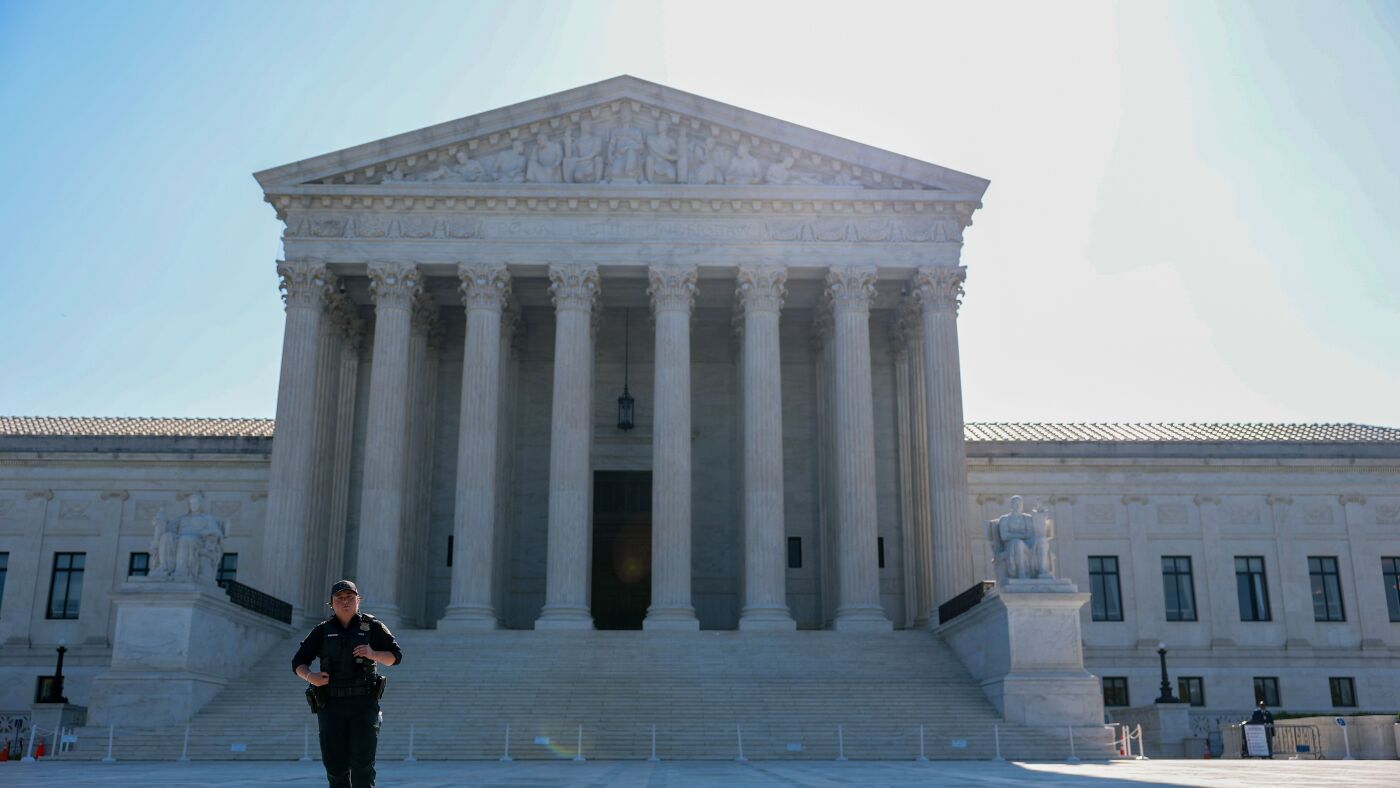
A federal judge ruled Friday that President Donald Trump’s administration cannot block federal money for child care subsidies and other programs aimed at supporting needy children and their families from flowing to five Democratic-led states for now.

The states of California, Colorado, Illinois, Minnesota and New York argued that a policy announced Tuesday to freeze funds for three grant programs is having an immediate impact on them and creating “operational chaos.” In court filings and a hearing earlier Friday, the states contended that the government did not have a legal reason for holding back the money from those states.

The U.S. Department of Health and Human Services said it was pausing the funding because it had “reason to believe” the states were granting benefits to people in the country illegally, though it did not provide evidence or explain why it was targeting those states and not others.

The programs are the Child Care and Development Fund, which subsidizes child care for children from low-income families; the Temporary Assistance for Needy Families program, which provides cash assistance and job training; and the Social Services Block Grant, a smaller fund that provides money for a variety of programs.

The five states say they receive a total of more than $10 billion a year from the programs.

Advertisement

U.S. District Judge Arun Subramanian, who was nominated to the bench by former President Joe Biden, did not rule on the legality of the funding freeze, but he said the five states had met a legal threshold “to protect the status quo” for at least 14 days while arguments are made in court.

The government had requested reams of data from the five states, including the names and Social Security numbers of everyone who received benefits from some of the programs since 2022.

The states argue that the effort is unconstitutional and is intended to go after Trump’s political adversaries rather than to stamp out fraud in government programs — something the states say they already do.

Jessica Ranucci, a lawyer in the New York Attorney General’s office, said in the Friday hearing, which was conducted by telephone, that at least four of the states had already had money delayed after requesting it. She said that if the states can’t get child care funds, there will be immediate uncertainty for providers and families who rely on the programs.

A lawyer for the federal government, Kamika Shaw, said it was her understanding that the money had not stopped flowing to states.

Advertisement
Continue Reading

News

National Park Service will void passes with stickers over Trump’s face

Published

on

National Park Service will void passes with stickers over Trump’s face

The Interior Department’s new “America the Beautiful” annual pass for U.S. national parks.

Department of Interior


hide caption

toggle caption

Advertisement

Department of Interior

The National Park Service has updated its policy to discourage visitors from defacing a picture of President Trump on this year’s pass.

The use of an image of Trump on the 2026 pass — rather than the usual picture of nature — has sparked a backlash, sticker protests, and a lawsuit from a conservation group.

The $80 annual America the Beautiful pass gives visitors access to more than 2,000 federal recreation sites. Since 2004, the pass has typically showcased sweeping landscapes or iconic wildlife, selected through a public photo contest. Past winners have featured places like Arches National Park in Utah and images of bison roaming the plains.

Advertisement

Instead, of a picture of nature, this year’s design shows side-by-side portraits of Presidents George Washington and Trump. The new design has drawn criticism from parkgoers and ignited a wave of “do-it-yourself” resistance.

Photos circulating online show that many national park cardholders have covered the image of Trump’s face with stickers of wildlife, landscapes, and yellow smiley faces, while some have completely blocked out the whole card. The backlash has also inspired a growing sticker campaign.

Jenny McCarty, a longtime park volunteer and graphic designer, began selling custom stickers meant to fit directly over Trump’s face — with 100% of proceeds going to conservation nonprofits. “We made our first donation of $16,000 in December,” McCarty said. “The power of community is incredible.”

McCarty says the sticker movement is less about politics and more about preserving the neutrality of public lands. “The Interior’s new guidance only shows they continue to disregard how strongly people feel about keeping politics out of national parks,” she said.

Advertisement

The National Park Service card policy was updated this week to say that passes may no longer be valid if they’ve been “defaced or altered.” The change, which was revealed in an internal email to National Park Service staff obtained by SFGATE, comes just as the sticker movement has gained traction across social media.

In a statement to NPR, the Interior Department said there was no new policy. Interagency passes have always been void if altered, as stated on the card itself. The agency said the recent update was meant to clarify that rule and help staff deal with confusion from visitors.

The Park Service has long said passes can be voided if the signature strip is altered, but the updated guidance now explicitly includes stickers or markings on the front of the card.

It will be left to the discretion of park service officials to determine whether a pass has been “defaced” or not. The update means park officials now have the leeway to reject a pass if a sticker leaves behind residue, even if the image underneath is intact.

In December, conservation group the Center for Biological Diversity filed a lawsuit in Washington, D.C., opposing the new pass design.

Advertisement

The group argues that the image violates a federal requirement that the annual America the Beautiful pass display a winning photograph from a national parks photo contest. The 2026 winning image was a picture of Glacier National Park.

“This is part of a larger pattern of Trump branding government materials with his name and image,” Kierán Suckling, the executive director of the Center for Biological Diversity, told NPR. “But this kind of cartoonish authoritarianism won’t fly in the United States.”

The lawsuit asks a federal court to pull the current pass design and replace it with the original contest winner — the Glacier National Park image. It also seeks to block the government from featuring a president’s face on future passes.

The America the Beautiful National Parks Annual Pass for 2025, showing one of the natural images which used to adorn the pass. Its picture, of a Roseate Spoonbill taken at Everglades National Park, was taken by Michael Zheng.

The America the Beautiful National Parks Annual Pass for 2025, showing one of the natural images which used to adorn the pass. Its picture, of a Roseate Spoonbill taken at Everglades National Park, was taken by Michael Zheng.

Department of Interior


hide caption

Advertisement

toggle caption

Department of Interior

Not everyone sees a problem with the new design. Vince Vanata, the GOP chairman of Park County, Wyoming, told the Cowboy State Daily that Trump detractors should “suck it up” and accept the park passes, saying they are a fitting tribute to America’s 250th birthday this July 4.

Advertisement

“The 250th anniversary of our country only comes once. This pass is showing the first president of the United States and the current president of the United States,” Vanata said.

But for many longtime visitors, the backlash goes beyond design.

Erin Quinn Gery, who buys an annual pass each year, compared the image to “a mug shot slapped onto natural beauty.”

She also likened the decision to self-glorification: “It’s akin to throwing yourself a parade or putting yourself on currency,” she said. “Let someone else tell you you’re great — or worth celebrating and commemorating.”

When asked if she plans to remove her protest sticker, Gery replied: “I’ll take the sticker off my pass after Trump takes his name off the Kennedy Center.”

Advertisement
Continue Reading

News

Federal immigration agents shoot 2 people in Portland, Oregon, police say

Published

on

Federal immigration agents shoot 2 people in Portland, Oregon, police say

PORTLAND, Ore. (AP) — Federal immigration officers shot and wounded two people in a vehicle outside a hospital in Portland, Oregon, on Thursday, a day after an officer shot and killed a driver in Minnesota, authorities said.

The Department of Homeland Security described the vehicle’s passenger as “a Venezuelan illegal alien affiliated with the transnational Tren de Aragua prostitution ring” who had been involved in a recent shooting in Portland. When agents identified themselves to the vehicle occupants Thursday afternoon, the driver tried to run them over, the department said in a written statement.

“Fearing for his life and safety, an agent fired a defensive shot,” the statement said. “The driver drove off with the passenger, fleeing the scene.”

There was no immediate independent corroboration of those events or of any gang affiliation of the vehicle’s occupants. During prior shootings involving agents involved in President Donald Trump’s surge of immigration enforcement in U.S. cities, including Wednesday’s shooting by an Immigration and Customs Enforcement officer in Minneapolis, video evidence cast doubt on the administration’s initial descriptions of what prompted the shootings.

READ MORE: What we know so far about the ICE shooting in Minneapolis

Advertisement

According to the the Portland Police bureau, officers initially responded to a report of a shooting near a hospital at about 2:18 p.m.

A few minutes later, police received information that a man who had been shot was asking for help in a residential area a couple of miles away. Officers then responded there and found the two people with apparent gunshot wounds. Officers determined they were injured in the shooting with federal agents, police said.

Their conditions were not immediately known. Council President Elana Pirtle-Guiney said during a Portland city council meeting that Thursday’s shooting took place in the eastern part of the city and that two Portlanders were wounded.

“As far as we know both of these individuals are still alive and we are hoping for more positive updates throughout the afternoon,” she said.

The shooting escalates tensions in an city that has long had a contentious relationship with President Donald Trump, including Trump’s recent, failed effort to deploy National Guard troops in the city.

Advertisement

Portland police secured both the scene of the shooting and the area where the wounded people were found pending investigation.

“We are still in the early stages of this incident,” said Chief Bob Day. “We understand the heightened emotion and tension many are feeling in the wake of the shooting in Minneapolis, but I am asking the community to remain calm as we work to learn more.”

Portland Mayor Keith Wilson and the city council called on U.S. Immigration and Customs Enforcement to end all operations in Oregon’s largest city until a full investigation is completed.

“We stand united as elected officials in saying that we cannot sit by while constitutional protections erode and bloodshed mounts,” a joint statement said. “Portland is not a ‘training ground’ for militarized agents, and the ‘full force’ threatened by the administration has deadly consequences.”

The city officials said “federal militarization undermines effective, community‑based public safety, and it runs counter to the values that define our region. We’ll use every legal and legislative tool available to protect our residents’ civil and human rights.”

Advertisement

They urged residents to show up with “calm and purpose during this difficult time.”

“We respond with clarity, unity, and a commitment to justice,” the statement said. “We must stand together to protect Portland.”

U.S. Sen. Jeff Merkley, an Oregon Democrat, urged any protesters to remain peaceful.

“Trump wants to generate riots,” he said in a post on the X social media platform. “Don’t take the bait.”

A free press is a cornerstone of a healthy democracy.

Advertisement

Support trusted journalism and civil dialogue.


Advertisement
Continue Reading
Advertisement

Trending