News
Trump heads to Texas as recovery efforts from deadly flood continue


President Donald Trump and first lady Melania Trump will travel to Texas on Friday to meet with first responders and grieving families in the aftermath of last week’s catastrophic flooding that has left more than 100 people dead.
During his visit, Trump is expected to receive a briefing from local elected officials and meet with victims’ relatives. He will be joined by Texas Gov. Greg Abbott.
Republican Sens. Ted Cruz and John Cornyn told reporters this week that they planned to travel with Trump to tour the flood damage. It is unclear whether state Attorney General Ken Paxton, a staunch ally of the administration who is challenging Cornyn in next year’s GOP primary, will join them.
Authorities continue to search miles of the Guadalupe River for more than 150 people who remain missing as hopes of finding more survivors dwindle. Among those confirmed or feared dead are 27 children and counselors at Camp Mystic, a Christian summer camp in Hunt.
Trump on Sunday signed a major disaster declaration for Texas to make federal funding available for hard-hit Kerr County, where nearly 77% of voters backed him in the 2024 election.
The trip to Texas will be Trump’s second to the site of a natural disaster since he was inaugurated for his second term; he visited Los Angeles in January after a wildfire devastated large swaths of Southern California. During his first term, he made multiple trips to Texas in 2017 in the aftermath of Hurricane Harvey and its deadly floods. The same year, he traveled to Puerto Rico to survey damage caused by Hurricane Maria.
The Trump administration has faced criticism from officials and lawmakers at various levels of government who have argued that recent job cuts at the National Weather Service and the National Oceanic and Atmospheric Administration, alongside plans to shutter the Federal Emergency Management Agency, prevented accurate forecasting and worsened the effects of the floods. Administration officials have repeatedly rejected those assertions.
Trump has pledged to “get rid” of FEMA, which is part of the Department of Homeland Security, and his administration has overseen a largely voluntary exodus of experienced personnel at the agency, fueling concerns about its ability to promptly respond to disasters. The concerns were heightened by a new policy from Homeland Security Secretary Kristi Noem mandating her approval for any agency spending in excess of $100,000.
Asked by NBC News on Thursday whether the new policy delayed FEMA’s response to the tragedy in Texas, Trump defended Noem.
“We were right on time. We were there — in fact, she was the first one I saw on television,” Trump told “Meet the Press” moderator Kristen Welker in a phone call. “She was there right from the beginning.”
Criticism of the disaster response has also focused on Kerr County’s emergency management system after reports indicated local officials did not use warnings from FEMA to send text alerts when the severity and speed of the flooding heightened, catching hundreds of people in a region known as “flash flood alley” by surprise. In addition, Kerr County, which has a population of more than 50,000 people, had no siren system to alert residents, in part because some local officials felt it was too expensive to install.
Trump called for additional flood alarms in Texas on Thursday, though he argued that the storm was unprecedented and that “nobody ever saw a thing like this coming.”
“After having seen this horrible event, I would imagine you’d put alarms up in some form, where alarms would go up if they see any large amounts of water or whatever it is,” he told NBC News.
Joe Herring, the mayor of Kerrville, told MSNBC’s Katy Tur this week that the state rejected an effort to install a siren system nearly a decade ago.
“The county government looked into that in 2017, and from what I heard, their grant application was denied,” Herring said. “I wasn’t in government at that time, but it sounds like we talked about it, we asked for help, and we were denied before.”


At least about two dozen people have died amid the perilous climate crisis-driven heatwave that has scorched swaths of the US with record temperatures.
As a huge heat dome sits over the county’s eastern half, extreme heat gripped millions of people in the days leading up to the US’s semiquincentennial on Saturday – and beyond it. More than 20 states experienced have reported stifling temperatures more than 100F (38C), marring celebrations. And more than 140 million people remained under active heat alerts across the US on Sunday.
Officials in New Jersey believe the extreme heat was a factor in the deaths of 22 people across 10 counties there, mostly in central and northern parts of the state. Many of the individuals were found in homes with no air conditioning, outside their residences, on the street and in parked cars, according to officials.
The first of those deaths occurred on Thursday, and the ages of the deceased in question mostly range from their mid-30s to their 80s. Preliminary findings cause investigators to believe the deaths are heat-related, though the chief state medical examiner for New Jersey would later determine the exact cause of death for each.
“This is not a typical summer heatwave,” the New Jersey department of public health said in a statement. “This type of heat can quickly become life-threatening to humans and to animals of all ages.”
The National Weather Service (NWS) has said cool air from the north in the coming days is going to lower some of the most extreme temperatures in the region, including New Jersey. The Fifa World Cup final is scheduled to be held in the New Jersey city of East Rutherford on 19 July.
Elsewhere, a heat-related death was reported in Cook county, Illinois, Natalia Derevyanny, a government spokesperson, told NBC News. The cause of that death was recorded as organic cardiovascular disease – with heat stress as a contributing factor.
Hinds county in Mississippi reported the death of 74-year-old Mitchell Ray Cooley due to heat exposure on Thursday, state officials said. Cooley had been reported missing, and his body was found the next day behind a gas station, the county coroner said in a statement.
“Mr Cooley suffered from a medical condition that impaired his judgment,” the coroner’s office said. “Based on the investigative findings, scene examination, and subsequent evaluation, the cause of death has been determined to be weather-related heat exposure. At this time, there is no indication of foul play.”
Meanwhile, on 27 June, Martha Irene Van Egmond, 83, died in Bolton, Mississippi, after falling in her garden. When her husband, Rick, tried to help her up, he fell too. The couple were unable to get up and spent hours in the heat.
Rick Van Egmond said he and his wife called out for help, and eventually two men from a nearby apartment complex came – but it was too late for Martha. She died surrounded by flowers, doing what she loved, he said to local news outlet WAPT.
Jeramiah Howard, Hinds county’s chief death investigator, attributed her death to the heat combined with her age, WAPT reported.
after newsletter promotion
As Donald Trump spoke during rain-dampened celebrations in Washington DC on Saturday, emergency services there had treated 51 people with heat-related issues as of 8pm ET, with 12 taken to nearby hospitals, according to local emergency response officials.
Other events scheduled for Saturday – including the Independence Day parade in DC – were cancelled amid the blistering heat. Among other weather-related disruptions, Trump’s so-called Great American State Fair on the National Mall also temporarily closed down on Friday after reports that 44 visitors had been treated for heat-related illnesses.
The worst of the heat started moving out of the US’s north-east and midwest regions by Sunday, shifting farther south into the mid-Atlantic and south-eastern parts of the country.
But scientists warn that heatwaves with extreme temperatures are indications that the world must lower the greenhouse gas pollution driving the global climate crisis.
The NWS is urging the public to avoid heat sickness by drinking plenty of fluids as well as staying out of the sun and in air-conditioned environments. Officials have also asked people to check on relatives and neighbors.
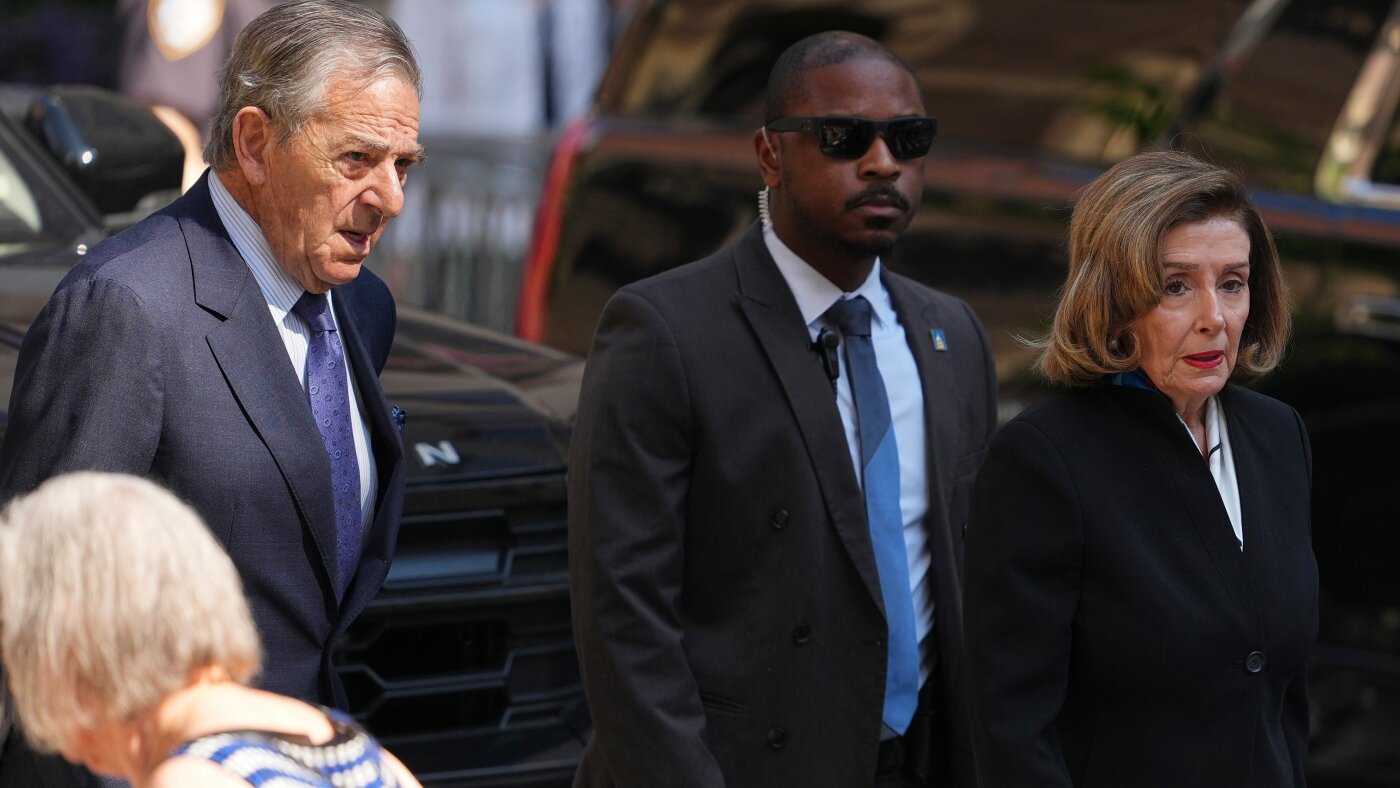
Rep. Nancy Pelosi, D-Calif., and her husband Paul arrive at the funeral services for Clive Davis at Central Synagogue in New York, Monday, June 29, 2026.
Adam Gray/AP
hide caption
toggle caption
Adam Gray/AP
LOS ANGELES — The husband of former House Speaker Nancy Pelosi was involved in a hit-and-run in California that left a parked car with “major” damage authorities said Saturday, and he could face misdemeanor charges.
Paul Pelosi was driving his brown convertible Friday in Yountville, a town in the heart of wine country, when he struck a legally parked car on the side of the road, briefly stopped and then drove away, the Napa County Sheriff’s Office said in a statement. No injuries were reported.

A witness saw the collision and called 911. Shortly afterward sheriff’s deputies found Pelosi with damage to the front of his car on a road roughly a quarter of a mile away. He reportedly told officers he knew he hit something but was not sure when or what caused the damage.
Pelosi, 86, did not have any alcohol in his system, according to the statement. The sheriff’s office referred him to the Department of Motor Vehicles for a process to determine whether he may continue to drive — something that officials say is common for older drivers.
Pelosi was not arrested, and because no one was injured, the sheriff’s office recommended a misdemeanor charge for fleeing the scene of an accident.
A staffer for Nancy Pelosi did not immediately respond to an email seeking comment.
Paul Pelosi pleaded guilty in 2022 to misdemeanor charges of driving under the influence in Napa County and was sentenced to five days in jail and three years of probation. However, he served only two days in jail and received good conduct credit for two other days, leaving just one day to serve in a work program at the courthouse.
As part of his probation, Pelosi was required to attend a three-month drinking driver class and install an ignition interlock device, which forces drivers to provide a breath sample to prove sobriety before the engine will start. He also was ordered to pay about $5,000 in victim restitution for medical bills and lost wages, along with nearly $2,000 in fines.
That same year he was attacked and severely beaten with a hammer at the couple’s San Francisco home.

WASHINGTON (7News) — The thousands of people attending the Great American State Fair and other areas around the National Mall are being ordered to evacuate as stormy weather approaches.
The National Weather Service previously announced a Severe Thunderstorm Warning in the District. Officials are asking attendees to seek shelter.
SEE ALSO: Historic Fourth of July fireworks to light up National Mall: How to watch live
The DC Homeland Security & Emergency Management released a list of places where the crowds can go to get out of the weather:
Federal Buildings:
- Ronald Reagan Building – 100 Pennsylvania Ave NW
- Dept. of Commerce – 1401 Constitution Ave NW
- Dept. of Agriculture – 1400 Independence Dr SW
- Dept. of Education – 400 Maryland Ave SW
- Internal Revenue Service – 1111 Constitution Ave NW
- Voice of America – 330 Independence Ave SW
- Thomas Jefferson Memorial – 16 E Basin Dr SW
Museums:
- National Museum of American History – 1300 Constitution Ave NW
- National Museum of Natural History – 1000 Constitution Ave NW
- National Museum of African American History and Culture – 1400 Constitution Ave NW
Freedom 250 organizers released this statement:
“The safety of our guests, performers, and staff is our top priority. Due to approaching severe storms, Freedom 250, United States Secret Service, United States Park Police, National Park Service, the Federal Emergency Management Agency, and all public safety partners are asking all guests to evacuate event grounds and seek temporary shelter in a nearby building. Available shelter locations include the Department of Commerce, Department of Education, Department of Agriculture, Internal Revenue Service, VOA Building, Thomas Jefferson Memorial, National Museum of American History, National Museum of Natural History, the African American Museum, and the Ronald Reagan Building. Please remain calm, follow the directions of law enforcement and event staff, and stay tuned to Freedom 250’s official channels for updates. Freedom 250 will share updates on programming and doors reopening — please stay close to our official channels for updates.”
The Secret Service said they have suspended screening on the National Mall.
“Security screening on the National Mall has been suspended due to dangerous storms,” the Secret Service said. “If you are already on the grounds, follow directions from officers and event staff and move to shelter immediately. Do not shelter under trees.”
BE THE FIRST TO COMMENT
Metro riders are also asked to seek shelter. Commuters should expect heavy crowds at stations near the National Mall and are asked to consider using L’Enfant Plaza, Metro Center, Archives, Federal Triangle or Federal Center SW stations to avoid congestion.
-

 San Francisco, CA10 minutes ago
San Francisco’s fireworks show ends in hours of gridlock involving Waymo cars
-

 Dallas, TX13 minutes ago
FIFA Fan Fest in Dallas paused due to lighting in the area Sunday evening
-

 Miami, FL18 minutes ago
Venezuelan Independence Day: Aid efforts continue after devastating earthquake
-

 Boston, MA25 minutes ago
Timeline: Looking back on Jaylen Brown’s Celtics career – The Boston Globe
-

 Denver, CO28 minutes ago
Denver police arrest suspect in fatal July 4 triple stabbing
-

 Seattle, WA33 minutes ago
UPDATE: Water-rescue response off west end of Alki Beach
-
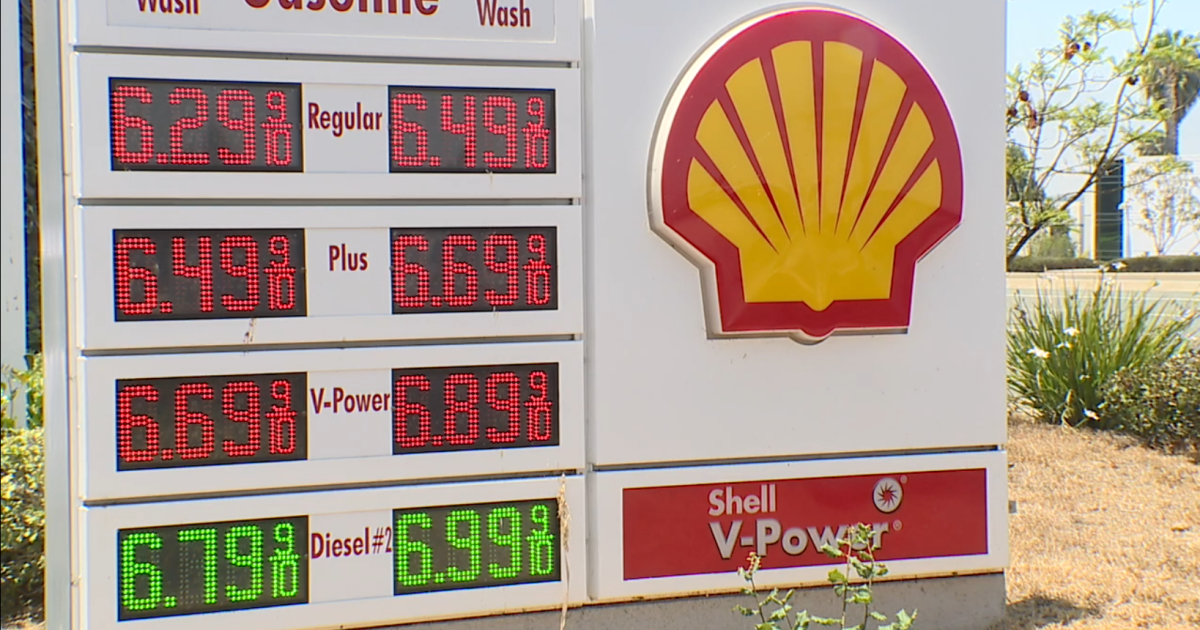 San Diego, CA40 minutes ago
San Diego County Gas Prices Still Dropping
-

 Milwaukee, WI43 minutes ago
Two Milwaukee officers hurt over Fourth of July weekend

