News
Trump Again Hints at Jan. 6 Pardons, Including for Attacks on Police


President-elect Donald J. Trump on Tuesday once again left open the possibility of offering pardons to some of his supporters who are serving prison time for assaulting police officers during the attack on the Capitol on Jan. 6, 2021.
Mr. Trump, who campaigned on a pledge to restore “law and order,” said that the pardons he intended to offer could cover people charged and convicted of violent crimes.
“Well, we’re looking at it,” Mr. Trump told reporters at a news conference at Mar-a-Lago, his Florida estate, when asked whether he was considering pardoning people charged with violent offenses. “We’ll be looking at the whole thing, but I’ll be making major pardons, yes.”
When a reporter pressed Mr. Trump on whether he would pardon anyone who attacked a police officer, Mr. Trump deflected and suggested that his supporters were the true victims of Jan. 6.
“Well, you know, the only one that was killed was a beautiful young lady named Ashli Babbitt,” he said, adding that she was “shot for no reason whatsoever.” In fact, three other pro-Trump protesters also died during the riot.
Ms. Babbitt, an Air Force veteran, was shot and killed by a police officer while she was part of a group trying to break through a door to the House floor, where lawmakers were seeking shelter from the mob. Her death has become a cause célèbre on the right.
Mr. Trump did not mention the more than 140 police officers who were injured during the attack by people wielding baseball bats, flagpoles, metal batons, broken table legs, crutches and even a hockey stick. He also said nothing about four officers who later died by suicide or another who died shortly after Jan. 6 of a stroke that a medical examiner determined was caused in part by “all that transpired” on that day.
At Tuesday’s news conference, Mr. Trump sought to blame the F.B.I. for the riot, echoing a conspiracy theory that is widespread on the right and that was contradicted by a recent report from the Justice Department’s internal watchdog.
Moreover, he seemed to suggest, without evidence, that the Iranian-backed terrorist organization Hezbollah was somehow involved in the attack — an allegation that has never come up in the multiple criminal and congressional investigations into Jan. 6.
Representatives for Mr. Trump did not respond to questions about these comments.
Even though he repeatedly promised during his campaign and after the election to issue pardons to potentially hundreds of Jan. 6 rioters, Mr. Trump has never described specific criteria for who will get clemency.
Sometimes, he has said that he will pardon rioters charged only with nonviolent crimes — of which there are about 1,000. At other times, including during an interview with the National Association of Black Journalists, Mr. Trump left open the possibility that he would pardon people who attacked the police.
When Mr. Trump won the election, there was jubilation among the Jan. 6 defendants and their families who have been urging him to issue a blanket amnesty to all of the nearly 1,600 who have been charged over the past four years in connection with the Capitol attack.
But if Mr. Trump decides to do that, it will mean granting some form of clemency to people, say, who hit officers with two-by-fours or members of far-right groups like the Proud Boys who were convicted and imprisoned on charges of seditious conspiracy.
After initially condemning the riot as “a heinous attack” and vowing that those who broke the law that day “will pay,” Mr. Trump and his allies quickly pivoted into a campaign to rebrand and launder Jan. 6 as a day of patriotism by Trump supporters. Mr. Trump continued that rewriting of history at Tuesday’s news conference.
He portrayed the imprisoned supporters as nonviolent victims of unfair prosecutors. He falsely claimed that his supporters brought “not one gun” to the Capitol. And he implied, without evidence, that the riot was instead a plot by either the F.B.I. or shadowy foreign actors.
“They had people in some form related to the F.B.I.,” Mr. Trump said of the riot, referring to the false-flag conspiracy theory prevalent on the right.
The baseless claim that Jan. 6 was instigated by “deep state” actors rather than the hundreds of Trump supporters who were trying to block the peaceful transfer of power in his name has been rejected by defense lawyers working on Capitol riot cases, the Justice Department’s inspector general and even some of the F.B.I.’s own informants who were at the Capitol that day.
“We have to find out about Hezbollah,” Mr. Trump said. “We have to find out about who exactly was in that whole thing, because people that did some bad things were not prosecuted.”
It is unclear why Mr. Trump mentioned Hezbollah in connection with Jan. 6.



new video loaded: 12 Dead in Missouri Skydiving Plane Crash
transcript
transcript
12 Dead in Missouri Skydiving Plane Crash
Eleven passengers and a pilot were killed shortly after taking off for a skydiving trip in Missouri on Sunday.
-
We’re still trying to identify family and make notifications. And so we’re going to be respectful of that. There were witnesses that were family members, yes.

By Cynthia Silva
June 14, 2026

Attorney and tour guide Raina Yancey wants the federal government to fully restore a slavery exhibit taken down months ago at the President’s House in Philadelphia.
Adrian Florido
hide caption
toggle caption
Adrian Florido
President Trump’s fight to reshape how American history is told has hit another hurdle.
Last week, a federal judge temporarily blocked his year-old executive order titled “Restoring Truth and Sanity to American History.” It ordered the Interior Secretary to remove from national parks and historic sites content that “inappropriately disparages Americans past or living.”
Months later, federal employees took crowbars and peeled away an exhibit about nine African-Americans President George Washington had enslaved at the nation’s first executive mansion in Philadelphia.
The removal sparked bipartisan condemnation and a separate lengthy legal battle that has wound its way to a federal court of appeals.
Some of the exhibit has since been restored, but a lot is still missing.

Lawyer and activist Michael Coard spent years fighting to create a site telling the stories of the people enslaved by George Washington in Philadelphia.
Henry Larson
hide caption
toggle caption
Henry Larson
Michael Coard is a lawyer and activist who advocated for the exhibit’s creation. It opened in 2010.
“It was the grand opening of the first slave memorial of its kind on federal property in the history of the U.S. We thought it would last forever. But 15 years later, the destruction came,” Coard said.
He and others want the full exhibit restored by the Fourth of July, when people will descend on historic Philadelphia to celebrate the 250th anniversary of the nation’s founding.
NPR’s Adrian Florido spoke with Coard, attorney and tour guide Raina Yancey and others at the President’s House in Philadelphia to understand the deadline pressure activists now face, and how they’re still telling the story of Washington’s enslaved workers as the legal battle wages on.
Listen to the full story by clicking the blue play button above.
News
Trump endorses Collins in Georgia Senate runoff. It’s his latest ‘MAGA’ pick in Republican primaries

ATLANTA (AP) — Days before the U.S. Senate runoff in Georgia, President Donald Trump has endorsed U.S. Rep. Mike Collins over former football coach Derek Dooley, putting his stamp of approval on another loyalist who some conservatives believe could be a risky bet in November.
The Republican candidates are competing Tuesday for the chance to take on Democratic Sen. Jon Ossoff in one of the most closely watched campaigns in the November midterm elections. Collins has positioned himself as a stalwart ally of Trump and his “Make America Great Again” movement, and the president said in his announcement early Sunday on social media that the trucking company owner and second-term congressman “has been with me from the very beginning” and is a ”true friend, fighter, and WARRIOR.”
Dooley, a political newcomer, is backed by outgoing Gov. Brian Kemp, who has clashed with Trump in the past. “I don’t know Derek Dooley, and neither does anyone else, but he seems like a nice person,” Trump wrote, while noting that Dooley did not vote in 2016 or 2020, when Trump was on the ballot. Dooley has acknowledged going nearly two decades without voting but says he did vote for Trump in 2024.
Collins led Dooley in the May 19 primary but neither surpassed 40%, leaving many Republican votes up for grabs. Trump’s endorsement has proved powerful as he shapes a party identity that is increasingly indistinguishable from his own.
“Everybody knows that I do best with the MAGA base,” Collins said on primary night. “It’s because they know I’ve always been with President Trump.”
Still, the president’s choice puts him at odds with more traditional Republicans, including Kemp. The endorsement is reminiscent of Trump’s decision to back Texas Attorney General Ken Paxton before his victory over U.S. Sen. John Cornyn in the state’s recent primary runoff.
Dooley responded to Trump’s decision by saying Georgia voters want “a political outsider” rather than “typical D.C. politicians like Mike Collins.” In an X post, Dooley expressed confidence that he would win.
Collins has embraced Trump since his first campaign for Congress in 2022, and he has echoed the president’s false claims that his 2020 defeat to Democrat Joe Biden was fraudulent. Collins sponsored the Laken Riley Act, a 2025 law that requires immigrants be detained when charged with certain crimes. Republicans believe the issue damages Ossoff because he initially voted against the measure before supporting it after Trump returned to the White House.
Dooley — and Kemp as his top surrogate — argue that a first-time candidate has a better shot to defeat Ossoff, the only Democratic senator facing voters in a state Trump carried in 2024.
Kemp, who once drew Trump’s ire for refusing to help overturn Biden’s victory, was the top choice of Senate Republican leaders looking for an Ossoff challenger. Kemp recruited Dooley, a childhood friend, to run instead.
The governor points to a trio of first-term Republican senators — Montana’s Tim Sheehy, Pennsylvania’s Dave McCormick and Ohio’s Bernie Moreno — who defeated Democratic incumbents in 2024 running as outsiders who still aligned with the president.
Dooley’s argument is matched against Trump’s winning streak inside the party. In a matter of weeks, Trump has celebrated victories over Republicans who did not pass his test of loyalty.
Cornyn lost to Paxton, U.S. Rep. Thomas Massie of Kentucky lost to Ed Gallrein, U.S. Sen. Bill Cassidy of Louisiana failed to make a runoff and several Indiana state senators were defeated by challengers.
Dooley has told voters he will “work with President Trump but fight for you.” He also emphasizes that Republicans have not won a U.S. Senate race in Georgia since 2016.
Collins walks no such tightrope, and he still insists that he can have wider appeal in the fall.
“You don’t beat Jon Ossoff by having no record,” he said. “You win by having a record of results.”
-

 Idaho6 minutes ago
East Idaho braces for first 90-degree day of the season – East Idaho News
-

 Kansas8 minutes ago
MSHP recover missing Kansas person from Table Rock Lake
-
 Illinois9 minutes ago
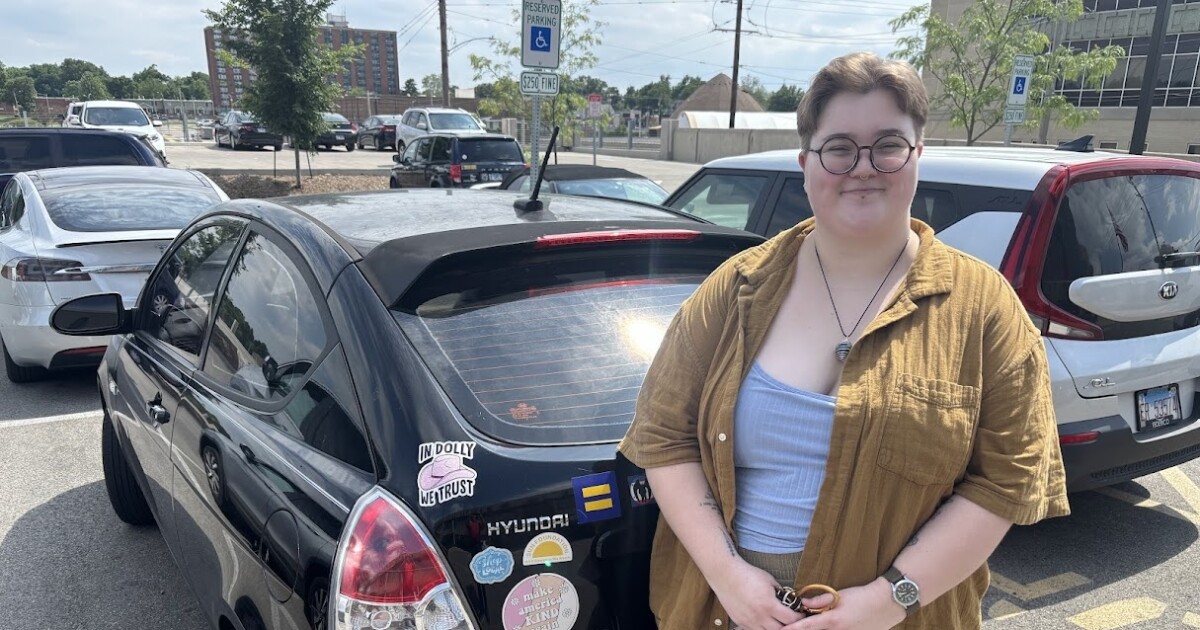
Central Illinois residents face tough compromises as gas prices pinch budgets
-

 Indiana14 minutes ago
21-year-old Indiana man shot, killed near Ford City Mall, Chicago officials say
-

 Iowa21 minutes ago
Staffing new Iowa prisons may be “impossible,” union president warns
-

 Kentucky36 minutes ago
Kentucky Lottery Cash Ball, Pick 3 Evening winning numbers for June 14, 2026
-
Louisiana38 minutes ago
Louisiana Lottery Pick 3, Pick 4 results for June 14, 2026
-
 Maine44 minutes ago
Maine’s Susan Collins-Graham Platner race expected to draw nearly $400M in ads

