News
Many state abortion bans include exceptions for rape. How often are they granted?

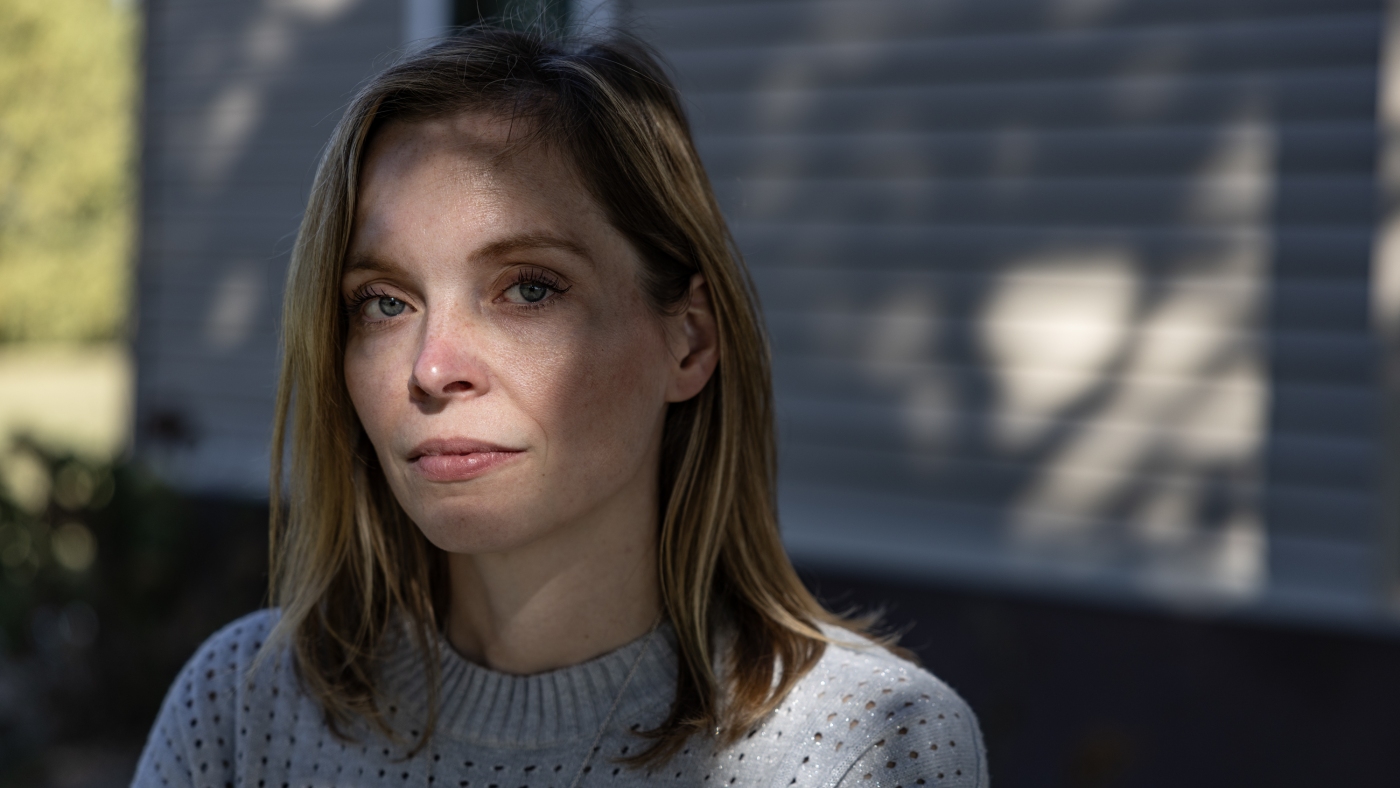
Dr. Emily Boevers, an OBGYN based in Waverly, Iowa, poses for a portrait at her family’s farm in nearby Tripoli. She says the state’s rape exception requirements threaten the privacy, trust and intimacy of the patient-doctor relationship.
Geoff Stellfox for NPR
hide caption
toggle caption
Geoff Stellfox for NPR
After the Supreme Court overturned the federal right to abortion in 2022, many states that banned the procedure did so with the promise that it would still be legal in some circumstances, including in the event of rape. One study estimates that over 64,000 pregnancies have occurred due to rape in the years since the ruling in states where abortion is banned.
But many people on the frontlines of this issue say getting an abortion in these states after an assault is difficult or – in some cases – impossible.
There is no central database that measures abortions performed because of rape. For this story, NPR looked at state records and talked with researchers, advocates and doctors in seven of the 11 states where abortion is banned but legal in the case of rape. Taken together, these accounts show a patchwork of laws governing rape exceptions, confusion over who qualifies for an exemption and law enforcement’s role in that process, and widespread fear from doctors about performing abortions for assault victims.
Many victims aren’t capable of immediately reporting their rapes
It’s all but impossible to know exactly how many abortions are performed because of rape exemptions. When they report the procedure, doctors aren’t required to include a reason. And an abortion could fall under a different exemption – such as a fetal anomaly or life of the mother.
Existing annual data suggests that in many states, the numbers of known abortions performed due to rape are in the single digits or, in some cases, zero.
One reason for that is because in many states, rape victims who want an abortion are required to report their assault to law enforcement. Advocates and medical professionals who work with rape victims say in the aftermath of an attack, there are more immediate issues to consider than abortion laws.
“It’s just too much for them to manage at that point,” says Katy Rasmussen, a nurse who works with assault victims with the Johnson County Sexual Assault Response team in Iowa. The patients she sees are frequently in shock or dealing with the stigma around sexual assault. If alcohol or illegal substances are involved, Rasmussen says, patients may feel shame or even blame themselves.
“Often, sexual assault survivors just want it to be over,” says Kelly Miller, former executive director of the Idaho Coalition Against Sexual and Domestic Violence. “And so having to go through the trauma of reporting, the trauma of a forensic interview, most survivors opt out of all of that.”
Other advocates point out that many patients are experiencing domestic violence when they are raped. That’s what happened to Laurie Betram Roberts. She says she became pregnant years ago after she was raped by someone she lived with. Reporting him and risking his arrest, she says, could have meant losing her housing.
“We shared a residence,” she says. “There was no domestic violence shelter that would take me because my family was too big.”
Bertram Roberts, who has seven children, did eventually disentangle herself from this man. She now works with people in similar situations as part of her job with the Mississippi Reproductive Freedom Fund, a nonprofit that helps people get abortion care in that state.
“There’s a perception of good and bad abortions” among people who defend state abortion bans, Bertram Roberts says. “But the truth is the exemptions are all rhetoric and no practical use.”
Last year in Mississippi, there were zero abortions for any reason, according to a recent report from The Society of Family Planning’s WeCount project.
Mississippi Gov. Tate Reeves promised exemptions for rape when the state’s 2022 law went into effect. NPR reached out to Reeves’ office as well as to lawmakers in multiple states who sponsored these bans and to national anti-abortion groups. None of them wanted to speak on the subject of rape exemptions across the country.
One group, Susan B Anthony Pro-Life America, sent NPR a written statement laying blame with doctors and health systems for their confusion and inability to utilize the law. “If there are doctors who are confused about rape exceptions, hospital administrations and health associations should provide clarity,” the statement read.
Some doctors say they feel weaponized and intimidated
Involving law enforcement makes patients and doctors feel like “potential criminals,” says Jessica Tarleton, an obstetrician in South Carolina, where by law, doctors must report abortions performed because of a rape to their local sheriff’s office.
“Somebody comes into the emergency room who’s been shot, we don’t ask them what they did to be in a position to be shot. We take care of the patient,” says Tarleton. She points out that no other kind of medicine demands doctors legally justify care.
“In the past two years,” she says, “I am aware of one one patient that I was associated with that sought a legal abortion under the rape exception.”
Tarleton tries to offer abortion care whenever she legally can. But she says many doctors in this state are scared and feel they don’t have enough support to provide abortions in a place where it feels legally risky. As a result, she says, many distance themselves from the practice altogether.
‘Now I’m the investigator’
Iowa makes it particularly difficult for rape victims to get an abortion, according to doctors and reproductive rights advocates.
This summer, after a long court fight, the state started enforcing a six-week abortion ban, which makes an exception for certain things like rape. But directions from the Iowa Board of Medicine say doctors – before performing an abortion – must determine whether a rape is legitimate or risk legal consequences for noncompliance.

Dr. Emily Boevers says that so far, she hasn’t had to investigate the circumstances around a patient’s rape, but she’s been practicing what she’ll say when that day comes.
Geoff Stellfox for NPR
hide caption
toggle caption
Geoff Stellfox for NPR
It’s an unusual level of detail for doctors to collect and document, even among the other 10 states that include exemptions for rape.
“Now I’m the investigator trying to decide if the details of the incident constitute rape as per Iowa Code,” says Dr. Emily Boevers, who works in Waverly, a town of 10,000 in northeastern Iowa. She says these requirements threaten the privacy, trust and intimacy of the patient-doctor relationship. “I’m supposed to maintain a therapeutic, caring relationship with this patient while I query all these details,” Boevers says.
So far, she hasn’t had to investigate the circumstances of assault with a patient, but she’s practicing what she’ll say when that day comes. “Unfortunately, our government mandates that I must ask you some questions,” she plans to say. “If you are able to answer these, I might be able to help you.”
Those who enforce the laws might not always know the laws
In some states, there is little clarity on rape exemptions even among those officials charged with enforcing the laws.
Idaho outlaws abortion with exceptions for rape, incest and when the life of the mother is threatened. To get an abortion, sexual assault victims have to produce a police report for medical providers.
When the state’s ban went into effect in 2022, victim advocates quickly pointed out that law enforcement agencies don’t release police reports until a case is closed – preventing victims from accessing timely care. The following year, the Idaho Legislature amended the bill’s text so that rape victims are entitled to receive, upon request, a copy within 72 hours of the report being made.
But agencies appear to follow these requirements unevenly.
Boise State Public Radio reached out to 56 law enforcement agencies across Idaho about their protocols to assist rape victims since the ban. A handful said they complied with the 72-hour amendment and said their in-house victim advocates were available to help victims throughout their process.
Many others seemed unfamiliar with the amendment. Several public records departments said they would automatically deny requests for copies of a report on an open case, regardless of who made it. One agency realized it hadn’t been complying with the 72-hour law after it went into effect and had unknowingly denied records to rape victims.
Local agencies said they had received no guidance from the state.
Advocates say this murky process compounds a system of reporting that’s already unwelcoming to victims.
“Survivors generally don’t report to these systems that were never created to be centered around survivors in the first place,” says Miller, the former head of the Idaho Coalition Against Sexual and Domestic Violence. “It’s just unrealistic to expect that survivors will access these systems just for the purposes of being able to gain access to an abortion as a result of a pregnancy from a sexual assault.”
State records suggest there were fewer than 10 abortions for any reason last year in Idaho.
Providers of rape-exception abortions often are shielded by big institutions
Only a handful of doctors interviewed for this story reported performing rape exception-abortions with any consistency. Those who did all worked at major academic medical institutions.
Dr. Nisha Verma in Georgia estimates she sees someone who has been raped or experienced incest who meets the exception standard “every couple weeks.”
Verma isn’t an official spokesperson and didn’t want to be identified using her institution’s name. But she says her employer has protocols and task forces to assist doctors in managing their legal risk. That helps mitigate doctors’ fears of losing their medical license, being fined or going to jail.
“At my institution, we have really again worked to create a system that helps us as doctors feel more supported and protected,” Verma says.
But for most people who work with victims, it’s not simply a question of how to get abortion exemptions. Some states, for example, are also constrained by a shortage of providers willing even to deliver babies, let alone perform legally risky procedures.
“The question is,” says Bertram Roberts of the Mississippi Reproductive Freedom Fund, “If you got an exemption in Mississippi, who’s going to perform your abortion?” The state has a significant shortage of obstetricians.
Bertram Roberts says she’s never seen anyone in that state get an exemption – for any reason, let alone rape.

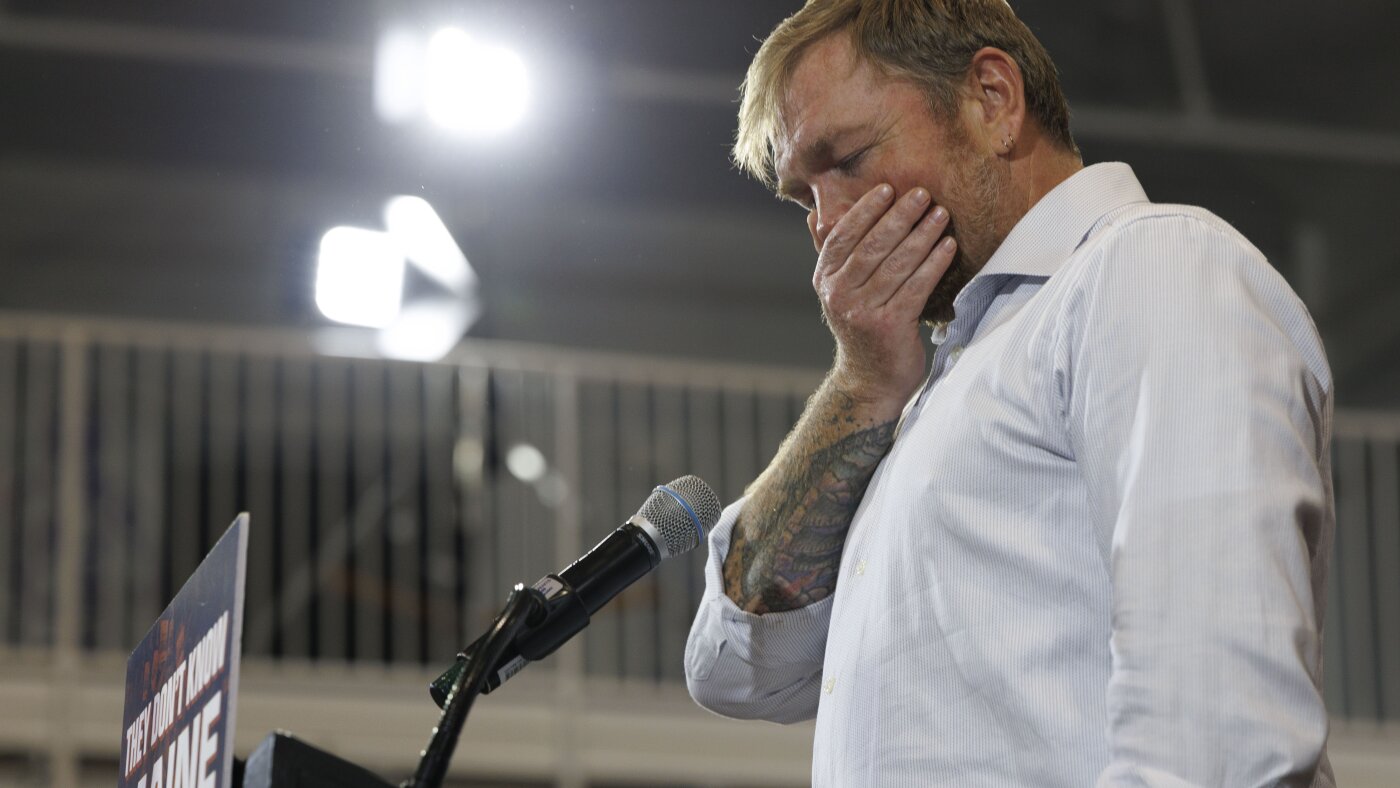
Now-former Democratic Senate candidate Graham Platner speaks at his primary election night event on June 9 in Blue Hill, Maine. Platner officially dropped out of the race July 10 following rape allegations from a former romantic partner that he denies.
CJ Gunther/Getty Images
hide caption
toggle caption
CJ Gunther/Getty Images
Graham Platner, Maine’s Democratic nominee for Senate, is officially out of the race.
The Maine Secretary of State said Platner filed the necessary paperwork to withdraw his candidacy two days after he announced he planned to do so following an accusation of rape by a former romantic partner. Platner denies the allegation.
The Maine Democratic Party has until July 27 to pick Platner’s replacement.
In his withdrawal notice, Platner said “people are desperate for change” and that’s why they voted “for a new kind of politics” by making him the Democratic nominee. He expressed gratitude for those who supported his campaign and said that he will continue to fight for “the movement we have built together and the future we believe in.”
He ended his notice with a strong statement aligned with the progressive platform.
“F*ck ICE. Free Palestine. Up the Hearts.”
Platner announced his plan to withdraw from the race in an 11-minute video he posted to social media on July 8. He said he had no choice but to suspend his campaign, citing it was no longer viable financially.
“We are going to lose our ability to fundraise. We are going to lose our ability to access voter data. We are going to lose all of the things that any campaign needs on the basic level simply to function,” he said.
Platner added that dropping out was not an admission of guilt. Rather, the decision, he said, is to keep the progressive movement in Maine alive to defeat Republican Sen. Susan Collins in November. Platner blamed the “political establishment” for his downfall and argued the goal was to force him out of the race.
“We built a campaign. We engaged in electoral politics. We motivated people. We banded together. We did it the way that we were told we are supposed to make change and we won. And now they are not going to let us have it. Not if it’s me,” he said.
Many powerful Democrats and progressives, including Sen. Bernie Sanders, an independent, urged Platner to step down.
Platner has had to answer to a waterfall of scandals since he launched his Senate bid. Despite those, he ran away with the nomination in the June 9 primary, securing more than 150,000 votes — more than any other Democratic Senate candidate in Maine’s history.
Platner ran on a progressive platform centered on affordability, universal health care and getting corporate money and influence out of politics. During his campaign, he generated an undeniable amount of enthusiasm, something the Maine Democratic Party will have to harness if it hopes to beat Collins in the general election.
Multiple people have already launched campaigns to replace Platner, including former state Sen. Troy Jackson and former CDC official Nirav Shah, who both ran unsuccessful bids for governor.
Platner called on the replacement process to reflect “the Mainers who on June 9 turned out and showed that they are desperate for a different kind of politics.”
“We were asking for real democracy, and we did it the right way. And we won. But now the ball is in the court of the Democratic establishment,” he added.
The Maine Democratic Party said that it intends to hold a new nominating convention where around 600 delegates will select Platner’s successor. Candidates have until July 15 to declare their intent to seek the nomination and gather signatures from at least 8 of Maine’s 16 counties. Party leadership added they will make the nomination process public and transparent.
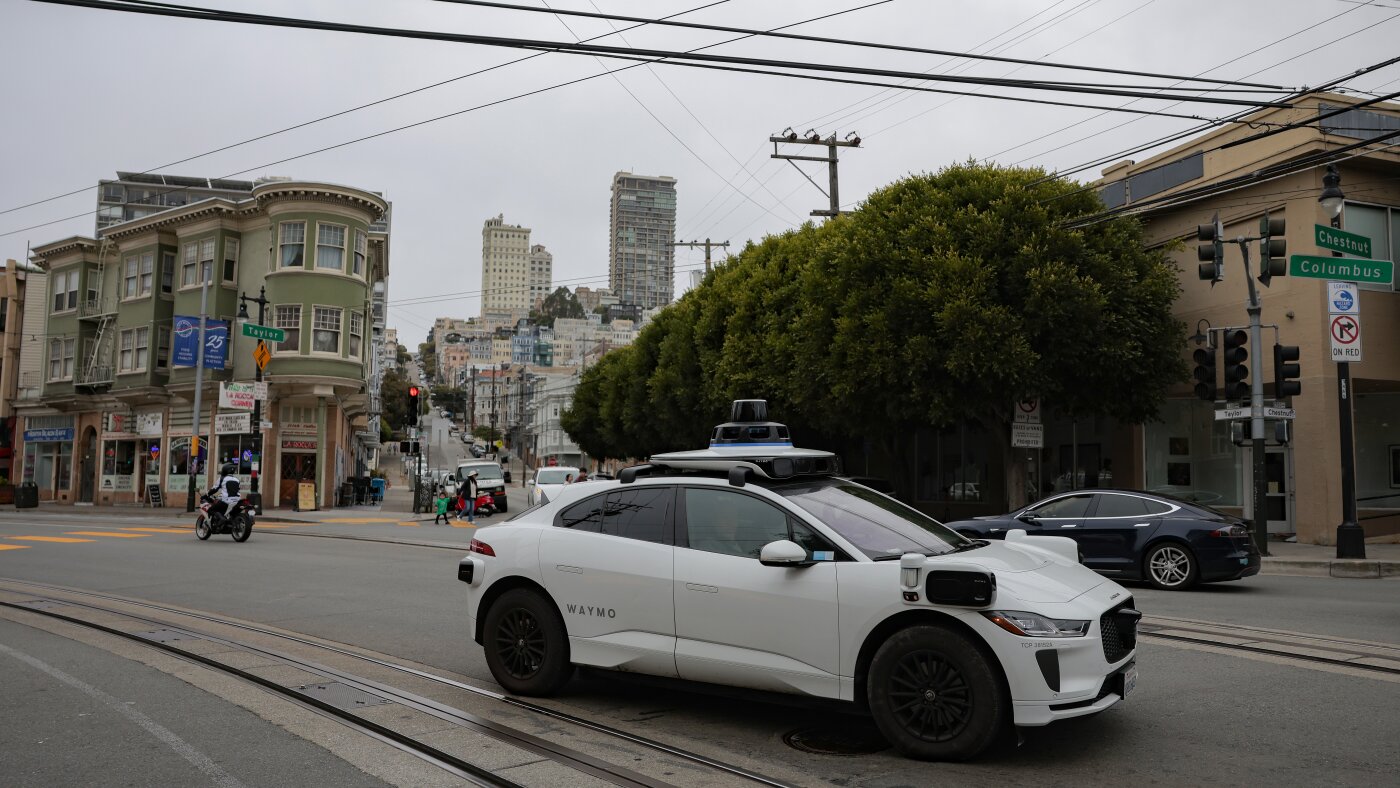
A Waymo robotaxi drives in San Francisco’s North Beach neighborhood this week.
Heather Diehl/Getty Images
hide caption
toggle caption
Heather Diehl/Getty Images
Police in San Mateo, Calif., posted Monday on social media that they had apprehended a pair of teenagers from a Waymo driverless robotaxi after the company alerted authorities to suspected criminal activity. It’s the latest incident involving video surveillance of passengers and others by autonomous vehicles — raising questions about the limits of privacy in such vehicles.

The Facebook post by the San Mateo County Police said: “Parents do you know where your teens are? @waymo does!”
The 15-year-olds were allegedly drinking alcohol and shooting toy guns from the car, according to the police. They said Waymo’s systems detected behavior that then triggered a safety response, after which the company disabled the vehicle and contacted police.
Waymo’s cars, equipped with an array of cameras, microphones and other sensors to monitor passengers and other nearby vehicles, are becoming more common in cities across the United States. Experts say the detention of the two teens in San Mateo highlights a potential — but not inevitable — trade-off between privacy and convenience. It also questions the extent to which companies similar to Waymo are required to hand over private data, including audio and video of passengers, in situations where a crime is suspected.
NPR reached out to Waymo, which is owned by Alphabet, the parent company of Google, for comment on the details of the San Mateo incident and how the company responded, but did not hear back. But on its website, the company says that as many as 29 cameras in its autonomous cars provide an all-around view and “are designed with high dynamic range and thermal stability, to see in both daylight and low-light conditions, and tackle more complex environments.”
“There already exist laws that govern duty to report or even duty to protect” for carriers such as Waymo, according to Alessandro Acquisti, a professor of information technology at the MIT Sloan School of Management. “The privacy problems arise when and if driverless carrier companies used such laws or ethical obligations as a pretext for blanket, indiscriminate accumulation of identifiable data for unspecified future purposes.”
That includes not just monitoring people inside the cars, but outside too. Take, for example, a hit-and-run investigation last year in Los Angeles. Media reported that the police inquiry was aided by video captured by a Waymo taxi that had a clear view of the crime. Critics suggested at the time that authorities were using the company’s vehicles as a mobile surveillance platform. And during 2025 protests in Los Angeles against Immigration and Customs Enforcement crackdowns, demonstrators vandalized Waymos, apparently angry that video recorded by the vehicles could be used by police, although there is no evidence that happened.
In a transparency report, Google says it received nearly 290,000 requests from governments worldwide in the first six months of 2025 for disclosure of user information across all its platforms, including Waymo. The company says that in more than 80% of the requests in those six months, some information was disclosed. “Google carefully reviews each request to make sure it satisfies applicable laws. If a request asks for too much information, we try to narrow it, and in some cases we object to producing any information at all,” the company says.
In an email to NPR, San Mateo Police Department spokesperson Jeanine Luna said that detaining the teens in the Waymo on Monday was “wholly appropriate” under the circumstances. “We received the call of a ‘firearm’ being shot from a moving vehicle,” she said. “Furthermore, the occupants were described as being possibly ‘intoxicated.’” she said.
“Being that the vehicle was disabled (the occupants had every right to exit the vehicle before police arrival, but they did not), a high-risk traffic stop was conducted to ensure the safety of all involved,” Luna added. “They were not arrested and were released to their parents, however, potential charges are still pending dependent on what the video from inside the vehicle shows.”
Autonomous taxis represent an ethical gray area
Robotaxis began to roll out across the U.S. in December 2018, when Waymo launched in Phoenix. These services have been used for less than a decade — so the norms surrounding them aren’t settled, experts agree.
The Facebook post may make Waymo passengers wonder what triggers a police intervention, says Irina Raicu, director of the Internet Ethics program at Santa Clara University. She has used Waymo’s driverless taxis and says ethically, the privacy issues surrounding them sit in a gray area. “There’s something about being in a car without another person that makes you think it’s private.”
“With all these recording devices, we don’t see them, [and] they’re not these obvious things being stuck in our faces,” Raicu adds.
That brings up a key issue: informed consent, Acquisti says.
“It is not clear the extent to which passengers … are reminded that when they step into the car, that they are being monitored, and most likely they are not told in its entirety how the data will be used,” he says.
Bruce Schneier, a cybersecurity and privacy expert and professor at the Munk School at the University of Toronto, believes that Waymo does have a compelling interest in protecting its vehicles. He compares monitoring a robotaxi via cameras to a human taxi driver keeping an eye on passengers in the rearview mirror.
“Maybe the driverless car comes back … and it has all of its cushions slashed, and it’s like, ‘Who the hell did that? Let’s go and look at the tape,’” Schneier suggests. “You can’t have sex in the back of a taxi, right? Someone would say, ‘Stop it.’”
He concludes that some supervision makes sense. In an Uber rideshare, he notes, “most of the time there’s a camera recording the back seat.” (Uber says on its website that it allows drivers to install such cameras for the purpose of “fulfilling transportation services.”)

Waymo robotaxis, while a fairly common sight in the San Francisco Bay Area, are still a novelty in much of the country. And many people are hesitant to ride in one, according to a Pew Research Center poll published this month. The survey found that only 5% of Americans had ever ridden in a driverless car. Meanwhile, 71% of those polled said they would feel uncomfortable in one, with only 7% saying they would be “extremely or very comfortable” riding in one.
For that reason, experts who spoke with NPR said they were optimistic that it’s not too late to shift gears on privacy norms and policies surrounding these vehicles.
Acquisti doesn’t see why privacy measures can’t be built into driverless vehicles.
“I would immediately challenge the notion that people have to be monitored,” he says, noting that privacy-preserving technologies exist and can be installed.
“Driverless cars are coming, but they don’t have to come in this particular incarnation,” Raicu says. “They’re still being designed and redesigned. It’s early days.”

Donald Trump has terminated the remaining members of the independent, federal commission that assists election administration officials nationwide just a few months before the midterm elections, multiple outlets reported Thursday.
The remaining three commissioners of the four-member bipartisan commission were forced out on Thursday in different ways. The one Republican appointee resigned and the other two, Democratic appointees were notified of their terminations via email from the White House presidential personnel office.
“On behalf of President Donald J Trump, I am writing to inform you that your position as Commissioner of the Election Assistance Commission is terminated, effective immediately. Thank you for your service,” the email, seen by Reuters, said.
The White House did not immediately respond to a request for comment.
The Election Assistance Commission serves as a “national clearinghouse of information on election administration”, accredits testing laboratories and certifies voting systems, and maintains the national mail-voter registration form developed by the National Voter Registration Act of 1993, according to the commission’s website. The terminations follow Trump and top administration officials’ advocacy to change vote-by-mail requirements and investigations into the 2020 election outcome, which Trump lost to Democrat Joe Biden.
“It is irresponsible and dangerous that this Administration remains dead set on causing chaos for our election officials across this country,” Arizona secretary of state Adrian Fontes said in a Thursday statement. “This move undermines the integrity of nonpartisan election administration.”
The 2002 law that established the commission, the Help America Vote Act, states the president can appoint replacements to the commission.
It is unclear how Trump will move ahead with the commission.
Reuters contributed reporting
-

 New York33 minutes ago
How ‘The Wire’ Star Jamie Hector Spends a Hot Day in Brooklyn
-

 Los Angeles, Ca36 minutes ago
Burglars ransack Sherman Oaks condo building during fumigation
-

 Detroit, MI56 minutes ago
Metro Detroit weather forecast, July 10, 2026 — 11 p.m. Update
-

 San Francisco, CA1 hour ago
Classical music series helps reconnect downtown San Francisco community
-

 Dallas, TX1 hour ago
Dallas police officers, paramedics recall saving woman stuck in a ravine for days;
-

 Boston, MA1 hour ago
Red Sox win 7th straight game just hours after landing in New York
-
 Denver, CO1 hour ago
One tree at a time: Denver nonprofit works to close shade gap as heat dome threatens neighborhoods
-

 Seattle, WA2 hours ago
VIDEO: West Seattle Summer Fest 2026 day 1, evening report

