Connect with us

News

Germany’s Olaf Scholz defies odds as party swings behind re-election bid

Published

on

Germany’s Olaf Scholz defies odds as party swings behind re-election bid

Olaf Scholz has just pulled the plug on his coalition and lost his parliamentary majority, with polls suggesting his party will be defeated in Germany’s upcoming snap election. Yet he still looks likely to be crowned as his party’s candidate for chancellor.

The government crisis that culminated last week with Scholz calling time on the three-party alliance plunged Germany into a new phase of turbulence. But Social Democrat leaders have rallied round him, steadying his status in a party that long nurtured doubts about their chancellor.

Some Social Democrats would still prefer to see him replaced on the ballot by Boris Pistorius, the popular defence minister. But they are the minority. Most expect an SPD congress to be held in the coming weeks to anoint Scholz as the party’s Kanzlerkandidat — regardless of his approval ratings.

The support for Scholz was on full display at an emotional meeting of the SPD parliamentary group last week when he was given a standing ovation by MPs.

Jens Spahn, an MP for the opposition Christian Democrats (CDU) and a former health minister, described the scene as “surreal”.

Advertisement

“Here is Olaf Scholz, a failed chancellor, his coalition has just broken down, he’s sacked his finance minister and his SPD thinks it’s a cause for celebration?” Spahn told the Financial Times.

The incredulity in opposition ranks increased after a television interview with Scholz on Sunday evening in which he refused to admit mistakes and, in the view of some commentators, came across as cold and unsympathetic.

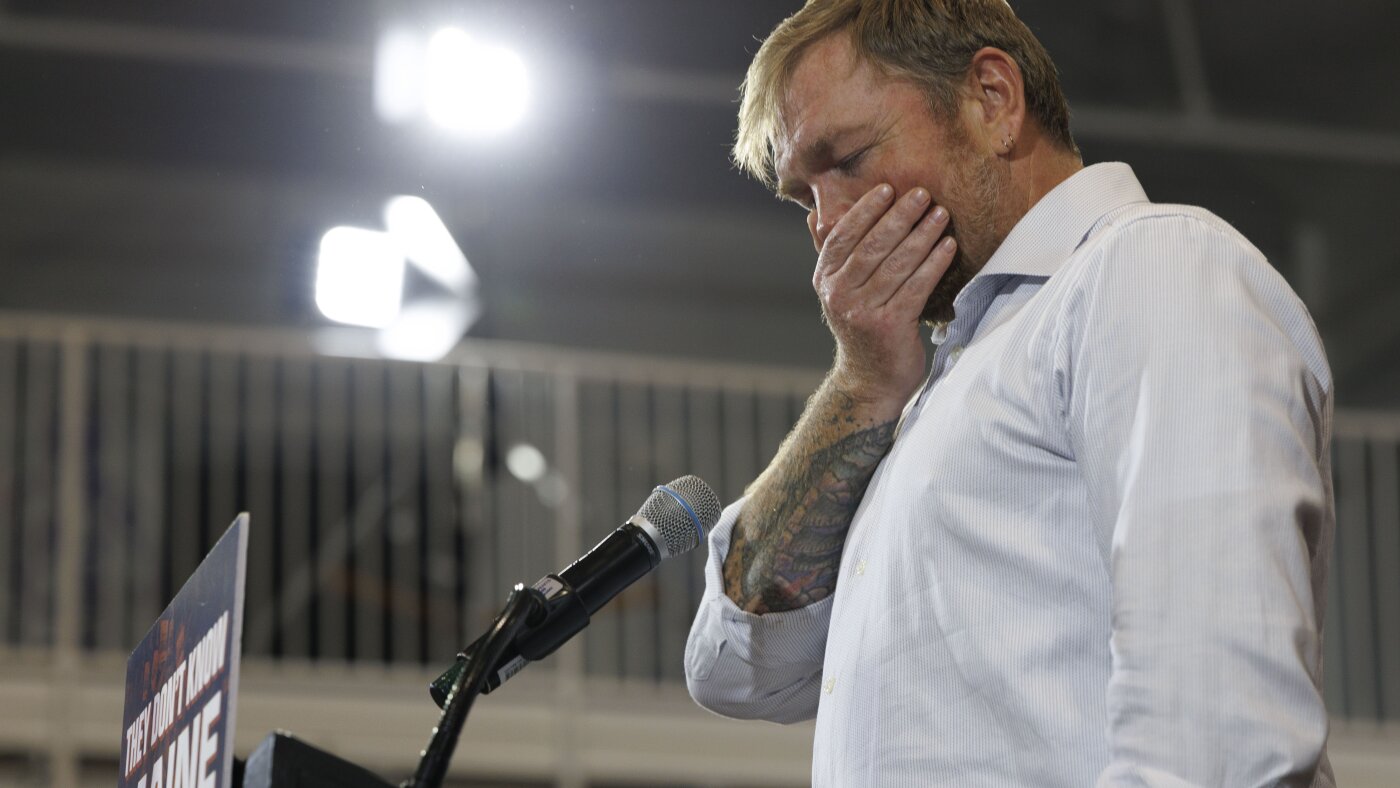
Some have openly questioned why the party still backs Scholz. TV presenter Micky Beisenherz compared him to Bruce Willis in the film The Sixth Sense. He “goes to work every day even though he’s long dead,” he wrote on X. “He just doesn’t know it yet.”

Just months ago, Scholz’s position was precarious. Some in the SPD blamed him for the party’s slump in support, with polls putting it at between 14 and 16 per cent over the past year, way behind the CDU on 30 to 32 per cent.

Many Social Democrats wonder whether they would be better off fielding defence minister Boris Pistorius © Bernd von Jutrczenka/dpa

But Scholz’s standing among some of his party colleagues has paradoxically improved since the government’s collapse. They have hailed him as a hero who finally lanced the boil, ending a dysfunctional government riven by ideological conflict.

Advertisement

For them, the sacking of finance minister Christian Lindner, leader of the pro-business Free Democrats (FDP), was the inevitable climax of months of provocation.

“There is relief that we will no longer be subjected to endless humiliation by Lindner and the FDP,” said one SPD MP.

Scholz said he fired Lindner because he refused to suspend the “debt brake” — Germany’s constitutional cap on new borrowing — to allow for more funding for Ukraine. The issue has taken on greater urgency since US voters re-elected Donald Trump, who has questioned western aid to Kyiv.

The dismissal played well in the SPD’s grassroots. “It was a kind of liberation — long overdue,” said Dirk Smaczny, head of the party’s local branch in Rheinhausen-Mitte, near the Ruhr industrial city of Duisburg. “We’ve been waiting a long time for Scholz to show strong leadership, and he finally delivered it.”

“He could have said ‘let’s just muddle through another year’,” said Johannes Fechner, a senior SPD MP. “The fact he accepted that the country needed a new government, even though it might mean he’ll lose his job — the SPD rank-and-file really respect him for that.”

Advertisement

Yet Scholz remains controversial in the party. Closely associated with the labour market reforms of chancellor Gerhard Schröder in the early 2000s that alienated working-class voters, he lost his bid for the party leadership in 2019 in a humiliating defeat.

He staged a remarkable comeback two years later, running for chancellor in 2021 and winning the election. He then brought together the SPD, FDP and Greens in a coalition that was unique in Germany’s history.

But his record has been clouded by countless internal rows over economic policy that he tried — and ultimately failed — to mediate. Scholz has seen the worst approval ratings of any postwar chancellor.

On Monday two SPD politicians from the chancellor’s home town of Hamburg, Markus Schreiber and Tim Stoberock, said he should make way for the defence minister.

“Our chances of winning the election or at least performing a lot better are much greater with [Pistorius], who has long been Germany’s most popular politician,” they wrote on Instagram.

Advertisement

Scholz spent too much time cobbling together compromises “in technocratic language” which were then rejected by his coalition partners. “We believe the negative image the people in this country have of him can no longer be repaired,” they wrote.

Privately, some SPD lawmakers agreed that Pistorius might be a better bet. “But politics doesn’t work like that,” said one. “Scholz’s huge strategic advantage is that he holds the reins of power. He’s the one who took this step. He’s the one who announced early elections. That gives him a certain strength.”

Scholz has shown no inclination to stand aside — nor does he intend to put his candidacy to a party vote.

His spokesperson Steffen Hebestreit on Monday defended the absence of a formal selection process, saying there was no need — and also no time.

“First of all, he’s the natural candidate because he’s chancellor,” he told reporters. “Secondly, look at the clock . . . We’re going to have snap elections quite soon, if he loses the confidence vote. We all need to focus on that right now, and you can understand why.”

Advertisement

Observers said that approach made sense, especially in light of what just happened in the US.

Wolfgang Schroeder, a political scientist at Kassel University, noted that the Democrats had hoped to improve their fortunes by substituting Joe Biden for Kamala Harris just months before the election.

“It injected some momentum, but it didn’t turn out to be long-lasting or effective,” he said. “For that reason I would advise the SPD against carrying out any grand experiments right now.”

MPs from the opposition CDU say that suits them, predicting that Scholz will be soundly beaten by their leader Friedrich Merz. “Olaf Scholz is the face of failure,” said CDU’s Spahn. “As such, we couldn’t wish for a better opponent.”

Advertisement

News

Amazon accused of listing products from independent shops without permission

Published

on

Amazon accused of listing products from independent shops without permission

Unlock the Editor’s Digest for free

Amazon has been accused of listing products from independent retailers without their consent, even as the ecommerce giant sues start-up Perplexity over its AI software shopping without permission.

The $2.5tn online retailer has listed some independent shops’ full inventory on its platform without seeking permission, four business owners told the Financial Times, enabling customers to shop through Amazon rather than buy directly.

Two independent retailers told the FT that they had also received orders for products that were either out of stock or were mispriced and mislabelled by Amazon leading to customer complaints.

Advertisement

“Nobody opted into this,” said Angie Chua, owner of Bobo Design Studio, a stationery store based in Los Angeles.

Tech companies are experimenting with artificial intelligence “agents” that can perform tasks like shopping autonomously based on user instructions.

Amazon has blocked agents from Anthropic, Google, OpenAI and a host of other AI start-ups from its website.

It filed a lawsuit in November against Perplexity, whose Comet browser was making purchases on Amazon on behalf of users, alleging that the company’s actions risked undermining user privacy and violated its terms of service.

In its complaint, Amazon said Perplexity had taken steps “without prior notice to Amazon and without authorisation” and that it degraded a customer shopping experience it had invested in over several decades.

Advertisement

Perplexity in a statement at the time said that the lawsuit was a “bully tactic” aimed at scaring “disruptive companies like Perplexity” from improving customers’ experience.

The recent complaints against Amazon relate to its “Buy for Me” function, launched last April, which lets some customers purchase items that are not listed with Amazon but on other retailers’ sites.

Retailers said Amazon did not seek their permission before sending them orders that were placed on the ecommerce site. They do not receive the user’s email address or other information that might be helpful for generating future sales, several sellers told the FT.

“We consciously avoid Amazon because our business is rooted in community and building a relationship with customers,” Chua said. “I don’t know who these customers are.”

Several of the independent retailers said Amazon’s move had led to poor experiences for customers, or hurt their business.

Advertisement

Sarah Hitchcock Burzio, the owner of Hitchcock Paper Co. in Virginia, said that Amazon had mislabelled items leading to a surge in orders as customers believed they were receiving more expensive versions of a product at a much lower price.

“There were no guardrails set up so when there were issues there was nobody I could go to,” she said.

Product returns and complaints for the “Buy for Me” function are handled by sellers rather than Amazon, even when errors are produced by the Seattle-based group.

Amazon enables sellers to opt out of the service by contacting the company on a specific email address.

Amazon said: “Shop Direct and Buy for Me are programmes we’re testing that help customers discover brands and products not currently sold in Amazon’s store, while helping businesses reach new customers and drive incremental sales.

Advertisement

“We have received positive feedback on these programmes. Businesses can opt out at any time.”

Continue Reading

News

Trump says Venezuela will turn over 30 million to 50 million barrels of oil to US | CNN Business

Published

on

Trump says Venezuela will turn over 30 million to 50 million barrels of oil to US | CNN Business

President Donald Trump said Tuesday night that Venezuela will turn over 30 million to 50 million barrels of oil to the United States, to be sold at market value and with the proceeds controlled by the US.

Interim authorities in Venezuela will turn over “sanctioned oil” Trump said on Truth Social.

The US will use the proceeds “to benefit the people of Venezuela and the United States!” he wrote.

Energy Secretary Chris Wright has been directed to “execute this plan, immediately,” and the barrels “will be taken by storage ships, and brought directly to unloading docks in the United States.”

CNN has reached out to the White House for more information.

Advertisement

A senior administration official, speaking under condition of anonymity, told CNN that the oil has already been produced and put in barrels. The majority of it is currently on boats and will now go to US facilities in the Gulf to be refined.

Although 30 to 50 million barrels of oil sounds like a lot, the United States consumed just over 20 million barrels of oil per day over the past month.

That amount may lower oil prices a bit, but it probably won’t lower Americans’ gas prices that much: Former President Joe Biden released about four to six times as much — 180 million barrels of oil — from the US Strategic Petroleum Reserve in 2022, which lowered gas prices by only between 13 cents and 31 cents a gallon over the course of four months, according to a Treasury Department analysis.

US oil fell about $1 a barrel, or just under 2%, to $56, immediately after Trump made his announcement on Truth Social.

Selling up to 50 million barrels could raise quite a bit of revenue: Venezuelan oil is currently trading at $55 per barrel, so if the United States can find buyers willing to pay market price, it could raise between $1.65 billion and $2.75 billion from the sale.

Advertisement

Venezuela has built up significant stockpiles of crude over since the United States began its oil embargo late last year. But handing over that much oil to the United States may deplete Venezuela’s own oil reserves.

The oil is almost certainly coming from both its onshore storage and some of the seized tankers that were transporting oil: The country has about 48 million barrels of storage capacity and was nearly full, according to Phil Flynn, senior market analyst at the Price Futures Group. The tankers were transporting about 15 million to 22 million barrels of oil, according to industry estimates.

It’s unclear over what time period Venezuela will hand over the oil to the United States.

The senior administration official said the transfer would happen quickly because Venezuela’s crude is very heavy, which means it can’t be stored for long.

But crude does not go bad if it is not refined in a certain amount of time, said Andrew Lipow, the president of Lipow Oil Associates, in a note. “It has sat underground for hundreds of millions of years. In fact, much of the oil in the Strategic Petroleum Reserve has been around for decades,” he wrote.

Advertisement
Continue Reading

News

Video: Nvidia Shows Off New A.I. Chip at CES

Published

on

Video: Nvidia Shows Off New A.I. Chip at CES

new video loaded: Nvidia Shows Off New A.I. Chip at CES

transcript

transcript

Nvidia Shows Off New A.I. Chip at CES

At the annual tech conference, CES, Nvidia showed off a new A.I. chip, known as Vera Rubin, which is more efficient and powerful than previous generations of chips.

This is the Vera CPU. This is one CPU. This is groundbreaking work. I would not be surprised if the industry would like us to make this format and this structure an industry standard in the future. Today, we’re announcing Alpamayo, the world’s first thinking, reasoning autonomous vehicle A.I.

Advertisement
At the annual tech conference, CES, Nvidia showed off a new A.I. chip, known as Vera Rubin, which is more efficient and powerful than previous generations of chips.

By Jiawei Wang

January 6, 2026

Continue Reading

Trending