Connect with us

News

Analysis: Hegseth is still standing, but hasn’t yet saved his Pentagon bid | CNN Politics

Published

on

Analysis: Hegseth is still standing, but hasn’t yet saved his Pentagon bid | CNN Politics


CNN
 — 

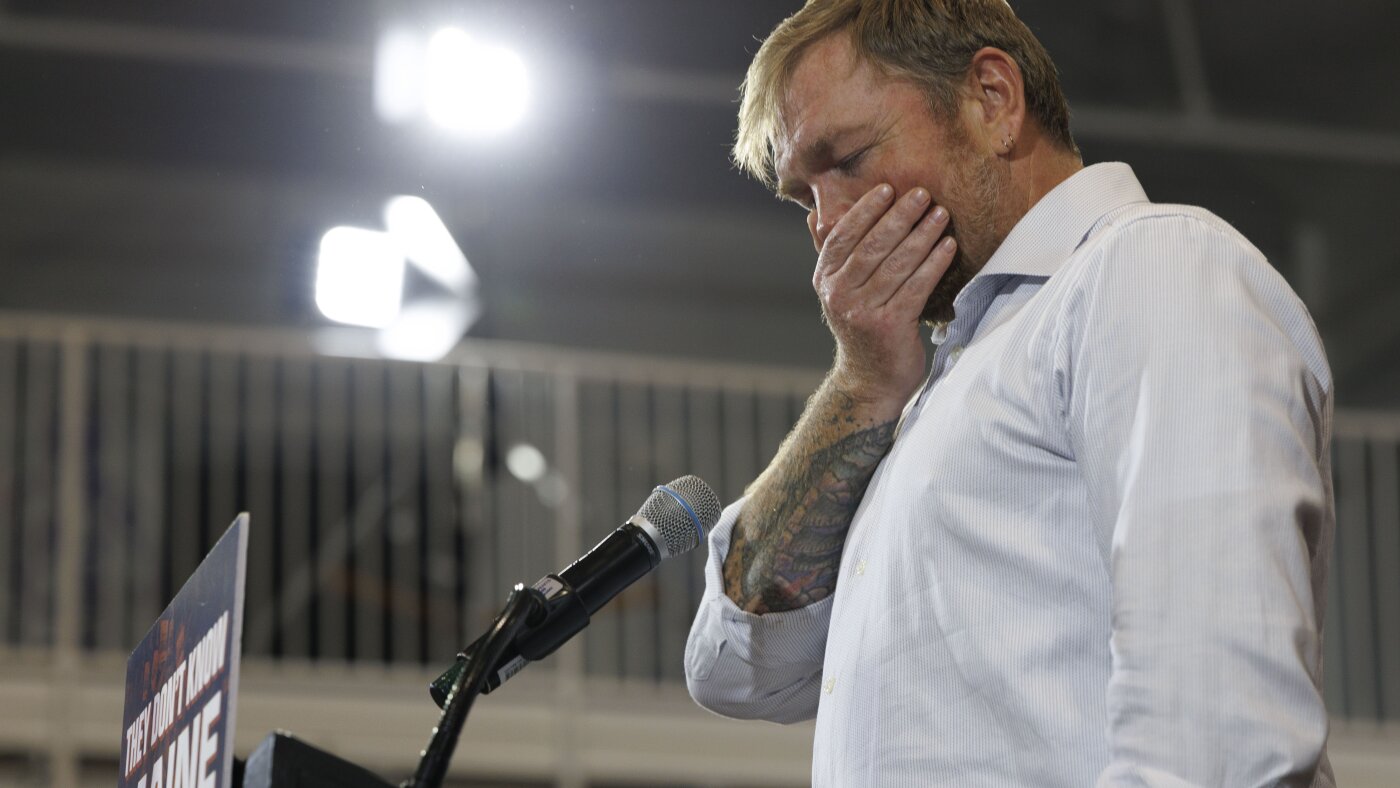
Pete Hegseth’s bid to lead the Pentagon is stuck in limbo, as he fiercely battles allegations of drinking and sexual misconduct and can’t be sure if President-elect Donald Trump really has his back.

A top Trump transition source had described Wednesday as “absolutely critical” for the former Fox News anchor’s confirmation hopes. And Hegseth threw himself into his task, meeting Republican senators, offering to quit alcohol if he’s confirmed, and mounting fiery rearguards on the Megyn Kelly radio show and in a Wall Street Journal op-ed.

Yet his position seems as tenuous Thursday morning as it was 24 hours earlier.

  • The most important meeting on Hegseth’s schedule was with Iowa Sen. Joni Ernst, a combat veteran, campaigner against sexual harassment in the military and a possible replacement pick for defense secretary if he falls short. Hegseth failed to emerge from the conversation with a public endorsement from the GOP senator. “I appreciate Pete Hegseth’s service to our country, something we both share,” she said in a post on X that was most notable for what was not said. “Today, as part of the confirmation process, we had a frank and thorough conversation.”
  • Hegseth, who has more Capitol Hill meetings Thursday, is due to meet two other key Republican senators, Maine’s Susan Collins and Alaska’s Lisa Murkowski, next week. Murkowski said Wednesday she’d “absolutely” ask him about allegations about his conduct and his opposition to women serving in combat roles in the military.
  • Hegseth told Kelly on Sirius XM that he spoke to Trump Wednesday morning and that the president-elect had told him, “’Hey Pete, I got your back. It’s a fight. They’re coming after you, get after it.’” He added that Trump said, “‘You go meet those senators and I’ve got your back.’” Hegseth concluded: “It means a lot to me. It tells you who that guy is.”
  • Hegseth’s lawyer, Tim Parlatore, told CNN’s Jake Tapper that his client “can’t wait” to undergo an FBI background check, which he said “is going to exonerate him of the vast majority of these claims.”
  • Yet Trump did not make a public, on-the-record endorsement of Hegseth on Wednesday as his team at Mar-a-Lago closely watched the defense pick’s day of meetings with key senators. A source told CNN that the president-elect and Ron DeSantis have discussed the Florida governor taking the role, suggesting that Trump may already have a Plan B in mind.
  • Hegseth’s more aggressive us-versus-them strategy also came into view on Wednesday as he styled himself with the same “warrior” spirit that he once showed on the battlefield. He characterized his troubles as purely the result of a “ridiculous” narrative by “legacy media.” He told Kelly, “It’s our turn, it’s our time, to stand up and tell the truth, and our side.”

But Sen. Josh Hawley summed up the doubts surrounding the Hegseth pick when he said he didn’t know if the selection should be withdrawn. The Missouri Republican said he’d support whomever Trump wanted in his Cabinet but added: “It’s not 100% clear who he wants as secretary of defense right now.”

Hegseth, an Iraq and Afghanistan war veteran, can afford to lose no more than three Republican senators and still be confirmed in the Senate, assuming all Democrats vote against. So, his window was narrow to begin with. And it’s hardly being helped by uncertainty over how much political capital Trump is willing to spend to see him confirmed.

Advertisement

But Sen. Markwayne Mullin said he’d spoken to both Trump and Hegseth and that the president-elect was still committed to his pick.

“They are still both all in the fight,” the Oklahoma Republican told CNN’s Kaitlan Collins on “The Source.”

“President Trump personally told me he wants to see Pete get confirmed and I think there’s a … path to get there. It may be a little narrow, but I believe we can get him confirmed,” he added.

The reticence of some senators to throw full public support behind Hegseth may be a hint that while they would prefer not to break with the president-elect early, they might also be keen to avoid a hearing that could turn into a public circus around the time of the inauguration.

One of Hegseth’s meetings on Wednesday was with West Virginia Sen. Shelley Moore Capito, who said she’d gotten into his “personal issues” and that their chat went well. But she said she has not yet decided whether she will vote to confirm him.

Advertisement

Growing talk about Ernst and DeSantis as possible replacements may also be bad news for Hegseth, because it’s likely that some senators will view the Iowa senator and Florida governor as potentially superior defense secretaries. A number of Republican senators have told reporters they hold Ernst in high regard. And she and DeSantis would have a far clearer path to confirmation than Hegseth. Still, it’s not clear whether Ernst would fit Trump’s bill for an ultra-loyalist who’d do whatever he wants at the Pentagon or whether the president-elect would be willing to elevate a former primary rival with whom he traded sharp words.

Connecticut Democratic Sen. Richard Blumenthal might not be a disinterested observer, but he suggested on Wednesday that the Hegseth nomination was already doomed. “I’ve talked to 5 to 10 Republicans who have said to me they’re just waiting for the right moment to say no to Pete Hegseth,” Blumenthal, who sits on the Armed Services Committee, told reporters.

Among the issues clouding Hegseth’s candidacy is a sexual assault allegation from 2017 — which he has denied, claiming the encounter was consensual, and in which no charges were filed.

The question of Hegseth’s alcohol use, which could be a concern given the grave responsibilities of the secretary of defense, was underscored by reporting from The New Yorker over the weekend about his tenure leading veterans’ advocacy groups. Other reports have also emerged about Hegseth’s conduct while employed at Fox News.

On Kelly’s radio show, he addressed reports of excessive drinking, complained that many of the allegations were made anonymously and suggested that some people in the Pentagon didn’t want him to get the job. “I’ve never had a drinking problem. I don’t – no one’s ever approached me and said, ‘Oh, you should really look at getting help,’” Hegseth told Kelly. He said that, like other service personnel who came home from wars, he had had some beers. “You know, how do you deal with the demons you’ve seen on the battlefield? Sometimes it’s with a bottle.” But he said that his wife Jennifer and embracing Christianity had saved his life and that he was now changed. Moreover, Hegseth said that he would treat serving as the secretary of defense like being sent to a war zone where alcohol was not allowed. “This is the biggest deployment of my life, and there won’t be a drop of alcohol on my lips while I’m doing it.”

Advertisement

Hegseth’s vow of temperance was welcomed by North Dakota Sen. Kevin Cramer, one of several Republican senators who have said that Trump’s pick would have to answer questions about allegations against him. “The drinking thing is a pretty significant issue – whether you have a problem or don’t have a problem, or you think you have a problem, or you think you don’t have a problem,” Cramer said. “And he said, ‘My commitment is to not touch alcohol while I’d have this position.’” Given that undertaking, Cramer said that he would be ready to give him the benefit of the doubt and put Hegseth before the Armed Services Committee and signaled he may be ready to eventually support his confirmation.

Hegseth’s chances hinge on winning over more senators like Cramer, which may require lowering the heat around his candidacy. Any fresh allegations against him might begin to throw his prospects even more into question. And while he says he has Trump’s support now, there’s no guarantee that he can retain it if he becomes even more of a distraction from the president-elect’s efforts to fill out his government.

Ironically, any new revelations about some of Trump’s other provocative choices — like Tulsi Gabbard for director of national intelligence or Robert F. Kennedy Jr. for the Health and Human Services Department – could help Hegseth return to the shadows and might help his aspirations. Gabbard and Kennedy have so far largely avoided the scrutiny that’s confronted Hegseth and Trump’s short-lived first pick for attorney general, former Florida Rep. Matt Gaetz.

The president-elect is notoriously prone to change his mind about candidates — one reason why talk of his interest in DeSantis for the defense job should be taken with appropriate caution.

Still, sources told CNN that the Florida governor and former US military lawyer would be interested in the position if asked. On the face of it, DeSantis would be a popular choice among Republicans, and he has the experience of running a massive government in Florida that could help prepare him for the task of leading the Pentagon bureaucracy. DeSantis also has the kind of culture war credentials that Trump wants for the Pentagon; he built his political brand partly on attacking diversity and inclusion programs, for example.

Advertisement

Swapping Florida for the Pentagon in Virginia could make smart political sense for DeSantis, as it would give him vital national security experience that could lift any future presidential campaign. If he were chosen, it would set up a fascinating triumvirate of at least three potential future primary foes — along with Vice President-elect JD Vance and secretary of state pick Marco Rubio — in Trump’s administration.

Still, DeSantis was scathing about Trump during their primary duel and was especially acerbic about the president-elect’s refusal to take part in the Republican debates. He suggested that Trump had “lost the zip” on his “fastball” and said that he’d be a far more effective implementor of MAGA policies. Unlike Rubio, who has had eight years to leaven his campaign trail critiques of Trump with praise, DeSantis’ insults may be far fresher in the president-elect’s mind.

News

Lawmakers split over Maduro’s seizure. And, CDC cuts childhood vaccine schedule

Published

on

Lawmakers split over Maduro’s seizure. And, CDC cuts childhood vaccine schedule

Good morning. You’re reading the Up First newsletter. Subscribe here to get it delivered to your inbox, and listen to the Up First podcast for all the news you need to start your day.

Today’s top stories

Ousted Venezuelan President Nicolás Maduro and his wife, Cilia Flores, pleaded not guilty yesterday to federal charges, which include narco-terrorism. U.S. military forces seized them both from their country over the weekend. Yesterday marked their first appearance in a federal court in New York.

Protesters express their anger toward ousted Venezuelan leader Nicolás Maduro and fly the Venezuelan flag outside the Daniel Patrick Moynihan United States Courthouse in New York City on Monday.

José A. Alvarado Jr. for NPR


hide caption

Advertisement

toggle caption

José A. Alvarado Jr. for NPR

  • 🎧 Before sitting down in court, Maduro made eye contact with reporters and wished them a “Happy New Year,” NPR’s Jasmine Garsd, who was in the courtroom, tells Up First. Flores walked in behind him and appeared to have a swollen eye and a bandaged forehead, which her lawyers explained came from her getting hurt during her capture. Outside the courthouse were heated exchanges between two groups of protesters: those who were against America’s intervention in Venezuela and Venezuelans celebrating Maduro’s capture. A man named Izzy McCabe says the capture is a ploy to take oil and foreign resources from Venezuela. Another protester, Maria Seu, said many countries have been living off Venezuela’s resources for years.

President Trump is set to meet with House Republicans at the Kennedy Center today as lawmakers call for more information on the operation in Venezuela and the U.S. role there moving forward. The meeting comes a day after top administration officials briefed Capitol Hill leaders on Maduro’s capture, leaving a largely partisan divide on the operation. Lawmakers questioned Trump’s decision not to inform Congress before carrying out the weekend seizure. Democrats say the action, which the White House is calling a law enforcement operation, is an act of war. Meanwhile, Republicans have largely aligned with the president’s stance on the situation.

  • 🎧 Democrats say the operation is just the latest example of the White House circumventing Congress, NPR’s Barbara Sprunt says. House Speaker Mike Johnson said Trump has the authority to deploy military forces to address threats to the U.S. When the president has joined meetings like the one he is expected to attend today in the past, it has become almost like a rally. Sprunt says she expects the same again today. The party is gearing up for the midterm elections, which means Venezuela will likely not be the only topic discussed.

The Centers for Disease Control and Prevention is reducing its number of recommended childhood vaccines from 17 to 11. The agency’s new schedule, which includes vaccines that had previously been recommended for all children — such as those for rotavirus, hepatitis A and B, meningitis and seasonal flu — is now more restrictive. The agency made these changes in response to a memo Trump issued in December directing health officials to align the U.S. schedule with those in “peer, developed countries” such as Germany and Japan.

  • 🎧 The new restrictions will lead to fewer children getting vaccinated, with consequences that could be seen for years down the line, Dr. Sean O’Leary, with the American Academy of Pediatrics, tells NPR’s Pien Huang. The agency implemented these changes without any new scientific developments behind them, Huang notes. The agency sidestepped its own advisory committee and didn’t consult vaccine makers.

Today’s listen

seasonal depression WIDE.jpg

Does the lack of winter sunlight drain your energy, or do you struggle to keep up with life’s demands during this season? If so, you may be experiencing seasonal affective disorder, or SAD. In this episode of It’s Been A Minute, host Brittany Luse shares the morning routine she developed for herself to combat this type of depression. She is also joined by Dr. Norman E. Rosenthal, a psychiatrist and scientist who first described seasonal affective disorder in the 1980s, to receive feedback on her SAD routine and learn about how we can all think differently about the rough winter months.

Advertisement

Special series

chapter-2.png

Trump has tried to bury the truth of what happened on Jan. 6, 2021. NPR built a visual archive of the attack on the Capitol, showing exactly what happened through the lenses of the people who were there. In “Chapter 2: Stop the Steal,” we look at how false claims of a stolen election mobilized Trump supporters.

On election night in 2020, Trump claimed victory and said the election was being stolen long before officials declared a winner. He and his allies launched the “Stop the Steal” movement almost immediately, even as U.S. courts rejected the widespread claims of election fraud. Trump campaign officials also admitted they found no evidence that could have changed the outcome of the election. Right-wing activists such as Infowars host Alex Jones and the white nationalist and Holocaust denier Nick Fuentes mobilized the movement. On the day that Congress was set to meet to certify the election, Trump pressured Vice President Mike Pence and Republicans in Congress to try to reject Biden’s victory. These videos highlight the movement that led to Jan. 6, 2021.

To learn more, explore NPR’s database of federal criminal cases from Jan. 6. You can also see more of NPR’s reporting on the topic, including an Instagram post debunking myths about looting.

3 things to know before you go

A pill form of Wegovy, the popular obesity drug previously available only by injection, is seen in a plastic tray.

A pill form of Wegovy, the popular obesity drug previously available only by injection, is now being stocked by pharmacies.

Novo Nordisk


hide caption

Advertisement

toggle caption

Novo Nordisk

  1. Pharmacies across the U.S. began stocking the pill version of the popular obesity drug Wegovy yesterday, offering patients an alternative to the injectable form.
  2. Minnesota Gov. Tim Walz ended his bid for a third term yesterday, saying that he wants to dedicate his final year in office to combating fraud in state programs rather than campaigning. (via MPR)
  3. Wegmans says it is using facial recognition technology in a handful of stores across multiple states to help identify people “previously flagged for misconduct.” (via WXXI)

This newsletter was edited by Suzanne Nuyen.

Advertisement
Continue Reading

News

US oil refiners gear up for comeback of Venezuelan crude

Published

on

US oil refiners gear up for comeback of Venezuelan crude

Unlock the White House Watch newsletter for free

US refiners are braced for a surge in Venezuelan crude that would make them early winners of President Donald Trump’s extraordinary plans for an energy-led regime change in Caracas.

Shares in America’s top refining groups jumped on Monday as traders bet their US Gulf Coast operations could snap up big volumes of Venezuelan heavy crude as Washington looks to ease sanctions and revive production.

Valero, the biggest US importer of Venezuelan crude, closed 9 per cent higher. Phillips 66 added 7 per cent and Marathon Petroleum 6 per cent. 

Advertisement

Some content could not load. Check your internet connection or browser settings.

“Our refineries in the Gulf Coast of the United States are the best in terms of refining the heavy crude,” said US secretary of state Marco Rubio on Sunday. “I think there will be tremendous demand and interest from private industry if given the space to do it.”

Trump this weekend touted the “tremendous amount of wealth” that could be generated by American oil companies returning to Venezuela’s oil sector after US forces captured President Nicolás Maduro and transported him to the US to face trial on drug-trafficking charges. 

That has sparked a burst of interest among energy investors keen to return to Venezuela — home to the biggest oil reserves in the world — decades after expropriations by Caracas led most to abandon the country. 

A flurry of executives was expected to arrive in Miami on Tuesday, where US energy secretary Chris Wright will pitch the benefits of channelling billions of dollars into reviving Venezuelan oil output, which has fallen from 3.7mn barrels a day in 1970 to less than 1mn b/d today as a result of chronic mismanagement, corruption and sanctions. 

Advertisement

While any investment by US companies in rejuvenating Venezuelan oil production could take time, Gulf Coast refiners are well positioned to hoover up crude shipments as soon as sanctions are eased and more import permits are granted, something analysts say could happen quickly. 

Some content could not load. Check your internet connection or browser settings.

“Near-term, Gulf Coast refiners could be among the biggest winners of shifts that could occur here,” said Dylan White, principal analyst for North American crude markets at consultancy Wood Mackenzie. 

“The investment side of the coin in Venezuela is much more slow moving. It’s turning a very slow ship and it involves high-level decisions from a number of companies,” he said. “[But] sanctions policy changing in the US could change the economic benefits for US Gulf Coast refiners tomorrow.”

American refiners and traders import about 100,000-200,000 b/d of Venezuelan crude, down from 1.4mn b/d in 1997. Under current US sanctions, Chevron is the only American producer allowed to operate in the country and imports of Venezuelan crude are heavily restricted.

As much as 80 per cent of Venezuelan exports had been bound for China before the US imposed a naval embargo last month. Much of that could be quickly rerouted to the US if sanctions were lifted.

Advertisement

“The natural proximal home for a lot of those Venezuelan heavy barrels would be the refining complex of the US Gulf Coast,” said Clayton Seigle, senior fellow at the Center for Strategic and International Studies, adding that the fact that the facilities were equipped to process Venezuelan heavy oil could explain “some of the short-term stock market reactions that we observed”.

Valero, Philips 66 and Marathon did not respond to requests for comment on their plans.

US refineries were largely set up before the shale revolution made America the world’s biggest oil producer. Almost 70 per cent of US refining capacity is designed primarily to handle the heavy grades common in Venezuela, Canada and Mexico rather than the light, sweet variety found in Texas oilfields, according to the American Fuel and Petrochemical Manufacturers.

Consultancy S&P Global Energy estimates that from 1990 to 2010, US refiners spent about $100bn on heavy crude processing capabilities, just before the fracking boom sent American production soaring.

“This finally gets some of the [return on investment] back,” said Debnil Chowdhury, Americas head of refining and marketing at S&P, of the potential for a return to significant imports of Venezuelan heavy oil.

Advertisement

“We had a system that was kind of running de-optimised for the last 10-15 years. And this allows it to get a little bit closer to what it was designed for — which means slightly higher yields, higher margins.

“You get to basically use your asset more how it was designed because you’re getting the feedstock it was designed for.”

Data visualisation by Eva Xiao in New York

Continue Reading

News

Maduro seized, norms tested: Security Council divided as Venezuela crisis deepens

Published

on

Maduro seized, norms tested: Security Council divided as Venezuela crisis deepens

Why it matters: Council members are split over whether Washington’s move upholds accountability – or undermines a foundational principle of international order.  

Some delegations argue the action was exceptional and justified; others warn it risks normalising unilateral force and eroding state sovereignty.

Setting the tone, the UN Secretary-General cautioned that international peace and security rest on all Member States adhering to the UN Charter – language that framed a debate likely to expose deep and lasting divisions inside the chamber in New York – all as the Venezuelan leader appeared in a downtown federal courtroom just a few miles away.

US Ambassador Michael Waltz addresses the Security Council.

US: Law-enforcement operation, not war

The United States rejected characterisations of its actions as military aggression, describing the operation as a targeted law enforcement measure facilitated by the military to arrest an indicted fugitive.

Advertisement

Ambassador Michael Waltz said:

  • Nicolás Maduro is not a legitimate head of State following disputed 2024 elections.
  • Saturday’s operation was necessary to combat narcotics trafficking and transnational organised crime threatening US and regional security.
  • Historical precedents exist, including the 1989 arrest of Panama’s former leader Manuel Noriega.

“There is no war against Venezuela or its people. We are not occupying a country,” he said. “This was a law-enforcement operation in furtherance of lawful indictments that have existed for decades.”

Venezuelan Ambassador Samuel Moncada addresses the Security Council meeting.

Venezuelan Ambassador Samuel Moncada addresses the Security Council.

Venezuela: Sovereignty violated; a dangerous precedent

Venezuelan Ambassador Samuel Moncada described his country as the target of an illegitimate armed attack lacking any legal justification, accusing the US of bombing Venezuelan territory, the loss of civilian and military lives, and the “kidnapping” of President Nicolás Maduro and First Lady Cilia Flores.

“We cannot ignore a central element of this US aggression,” he said. “Venezuela is the victim of these attacks because of its natural resources.”

Calling on the Council to act under its Charter mandate, he urged that:

  • The US be required to respect the immunities of the president and his wife and ensure their immediate release and safe return;
  • The use of force against Venezuela be clearly and unequivocally condemned;
  • The principle of non-acquisition of territory or resources by force be reaffirmed; and
  • Measures be adopted to de-escalate tensions, protect civilians and restore respect for international law.

Article 2 of the UN Charter in a nutshell

The ground rules for global cooperation 

Article 2 lays out the core principles that guide how countries work together under the United Nations. Here’s what it means:

Advertisement
  • Equality for all nations: Every Member State, big or small, is treated as an equal.
  • Keep your promises: Countries must honour the commitments they made when joining the UN.
  • Peaceful problem-solving: Disputes should be settled without violence, to protect peace and justice.
  • No force or threats: Nations must not use force or threaten others’ independence or territory.
  • Support the UN’s actions: Members should help the UN when it acts to maintain peace—and never assist those opposing it.
  • Influence beyond membership: Even non-member States should follow these principles when peace and security are at stake.
  • Hands off domestic affairs: The UN cannot interfere in a country’s internal matters – except when enforcing peace under Chapter VII, which deals with actions to preserve international peace and security.

Read more about the UN Charter here.

Concern over use of force

Several Council members and others invited to take part expressed deep concern over the US military action, grounding their positions firmly in the UN Charter.

Colombia, Brazil, Mexico, Chile and Panama, underscored their region’s long-standing declaration as a zone of peace and warned that unilateral military action risked destabilising the Western hemisphere and aggravating displacement flows.

  • Colombia, in its first intervention as an elected Council member, rejected “any unilateral use of force” and cautioned that civilians invariably pay the highest price.
  • Brazil said the bombing and seizure of a head of State crossed an “unacceptable line,” warning of the erosion of multilateralism.
  • Mexico stressed that externally imposed regime change violates international law regardless of political disagreements.

Ambassadors also cited a worrying human rights situation inside Venezuela and the suffering of civilians, highlighting the need to ensure compliance with international law:

  • The United Kingdom highlighted years of suffering endured by Venezuelans – poverty, repression and mass displacement – while underscoring that respect for the UN Charter and the rule of law is essential for global peace and security.
  • Denmark and France acknowledged the imperative to combat organised crime and protect human rights – but warned that counter-narcotics efforts and accountability must be pursued through lawful, multilateral means.
A wide view of the United Nations Security Council meeting discussing threats to international peace and security, specifically regarding the situation in Venezuela.

A wide view of the Security Council meeting on the situation in Venezuela.

Regional voices backing US action

A smaller group of countries from the region took a different view.

  • Argentina praised the US operation as a decisive step against narcotics trafficking and terrorism, arguing that the operation and Mr. Maduro’s removal could open a path toward restoring democracy, the rule of law and human rights in Venezuela.
  • Paraguay also welcomed Mr. Maduro’s removal, calling for the immediate restoration of democratic institutions and the release of political prisoners, while urging that the transition proceed through democratic means.

Charter credibility at stake

Russia and China delivered some of the strongest criticism, characterising the US action as armed aggression and warning against the normalisation of unilateral force.

This position was echoed by countries beyond the Americas – including South Africa, Pakistan, Iran and Uganda – which warned the selective application of international law risks undermining the entire collective security system.

Representatives of Moscow and Beijing called for the immediate release of President Maduro and stressed the inviolability of head-of-State immunity under international law, framing the situation as a test of whether Charter principles apply equally to all States.

Advertisement
Broadcast of the Security Council meeting regarding the situation in Venezuela.
Continue Reading
Advertisement

Trending