News
Alvin Bragg, Manhattan's district attorney, draws friends close and critics closer


Manhattan District Attorney Alvin Bragg speaks during a press conference following the arraignment of former U.S. President Donald Trump in New York City on April 4, 2023.
Jennah Moon/The Washington Post/Getty Images
hide caption
toggle caption
Jennah Moon/The Washington Post/Getty Images

Manhattan District Attorney Alvin Bragg speaks during a press conference following the arraignment of former U.S. President Donald Trump in New York City on April 4, 2023.
Jennah Moon/The Washington Post/Getty Images
Observers, friends and former colleagues view Alvin Bragg Jr., the Manhattan district attorney, as a smart, deliberate lawyer and a selfless public servant. And people who claim him as their friend say he’s a thoughtful one.
Those who spoke to NPR, who know Bragg well or watch him closely, say he is neither moved nor driven by politics. Bragg declined to speak for this story.
Attorney Anurima Bhargava has been friends with Bragg since they were undergrads at Harvard University, where Bragg also earned his law degree.
“One of the things that is so intensely remarkable,” she says, “is that he’s had friends, and colleagues, and people he grew up with, and he’s stayed close to all of us.”
Bhargava leads Anthem of Us, a consulting firm. She says Bragg finds ways to stay connected.
“This year, I had a movie premiere,” she says. “He was working, but he showed up in the back, and made sure I knew that he was in the room. And that’s the kind of stuff that, like, even if it’s for 10 minutes, it means something.”
Attorney Anurima Bhargava has been a friend of Manhattan District Attorney Alvin Bragg since they attended Harvard University in the 1990’s. She says his presence had always made her feel and supported.
José A. Alvarado Jr. for NPR
hide caption
toggle caption
José A. Alvarado Jr. for NPR
Attorney Anurima Bhargava has been a friend of Manhattan District Attorney Alvin Bragg since they attended Harvard University in the 1990’s. She says his presence had always made her feel and supported.
José A. Alvarado Jr. for NPR
Bragg was featured in Harvard’s student newspaper, The Crimson, in a 1995 article. He was described as “empathetic” and gregarious.”
“Alvin is always the person to go and start a conversation,” Bhargava says, and adds, he was at the center of difficult campus conversations, and someone who defied stereotypes as an actively listener, even with people he just met. Bhargava says whether at a committee meeting or a party, Bragg was a warm, welcoming presence.
“If Alvin was in the room, like, I always felt really safe and supported,” Bhargava says. “I felt like there was someone in the room who would always have my back.”
Alvin Bragg is now at the center of the first-ever criminal trial of a former American president.
The Manhattan district attorney now oversees a team of six prosecutors trying the case against Donald Trump. Trump is charged with 34 felony counts of falsifying business records in the first degree.
Last year, the former president was arraigned and pleaded not guilty to all charges. Bragg then held a news conference.
“Under New York State law, it is a felony to falsify business records with the intent to conceal another crime,” Bragg said. “That is exactly what this case is about.”
Jury selection is expected to be complete by the end of the week. Opening arguments could happen as early as Monday. Donald Trump faces a penalty of up to four years in prison.
The former president has claimed Bragg’s prosecution to be politically motivated. Trump’s defense attorneys have filed and failed to have the case delayed or dismissed. The presiding judge, Juan Merchan, has denied all those motions.
Some view the case as a distraction, compared to three other criminal cases pending against Trump, where prosecutors allege his actions present far more serious threats to democracy.
Terri Gerstein worked with Alvin Bragg in the New York Attorney General’s office. He is smart and a careful lawyer, she says. Gerstein is now a director at the Wagner Graduate School of Public Service at New York University.
José A. Alvarado Jr. for NPR
hide caption
toggle caption
José A. Alvarado Jr. for NPR
Terri Gerstein recalls Alvin Bragg as thoughtful and detail-oriented. “He’s one of the smartest people that I’ve known,” she says. “I know how careful he is as a lawyer.”
Bragg supervised Gerstein in the New York Attorney General’s office, where she was labor bureau chief.
“He would carefully read all of the pleadings or briefs or memos that we were writing. And look up the cases himself and, like, really, really delve into them,” she says.
Gerstein now is a director at the Wagner Graduate School of Public Service at NYU. She remembers working on a couple of wage theft cases where home care aides went unpaid, caring for older patients and people with disabilities.
“That case really touched a nerve with him,” she says. “That people would be doing this kind of work, and that someone would take advantage of them in that way.”
The employers pleaded guilty in both cases.
Before he was elected Manhattan district attorney, Bragg was steeped in prosecuting white collar crime and public corruption cases working for both the U.S. Attorney for the Southern District of New York (SDNY) and the New York Attorney General.
He grew up as a son of Harlem
Alvin Bragg Jr. attended Trinity, a private K-12 college prep school. He was nurtured in a storied section of Harlem called Strivers’ Row. His mother, Sadie, taught high school math and later was vice president at Borough of Manhattan Community College. His father, Alvin Sr., headed the local Urban League for several years. He retired as the city’s director of homeless shelters. Bragg’s parents wanted their only child to be open and experience all kinds of people.
Bragg worshiped at Abyssinian Baptist Church in Harlem as a child, and still does now with his wife and children. He teaches Sunday school there. In 2021, the late pastor Calvin Butts III introduced candidate Bragg during a Sunday service as “a son of Harlem.” Rev. Butts gave Bragg a few moments to make his pitch to potential voters.
“I had a gun pointed at me six times, three by the NYPD during lawless stops, and three by people who were not police officers,” Bragg told the congregation.
“After the first gunpoint stop by the NYPD, I saw our pastor, Reverend Butts, and he guided me through how to file a civilian complaint. That was the beginning of my advocacy.” He was a high school student at the time.
Bragg campaigned and won on his lived experience, and became the first black person elected Manhattan district attorney.
Jelani Cobb has covered Bragg as a staff writer for The New Yorker.
Jelani Cobb, a staff writer for The New Yorker, observes progressive district attorneys like Bragg must balance their ability to make reform in the system with the public’s perception of its safety.
David Buchan/Penske Mediaa/Getty Images
hide caption
toggle caption
David Buchan/Penske Mediaa/Getty Images
Jelani Cobb, a staff writer for The New Yorker, observes progressive district attorneys like Bragg must balance their ability to make reform in the system with the public’s perception of its safety.
David Buchan/Penske Mediaa/Getty Images
“Alvin Bragg is somebody who grew up in Harlem at the time that ‘stop and frisk’ was just a part of life,” Cobb says. “The Central Park Five are now kind of a stand-in for that whole era of policing.”
“And so, it means a lot,” says Cobb, who is also dean at Columbia University’s Journalism School. “That there’s somebody who has experienced both sides of the ledger, serving as a prosecutor, but also witnessing some of the areas in which the system has gone wrong.”
Bragg seeks to strike a balance between public safety and reform
D.A. Bragg declared prosecuting violent crime his top priority. He has also advocated for alternatives to jail when appropriate, and dropped prosecutions for low-level offenses.
Tina Luongo says Bragg has put people in high places of his administration who “think outside the box” in terms of reform. Tina Luongo heads criminal defense practice for the Legal Aid Society, the city’s primary source for public defenders. They were familiar with Bragg for many years and aware of his reform efforts when he worked in the New York Attorney General’s office.
Bragg is different from his predecessors, Luongo says.
Legal Aid Chief Attorney Tina Luongo says Alvin Bragg is an attentive listener. “He may or may not agree with my position, but he hears me out,” she says. She is shown speaking at a rally to protest the 17th death on Rikers Island at City Hall in New York City in 2022.
Michael M. Santiago/Getty Images
hide caption
toggle caption
Michael M. Santiago/Getty Images
Legal Aid Chief Attorney Tina Luongo says Alvin Bragg is an attentive listener. “He may or may not agree with my position, but he hears me out,” she says. She is shown speaking at a rally to protest the 17th death on Rikers Island at City Hall in New York City in 2022.
Michael M. Santiago/Getty Images
“I do believe that if I pick up a phone and I call Alvin and I complain about something, he’s listening,” Loungo says. “And he may or may not agree with my position, but he hears me out.”
Some of Bragg’s reforms, intended to reduce recidivism, draw criticism from conservative media who accuse Bragg of being “soft on crime.”
Jelani Cobb says Bragg works in a dynamic space where challenging the status quo on law and order issues can be tricky.
“For progressive prosecutors in general, I would say him included, their ability to make reform in the system is always counterbalanced by the public’s perception of its safety,” says Cobb.
A call for new ideas invites critics
Former prosecutor Karen Friedman Agnifilo was second in command to Cy Vance, the last Manhattan district attorney. “It really is a time in our history for a person of color to be the district attorney,” she says. Friedman says she decided not to run for the office after Vance declined a fourth bid.
She says “fresh, new ideas” are needed to solve recidivism, because “the old ways” or patterns of prosecution and incarceration are not working.
“I’ve never worked with him, but he’s doing a really good job,” she says.
Karen Friedman Agnifilo was former Chief Assistant District Attorney for Manhattan District Attorney Cy Vance. Every new district attorney has missteps in the beginning, she says.
José A. Alvarado Jr. for NPR
hide caption
toggle caption
José A. Alvarado Jr. for NPR
Karen Friedman Agnifilo was former Chief Assistant District Attorney for Manhattan District Attorney Cy Vance. Every new district attorney has missteps in the beginning, she says.
José A. Alvarado Jr. for NPR
Bragg stumbled early on with the release of the Day One Memo, a document that outlined policy shifts for bail and sentencing, among other changes. It was sent office-wide via email, without any discussion.
“It didn’t go well at all,” says Catherine Christian, a veteran Assistant District Attorney who worked for three decades in the office before becoming a law partner in private practice.
Catherine Christian, a former assistant district attorney in the Manhattan District Attorney’s office and currently in private practice, believes Alvin Bragg is someone who learns from his mistakes.
José A. Alvarado Jr. for NPR
hide caption
toggle caption
José A. Alvarado Jr. for NPR
Catherine Christian, a former assistant district attorney in the Manhattan District Attorney’s office and currently in private practice, believes Alvin Bragg is someone who learns from his mistakes.
José A. Alvarado Jr. for NPR
Christian, who left seven months into Bragg’s term, says he recovered after a long period of chaos and found his footing after about a year. “I think he’s someone who’s willing to learn, and learns from mistakes. And listens,” she says.
Only a few weeks in office, Bragg had another set of challenges.
Bragg reportedly questioned the lead prosecutors, Mark Pomerantz and Carey Dunne, in several meetings. He’d stopped their team from presenting evidence against Donald Trump to a grand jury in a criminal probe into Trump’s involvement in fraud for overvaluing his assets. (New York Attorney General Letitia James later successfully pursued a civil lawsuit against the Trump Organization, largely along the same lines of evidence pursued by Mark Pomerantz, and it resulted in a $454 million penalty against Trump.)
Bragg had doubts about moving forward, and both Pomerantz and Dunne resigned in protest a month later. In March 2023, Bragg empaneled a new grand jury that voted to indict Trump.
“I know that there were a few missteps in the beginning, and growing pains,” Karen Friedman Agnifilo says. “But I think he’s maturing really nicely.”
The Manhattan District Attorney’s office is staffed by more than 1,500 people. The work ranges from prosecuting white collar crime to human trafficking to street crime to addressing needs of survivors, exonerating wrongful convictions police misconduct, and returning of stolen antiquities.
In January 2023, a New York state court ordered the Trump Organization to pay fines totaling 1.6 million in a tax fraud case. D.A. Bragg’s office successfully won that prosecution.
Bragg may be seen as maturing in his job, but he continues to be tested by cases and critics. Earlier this year, several migrants allegedly attacked police officers in Times Square. At the hearing, prosecutors did not request bail, due to a lack of evidence at the time. The suspected attackers were set free, and Bragg took heat for his handling of the case from politicians and others.
“Why are these four individuals released on their own recognizance?” Patrick Hendry asked during a news conference. Hendry is president of the Police Benevolent Association (PBA), the city’s largest police union. “Why aren’t they in jail right now?”
Prosecutors did a thorough investigation. Bragg defended his office.
“We do not tolerate people assaulting police officers,” Bragg told the press. “But in a court of law, our profound obligation is to make sure we have the right people charged with the right crimes.”
Prosecutors filed charges after many days and several suspects were held for trial.
“You’re not allowed to talk about details and facts,” says Karen Friedman Agnifilo. Bragg, like all district attorneys, is confronted by cases where he can’t share information with the public, or respond to critics the way politicians do.
“You’re an officer of the court and the highest law enforcement official, first and foremost,” Agnifilo Friedman says, “and you’re a politician second.”
The unprecedented trial of Donald Trump is a case that Alvin Bragg Jr. doubted, delayed and later revived. Now underway, it will put the Manhattan district attorney to the test.

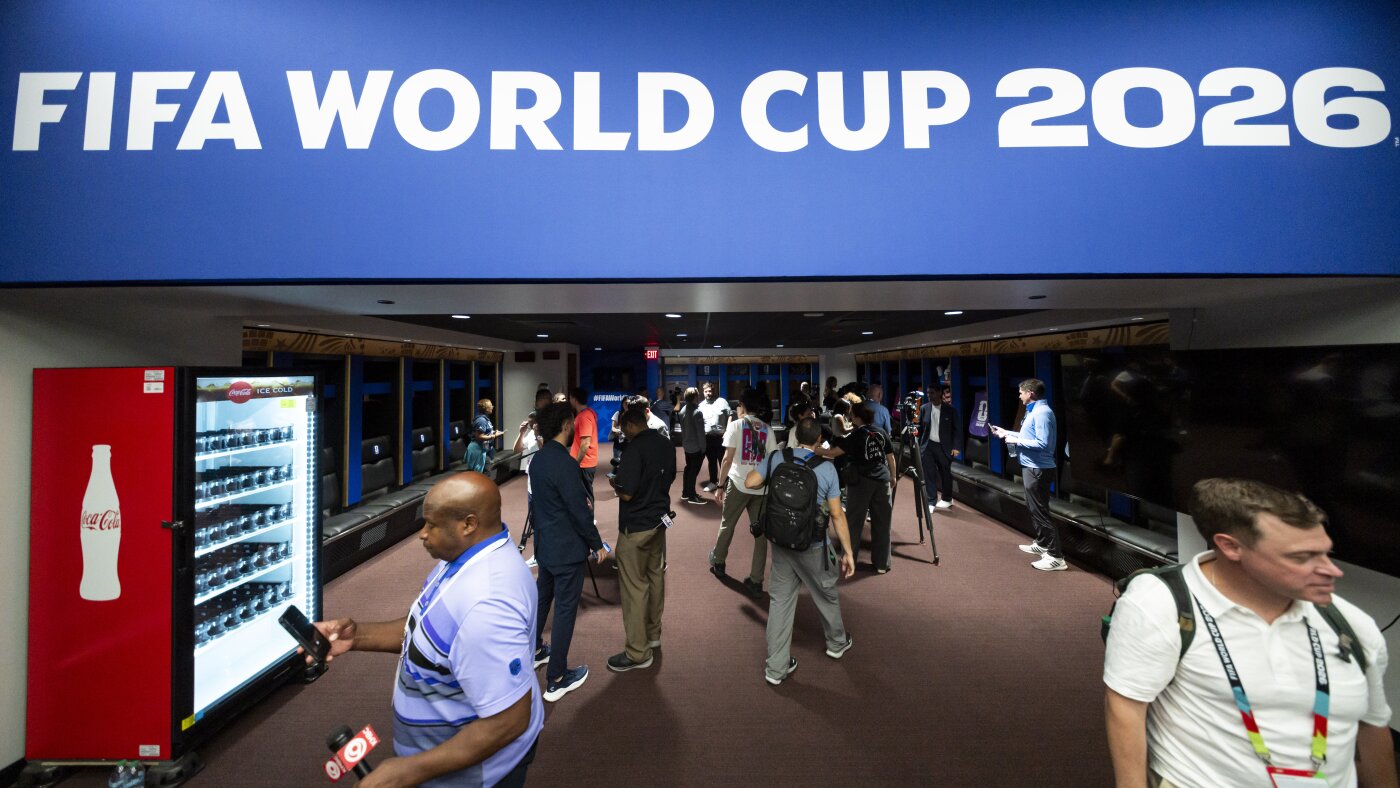
Media members tour the locker rooms at Kansas City Stadium ahead of the FIFA World Cup 2026 on June 8 in Kansas City, Mo.
Jay Biggerstaff/Getty Images
hide caption
toggle caption
Jay Biggerstaff/Getty Images
President Trump’s restrictive immigration policies are already impacting this year’s 2026 FIFA World Cup.
At least one referee from Somalia and one Iraqi team staff member were denied entry at U.S. airports in recent days, and dozens of fans from countries such as Morocco have been denied travel visas, despite being ticket holders.

“I view the 2026 World Cup as a massive paradox,” said Jules Boykoff, a professor and the author of Red Card: The 2026 World Cup, Sportswashing and the FIFA Greed Machine. “On one hand, it has more teams than ever participating. On the other hand, because of the policies of the Trump administration, it looks more like a World Cup of exclusion than inclusion.”
Boykoff, who is also a former professional soccer player, told NPR he worries the restrictive immigration policies also will shape the experience of fans in the U.S., who might be anxious about potential tense interactions with immigration agents outside of stadiums.
Boykoff’s concerns echo those of other policy experts and soccer fans who for months have warned about the influence of President Trump’s immigration policies on the tournament.
The White House did not respond to NPR’s request for comment.
In a statement to NPR, Customs and Border Protection said “all travelers seeking entry into the United States, including athletes, coaches, and staff, are subject to CBP inspection and vetting.”
The agency said “admissibility determinations are made on a case-by-case basis using law enforcement, national security, and immigration information available at the time of inspection.”
Denied entry to the U.S.
There are 39 countries who are under either a full or partial U.S. travel ban. For 19 of those countries, the State Department has suspended issuing all visas. The Trump administration has said the move is to “ensure that individuals approved for a visa do not endanger national security or public safety.”
Four countries in those lists — Iran, Haiti, Côte d’Ivoire, and Senegal — are expected to play in the World Cup.
On Saturday, decorated FIFA World Cup referee Omar Abdulkadir Artan, of Somalia, was denied entry to the U.S. after landing at the Miami International Airport.
In a statement, CBP said Artan was “determined to be inadmissible due to vetting concerns and was denied entry.” CBP did not say what concerns were.
Andrew Giuliani, the executive director of the White House Task Force for the World Cup, said Tuesday the denial was “for very good reasons,” but he didn’t provide any further explanation.
Artan did not respond to NPR’s request for comment.
Meanwhile, a player for Team Iraq was questioned for hours at Chicago O’Hare International Airport. He was allowed into the U.S., but a photographer for the team was denied entry due to “vetting concerns,” CBP said.

David Niven, a University of Cincinnati professor who teaches a course on sports and politics, told NPR these immigration issues are a self-inflicted wound.
“When you insert politics into the competition, it’s no longer the competition it was,” Niven said. “In some ways (it’s) very tangibly when a referee is missing or a player is delayed.”
The team from Iran — a country at war with the U.S. and Israel — was forced to relocate its lodging to Mexico after the U.S. government said players and staff were banned from staying overnight.
Visas for team members were approved last week, but more than a dozen support staff did not get approval, including Mehdi Taj, the president of the Iranian football federation.
In response to a social media post by U.S. Ambassador to Turkey Tom Barrack, the Iranian Embassy in Turkey said the U.S.’s conduct “violates FIFA regulations and breaches the United States’ host obligations.”
The Iranians also accused the U.S. of “politically biased interference in sport.”
“The U.S. government in practice is depriving Iran’s national team of its right to play in the World Cup under normal conditions and without undue pressure and stress,” the post on X said.
Fans face travel restrictions
Fans come from all over the world to attend the World Cup and cheer on their teams. Their chants and songs add to the excitement and vibrancy of the games.

But some fans and policy experts worry this year’s tournament may lose some of that exuberance because of U.S. visa denials.
According to the Moroccan news website Hespress, more than 40 members of multiple Moroccan football team supporter associations have been denied visas to attend the tournament. Many had tickets to the games and hotel bookings.
Gianni Infantino, FIFA’s president, in 2025 pushed against what he called “misconceptions” and said “everyone will be welcome in Canada, Mexico and the United States for the FIFA World Cup next year,” and that the U.S. was committed to a smooth travel process, so fans from all over the world will be welcome.”
But in response to Artan being denied entry to the U.S., a spokesperson for FIFA distanced the organization from the immigration issues. “FIFA is not involved in host country immigration processes, including visa adjudications, and has been informed by authorities that Mr. Artan’s status will not be changed at present,” FIFA said in a statement to NPR. “In line with previous FIFA events, a host government ultimately determines who receives a visa and who is admitted into their country.
Niven called FIFA’s new position “striking.”
“FIFA has raised the surrender flag on this question,” Niven said. “They’ve taken this situation and basically deferred to the United States and said the United States can do as they see fit.”

Voting stickers are displayed on a table at a polling place inside City Hall, Tuesday, Nov. 5, 2024, in Las Vegas.
John Locher/AP Photo
hide caption
toggle caption
John Locher/AP Photo
Today’s primary contests stretch from Maine to North Dakota, South Carolina and Nevada, where voters will decide on races for the U.S. Senate, House, governor and more.
A lot is riding on the Senate race in Maine, where political newcomer Graham Platner, facing a series of controversies, is the presumptive Democratic nominee to take on Republican Sen. Susan Collins, who has had the job for 30 years.
Another Republican incumbent, Nevada’s Gov. Joe Lombardo, is facing a tough challenge in November.
And in a field of MAGA-devoted Republicans in South Carolina, Lt. Gov. Pamela Evette was the one to grab President Trump’s endorsement in the race for governor.
Here, reporters from the NPR network tell us about the key races to watch.
Maine U.S. Senate seat | Maine’s 2nd Congressional District | Maine governor | Nevada governor | South Carolina governor
You can also check out voter resources for the June 9 primaries from the NPR network.
Maine’s primary winners will set up crucial November races
— Kevin Miller and Steve Mistler, Maine Public
Maine’s U.S. Senate seat
If Democrats want control of the U.S. come November, they almost certainly need to take five-term Republican Sen. Collins’ seat in Maine.
The outcome of the pivotal race could hinge on whether voters value Collins’ clout and ability to secure federal dollars over Democratic insurgent Platner’s call to upend a political system he says is rigged against working-class Americans.
The first-time Democratic candidate has so far run a barnstorming campaign that’s already pushed his Democratic rival, Gov. Janet Mills, out of the race.
After recent accusations published by The New York Times that he was physically threatening in a past relationship, and previous revelations that he sexted with several women early in his marriage, some are wondering if he still has enough support to flip the seat in November. In an interview with Maine Public, Platner denied the accusations.
Maine’s 2nd Congressional District
In a district that has voted for Trump three times, four Democrats are vying to replace retiring Democratic Rep. Jared Golden. Whoever wins the primary will face former Republican Gov. Paul LePage in the fall.
The Democratic nominee in this congressional district will offer a sense of what kind of candidates primary voters think can succeed in hard-to-win seats.
Maine’s governor
The race to replace term-limited Democratic Gov. Janet Mills is likely to go to a Democrat, according to an analysis by the Cook Political Report, but it’s still a question of who. There is a five-way Democratic race for the nomination, seven active candidates on the GOP side and both races have the potential to go to a ranked-choice runoff.
The affordable housing crisis, rising property taxes, access to health care and standing up to President Donald Trump have emerged as central themes in the primary contest.
Recent polls show former Maine CDC Director Dr. Nirav Shah in the lead, though former Maine Senate President Troy Jackson appears to be surging in popularity ahead of the ranked-choice primary election.
The presumptive frontrunner in the GOP contest is Bobby Charles, an attorney and former Navy intelligence officer.
In November, State Sen. Rick Bennett will also be on the ballot running as an independent.
Nevada’s GOP governor faces a tough November
Paul Boger, Nevada Public Radio
Trump’s economic policies are so unpopular in Nevada that the incumbent governor, Republican Joe Lombardo, is facing what could be a tough November election. Cook rates the race as a toss-up, and the candidate who may have the best shot against Lombardo, former Clark County Sheriff, is the state’s top cop, Democratic Attorney General Aaron Ford.
With a sizeable war chest, Lombardo should sail through the primary. Still, it may not be enough in November to assuage Nevadans worried about increasing costs in a tourism-based economy that is welcoming fewer domestic and international visitors every month.
Ford’s path to the Democratic nomination isn’t guaranteed. He’s drawn criticism from Republicans for his extensive domestic and international travel as attorney general. And from his main Democratic opponent in the primary, Washoe County Commissioner Alexis Hill, for Ford’s support of data centers, which are an existential concern in the country’s driest state.
The governor’s race in South Carolina tests Trump’s endorsement power
— Gavin Jackson, South Carolina Public Radio
The crowded race for governor in South Carolina doesn’t have a clear frontrunner, even though the president has endorsed Republican Lt. Gov. Pamela Evette, a longtime supporter of his, in Tuesday’s primary.
Evette’s biggest challenger is another Trump enthusiast, four-term Attorney General Alan Wilson. Congresswoman Nancy Mace, who claims her vote for more transparency of the Epstein files cost her Trump’s endorsement, is also on the ballot. The race is widely expected to go to a runoff.
Three Democrats are vying for their party’s nomination: Columbia state Rep. Jermaine Johnson, Charleston lawyer Mullins McLeod and Greenville businessman Billy Webster.
After Trump lost his first primary endorsement race last week in Iowa, political watchers are sure to have a close eye on how votes shake out in South Carolina.
Voter resources for the June 9 primaries from the NPR Network
Maine | Nevada | North Dakota | South Carolina
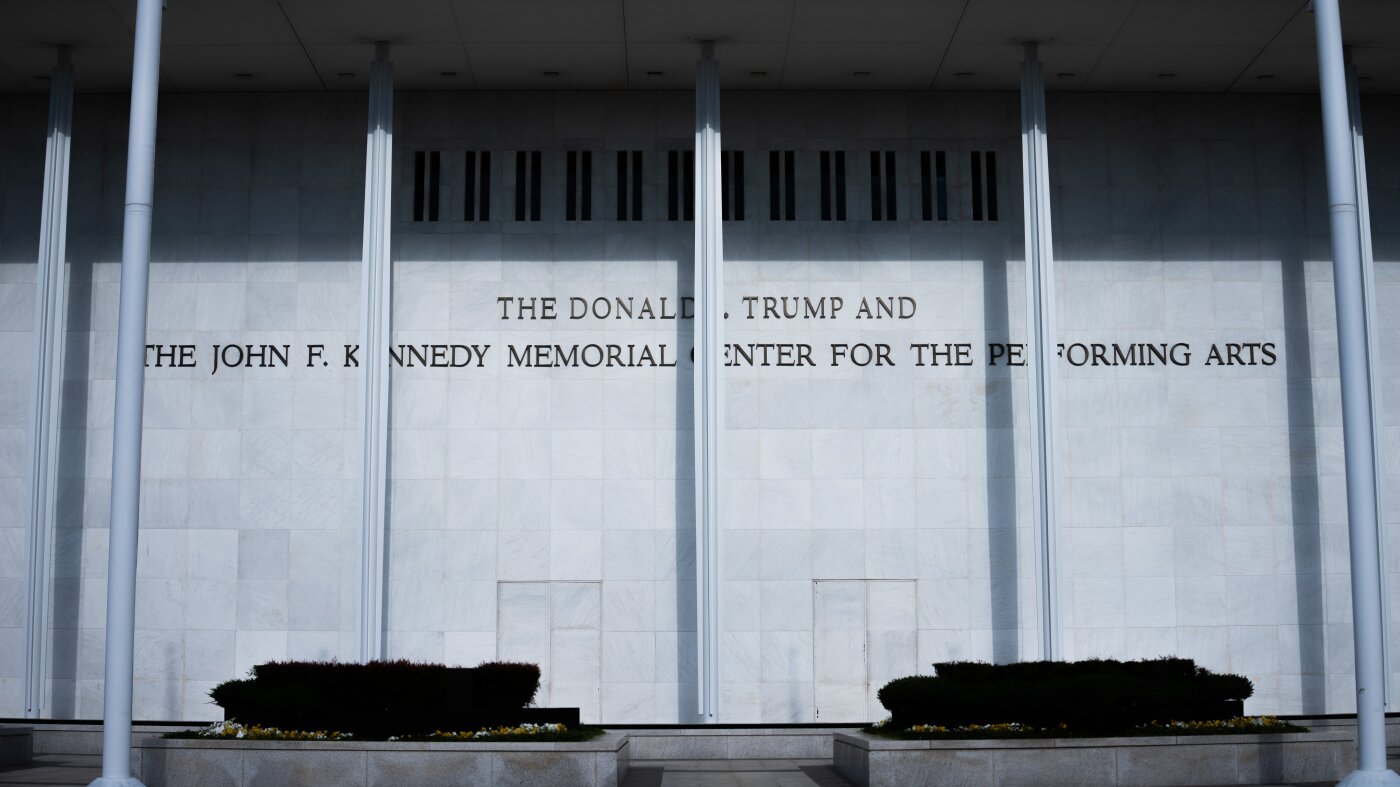
The facade of the John F. Kennedy Center for the Performing Arts is seen June 6 in Washington.
Aaron Schwartz/Getty Images
hide caption
toggle caption
Aaron Schwartz/Getty Images

After multiple setbacks in his effort to remake the Kennedy Center to his liking, including losses in several lawsuits, President Trump says he is handing operations of the center back to Congress. It is not clear what that means, since Congress does not actually run the cultural center.
The move comes after a judge in Washington, D.C., sided with jazz performer Chuck Redd, who canceled a 2025 holiday concert after Trump’s name was added to the building. The judge wrote that the Kennedy Center failed to prove the musician had signed a contract to perform.
Josef Palermo, a former curator of visual arts at the Kennedy Center, wrote about his experience in a piece for The Atlantic titled “What I Saw Inside the Kennedy Center.”
He told Morning Edition on Monday he joined at a time when others were quitting or being fired because he wanted to “run towards it as a sort of metaphorical first responder and try to save what I could.”
Palermo also said Trump’s Truth Social post about handing control back to Congress sounded like an attempt to distance himself from an institution. He adds that he believes the Trump administration has driven the center into bankruptcy. Programs such as the National Symphony Orchestra still do not have approved budgets.
In this interview, he talks about how the Kennedy Center’s leadership changed under Trump and how questions now surround the institution’s finances and future.
Listen to the interview by clicking play on the blue box above.
-

 Montana1 minute ago
‘Wake of carnage’: Former Missoula ER doctor sentenced to 40 years in Montana State Prison
-

 Nebraska8 minutes ago
New research network aims to address rural health disparities in Nebraska
-

 Nevada11 minutes ago
Nevada Highway Patrol investigates fatal Yerington collision
-

 New Hampshire16 minutes ago
These Jaw-Dropping Sand Sculptures Will Soon Take Over Hampton Beach Again
-

 New Jersey23 minutes ago
Gov. Sherrill announces 770 free World Cup tix for New Jersey residents
-

 New Mexico26 minutes ago
New Mexico attorney general calls out lack of DOJ cooperation in Epstein ranch investigation
-

 North Carolina31 minutes ago
Judge in Wake County dismisses lawsuit alleging NC State ignored trainer’s abuse
-

 North Dakota38 minutes ago
Fedorchak wins North Dakota Republican primary

