News
Alaska Airlines cancels all flights on the Boeing 737 Max 9 through Saturday


Alaska Airlines N704AL, a 737 Max 9 which made an emergency landing at Portland International Airport after a part of the fuselage broke off mid-flight on Friday, is parked at a maintenance hanger in Portland, Ore., Saturday, Jan. 6, 2024.
Craig Mitchelldyer/AP
hide caption
toggle caption
Craig Mitchelldyer/AP

Alaska Airlines N704AL, a 737 Max 9 which made an emergency landing at Portland International Airport after a part of the fuselage broke off mid-flight on Friday, is parked at a maintenance hanger in Portland, Ore., Saturday, Jan. 6, 2024.
Craig Mitchelldyer/AP
Alaska Airlines is canceling through Saturday all flights on Boeing 737 Max 9 planes like the one that suffered an in-flight blowout of a fuselage panel last week as it waits for new instructions from Boeing and federal officials on how to inspect the fleet.
The development came as signs indicate some travelers might try to avoid flying on Max 9 jetliners — at least temporarily.
Seattle-based Alaska Airlines said Wednesday that it would cancel 110 to 150 flights a day while the Max 9 planes remain grounded. By late afternoon, Alaska had canceled about 125 flights — one-fifth of its schedule for the day.
“We hope this action provides guests with a little more certainty, and we are working around the clock to re-accommodate impacted guests on other flights,” the airline said on its website.
United Airlines, the only other U.S. carrier that operates the Max 9, had canceled 167 flights because of the grounding order.
The Federal Aviation Administration grounded all Max 9s in the United States on Saturday, the day after a panel called a door plug blew off an Alaska Airlines jet over Oregon, leaving a hole in the side of the plane. The plug replaces extra doors that are used on Max 9s that are outfitted with more seats than Alaska uses.
The pilots of flight 1282 were able to return to Portland, Oregon, and make a safe emergency landing. No serious injuries were reported.
Investigators with the National Transportation Safety Board said this week they have not found four bolts used to help secure the 63-pound door plug, and they are not certain whether the bolts were missing before the plane took off or broke during the flight.
The FAA approved inspection and repair guidelines developed by Boeing on Monday. However, on Tuesday the agency ordered Boeing to revise the instructions based on “feedback received in response.”
The order to revise the guidelines came after Alaska and United reported finding loose bolts and other problems in the panel doors of an unspecified number of other Max 9s that they had begun to inspect.
Boeing CEO David Calhoun said a Boeing engineer was present during some of the Alaska checks, “and yes, he used that term, loose bolt.”
Asked how the plane was allowed to fly in the first place, Calhoun said on CNBC, “Because a quality escape occurred.”
Boeing said Wednesday that it was updating inspection procedures based on comments from FAA and the airlines, and the FAA repeated an earlier pledge to let safety determine when the planes fly again. Neither would say how long that might take.
The door plugs are installed by Boeing supplier Spirit AeroSystems, but investigators have not said which company’s employees last worked on the plug on the ill-fated Alaska plane.
Earlier this week, Calhoun told employees at the 737 factory in Renton, Washington, that the company was “acknowledging our mistake … and that this event can never happen again.”
Boeing, which is headquartered in Arlington, Virginia, didn’t allow reporters to attend the event, but it released a four-minute clip in which Calhoun stressed safety and said that Boeing’s airline customers are watching the company’s response to the current crisis.
“Moments like this shake them to the bone, just like it shook me to the bone,” he said, adding that Boeing must reassure airlines that the planes are safe.
“We will see our way through to that, but we need to know that we are starting from a very anxious moment for our customers,” he told the Boeing employees.
Some travelers are watching the unfolding investigation too.
Kayak, a travel-search site owned by Booking Holdings, said Wednesday that after the blowout on the Alaska flight, it saw a three-fold jump in the number of people filtering their searches to isolate the type of aircraft. The jump — from low numbers, a Kayak spokeswoman acknowledged — led the site to make its airplane-type filter easier to find.
“Anytime an aircraft model becomes a household name, something has gone wrong,” said Scott Keyes, founder of the travel site Going.
Keyes said once the FAA clears the planes to fly — “and assuming no other incidents” — the public’s memory will fade. Within six months, he predicted, few people will be paying attention to the aircraft type when booking a flight.
The Max — of which there are two models flying, the 8 and larger 9, and two more in development — is the latest version of Boeing’s half-century-old 737. Two Max 8 jets crashed in 2018 and 2019, killing 346 people, and the plane has been dogged by manufacturing quality problems since then.



More than 8 million people showed up across 3,300 No Kings protests on Saturday, calling for an end to the war in Iran, immigration agents in their communities and what they see as Trump’s creeping authoritarianism. Organizers say it’s the greatest number of protests in a single day in US history.
But movement scholars say social change doesn’t begin and end with one protest. It takes activism at the local and national level, and in a variety of forms, to bring about change.
“No Kings was conceived to unite a cross-movement push against authoritarianism. And there is not one way to fight it,” said Leah Greenberg, a co-executive director of the Indivisible Project, which founded the No Kings movement. “We see No Kings as part of a tapestry of defiance that is going on.”
In the past year, Americans have demanded change through a variety of actions. When Donald Trump sent federal agents into Los Angeles and Chicago, people rallied in the streets and called for “ICE Out!” When consumers wanted to express disapproval of corporations’ ties to Trump, they initiated boycotts of Target, Tesla and Amazon. When students were upset at the presence of ICE agents in their schools and communities, they organized walkouts.
“Protests build power by garnering attention and pulling people off the sidelines into action,” said Hahrie Han, a political scientist at Johns Hopkins University and the author of Prisms of the People: Power and Organizing in Twenty-First-Century America. “And if we look historically and across different movements, change is often a combination of people taking action through a variety of means and then leaders negotiating for power given the actions that people have taken.”
Han pointed to activists in Minnesota who were able to pass a raft of progressive and pro-labor laws in 2023 – paid family and medical leave and driver’s licenses for undocumented residents, among others – as an example of successful movement building by organizing with multiracial coalitions, strategizing with legislators and negotiating proposed legislation.
“It’s one of the most generous social safety nets in the country, and organizers were able to put grassroots energy together with institutional politics,” said Han.
No Kings’ success, organizers say, will be defined by whether attendees have signed up to organize in their communities and follow through on other actions, like know-your-rights trainings and mutual aid.
“What we think is actually important are the ways in which these large-scale gatherings fuel ongoing organizing that might look like economic non-cooperation, local mutual aid organizing or legislative advocacy at the state or local level,” said Greenberg. “It’s all connected if we do it right.”
Here’s a look at how these efforts have worked over time.
Protest
Some of the earliest protests in America include covert and overt acts that enslaved people took to object to bondage, including working slowly in the fields, breaking or misplacing tools, setting fires or running away. Enslaved people also attempted to free themselves by organizing armed rebellions and revolts.
Occupation has historically been another effective form of protest. Throughout the 1900s, Indigenous Americans protested US treaty violations by occupying Alcatraz Island, Mount Rushmore and the bureau of Indian affairs building to demand land back.
But probably the most recognizable form of protest is the one in the streets, immortalized in the marches, freedom rides and sit-ins of the civil rights movement for social justice and equal rights in the 1950s and 1960s.
Over the past 10 years, numerous mass protests have swept through the country, including March for Our Lives in 2018 to demand stricter gun control measures, the Black Lives Matter protests, triggered by the police killing of George Floyd in 2020, and the No Kings protests against the Trump administration last October. In 2025, the first year of Trump’s second term, more people protested in the streets than in 2017, the first year of his first term, according to data from the open-source project Crowd Counting Consortium
“The amount of people protesting is record-breaking,” said Hunter Dunn, an organizer with the grassroots organization 50501, which co-founded No Kings. “There’s also enthusiasm for using protests as a launchpad to get people involved in local organizing – whether it’s election defense with the midterms coming up, or immigrants’ rights organizing or organizing against AI data centers.”
Rally, march and parade
During rallies, people often gather at parks, on streets and other public locations to bring attention to a cause. A street protest or march can also culminate in a rally, where participants take turns speaking, performing music or leafleting attendees to share goals and literature about the cause.
Much like “rally”, “march” and “parade” are also terms used interchangeably with “protest”. In 1913, suffragists held the Women’s Suffrage Parade to draw attention to how women could vote in only nine states.
In 2017, activists held the first Women’s March the day after Trump’s first inauguration, protesting his rhetoric and platform as misogynistic and an overall threat to women. Activists and scholars have credited the march with driving the #MeToo movement and a record number of women to participate in the 2018 midterm elections.
“There was something special and different when people said #MeToo,” Fatima Goss Graves, president and CEO of the National Women’s Law Center, told the Guardian. “We had worked on issues related to harassment and gender-based violence over many decades. But the #MeToo movement really gave people a framework to speak out and name their experiences.”
General strike
Labor unions have a rich history of protest in the US, particularly in the form of a strike or a work stoppage in which workers demand better conditions, including healthcare benefits, on-the-job safety protections and higher wages.
A general strike is much larger; it’s when a sizable portion of the workforce in a certain town or region stops working to bring about economic or social change.
The first general strike in North America was in 1835 in Philadelphia, where 20,000 workers across 40 sectors demanded a 10-hour workday and fairer wages. In the end, they won – incorporating rallies, parades and newspaper campaigns to secure 10-hour workdays for skilled and unskilled workers in the city – and became the catalyst of labor organizing in the US.
After federal immigration agents killed Minneapolis residents Renee Good and Alex Pretti this January, organizers called for a national general strike of “no school, no work, and no shopping” to protest the presence and brutality of federal agents in the city. Thousands in Minnesota participated in protests, hundreds of businesses closed and work stoppages occurred across a variety of sectors, backed by labor unions.
“Those of us in the trade union movement understand the leverage and power that our labor has, and we are going to try and use that, because really there’s nothing else left,” Kieran Knutson, the president of Communications Workers of America (CWA) Local 7250 in Minneapolis, told the Guardian in January.
Boycott and divestment
Boycotts of corporations have historically involved a refusal to purchase their products or engage with their services, with the hope that punitive pressure can change attitudes and behaviors. Alternatively, a “procott” involves shifting resources to entities that people want to support – such as small local businesses – as they suspend support for others.
In the 1930s, Black Americans led “Don’t Buy Where You Can’t Work” campaigns in northern cities to advocate for Black jobs at white-owned businesses in Black neighborhoods. The boycotts and picketing, in which protesters stood outside of businesses and held signs, created jobs for Black workers during the Depression.
Divestments are a related form of protest. In 1985, UC Berkeley students demanded the university divest from South Africa in protest against apartheid. Students led rallies, teach-ins and encampments to pressure the university. A year later, the University of California board of regents voted to divest $3bn from companies with ties to South Africa.
In 2025, Americans’ boycott of Target – after the company rolled back its Diversity, Equity, and Inclusion (DEI) efforts – had an impact: Target acknowledged the boycott was one of the reasons sales were down last year.
“We are reclaiming our power,” LaTosha Brown, co-founder of Black Voters Matter, told the Guardian during a Black Friday boycott the group helped spearhead last year. “We are redirecting our spending. And we are resisting this rise to authoritarianism.”
Mutual aid
Under an ethos of “solidarity,” mutual aid involves a network of volunteers gathering resources – food, housing assistance and childcare – to support the needs of people in their communities.
In response to the HIV/Aids crisis of the 1980s, LGBTQ+ groups across the country developed care networks to support vulnerable community members. During the coronavirus pandemic, local organizations across the country stepped up to help low-income families, frontline workers and immunocompromised people through grocery delivery programs. One such aid program in Brooklyn, New York, supported 28,000 people with groceries between March 2020 and June 2021.
During Operation Metro Surge in Minneapolis in January, in which 3,000 ICE agents killed two Minneapolis residents and arrested hundreds, mutual aid networks were vital for distributing food, money and diapers to immigrant families sheltering in place out of fear of being stopped by ICE.
Brittany Kubricky, a Minneapolis resident, told the Guardian earlier this year she was organizing donations, grocery deliveries and school pick-ups from her dining room table. “I haven’t really ever done something like this before,” she said. “This is just something I tried, and it happens to be working.”
Walkout
When students and employees walk out of schools or workplaces to express their disapproval over a certain issue, the idea is to do so in numbers – the more people who participate, the more impactful the message.
In 1968, 15,000 students walked out en masse as part of the East Los Angeles Walkouts to protest disparities in educational outcomes between white American and Mexican American students. After the walkout, students submitted demands to the Los Angeles board of education to improve the bilingual education curriculum, among other issues. Even though police arrested organizers and the board rejected their demands, the walkout was one of the largest student protests in history.
Walkouts remain a viable protest tactic for young people today, including to voice their grievances against ICE. “This was our way to make our voices heard,” Lark Jeffers told the Guardian after participating in the Free America walkout on 20 January in Silver Spring, Maryland. “Because at the end of the day, we’re 16 – what we say isn’t going to make the lawmaker listen to us.
Teach-in
This longtime form of protest is about sharing knowledge. Activists and protest leaders spend time lecturing people in the movement about their causes, often opening debate and discussion as a means of raising awareness and spurring further action.
Teach-ins were popularized during the Vietnam war when students used them to discuss the war draft and strategies to curtail the US government’s involvement abroad. The first teach-in, which included lectures, debates and films, took place at the University of Michigan in 1965 and was attended by 3,500 students and supporting faculty members. The teach-in boosted the national anti-war movement and inspired other campuses to protest and hold teach-ins of their own.
Teach-ins once again became popular on US college campuses in 2024 as Israel bombed the Gaza Strip following Hamas’ attack. The teach-ins, often in student encampments, educated participants about the long fight for Palestinian freedom and the Boycott, Divestment, Sanctions (BDS) movement that seeks to isolate Israel economically, politically and culturally over its oppression of Palestinians.
Composites: Rita Liu/The Guardian/Getty Images/Wikimedia Commons
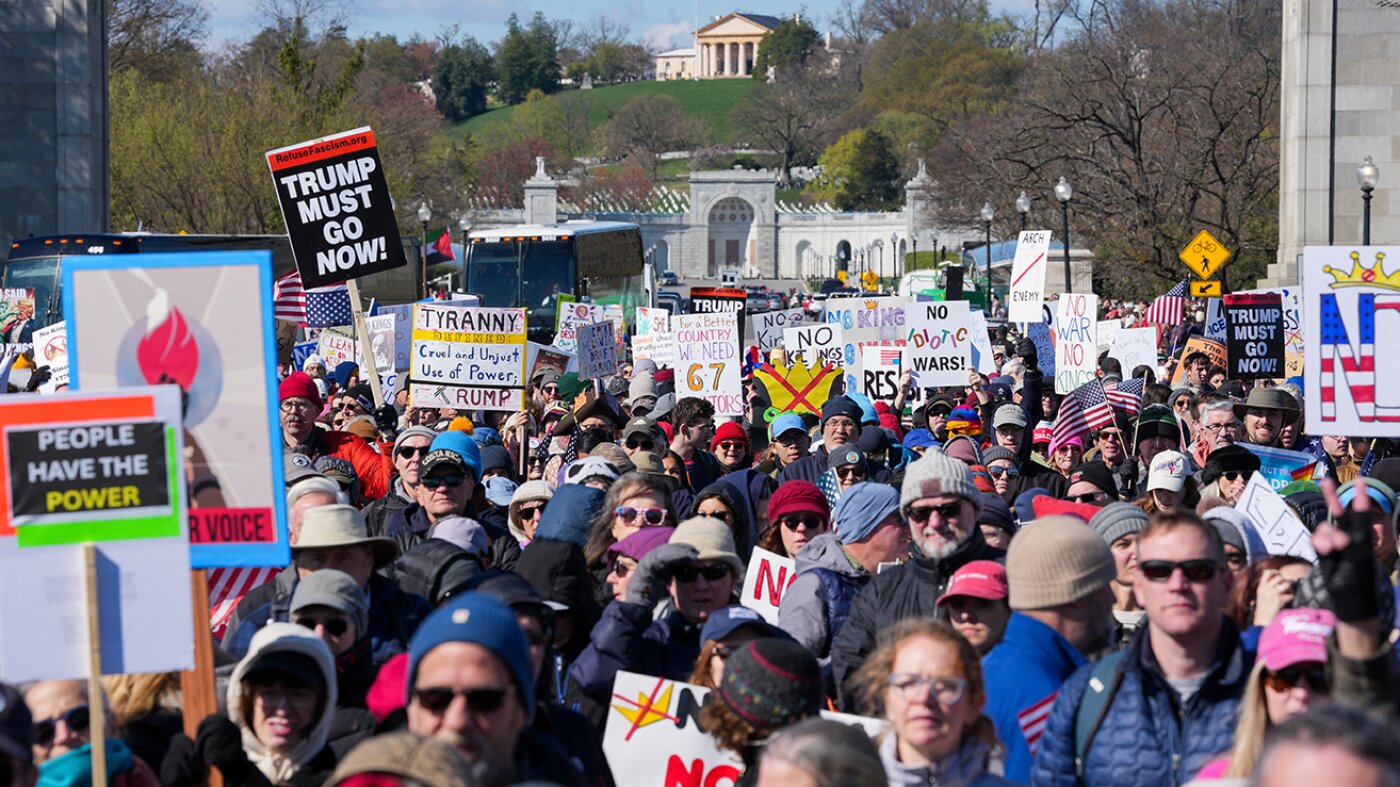
In large cities and small towns across the country, millions took to the streets today in protest against the policies of President Trump and his administration.
Organized by “No Kings,” a network of progressive groups opposed to the administration’s agenda, the protests are the third wave of demonstrations since the President took office for a second term. Last year, millions attended protests in June and again in October.
Crowds assemble at the Embarcadero in San Francisco prior to the start of the protest.
Martin do Nascimento/KQED
hide caption
toggle caption
Martin do Nascimento/KQED
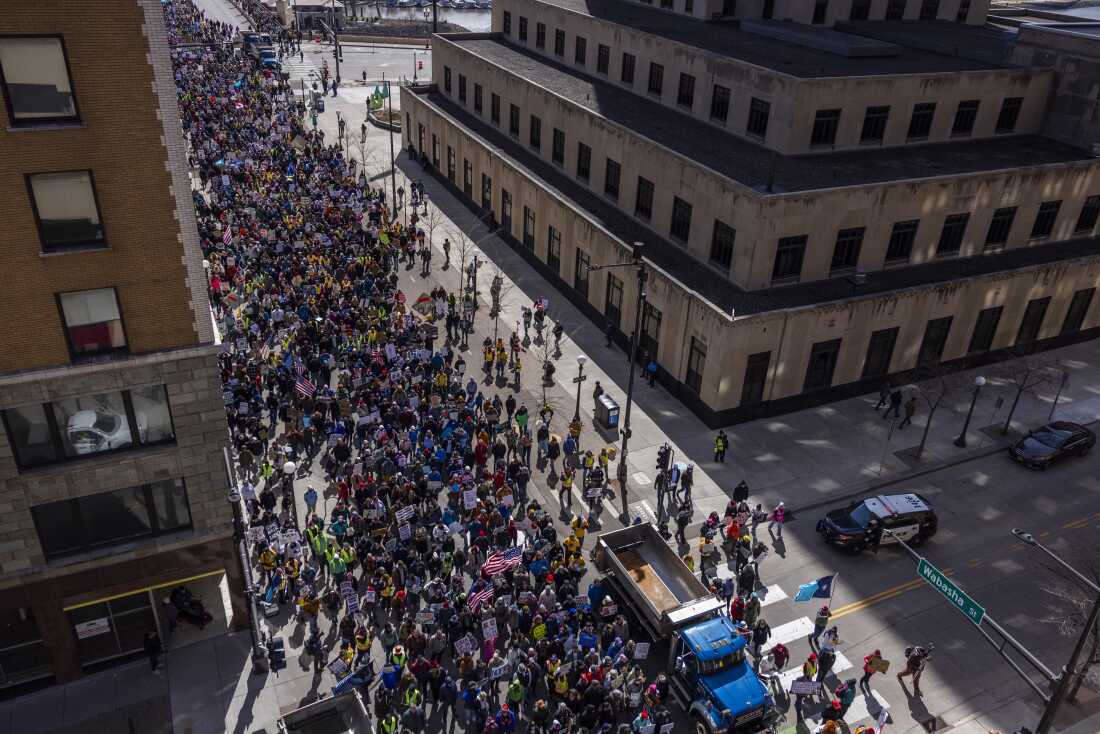
Thousands of community members marched in the flagship “No Kings” protest in St. Paul.
Jaida Grey Eagle/MPR News
hide caption
toggle caption
Jaida Grey Eagle/MPR News
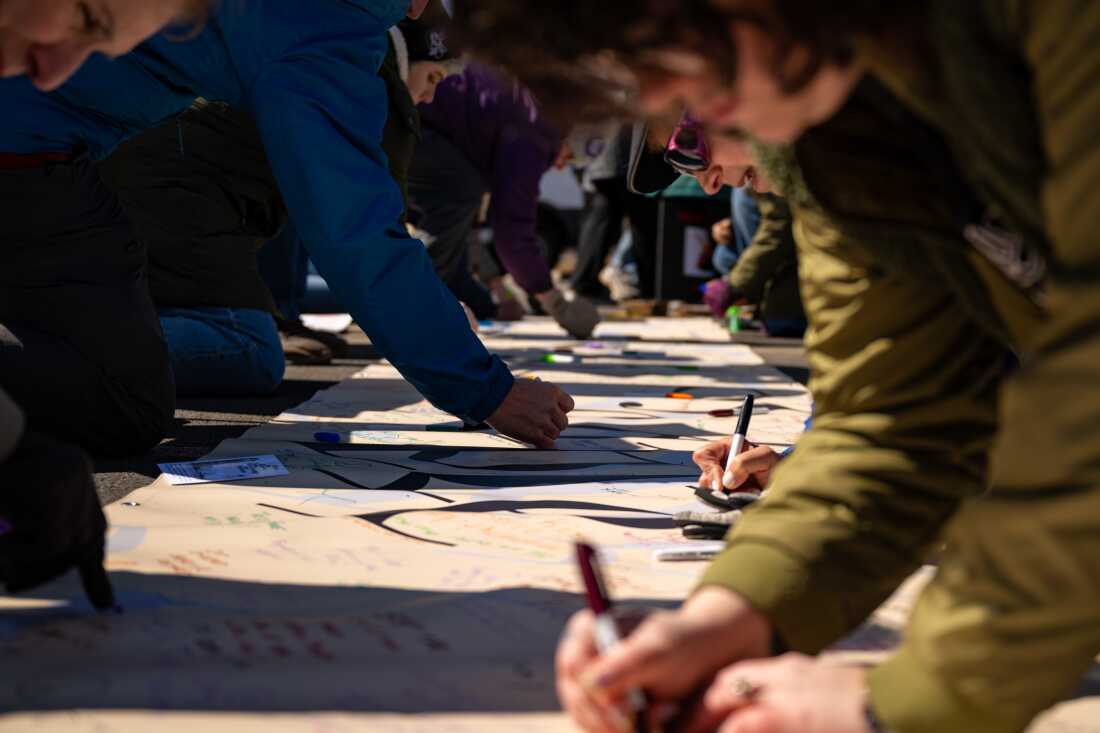
Thousands sign a banner in Hartford at the Capitol that says “We the People.”
Tyler Russell/Connecticut Public
hide caption
toggle caption
Tyler Russell/Connecticut Public
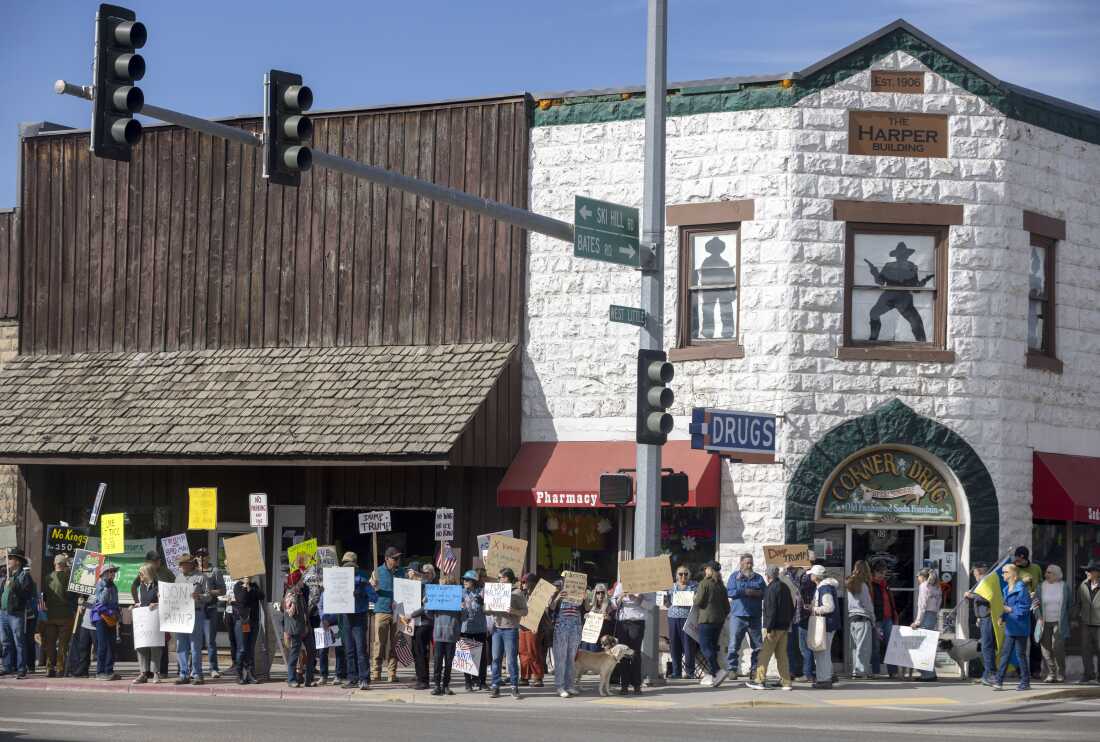
Protesters hold signs and chant slogans in Driggs, Idaho.
Natalie Behring/Getty Images
hide caption
toggle caption
Natalie Behring/Getty Images
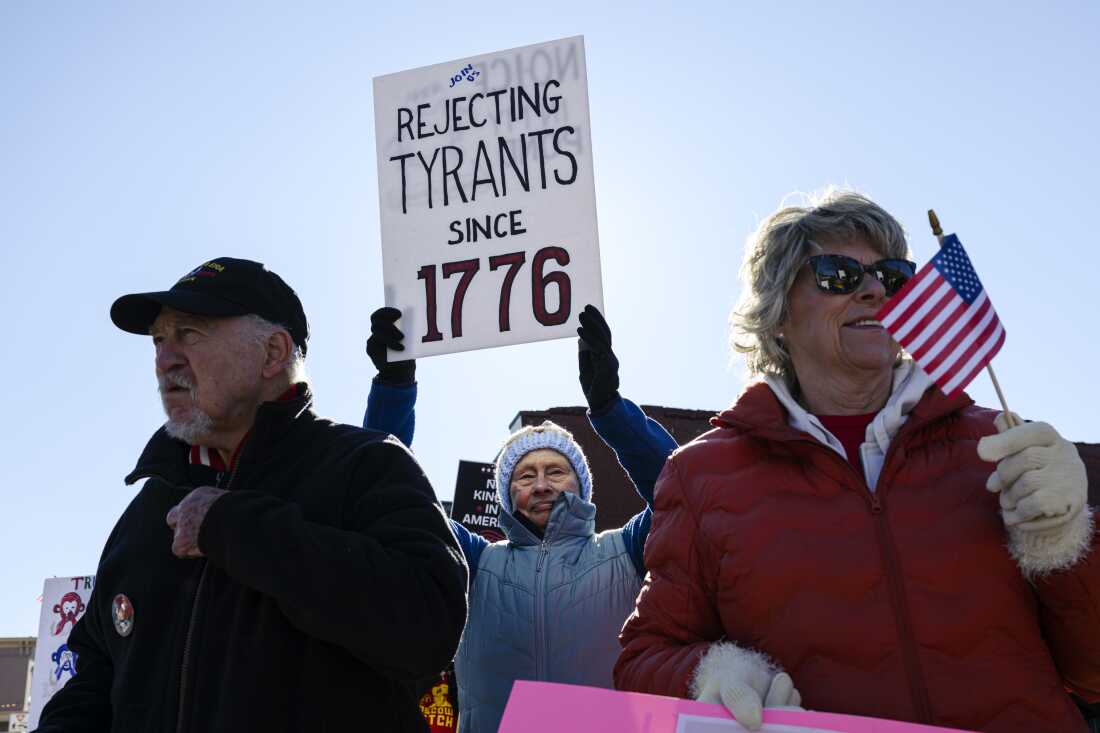
Demonstrators gather while holding signs near a roadside in Shelbyville, Kentucky.
Jon Cherry/Getty Images
hide caption
toggle caption
Jon Cherry/Getty Images
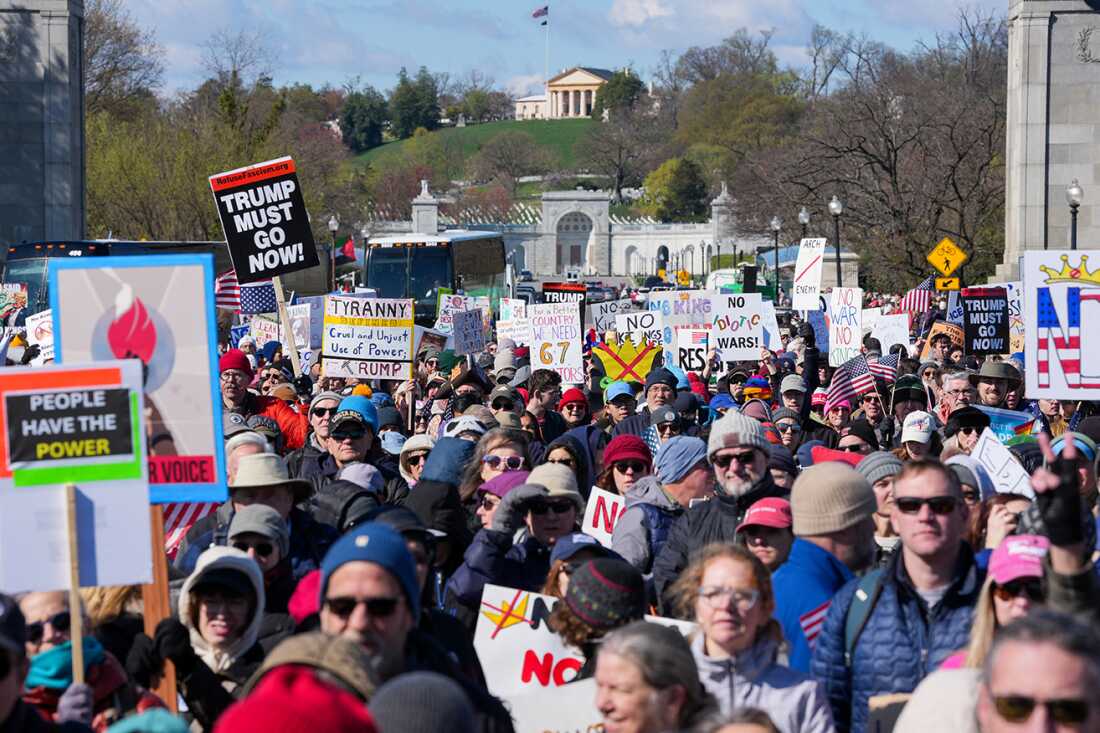
Demonstrators walk across the Memorial Bridge from Arlington, Virginia into Washington, DC.
Ken Cedeno/AFP
hide caption
toggle caption
Ken Cedeno/AFP
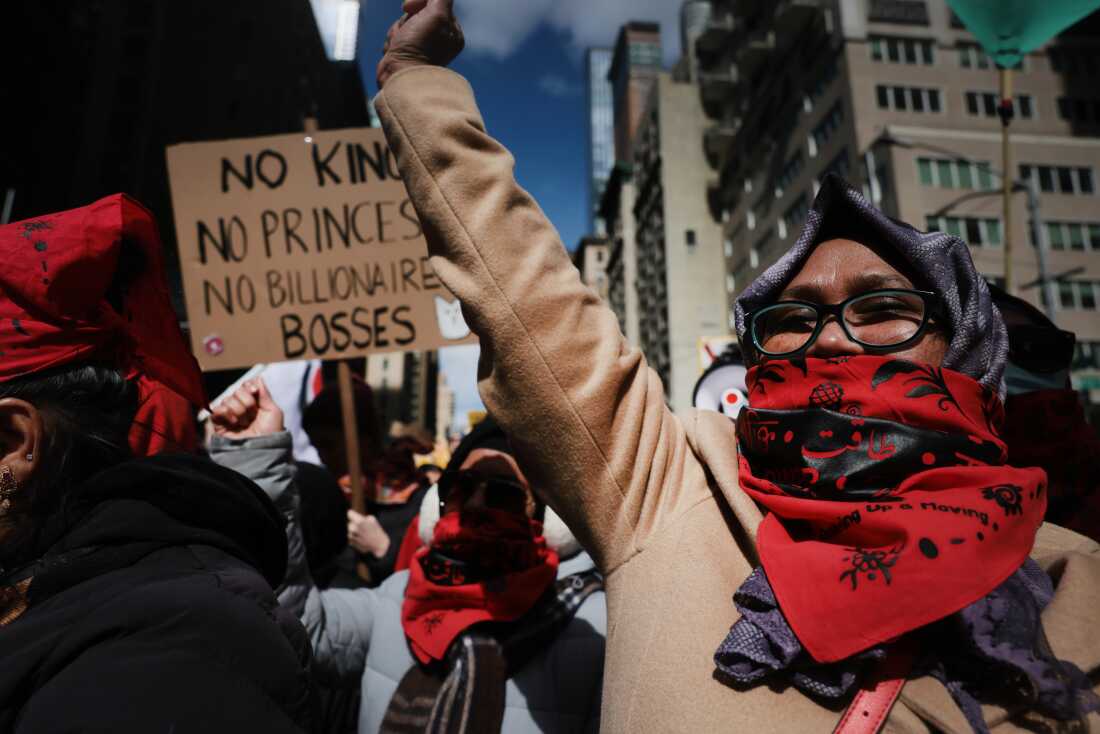
Demonstrators march down 7th Avenue and Broadway in Manhattan.
Spencer Platt/Getty Images
hide caption
toggle caption
Spencer Platt/Getty Images
![HARTFORD, CONNECTICUT, MARCH 28, 2026: Ken MacDonald tears up as he listens to a speech about the plight of his fellow veterans. “[Trump]’s playing with the lives of military people,” he said. Thousands rally at the “No Kings” protest at the capitol in Hartford on March 28, 2026. (Tyler Russell/Connecticut Public)](https://npr.brightspotcdn.com/dims3/default/strip/false/crop/6981x4654+0+0/resize/1100/quality/50/format/jpeg/?url=http%3A%2F%2Fnpr-brightspot.s3.amazonaws.com%2Feb%2F8b%2Fba7a9cb744baa343c85d45caf5ed%2F260328-nokingshartford-trb4371.jpg)
Ken MacDonald tears up in Hartford as he listens to a speech about the plight of his fellow veterans.
Tyler Russell/Connecticut Public
hide caption
toggle caption
Tyler Russell/Connecticut Public

A large crowd marches across the South First bridge toward a gathering at Auditorium Shores in Austin, Texas.
Patricia Lim/KUT News
hide caption
toggle caption
Patricia Lim/KUT News
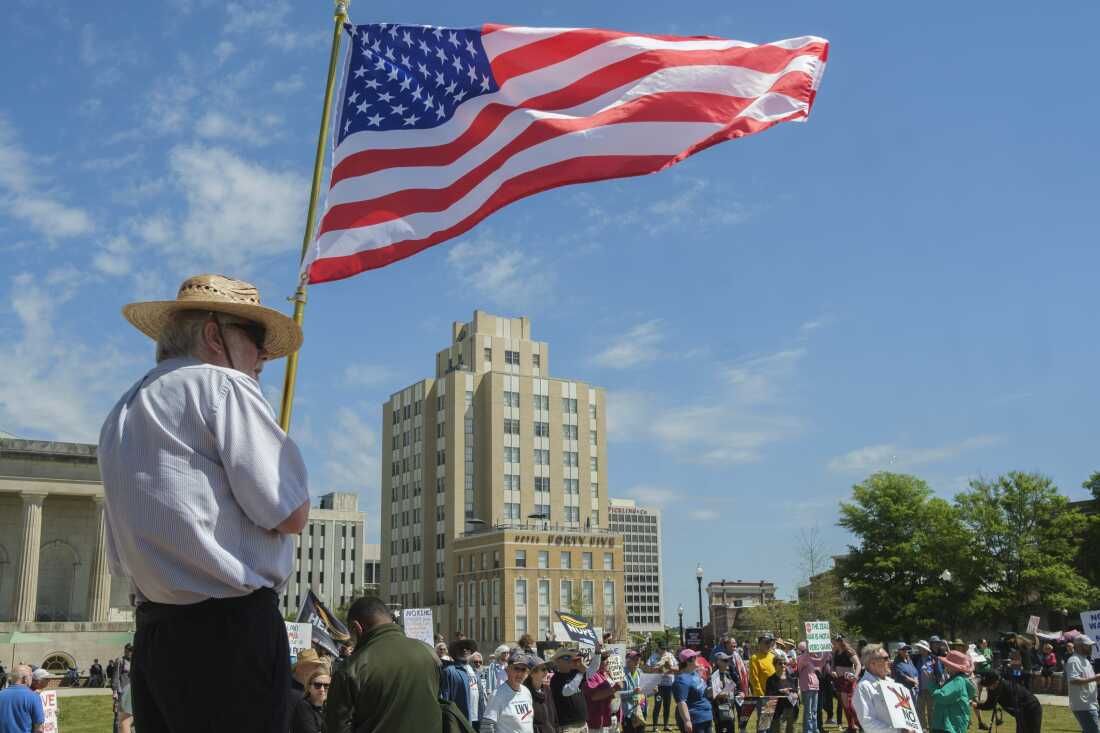
Lindsay Holliday waves an American flag in Rosa Parks Square in Macon, Georgia.
Grant Blankenship/GPB News
hide caption
toggle caption
Grant Blankenship/GPB News
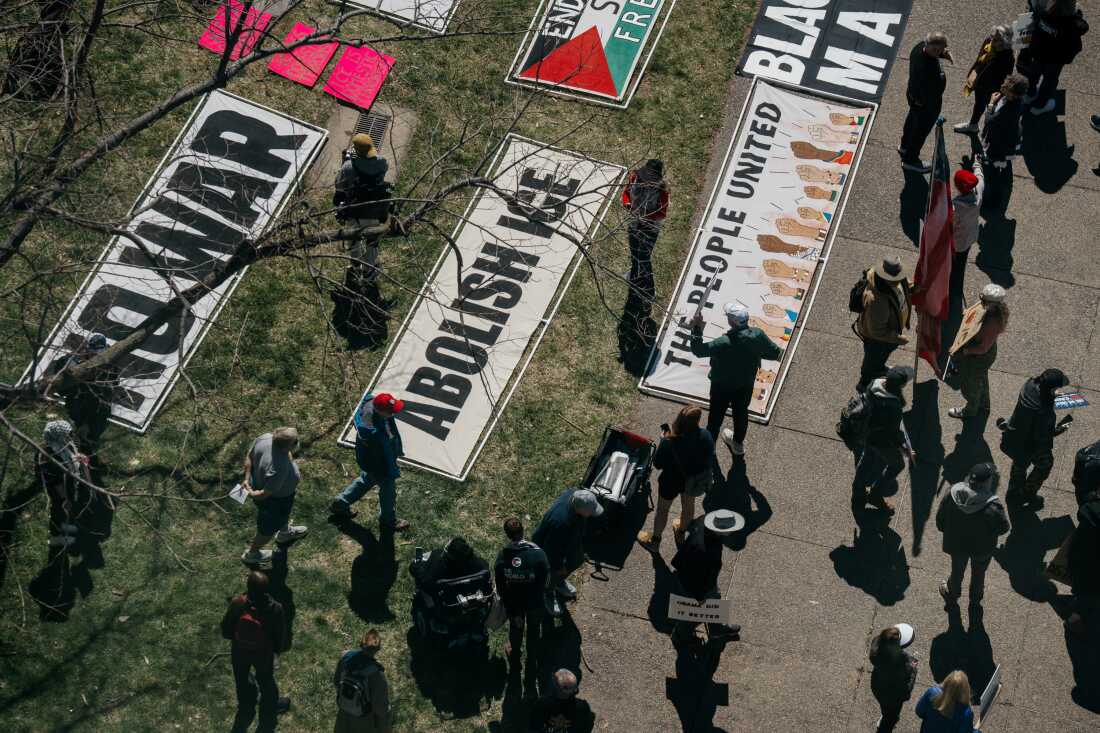
Demonstrators in downtown St. Louis walk by large banners decrying the U.S. conflict in Iran and U.S. Immigration and Customs Enforcement.
Brian Munoz/St. Louis Public Radio
hide caption
toggle caption
Brian Munoz/St. Louis Public Radio
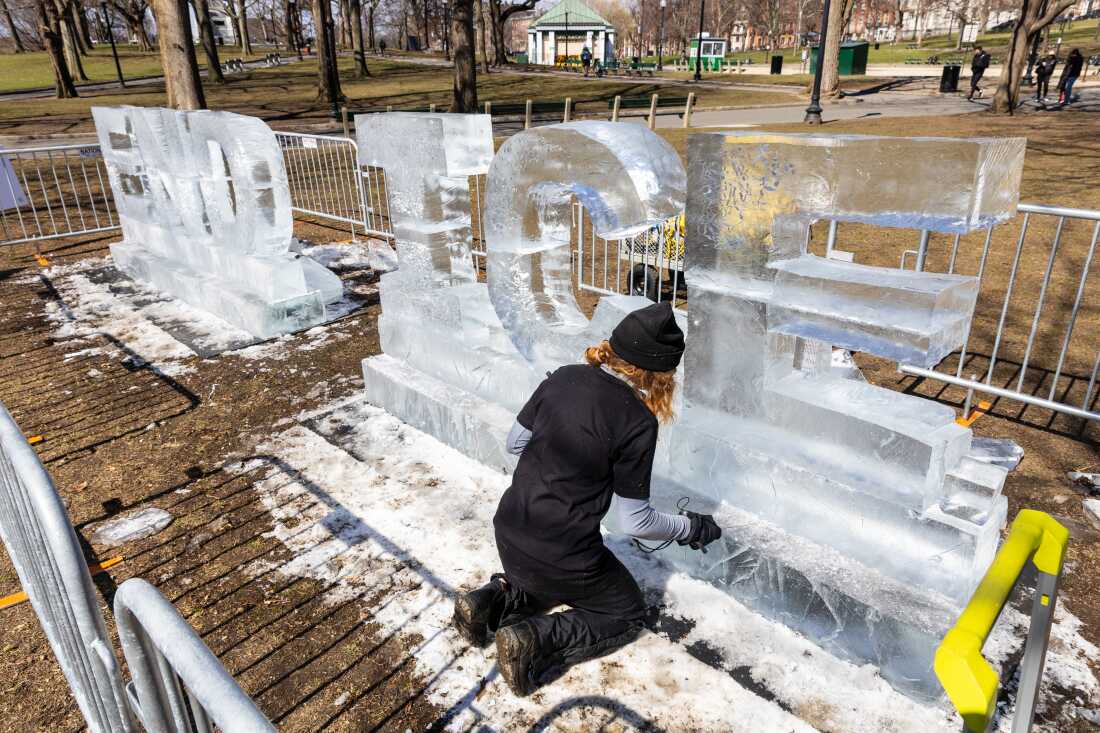
Kat Carves works on a ice sculpture that says ‘End Ice’ ahead of the rally on the Boston Common in Boston.
Arthur Mansavage/GBH News
hide caption
toggle caption
Arthur Mansavage/GBH News
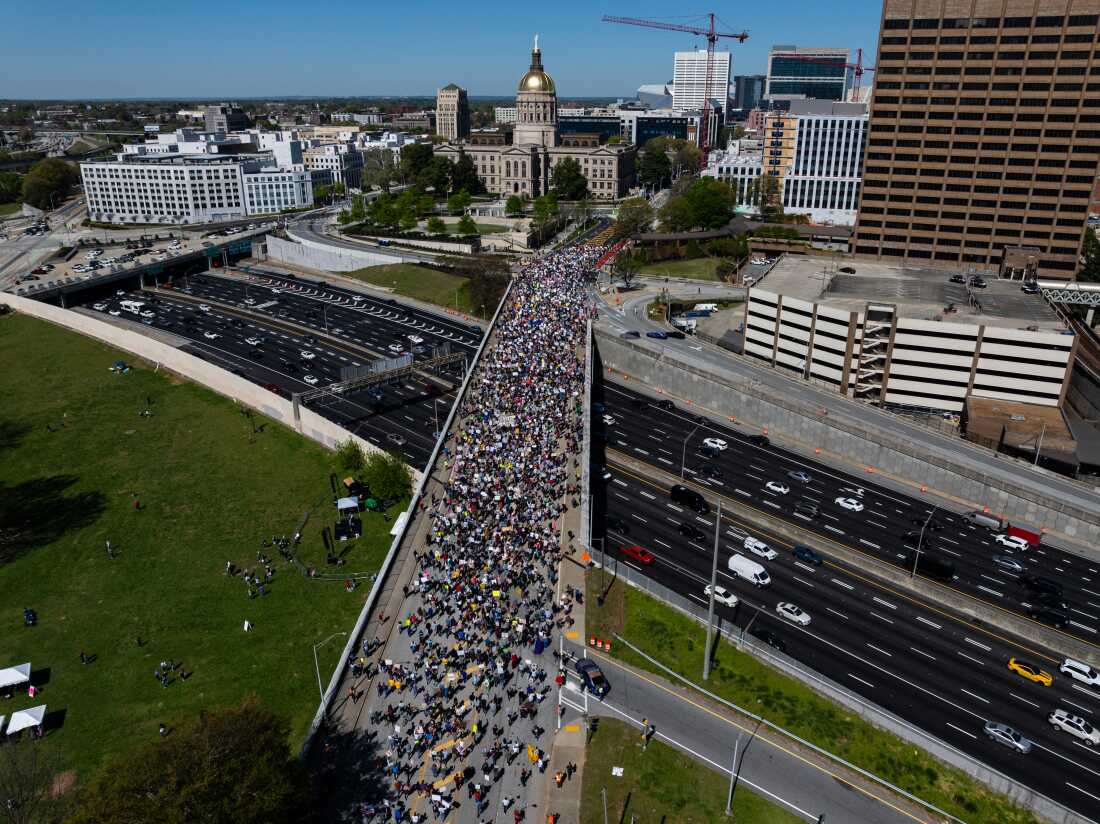
Protestors march across an overpass near the Georgia state Capitol building in Atlanta.
Elijah Nouvelage/AFP
hide caption
toggle caption
Elijah Nouvelage/AFP
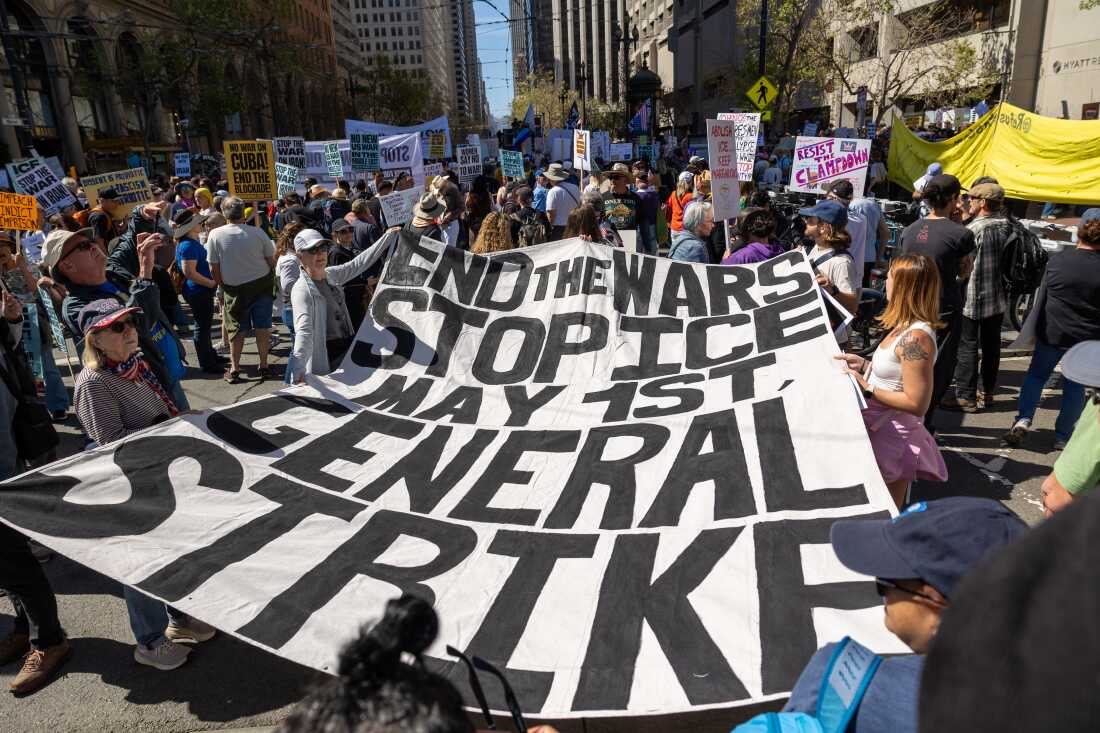
Protesters hold a banner reading “End the wars, stop ICE, general strike” at Embarcadero Plaza in San Francisco.
Gustavo Hernandez/KQED
hide caption
toggle caption
Gustavo Hernandez/KQED

Maria Perry, left, and John Stock, right, joined protesters gathering in Mill Creek Park in Kansas City, Missouri.
Julie Denesha/KCUR
hide caption
toggle caption
Julie Denesha/KCUR
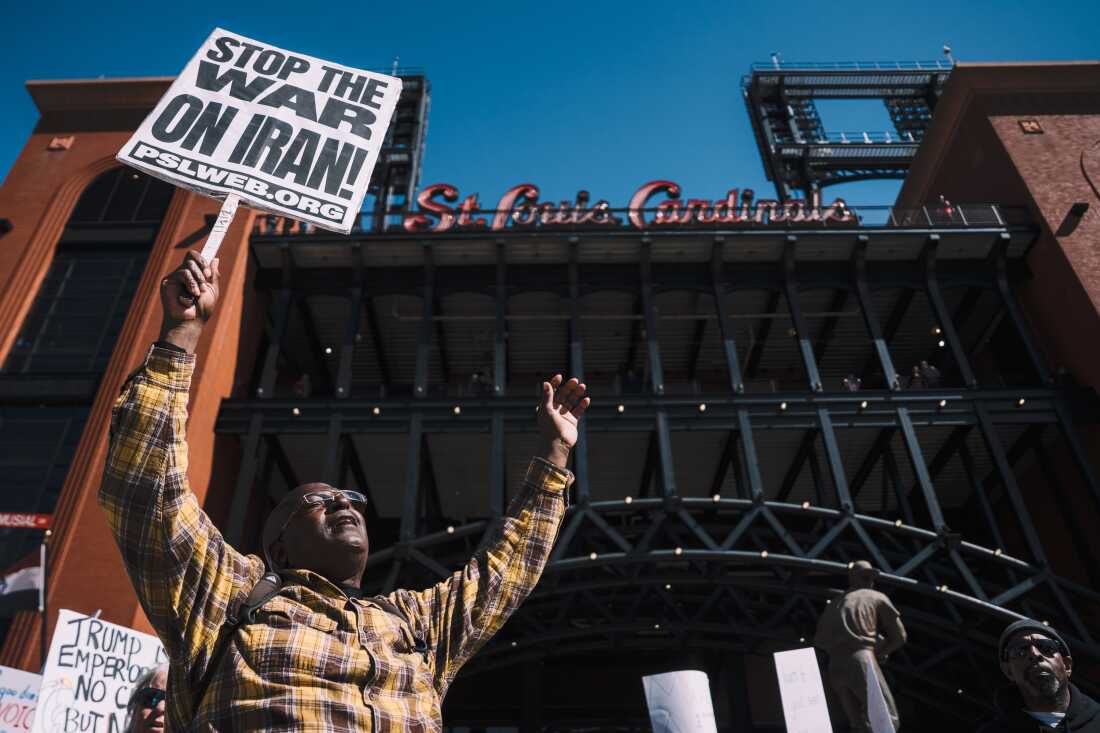
Duane Inge, a 63-year-old demonstrator, protests in front of Busch Stadium in downtown St. Louis.
Brian Munoz/St. Louis Public Radio
hide caption
toggle caption
Brian Munoz/St. Louis Public Radio

A protestor wears a “Let’s be brave” pin at a rally in Richmond, Virginia.
Shaban Athuman/VPM
hide caption
toggle caption
Shaban Athuman/VPM
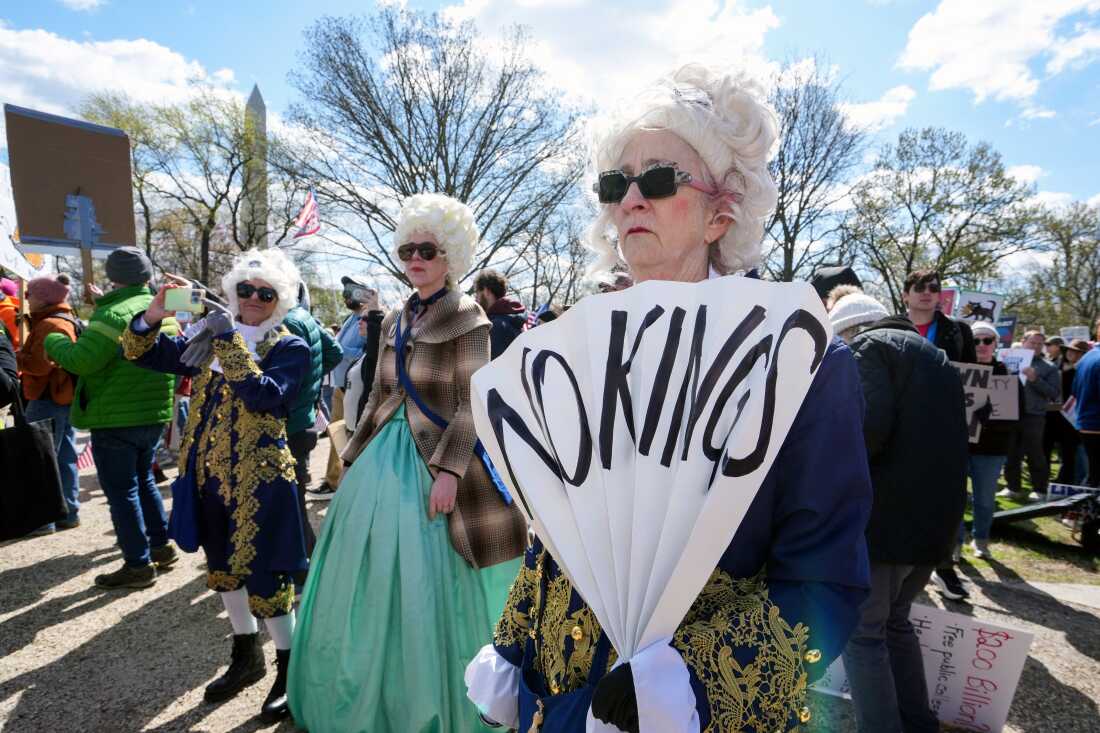
Demonstrators in costumes stand along the National Mall in Washington, DC.
Ken Cedeno/AFP
hide caption
toggle caption
Ken Cedeno/AFP
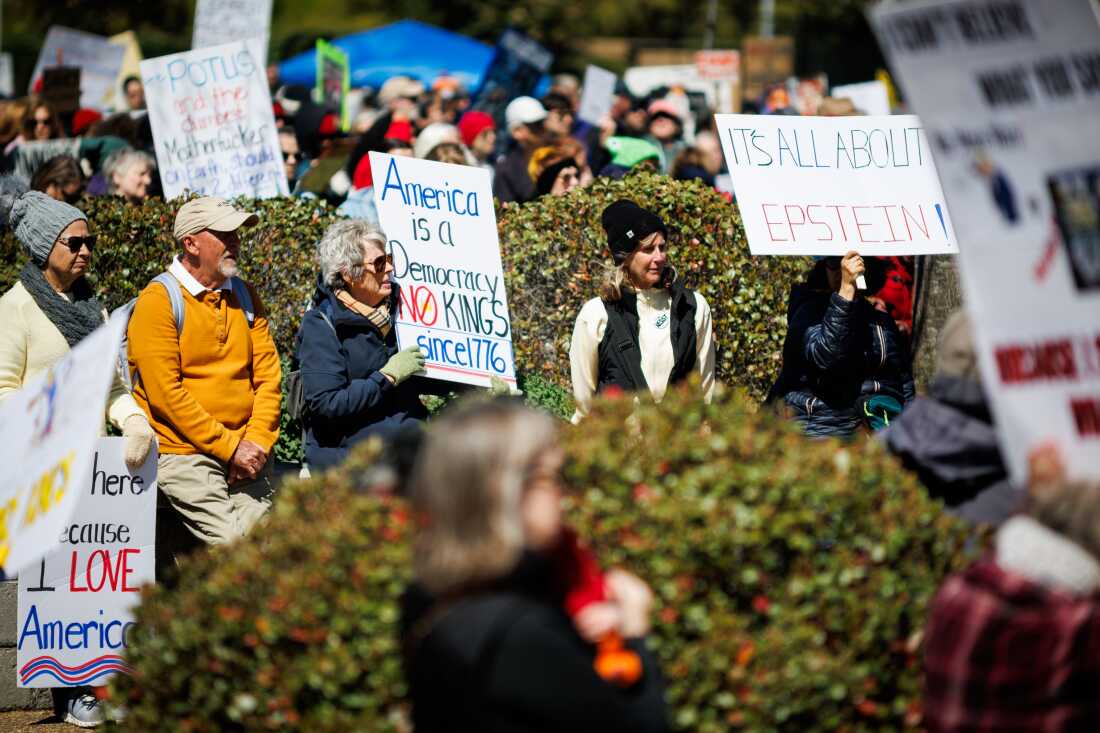
Protestors listens as speakers address the crowd gathered in Richmond, Virginia.
Shaban Athuman/VPM News
hide caption
toggle caption
Shaban Athuman/VPM News
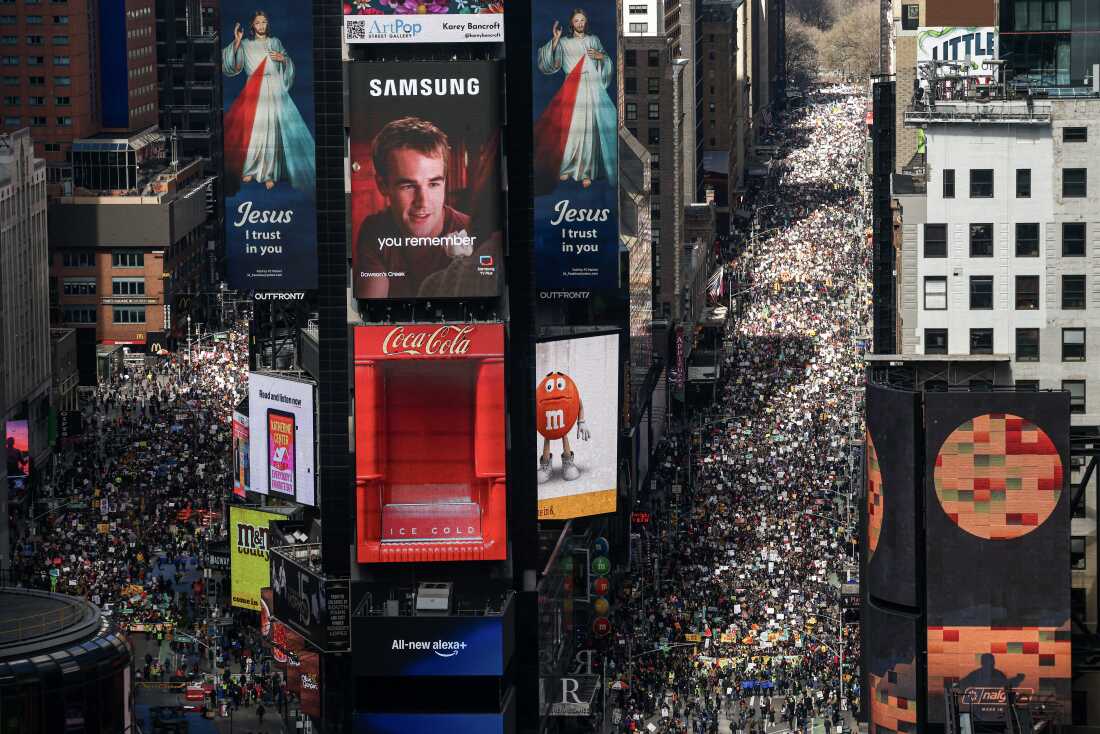
Protesters descend on Times Square in New York City.
Charly Triballeau/AFP
hide caption
toggle caption
Charly Triballeau/AFP
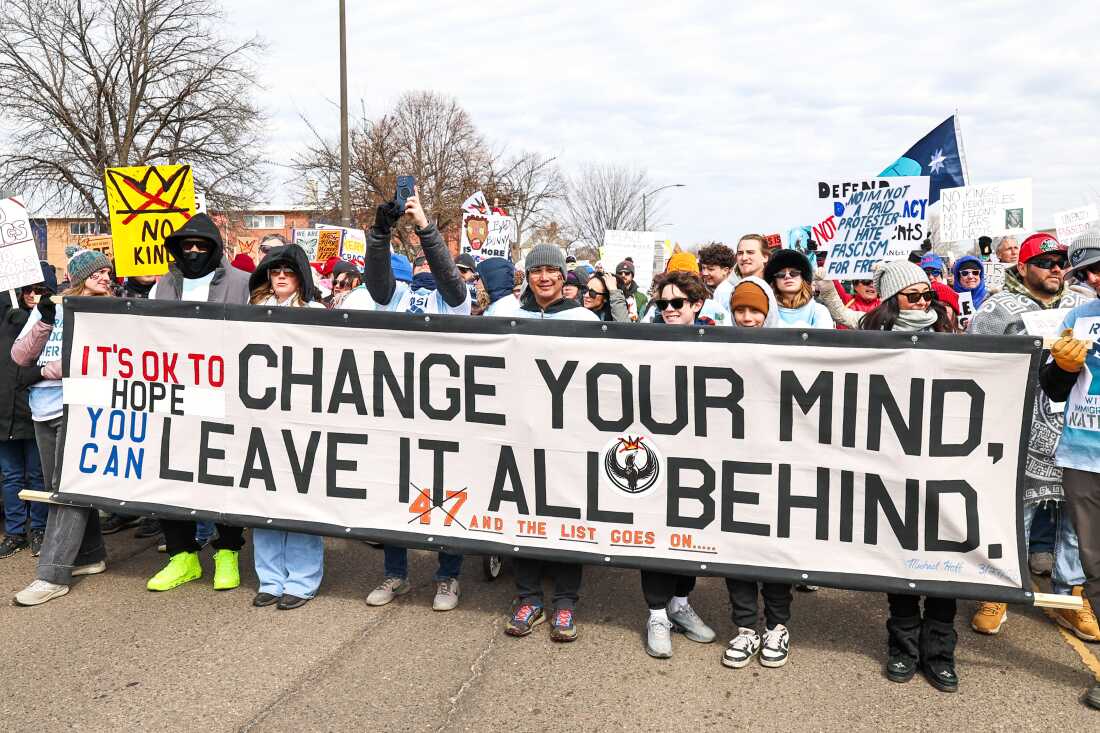
Demonstrators begin to march from the Western Sculpture Garden at the Minnesota State Capitol in St. Paul.
Steven Garcia/Minnesota Public Radio
hide caption
toggle caption
Steven Garcia/Minnesota Public Radio

Thousands march towards the Steel Bridge from the waterfront in Portland, Oregon.
Saskia Hatvany/OPB
hide caption
toggle caption
Saskia Hatvany/OPB

Two students were killed and at least seven other people were injured after a school bus crash in Tennessee on Friday, officials said.
The school bus was carrying 25 students and five adults from Kenwood Middle School in Clarksville for a field trip in Jackson, Tennessee, the school district said in a statement.
The crash, which remains under investigation, involved a Tennessee Department of Transportation dump truck, a Chevrolet Trailblazer and the school bus. It happened around noon on Highway 70 in Carroll County, said Maj. Travis Plotzer, a spokesperson for the Tennessee Highway Patrol.
Plotzer said there were two adults in the TDOT vehicle and one person in the Chevrolet Trailblazer. He said the crash is “a parent’s worst nightmare.”
The cause of the crash is under investigation.
At least seven people who were injured were taken by air ambulance to hospitals across Tennessee, including Memphis and Nashville, CBS affiliate WREG reported. The extent of their injuries was not immediately disclosed.
The school’s principal, Karen Miller, said counselors will be available starting Monday. In a written message to families shared on Facebook, she called the crash an unimaginable tragedy and encouraged parents to be attentive to their child’s emotional needs as they process the deaths of their classmates.
“Please continue to pray with us for our students, families, faculty, and staff,” Miller wrote. “I am grateful for the strength of our Kenwood community, and I trust we will all support each other during this difficult time.”
Four people were taken to Monroe Carell Jr. Children’s Hospital at Vanderbilt in Nashville and were in stable condition Friday, according to a Vanderbilt Health spokesperson.
Another 19 people were taken to Baptist Memorial Hospital-Carroll County, said Kim Alexander, a spokesperson for Baptist Memorial Health Care. All were evaluated and released, though it was unclear how many actually were injured, she said.
CBS affiliate WTVF reported the school bus was on the way to participate in the Toyota Hub City Grand Prix Greenpower USA race in Jackson. The Jackson-Madison County superintendent said in a statement that they were “completely devastated” by the crash and called the loss “immeasurable,” WTVF reported.
The school district was hosting the event.

Wolverines make Frozen Four

Bay Area residents hold rally in SF as war with Iran enters 2nd month

Dallas Jenkins says he is the ‘evangelical mascot of the LDS church’ and talks Easter celebrations

New video shows aftermath of police shooting in Downtown Miami

Boston Celtics Star Jayson Tatum Made History In Hornets Game

Florida High School Football Rankings: Top 25 teams – Oct. 21

How old is Bo Nix? What to know about Oregon quarterback ahead of 2024 NFL Draft

Cleary's 21 help Le Moyne down Central Connecticut State 69-64 in OT

99th annual Pony Swim held in Virginia

Indiana Members Credit Union announced as new anchor tenant at Bottleworks District

Scathing report claims nation’s oldest labor union ‘betrayed’ MAGA members through ‘shocking’ spending

Republican US lawmaker demands Congress vote on any Iran troop deployment

So you went to a No Kings protest. Now what?

JD Vance says he was ‘obsessed’ with UFOs, believes aliens are actually ‘demons’
The EU's recipe for trade deals : easy on beef, tough on wine
-

 Sports1 week ago
IOC addresses execution of 19-year-old Iranian wrestler Saleh Mohammadi
-

 New Mexico1 week ago
Clovis shooting leaves one dead, four injured
-

 Miami, FL4 days ago
Jannik Sinner’s Girlfriend Laila Hasanovic Stuns in Ab-Revealing Post Amid Miami Open
-

 Tennessee6 days ago
Tennessee Police Investigating Alleged Assault Involving ‘Reacher’ Star Alan Ritchson
-

 Minneapolis, MN4 days ago
Boy who shielded classmate during school shooting receives Medal of Honor
-

 Politics1 week ago
Schumer gambit fails as DHS shutdown hits 36 days and airport lines grow
-

 Science1 week ago
Record Heat Meets a Major Snow Drought Across the West
-

 Technology1 week ago
YouTube job scam text: How to spot it fast