Wisconsin
A look back at the 1998 and 2012 U.S. Women’s Opens in Wisconsin, including dramatic putts


Drone view of Erin Hills Golf, the site of the 2025 U.S. Women’s Open
Check out a drone view of Erin Hills Golf Course, the site of the 2025 U.S. Women’s Open May 29-June 1
Major golf championships are back on Wisconsin soil.
The state will host the 80th United States Women’s Open this week at Erin Hills, the third time that major has been in Wisconsin.
Here is a look back at the previous two, which were both played at Blackwolf Run in Kohler.
1998: Se Ri Pak’s dramatic U.S. Women’s Open victory at Blackwolf Run
When was it? It was scheduled from July 2-5, 1998, but then needed another day.
What happened? Well, only one of the most tension-filled finishes ever in a golf major. The gallery of 8,000 fans at Blackwolf Run in Kohler got to see Se Ri Pak and Jenny Chuasiriporn − both 20 years old − battle in an 18-hole playoff and then two sudden-death extra holes. So with the 72 holes during the first four days, the duo were on the course for 92.
Pak became the youngest U.S. Women’s Open winner when she knocked in a 15-foot birdie putt on No. 11. It was the first sudden-death playoff in U.S. Women’s Open history.
Inbee Park (2008) and Yuka Saso (2021) have since become the youngest U.S. Women’s Open winners − interestingly both at 19 years, 11 months and 17 days.
How much did Pak win? She claimed $267,500 of the $1.5 million purse. Chuasiriporn did not receive any prize money as an amateur. She was a golfer at Duke University.
According to the USGA, the 2025 purse is $12 million, the highest in women’s golf.
What they said: “I really had a sixth-sense feeling she was going to make it,” Chuasiriporn said about watching Pak line up the winning putt.
It was Pak’s second major that year after winning the LPGA McDonald’s Championship.
“I want to win every tournament,” she said.
Memorable moments: Take your pick of many with this tournament.
On the 18th playoff hole, with both golfers at 1-over, Pak pulled a drive that rolled on the edge of a water hazard. She took off her socks and shoes to get in the water and hit a shot that gave her life. Chuasiriporn then missed a par putt that would have given her the victory, leading to the sudden-death playoff.
Perhaps lost in all the other big shots, Chuasiriporn had a 40-foot putt on No. 18 in the final round that allowed her to catch Pak and force the 18-hole playoff.
Face in the crowd: Former U.S. President George Bush followed the twosome over their final few holes.
Postscript: Pak was on the LPGA tour until 2016. She won 25 times on the tour and claimed five major titles. The dramatic victory at Blackwolf Run is credited with starting the Korean women’s golf boom.
Chuasiriporn’s story is interesting. She led Duke to the 1999 NCAA golf title and finished college as a four-time All-American. She struggled on mini-tours as a professional and then walked away from the sport after a few years. When the U.S. Women’s Open returned in Blackwolf Run in 2012, Chuasiriporn was found by the Journal Sentinel working happily as a registered nurse in Virginia.
2012: Na Yeon Choi wins in return of U.S. Women’s Open to Blackwolf Run
When was it: July 5-8, 2012.
What happened? Na Yeon Choi bared down on the back nine of the final round to pull away for a four-shot victory over fellow Korean Amy Yang. They were the only two golfers to finish under par.
Pak, then 34 and one of 10 golfers who competed in both the 1998 and 2012 at Blackwolf Run, finished tied for ninth despite a shoulder injury that hampered her that year.
How much did Choi win? She claimed $550,000 of the $3.25 million purse.
What they said: “I really want to say to all the fans and crowd out there they really did a good job,” Choi said. “And one more thing: I think I was really calm out there. I think I am really proud of myself, too.”
Memorable moment: Choi was teetering on No. 10 in the final round. She hit her tee shot into a hazard and finished with a triple-bogey 8. That cut her lead from five strokes to two.
But the 24-year-old bounced back with a birdie on the next hole and cruised from there.
Interesting tidbit: At the 2012 U.S. Women’s Open, fans were allowed to bring cell phones onto the grounds for the first time at a USGA event.
Postscript: This was Choi’s lone major win, though she did have nine victories on the LPGA tour. Now 37, Choi still pops up at golf events.



(WLUK) — Wisconsin State Patrol troopers are teaming up with truckers to better spot dangerous driving behaviors.
The annual Trooper in a Truck initiative kicks off next week in Wisconsin.
Troopers will ride along with with semitruck and bus drivers to use the higher vantage point to spot dangerous driving behaviors, especially near commercial motor vehicles.
Troopers will be looking for risky driving behaviors, including distracted driving, speeding, following too closely and seatbelt violations. When an officer identifies a violation from the truck or bus, they will radio to patrol cars in the area for appropriate enforcement action.
Drivers can expect to see Trooper in a Truck enforcement in the following areas:
BE THE FIRST TO COMMENT
- Monday, July 13: Eau Claire
- Tuesday, July 14: Waukesha
- Wednesday, July 15: Madison
- Thursday, July 16: Green Bay
- Friday, July 17: Wausau

New Wisconsin athletic director Shawn Eichorst, who spent the last eight years at Texas, believes his new and old schools have much in common.
Both are well-regarded research universities in state capitals that belong to major conferences and have relatively similar enrollments.
He also pointed out one difference.
“There’s swag at Texas, right?” Eichorst said Tuesday during his introductory news conference. “There’s 30 million people in Texas. We’ve got swag, too, but we have a little humility with that deal. We need to get our shoulders up. We need to feel good about what it is that we’re doing.”
Wisconsin could gain more of that Texas swagger if its football program gets back to winning the way it did the last time Eichorst was employed in Madison. Eichorst, who most recently worked as a deputy athletic director at Texas, received a five-year deal worth $1.6 million annually, with provisions for increases and incentives. He was hired 2½ months after Chris McIntosh left to become the Big Ten’s deputy commissioner for strategy.
Eichorst worked at Wisconsin from 2006-11 when Barry Alvarez was AD and Bret Bielema was leading the football program. He followed that up with stints as an athletic director at Miami (2011-12) and Nebraska (2012-17) before Texas athletic director Chris Del Conte hired him in 2018.
He returns to Wisconsin with the Badgers coming off back-to-back losing seasons in football, a notable fall for a program that had 22 straight winning seasons from 2002-23. Wisconsin coach Luke Fickell has gone 17-21 after posting a 53-10 record with one College Football Playoff appearance in his last five years at Cincinnati.
Eichorst hasn’t worked with Fickell before but said he’s encouraged by their initial conversations.
“Obviously he’s won every place he’s been,” Eichorst said. “My expectation is more of me than him, meaning I need to pour into him, learn more about his program, how he has things set up, how his athletes are taken care of, how we’re supporting that endeavor. And then we can figure out, as we move along, what that might look like.”
Football struggles led to Eichorst’s downfall the last time he was an athletic director.
He fired Nebraska coach Bo Pelini in 2014 and hired Mike Riley, who had gone 93-80 in 14 seasons at Oregon State. Eichorst was dismissed shortly after Nebraska suffered an early-season loss to Northern Illinois in 2017. Riley was fired at the end of that season after going 19-19 in three years.
When Eichorst’s hiring was announced last week, he spoke about how much he had grown from that Nebraska stint. Wisconsin interim chancellor Eric Wilcots led the search and has emphasized Eichorst’s accomplishments at Texas, which has won the Learfield Directors’ Cup all-sports standings five times in the last six years.
Texas ranked anywhere from fifth to ninth in the Directors’ Cup standings in the five years before Wilcots’ arrival. Texas’ football team went a combined 23-27 from 2014-17 but has made two College Football Playoff appearances in the last three years.
“Everybody looks at the end result of what we did at Texas,” Eichorst said. “When we got there in 2018, we weren’t very good in a lot of areas. And that didn’t change overnight.”
Eichorst said one thing that has caught his attention about Wisconsin is the overall quality of its head coaches.
“You’re going to be as good as your coaches,” Eichorst said. “That’s it. If you have an elite group of coaches who are working together and uniting and galvanizing and learning from one another and taking it out to their individual programs, I think you can start to build something special. I go back to Texas. We built a room of really elite head coaches and put them at the top of everything we did to help guide us.”
Eichorst said this job is particularly important to him because of his Wisconsin roots. He was born in Lone Rock, about 45 miles northwest of the Madison campus.
He treasured his previous stint at Wisconsin and says he believes this school “represents everything that is great about higher education and college athletics.”
“Nobody will work harder for Wisconsin athletics,” Eichorst said. “I love this state, and I love everything that it represents. The passion is there. You can see it. I don’t have to make it up. I’ve lived it. It’s in my heart.”
___
AP college sports: https://apnews.com/hub/college-sports
Wisconsin
South Milwaukee, Wisconsin, officials in standoff with homeowner over year-round skeleton display

The city of South Milwaukee, Wisconsin, has ordered a homeowner to take down his year-round giant skeleton display or face fines, but the homeowner is standing firm and refusing, even as the deadline to remove the display has passed.
Now there’s a skeleton standoff.
The city cited ordinance violations in their order for Sean Oster to dismantle the lawn decorations. The notice specifically references “large Halloween decorations being displayed not during the appropriate time of year.”
Oster was also ordered to make other improvements to his property.
But Oster has refused to take down the display, which is re-dressed as the year goes on and is currently sporting a Fourth of July theme. The Institute for Justice, a public interest law firm, has come to his aid, saying the city’s actions violate Oster’s First Amendment rights.
City administrators declined to comment, citing a pending investigation. Neighbors have been divided by the display; some say they’re fine with it, and think it brings fun and positivity to the neighborhood, but some others want to see it removed and say the lawn should be kept up better and more consistently.
Oster said he’s hoping to reach an agreement with the city, and said he’s corrected all other violations outside of the display.
-

 South Dakota3 minutes ago
Petition to clarify South Dakota proof of citizenship law shot down over technicality
-

 Tennessee6 minutes ago
Tennessee State men’s hockey cancels 2026-27 inaugural season for second straight year
-

 Texas11 minutes ago
Ted Cruz warns Talarico has ‘real chance’ to flip Texas’ U.S. Senate seat
-

 Utah18 minutes ago
Man suspected in 2006 Utah murder left suicide note in Las Vegas jail cell: police
-
 Vermont21 minutes ago
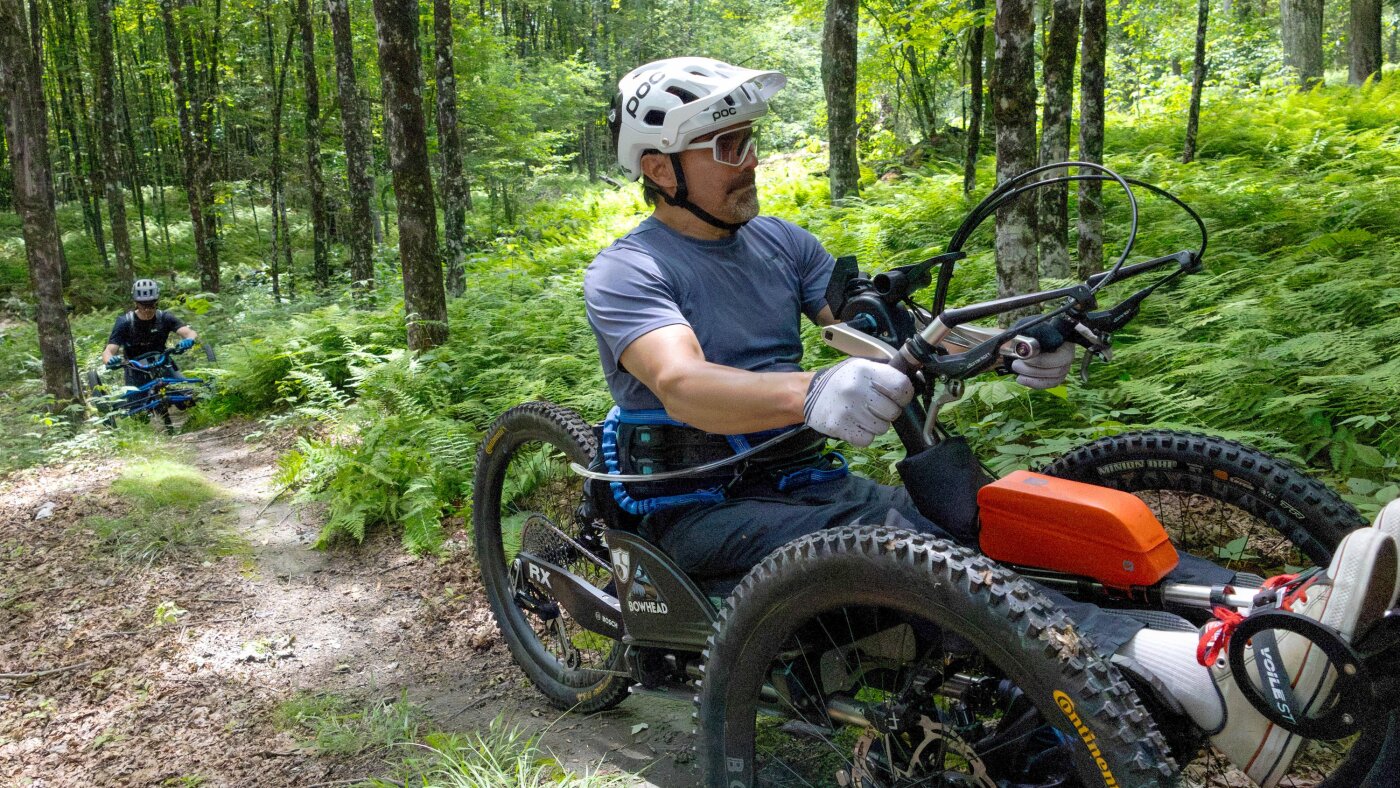
OUTDOOR ACCESS FOR DISABLED IN VERMONT
-
 Virginia26 minutes ago
4 indicted in Virginia double homicide; second victim ID’d as grandmother of 6
-

 Washington33 minutes ago
Washington Commanders are retiring Hall of Famer John Riggins’ No. 44
-

 Wisconsin36 minutes ago
Wisconsin State Patrol rides with truck and bus drivers to spot violations in five areas

