Midwest
Trump turns up heat on fellow Republicans in push to redraw congressional maps ahead of midterms

NEWYou can now listen to Fox News articles!
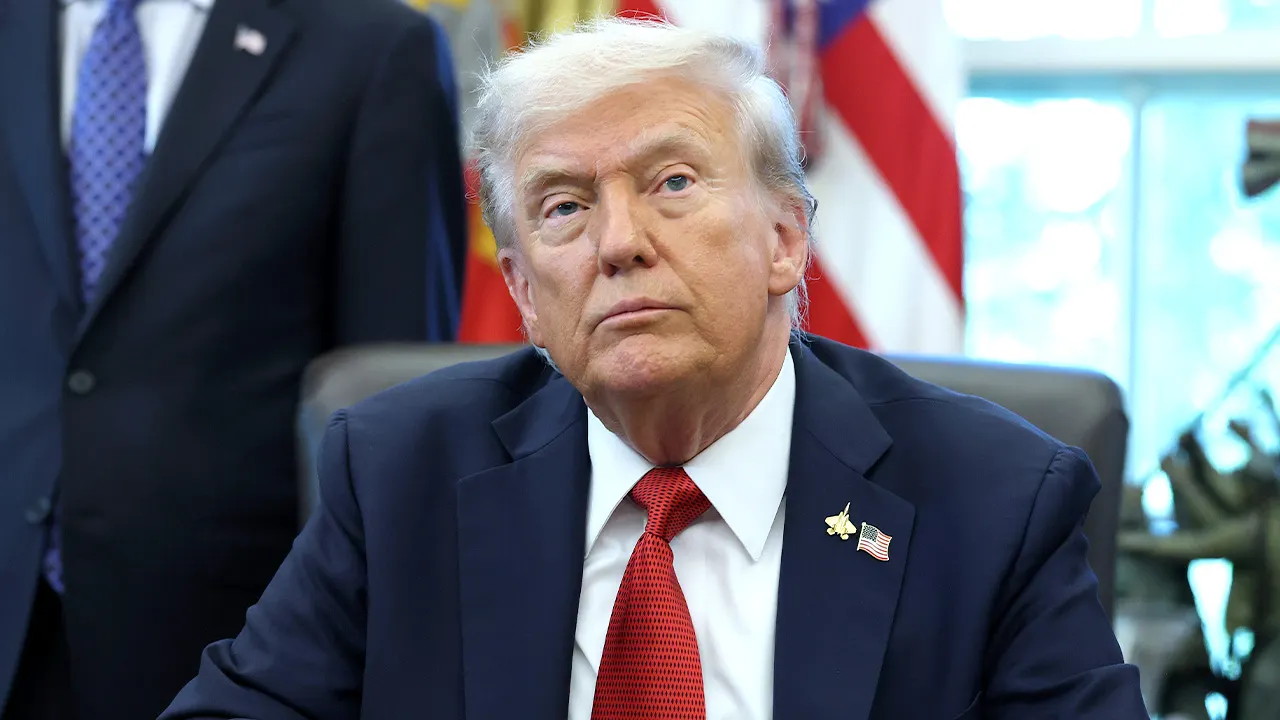
President Donald Trump is amplifying his political targeting of Indiana Republicans who have been resisting calls from the president to move forward with congressional redistricting.
Trump on Tuesday, for a third straight day, vowed to back primary challenges against state Republican lawmakers in the solidly red Midwestern state who didn’t support his push to draw new maps in Indiana, which would create another GOP-leaning congressional district.
“A RINO State Senator, Rodric Bray, who doesn’t care about keeping the Majority in the House in D.C., is the primary problem. Soon, he will have a Primary Problem, as will any other politician who supports him in this stupidity,” Trump warned in a social media post.
Despite pressure from Trump and his political team, Bray, the Republican leader in the state Senate, announced last week that there wasn’t enough support in the chamber to move forward with redistricting. Indiana is the latest battlefield in the high-stakes redistricting showdown pitting Trump and Republicans versus Democrats to shape the 2026 midterm landscape in the fight for the House majority.
INDIANA REPUBLICANS REJECT TRUMP-BACKED REDISTRICTING PUSH
President Donald Trump, seen pointing as he boards Air Force One at Joint Base Andrews, Maryland, on Sept. 11, 2025, is targeting Indiana Republican lawmakers who are not supportive of the president’s congressional redistricting push. (Mandel Ngan/AFP/Getty Images)
Republicans currently control seven of Indiana’s nine congressional districts, and any new map passed by the GOP supermajority in the legislature would likely shift the state’s 1st Congressional District from blue-leaning to a red-leaning seat.
Trump on Sunday lambasted Bray and another Republican state senator, calling for their ouster.
The president returned to social media a day later, charging, “Because of these two politically correct type ‘gentlemen,’ and a few others, they could be depriving Republicans of a Majority in the House, A VERY BIG DEAL!”
RULING BY RED STATE JUDGE REDISTRICTING SETBACK FOR REPUBLICANS
Trump is twisting elbows in his attempt to make Indiana the latest Republican-controlled state to change their congressional maps. The president has called state lawmakers and Vice President JD Vance visited the state earlier this autumn to discuss redistricting.
And Fox News has confirmed that Trump has invited some of the Indiana Republicans who are holding out against redistricting to White House meetings in the coming days. The news was first reported by Politico.
Indiana Gov. Mike Braun speaks during a press conference at the Gary Chicago International Airport in Gary, Indiana, on Thursday, Oct. 30, 2025. He has called a special session to redraw the state’s congressional map. (Michael Gard/Post-Tribune/Tribune News Service via Getty Images)
Trump, in his Sunday post, also took a jab at Republican Gov. Mike Braun of Indiana, arguing that the governor “perhaps, is not working the way he should to get the necessary Votes.”
Braun on Monday wrote on social media that “I just had a great call with President Trump! I told him I remain committed to standing with him on the critical issue of passing fair maps in Indiana to ensure the MAGA agenda is successful in Congress.”
And the governor claimed that “the Indiana State Senate is hiding behind closed doors and refusing to even bring redistricting to a vote. Hoosiers deserve to know where their legislators stand and expect them to show up for work, not walk out and hide in the dark.”
Trump on Tuesday called Braun “a good man,” but warned he “must produce on this, or he will be the only Governor, Republican or Democrat, who didn’t.”
NEWSOM TAKES VICTORY LAP AFTER LANDSLIDE REDISTRICTING VICTORY IN CALIFORNIA
The push by the president in Indiana is part of a broad effort by Trump’s political team and the GOP to pad the party’s razor-thin House majority to keep control of the chamber in next year’s midterms, when the party in power traditionally faces political headwinds and loses seats.
Trump is aiming to prevent what happened during his first term in the White House when Democrats reclaimed the House majority in the 2018 midterm elections.
Texas, Missouri, North Carolina, and Ohio have drawn new maps as part of the president’s push. And Florida and Kansas are also mulling redrawing their maps.
“We must keep the Majority at all costs,” Trump wrote Monday.
But on Tuesday, a three-judge federal panel delivered a blow to Trump and Republicans, by ruling that the state can’t use the newly drawn map in next year’s elections. Texas Republicans say they’ll appeal the ruling to the Supreme Court.
Meanwhile, Democrats are fighting back.
California Gov. Gavin Newsom speaks during an election night press conference at a California Democratic Party office Tuesday, Nov. 4, 2025, in Sacramento, California. (Godofredo A. Vásquez/AP Photo)
California voters two weeks ago overwhelmingly passed Proposition 50, a ballot initiative which will temporarily sidetrack the left-leaning state’s nonpartisan redistricting commission and return the power to draw the congressional maps to the Democrat-dominated legislature.
That is expected to result in five more Democratic-leaning congressional districts in California, which would counter the passage earlier this year in Texas of a new map that aims to create up to five right-leaning House seats.
CLICK HERE TO DOWNLOAD THE FOX NEWS APP
Illinois and Maryland, two blue states, and Virginia, where Democrats control the legislature, are also taking steps or seriously considering redistricting.
And in a blow to Republicans, a Utah district judge last week rejected a congressional district map drawn up by the state’s GOP-dominated legislature and instead approved an alternate that will create a Democratic-leaning district ahead of the 2026 midterm elections.
Read the full article from Here



Detroit, MI
Retired Detroit sergeant faces new sexual assault charge involving 14-year-old victim from 2002

An additional case, this one involving a victim who was then 14 years old, has been added to the sexual assault investigation against a former Detroit Police Department sergeant.
Wayne County Prosecutor Kym Worthy announced the latest charges on Friday against Benjamin Martin Wagner, 68, who now lives in Greenville, N.C. He had retired from the Detroit Police Department in 2017.
The victim in the additional charges was 14 years old when the assault happened in October 2002 in Detroit, Worthy said. The prosecutor alleges that Wagner approached the victim, pointed a handgun at her, ordered her away from the location and then sexually assaulted her.
In this case, he faces charges of kidnapping, two counts of first-degree criminal sexual conduct and two counts of third-degree criminal sexual conduct. An arraignment hearing took place Friday in the 36th District Court in Detroit. A probable cause conference is scheduled for April 7.
The woman is now 37 years old.
“She has lived with what happened to her for 23 years and has now bravely decided that she wants to be a part of holding him accountable,” Worthy said.
Wagner participated in a court hearing Thursday and was remanded to jail, one week after he was charged with 15 counts of kidnapping and rape in five separate sexual assault cases. All of those incidents happened between 1999 and 2003 in the northwest side of Detroit, with the victims being young women between the ages of 15 and 23.
The court dates for the earlier list of charges are April 7 for a probable cause hearing and April 14 for a preliminary exam.
Wagner joined the Detroit Police Department in 1989 as a police officer and was eventually promoted to sergeant. He retired in 2017 and moved to North Carolina.
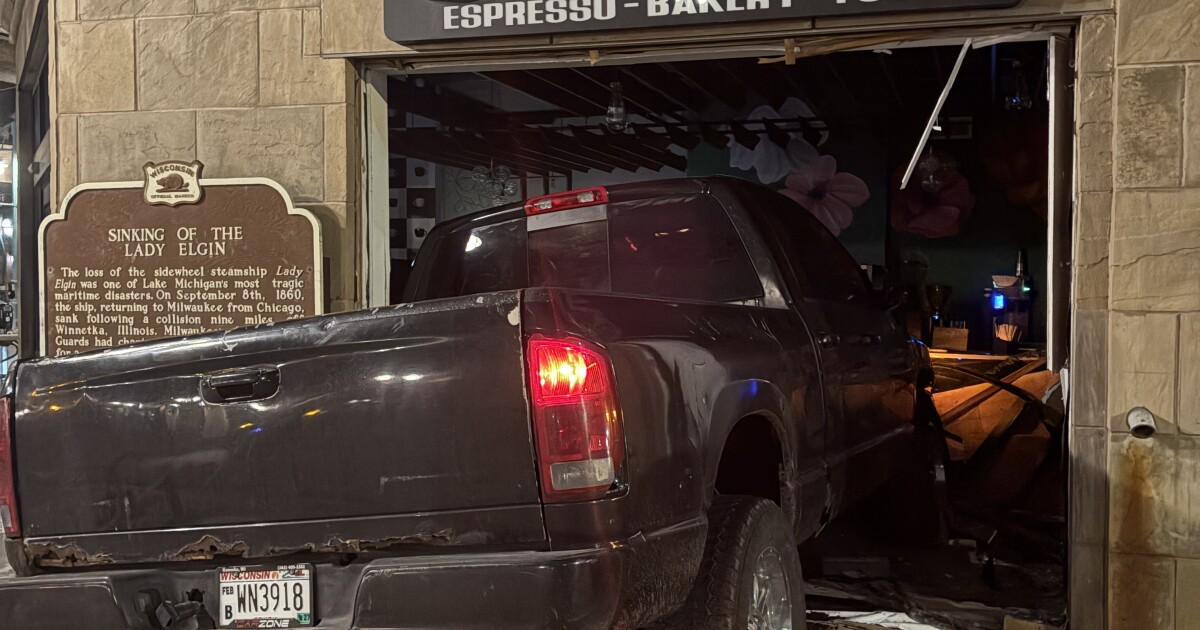
MILWAUKEE — A truck drove through the Grace Coffee Co. in Milwaukee’s Historic Third Ward on early Friday morning, the owners announced in a social media post.
Due to the extensive damage that was done, the coffee shop will be closed until further notice.
TMJ4
“We’re incredibly grateful no one was hurt, and we’ll keep you updated as we begin repairs,” the coffee shop said in the post.
TMJ4 reached out to the Milwaukee Police Department but have yet to hear back.
Let’s talk:
Hey there! At TMJ4 News, we’re all about listening to our audience and tackling the stuff that really matters to you. Got a story idea, tip, or just want to chat about this piece? Hit us up using the form below. For more ways to get in touch, head over to tmj4.com/tips.
It’s about time to watch on your time. Stream local news and weather 24/7 by searching for “TMJ4” on your device.
Available for download on Roku, Apple TV, Amazon Fire TV, and more.
Report a typo or error // Submit a news tip

Police say two people were hurt and one other man died.
A homicide investigation is underway in Minneapolis after a shooting early Friday morning killed one man and hurt two others.
Minneapolis police were called to the area of East Franklin Avenue and Chicago Avenue at around 12:30 a.m.
5 EYEWITNESS NEWS cameras caught more than 65 evidence markers scattered across the ground in the area and shattered glass at a bus shelter. Some nearby businesses also appeared to have some damage.
Minneapolis police are still working to determine what led up to the shooting and who was involved but investigators say first responders found the three men suffering from gunshot wounds.
One injured man is in his 40s, the other in his 50s, police say. Both were taken to a hospital by ambulance.
The third man died at the scene. His name and age haven’t yet been publicly released.
Police say early information suggests the men were on a sidewalk when at least one person opened fire, then fled in a vehicle.
So far, no arrests have been made.
Anyone with information about what happened is asked to call police at 612-673-5845 to leave a voicemail or email policetips@minneapolismn.gov.
“This is a tragic and deeply disturbing act of violence that has taken a life, and left others seriously injured,” MPD Chief Brian O’Hara said. “This kind of violence is unacceptable, and we are committed to identifying those responsible and holding them accountable.”
Minneapolis police investigating alleyway shooting near East Franklin Avenue
It comes less than 30 hours after another serious shooting along East Franklin Avenue, just a half-mile west of Friday’s scene. That incident left a man hospitalized with a potentially life-threatening gunshot wound. No arrests have been announced in that case either.
5 EYEWITNESS NEWS is still working to learn more about this shooting. Stay with KSTP-TV for the latest updates on air and on the KSTP app.


Retired Detroit sergeant faces new sexual assault charge involving 14-year-old victim from 2002

Trump floats sending federal agents to San Francisco to tackle crime

Dallas ISD will offer free pre-K starting next school year

Norwegian Cruise Line offers a first look at Luna, new cruise ship setting sail from PortMiami – WSVN 7News | Miami News, Weather, Sports | Fort Lauderdale

Live: CPAC 2026 Day 2

Florida High School Football Rankings: Top 25 teams – Oct. 21

How old is Bo Nix? What to know about Oregon quarterback ahead of 2024 NFL Draft

Cleary's 21 help Le Moyne down Central Connecticut State 69-64 in OT

99th annual Pony Swim held in Virginia

Indiana Members Credit Union announced as new anchor tenant at Bottleworks District
Live: CPAC 2026 Day 2

Video: Will ICE Change Under Its New Leader?

DHS shutdown breakthrough comes at cost for Republicans as funding fights nears end

Rubio joins crucial G7 talks as Iran war set to dominate second day

A surprise resignation could open the door for an independent to win a Montana Senate seat
-

 Detroit, MI1 week ago
Drummer Brian Pastoria, longtime Detroit music advocate, dies at 68
-

 Science1 week ago
How a Melting Glacier in Antarctica Could Affect Tens of Millions Around the Globe
-

 Movie Reviews1 week ago
‘Youth’ Twitter review: Ken Karunaas impresses audiences; Suraj Venjaramoodu adds charm; music wins praise | – The Times of India
-

 Sports6 days ago
IOC addresses execution of 19-year-old Iranian wrestler Saleh Mohammadi
-

 New Mexico5 days ago
Clovis shooting leaves one dead, four injured
-
 Business1 week ago
Disney’s new CEO says his focus is on storytelling and creativity
-

 Technology5 days ago
YouTube job scam text: How to spot it fast
-

 Tennessee4 days ago
Tennessee Police Investigating Alleged Assault Involving ‘Reacher’ Star Alan Ritchson