Midwest
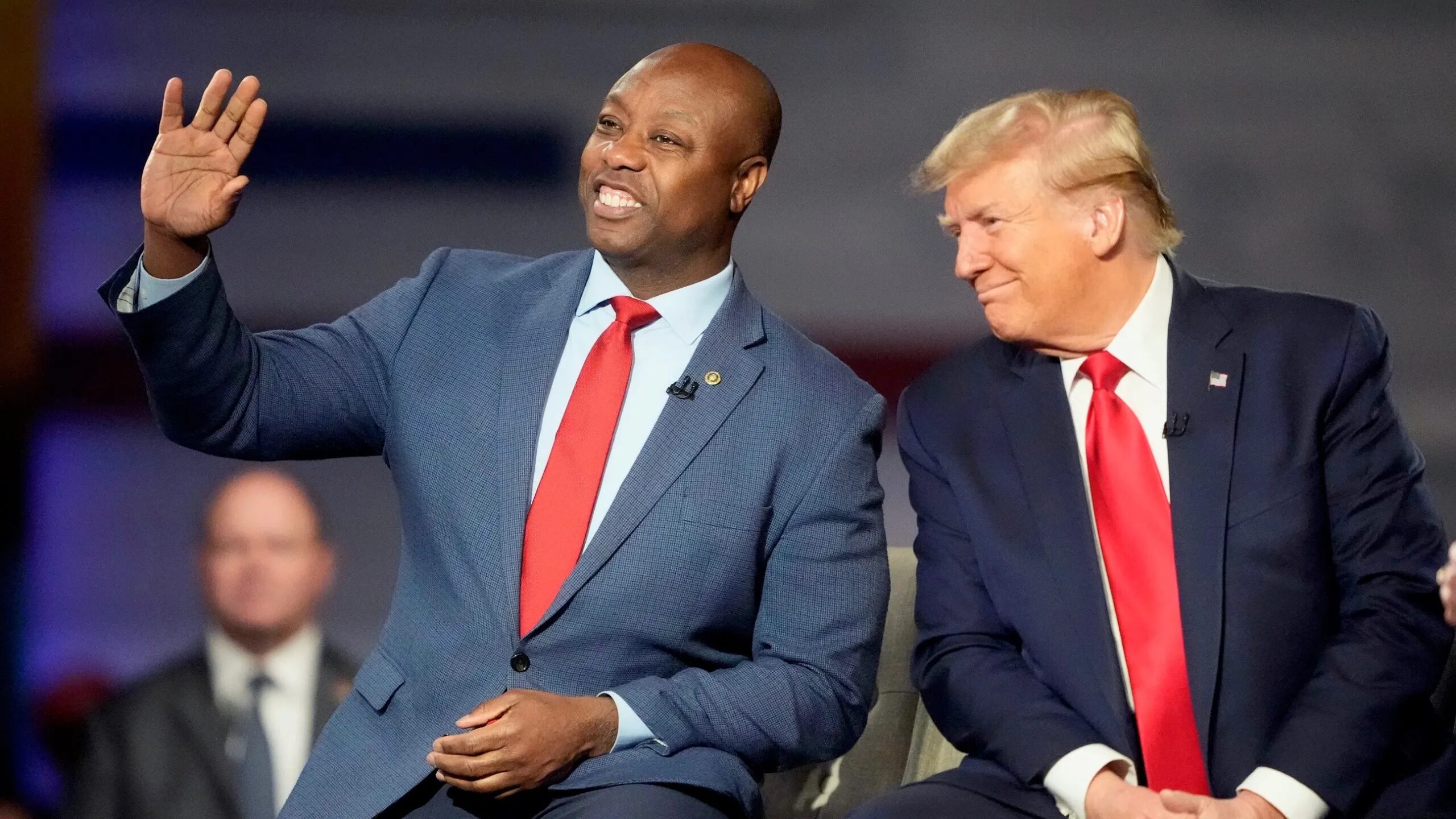
Tim Scott tells MAGA voters Trump ‘is on the ballot’ as GOP fights to grow Senate majority in 2026

NEWYou can now listen to Fox News articles!
As he aims to not only defend but expand the GOP’s 53-47 Senate majority in next year’s midterm elections, Sen. Tim Scott has a message for MAGA voters who don’t always go to the polls when President Donald Trump’s name isn’t on the ballot.
“Donald Trump is on the ballot, and that’s why he’s been so active around the country,” Scott, the chair of the National Republican Senatorial Committee (NRSC) said this week in a Fox News Digital interview.
Scott, a Republican from South Carolina and Trump ally, said, “I look forward to seeing the president on the campaign trail across this country.”
And the president appears to be delivering.
WHATLEY: ‘THE PRESIDENT AND HIS LEGACY’ ON 2026 BALLOT
Former RNC Chairman Michael Whatley, a 2026 U.S. Senate candidate, is greeted onstage by President Donald Trump, at a campaign event, Friday, Dec.19, 2025, in Rocky Mount, N.C. (Alex Brandon/AP Photo)
Trump on Friday night held the second leg of his affordability tour during a stop in battleground North Carolina, home to what is shaping up to be one of the most crucial, combustible, and expensive Senate battles next year.
“We’re certainly going to need him to be on the ballot,” former Republican National Committee Chair Michael Whatley told Fox News Digital, as he pointed to Trump.
THE GOP’S TAKE ON HIGH-PROFILE SENATE DEMOCRATIC PRIMARIES: ‘THEY’RE IN SHAMBLES’
Whatley, the Trump-backed clear frontrunner for the GOP Senate nomination in the 2026 race to succeed retiring Republican Sen. Thom Tillis of North Carolina, joined Trump at Friday night’s event.
“When you think about what happens if we lose the House, if we lose the Senate, if the Democrats take over, and they go right back to investigations and hoaxes and impeachments, that is really, truly the president and his legacy are going to be on the ballot,” Whatley emphasized.
Trump and Republicans spotlighted rising prices as they swept to major victories in 2024, retaking the White House and Senate and holding their majority in the House.
But with inflation remaining persistent, Democrats have been laser focused this year on the issue of affordability, which fueled their decisive victories in last month’s 2025 elections and their overperformances this year in a slew of special elections.
But Scott predicts the tide will turn.
“I’ve said 2026 is a year of affordability, and the great news is President Trump has been producing time and time again,” he touted.
Pointing to the tax cut provisions in the GOP’s sweeping domestic policy measure signed into law this past summer by Trump, Scott said “2026 is shaping up to be the year where Donald Trump’s activities, his actions, the legislation we’ve passed, shows up for the American voter. And consumers all across the country will see a more affordable economy because of President Trump and the Senate majority and the House majority in the hands of the Republican Party.”
GOP SENATE CAMPAIGN CHIEF AIMS TO EXPAND 2026 MAP IN THIS BLUE-LEANING STATE
Lauren French, communications director at Senate Majority PAC, the top Senate Democrat-aligned outside group, told Fox News Digital that “even Tim Scott is occasionally right — 2026 will be the year of affordability.”
But taking aim at the GOP narrative, French argued that affordability will continue to grab top billing with voters “because Americans can’t afford Donald Trump and Republican policies that continue to drive up the cost of groceries, basic goods, and, right now, Christmas presents.”
“The out-of-touch insistence from the GOP that the economy is thriving proves they don’t understand what working families are facing, which is probably why Democrats won or dramatically overperformed in every contested election this year,” she emphasized. “2026 will be no different as Democrats continue to put forward real plans to address the cost-of-living crisis.”
There are 35 Senate seats up for grabs next year, including special elections for GOP-held seats in Florida and Ohio. Overall, Republicans are defending 22 of the seats.
But the map of competitive races is much smaller.
Scott reiterated that open Democrat-held seats in battleground Michigan and swing state New Hampshire are two of the NRSC’s top targets, along with Sen. Jon Ossoff in battleground Georgia, whom Republicans consider the most vulnerable Democrat seeking re-election next year.
4 KEY SENATE SEATS REPUBLICANS AIM TO FLIP IN 2026 MIDTERMS TO EXPAND THEIR MAJORITY
The NRSC chair is also eyeing blue-leaning Minnesota, where the Senate GOP campaign arm is working to recruit former professional football sideline reporter turned political activist and commentator Michele Tafoya, who is inching closer to jumping into the race.
“We’re excited about expanding our map, and Minnesota is one of the target states that we’re looking at,” Scott said. “We see real reasons to be optimistic. President Trump was very close in Minnesota. It’s a four-point race. We know with the right candidate, we will be successful.”
Apparently pointing to Tafoya, Scott suggested Republicans are likely to land “a strong candidate in the race,” and teased “wait and see” for “better news.”
Scott will likely be playing defense in Texas, where there’s currently a nasty three-way GOP Senate primary, as well as in North Carolina, Maine and Ohio.
Asked his prediction for next year, Scott said “54 is clearly within our grasp right now, but with a little bit of luck, 55 is on our side.”
CLICK HERE TO DOWNLOAD THE FOX NEWS APP
But the rival Democratic Senatorial Campaign Committee (DSCC) sees it differently.
“While Democrats have expanded the map and created a path to flip the majority in 2026, Senate Republicans are facing a string of embarrassing recruitment failures and messy primaries — and their toxic agenda of health care cuts and price spikes for hardworking Americans will cost them at the ballot box,” DSCC spokesperson Joe Bush told Fox News Digital.
Read the full article from Here



Gunfire erupted Friday during a funeral on Detroit’s west side, leaving five people injured, including the suspect.
At about 5:48 p.m., a physical fight broke out during a funeral at Greater Love Tabernacle Church on Plymouth Road, south of Interstate 96 on the city’s west side, authorities said.
During the fight, one suspect produced a handgun and fired into the crowd, striking multiple people, authorities said.
Officers were already stationed in the area, assigned to assist at a separate visitation at a nearby funeral home after police received threats of violence during that event. One officer who responded to the church in response to the fight saw the shooting and returned fire, striking the shooter.
“I want to thank the Detroit Police Department for the officer’s quick and courageous action, which prevented further harm,” Mayor Mary Sheffield said in a statement late Friday. “This was an act of senseless violence, and it has no place in our city.”
In total, five people were struck, including the suspect, police said. All were hit in the lower part of their body and were hospitalized with non-life-threatening injuries.
Police called the shooting an “isolated incident” and said there was no ongoing threat to the public.
Authorities said four of the injured parties were in their mid-20s, including the suspect. The other victim was in their mid-30s.
Sheffield said the funeral was for a young man who had died in a car crash.
“My thoughts are with them, their families, and everyone affected. I am grateful that all of the victims are expected to survive,” the mayor said.
The suspect was taken into police custody and police recovered the firearm, authorities said.
Police were not sure why the combatants were initially fighting at the church.
Anyone with information is asked to contact Detroit Crime Stoppers at 1-800-SPEAK-UP.
mreinhart@detroitnews.com


When will wildfire smoke leave Wisconsin?
Let’s clear the haze on exactly how smoke from Canadian wildfires is affecting air quality in Wisconsin. Here are answers to common questions.
A 12-year-old was shot and injured during the afternoon of July 17, and Milwaukee police are asking the public for information.
The shooting happened around 6:35 p.m. on the 5600 block of North 60th Street, according to the Milwaukee Police Department. The child was injured and transported to a local hospital for treatment of non-fatal injuries.
Police said the circumstances leading up to the shooting remain under investigation.
Milwaukee police continue to seek unknown suspects. Anyone with information is asked to call 414-935-7360 or, to remain anonymous, contact Crime Stoppers at 414-224-Tips or the P3 Tips App.
Adrienne Davis is a general assignment and breaking news reporter for the Milwaukee Journal Sentinel. Got any tips or stories to share? Contact Adrienne at amdavis@gannett.com. Follow her on X at @AdriReportss.

A Minneapolis man is charged after he drove at two campground workers in Washington County, court documents show.
According to a criminal complaint, 53-year-old Michael Fritz is facing two counts of second-degree assault and one count of fleeing a peace officer.
Washington County deputies were called to the Saint Croix Bluffs Campground on Tuesday around 1:10 p.m. in response to a caller who said Fritz attempted to run him and his wife over.
The workers told deputies they were picking up trash when Fritz argued with his girlfriend, then yelled at them to stop looking. Court documents said Fritz then got into his car and drove through multiple campsites directly at them.
At one point, one of the campground workers said Fritz “aimed the car” at her husband and came within feet of hitting him. The campground worker also said she had to run behind a large tree to protect herself, according to the criminal complaint.
Deputies spoke with a camper who confirmed Fritz drove his car directly at the two campground workers. Then, deputies took Fritz into custody after a brief pursuit.
Fritz is set for an omnibus hearing on Sept. 16.
-

 Wyoming1 minute ago
Racines runs unopposed for Wyoming State Auditor
-

 Crypto7 minutes ago
‘Useless Plastic’: NSPK CEO Declares the End of Visa and Mastercard in Russia
-

 Finance13 minutes ago
Former Bank chief financial officer sentenced to three years for $4.3 million loan fraud
-

 Fitness19 minutes ago
Widening Health Divide Among U.S. Cities Revealed in 2026 ACSM American Fitness Index® | Newswise
-

 Movie Reviews31 minutes ago
“The Odyssey” is Christopher Nolan’s Most Singular Film Yet (Movie Review)
-
World43 minutes ago
Iran War Updates: Bridges and Water Plants Hit as Strikes Stretch to 7th Straight Day
-
 Lifestyle2 hours ago
Spain could make World Cup history: The first to win men’s and women’s trophies back-to-back
-

 Technology2 hours ago
Taylor Farms pulls iceberg lettuce from the US market after cyclosporiasis outbreak

