South Dakota
South Dakota DANR awarding grants for water projects

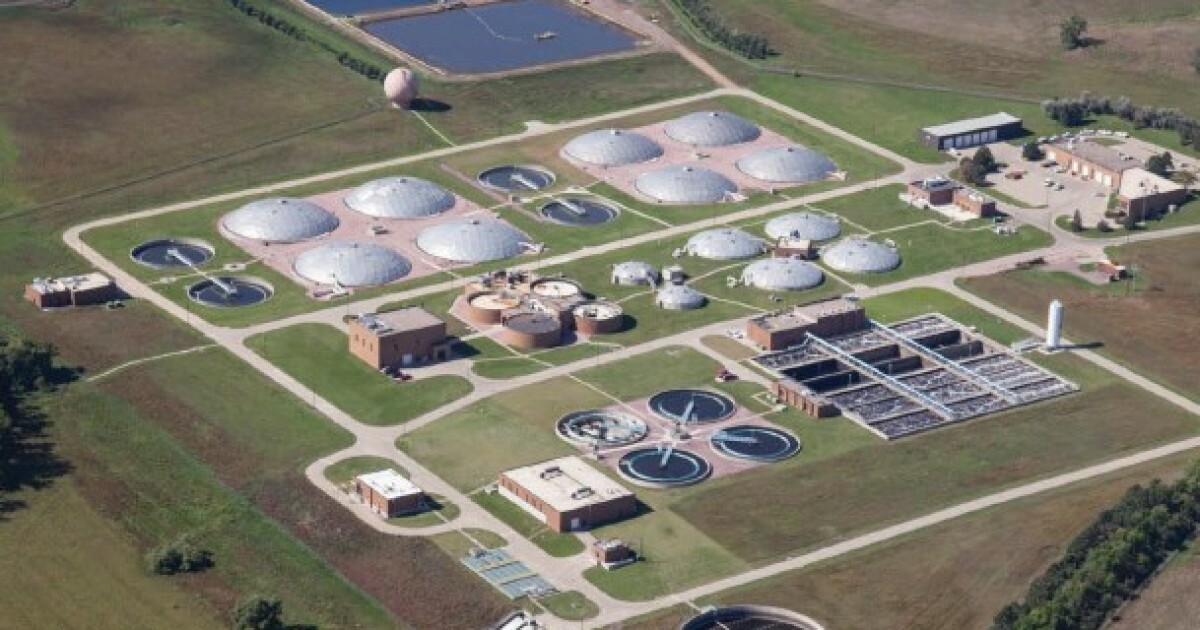
The South Dakota Department of Ag and Natural Resources is allocating $175 million in federal grants.
The American Rescue Plan Act money is going toward grants for drinking water, wastewater system improvements and the state’s riparian buffer initiative. The department is awarding $105 million in grants to nearly thirty water districts and rural water systems to improve drinking water across the state.
Another $65 million is going toward almost 20 cities and sanitary districts for waste and stormwater projects.
The department is investing $5,000,000 into riparian buffer grants. A riparian zone is a conservation practice that encourages vegetation growth along the edges of rivers, stream and lakes to help improve water quality.
The full list of approved grants:
- Aurora-Brule Rural Water received an additional $846,775 ARPA grant to install a new parallel water main, a new water storage reservoir, multiple loops within the system, a booster station, and make distribution line improvements. Previous funding for this project was awarded in April 2022
- BDM Rural Water System received an additional $1,738,345 ARPA grant to construct a new water treatment plant, install a water reservoir, install pipe to expand the water system and loop lines for added redundancy, and replace water meters. Previous funding was awarded in April 2022.
- Black Hawk Water User District received an additional $254,340 ARPA grant to install a new water main crossing I-90 near Exit 52. The existing crossing is undersized and not operating effectively. Previous funding was awarded in June 2022.
- Brookings received an additional $8,000,000 ARPA grant to construct a new lime softening water treatment facility along 34th Avenue. The new treatment plant will require the installation of raw and finished water lines to feed into the distribution system and includes the construction of six new municipal wells and a new transmission main. Previous funding was awarded in April 2022.
- Brookings-Deuel Rural Water System received an additional $1,357,708 ARPA grant to construct water main to interconnect the system’s two primary water sources, the Joint Well Field, and the Clear Lake Water Treatment Plant. The project will also include installation of a new water main to the Lake Cochrane service area to improve low pressures around the lake during periods of peak water use. Previous funding was awarded in April 2022.
- Clay Rural Water System received an additional $2,488,710 ARPA grant to construct two ground storage reservoirs near the existing Greenfield reservoir and the Wakonda Water Treatment plant. A new booster station at the Greenfield reservoir and distribution line improvements to provide additional capacity and accommodate a Highway 46 construction project is also included. Previous funding was awarded in April 2022.
- Davison Rural Water System received an additional $189,255 ARPA grant to install a water line to parallel and loop existing mains and make upgrades to its automatic meter reading technology. Previous funding was awarded in April 2022.
- Fall River Water User District received an additional $1,400,007.62 ARPA grant to install a submersible pump and finish piping at the existing Fairburn well, construct a pump station and well house, a control building/pump station, a ground storage reservoir at the well site, pipeline to connect the Fairburn well to the existing distribution system in two locations, and a ground storage reservoir along the new pipeline route. Previous funding was awarded in June 2022.
- Grant-Roberts Rural Water System received an additional $1,023,690 ARPA grant to add transmission capacity allowing the system’s two reservoirs to fill during high water use periods. Additional pipeline looping and parallels will be completed to distribute water to existing and new customers and improve the reliability of the water system. The project also includes installation new pipeline and other appurtenances to allow the town of Corona to access the Grant-Roberts Rural Water System. Previous funding was awarded in April 2022.
- Hanson Rural Water System received an additional $548,388 ARPA grant to install water lines to parallel and loop of existing mains and make upgrades to its automatic meter reading technology. Previous funding was awarded April 2022.
- Joint Well Field, Inc. received an additional $1,440,459 ARPA grant to construct a new gravity filtration water treatment plant including aeration, detention, filtration, transfer pumping, raw water supply wells, and generation equipment. Previous funding was awarded in April 2022.
- Kingbrook Rural Water System received an additional $4,972,298 ARPA to upgrade the Badger pump station, DeSmet water treatment plant, Chester water treatment plan, Oakwood pump station, and the Orland pump station. The project also involves construction of an elevated tank near Arlington and booster pump station near Bryant, and relocation and resizing of pipeline segments along Highway 25 north of DeSmet. Previous funding was awarded in April 2022.
- Lead-Deadwood Sanitary District received an additional $339,623 ARPA grant to abandon the Hanna raw water transmission pipeline and install new ductile iron or steel pipe. Both low- and high-pressure lines will be re-routed to bypass the Englewood power generation facility, and a portable backup power generator will be purchased for use at multiple locations. Previous funding was awarded in June 2022.
- Lead-Deadwood Sanitary District also received an additional $136,662 ARPA grant to make improvements to the wastewater treatment plant serving Lead, Deadwood, Central City, and other unincorporated areas. Improvements include replacement of five aeration blowers, installation of fine bubble diffusers and aeration piping, and installation of a blower control system. Previous funding was awarded In June 2022.
- Lewis & Clark Regional Water System received an additional $5,000,000 ARPA grant to construct two solids contact units, a sludge thickener, three lime sludge drying beds, and a three million gallon clear well and high service pump station to increase the treatment plant capacity. Previous funding was awarded in April 2022.
- Lincoln County Rural Water System received an additional $571,211 ARPA grant to install transmission improvements to serve newly constructed residences. The project will install approximately 16.5 miles of pipeline and includes looping of dead-end lines. Previous funding was awarded in April 2022.
- Mid-Dakota Rural Water System received an additional $6,830,882 ARPA grant to update the existing water system by installing an advanced metering infrastructure system, paralleling of pipe, addition of a new backwash recovery system, and additional membrane capacity. Previous funding was awarded in April 2022.
- Mni Wašté Water Company received an additional $6,545,503 ARPA grant to install a treated water pipeline, a water tower, and appurtenances including valves, pumps, and air releases. This project replaces the undersized pipeline along Highway 63 and will serve as the main pipeline for the northern tier of the Cheyenne River Sioux Tribe. Previous funding was awarded in April 2022.
- Randall Community Water District received an additional $10,000,000 ARPA grant to address increasing demand among existing customers and supply water to the City of Mitchell. The proposed improvements will provide enough capacity to allow Mitchell to connect its redundant water line to the system. Booster stations, storage facilities, and an upgrade to the Platte Water Treatment Plant are necessary to complete the proposed improvements. Previous funding was awarded in June 2022.
- Rapid City received an additional $8,000,000 to make improvements to its wastewater treatment facility by adding secondary clarifiers and hydraulic improvements which allows the South Plant to assume all inflow while meeting permit limits. This project would also decommission the North Plant. Previous funding was awarded in April 2022.
- Shared Resources received an additional $10,000,000 ARPA grant for a treatment plant, well field, distribution pipeline, and two storage tanks. Shared Resources is a joint effort between Minnehaha Community Water Corporation and the Big Sioux Community Water System. Previous funding was awarded in April 2022.
- Sioux Falls received an additional $8,000,000 ARPA grant to make substantial improvements throughout the city’s wastewater reclamation facility and to expand the plant capacity to accommodate growth in the region. Previous funding was awarded in May 2022.
- Sioux Rural Water System received an additional $765,583 ARPA to construct a new elevated tank in the southwest part of the system and two segments of pipeline to increase pressure and capacity. Previous funding was awarded in April 2022.
- South Lincoln Rural Water System received an additional $2,444,355 ARPA grant to make system wide improvements including installing an elevated water tank, a new pump station, and a new water treatment plant. This project addresses capacity issues in portions of the distribution system and increasing demands within the existing service area. Previous funding was awarded in April 2022.
- Southern Black Hills Water System received an additional $542,432 ARPA grant to extend the existing water system main from the two wells at Paramount Point Subdivision approximately 5 miles northeast to the Spring Creek Acres Subdivision to provide redundancy. The project will also construct a new well, booster pump station, new elevated storage reservoir, chlorination and SCADA systems, and new pressure reducing valve stations. Previous funding was awarded in April 2022.
- TM Rural Water District received an additional $1,272,908 ARPA grant to install four miles of parallel 12-inch water main to address low water pressure situations during high water demand periods. Previous funding was awarded in April 2022.
- Tripp County Water User District received an additional $2,034,121 ARPA grant to replace two storage tanks, to parallel and loop water lines to increase the water pressure within the system, and to develop a new well field to address water supply issues. Previous funding was awarded in April 2022.
- WEB Water Development Association received an additional $10,500,000 ARPA grant. The funding is part of a much larger project to increase water capacity for WEB and to provide a bulk water connection for Aberdeen and BDM Rural Water. The project is known as the Water Investment in Northern South Dakota or WINS project, undertaken by all three entities with WEB acting as the lead contracting entity at this time. Previous funding was awarded in June 2023.
- Western Dakota Regional Water System received an additional $2,165,000 ARPA grant for a feasibility study to explore the use of its Missouri River water to supply a large portion of western South Dakota with a bulk water transmission line conveying Missouri River water to various communities, tribes, and water systems. The current funding will be used to hire an engineering firm to complete facilities plan and preliminary design for the project. Previous funding was awarded in April 2022.
- West River/Lyman-Jones Rural Water System received an additional $602,702 ARPA grant to install PVC water mains serving areas in Mellette, Haakon, and Lyman counties. A new ground storage tank and necessary electrical controls would also be installed in Pennington County. Previous funding was awarded in April 2022.



Definition of a Buck Deer and Bull Elk Antler
The Commission finalized a clean-up to remove “polished antler” and replace with “antler” from the definition of a buck and bull to allow an individual to harvest a velvet antlered deer or elk.
Spring and Fall Turkey Seasons
The Commission made several changes to the spring and fall turkey seasons.
For the Spring Turkey Season, references to federal property closures were removed from administrative rule and the Day and Codington County combined unit was separated into county specific units for Day (PST-22A) and Codington (PST-05A) counties.
Changes to the Fall Turkey Season include a weapons restriction change allowing for the use of rifles or shotguns for hunting turkeys in the fall for all units, except for Minnehaha County. In addition, the changes to fall turkey unit boundaries will result in the same Spring and Fall turkey unit boundaries for all units, except for the Black Hills.
The Commission closed Bennett and Sanborn counties to spring firearm turkey hunting. The Commission closed Gregory and Mellette counties to fall turkey hunting and opened Hughes County. All spring and fall turkey hunting season unit license numbers were finalized.
Tagging and Transportation of Shooting Preserve Harvested Pheasants
The Commission adopted additional allowances for the transportation of harvested birds from a private shooting preserve directly to a lodge or cleaning facility not located on permitted acres prior to tagging. This finalization is the result of a public petition.
PROPOSALS
Aquatic Invasive Species Regulations
The Commission proposed to add golden mussels to the current list of Aquatic Invasive Species. Currently, golden mussels have established populations in western North America and are spreading east. They have similar effects as zebra mussels. They are not in South Dakota at this time.
The Commission also proposed to exclude phragmites species from types of vegetation that can be used as blind material on boats when being launched or trailered. Phragmites could be used as blind material, but cannot be transported from the waterbody.
Bait Regulations
The Commission proposed to remove the requirement to submit an annual summary of bait harvested for resident bait dealers. Resident bait dealers who trap their own bait would still be required to maintain daily records of bait trapped.
Muskellunge Limits
The Commission proposed to modify the daily and possession limit of muskellunge and northern-muskellunge (tiger) cross from catch and release to 1 daily, 2 in possession with a 45-inch minimum length limit for inland waters.
Fishing Tournaments
The Commission proposed to modify the dates when a fishing tournament cannot occur to clarify fishing tournaments cannot occur on the Friday of the 4th of July weekend, if the 4th falls on a Friday, Saturday, Sunday or Monday.
Fish Pathogens
The Commission proposed to update the list of fish pathogens of regulatory concern used for fish importation permit requirements. This change would reduce the regulatory burden on importers and suppliers by reducing the number of pathogens that must be tested for. The proposed changes reflect current fish health standards and disease risk assessments while maintaining safeguards to prevent the introduction of significant fish pathogens into South Dakota waters.
Paddlefish Transportation
The Commission proposed to modify the transportation requirements for paddlefish harvested during the archery season below Gavins Point Dam to allow for harvested paddlefish to be cleaned, including removal of the head, skin and tail, prior to transport.
Bobcat Hunting Season
The Commission proposed the 2026-2027 and 2027-2028 Bobcat Hunting Season with no recommended changes to administrative rule from past years. With no changes to rule, the current season structure will be retained.
Endangered and Threatened Species
The Commission proposed to remove the Eskimo curlew and Least tern from the list of
endangered birds.
The Eskimo curlew is believed to be extinct throughout its range. The last confirmed
observation occurred in Barbados in 1963, and there are no records of the species in the South Dakota Nongame Conservation Database.
The Least tern was removed from the Federal List of Threatened and Endangered Species in 2021. In South Dakota, Least terns have been monitored annually for more than 30 years, and recovery criteria have been met for multiple consecutive years, including the most recent monitoring period.
Public Comments Being Accepted
To hear the discussion on these topics, audio from the meeting is available through South Dakota Public Broadcasting and will soon be available on the GFP website as part of the meeting archive.
To see these topics in their entirety, visit gfp.sd.gov/commission/information.
To be included in the public record and to be considered by the Commission, comments must include a full name and city of residence and be submitted by 11:59 p.m. CDT on Sept. 6.
The next GFP Commission meeting will be held in Winner, September 10-11.
South Dakota
MN officials warn dogs adopted from South Dakota show ‘high prevalence of canine brucellosis’

Image on the left shows a dog waiting for adoption in a shelter (Photo by Beata Zawrzel/NurPhoto via Getty Images). image on the right shows an optical microscope view of bacterium brucella canis causes brucellosis (Photo by: BSIP/Education Images/Un (Getty Images)
The Minnesota Board of Animal Health is warning that some dogs adopted from South Dakota are testing positive for canine brucellosis, a contagious and uncurable infection.
Dogs from South Dakota carrying canine brucellosis
By the numbers:
State officials say that so far in 2026, there have been seven canine brucellosis positive dogs traced to South Dakota.
What they’re saying:
Companion Animal Program Veterinarian Dr. Steve Kivisto shared the following statement on the matter.
“We’re evaluating new import requirements and quarantine procedures for dogs coming into Minnesota from South Dakota due to a high prevalence of canine brucellosis in dogs rescued from that geographic area in the past few years,” said companion animal program veterinarian Dr. Steve Kivisto. “We’ve also had recent cases imported from other states and will consider additional requirements if those also prove to contain a pattern of canine brucellosis.”
Dig deeper:
Canine brucellosis is an infection that primarily affects dogs, but there are strains capable of infecting other species, including humans.
The infection in dogs is not curable, and should an owner choose to attempt treatment, their pet could still continue to shed the bacteria. Infected dogs would either need to be quarantined for life or humanely euthanized to prevent the spread.
People who live with or work closely with animals are also at risk of contracting brucellosis.
What you can do:
Officials say anyone bringing dogs into Minnesota for resale or adoption must have a veterinarian examine the animal and sign off on a certificate of veterinary inspection certifying that it appears free from disease.
Testing is also highly recommended since infected dogs can appear healthy.
The Source: This story uses information shared by the Minnesota Board of Animal Health.

A Tyrannosaurus rex fossil discovered on a ranch in western South Dakota will be auctioned off in New York City on Tuesday with a possible sale price of $30 million or more.
The 38-foot long skeleton, nicknamed Gus, stands more than 12 feet tall and has one of the most complete T. rex skeletons ever found. According to Sotheby’s auction house, which is handling the sale, Gus could bring the highest sale price ever for a dinosaur fossil.
The dinosaur is from the late Cretaceous Period and was believed to have lived on Earth 67 million years ago.
The Harding County ranch where the skeleton was found lies in the famed Hell Creek Formation, a geological region of northwestern South Dakota and parts of Montana, North Dakota and Wyoming where dinosaur finds are fairly common.
Several other major dinosaur finds have been made there, including Sue, the famous T. rex discovered in 1990. After legal wrangling over ownership, Sue was auctioned in 1997 at a sale price of $8.3 million to the Field Museum of Natural History in Chicago, where it remains today.
(Photo: Malcolm Ritter)
The first piece of Gus, a metatarsal from the dinosaur’s foot, was found in 2021 sticking out of the ground on a Harding County ranch owned by Gary and Dana Licking. The find was made by paleontologists with Theropoda Expeditions, a Texas company specializing in commercial excavation, preparation and mounting of dinosaur fossils.
The fossil consists of 183 bone elements, making up 61% of the possible bones in the dinosaur’s body and representing 75% to 80% of the original bone mass by weight, Sotheby’s said.
The dinosaur Sue is 40 feet long and 13 feet tall and is considered the largest and most complete T. rex skeleton ever discovered at 90% of possible bone mass.
“This is our longest-term project ever,” Cassandra Hatton, worldwide head of Sotheby’s Science & Natural History division, said in the video. “From the day the first bone was discovered, we’ve been going back and forth to South Dakota to oversee this whole process.”
The lowest opening bid accepted will be $19 million, with an estimated sale price up to $30 million or more depending on buyer interest, Sotheby’s said.
Gus is named after rancher Gary Licking, whose nickname was Gus. Licking died at age 67 in February 2022, before the full extent of the T. rex skeleton was known.
Gary and Dana Licking married in 1983 and lived on their family ranch 11 miles west of Buffalo, according to Gary’s obituary.
Dana Licking said in Sotheby’s video that she was impressed at the level of skill and professionalism displayed by the paleontologists who discovered the skeleton.
“I’m really grateful that they found it because it could have been lost and nobody ever would learn anything about it,” she said.
Walter Stein, owner of PaleoAdventures in Belle Fourche, in western South Dakota, is an independent paleontologist who is also working to uncover fossils in the Hell Creek Formation.
Western South Dakota is likely to remain a hotbed for discovery of dinosaur fossils, said Stein, who last year opened the Dinosaurs of the Hell Creek Museum in Belle Fourche, a 6,500 square-foot museum with a working paleontology lab, interactive exhibits and dinosaur displays.
“Finding a Tyrannosaurus rex skeleton with 183 bones doesn’t happen every day,” he said.
Stein said the auction of Gus could lead to a purchase by either a museum or a private individual or group.
But it is unlikely an American museum would have the funding to acquire Gus because many are struggling or struggling financially, Stein said. Across the world, however, interest remains high in major fossils in countries where funding may be more accessible, such as in Japan, Korea, China, Dubai, Saudi Arabia or in Europe, Stein said.
“On the one hand, I would love for this and every fossil I collect to go to a museum,” he said. “However, there’s so many dinosaur specimens and skeletons on display, it’s not going to affect the science that much if it ends up in private hands.”
— This story originally published on southdakotanewswatch.org.
-

 Louisiana43 seconds ago
Louisiana judge admits to misconduct; is suspended without pay for rest of term
-

 Maine8 minutes ago
As Democrats pick up the pieces after Graham Platner, many wonder: how did this happen?
-

 Maryland8 minutes ago
Afternoon Summertime Storms Across Maryland Today
-

 Michigan15 minutes ago
117th annual Race to Mackinac takes off from Chicago’s Monroe Harbor
-

 Massachusetts23 minutes ago
Officials ID man and woman killed in Route 6 crash in Dartmouth
-

 Minnesota26 minutes ago
Minnesota weather: Warm Saturday with hotter days ahead
-

 Mississippi31 minutes ago
Tracking Mississippi State baseball players, signees picked in 2026 MLB Draft
-

 Missouri38 minutes ago
Missouri pushes for more nuclear energy to power the future

