South Dakota
Kristi Noem faces confirmation hearing for homeland security post: Live updates


WASHINGTON − A Senate committee will hear today from Kristi Noem, President-elect Donald Trump’s choice to run the Department of Homeland Security, an agency that will be central to fulfilling his campaign promise to perform mass deportations of unauthorized immigrants.
Noem, the Republican governor of South Dakota, was on Trump’s vice-presidential shortlist before he named her to run the sprawling, $108 billion DHS. She was a member of Congress during Trump’s first administration and is an outspoken advocate for border security and tax cuts.
Trump is expected to formally nominate Noem shortly after taking office Jan. 20.
Noem is the only prospective Trump cabinet member with a hearing on Friday. Senate committees have so far heard from nine top appointments, including Pete Hegseth (Defense), Pam Bondi (Justice), Scott Bessent (Treasury), Marco Rubio (State), and John Ratcliffe (CIA). All appear headed for confirmation.

Kristi Noem defends killing dog for bad behavior in new memoir
Governor Kristi Noem, a Trump vice presidential candidate, landed in controversy for killing her former dog. Rivals seized the moment to share photos with their respective pets.
Sen. Peters asked Noem about countering militants who’ve been “radicalized here in the U.S. with the intent of terrorizing our communities.” She agreed that “homegrown terrorism is on the rise,” while cautioning that Americans’ civil liberties must be protected.
But Noem also shifted focus back to the southern border and said 382 “known terrorists” had been allowed to cross into the U.S. from Mexico. According to DHS, 382 people whose names appear on a terrorist watch list were arrested trying to cross the border between 2021 adn 2024, up from 11 between 2017 and 2020.
Noem cites familiarity with FEMA from SD disasters
In her opening statement, Noem said she worked with the Federal Emergency Management Agency on 12 natural disasters in her state so she would be familiar leading the Department of Homeland security responding to “floods, tornados, blizzards, wildfires, a derecho, and even a global pandemic.”
“As Secretary, I will enhance our emergency preparedness and strengthen FEMA’s capabilities,” Noem said. “We will ensure that no community is left behind and that life-saving services like electricity and water are quickly restored.”
−Bart Jansen
Noem calls border security ‘a top priority’
Noem said securing the country’s borders against illegal trafficking and immigration will be a top priority.
“Border security must remain a top priority,” Noem said. “As a nation, we have the right and responsibility to secure our borders against those who would do us harm.”
She said the country “must create a fair and lawful immigration system that is efficient and effective.”
−Bart Jansen
Thune praises Noem’s ‘absolute toughness’ to lead DHS
Senate Majority Leader John Thune, R-S.D., introduced Noem, his state’s governor, by saying her “absolute toughness” is required to lead the Department of Homeland Security and toughen security along the southern border.
Thune argued Noem’s “tremendous persistence and energy” would enable her to combat the “chaos on the southern border” and fight drug trafficking.
“I think she brings things to this job that are absolutely essential,” Thune said.
The Dakotas are well represented at the top of Washington this year. In addition to Thune’s leadership at the Senate and Noem’s expected confirmation at Homeland Security, President-elect Donald Trump has named former North Dakota Gov. Doug Burgum to lead the Interior Department.
−Bart Jansen
Peters: DHS needs ‘strong, stable and principled leadership’
Sen. Gary Peters, D-Mich., the comittee’s top Democrat, said Noem would “need strong, stable and principled leadership” to oversee the sprawling Department of Homeland Security with 240,000 workers and an annual budget of more than $100 billion.
He urged her to focus on the northern border in addition to the southern border, while working to streamline the immigration system and asylum process.
Peters said she must also protect the country from attacks like ones recently in New Orleans and Las Vegas on New Year’s Day, and cyber attacks from China and other foreign adversaries.
−Bart Jansen
Committee Chairman Rand Paul, R-Ky., opens Kristi Noem’s hearing with a litany of complaints about the department she may soon command, saying DHS has been distracted from its core duties of protecting the U.S. by intruding on the constitutional rights of Americans and policing their speech.
House Republicans voted to impeach the outgoing Homemand Security secretary, Alejandro Mayorkas, last February but the Senate, then under Democratic control, killed both impeachment articles.
South Dakota Gov. Kristi Noem may not have to answer for her dead hunting dog Cricket at her confirmation hearing Wednesday. But President-elect Donald Trump’s pick to head the Department of Homeland Security will likely face tough questions about how she intends to run one of the nation’s largest and most sensitive federal agencies.
If confirmed by the Senate, Noem would be at the center of Trump’s effort to make good on campaign promises to shut down the border, prevent illegal immigrants from crossing from Mexico and Canada, and stop the flood of lethal fentanyl into the U.S.
As overseer of DHS’s Immigration and Customs Enforcement agency, Noem would play a critical role in Trump’s much-touted plans to deport potentially tens of millions of people living without authorization in the U.S.
Noem made headlines last year for writing in her 2024 autobiography “No Going Back” that she shot her 14-month-old wirehaired pointer because it was “untrainable,” attacked livestock and tried to bite her. The backlash may have cost her a shot at the vice-presidency.
−Josh Meyer
Who is Kristi Noem?
Prior to starting her government career, Noem worked on her family’s farm in rural South Dakota. She served in the state legislature for four years, and was elected to Congress in 2010, during the midterm election under then-President Barack Obama when the Tea Party movement swept the nation.
Noem won the governor’s race in 2018 on a small-government platform. She is an outspoken advocate of border security and has sent three different cohorts of the South Dakota National Guard to serve on the Texas-Mexico border for Operation Lone Star.
−Erin Mansfield
What is the Department of Homeland Security?
The Department of Homeland Security is the umbrella agency for 22 departments and about 260,000 employees. Its departments handle border security, immigration detention, citizenship processing, airport security, and natural disasters, among other things.
President Joe Biden’s current secretary, Alejandro Mayorkas, has been a frequent target of Republican criticism for the administration’s handling of unlawful crossings at the U.S.-Mexico border.
−Erin Mansfield
Will Kristi Noem be confirmed?
While some of Trump’s nominees have faced controversy or bowed out of the confirmation process, Noem has been well received.
Sen. Rand Paul, the Kentucky Republican who heads the committee that will hold her hearing, told a podcast in December, “My first order of business will be getting her confirmed, and I plan on trying to do that either the day of the inauguration, or that week.”
−Erin Mansfield
What time is Kristi Noem’s confirmation hearing?
The hearing with the Senate Homeland Security and Government Affairs Committee starts at 9 a.m. It will be held in the Senate Dirksen Building, room SD-342, in Washington, D.C. USA TODAY will post a livestream link here when it becomes available.
−Erin Mansfield




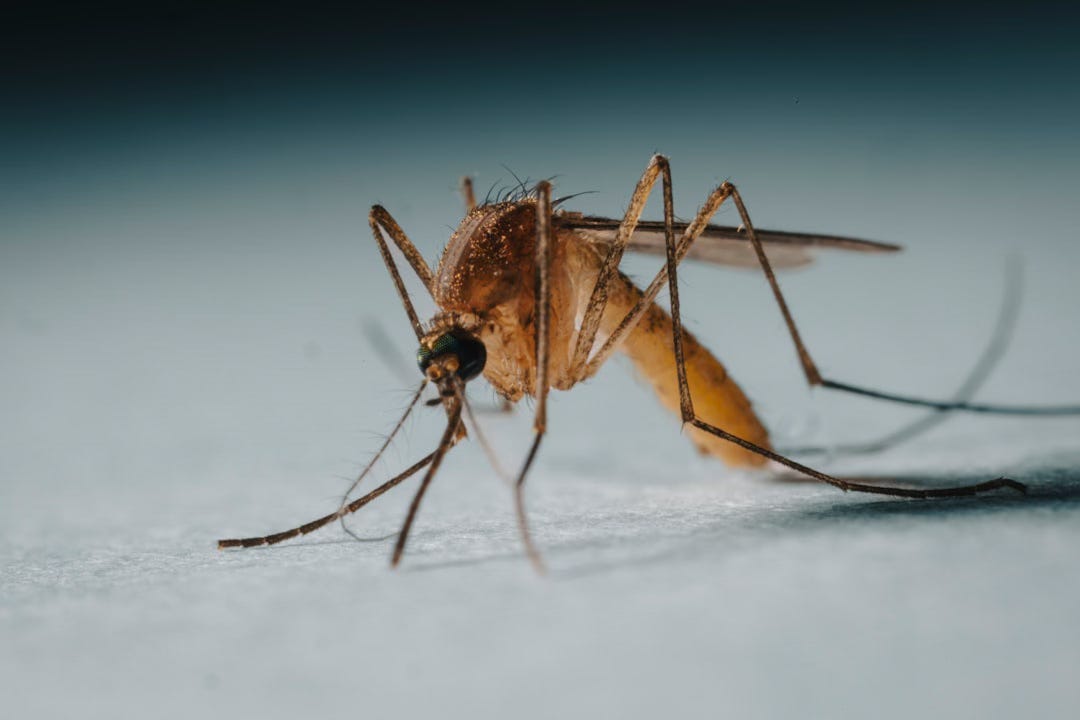
The first mosquito pool of the year carrying West Nile virus has been confirmed in Brown County, the South Dakota Department of Health reported Monday.
The department urged residents to take steps to protect themselves and their families from the virus, which can cause fever, headaches, rash, swollen lymph nodes and achy muscles and joints, and in worst cases, death.




WESTERN S.D. AND NORTHEASTERN WYO. — There’s a slight chill in the air this morning as temperatures currently in the 30s and 40s. Higher elevations in the Black Hills and Bighorns may even be seeing some upper 20s.
“Cooler” air remains today with highs reaching the low to mid-70s for most… However, 60s are possible in higher elevations, while southwestern South Dakota will likely see upper 70s to low 80s.
While winds are light and variable this morning, northerly flow persists as we head into mid-morning. Northwesterly winds today should be sustained around 15-25 mph, gusting up to 40 mph at times.

Due to relative humidity values between 10% and 25% in southern portions of the region, a Red Flag Warning will be in effect from noon today through this evening. This warning includes portions of Weston, Custer, Fall River, Oglala Lakota, Pennington, Jackson, and Bennett counties.
Elevated to critical fire concerns remain throughout the week, although we may see occasionally some pop-up showers to the north, most of the region is expected to remain dry.

Please be careful with fire and/or anything that could create sparks. While we have received beneficial moisture over the last couple of weeks (which I think we’re all grateful for), drought conditions continue for the region. This means vegetation is still dry and struggling to soak up that moisture, so please check local burn bans and stay vigilant.
As stated above, we could see a few quick, pop-up rain showers in northern areas this week, but luckily, we aren’t expecting any severe weather.

Tonight’s lows should be milder, likely in the 40s and 50s. Breezy conditions briefly slow down this evening before increasing again tomorrow, especially in northeastern Wyoming, where west-northwest winds are expected to reach 10-20 mph, with 30 mph gusts likely. Highs will warm up into the low-to-mid 80s tomorrow, with some 70s in the higher elevations.

We’ll continue to see average mid-June temperatures in the 70s and 80s this week. Wednesday looks particularly windy, with northwest gusts potentially reaching 50-55 mph. I would not be surprised if another Red Flag Warning or Wind Advisory is issued by then.

Expect more sunshine to round out the week on Thursday and Friday, with the likelihood of showers and non-severe storms increasing for this Father’s Day weekend.


As a dedicated meteorologist, Sam is committed to delivering accurate and timely weather information to the community. In the future, she hopes to inspire younger generations to develop a love for STEM, just as she did.
The South Dakota Lottery offers multiple draw games for those aiming to win big.
Here’s a look at June 14, 2026, results for each game:
Winning Millionaire for Life numbers from June 14 drawing
03-06-16-18-48, Bonus: 01
Check Millionaire for Life payouts and previous drawings here.
Feeling lucky? Explore the latest lottery news & results
Are you a winner? Here’s how to claim your prize
- Prizes of $100 or less: Can be claimed at any South Dakota Lottery retailer.
- Prizes of $101 or more: Must be claimed from the Lottery. By mail, send a claim form and a signed winning ticket to the Lottery at 711 E. Wells Avenue, Pierre, SD 57501.
- Any jackpot-winning ticket for Dakota Cash or Lotto America, top prize-winning ticket for Lucky for Life, or for the second prizes for Powerball and Mega Millions must be presented in person at a Lottery office. A jackpot-winning Powerball or Mega Millions ticket must be presented in person at the Lottery office in Pierre.
When are the South Dakota Lottery drawings held?
- Powerball: 9:59 p.m. CT on Monday, Wednesday, and Saturday.
- Mega Millions: 10 p.m. CT on Tuesday and Friday.
- Lucky for Life: 9:38 p.m. CT daily.
- Lotto America: 9:15 p.m. CT on Monday, Wednesday and Saturday.
- Dakota Cash: 9 p.m. CT on Wednesday and Saturday.
- Millionaire for Life: 10:15 p.m. CT daily.
This results page was generated automatically using information from TinBu and a template written and reviewed by a South Dakota editor. You can send feedback using this form.
-

 West Virginia6 minutes ago
Commentary: As Mountaineers ready for elimination game, harping on errors does no good – WV MetroNews
-

 Wyoming9 minutes ago
Old Wyoming Missile Silos Used For Train Restorations
-

 Crypto14 minutes ago
Binance Research: April DeFi Exploits Triggered $13 Billion in Outflows
-

 Finance21 minutes ago
New global framework launched to help financial firms make transition plans
-

 Fitness23 minutes ago
US Health Clubs and Studios to Offer Free Memberships for Military Recruits Under New Service Ready Program – Health & Fitness Association
-

 Movie Reviews36 minutes ago
Review | Dog Day Evening: Kafkaesque comedy reflects on a Hong Kong hostage incident
-
World44 minutes ago
Author Amy Griffin sues woman who alleged she stole her stories of sexual abuse in memoir ‘The Tell’
-

 News51 minutes ago
Video: What We Learned About Jeffrey Epstein’s Death


