
Connect with us

South Dakota

Carbon-capture pipeline could be delayed after eminent domain ban in South Dakota | OUT WEST ROUNDUP

Published

on

Carbon-capture pipeline could be delayed after eminent domain ban in South Dakota | OUT WEST ROUNDUP


SOUTH DAKOTA

State law could delay carbon pipeline

SIOUX FALLS — The company behind an $8.9 billion carbon-capture pipeline proposed for five Midwestern states said on March 12 it wants to indefinitely delay its plans after South Dakota passed a law limiting its ability to acquire land for the project.

But even as it filed a motion to suspend its pipeline permit application timeline with the South Dakota Public Utilities Commission, the Iowa-based Summit Carbon Solutions said it remains committed to the pipeline.

Summit attorney Brett Koenecke said the action was needed because the legislation approved by South Dakota lawmakers and quickly signed into law by the governor changed the company’s ability to survey the route, making its application timeline “unrealistic.”

Advertisement

The proposed 2,500-mile pipeline would carry carbon emissions from ethanol plants in Iowa, Minnesota, Nebraska, North Dakota and South Dakota to be stored underground permanently in North Dakota.

The project had approvals in Iowa, Minnesota and North Dakota. But in South Dakota, a new law banned the use of eminent domain — the government seizure of private property with compensation — specifically for carbon-capture projects.

Tad Hepner, vice president of strategy and innovation at the Renewable Fuels Association, said the move would put ethanol producers in the state at a competitive disadvantage to out-of-state plants connected to the pipeline.

North Dakota Gov. Kelly Armstrong said he doesn’t know how Summit will get its pipeline into North Dakota given South Dakota’s eminent domain ban.

Advertisement

Summit has already spent more than $1 billion on the project, Summit spokesperson Sabrina Zenor said. Despite the South Dakota suspension, “all options” are still on the table, the company said.

UTAH

Law requires app stores to verify ages

SALT LAKE CITY — Utah on March 5 became the first state to pass legislation requiring app stores to verify users’ ages and get parental consent for minors to download apps to their devices.

The bill has pitted Meta, which operates Facebook and Instagram, against app store giants Apple and Google over who should be responsible for verifying ages.

Meta and other social media companies support putting the onus on app stores to verify ages amid criticism that they don’t do enough to make their products safe for children — or verify that no kids under 13 use them.

The app stores say app developers are better equipped to handle age verification and other safety measures. Requiring app stores to confirm ages will make it so all users have to hand over sensitive identifying information, such as a driver’s license, passport, credit card or Social Security number, even if they don’t want to use an age-restricted app, Apple said.

Advertisement

Colorado lawmakers introduce bipartisan bill to require cellphone policies in schools

The company gives parents the option to set age-appropriate parameters for app downloads. The Google Play Store does the same.

Kouri Marshall, a spokesperson for the Chamber of Progress, a tech policy group that lobbied Utah lawmakers to reject the bill, called the measure “a tremendous encroachment of individual privacy” that he said places a heavy burden on app stores to ensure online safety.

Republican Sen. Todd Weiler, the bill’s sponsor, argued that it’s easier to “target two app stores than it is to target 10,000 (app) developers.”

IDAHO

Bill makes firing squad chief execution method

BOISE — Death by firing squad could become Idaho’s primary method of execution under a bill passed by the legislature and set to take take effect next year if it is signed by Gov. Brad Little.

Advertisement

Firing-squad executions have been a back-up method in Idaho since 2023, available only if prison officials are unable to obtain lethal injection drugs.

Sen. Doug Ricks, the bill’s sponsor, said the legislation was spurred by Idaho’s botched attempt to execute Thomas Eugene Creech last year, when execution team members were unable to find a suitable vein for an IV line. He suggested shooting someone was more effective and humane than other execution methods. He speculated that the state could use a machine or “electronic triggering methods” that would eliminate the need for human volunteers to pull the triggers.
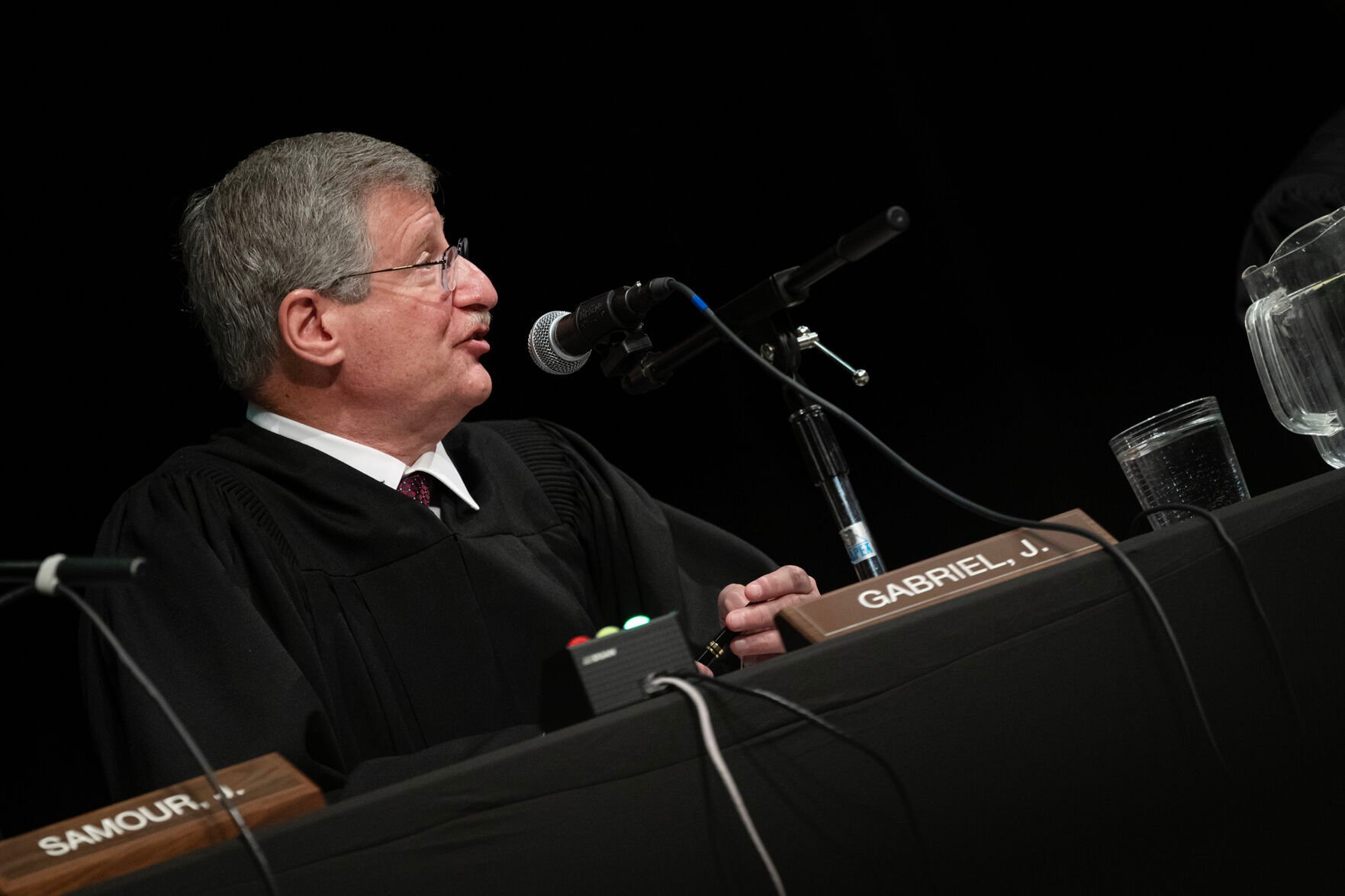
A tattoo, the N-word, a different crime: Colorado justices hear appeal of former death row inmate

Four other states — Mississippi, Oklahoma, South Carolina and Utah — also allow the use of firing squads in certain circumstances, but the method has rarely been used in recent history.

Republican Sen. Daniel Foreman, a retired police officer and former Air Force veteran who served in combat, was the only Republican to debate against the bill. He said he has seen shooting deaths, and that they are “anything but humane.”

Advertisement

Democratic Sen. Melissa Wintrow agreed, calling firing squads “barbaric” and saying they would create bad optics for the state.

NEW MEXICO

‘Young Guns 3: Dead or Alive’ set to film

SANTA FE — It’s been almost 40 years since Emilio Estevez first drew his revolver as Billy the Kid in the iconic Western “Young Guns.”

The actor visited the New Mexico State Capitol on March 13 during Film and Media Day to announce that he’ll be coming back to where it all started to film the next installment in the franchise. He will direct “Young Guns 3: Dead or Alive” and will star again as the famous outlaw. The cast also includes original members Lou Diamond Phillips and Christian Slater.

Estevez said during a news conference that he’s heard jokes about whether the title should be “Old Guns.”

The first “Young Guns” premiered in 1988. Its success resulted in a sequel that followed two years later. Both were filmed in New Mexico.

Advertisement

Colorado's plan to buy Stanley Hotel was on 'razor’s edge' until big concessions made

Gov. Michelle Lujan Grisham highlighted “Young Guns” as one of the films that helped to establish the state as a premier filming destination, saying the next one will add to the legacy.

Estevez, 62, said some work already is happening on the film, but officials didn’t provide any details on when the cameras could start rolling. The plot also is under wraps, although Estevez and Phillips had hinted in interviews in recent years that it was very possible that the franchise would return to the big screen.

Written by Estevez and John Fusco, “Young Guns 3” will be produced by Morgan Creek.

Montana legislature green-lights Medicaid expansion as Congress eyes cuts | OUT WEST ROUNDUP

Advertisement

Shipments of uranium ore can resume under agreement reached with Navajo Nation | OUT WEST ROUNDUP

Utah governor signs collective bargaining ban for teachers, public safety unions | OUT WEST ROUNDUP


Source link

South Dakota

As South Dakota’s student population shrinks, more choose homeschools

Published

on

As South Dakota’s student population shrinks, more choose homeschools


South Dakota’s K-12 population dropped slightly this year, along with public and private school enrollment, but enrollment in alternative instruction grew once again.

That’s according to headcount numbers taken Sept. 26, 2025, and released by the South Dakota Department of Education by Dec. 31.

All totaled, there are 163,053 K-12 students across the state, with 83% of those students attending public schools, 9% enrolled in nonpublic schools and 8% in alternative instruction.

There are 934 fewer K-12 students across the state than last year’s count of 163,987, a 0.5% decrease.

Advertisement

Public school enrollment decreased by 1,736 students statewide. Across 147 public school districts, there were 135,577 K-12 students this fall, down from 137,313 in last year’s fall count, a decrease of slightly more than 1%.

Private school enrollment decreased by 142 students statewide, totaling 15,043 students in nonpublic schools accredited by the SDDOE across the state, down from last year’s count of 15,185, a decrease of 1%.

Nonpublic school enrollment includes 9,462 students in private schools, 5,072 in tribal/BIE schools, 268 in special population schools, 175 in coop/multi-districts, 26 in community-based service providers, 21 in the South Dakota School for the Blind and Visually Impaired, and 19 in alternative schools.

Advertisement

Alternative instruction enrollment increased by 944 students statewide, totaling 12,433 students in alternative instruction or homeschooling this fall, up from 11,489 in last year’s count, an increase of 8%.

In the Sioux Falls metro area, there are 52,325 K-12 students, with 85% attending public schools, 9% enrolled in nonpublic schools and 6% in alternative instruction.

Sioux Falls area public schools

The state’s largest public school district, the Sioux Falls School District, shrunk by 171 students this fall, down from last year’s count of 24,221 K-12 students to this year’s count of 24,050.

Sioux Falls’ neighboring public K-12 school districts saw the following enrollment changes this year:

Advertisement
  • Harrisburg, the state’s third-largest district, grew by 173 students, from 6,182 last year to 6,355 this year.
  • Brandon Valley, the state’s fourth-largest district, grew by 82 students, from 5,073 last year to 5,155 this year.
  • Tea Area grew by five students, from 2,509 last year to 2,514 this year.
  • West Central shrunk by 32 students, from 1,418 last year to 1,386 this year.
  • Lennox grew by 14 students, from 1,119 last year to 1,133 this year.
  • Tri-Valley grew by 41 students, from 952 last year to 993 this year.
  • Dell Rapids shrunk by 32 students, from 965 last year to 933 this year.
  • Canton shrunk by 23 students, from 888 last year to 865 this year.
  • Baltic grew by three students, from 539 last year to 542 this year.
  • Garretson shrunk by 10 students, from 468 last year to 458 this year.

All totaled, there are 44,384 K-12 students in Sioux Falls area public schools, a growth of 50 students or 0.1% from last fall’s count of 44,334.

Sioux Falls area private schools

Sioux Falls’ three largest private K-12 school systems saw the following enrollment changes this year:

  • Bishop O’Gorman Catholic Schools, the largest private school system in the state, shrunk by two students, from 2,224 last year to 2,222 this year.
  • Sioux Falls Christian School shrunk by nine students, from 1,447 last year to 1,438 this year.
  • Sioux Falls Lutheran School grew by 41 students, from 336 last year to 377 this year.

Other local nonpublic K-12 school enrollments include:

  • 221 students at St. Mary’s School in Dell Rapids;
  • 130 students at Children’s Home Society of South Dakota;
  • 125 at East Dakota Educational Cooperative;
  • 119 at LifeScape;
  • 49 at McCrossan Boys Ranch;
  • 45 at Good Shepherd Lutheran School,
  • 43 at Westside Christian School,
  • 23 at Bethel Lutheran School;
  • Four at Southeastern;
  • Three at Baan Dek Montessori;
  • One at 605 Prep;
  • One at DakotAbilities.

All totaled, there are 4,801 K-12 students in Sioux Falls area nonpublic schools, a growth of 24 students or 0.5% from last fall’s count of 4,777.

Sioux Falls area alternative instruction

Though it’s the second-largest public school district in the state, Rapid City Area Schools saw the largest number of students opt out of public school and into alternative instruction and homeschooling once again this year, with 1,839 students, followed by the largest district, Sioux Falls, with 1,793 students.

Sioux Falls-area schools had the following alternative instruction enrollment shifts this year:

Advertisement
  • 1,793 in Sioux Falls, an increase of 131 from last year’s count of 1,662;
  • 379 in Harrisburg, an increase of 78 from last year’s count of 301;
  • 350 in Brandon Valley, an increase of 67 from last year’s count of 283;
  • 111 in Tea, a decrease of four from last year’s count of 115;
  • 105 in Lennox, an increase of two from last year’s count of 103;
  • 97 in West Central, an increase of six from last year’s count of 91; 
  • 87 in Dell Rapids, an increase of 11 from last year’s count of 76;
  • 79 in Canton, a decrease of two from last year’s count of 81;
  • 73 in Tri-Valley, an increase of seven from last year’s count of 66;
  • 42 in Garretson, an increase of 10 from last year’s count of 32;
  • 24 in Baltic, a decrease of one from last year’s count of 25.

All totaled, there are 3,140 students in alternative instruction in the Sioux Falls metro area, an increase of 305 students or 10.7% from last year’s count of 2,835.


Source link

Continue Reading

South Dakota

SD Lottery Mega Millions, Lucky For Life winning numbers for Jan. 6, 2026

Published

on


The South Dakota Lottery offers multiple draw games for those aiming to win big. Here’s a look at Jan. 6, 2026, results for each game:

Winning Mega Millions numbers from Jan. 6 drawing

09-39-47-58-68, Mega Ball: 24

Check Mega Millions payouts and previous drawings here.

Winning Lucky For Life numbers from Jan. 6 drawing

10-13-24-27-31, Lucky Ball: 08

Advertisement

Check Lucky For Life payouts and previous drawings here.

Feeling lucky? Explore the latest lottery news & results

Are you a winner? Here’s how to claim your prize

  • Prizes of $100 or less: Can be claimed at any South Dakota Lottery retailer.
  • Prizes of $101 or more: Must be claimed from the Lottery. By mail, send a claim form and a signed winning ticket to the Lottery at 711 E. Wells Avenue, Pierre, SD 57501.
  • Any jackpot-winning ticket for Dakota Cash or Lotto America, top prize-winning ticket for Lucky for Life, or for the second prizes for Powerball and Mega Millions must be presented in person at a Lottery office. A jackpot-winning Powerball or Mega Millions ticket must be presented in person at the Lottery office in Pierre.

When are the South Dakota Lottery drawings held?

  • Powerball: 9:59 p.m. CT on Monday, Wednesday, and Saturday.
  • Mega Millions: 10 p.m. CT on Tuesday and Friday.
  • Lucky for Life: 9:38 p.m. CT daily.
  • Lotto America: 9:15 p.m. CT on Monday, Wednesday and Saturday.
  • Dakota Cash: 9 p.m. CT on Wednesday and Saturday.

This results page was generated automatically using information from TinBu and a template written and reviewed by a South Dakota editor. You can send feedback using this form.


Source link

Continue Reading

South Dakota

As South Dakota legislative session nears, dozens of bills already filed

Published

on

As South Dakota legislative session nears, dozens of bills already filed


The 2026 South Dakota legislative session is still a week away but we’re already seeing dozens of bills being introduced.

The Legislative Research Council’s website shows more than 60 bills already on tap as of Tuesday.

But many more are on the way. In recent years, the Legislature has seen on average around 500 bills per session. Generally, a little under half end up being signed into law.

Some of the early bills include an act allowing for the removal of a county commissioner and another creating a tax exemption for data centers.

Advertisement

Attorney General Marty Jackley is also introducing a host of bills including one allowing law enforcement to seize cryptocurrency that’s part of a criminal investigation.

“Cryptocurrency has become a haven for scammers, drug traffickers, and human traffickers, costing South Dakotans millions in losses and fueling online crime,” said Jackley. “This legislation adds ‘digital currency’ to South Dakota’s seizure laws, giving law enforcement the tools to confiscate illicit crypto assets and disrupt criminal networks hiding behind digital secrecy.”

A full list of bills and resolutions is available on the LRC’s website.

The 2026 session begins Jan. 13.

Advertisement


Source link

Continue Reading

Trending
