Ohio
Some Ohio veterans say state isn't doing enough to help


COLUMBUS, Ohio — Veterans Day is meant to remember those who served, with many losing their lives to fight for the United States. Some Ohio vets want the state to fight better for them.
While at the Veterans Day Ceremony in Green, Army vet Rodney Yeargin reflected on his time in the service.
“[The day is] to realize and understand the honor and separation that they went through,” Yeargin said.
Although numbers vary from state to federal databases, the state reported that they have nearly 700,000 veterans.
Ohio has a slew of resources for veterans, ranging from educational opportunities — like a fast track to earning college credits — to employment assistance, like the specific career program to help vets find jobs.
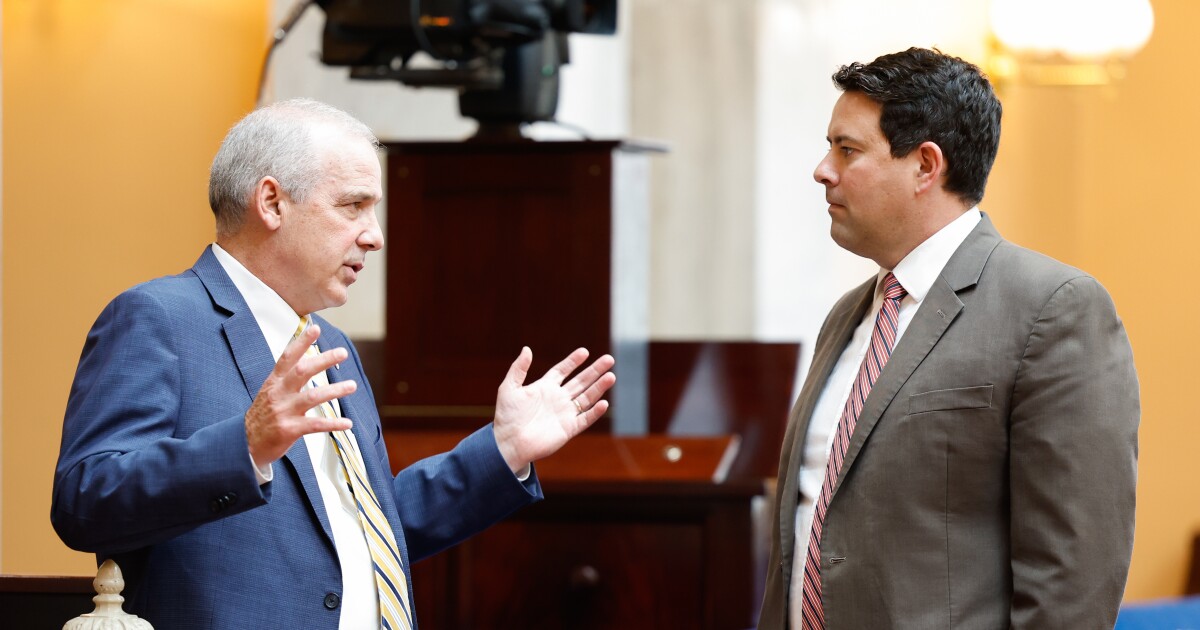
Some of the programs have benefited state Rep. Casey Weinstein (D-Hudson), an Air Force vet who sits on the House Armed Services and Veterans Affairs Committee.
“There’s a lot of work that we do about accessibility for services and trying to enhance veterans’ way of life here in Ohio,” Weinstein said.
But Yeargin says Ohio could be doing better.
“The state should be doing more, especially for the homeless,” he said. “There’s too many of them killing themselves [sic], there’s too many of them sitting on the streets in boxes.”
There are more than 630 unhoused veterans in Ohio, federal data from the U.S. Department of Housing and Urban Development estimates. Plus, more than 7% of all vets in Ohio live in poverty.
Bill to help homeless veterans in Ohio suddenly killed by lawmakers for ‘not being needed’
Luckily, the organization Sub Zero Mission is dedicated to helping veterans facing homelessness.
Sub-Zero Mission launches new ‘Homeless Veteran Re-empowerment Program’
Sub Zero Mission launches new ‘Homeless Veteran Re-empowerment Program’ streamlining services
One unhoused veteran is too many, Weinstein said, and he and the committee are currently reviewing bills to make homes more affordable.
“We are always trying to work to ease financial hardships — and in particular, things around property tax alleviation, homestead exemptions, things that can make and ease financial hardships for veterans,” he said.
However, due to squabbling between leadership in each chamber, the bills have stalled. Both the House and the Senate agree to help veterans but can’t agree on the vehicle to do it.
An example of this is H.B. 187, originally a property tax relief bill proposed by House lawmakers. It would have changed how property tax is determined and increased homestead exemptions.
The Senate, however, changed it to focus on financially vulnerable people, which the House will now need to agree to. This would have immediate property tax relief for eligible veterans with disabilities. The bill sponsors are not happy with the changes.
At this point, no one can get the property tax relief.
The House also sent over H.B. 57, which dealt specifically with a property tax homestead exemption for veterans with disabilities. It is sitting in the Senate.
“It’s very frustrating to me when you see a common objective, but things get tripped up by infighting — that slow us and slow our ability to deliver really critical support needed for those who served us,” Weinstein said.
Healthcare is also a major challenge, Yeargin added.
Ohio has several different medical programs, like the new Veterans Crisis Line — which you can reach by calling 988 if you’re struggling with your mental health. Counties also provide transportation to VA appointments.
But, some veterans still struggle with the costs of those medical bills.
“It should be all veterans for all things, all the time, regardless of their status,” Yeargin said. “A lot of the benefits in the medical section I have to pay for.”
There are now efforts to get more money for services for veterans into the next state budget.
Resources for veterans
Follow WEWS statehouse reporter Morgan Trau on Twitter and Facebook.




The SAVE acronym should stand for Suppress American Votes Everywhere.

Trump pushes voter ID bill that could burden married women
President Donald Trump is advocating for the passage of the SAVE America Act, a voter ID bill critics say could make voting harder for married women and other eligible voters.
Richard Topper has been a trial attorney in Columbus for 45 years and is actively involved in voting rights efforts.
As chief election officer of our state, Frank LaRose should be focused equally, if not more, on how election laws affect Ohio citizens’ rights to vote as he does to the miniscule numbers of undocumented citizens who attempted to vote in our elections.
To support our right to vote, LaRose, a Republican candidate for Ohio auditor of state, should speak out against the SAVE Act pending before the U.S. Senate.
The SAVE acronym should stand for Suppress American Votes Everywhere.
The bill would require all U.S. citizens to present a birth certificate or passport in person when they register to vote. The act could prevent thousands of Ohio citizens from participating in a single election.
The number far outweighs the 167 noncitizens whom, according to LaRose, “have appeared to cast a ballot in (over 15 elections) since 2018.”
How will the Save Act affect you?
Let’s say you’ve lived and worked in Ohio all your life but decide to move.
To vote, you’d have to re-register in person at your county board of elections and show them your birth certificate or passport. If you have neither, you will be unable to vote.
For Ohioans who’ve changed their name due to marriage or remarriage, it becomes even more difficult to prove your citizenship with a birth certificate.
This will affect Ohio women’s right to vote, since 70% change their name when they marry.
Every person who wants to vote in Ohio for the first time, who moves to Ohio, or who moves within the state will need to have a birth certificate or passport to vote.
In 2023, close to 1.2 million Ohioans moved within or to Ohio. Under the SAVE Act, every one of those Ohioans is considered a non-citizen until they prove otherwise.
Not everyone has or can get access to a birth certificate.
An argument that sinks
A study by the Center for Democracy and Civic Engagement showed over 9% of voting-age citizens, or 21.3 million people in the U.S., cannot timely obtain a birth certificate or passport. In fact, only 37% of Ohioans own a U.S. passport.
The argument that too many non-citizens vote holds no water.
In 2024, Secretary LaRose required poll workers to challenge voters whose driver license read “non-citizen.”
Of the 5,851,387 people who cast ballots in 2024, only five alleged non-citizens attempted, but were not able to vote that day. One in a million. Nationwide, the figures are similar.
Kansas legislators tried their own SAVE Act. The 67 non-citizens who registered to vote paled in comparison to the 31,000 Kansans who were denied their right to vote.
Ohioans need Frank LaRose to take a stand
LaRose should focus his attention on what the SAVE Act requires and how this will affect the average Ohioan.
In the past five years in his chief election officer position, LaRose decried costly and non-participatory August elections, then supported an August 2023 election that would have taken Ohioans’ longstanding right to amend our constitution by a majority.
He also voted in favor of unconstitutional gerrymandered Ohio legislative and Congressional districts which diminished the votes of 45% of Ohioans.
Recently, LaRose bowed to the Trump administration and supported an Ohio law which would nullify up to 7,000 legitimate Ohio mail-in ballots received during the four-day grace period after election day.
LaRose can redeem himself by supporting Ohio voters and taking a bold step to speak out against the voter suppressive SAVE Act.
Richard Topper has been a trial attorney in Columbus for 45 years and is actively involved in voting rights efforts.

It is the season for salamanders!
Nicholas Gaye, a naturalist with Lake Metroparks, said Northeast Ohio is home to about 15 species of salamander, each with their own habitat. But one of these species, the mole salamander, has a habitat unlike the others.
“Most of their time they’re spending is actually underneath the ground,” Gaye said.
Mole salamanders emerge once a year during the transition from winter to spring. This yearly migration was the delight of Lake County nature enthusiasts Saturday at the Penitentiary Glen Reservation, where nationalists shared facts about these elusive amphibians, pointing them out and guiding families along the trail.
Lake Metroparks
During these migrations, the salamanders trek to the surface in search of vernal pools, bodies of water that fill with rain and melted snow but dry in the summer and lack fish, the predators of salamander eggs.
Then, after four to eight weeks of development, the baby salamanders will emerge and spend a year or three in that vernal pool until they can survive on land.
If you missed it, don’t worry, because Gaye said the migration typically lasts for a week or two at the beginning of the season, and he expects further opportunities for viewing depending on the temperature. Mole salamanders require moist conditions to travel, so look for rainy and warm nights.
Additionally, he expects that another species, the marble salamander, will undergo its annual migration in the fall.
If you plan to join the hunt, however, Gaye asks for caution.
“As humans, we are stewards to our environment,” he said. “And it’s really important that, when we get out there to enjoy these amazing opportunities, that we’re being respectful and caring towards the critters that we’re coming across.”
Nicole Chaps Wyman

Salamanders are slow-moving, so Gaye said observers should bring a flashlight to avoid stepping on them. Then, if you intend to touch them, he said to avoid anything on your hands that contains heavy metals, such as scented lotions, sunscreen, bug spray, or other products.
“Salamander skin is semi-permeable, meaning things can get through it easily and, if those heavy metals get through, they can really hurt the salamanders,” Gaye said.
Wet hands are also encouraged, as is limited exposure to what, at the end of the day, is considered a wild animal.
Lake Metroparks also has a salamander migration email list, which you can sign up for on their website.
We Follow Through
Want us to continue to follow through on a story? Let us know.

Is the Christian thing to do to turn a blind eye to this tragedy? Would it be to advocate for more money towards a system that is already flush with cash?
The Center for Christian Virtue, or CCV, is Ohio’s largest Christian public policy group.
The Center for Christian Virtue, or CCV, is Ohio’s largest Christian public policy group.
Aaron Baer is president of the Center for Christian Virtue.
Parents deserve options, competition and constitutional clarity — not fearmongering.
A February Dispatch guest column by teachers’ union gadfly William Phillis criticizing the Center for Christian Virtue is a case study in how teachers’ unions attempt to distract and divert the public’s attention away from the education crisis facing Ohio.
Tracking Phillis’ rants can be difficult. But in his piece, he manages to attack the Center for Christian Virtue for advocating for parental choice, goes on a rambling pseudo-legal argument about the First Amendment, and ends with a complete butchering of Jesus’ words.
What his column never does is address the plight of Ohio’s kids in a failing education system created by the teachers’ unions. Because for Phillis and his friends, this discussion is not about the kids — it’s about protecting their monopoly and the billions of dollars that flow through their system.
The numbers don’t add up
This system needs reform from the ground up. And that’s what Center for Christian Virtues’ work is all about.
At its core, CCV’s education agenda is about expanding opportunity, strengthening parental authority and ensuring more families can access schools that meet their children’s needs.
Through our advocacy for EdChoice and other scholarship pathways, CCV has helped broaden access to nonpublic education for families who previously had few realistic options.
Critics like Phillis describe this as “diverting” public funds. The numbers tell a different story.
The combined cash reserves of Ohio’s school districts now exceed $10.5 billion, nearly triple what they were just 12 years ago. Yet three out of five Ohio fourth graders are not proficient in math and two out of three struggle with reading, according to the National Center for Education Statistics’ latest report.
Columbus City Schools tells the same story.
In fiscal year 2019, the district enrolled 48,927 students, spent $21,336 per pupil, and ended the year with a $229 million cash balance. By 2025, enrollment had dropped nearly 10% to 43,998. Yet per-pupil revenue rose 8% to $23,166, and cash reserves grew 62% to $372 million.
Despite higher funding and larger reserves, academic outcomes remain troubling: Just 25% of Columbus City Schools eighth graders are proficient in reading, and only 23% are proficient in math.
Simply pouring more money into underperforming public schools and into the political priorities of teachers’ unions has not produced the academic gains families were promised.
We must stop blindly throwing money away
That’s why the Center for Christian Virtues advocates for expanding educational options and fostering healthy competition among schools. This isn’t abolishing the public schools, this is challenging the public schools to meet the needs of families today, instead of just blindly throwing money after the problem.
Phillis also falsely raises alarms about the separation of church and state. But the constitutional framework governing school choice is well established.
The U.S. Supreme Court made clear in Zelman v. Simmons-Harris that Ohio’s school voucher program is constitutional and that scholarship programs driven by private parental choice do not violate the First Amendment.
More broadly, Center for Christian Virtues’ education advocacy extends beyond vouchers. Through the Ohio Christian Education Network, we help communities launch new schools where demand is strong and equip educators with operational support to serve families seeking alternatives.
We also protect the religious liberty of Christian schools while expanding access to Gospel-centered education for Ohio families who choose it.
Yet what Phillis gets most wrong is his use of scripture to try to silence Center for Christian Virtues and our Ohio Christian Education Network.
We cannot stay silent
Jesus commands his followers to “love our neighbors as ourselves,” and to care for the “least of these.”
So, as Christians, when we see a generation of American children suffering at the hands of an education establishment that is getting more money than ever and producing worse results, we cannot stay silent.
Research from neuroscientist Jared Cooney Horvath revealed that Generation Z is the first generation in American history to perform worse academically than the previous generation.
Is the Christian thing to do to turn a blind eye to this tragedy? Would it be to advocate for more money towards a system that is already flush with cash?
No. As Christians, we serve a God who cares for the “orphan, the widow, the stranger.” He loves those forgotten about by society. And there are few more overlooked today than the kids in our schools who are being starved of the educational opportunity our state has promised to provide them.
Phillis seems upset that Center for Christian Virtues is growing and having success helping families find better schools. While he continues to call us names and criticize our work, we’ll stay focused on helping kids.
It’s what Jesus would have us do.
Aaron Baer is president of the Center for Christian Virtue.

Not ‘a litre of oil’ to pass Strait of Hormuz, expect $200 price tag: Iran

Tornadoes hit Illinois, Indiana and Texas as severe storms sweep US

Coast Guard rescue swimmer dies after medical evacuation mission off Washington coast turns tragic

WATCH: Walz, Ellison, Omar refuse to answer when pressed on fraud after contentious fraud hearing

Texas Gov Abbott issues warning of Chinese spying in medical tech

Florida High School Football Rankings: Top 25 teams – Oct. 21

Cleary's 21 help Le Moyne down Central Connecticut State 69-64 in OT

How old is Bo Nix? What to know about Oregon quarterback ahead of 2024 NFL Draft

99th annual Pony Swim held in Virginia

Indiana Members Credit Union announced as new anchor tenant at Bottleworks District
Not ‘a litre of oil’ to pass Strait of Hormuz, expect $200 price tag: Iran
Tornadoes hit Illinois, Indiana and Texas as severe storms sweep US

EXCLUSIVE: ICE says El Paso detention facility will stay open under new contractor after $1.2B deal scrapped

Von der Leyen ‘acting outside of competence,’ Araud tells Euronews

Wheelchair curler Steve Emt’s path from drunk driver to three-time Paralympian
-

 Wisconsin1 week ago
Setting sail on iceboats across a frozen lake in Wisconsin
-

 Massachusetts1 week ago
Massachusetts man awaits word from family in Iran after attacks
-

 Detroit, MI5 days ago
U.S. Postal Service could run out of money within a year
-

 Pennsylvania6 days ago
Pa. man found guilty of raping teen girl who he took to Mexico
-

 Miami, FL7 days ago
City of Miami celebrates reopening of Flagler Street as part of beautification project
-

 Sports7 days ago
Keith Olbermann under fire for calling Lou Holtz a ‘scumbag’ after legendary coach’s death
-

 Virginia7 days ago
Giants will hold 2026 training camp in West Virginia
-

 Culture1 week ago
Try This Quiz on the Real Locations in These Magical and Mysterious Novels