North Dakota
Marathon Oil reaches $241M settlement with EPA for North Dakota environmental violations


The federal government announced a $241.5 million settlement with Marathon Oil on Thursday for alleged air quality violations at the company’s oil and gas operations in the Forth Berthold Indian Reservation in North Dakota.
The Environmental Protection Agency and Department of Justice said the settlement requires Marathon to reduce climate- and health-harming emissions from those facilities and will result in over 2.3 million tons worth of pollution reduction.
“This historic settlement — the largest ever civil penalty for violations of the Clean Air Act at stationary sources — will ensure cleaner air for the Fort Berthold Indian Reservation and other communities in North Dakota, while holding Marathon accountable for its illegal pollution,” said Attorney General Merrick B. Garland.
Marathon officials did not immediately respond to a request for comment. Houston-based Marathon operates 169 well pads in North Dakota, where the company extracts oil and natural gas.
While Marathon is the country’s 22nd-largest oil producer based on 2022 data, the federal agencies said, it’s also the seventh-largest emitter of greenhouse gas emissions in the oil and gas industry. Much of its emissions come from flaring, the industry practice of burning off waste gases, which also releases methane, a particularly potent contributor to climate change.
The settlement calls for Marathon to eliminate the equivalent of over 2.25 million tons of carbon dioxide emissions over the next five years, which the agencies said was tantamount to taking 487,000 cars off the road for one year, and will also eliminate nearly 110,000 tons of volatile organic compound missions.
The agencies said the case is the first of its kind against an oil and gas producer for “violations of major source emissions permitting requirements under the Clean Air Act’s Prevention of Significant Deterioration program.” They also said it’s the largest-ever penalty imposed for “stationary source violations,” which include facilities such as oil and gas tank systems.
The complaint alleged that these and other Clean Air Act violations at nearly 90 Marathon facilities resulted in thousands of tons of illegal pollution.
The settlement is part of a lawsuit and consent decree officially filed Thursday in federal court in North Dakota.



IRVINE, Calif. — Team North Dakota (ND) coach Jared Cowan didn’t have many words to share after he had just witnessed his program’s first title.
“Not many words so far here, it was a great tournament,” Cowan said. “The kids played hard, resilient and they put in the work. They deserve it.”
His kids played nearly perfect in the 1A title game of the 2026 Chipotle-USA Hockey Youth Tier II 16U National Championship at Great Park Ice, taking down Team Wyoming 9-0 on Sunday.
A four-goal second period helped North Dakota take control of a game that featured 36 total penalties.
Asher Straus scored twice for North Dakota, while Nathan Fogarty, Ray Sjule, Tyler Dub, Carson Hogness, Keegan Brenno and Colton Lehn rounded out the team’s goals. There was one goal unaccounted for on the final stat sheet.
Balanced scoring has been a theme for North Dakota in this tournament. Sjule and Lehn became the 13th and 14th players to score a goal for North Dakota at nationals. Lehn led the tournament with eight assists, while Straus and Hogness tied for the team lead with five goals.
Unlike some other teams at nationals, the North Dakota roster came back together following the high school season and made a run to the national championship, just the third in state history.
“You’ve got to relearn how people play,” said Hogness, a co-captain. “People play differently in high schools, different systems, all that. So it’s a different aspect when you come back together and play. But it was fun.”
North Dakota’s 32-9 advantage in shots didn’t leave much work for goaltender Alex Straus, who had a nice kick save during a Wyoming power play midway through the first period that might have been the toughest he had to make Sunday. It was his second shutout of the tournament.
“It means a lot,” Alex Straus said. “Three weeks ago, I was on the other side, losing in the state championship, so this means a lot to me.”
Alex Straus gave a lot of the credit to his defense, which was fantastic throughout nationals. North Dakota allowed four goals in five games.
“I think they’re pretty good,” Alex Straus said. “They block a lot of shots. Get the puck out deep and I think they listen to me pretty well when I give them some communication.”
Cowan said he had to shift two forwards back to defense for this tournament due to injuries and they kept the standard high.
“They put pressure on everything, and they don’t give up too many odd-man rushes and they block shots when they need to,” Cowan said.
It’s just a good system to play in.”
Fogarty got the scoring started when, after the Wyoming goaltender had seemingly stopped the puck following a point-blank shot, he stuffed the puck into the goal 2:18 into the game.
“That’s what we try to do,” Cowan said. “We try to get that first one quick, and then just keep building on that with pressure and playing our position and playing connected in all three zones.”
Wyoming had two shutouts en route to the championship game, the second straight for several members of this roster. Wyoming dropped the Tier II 14U national championship game a year ago.
“I can’t give enough props to two teams from the Northern Plains both being here and that one of us gets to walk away a national champion,” Wyoming coach Kasey Kiel said. “But the fact is, out of everybody across the whole country, we’ve got two Northern Plains representatives. That’s fun.”
Story from Red Line Editorial, Inc.

Today in History revisits the Friday, March 29, 1940, edition of the Grand Forks Herald and highlights a story of the organization of the Minn-Kota Electric Power Co-operative.
New N. W. REA Unit Organizes
Organization of the Minn-Kota Electric Power Co-operative, to direct farm electricity units in Minnesota and North Dakota counties along the Red river was completed at a meeting here Thursday night.
P. J. Donelly, Grafton, a director of the Nodak co-operative, was named president. Other officers will be S. E. Hunt of Thief River Falls, a director of the Red Lake Rural Electric association; vice president; Victor Edman of Alvarado, Minn., P K and M co-operative, secretary – treasurer; Einar Johnson of Lakota, attorney and A. L. Freeman of Grand Forks, acting superintendent. Engineers will be Ellerby and Co. of St. Paul.
Power co-operative directors who attended were Hugh M. Trowbridge of Comstock, Minn., Red River Valley Electric association; O. P. Refling, Fertile, Minn., Wild Rice Rural Electric co-op; Harry Branigan, Shelvin, Minn., Itasca-Mantrap REA; M. D. Butler, Grand Forks, F. C. Chandler, Whitman, N. D., L. C. Odegard, Buxton, N. D., and Donelly, Nodak Rural Electric co-operative, Hunt and Edman.
Besides the nine directors, those in attendance included George J. Long of Washington, D. C., assistant engineering head of the rural electrification administration; G. B. Ellerbe & Co., engineer, St. Paul; W. T. DePuy, Nodak attorney, Grafton.

Our newsroom occasionally reports stories under a byline of “staff.” Often, the “staff” byline is used when rewriting basic news briefs that originate from official sources, such as a city press release about a road closure, and which require little or no reporting. At times, this byline is used when a news story includes numerous authors or when the story is formed by aggregating previously reported news from various sources. If outside sources are used, it is noted within the story.

SIOUX FALLS, S.D. — Quinnipiac and North Dakota are playing in the NCAA regional final in the Denny Sanford Premier Center. The winner advances to the NCAA Frozen Four in Las Vegas.
Time: 6 p.m.
Place: Denny Sanford Premier Center, Sioux Falls, S.D.
TV: ESPN2 (GF Ch. 26/621 HD).
Stream:
Watch ESPN.
Radio:
The Fox (96.1 FM).
UND 1, Quinnipiac 0 — Jack Kernan 10 (Will Zellers) 6:03. Quinnipiac defenseman Braden Blace attempts to chip a puck out of the zone, but Zellers holds it in and gets it to Kernan along the halfwall. Kernan curls off the wall and into the left circle and snaps a puck five-hole on Bobcats goalie Dylan Silverstein for his 10th goal of the season.
UND 2, Quinnipiac 0 — Cody Croal 10 (Tyler Young, Abram Wiebe) 8:13. Kernan rims a puck around the wall to Wiebe at the left point. Wiebe fires a shot toward the top of the crease, where Young tries to tip it in. It goes to the top of the crease, where Croal sweeps it between his legs and into the back of the net for his third goal of the regional.
UND 3, Quinnipiac 0 — Jack Kernan 11 (Abram Wiebe) 12:20. Wiebe makes a fantastic play at the blue line to strip the puck from Quinnipiac forward Aaron Schwartz. Kernan picks it up near the left point, circles to the right circle and snaps one past Silverstein. The Bobcats yank Silverstein after the goal and put in Matej Marinov.
Forwards
26 Dylan James—29 Ellis Rickwood—9 Will Zellers
7 Mac Swanson—17 Cole Reschny—21 Ben Strinden
19 Cody Croal—15 Jack Kernan—14 Tyler Young
22 David Klee—20 Cade Littler—24 Josh Zakreski
Defenseman
4 Jake Livanavage—2 Bennett Zmolek
25 Abram Wiebe—6 E.J. Emery
16 Andrew Strathmann—18 Keaton Verhoeff
13 Sam Laurila
Goaltenders
35 Jan Špunar
31 Gibson Homer
1 Zach Sandy
Not in lineup: F Ollie Josephson (inj), F Anthony Menghini, F Dalton Andrew, D Jayden Jubenvill, D Ian Engel
Forwards
27 Andon Cerbone—28 Chris Pelosi—11 Aaron Schwartz
20 Mason Marcellus—12 Markus Vidicek—19 Ethan Wyttenbach
23 Antonin Verreault—14 Victor Czerneckianair—10 Tyler Borgula
18 Anthony Cipollone—26 Matthew Lansing—8 Matthew McGroarty
Defensemen
15 Graham Sward—6 Charlie Leddy
7 Elliott Groenewold—22 Braden Brace
25 Nate Tivey—3 William Gilson
5 Brady Schultz
Goaltenders
29 Dylan Silverstein
33 Matej Marinov
31 Samuel Scopa
Not in lineup: F Jeremy Wilmer (inj), F Alex Power, F Ben Riche, D Logan McCutcheon
Referees — Andrew Bruggeman and Sam Hernandez (Big Ten)
Linesmen — Sam Shikowsky and Tommy George (Big Ten)
Supervisor — Steve Piotrowski (Big Ten)
UND is using the same lines as Thursday’s regional game against Merrimack. . . Quinnipiac is using the same lines as Thursday’s game against Providence. . . The Fighting Hawks are looking to go to their first NCAA Frozen Four since 2016, when the program won its eighth national championship. . . Quinnipiac is looking to return to the Frozen Four for the first time since 2023, when the school won its first national title. . . UND and Quinnipiac have met twice in the NCAA tournament. UND beat the Bobcats in the 2015 NCAA regional in Fargo and in the 2016 NCAA national championship game.
Schlossman has covered college hockey for the Grand Forks Herald since 2005. He has been recognized by the Associated Press Sports Editors as the top beat writer for the Herald’s circulation division four times and the North Dakota sportswriter of the year twice. He resides in Grand Forks. Reach him at bschlossman@gfherald.com.

What to Know about NASA’s Artemis II Moon Mission
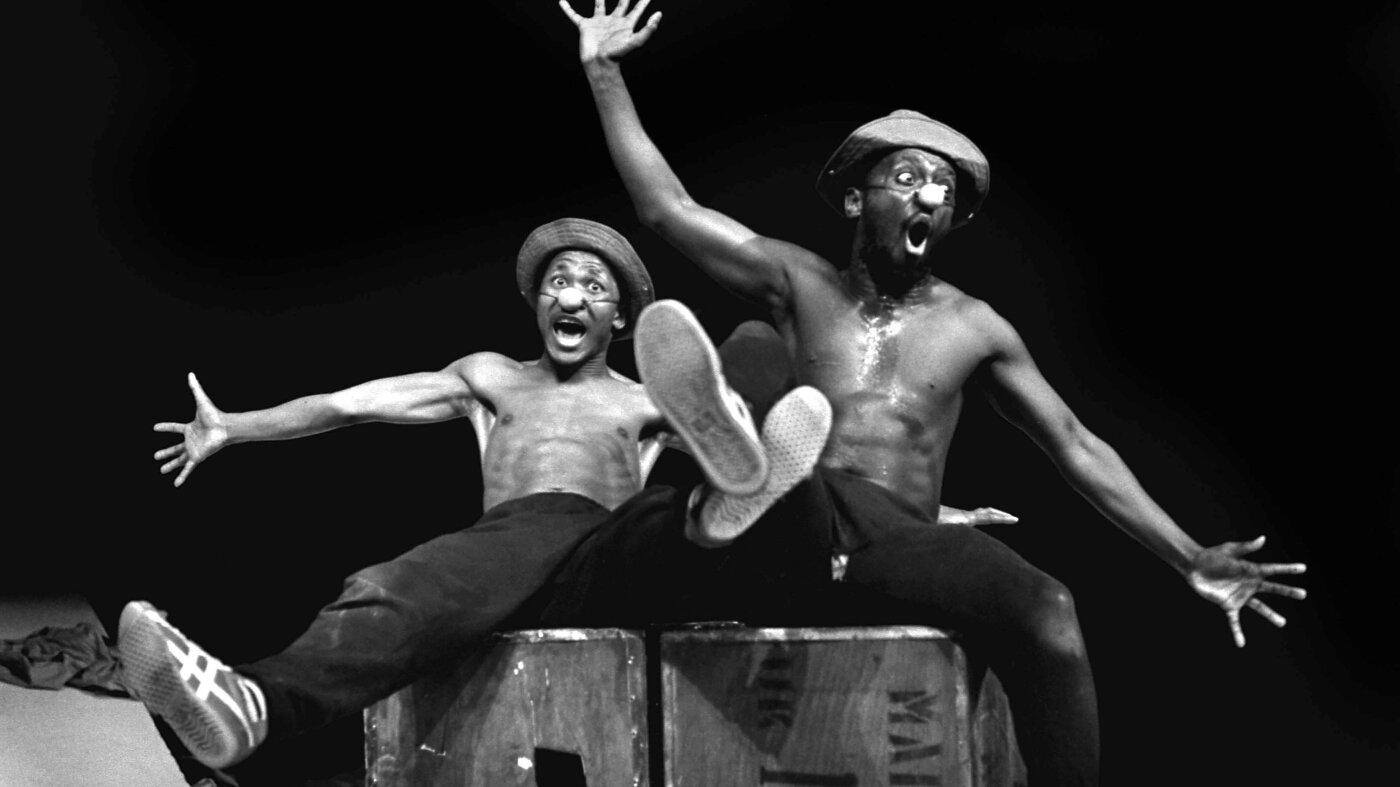
The iconic South African theater that took on apartheid

All the latest in AI ‘music’

US allows Russian oil tanker to reach Cuba amid blockade as Trump says island ‘has to survive’

Dem senator warns deportation could let Virginia woman’s illegal immigrant killer ‘escape accountability’

Florida High School Football Rankings: Top 25 teams – Oct. 21

How old is Bo Nix? What to know about Oregon quarterback ahead of 2024 NFL Draft

Cleary's 21 help Le Moyne down Central Connecticut State 69-64 in OT

99th annual Pony Swim held in Virginia

Indiana Members Credit Union announced as new anchor tenant at Bottleworks District
Dem senator warns deportation could let Virginia woman’s illegal immigrant killer ‘escape accountability’

Newsletter: G7 ministers to hold talks on war’s economic fallout

ICE officers could remain at airports after TSA workers are paid

Scathing report claims nation’s oldest labor union ‘betrayed’ MAGA members through ‘shocking’ spending

Republican US lawmaker demands Congress vote on any Iran troop deployment
-

 Sports1 week ago
IOC addresses execution of 19-year-old Iranian wrestler Saleh Mohammadi
-

 New Mexico1 week ago
Clovis shooting leaves one dead, four injured
-

 Miami, FL4 days ago
Jannik Sinner’s Girlfriend Laila Hasanovic Stuns in Ab-Revealing Post Amid Miami Open
-

 Tennessee6 days ago
Tennessee Police Investigating Alleged Assault Involving ‘Reacher’ Star Alan Ritchson
-

 Minneapolis, MN4 days ago
Boy who shielded classmate during school shooting receives Medal of Honor
-

 Politics1 week ago
Schumer gambit fails as DHS shutdown hits 36 days and airport lines grow
-

 Science1 week ago
Record Heat Meets a Major Snow Drought Across the West
-

 Technology1 week ago
YouTube job scam text: How to spot it fast