Nebraska
Nearly half of Nebraska foster kids suffered parental substance abuse, report shows


OMAHA, Neb. (WOWT) – A new report shows nearly half of the children in the custody of Nebraska DHHS were removed from their home because of parental substance abuse.
The Foster Care Review Office’s annual report to the Nebraska Legislature also indicated that most families in the child welfare system struggle to access the treatment they need.
Julie Larson, of Malcolm, knows the impact of addiction firsthand. Her adult daughter has struggled on and off with substance abuse for years and is unable to reliably care for her 7-year-old child, Emory.
“We would have Emory for a period of time when she was in treatment. She’d get out of treatment, do well for a period of time, and then relapse,” said Larson.
Emory has been living with Larson and her husband for more than two years. Larson is her parental delegate, but now they are working to gain guardianship of Emory.
“It got to the point where I just felt like the relapse was too much and Emory needed a more stable environment,” said Larson.
Larson said getting the guardianship process started was intimidating. “I didn’t know where to go, where to start,” said Larson.
A recommendation from Emory’s school to contact Lutheran Family Services led them to join the free Kinship Navigation program.
“They take you step by step through everything that needs to be done, including getting services for the child, getting services for the grandparents that are taking in the child, and getting through the legal system without having to retain that attorney,” said Larson.
Larson said the program has lifted an emotional and financial burden off her family. The process has also helped Emory understand what is happening.
“We’ve been very open and honest with her about her mother’s addiction and substance abuse. Going through the guardianship program, she loves when our navigator comes, she draws little pictures for her. She understands that once this program is complete, that it will be a more permanent home for her,” said Larson.
Larson added, the program has also helped them gain a better understanding of addiction and has made it easier for them to speak with their family and friends about it.
“Nobody chooses to be an addict or an alcoholic or a substance abuser. It just sneaks up and it gets these claws in you that are very, very difficult to get out of,” said Larson.
Lutheran Family Services also offers treatment programs for adults struggling with substance abuse, including parents who have had their children removed from the home or are at risk of removal.
“If they are not successfully tending to everything that comes with addiction, then they won’t be able to provide a healthy home for their children,” said Jamie Rich, Clinical Supervisor of the Adult Behavioral Health Program & Treatment Court Program at Lutheran Family Services.
LFS offers outpatient treatment with therapy, groups, and medication-assisted treatment, regardless of someone’s income or if they have insurance.
“My team’s job is to work with the parents to help them find the resources and treatment they need to get well, to find a solid recovery program and to be able to reunify with their family,” said Rich.
Rich said she’s seen countless stories of parents getting sober and regaining custody of their children but said it can take time to get there.
“It’s a disease that effects so much of the person’s life and those around them. Recovery is a process and sometimes a very long process. The more support and the more resources that we can build around a person, the more chance they have for success,” said Rich.
Parental substance abuse can lead to child abuse and neglect, according to the Nebraska child advocacy center, Project Harmony.
“It’s not unusual for children to be experiencing more than one type of abuse, including possible addiction of parents. What that means is those caregivers as well as those children are much more vulnerable to other types of abuse when there’s substance abuse happening,” said Colleen Brazil, the VP of Children’s Services at Project Harmony.

Brazil said that this can impact a child’s brain development. “When children have adverse childhood experiences, they become adults that then maybe struggle with mental health, addiction, and chronic health conditions,” said Brazil.
Project Harmony conducts forensic interviews with children to identify abuse and offers preventative resources for families. They also stress the importance of kids having other adults looking out for changes in behavior and making a call if concerns arise.
“That would be calling child protective services. We don’t have to know that something is definitely happening to make that call. I think it’s important to keep in mind that we won’t regret that we’ve made a call to check on a child, we might regret if we haven’t,” said Brazil.
Both Lutheran Family Services and Project Harmony can connect families with mental health services for kids as well.
Copyright 2024 WOWT. All rights reserved.



The U.S. Supreme Court has agreed to hear Nebraska’s lawsuit against Colorado over a proposed canal that would take water out of the South Platte River in Colorado and send it to a reservoir in Nebraska.
Nebraska claims Colorado is deliberately obstructing efforts to build the ditch, known as the Perkins Canal, even though everyone agrees Nebraska has the right to do so. The canal is necessary, Nebraska says, because Colorado isn’t sending enough water into Nebraska.
The Perkins Canal would divert water from the South Platte River near Ovid to a storage site somewhere in Nebraska. The South Platte River Compact, ratified by both states and Congress in 1923, requires Colorado to guarantee a flow in the river of 120 cubic feet per second at a water gauge near the state line during the irrigation season. The compact also authorizes Nebraska to build the canal and grants the right to use the power of eminent domain to acquire land on which to build it. Initial work was done on the canal more than a century ago, but the project was abandoned as unfeasible.
Nebraska resurrected the idea in late 2021, citing fears that urban development along Colorado’s Interstate 25 corridor and plans to expand water storage were causing Colorado to violate the terms of the 1923 compact.
The idea that Nebraska might actually build the canal has water users in the lower reaches of the river worried that doing so would disrupt the water augmentation process that underpins much of the crop irrigation along the South Platte, especially between Fort Morgan and the Colorado-Nebraska state line. It is designed to help Colorado meet the terms of the 1923 compact.
Colorado land owners have resisted Nebraska’s efforts to buy land in the Julesburg area so the canal can be built. Colorado Attorney General Phil Weiser and Gov. Jared Polis, while recognizing Nebraska’s right to build the canal, have nevertheless sworn to do all they can to protect Coloradans’ property and water rights. Seeing such rhetoric as subverting Nebraska’s right to build, Nebraska sued Colorado in the Supreme Court in July 2025, alleging that Colorado is obstructing Nebraska’s efforts to go ahead with the Perkins project. Nebraska also attacked Colorado’s water augmentation system, saying it doesn’t work.
To understand augmentation, it’s important to know that Colorado operates on the prior appropriation doctrine, meaning the oldest (senior) water right holders get their water first. During dry periods, senior users may place a “call” on a stream, forcing junior users to stop taking water to ensure the senior rights are fulfilled. When someone pumps water out of a river basin, it eventually pulls water out of nearby streams and rivers, which can illegally shortchange senior surface-right holders. In that case, the junior wells would have to be shut down until senior rights were satisfied
To avoid such shutdowns, called “curtailment,” Colorado devised a system called augmentation in which the water that is pumped during the irrigation season must be replaced during the winter months so it flows back through the aquifer into the river in the following irrigation season. Some augmentation is done simply by buying water rights from upstream users, increasing the amount of water in the river. The system is highly complex and requires detailed accounting of river flows.
In a prepared statement issued last week, after the high court agreed to hear the case, Colorado Attorney General Phil Weiser said Colorado is in compliance with the compact.
The court’s decision, he wrote, “merely opens the door for Nebraska to bring its claims against Colorado. Nebraska’s burden to prove those claims is incredibly high and we will vigorously defend Colorado’s full entitlements under the compact.”
Perkins Canal needed because Colorado is harming Nebraska
But Nebraska officials insist water augmentation isn’t doing what it was supposed to do. In its 55-page complaint to the U.S. Supreme Court, Nebraska calls the augmentation system illegal and a violation of the river compact.
“Colorado’s water administration system, including its augmentation plans, have harmed and will continue to harm Nebraska,” the lawsuit reads. “For example, many augmentation projects … allow junior well owners to pump water out of priority during the irrigation season, provided they pump or divert additional water during the non-irrigation season and apply it to recharge ponds. This method assumes that water will percolate back into the water table and make its way to the South Platte River in time to make whole downstream senior users.”
Kent Miller is general manager of the Twin Platte Natural Resources District, which includes most of the South Platte River in Nebraska. He’s said he’s watched the river since 1972 and is skeptical that augmentation even works.
“Those plans have not been working, and I base that on the fact that the Western Irrigation District rarely receives what it’s supposed to receive,” Miller said.
In May, U.S. Solicitor General John Sauer filed an amicus brief with the high court recommending that the court allow the suit to go ahead, but with conditions.
In its lawsuit, Nebraska addresses augmentation because of its complexity and insists that any mechanism Colorado uses to comply with the compact should be simple. In his amicus brief, Sauer recommended tossing the argument.
“Nebraska reads Article VIII (of the compact) as mandating that compliance mechanisms be ‘simple,’ and it alleges that Colorado has violated that requirement,” Sauer wrote. “But Article VIII imposes no such requirement; it merely authorizes Colorado officials to enforce the Compact without action by the Colorado legislature. Because Nebraska’s Article VIII claim is facially meritless, it should not be permitted to proceed further.”
Sauer further recommended disallowing arguments that Colorado is obstructing Nebraska’s efforts to build the canal, saying Nebraska offers no evidence of such obstruction.
In signaling its acceptance of the lawsuit on Monday, the Supreme Court said it wants to hear all of Nebraska’s complaints and let the justices judge for themselves whether parts of it lack merit. Colorado originally had 30 days to respond to the court’s action but, on July 2, requested a 60-day extension.

Bellevue, Neb — Some Nebraskans arrived early with signs outside U.S. Rep. Mike Flood’s second town hall of the year, hoping to press the congressman on issues ranging from food assistance to the conflict in the Middle East.
Rhonda Mays said she brought a sign to show Flood what some constituents think and to encourage others heading inside to speak up. “People walking by that plan on going in there need a reminder to speak out, to ask the right question, and don’t just go to listen but to actually challenge the representative,” Mays said.
Flood said Nebraskans are able to treat each other with respect while also having tough conversations.
During the hourlong event, attendees asked about a range of topics, including multiple questions about SNAP benefits. Some Nebraskans said there is a large population facing food insecurity. Flood responded, “I understand your concerns with SNAP I work often with the foodbanks and with Nebraskans that need assistance. I appreciate the question and I will double back with some of my sources when I get a chance this week, but I have not heard anything about that from any of my sources.”
The crowd became particularly rowdy during discussion of the conflict in the Middle East. Flood said, “We have no greater ally in the middle east than Israel. We have no greater ally than Israel.”
Asked about the outcry after the town hall, Flood reiterated his position, saying, “Isreal was attacked by Hamas; a terrorist organization and horrific things were done to Israelis. At the same time Hezbollah working to do the same on the northern border and then you have the Houthis. Israel has the right to defend itself and we would as well if we were put in that situation.”
Flood holds three town halls a year. It was not known where his third town hall will be.
The town hall was held in Bellevue.
Nebraska
Judge sentences Northeast Nebraska man for sexual assault of a minor, faces possible deportation

WOODLAND PARK, Neb. (KTIV) – A Northeast Nebraska man was sentenced to prison after being convicted in May.
Authorities say 51-year-old Henry Pena-Urrutia of Norfolk was sentenced to six years in prison. The Stanton County Sheriff’s Office says Pena-Urrutia was also given 18 months of post-release supervision and will have to register as a sex offender after his time in prison.
In May, Pena-Urrutia pleaded guilty and was convicted of one count of sexual assault involving a minor. Deputies say the man also faces sex offense charges in both Kearney and Buffalo County after the sheriff’s investigation.
Stanton County deputies say Pena-Urrutia also faces possible deportation from the United States as he is here on a green card from El Salvador.
Pena-Urrutia was arrested in December 2025 after an investigation by the Stanton County Sheriff’s Office. As previously reported, the sheriff’s office was contacted by the Sherman County Sheriff’s Office about a possible sexual assault suspect who lived in Stanton County.
An investigation led the sheriff’s office to determine that a minor, younger than 11, was sexually assaulted at a Woodland Park residence.
Law enforcement was led to Pena-Urrutia after an interview with the minor. During an interview with Pena-Urrutia, he reportedly admitted to improper sexual contact with the minor on several occasions.
The two children in his Norfolk home were removed by deputies and placed in the custody of DHHS.
Want to get the latest news and weather from Siouxland’s News Source? Follow these links to download our KTIV News app and our First Alert Weather app.
Copyright 2026 KTIV. All rights reserved.
-
 Alabama5 minutes ago
Mac Jones asked who was his craziest teammate at Alabama
-

 Alaska12 minutes ago
Climate Change Is Helping an Invasive Predator Wreak Havoc on Iconic Alaskan Fish
-

 Arizona15 minutes ago
Arizona man pleads guilty after illegally living in forest for years among ‘1,000lbs of trash’
-

 Arkansas20 minutes ago
Army names intelligence facility for Arkansas Tech graduate
-

 California27 minutes ago
How California Effectively Legalized an Open-Air Sex Market
-

 Colorado30 minutes ago
Julian Lewis Says Deion Sanders’ Colorado ‘Wasn’t Really Looking at Defenses Much’ Last Season
-
 Idaho35 minutes ago
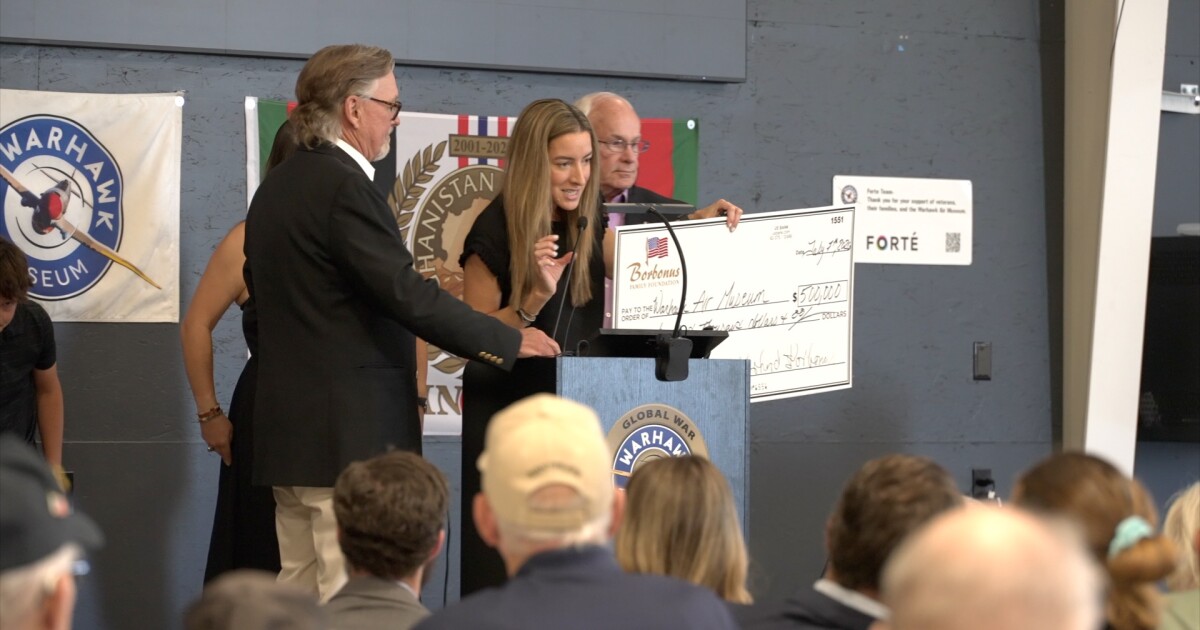
Warhawk Air Museum receives $500K grant honoring fallen Idaho soldier
-

 Connecticut35 minutes ago
Several beaches closed to swimming due to potential bacteria in the water

