Missouri
Missouri judge rules abortion amendment is in ‘blatant violation’ of state requirements • Missouri Independent


A Missouri judge ruled Friday evening that a reproductive-rights amendment did not comply with state initiative petition requirements, leaving the door open to potentially withhold it from the November ballot.
Cole County Circuit Judge Christopher Limbaugh ruled that the coalition behind the citizen-led ballot measure failed to meet the sufficiency requirement through a “failure to include any statute or provision that will be repealed, especially when many of these statutes are apparent.”
Need to get in touch?
Have a news tip?
A spokesperson for Missourians for Constitutional Freedom, the campaign behind the reproductive-rights amendment, said they plan to appeal.
Limbaugh also wrote that while he found a “blatant violation” of state law, he “recognizes the gravity of the unique issues involved in this case, and the lack of direct precedent on point.”
As a result, he won’t issue an injunction preventing the amendment from being printed on the ballot until Tuesday to allow time for “further guidance or rulings” from the appeals court.
The constitutional deadline for ballots to be printed is Tuesday.
Amendment 3 would establish the constitutional right to an abortion up until fetal viability and grant constitutional protections to other reproductive health care, including in-vitro fertilization and birth control. It would also protect those who assist in an abortion from prosecution.
“The court’s decision to block Amendment 3 from appearing on the ballot is a profound injustice to the initiative petition process,” Rachel Sweet, campaign manager with Missourians for Constitutional Freedom, said in a statement. “And undermines the rights of the 380,000 Missourians who signed our petition demanding a voice on this critical issue.
The lawsuit was filed two weeks ago by a group of anti-abortion lawmakers and activists against Missouri Secretary of State Jay Ashcroft, who certified the citizen-led ballot initiative for the Nov. 5 ballot nine days earlier. The group is arguing that the initiative should never have been allowed on the ballot.
The plaintiffs — state Sen. Mary Elizabeth Coleman, state Rep. Hannah Kelly, anti-abortion activist Kathy Forck and shelter operator Marguerite Forrest — said in a statement Friday evening that the amendment’s scope is “staggering.”
“Missourians have a constitutional right to know what laws their votes would overturn before deciding to sign initiative petitions,” they said. “Amendment 3 isn’t just about abortion.”
The plaintiffs were represented in court by Mary Catherine Martin, an attorney with the Thomas More Society who argued during a brief bench trial Friday morning that the campaign behind the amendment fell short of the law by failing to list the specific laws or constitutional provisions which would be repealed if the amendment is approved by voters.
Missouri law requires that initiative petitions “include all sections of existing law or of the constitution which would be repealed by the measure.”
“No one disputes,” she said, “one of its primary purposes and effects is to repeal Missouri’s ban on abortion.”
Speculation isn’t necessary to come to this conclusion, Martin said, pointing to the ballot summary which reads, in part, that a yes vote would “remove Missouri’s ban on abortion.”
Loretta Haggard, an attorney representing the campaign supporting the amendment, said that while the amendment would supersede existing law, it would not erase it from the current constitutional text, and therefore would not truly repeal the current statute.
She told the judge in court that this is because the two texts do have some overlapping similarities: both protect women who get abortions from prosecution and both restrict abortion after the point of fetal viability.
GET THE MORNING HEADLINES DELIVERED TO YOUR INBOX
Fetal viability is an undefined period of time generally seen as the point in which the fetus could survive outside the womb on its own, generally around 24 weeks, according to the American College of Obstetricians and Gynecologists.
When it comes to everything else, Haggard said, the amendment would leave the current law to be interpreted through the lens of the new law, meaning any restrictions implemented by the government on abortion prior to fetal viability will have to withstand strict scrutiny in court to remain. She ventured that most of Missouir’s current restrictions would not survive for this reason.
Ultimately, Limbaugh sided with the plaintiffs, writing that the page attached to the initiative petition forms “included no disclaimer or any equivalent to a disclaimer.”
“In fact,” he concluded. “The full and correct text failed to identify any ‘sections of existing law or of the constitution which would be repealed by the measure.’”



Missouri
Boone Health files lawsuit against Missouri Heart Center, alleging contract breaches, data misuse

COLUMBIA, Mo. (KMIZ)
Boone Health is suing a Columbia-based cardiology group, alleging breaches of contract, misuse of confidential information and plans to engage in unlawful competition.
The lawsuit, filed in Boone County Circuit Court, targets Missouri Cardiovascular Specialists LLP, also known as the Missouri Heart Center or MO Heart, which has provided cardiology services to Boone Health for more than a decade. According to court documents, a renewed agreement was signed in 2021 covering professional services and management of Boone Health’s cardiology operations.
Boone Health alleges it paid the cardiology group millions of dollars under those agreements for staffing, administrative oversight and revenue cycle management, which included access to sensitive financial and patient-related data. In return, MO Heart and its physicians agreed to noncompete and confidentiality provisions designed to protect Boone Health’s business interests.
The health system claims MO Heart violated those agreements by preparing to launch a competing cardiology practice in the Columbia area, potentially as soon as the contracts expire on May 6, 2026. The lawsuit alleges the new venture would fall within a restricted geographic area and time frame outlined in the noncompete clause, which Boone Health argues is enforceable under Missouri law.
Boone Health also accuses MO Heart of disclosing or misusing confidential information, including billing rates, reimbursement data and strategic business details during its transition to new partnerships with outside organizations. Boone Health alleges in the lawsuit those actions could cause “severe and irreparable injury.”
In addition, Boone Health claims MO Heart obstructed access to critical systems and data. The lawsuit alleges the cardiology group cut off Boone Health’s access to a key billing and patient information platform and stopped sharing necessary data, raising concerns about continuity of patient care.
Boone Health alleged that MO Heart indicated that it intends to operate independently and has taken the position that the noncompete provisions are unenforceable, according to the filing.
Boone Health is asking a judge to rule the noncompete agreements that MO Heart signed are valid, as well as having MO Heart return or destroy confidential information, and delay starting a competing practice until May 2027.
A jury trial has been requested.
A spokesperson for Boone Health told ABC 17 News that it would provide additional details early next week.
Dr. James T. Elliott of MO Heart disagreed with allegations in the lawsuit through a written statement.
“For months, we have tried to meet with leadership team at Boone Health to work constructively towards a new, collaborative arrangement that would preserve access to and expand high‑quality care for our patients and for the entire community. Unfortunately, Boone refused to engage with us in any meaningful way. Instead, we have been met with a series of escalating legal threats, culminating in today’s filing,” the statement reads.
“Earlier today Boone Health filed a lawsuit against Missouri Heart Center. We disagree with the lawsuit’s allegations and believe those claims are both legally and factually incorrect. This litigation does not change our commitment to caring for patients.”
Missouri
Missouri bill that would split Jackson County and Kansas City gets little support from lawmakers

A Missouri House committee had its first hearing this week on a proposed constitutional amendment that would split Kansas City and Jackson County upon approval by voters.
The legislation is nicknamed “Jackxit,” a nod to Brexit, the withdrawal of the United Kingdom from the European Union in 2020.
Republican state Rep. Mike Steinmeyer is sponsoring the bill. He said eastern Jackson County voters feel underrepresented in the county government, and this legislation would give them the power to change that.
At the hearing, committee members listened to Steinmeyer’s presentation of the bill before asking questions and sharing their thoughts.
Democratic state Rep. Bridget Walsh Moore compared what the bill proposes to “The Great Divorce” that saw the legal separation of the city of St. Louis from St. Louis County in 1876.
Several committee members criticized a part of the bill that says if it’s signed into law, the question of whether to split the county in two would appear on the Missouri ballot every 10 years.
Moore called it a “never-ending clause.”
“There’s a provision that says every 10 years this has to go back on the ballot, whether you like it or not,” Moore said. “And we’re going to keep voting on it, until you vote the way we think you should.”
Democratic state Rep. Jeff Hales said the bill’s language suggests the question would reappear on the ballot every 10 years until it’s approved by voters.
“Why does it end when it’s approved if the importance and the value here is giving the voters of Jackson County a right to weigh in on their charter and their government?” Hales said.
Steinmeyer said that clause exists to give Jackson County voters the opportunity to weigh in on their form of government.
“It gives them the right to speak and say we want change, or we want to abolish and start over,” Steinmeyer said. “That’s all we’re asking for.”
Democratic state Rep. Ashley Aune questioned how the ballot question would protect the right of voters. Steinmeyer said it protects their right to vote and be heard, specifically on their governance.
Lobbyist Shannon Cooper testified on behalf of the city of Kansas City, the Greater Kansas City Chamber of Commerce and the Civic Council of Greater Kansas City. He said during a public comment period that the bill was “the most befuddling piece of legislation” that he’s had to testify for or against.
Cooper brought up the historic recall election of County Executive Frank White Jr. and said the recall showed the system Steinmeyer is trying to fix with this bill can work.
“If the voters are not happy, they can deal with their problems,” Cooper said. “They’ve proven that in the last year.”
No action was taken on the bill, and it is not yet scheduled for a future hearing.
Missouri
Kansas City, Missouri, City Council voted Thursday to approve the city’s $2.6 billion budget for 2026-27
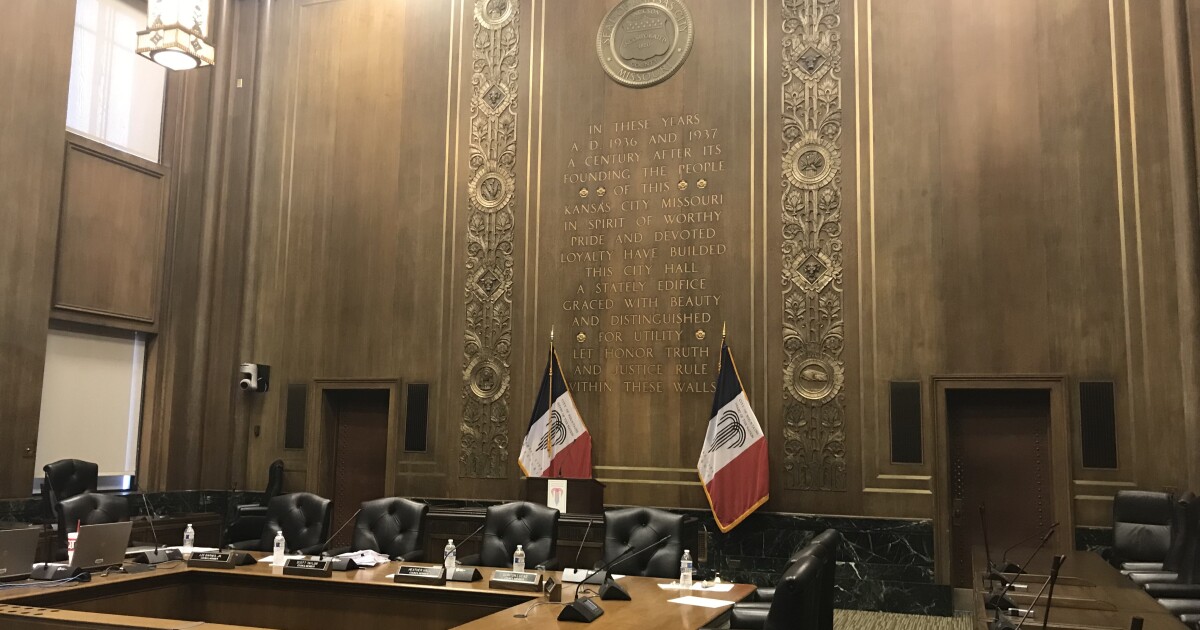
KANSAS CITY, Mo. — The Kansas City, Missouri, City Council voted Thursday to approve a $2.6 billion budget for the city’s fiscal year of 2026-27.
The budget includes $744 million in spending for public safety, including $26.3 million for a new Department of Community Safety and $4.2 million to hire 50 new KCMO Police Department officers, along with 10 call takers and 10 dispatchers.
“Our budget respects the strong fiscal foundation the taxpayers have helped Kansas City build, maintaining a rainy-day fund of over $200 million, increasing road resurfacing, hiring more public safety and city workers, and investing in all Kansas City neighborhoods,” Mayor Quinton Lucas said in a news release from the city. “In a city that can walk and chew gum, we are proud to welcome the world while delivering strong basic services for Kansas City’s families.”
The council voted to spend $83.8 million for the Kansas City Area Transportation Authority to provide bus services, but the KCATA may have to make cuts in bus services even with a $6 million boost in funding from the city.
In addition, the council approved spending $39.4 million for citywide street resurfacing and $1.5 million for tearing down dangerous buildings.
“This budget reflects a collaborative effort across the city, and provides a clear path for Kansas City to keep moving forward with discipline, accountability and a focus on service,” City Manager Mario Vasquez said in the news release. “Thank you to the council for its thoughtful deliberation and input in crafting this budget.”
More information on the fiscal year 2026-27 budget can be found on the city’s website.
—

In deep-red Washington County, a surge in Democratic candidates

In battleground Wisconsin, the 2026 elections are poised to bring a ‘changing of the guard’

Morrisey: Growth of Alcon in Cabell County is evidence of good times ahead for WV

Wyoming teen discovers rare and ancient megalodon shark tooth off Florida coast

Where Will the Cryptocurrency XRP Be in 10 Years? | The Motley Fool

Florida High School Football Rankings: Top 25 teams – Oct. 21

How old is Bo Nix? What to know about Oregon quarterback ahead of 2024 NFL Draft

Cleary's 21 help Le Moyne down Central Connecticut State 69-64 in OT

99th annual Pony Swim held in Virginia

Indiana Members Credit Union announced as new anchor tenant at Bottleworks District

Dem senators dodge crucial question on illegal alien accused of killing Chicago college student

EU Parliament unblocks key political hurdle in digital euro talks

Man arrested in plot to firebomb Palestinian activist’s home after undercover op

WATCH: Senate hearing goes silent after Angel Father confronts top Dem over daughter’s death

US diplomat Marco Rubio denounces settler violence, tolls in Hormuz strait
-

 Detroit, MI1 week ago
Drummer Brian Pastoria, longtime Detroit music advocate, dies at 68
-

 Movie Reviews1 week ago
‘Youth’ Twitter review: Ken Karunaas impresses audiences; Suraj Venjaramoodu adds charm; music wins praise | – The Times of India
-

 Sports7 days ago
IOC addresses execution of 19-year-old Iranian wrestler Saleh Mohammadi
-

 New Mexico5 days ago
Clovis shooting leaves one dead, four injured
-
 Business1 week ago
Disney’s new CEO says his focus is on storytelling and creativity
-

 Tennessee5 days ago
Tennessee Police Investigating Alleged Assault Involving ‘Reacher’ Star Alan Ritchson
-

 Technology6 days ago
YouTube job scam text: How to spot it fast
-

 Texas1 week ago
How to buy Houston vs. Texas A&M 2026 March Madness tickets