Midwest
Repeat offender kills 2 deputies days after $50K bond despite long violent record: police

NEWYou can now listen to Fox News articles!
A violent repeat offender with a documented history of firing at law enforcement and cycling through arrests across two states killed two Missouri deputies before being shot dead by police, authorities said.
Richard Dean Bird, 45, had a criminal record spanning more than a decade in Kansas and Missouri before Monday’s deadly encounter in Christian County, officials and court records show.
Bird was killed following a 30-minute shoot-out with deputies after authorities say he fatally shot Deputy Gabriel Ramirez, 30, during a traffic stop south of Highlandville just after 4 p.m. Monday. Deputy Michael Hislope, 40, was later killed during the overnight manhunt, according to Christian County Sheriff Brad Cole.
Court and booking records show Bird was arrested in Stone County, Missouri, on Feb. 20, 2026, just days before the shooting. He was booked on charges of second-degree burglary, unlawful possession of a firearm and stealing property valued at $750 or more, according to Stone County jail records.
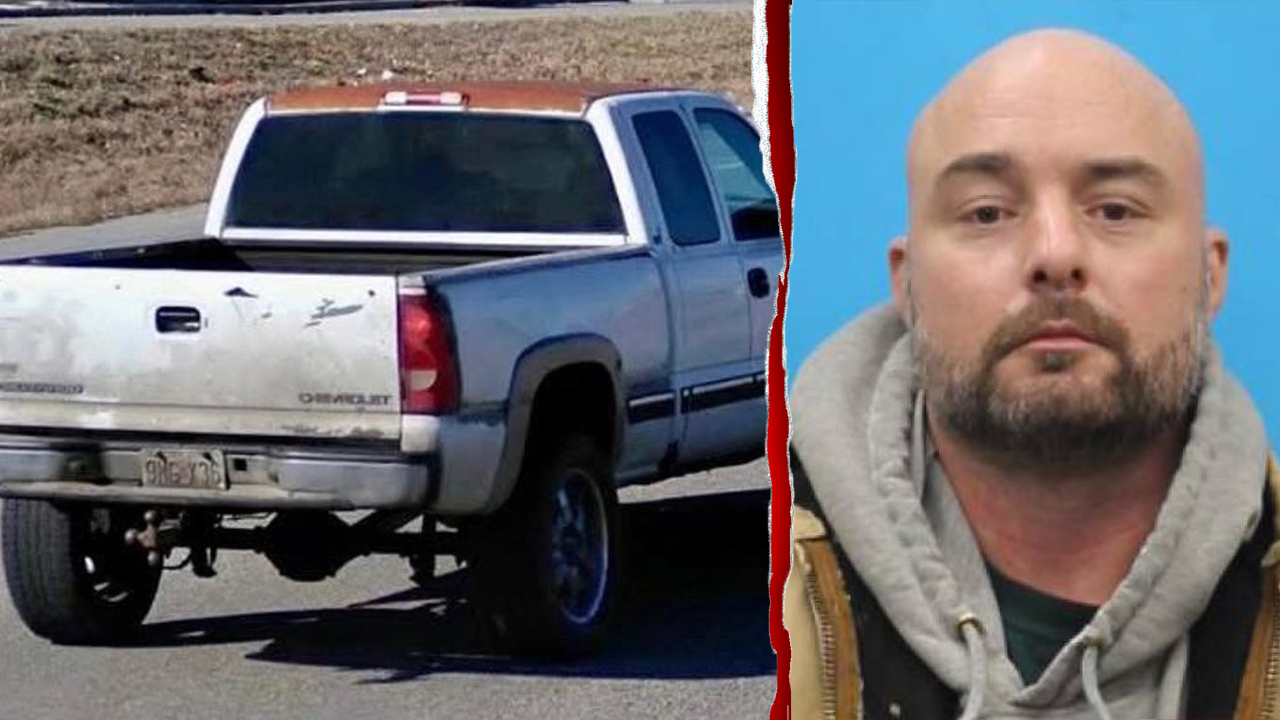
A booking photo of Richard Dean Bird, identified by authorities as the suspect in the fatal shooting of two Christian County deputies in southwest Missouri. (Missouri State Highway Patrol Facebook)
According to court records cited by The New York Times, Bird had also recently been charged with receiving stolen property. In that case, police found him with collectible coins, including Indian-head pennies valued at about $2,000, that had been inside a safe reported stolen. Officers also discovered documents he allegedly attempted to burn, according to the warrant. Bird had posted $50,000 bond on Friday, the Times reported.
Bird’s violent record dates back to 2014.
In September of that year, he was arrested after allegedly firing multiple shots from a rifle at a Johnson County, Kansas, sheriff’s deputy investigating a theft at a construction site near 191st Street and State Line Road, according to The Kansas City Star.
The outlet reported Bird fired “multiple shots from a rifle at the deputy, who was not hit.” He was initially charged with attempted first-degree murder and theft, and his bond was set at $1 million.
Bird later pleaded guilty to reduced charges and was sentenced in 2016 on five counts stemming from that case, according to court records. Kansas Department of Corrections records show he was released in April 2023.
Court filings over the years show Bird faced multiple additional charges, including burglary, tampering, trespassing, theft and unlawful possession of a firearm.
FLORIDA DEPUTY WITH 25 YEARS ON FORCE KILLED SERVING EVICTION NOTICE; SUSPECT, LOCKSMITH ALSO SHOT: SHERIFF
Richard Dean Bird had a lengthy criminal history before he killed two deputies, police said. (Missouri State Highway Patrol)
During a press conference Tuesday, Sheriff Cole confirmed Bird had a “lengthy” criminal record and multiple prior arrests.
The initial traffic stop that led to the deputies’ deaths happened just after 4 p.m. Monday, officials said. Authorities have not disclosed what prompted the stop.
Deputy Ramirez was killed during the initial encounter, Cole said.
Bird fled, triggering a massive manhunt involving approximately 150 officers from local, state and federal agencies, including the FBI, U.S. Marshals and ATF.
VIOLENT REPEAT OFFENDER ACCUSED OF KILLING TEACHER AS 911 CALL REVEALED HER FINAL MOMENTS: REPORT
The Missouri State Highway Patrol issued a Blue Alert for a white 2001 Chevrolet Silverado extended cab pickup truck, Missouri license plate 9MGX36, after a Christian County deputy was fatally shot near Highlandville. (Missouri State Highway Patrol Facebook)
Early Tuesday morning, deputies tracked Bird into wooded terrain near Reeds Spring. Cole said officers attempted communication but “received no response other than shooting at us.”
Deputy Hislope was killed during the exchange. Deputies Josh Wahl and Austin McCall were wounded but are recovering from injuries that are not considered life-threatening.
Bird was shot and killed during the gunfight, authorities said.
The loss has shaken the Christian County Sheriff’s Office, which has about 30 patrol officers and roughly 140 employees overall, according to Kathy Thimesch, an executive administrator with the agency who spoke to The New York Times. Thimesch told the outlet she was not aware of another officer from the department ever having been killed in the line of duty.
In a Facebook post, Cole offered a tribute to the fallen deputies.
“It is with the heaviest of hearts that we mourn the loss of two of our own — Deputy Gabriel Ramirez and Deputy Michael Hislope — who gave their lives in the line of duty,” Cole wrote.
MANHUNTS ACROSS AMERICA IN 2025: FIVE CASES THAT LEFT CITIES, CAMPUSES AND TOWNS ON EDGE
Christian County Sheriff’s Office Deputies Gabriel Ramirez and Michael Hislope were killed during a deadly encounter in southwest Missouri. Authorities said the suspect was killed following a manhunt and gun battle in wooded terrain near Highlandville. (Christian County Sheriff’s Office Facebook)
Ramirez joined the department on March 14, 2025, and though his time with the agency was brief, Cole said “his commitment to serving others and protecting this community was clear from the very beginning.”
Hislope had served since October 28, 2019, and was described by Cole as “a dedicated deputy, a trusted colleague, and a valued member of our sheriff’s office family.”
“These men answered the call to serve, putting the safety of others before their own, including serving our nation in the U.S. Army,” Cole wrote. “Their courage, sacrifice, and unwavering commitment to Christian County will never be forgotten.”
The case also drew reaction from national and state leaders.
VIDEO SHOWS POLICE OFFICER AMBUSHED IN PATROL CAR IN EXPLOSION OF GUNFIRE, SUSPECT FOUND DEAD AFTER SHOOTOUT
Sen. Josh Hawley, R-Mo., condemned the killings and pointed to Bird’s criminal history.
“Two heroic deputies in my home state of Missouri were senselessly murdered by a thug with a long history of violence toward law enforcement,” Hawley said in a statement to Fox News Digital. “We need accountability for these soft-on-crime policies destroying our communities.”
Joe Gamaldi, national vice president of the Fraternal Order of Police, called the killings “horrific news out of Missouri” and urged Americans to keep the deputies’ families in their thoughts and prayers as they face “unimaginable grief.”
“History will not be kind to our nation for its treatment of our protectors… sickening!” Gamaldi wrote.
The conservative social media account Libs of TikTok described Bird as a “career criminal” and questioned how someone with a lengthy record was back on the streets. In a post on X, the account cited Bird’s prior charges, including burglary, unlawful possession of a firearm and the 2014 attempted first-degree murder case, and asked, “Why does this keep happening?”
Missouri leaders also weighed in and honored the fallen officers.
Rep. Eric Burlison honored the fallen deputies on the House floor, noting both were U.S. Army veterans who “continued their service as deputies in southwest Missouri.”
“We remember their sacrifice and pray for their families, fellow officers, and the entire law enforcement community,” Burlison said.
Sen. Eric Schmitt, R-Mo., called the incident “a devastating loss in Christian County.”
“As local law enforcement works to bring the suspect to justice, my prayers are with the deputy’s loved ones and those who served shoulder to shoulder with him to keep Missouri safe,” Schmitt wrote on X.
The FBI also issued a statement offering condolences to the deputies’ families and colleagues, noting Ramirez had served nearly a year with the department and Hislope more than six years.
CLICK HERE TO DOWNLOAD THE FOX NEWS APP
Missouri officials described the killings as a devastating loss for the state’s law enforcement community.
Sheriff Cole called it one of the “darkest days” in county history and said the department’s focus now is planning two funerals and supporting injured deputies.
Stepheny Price covers crime, including missing persons, homicides and migrant crime. Send story tips to stepheny.price@fox.com.
Related Article

Read the full article from Here



Two of the keys for Cleveland’s near and long-term future are how both of their first-round picks perform in their rookie seasons. Both Spencer Fano and KC Concepcion are under a lot of pressure to show that they have what it takes to be long-term pieces in this league.
It is going to be a challenge for both of them, as the Browns offense is very young throughout and will also have a major question mark at the quarterback position. With all of the aside, the Browns have had a very rough go at it with their first-round picks in the last 20 years.
We are examining the careers of the last 10 to see which ones were worth the selection and which ones were a bust. Spoiler alert, it’s heavily weighted to the latter.
Cleveland’s last eleven first-round picks are a roller coaster of results, which is the reason they have been perpetually stuck in a rebuild.
2015 Round 1 Pick 12: DT Danny Shelton
Cleveland went with the defensive line to start the 2015 draft and took one of the biggest busts of that first round. Shelton had potential but never grew into it. It is always a risk going DL in the first round because if the result isn’t a home run, it is likely a failure.
2015 Round 1 Pick 19: OT Cameron Erving
DL and OL were within just a few picks away from each other with the intent of bolstering their lines of scrimmage, it didn’t work. Erving spent only two seasons in Cleveland before being traded to Kansas City in 2017.
2016 Round 1 Pick 15: WR Corey Coleman
This was one pick that I personally got excited about when it happened, and then that was the best part of the Corey Coleman tenure. He never materialized as a player in the NFL and was one of the biggest busts from the 2016 draft.
2017 Round 1 Pick 1: DE Myles Garrett
The moment that Myles Garrett hits five years after retirement, he will walk right through the doors in Canton, Ohio. The only hope is that his career comes back to Cleveland before it ends.
2017 Round 1 Pick 25: S Jabrill Peppers
Peppers brought an attitude and a swagger to the back end of the Browns’ defense. He ended up being an average Cleveland Brown because, in my opinion, he was massively misused in his time in Cleveland.
2017 Round 1 Pick 29: TE David Njoku
Many Browns fans were hoping Njoku would retire as a Cleveland Brown, but it wasn’t in the cards. It was nine seasons of good to very good for Njoku. He, like many, suffered from horrible QB play throughout his career, and it cost him the prime of his career.
2018 Round 1 Pick 1: QB Baker Mayfield
It was always so close with Baker. He had the right attitude to turn the Cleveland franchise around, but he could never get out of his own way. Turnovers, immaturity, and a string of bad coaching cost him what could have been an incredibly special career.
2018 Round 1 Pick 4: CD Denzel Ward
Ward has been a slam dunk pick from his literal first game. In that opening game, Ward intercepted Ben Roethlisberger twice and began what has been an amazing career in Cleveland. His time here is coming to a close, but he was everything and more than what the Browns could have asked for.
2019 Round 1 Pick 17: Traded to New York for Odell Beckham Jr.
2020 Round 1 Pick 10: OT Jedrick Wills Jr.
This one hurts because Andrew Berry selected Wills three spots ahead of Tristan Wirfs, who is on his way to what could be a Hall-of-Fame career.
2021 Round 1 Pick 26: CB Greg Newsome III
Newsome loved playing for the Cleveland Browns more than anything. His game never matched his infinite love for the city, as he just lacked some of the required skills to be a lockdown DB. No one will ever forget his pick six against Baltimore to come back on the Ravens.
2022 Round 1 Pick 13: Traded to Houston for Deshaun Watson
2023 Round 1 Pick 12: Traded to Houston for Deshaun Watson
2024 Round 1 Pick 23: Traded to Houston for Deshaun Watson
2025 Round 1 Pick 5: DT Mason Graham
Graham played very well in his first year in Cleveland, but again, it is a major risk to take a DT in the first round, let alone the top 5. He has to be a home run hit, or else there will be a lot of questions.
The first round has been quite the roller coaster for the Browns over the past 15 years. It is no surprise to Browns fans, but reliving the ups and downs is always a good thought experiment about what could have been if Cleveland had made the right picks consistently.
The hope now is that their most recent picks, Fano and Concepcion, prove that they fall into that category and will be in Cleveland for a very long time.

(WGME) Sen. Tammy Duckworth, from the state of Illinois, is publicly opposing Dr. Nirav Shah’s run for the U.S. Senate in Maine, citing his past performance as Illinois’ public health director.
Duckworth posted on X Thursday that her opposition is based on Shah’s handling of a 2015 Legionnaires’ outbreak at a veterans home. Duckworth said Shah “put his image before the safety of veterans” during the outbreak, which resulted in the deaths of 13 people.
Shah has previously responded to criticism of how he handled the outbreak. During a debate on CBS13 when he was running for governor, Shah said, “If what we demand are leaders with unblemished records, then what we will get are leaders who have not been tested. I have been tested, I have learned, I am better for it, and that will make me a better governor for every single Mainer.”
Shah also responded directly to Duckworth’s comments, saying he was praised — including by Sen. Susan Collins — for how he handled the COVID-19 pandemic. He also reemphasized his willingness to answer questions in town halls across Maine.
Shah noted most Maine voters will likely not have a say in who gets the nomination, but said they still deserve to hear candidates’ thoughts in debates before taking on Collins.

-

 Washington, D.C31 seconds ago
Storm Team4 Forecast: Scattered showers and storms possible Saturday PM
-

 Cleveland, OH7 minutes ago
Cleveland’s First Round woes must end with the 2026 class
-

 Austin, TX10 minutes ago
Texas reports dozens of cyclosporiasis cases tied to contaminated fresh produce
-

 Alabama23 minutes ago
Small Plane Makes Emergency Landing In Peanut Field Near Florida-Alabama Line : NorthEscambia.com
-
Alaska25 minutes ago
An Alaska vacation can remind Israelis the world doesn’t revolve around them | The Jerusalem Post
-
 Arizona31 minutes ago
Arizona AG continues to investigate Glendale apartment complex after Friday deadline to fix A/C
-

 Arkansas37 minutes ago
Office of Keep Arkansas Beautiful Now Part of the ARDOT
-

 California40 minutes ago
Amber Alert issued for 3-year-old out of California City in Kern County


