Midwest
Missouri law requiring photo ID to vote remains intact: 'Huge win for election security'

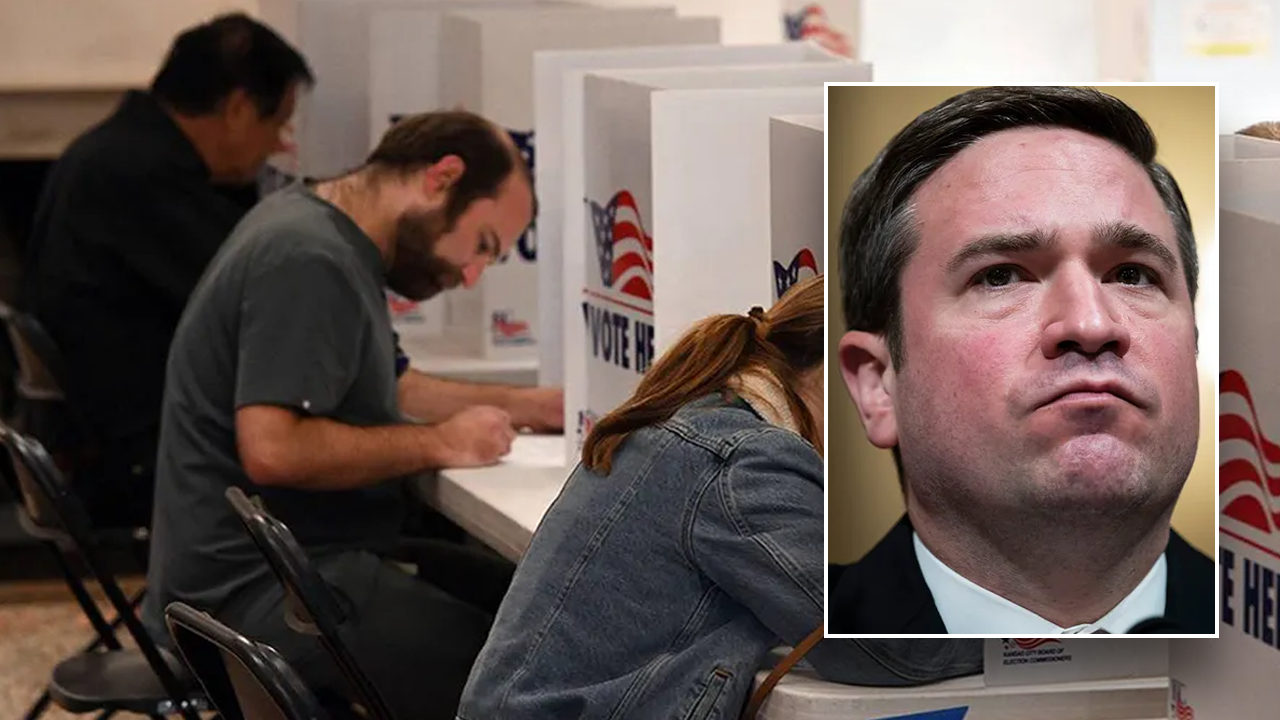
Missouri Attorney General Andrew Bailey said a state law requiring a photo ID to vote being upheld in court is a “huge win for election security.”
“Missouri proved today how to handle radical activists that come into a state with secure elections and try to undermine them through the legal process,” Bailey said in an exclusive statement to Fox News Digital.
Bailey added that this was a huge victory for the Show Me State.
“We went to court, we put on the evidence, and radical activists working to undermine our elections FAILED. This is a HUGE win for election security,” Bailey said in a post on X.
COURT UPHOLDS RED STATE’S BAN ON TRANS SURGERIES, TREATMENTS FOR MINORS
Andrew Bailey, Missouri’s attorney general, called the court win over photo ID to vote a “huge win for election security.” (Graeme Sloan/Bloomberg via Getty Images)
Elon Musk also shared his approval and praise for Missouri’s court ruling.
“Congratulations AG Bailey! Now we need this nationwide,” Musk wrote in a post on X.
The Missouri court’s decision to uphold the voter ID law came after heavy criticism from groups arguing that such requirements could disenfranchise voters.
However, Bailey’s office successfully presented evidence supporting the law’s necessity and effectiveness in maintaining the integrity of the voting process. The court’s ruling confirmed that the voter ID law does not impose a burden on voters.
Missouri also provides free non-driver’s licenses for voting for those who do not already have a driver’s license or have a current license. The health department’s Bureau of Vital Records provides free birth certificates to those seeking their first non-driver’s license in order to vote if the applicant does not have a current driver’s license.
PENNSYLVANIA DEM GOV. JOSH SHAPIRO SIDES WITH STATE SUPREME COURT RULING NOT TO COUNT CERTAIN MAIL-IN BALLOTS
Cole County Circuit Judge Jon Beetem ruled Monday that a Missouri law requiring a photo ID to vote would remain intact. (Getty Images)
“There is not a severe burden on the right to vote as the State has gone to great lengths to help voters obtain IDs,” Bailey wrote in a previous court brief.
In October 2022, Cole County Presiding Judge Jon Beetem had already rejected a lawsuit brought by the Missouri League of Women Voters, NAACP and two voters challenging a law passed by the Republican-controlled state legislature making it mandatory that voters show photo identification to cast a regular ballot. Under the 2022 law, people with a valid government-issued photo ID are still able to submit provisional ballots, which will be counted if they return later that day with a photo ID or if election officials verify their signatures.
A Missouri court decided to uphold the state’s voter ID law, something Andrew Bailey fought for. (Vanessa Abbitt/St. Louis Post-Dispatch/Tribune News Service via Getty Images)
Republicans said the goal of the 2022 law was to deter voter fraud, but the plaintiffs in the case argued the legislation placed unconstitutional hurdles on voting, suppressing turnout.
Before the 2022 midterm elections, it was acceptable for Missourians to present a voter registration card, a student identification card, a bank statement or utility bill or a valid driver’s license to cast their ballots in the state.
The National Conference of State Legislatures reports that 36 states request or require identification to vote, of which at least 20 ask for a photo ID.
Other Republican-led states are moving in the same direction as Missouri, which could serve as the blueprint for national policy.
“I’m proud that Missouri will continue to lead the nation in defense of election security,” Bailey said.
Critics argue that such requirements are an overreaction that could disenfranchise eligible voters.
Fox News Digital’s Danielle Wallace and the Associated Press contributed to this report.
Stepheny Price is writer for Fox News Digital and Fox Business. Story tips and ideas can be sent to stepheny.price@fox.com.
Read the full article from Here


It was a sunny morning in early June when I visited Jeb Williams, director of the North Dakota Game and Fish Department, at its headquarters in Bismarck. While we talked, we saw outside the spacious window of his office a young family walk to a trail near the parking lot. Some of them were carrying fishing poles.
I inquired about it, and Williams told me that Game and Fish manages a pond it stocks with fish on the property and families come to use it often during the summer months. He said I should check it out after our meeting. I said I would, but first we had other things to discuss.
It’s not the first time that Williams and I have met like this. We try to meet once every few weeks to catch up on news and events from the department and the outdoors community. This time, he spoke about the advisory meetings Game and Fish held this spring across the state and some of the things that came out of the meetings.
Joshua Palmer
One item is talk of possibly proposing a bear season, a first for North Dakota.
It would be in the Walhalla area, where Williams said people are seeing more of the animals to the point “where landowners might like to harvest a bear,” he said. “Individual hunters are also seeing enough of them that they’re starting to feel maybe it’s time.”
He said the department will take time this summer to do its due diligence in determining if a bear season would be positive for North Dakota.
“We’re a data-based agency that likes to have more than anecdotal stories when it comes to setting seasons or regulations, those types of things, and I think the public expects that of us. I think having some baseline information is important and the responsible thing for us to do, and so we’re going to be doing that this summer and discussing it with the public this fall and next spring for a potential bear season in fall 2027.”
Williams also addressed the Governor’s Soil Health and Habitat Program, a $6.5 million, state-funded initiative designed to improve soil, create wildlife habitat and support farmers. It also will benefit hunters. The program, funded by the Outdoor Heritage Fund and through in-kind donations, was developed with input from agricultural and conservation partners and is administered through North Dakota Association of Soil Conservation Districts. The North Dakota Game and Fish Department serves as a co-applicant.
The pilot program provides five-year contracts to approved private landowners who put habitat on their property, who will then be compensated in the form of annual rental payments, cost-share for grass establishment, and a first-of-its-kind $10 per acre crop insurance credit for unproductive cropland converted to grassland habitat. Producers who enroll acres into the North Dakota Game and Fish’s Private Land Open To Sportsmen (PLOTS) program receive additional incentives. The department provides the crop insurance premium reduction for converting marginal, unproductive cropland into perennial grass habitat.
Williams said not all agricultural land is productive, and those lands that are not could become important areas for conservation. “There are pieces of land that can be utilized in other ways — improving the soil health and putting habitat and grass on the landscape. Any time you can put habitat on the land in the form of grass and wetlands and trees, those are features that wildlife respond to.”
Williams said there have been a lot of conversations about the program since it was announced by Gov. Kelly Armstrong during a press conference in late January, and those discussions will continue. It’s good to clear the air.
“It’s not like us taking a township and putting it all in grass,” Williams said. “It’s taking chunks that a particular producer or landowner looks at as being unproductive acres and turning it into productive wildlife habitat for pheasants and other animals.”
Williams is excited about the initial response for the program and said Game and Fish and its partners are working on ways to keep the program funded for the years ahead.
As our meeting wrapped up, we saw more people in the parking lot heading to the trail that would take them to the pond. Williams said sometimes on days when things haven’t gone as well as he had hoped, and he sees young people and their parents show up to use the pond, it brightens his mood. It reminds him of the department’s overall mission.
He said, “that’s what we’re here for” — to provide natural resources to North Dakota residents, now and into the future.
As promised, once I left Williams’ office, I walked to the pond and encountered a prairie snake on my walkabout. Soon, I met up with the fishing family we saw from his window — Christy Hosek, of Bismarck, and seven of her 15 children. She said they visit the pond every week, and most every time the kids catch fish. While I was there, 10-year-old Cole caught a small walleye. He held it up so I could take a picture of him with the fish before he released it back into the water. The pond is a catch-and-release-only water.
For those who have the need or interest in visiting the Game and Fish headquarters, a modern building in a quiet area on the outskirts of Bismarck, check out its catch-and-release pond. It’s a pleasant spot with a mowed grassy trail around it and some wildlife to view as well. There’s even a picnic area at the trailhead where parents and their young anglers can relax with a sandwich and drink. Visitors must bring their own lunch, of course.
As I began my walk back to my car, I heard shouting from the pond. Another young angler caught a white bass.
Do you have a story idea or outdoors news tip? Reach out to Andrew Weeks, outdoors editor for the Grand Forks Herald, at aweeks@gfherald.com.

Andrew Weeks is an award-winning journalist who has reported for newspapers and magazines. Prior to joining the Grand Forks Herald as its outdoors editor, Weeks was editor for several years of Prairie Business, a publication of the Grand Forks Herald and Forum Communications Co. Before that role, he was outdoors editor for a daily newspaper in Idaho.

The Oregon Ducks and coach Dan Lanning have lost out on a top offensive lineman target for their 2027 recruiting class.
On Friday, four-star interior offensive lineman Caden Moss committed to the Ohio State Buckeyes, per On3’s Hayes Fawcett. The 6-5, 320-pound offensive lineman from Jackson Academy in Mississippi chose the Buckeyes over Oregon, Ole Miss, LSU, and Kentucky.
In his commitment post on Instagram, Moss said, “Go Bucks, I’m home.” Moss arrives at Ohio State rated as the No. 72 overall player nationally and No. 7 offensive tackle in the 2027 recruiting class, per 247Sports Composite rankings.
How Moss Commitment Impacts Oregon’s 2027 Recruiting Class Ranking
Despite the loss of Moss to their 2027 recruiting class, the Ducks are ahead of the Buckeyes in the rankings, per 247Sports. The Ducks are No. 6 in the 2027 recruiting class rankings, while the Buckeyes are two spots behind Oregon at No. 8 overall in the country.
The Ducks and Buckeyes, the way things stand at the end of June, have the two best 2027 recruiting classes in the Big Ten and are the only schools from the conference currently ranked inside the top 10. Oregon, however, has four more commits than Ohio State following Moss’ commitment to the Buckeyes on Friday.
The four Big Ten teams behind the Ducks and Buckeyes, but inside the top 20 of the 2027 recruiting class rankings, per 247Sports, include the Penn State Nittany Lions (No. 13), USC Trojans (No. 14), UCLA Bruins (No. 16), and Nebraska Cornhuskers (No. 18).
Oregon and Ohio State’s 2027 recruiting classes are very similar as they both have 11 total blue-chip commits, per 247Sports, including two five-stars and nine four-stars.
Oregon 2027 Offensive Line Commits
While wide receiver Dakota Guerrant and edge rusher Rashad Streets are Oregon’s two five-star commits in the 2027 recruiting class, the Ducks have four offensive line commits despite the loss of Moss to coach Ryan Day and the Buckeyes.
Offensive lineman commits in the Ducks’ 2027 recruiting class include a pair of four-star recruits, Gus Corsair and Cameron Wagner. Three-star commits Avery Michael and Lex Mailangi also highlight the offensive line commits in the Ducks’ 2027 recruiting class.
Over the course of his four seasons as coach of the Ducks, Oregon has been known for its efficient offensive line play, building one of the best groups in the country. In the last four seasons, the Ducks have been the only school to have their offensive line named a semifinalist for the Joe Moore Award.
With the commits in Oregon’s 2027 recruiting class, along with the returners that the Ducks have for the 2026 season, the offensive line looks to continue that trend heading into a year with national championship expectations.
As for the Buckeyes, Ohio State hopes that a dominant offensive lineman can help it continue to be a Big Ten championship and national title contender consistently, as it looks to avenge last season’s loss to the Miami Hurricanes in the CFP Quarterfinal at the Cotton Bowl.
Sign up to our free newsletter and follow us on Facebook, X and Instagram for the latest news.
 Add us as a preferred source on Google
Follow
South Dakota
Work, housing and staffing: How South Dakota’s corrections chief aims to keep inmates from returning

SIOUX FALLS – South Dakota’s repeat offense rate for people who leave prison can return to the low point it saw a a dozen years ago, the state’s corrections secretary said Tuesday.
Nick Lamb, now six months into his role atop the Department of Corrections, laid out the agency’s plan Tuesday at the Correctional Rehabilitation Task Force at its meeting in Sioux Falls. The plan includes work release programs, residential housing for inmates and a top-to-bottom restructuring of how the department operates.
Recidivism measures how many inmates return to prison within three years of their release. The figure for South Dakota stood at
50%
in the most recent data, which was based on the performance of inmates released in 2021.
South Dakota’s lowest recidivism rate in the last two decades was 39% in 2014.
“We’ll get back there,” Lamb said Tuesday.
Lamb told reporters after the meeting he wants “to start getting in the business of closing prisons” during his tenure.
“Our population is too high for our state,” Lamb said. “We need to get our population down, but we’ve got to give the offenders the tools they need that they haven’t always had.”
Several recommendations presented on Tuesday, by Lamb and other criminal justice experts, will require more staff and funding.
State Rep. John Hughes, R-Sioux Falls, worries that the Legislature’s budget-setting committee will balk at new spending.
“My concern is that we put all these elaborate proposals together, then when we get to appropriations we’re going to hit the wall,” Hughes said.
Inmates return to work release
Under Lamb’s predecessor, Kellie Wasko, pay for inmate work performed outside the prison walls
was increased to minimum wage
. After that policy change, fewer communities and organizations contracted inmate workers for community service jobs.
Rep. Tim Reisch, R-Howard, said most of the roughly 250 minimum-security prisoners he oversaw during his tenure as corrections secretary participated in work release.
“They got up and they all had jobs. They were used to getting out of bed, going to work, getting in a habit of that,” Reisch said.
When he toured the prison last year, fewer than 20 were working, he said.
Lamb has cut inmate wages below minimum wage since he started.
“We reached out to a lot of these communities, basically asking if they need help,” Lamb said. “We lowered the wage, which upset some people, but we need them out working.”
This summer, inmates will work at Sioux Falls parks and at its regional landfill, and they’ll prepare the fairgrounds in Huron for the State Fairgrounds in August. They’ll also help out during Riverboat Days in Yankton, and pitch in on tournament preparation for the National Field Archery Association.
Statewide residential facilities planned
Lamb also wants to establish a residential corrections program. He shared a presentation showing how such a program
operated in Iowa
, where he served as deputy director of institutional operations for the Iowa Department of Corrections before his move to South Dakota.
In Iowa, most residential facilities were filled with people on probation, parole or work release. He envisions a similar program in South Dakota, with housing outside of traditional prison settings designed to help transition back into the community, but he hasn’t finalized details or a timeline.
“We’re going to try it,” Lamb said. “I’ll be honest, I haven’t talked to the lieutenant governor or anybody else about it, but we need to try it. It works.”
The program has been in Iowa for decades. Iowa’s three-year recidivism rate peaked at 38.9% in 2019 and has since fallen to 32.8%, based on the
latest data available
.
“I’m not trying to throw you a sales pitch,” Lamb said, but residential programming is “a good idea.”
Lamb said he doesn’t want to replace programs like the one run by the Sioux Falls-based nonprofit St. Francis House, but to add to it.
St. Francis House doesn’t cap how long residents can stay and limits rent to $250 a month. Lamb said a state-run program would include a time limit and higher rent.
A lack of “felon-friendly housing” is a major driver of recidivism, said Sioux Falls Mayor Paul TenHaken, who’s leaving his position soon after two terms in office. The problem won’t improve without government involvement, he added.
“If the state ever chooses to invest in St. Francis House programming, it’s money well spent,” TenHaken said.
Justice Center recommendations
The percentage of inmates who got rehabilitative programming increased from 27%to 44% between 2023 and 2025, according to a report presented Tuesday by the Council for State Governments Justice Center.
The national nonprofit was contracted to analyze the state’s prison system and help guide the task force’s work.
Despite the gains in programming, the group reported, 46% of inmates released in 2025 received none. Access was also limited by where inmates were held, due to space and staffing restrictions.
The justice center recommended several changes, including:
- Creating a rehabilitation and reentry division and hiring several new positions.
- Creating a centralized waitlist for programs.
- Streamlining the program catalog to reduce overlap and fill gaps.
- Sequencing programming to cover an inmate’s entire stay, rather than stacking programs in the last few months of their sentence.
- Creating a dedicated parole violation program track.
Many of those recommendations hinge on hiring and retaining adequate staff — one of the department’s most significant challenges, according to the group.
Sara Friedman, program director with the Justice Center, said her team consistently heard in interviews that the department tends to shift employees around when attempting new initiatives, rather than hiring. That creates gaps for inmates seeking programming.
Sometimes, for example, shifting staffing patterns will leave facilities without enough security staff to transport inmates to classrooms.
“Technically, you’re fully staffed, but you’re fully staffed so thinly that the moment one thing goes wrong, the waterfall effect is people are not getting their rehabilitative services,” Friedman said.
Lamb told South Dakota Searchlight after the presentation that he wasn’t surprised by the staffing recommendations. The department lacks adequate staff to backfill for sick or vacationing employees, he said, though he didn’t say how many more employees would need to be hired to address the issue.
The department is already working to create the new rehabilitation and reentry division and centralize its scheduling.
The task force plans to meet two more times before it’ll finalize its recommendations for the Legislature ahead of the next session, which starts in January.
— This story was originally published on southdakotasearchlight.com.
-

 Nevada2 minutes ago
Nevada QB Thaddeus Thatcher commits to Oregon State, breaks down his decision
-

 New Hampshire7 minutes ago
Going with the flow in New Hampshire’s Lakes Region – The Boston Globe
-

 New Jersey14 minutes ago
More than 681,000 New Jersey children to receive Summer EBT benefits – WRNJ Radio
-

 New Mexico17 minutes ago
New Mexico AG launches criminal investigation into DEA over allegations agents let fentanyl flood state
-

 North Carolina22 minutes ago
AMBER Alert issued after 15-year-old New Bern boy abducted at gunpoint, police say
-

 North Dakota29 minutes ago
Column: A possible bear season in North Dakota?
-

 Ohio32 minutes ago
Oregon Misses Out On Four-Star Offensive Lineman to Ryan Day, Ohio State
-

 Oklahoma37 minutes ago
Flooded roads prompt travel warnings across Northeast Oklahoma

