Minnesota
Our View: How can Minnesota still be so unprepared?


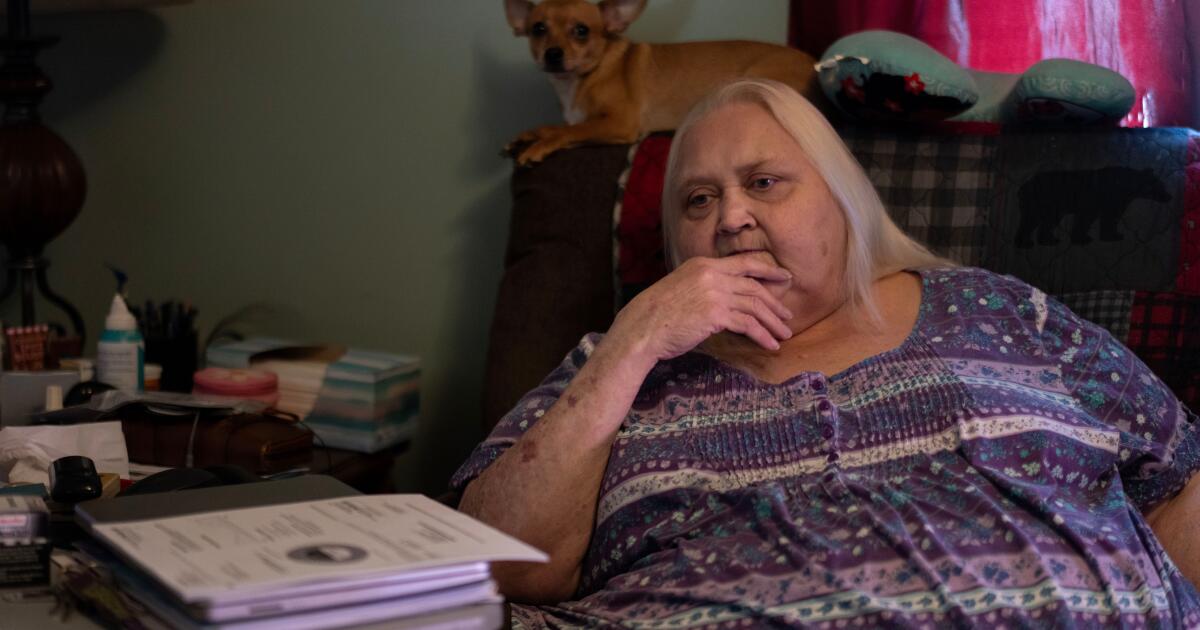
We certainly saw this coming. For years and even decades, the professionals who care for aging Minnesotans have been hollering and waving proverbial red flags about the rapidly graying baby-boomer generation; how it could overwhelm assisted-living facilities, nursing homes, and other senior-care services; and how there just won’t be enough space or workers to care for everyone. In just the last decade, the population of Americans over 65 has ballooned by a third. And in Minnesota, by 2030, a fourth of the state is predicted to be older than 65, the age when long-term care is more likely a necessity.
Knowing all this, Minnesota is ready, right, after heeding the many, many calls for action? Right?
Hardly. Instead, 12,500 caregiving positions statewide are currently vacant, and while experts determined 27,000 additional nursing-home beds would be needed by 2045 to meet the coming demand, one in three beds have disappeared since 2000. Since the pandemic, especially, nursing homes and other senior-care facilities, rather than expanding, have been closing off wings, shutting down floors, or going out of business entirely, due to a lack of public and health-insurance funding and a dearth of workers willing to care for the elderly at wages clearly not competitive enough.
“At a time where we should be ramping up services for seniors (and) access to services, we’re actually seeing the access to senior care decline,” Kari Thurlow, president and CEO of
LeadingAge Minnesota
, an advocacy nonprofit in Minneapolis, said in an exclusive interview last week with the News Tribune Editorial Board. “Especialy in rural communities (like so much of Northeastern Minnesota), it is very difficult to staff nursing homes. Then it becomes a cycle. If you’re not able to admit residents even when they need it, you’re not able to generate revenue to sustain the operations. That leads to further financial fragility. …
“It’s heartbreaking and quite frankly shouldn’t be the way that we should be treating our seniors,” Thurlow additionally said.
Her organization and the Bloomington nonprofit
Care Providers of Minnesota
together make up the
Long-Term Care Imperative
, a collaborative advocating for seniors and senior care, especially at the state Capitol in St. Paul — where there’s lots of overdue work to be done this session.
Minnesota’s elected state representatives and state senators are uniquely positioned to address the coming crisis. They’re the ones who set the rates nursing homes and other care facilities charge both Medicaid and private-paying patients. And those rates are what determine caregivers’ salaries and benefits, the services residents receive, and the number of residents served by each facility.
“But lawmakers are apathetic,” Care Providers of Minnesota charges on its prepared materials. “Despite public support, the Legislature has chosen not to invest in long-term care.”
In 2023, the Legislature did allocate $300 million to struggling facilities. However, it was one-time funding, not a long-term solution, and it has since ended. Also, new mandates from the Legislature have heaped nearly $200 million in additional costs on already struggling facilities, specifically $20 million for time and a half pay for 11 holidays for care-facility workers and $175 million for minimum-wage increases. And Gov. Tim Walz’s budget proposal this year would cut $700 million from those same facilities.
“(With the) mandates, plus the governor’s cuts, you’re going to see financial conditions worsen and you’re going to see an increased lack of access,” Care Providers of Minnesota CEO Toby Pearson said in the interview with the Editorial Board. “And it’s going to hit in rural Minnesota first, because that’s where we have more of an aging population.”
To be sure, without legislative action this session, Minnesotans can expect even more wings, floors, and entire facilities to close — all with that boom of aging baby boomers about to be in need of care in those facilities.
One pair of bipartisan measures
in the House
and
in the Senate
would modify elderly waiver rates and nursing facility reimbursement rates. Another pair of companion bills in the
House
and
Senate
would make necessary changes to Minnesota’s Nursing Home Workforce Standards Board. Rep. Natalie Zeleznikar is a co-author of the House version of each. The Republican from Fredenberg Township, whose district includes a bit of Duluth, is a former senior-care operator and long-time advocate for the industry and the residents it serves.
Even just the introduction of legislation is reason for optimism, according to Pearson and Thurlow. But it needs to be followed by overdue action.
“We feel like the committees are listening to us,” Thurlow said. “Obviously, it’s a great thing when it’s bipartisan.”
“We have been at the table at the Legislature saying we need more money to pay workers’ wages and benefits,” said Pearson. “They have repeatedly said no. … It’s frustrating on two levels. On one level, for a long time we were trying to get people’s attention (about the coming crisis), and now it’s hard because people have heard it so much it’s hard for them to hear the actual urgency.”
That urgency isn’t new. Neither is Minnesota’s long-time lack of meaningful action in response. That demands to end. This legislative session. Now.

“Our View” editorials in the News Tribune are the opinion of the newspaper as determined by its Editorial Board. Current board members are Publisher Neal Ronquist, Editorial Page Editor Chuck Frederick, and Employee Representative Kris Vereecken.



Was Wisconsin hockey’s win over North Dakota its best of the season?
How well is Wisconsin playing going into the national title game? Daniel Hauser and Ben Dexheimer weighed in after the win over North Dakota April 9.
Minnesota Duluth sophomore forward Max Plante is the winner of the 2026 Hobey Baker Award as the top player in men’s college hockey.
He edged fellow finalists, T.J. Hughes, a senior forward from Michigan, and Eric Pohlkamp, a junior defenseman from the University of Denver.
Plante scored 25 goals and had 52 points in 40 games in his second season with the Bulldogs. The 2024 second-round pick of the Detroit Red Wings finished third in NCAA Division I scoring behind Quinnipiac’s Ethan Wyttenbach (59) and Hughes (57).
He’s the first Minnesota Duluth player to win the award since Scott Perunovich in 2020 and the seventh overall.
Plante’s father, former NHL player Derek Plante, also played for Minnesota Duluth and was a Hobey Baker top 10 finalist in 1993.
Michigan State’s Trey Augustine was named the top goaltender in the Friday, April 10 ceremony. He went 24-9-1 for the Spartans with a 2.11 goals-against average and a .929 save percentage.
Wyttenbach was named college hockey’s rookie of the year.
Recent Hobey Baker Award winners
- 2026: F Max Plante, Minnesota Duluth
- 2025: F Isaac Howard, Michigan State
- 2024: F Macklin Celebrini, Boston University
- 2023: F Adam Fantilli, Michigan
- 2022: G Dryden McKay, Minnesota State
- 2021: F Cole Caufield, Wisconsin
- 2020: D Scott Perunovich, Minnesota Duluth
- 2019: D Cale Makar, UMass
- 2018: F Adam Gaudette, Northeastern
- 2017: D Will Butcher, Denver
- 2016: F Jimmy Vesey, Harvard


Mercado Central on Lake Street in Minneapolis has been more than a marketplace; it’s a heartbeat, a place filled with food, culture and community. During Operation Metro Surge, that heartbeat slowed.
“We’re a co-op. We’re all business owners that just need support from our community,” Ajeleth Moreno with El Rincon Pupuseria said.
Many regular customers stopped coming and the change was impossible to ignore.
“Our regulars would not be here at all in the beginning months, but we did get really good support for the community,” Joscan Moreno said.
That community is showing up with purpose.
“I think it’s important to set an example and to show other community members that we are still here. We still need to be showing up and there’s so many beautiful examples of resilience out here today,” Rose Gomez said.
Through a wave of community support, online donations, to simply having people walk into their doors again.
“These places are few and far between, I don’t know if I know of any place exactly like this,” Simon Fitzkappes said. “And for our community to lose such a great spot, it’s really detrimental. We all hope that doesn’t happen.”
Because here, the business owners and diners alike say every visit and dollar matters.
“We’ve never got this many people here,” Ajeleth Moreno said. “We just hope it stays that way because we don’t want to be forgotten again.”

‘Don’t Fairfax Me’: How Virginia’s largest county became center of antiredistricting campaign – WTOP News

Report: Wisconsin transfer John Blackwell down to six schools, not two
Trump promised to cut electric costs in half. In energy-rich West Virginia, bills now top mortgages

Keenan Morgan to run for House District 58 seat

OKX Invests in Vietnam Exchange CAEX Ahead of Crypto Pilot

Florida High School Football Rankings: Top 25 teams – Oct. 21

How old is Bo Nix? What to know about Oregon quarterback ahead of 2024 NFL Draft

Cleary's 21 help Le Moyne down Central Connecticut State 69-64 in OT

99th annual Pony Swim held in Virginia

Indiana Members Credit Union announced as new anchor tenant at Bottleworks District

Trump adversary running for Senate borrows his filibuster playbook

Russian propaganda unit targets Hungary’s elections

WATCH: Artemis II astronauts splash down on Earth

Swalwell’s former female staffer drops bombshell allegations of sexual assault, exposing himself: report

NASA’s Artemis II prepares for splashdown on Earth
-

 Atlanta, GA6 days ago
1 teenage girl killed, another injured in shooting at Piedmont Park, police say
-

 Education1 week ago
Video: Toy Testing with a Discerning Bodega Cat
-

 Movie Reviews1 week ago
Vaazha 2 first half review: Hashir anchors a lively, chaos-filled teen tale
-

 Georgia4 days ago
Georgia House Special Runoff Election 2026 Live Results
-

 Pennsylvania5 days ago
Parents charged after toddler injured by wolf at Pennsylvania zoo
-

 Arkansas20 hours ago
Arkansas TV meteorologist Melinda Mayo retires after nearly four decades on air
-
 Milwaukee, WI5 days ago
Potawatomi Casino Hotel evacuated after fire breaks out in rooftop HVAC system
-
 Entertainment1 week ago
Inside Ye’s first comeback show at SoFi Stadium