Minnesota
OPINION EXCHANGE | What America needs to know about Tim Walz of Minnesota


Opinion editor’s note: Star Tribune Opinion publishes a mix of national and local commentaries online and in print each day. To contribute, click here.
•••
As Democrats scramble to assemble a ticket following Joe Biden’s withdrawal from the presidential race, Minnesota Gov. Tim Walz is putting himself out there as potential vice-presidential pick. He is making the rounds of national talk shows bragging about his record. A closer look reveals little to brag about.
During his first term as governor, Walz faced two major challenges: The riots following the death of George Floyd in Minneapolis and COVID-19. He fumbled both.
As the Twin Cities burned for three days in May 2020, Walz froze, terrified of upsetting his party’s activist base which sympathized with the rioters, for whom Kamala Harris raised money. Walz hesitated to commit the National Guard — whom he dismissed as “19-year-old cooks” — but when they finally were deployed, the violence ceased immediately.
This concern for criminals over law-abiding citizens has contributed to Minnesota becoming a high-crime state for the first time in recent history, with part one crimes, such as murder, aggravated assault and rape, now above the national average. Indeed, Minnesota’s crime rates began climbing in 2018, when Walz took office and two years before George Floyd’s death. In 2024, violent crime in Minneapolis remains 29% above 2019.
In response to the second challenge, COVID-19, in defiance of the science, Walz shut down schools, churches and businesses and instituted draconian mask mandates and shelter in place orders. This was driven by a computer model cooked up by a couple of graduate students over a weekend and which was such a failure it was quietly abandoned. Walz spent $7 million on a morgue to hold all the forecast bodies. This, too, was quietly sold without ever housing a single body. Walz’s failed nursing home policies resulted in over 5,000 deaths from COVID, one of the highest percentages in the country. And the man who likes to talk tough on cable news, telling Republicans to “mind your own damn business,” created a phone line for people to snitch on their neighbors who violated COVID regulations.
For all this government activity in response to COVID-19, Walz still managed to oversee the largest COVID fraud scheme in the country, with $250 million stolen. Millions more have been wasted in other fraud schemes throughout his time in office, but no one has been fired or held accountable.
Walz frequently touts his experience as an educator, but Minnesotans have seen no benefit from this, with the quality of Minnesota’s K-12 schools falling steadily during his time in office. Minnesota fourth-grade reading and eighth-grade math scores on national tests are the lowest in 30 years. On the education component of CNBC’s much-heralded — including by Walz — “Best States for Business” rankings, Minnesota has dropped from fifth in 2018 to 17th. Walz will tell national audiences he “fully funded” K-12 education, but more money does not translate to stronger achievement.
Instead of achievement, Walz focused on instituting radical social studies standards and ethnic studies requirements that infuse critical social justice ideology into K-12 education. He used a bait-and-switch to sell ethnic studies as “learning about other cultures,” while hiding the real purpose: to reshape our children’s identity around skin color and convince them that America is a “racialized hierarchy” defined by oppression and injustice. Walz also allowed protesters to tear down a statue of Christopher Columbus and changed Minnesota’s state flag because he wrongly believed it was racist.
In 2023, Walz squandered a $17.6 billion budget surplus and raised taxes on income, sales, gasoline, car tabs, deliveries, boats, marijuana and businesses. His new family leave program will be funded with a new tax on every employee and employer in the state. They are yet to launch the program but have already raised the tax rate. Under Walz’s leadership, Minnesota recently fell behind the country in GDP per capita for the first time in modern history.
Walz signed away Minnesota’s energy future by locking us into a renewable energy mandate that is driving up electricity costs in the pursuit of unmeasurable climate change goals. Running an energy grid with weather-based, intermittent energy sources, as called for in Walz’s 2023 renewable-energy mandate, is causing massive price increases and will ultimately lead to blackouts.
Minnesotans have been voting with their feet during the Walz governorship with new data from the Internal Revenue Service (IRS) showing a net loss of 13,455 individuals leaving Minnesota for other parts of the U.S. in 2021-22. The population loss is across the board — every age group tracked by the IRS shows a net loss of people.
Now that we think of it, promoting Tim Walz could be a really good idea. He couldn’t possibly do more harm to Minnesota in the relatively meaningless job of vice president.
John Phelan is senior economist and Bill Walsh is director of communications for the Center of the American Experiment.

Minnesota
Wildfire smoke from Canada and Minnesota pushes further into US, engulfing DC in eerie haze

NEW YORK (AP) — Millions of people in the Great Lakes, Northeast and Mid-Atlantic states muddled through another day of unhealthy air from uncontrolled wildfires on Friday, as smoke enveloped the nation’s capital in a gloomy, eerie haze.
Air quality warnings were expected to remain in effect through Saturday across a wide swath of the U.S., but there’s potential for temporary relief with rains and storms forecast over a chunk of the affected region over the weekend.
The smoky conditions won’t be gone anytime soon, though, as fires burn unchecked across a remote region of Canada, cautioned Bob Oravec, a lead forecaster at the National Weather Service based in Maryland. Wildfires in a wilderness area in Minnesota are also contributing to the smoke.
“The source of the smoke is going to continue on for certainly a week, probably,” he said. “So in some form, there’s going to be smoke that gets transported from the fires downstream, and it’s just going to depend upon which way the wind’s blowing as to where the smoke is going to affect the most.”
On Friday, communities in Minnesota, Michigan and Illinois closest to the Canadian border and the Boundary Waters Canoe Area Wilderness in Minnesota again registered some of the worst air quality in the world, according to IQAir, an air quality monitoring website.
Not far behind them was Washington, D.C., where the thick smoke created eerie scenes. The Washington Monument, the Lincoln Memorial and other national landmarks could be seen enveloped in a thick, orange-hued haze in the morning.
“Wow that Canadian smoke haze is no joke,” Stewart Verdery, a former assistant secretary at the U.S. Department of Homeland Security, wrote on X as he shared a panorama of D.C. at sunrise. “Almost nothing visible – no sun, no monuments, no Reagan Airport.”
Air in and around Washington was expected to go from bad to worse as the day progressed, reaching “very unhealthy” and potentially “hazardous” levels on the air quality index, regional officials said.
People, particularly those with heart or lung disease, older adults and children, were urged to limit or avoid going outside as much as possible until air quality improved.
There was also concern in the New York City area about how the foul air might impact the World Cup final match between soccer powerhouses Spain and Argentina at MetLife Stadium in New Jersey on Sunday.
Oravec said winds will continue pushing the wildfire smoke east in the U.S., though conditions should be better on game day Sunday than on Saturday.
Just a day earlier, a thick haze tinged with orange and yellow darkened skies across several states and partly obscured Manhattan’s skyline.
Officials from New York, New Jersey, Pennsylvania and other Northeast states distributed free K95 face masks, canceled outdoor programming and opened libraries and other public buildings as cooling centers where people could get a respite from the sooty air.
As Friday progressed, air quality measures improved from “unhealthy” to “moderate” in some places in and around New York City.
A strong sun broke through a thin veil of smoke, and large chunks of clear blue sky were visible across much of the region by Friday afternoon.
Saturday brings a high chance of thunderstorms across much of the Northeast and mid-Atlantic, which will help dampen the bad air.
How long the reprieve lasts depends on what happens hundreds of miles north, as some 100 wildfires burn without end in sight, largely in the Ontario area in Canada. In the U.S., officials have closed the Boundary Waters while battling multiple fires.
Long-term exposure to smoky conditions can complicate existing health problems and lead to chronic and deadly issues, including respiratory illness, cardiovascular and neurological diseases and premature death.


See how the bald eagle’s story shows its enduring symbolism
As the U.S. celebrates 250 years, the bald eagle endures as North America’s native sea eagle and national bird.
The common loon, Minnesota’s state bird, is more closely related to a penguin than a duck.
Despite loons predominantly living in the northern hemisphere and penguins mostly living in the southern hemisphere, researchers consider them to be genetic cousins. Taxonomic analyses placed them in an evolutionary cluster tracing back 40 million to 50 million years ago, along with herons and pelicans.
While loons and ducks share habitat on Minnesota lakes, they aren’t close relatives. Ducks are closer cousins to geese and swans.
After sharing a common ancestor, penguins and loons developed distinct characteristics. Loons can fly, but struggle to move on land; penguins can’t fly, but waddle on land. Penguins use flipper-like wings to swim; loons use webbed feet for underwater propulsion.
They have some similar features, however, including dense bones to help dive underwater and their tuxedo coloring.
MinnPost partners with Gigafact to produce fact briefs — bite-sized fact checks of trending claims. Read our methodology to learn how we check claims.

Fires in the past burned more frequently in western Canada, but recent years have seen that trend migrate eastward, with large fires now burning in Ontario, Quebec and Atlantic provinces, Prof Chasmer said, leading to more noticeable smoke in densely populated cities like Toronto and New York.
-
 Politics4 minutes ago
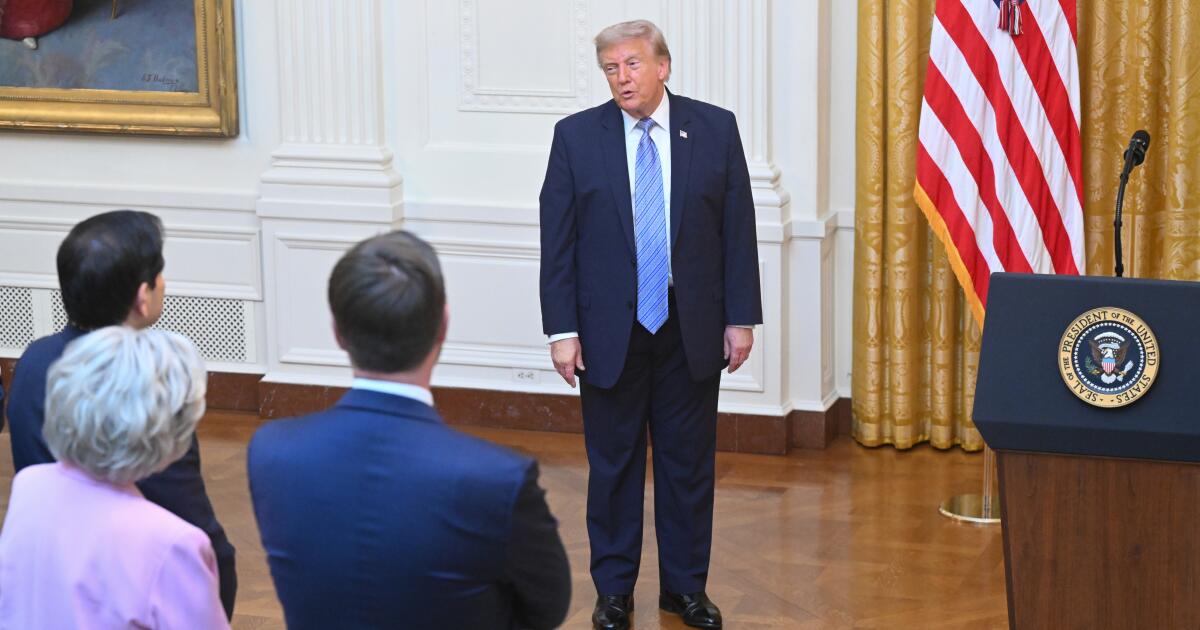
Trump escalates election attacks, threatens California over voter data
-
 Science10 minutes ago
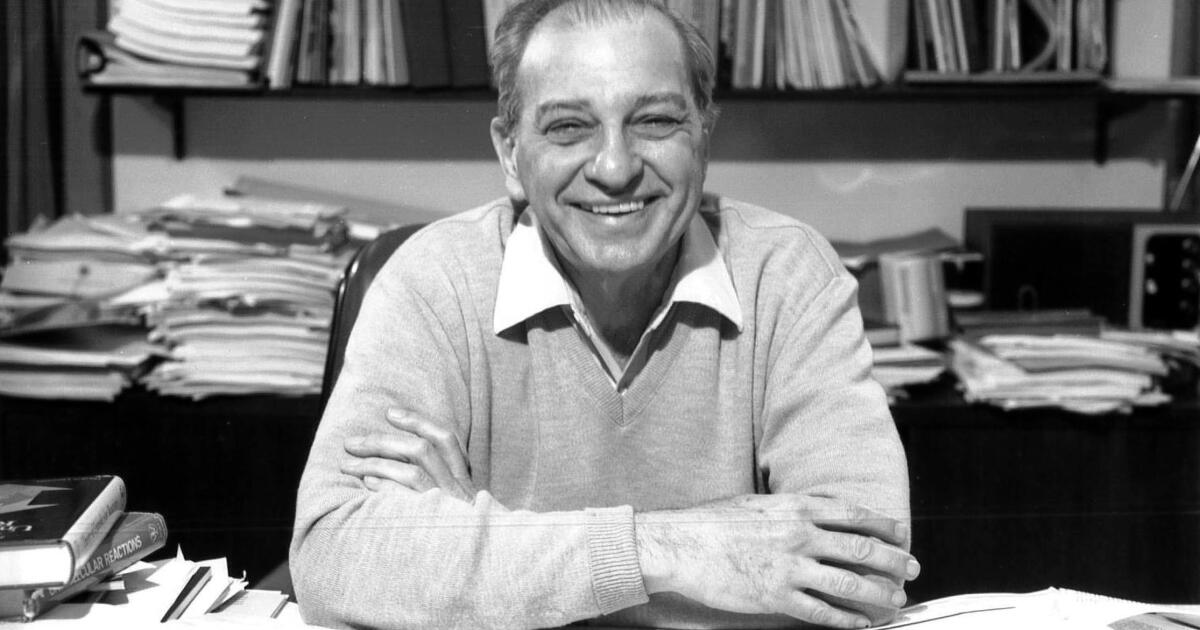
Rudolph Marcus, Caltech chemist who won Nobel Prize, dies at 102
-
 Sports16 minutes ago
Commentary: With Will Smith out indefinitely, Dodgers need to trade for a catcher
-

 World28 minutes ago
Mandela Day: What his legacy means in today’s South Africa
-
 News58 minutes ago
ICE shared Medicaid data it wasn’t supposed to have with Palantir
-

 Los Angeles, Ca3 hours ago
‘Moana’ is a triumph for Pacific Islander representation on the big screen
-

 Detroit, MI3 hours ago
Five shot during funeral at Detroit church
-

 San Francisco, CA3 hours ago
San Francisco Giants Announce Intriguing Roster Move Ahead of Mariners Series

