Kansas
Sparks fly when Kansas House budget panel explores detail of university budget requests • Kansas Reflector


TOPEKA — The Kansas House’s budget committee delivered bipartisan condemnation Monday of unusual $3 million payouts to Emporia State University, Fort Hays State University and Pittsburg State University intended to stabilize campus operating budgets during a period of enrollment decline and rising costs.
The funding request, which had been previously rejected by Gov. Laura Kelly, was submitted by the Kansas Board of Regents’ three smaller-sized universities. Those campus leaders were emboldened by the 2023 Legislature’s decision to write ESU an extraordinary $9 million check amid a nearly 20% enrollment drop over five years. ESU had been in the spotlight for using a COVID-19-era emergency policy to jettison tenured faculty, slash core academic programs and impose a new business “model” of higher education.
Rep. Brenda Landwehr, a Wichita Republican, proposed a budget amendment during the House Appropriations Committee meeting to delete the $3 million gratuities to ESU, FHSU and PSU. Landwehr’s motion failed along with a more modest “parachute” amendment from Rep. Henry Helgerson, a Wichita Democrat. He wanted to link $1.5 million payments to the three universities to a demand that administrators outline a plan for what was to be accomplished with the cash.
“We plugged a hole with Emporia State last year,” said Landwehr, referring to the $9 million presented to ESU. “Now, we’re back because all the others are like, ‘Hey, if Emporia State can get this, then we should get something too to help right-size us or stabilize us.’ It’s a slippery slope.”
Helgerson’s blunt inquiry: “How long do we subsidize them?”
Rep. Steven Howe, the Salina Republican who chaired the House’s Higher Education Budget Committee, said the state’s six public universities were working to find a balance between academic offerings, student enrollment and workplace demands. He said the state invested heavily over the generations to create quality public universities, but those institutions needed time to hit reorganizational targets.
“I would hate to just pull out the rug, per se, and not give them the fighting chance,” Howe said. “We have good leadership amongst our institutions and I feel like they’re willing to make the difficult decisions ahead.”
The House Appropriations Committee decided to leave in place — for now — another $9 million installment of the subsidy to ESU. The committee also — for now — chose not to derail the $3 million supplemental payments to ESU, FHSU and PSU.
‘Somewhat hypocritical’
The budget committee postponed until end of the 2024 legislative session a recommendation to devote $15 million for renovation of a FHSU building to accommodate more nursing students. Questions were raised about whether student demand for Kansas nursing degrees warranted the project.
The budget blueprint for higher education, which will continue to take shape Tuesday in the appropriations committee, included $75 million in state support for the University of Kansas Medical Center’s plan to build a cancer research and treatment building. The half-billion-dollar project on the KUMC campus in Kansas City, Kansas, previously received a $100 million private donation and $43 million in federal funding.
In addition, the committee voted to delete ESU’s request for $4.6 million to pay off an “internal” university loan made in 2015 for residence hall construction. In 2018, ESU issued bonds for more housing projects. The steep decline in student enrollment and shrinking demand for on-campus housing meant the loan obligation couldn’t be repaid unless housing rates were increased to unreasonable levels.
Rep. Troy Waymaster, a Bunker Hill Republican and chairman of the House Appropriations Committee, said it didn’t make sense ESU expected state taxpayers to pay a price for the university’s mistakes in the student housing market at the same time ESU asked the Legislature to approve $10.2 million in new bonds for energy efficiency projects in campus buildings.
His ire was directed at ESU’s assumption the Legislature would let the university dump bad debt on taxpayers.
“I found it somewhat hypocritical,” Waymaster said. “If this is an internal loan, why are we paying it off with state general fund? It’s a valid question. Why are we paying it off with state general fund dollars?”

The ESU bubble
In September 2022, the Kansas Board of Regents approved ESU’s “model” for restructuring the university and delivering stability to the university’s budget. The authority was relied upon by President Ken Hush when dismissing 30 tenured or tenure-track faculty. The university gutted English, journalism, history and debate programs, but expanded from four academic schools to seven schools and invested in programs in nursing, computer science, art, music and cybersecurity.
The policy used by ESU to initiate the transformation didn’t speak to the necessity of multimillion-dollar bailouts by the Republican-controlled Legislature and the state’s Democratic governor. At conclusion of the 2023 session, however, House Speaker Dan Hawkins, R-Wichita, lauded the Legislature’s decision to earmark $9 million for ESU. He said management changes at ESU were “the way forward for all higher education institutions in our state.”
Rep. Stephen Owens, a Hesston Republican, challenged the $3 million handouts to ESU, PSU and FHSU.
“I just don’t know that it’s our responsibility to stabilize these universities,” he said. “We like to have conversations around here, but sometimes we don’t like to have the really hard conversations that exist. Nobody wants to make the hard decisions to say, ‘Well, we have X amount of universities and maybe we need one less because of declining population.’”
He said there was no motivation for government-funded entities to find the sweet spot in terms of budgeting, because the system allowed each to simply demand more from taxpayers.
Landwehr, who unsuccessfully sought deletion of the $3 million tips, said she was perplexed that the $9 million earmark last year for ESU didn’t appear to have made a difference. Originally, ESU said it would need $9 million infusions of cash in three consecutive years.
“You can’t keep cherry picking different universities on what we’re going to come in and do special things for,” Landwehrs said. “They’re not adjusting to what the market.”

Crayons, and the amused
The supplemental earmarks of $3 million, or at least half that amount, had defenders on both sides of the aisle during the House committee debate on higher education spending.
Rep. Ken Rahjas, a Republican from Agra, said regional universities had plans for working through budget challenges even if the full scope of those strategies weren’t presented to the House Higher Education Budget Committee chaired by Howe.
“Did they write it in Crayon? Did they print it out for us? There was a plan.” Rahjes said. “I trust the system. I trust the process. I trust my chairman.”
Democratic Rep. Barbara Ballard of Lawrence said larger universities, such as Kansas State University or University of Kansas, had substantial budgets and more wiggle room to reimagine themselves when money got tight. Ballard, currently the longest-serving House member, said she recalled a time when the Legislature provided nearly half of state university budgets, but that measure had fallen to about one-fourth.
“I don’t know what the answer is, but whenever we don’t like something or we can’t understand it, we just pull the funding,” Ballard said.
Rep. Bill Sutton, R-Gardner, said he found it somewhat amusing House legislators were castigating universities for not preparing for difficulties consistent with the anticipated decline in the college-age population.
He asked peers on the House committee whether the Legislature prepared for disruption of COVID-19, which he referred to as a flu, by setting aside significant cash reserves.
“We did not and we gladly accepted … $34 billion from the federal government to bail us out because we didn’t have a rainy-day fund,” Sutton said.



The Kansas player with the biggest decision to make this offseason is sophomore big man Flory Bidunga. The Congo native just wrapped up his second year in Lawrence and will have to determine whether he wants to spend another year at the university.
In 35 games this season, he averaged 13.3 points, 9.0 rebounds, and 2.6 blocks per game en route to an All-Big 12 First Team selection. A breakout star, Bidunga took one of the biggest jumps of any player in the entire country.
Most mock drafts project Bidunga to be selected in the early-to-mid second round or even as early as the late first round, though you’d be hard-pressed to find many predictions like that. Is he a strong enough draft prospect to go pro after two campaigns?
Evaluating Flory Bidunga as an NBA Draft Prospect
Bidunga’s biggest strength is as a rim protector and shot-blocker, evidenced by his conference-leading block number. His freakishly lengthy wingspan allows him to contest nearly any shot at the rim and forces opposing players to reconsider testing their luck against him.
Almost all of Bidunga’s points come within six feet of the basket or the free-throw line, where he has shot a lifetime 61.8% in the NCAA. Since he has such an impressive vertical for his size, he can rise up for several dunks a game and might have thrown down more alley oops than any other player in the country this season.
Despite his long arms, Bidunga is still quite undersized as a true five. He stands at 6-foot-9, which is rather short for someone with the skill set he possesses.
Bidunga is a traditional big who specializes on the defensive end and on the defensive glass. Still, it is difficult to see why an NBA team would want to spend an early draft pick on a center who doesn’t have much of a post game or imposing size.
He feels like someone who can carve out a long career in the league as a backup big man, which is a perfectly fine role to have. For him to become anything more than that, he’ll have to expand his game outside the paint and build more muscle to avoid being bullied by stronger centers.
Could Flory Bidunga Play Collegiately at a Different School?
While Bidunga will certainly be looking to impress NBA Draft scouts with his ability, going pro is not the only option for him. He could return to Kansas for his junior year or even enter the transfer portal to explore other collegiate opportunities.
Last year, Bidunga briefly entered the transfer portal before returning to the university and staying with Kansas. His reasoning was that he had concerns after playing sparingly in his freshman year behind Hunter Dickinson and may have also been seeking a larger NIL payout.
Before the season even ended, there was speculation that Bidunga might be eyeing opportunities from other schools that could offer more in NIL compensation. This has led to widespread uncertainty about his future as a Jayhawk.
Head coach Bill Self has refused to comment on these rumors in the past, but the uncertainty surrounding his own future at the school adds another layer to Bidunga’s situation. He has played for Coach Self in both of his collegiate seasons and may not be willing to stick it out with KU if a new face takes over the program.
We should learn more about these circumstances in the coming weeks, but Bidunga’s decision is one to monitor more closely than anyone else’s on the team. What he decides this offseason could ultimately shape the trajectory of his basketball career.
Kansas
Kansas City barbecue pitmaster Arthur Lee Sr. killed in hit-and-run crash while riding his scooter

KSHB 41 reporter La’Nita Brooks covers stories providing solutions and offering discussions on topics of crime and violence. She also covers stories in the Northland. Share your story idea with La’Nita.
—
Kansas City barbecue pitmaster Arthur Lee Sr. was killed in an early morning hit-and-run crash while riding his scooter March 21.
Kansas City barbecue pitmaster Arthur Lee Sr. killed in hit-and-run crash
Lee was turning left from Dr. Martin Luther King Jr. Boulevard onto Eastwood Trafficway when a car ran a red light and hit him. A small memorial now grows at the intersection.
Chris Morrison
“Devastated. Everybody’s hurt, it was really unexpected,” his son Arthur Lee Jr. said. “I loved him to death. My dad was like my best friend.”
Lee was well known in the barbecue community, working as a pitmaster at Gates Bar-B-Q for the past eight years after spending two decades at Arthur Bryant’s Barbeque.
“He loved working at Gates,” Rose Qualls, Lee’s sister-in-law, said. “He was always making us slabs and turkey sandwiches.”
Chris Morrison
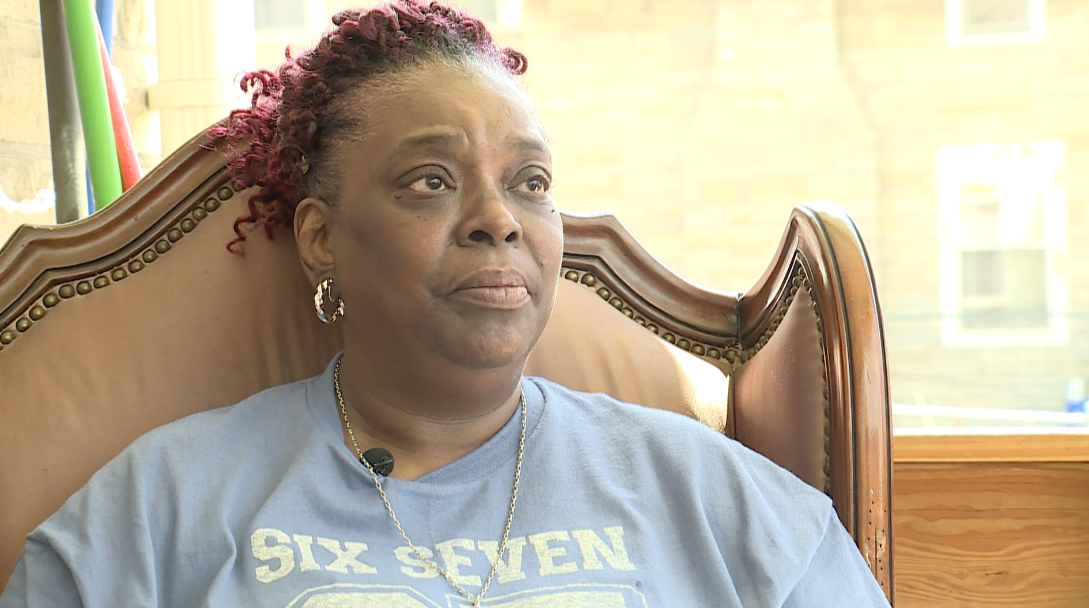
The morning of the incident, Lee was preparing to move into a new home with his wife and children, getting ready for a fresh start before a tragic end.
“He was really special, you know. He was one of a kind and everybody that he was around just loved him,” Qualls said. “It’s just a sad situation.”
Lee was 60 years old. His family said while his life was cut short, his flame will burn forever.
“My sister, she is really going through it, we all are,” Qualls said. “And I’m here for her, whatever she needs, when she need a shoulder to cry on, I’m here.”
Courtesy of Arthur Lee Jr.
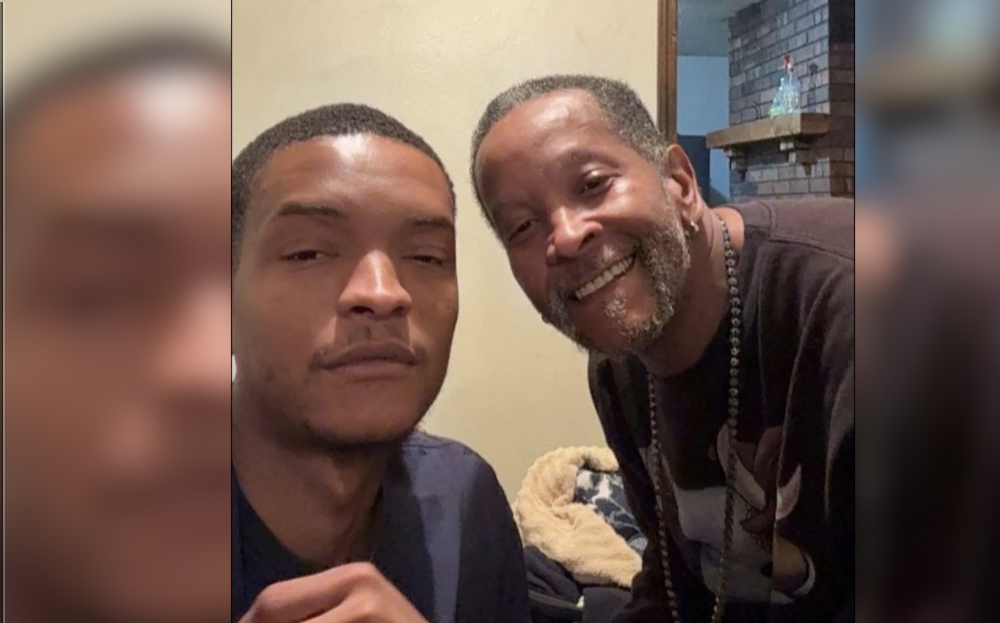
The family is pleading for answers and for the driver, who fled the scene, to come forward.
“I would pray that they would have some type of compassion, some type of heart, possibly turn themselves in,” Lee Jr. said.
This story was reported on-air by a journalist and has been converted to this platform with the assistance of AI. Our editorial team verifies all reporting on all platforms for fairness and accuracy.
—


WICHITA, KAN. – A Kansas man was sentenced to 120 months in prison for selling methamphetamine to an undercover police officer, according to the United State’s Attorney.
According to court documents, Wayne F. Fleming, 41, of Wichita pleaded guilty to one count of distribution of a controlled substance.
In May 2021, Fleming sold drugs multiple times to an undercover officer with the Wichita Police Department. Testing by the Sedgwick County Regional Forensic Science Center showed the total amount Fleming sold to the officer to be more than 200 grams of pure methamphetamine.
“Mr. Fleming was federally indicted in 2021, but before a plea agreement was reached, Mr. Fleming went to state prison to serve time for offenses unrelated to the federal case,” said U.S. Attorney Ryan A. Kriegshauser. “The Department of Justice doesn’t forget. Not long after his release from a state prison, Mr. Fleming is now an inmate in a federal prison.”
The Wichita Police Department investigated the case.

Joshua Jefferson injury update, Iowa State star questionable vs Tennessee basketball

Body found in Colombia during search for missing North Texas flight attendant, mayor says

Case dismissed for Wyoming man charged with allegedly kidnapping missing Utah girl – East Idaho News

Capitol Recap: Act 181 debate pokes at the heart of Vermont’s rural-urban dynamics

TCU vs Virginia prediction, analysis, Sweet 16 expert picks for women’s March Madness

Florida High School Football Rankings: Top 25 teams – Oct. 21

How old is Bo Nix? What to know about Oregon quarterback ahead of 2024 NFL Draft

Cleary's 21 help Le Moyne down Central Connecticut State 69-64 in OT

99th annual Pony Swim held in Virginia

Indiana Members Credit Union announced as new anchor tenant at Bottleworks District

WATCH: Senate hearing goes silent after Angel Father confronts top Dem over daughter’s death

US diplomat Marco Rubio denounces settler violence, tolls in Hormuz strait

Iran-linked hackers have breached FBI Director Kash Patel’s personal emails | CNN Politics

Live: CPAC 2026 Day 2

Video: Will ICE Change Under Its New Leader?
-

 Detroit, MI1 week ago
Drummer Brian Pastoria, longtime Detroit music advocate, dies at 68
-

 Movie Reviews1 week ago
‘Youth’ Twitter review: Ken Karunaas impresses audiences; Suraj Venjaramoodu adds charm; music wins praise | – The Times of India
-

 Sports6 days ago
IOC addresses execution of 19-year-old Iranian wrestler Saleh Mohammadi
-

 New Mexico5 days ago
Clovis shooting leaves one dead, four injured
-
 Business1 week ago
Disney’s new CEO says his focus is on storytelling and creativity
-

 Technology5 days ago
YouTube job scam text: How to spot it fast
-

 Tennessee4 days ago
Tennessee Police Investigating Alleged Assault Involving ‘Reacher’ Star Alan Ritchson
-

 Texas1 week ago
How to buy Houston vs. Texas A&M 2026 March Madness tickets