Kansas
Kansas weighs investing millions in shelters after years of increased homeless populations


On a single night in Kansas last year, there were about 2,636 homeless people living in the state, including about 400 in Shawnee County, according to the statewide Point in Time Count that likely undercounts the total number.
But there are less than a thousand shelter beds available statewide.
The House Committee on Welfare Reform is tasked with finding ways to address the growing homeless population in the state, which reached the highest levels it has seen since 2014 after six consecutive years of rising homeless populations.
The committee heard a bill, House Bill 2723, which would establish a $40 million grant fund that would go to communities around the state that create a plan to create more shelter beds. Grants would only go to cities that do the following:
- Provide the same amount of money they receive.
- Submit a building plan to create or improve a shelter.
- Collect data on the populations the shelter serves.
- Enforce laws criminalizing vagrancy and public camping.
- Prioritize Kansas residents who’ve lived in the state for more than eight months.
- Provide “wraparound” housing service.
Those wraparound services aren’t defined in the bill, which several legislators and advocates raised concern about. But legislators got a better sense of what those services include at a March 14 briefing from homeless service providers and cities seeking to expand their services.
Shelters, services and statutes
Of the 2,636 homeless people identified in the latest Point in Time Count, 943 resided in rural areas. Several legislators on the reform committee raised concerns about equitably distributing funds to address both categories of homelessness. McPherson Housing Coalition runs a non-congregate shelter in the 14,000-population town, hosting up to 10 families in separated tiny homes.
To get the shelter up and running cost around $1 million, said MHC’s executive director Chris Goodson. The most important part, though, is the social services included to help get families back on their feet.
“You can build affordable housing, but if you don’t offer social services of some sort to help families work through those roadblocks, it’s not going to work,” Goodson said.
City officials from Wichita presented their idea of addressing homelessness in a much larger City. Their proposal is to refurbish Riverside Hospital into a complex that includes a congregate shelter, where people share rooms for an overnight stay, as well as solo non-congregate rooms, low-income housing, space for homeless services, dining rooms and classrooms.
“The more that we can bring under one roof,” said Troy Anderson, Wichita’s assistant city manager. “There are efficiencies of scale, there are efficiencies in trying to achieve that functional net zero because there’s not a lack or a confusion of trying to connect one resource to another.”
The “functional net zero” of homelessness is effectively getting more people out of homelessness than are becoming homeless. Anderson said if they can consistently graduate people toward housing stability, it’d eventually mean that the homeless population is almost entirely temporarily displaced people, rather than chronic homelessness, which accounts for about 25% of Kansas’s homeless population.
Wichita has the largest homeless population in the state, and its proposal may have the highest price tag. The city said it would likely be asking for $20 million, half of the total grant money available in HB 2723, to construct the complex.
Advocates from all over the state spoke to the committee, from Liberal to Wyandotte County. Though smaller communities will need less money for their projects than larger communities, their less resourced local governments may have additional barriers to proposing than more heavily staffed urban areas.
Committee-members considered earmarking a certain amount for more sparsely populated areas or allowing cities to bolster their applications with donations from nonprofits.
Is the bill enough to address homelessness in Kansas?
Some homeless service providers had quibbles with the bill, including the provisions on enforcing vagrancy laws, that the data collection doesn’t feed into other reports, that nonprofits should be able to apply for funds and including a severability clause that would ensure the program continues if parts of the legislation are struck down in court.
One conferee, though, sharply differed from the others in their rejection rejection of “housing-first” policies that offer transitional housing, pointing to increases in homeless populations in areas that adopted a housing-first approach.
“Obviously homelessness and there’s many factors, but we believe housing first is making the problem worse, it focuses dollars away from shelter and toward permanent supportive housing,” said Andrew Wiems, of Cicero Action, a group that last year advocated for legislation that would criminalize public homelessness.
House Bill 2723 had its hearing on March 5 and isn’t scheduled for debate on the House floor, but if passed could significantly impact the scope of homeless services in the state.
“From the conversations I’ve had with prospective bidders, communities that are considering applying for the funds, I feel like the $40 million, with the one-for-one match which would be $80 million, I think would be sufficient to address the chronically homeless population that we’re looking to target with our funds,” said Andrew Brown, deputy secretary for programs of the Kansas Department of Aging and Disability Services.




KSHB 41 reporter Fernanda Silva covers stories in the Northland, including Liberty. She also focuses on issues surrounding immigration. Share your story idea with Fernanda.
—
Soccer may be wrapping up in Kansas City, but the city is about to take center stage again.
The new season of “Ted Lasso,” filmed in Kansas City, is just days away, and for families like the Brownes, the excitement is hard to contain.
“My boys were so excited. Like I’ve seen them do a lot of things they like, but I’ve never, ever seen them that level of joy and excitement for days,” Kerry Browne said.
KSHB 41
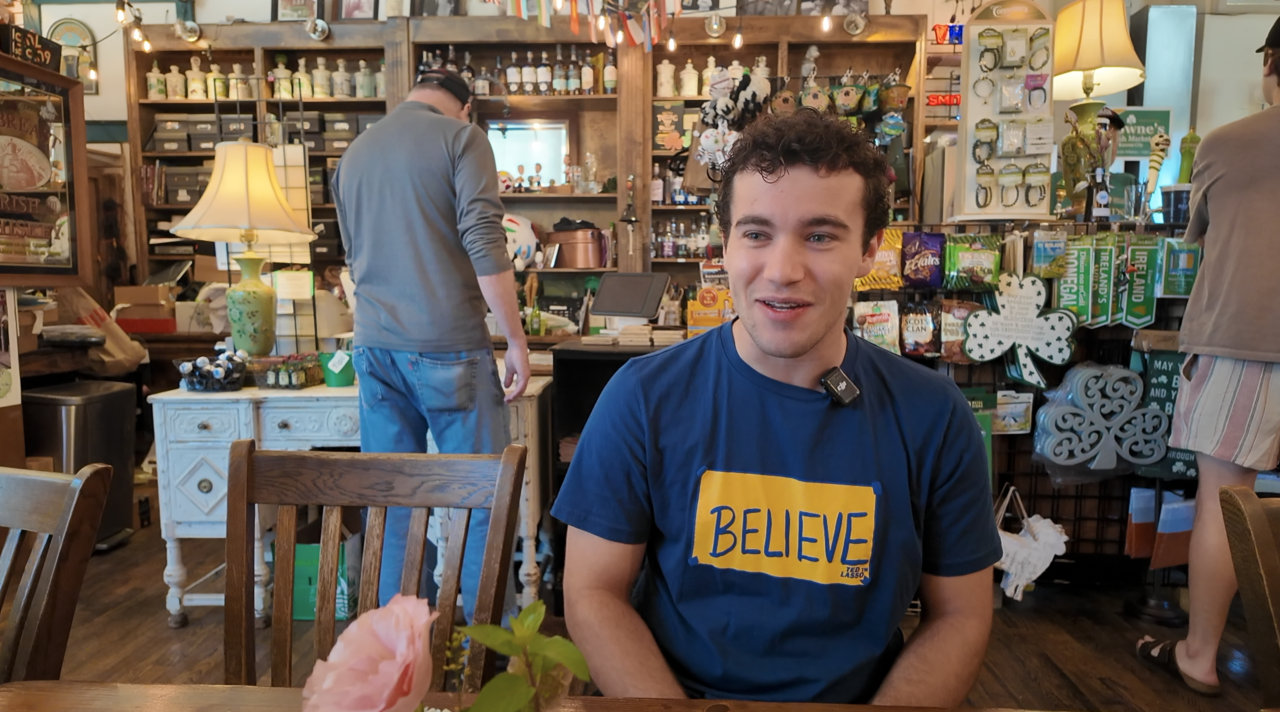
The show holds a special place for the family, who were among those caught up in the buzz when production came to town last summer.
Fernanda Silva/KSHB
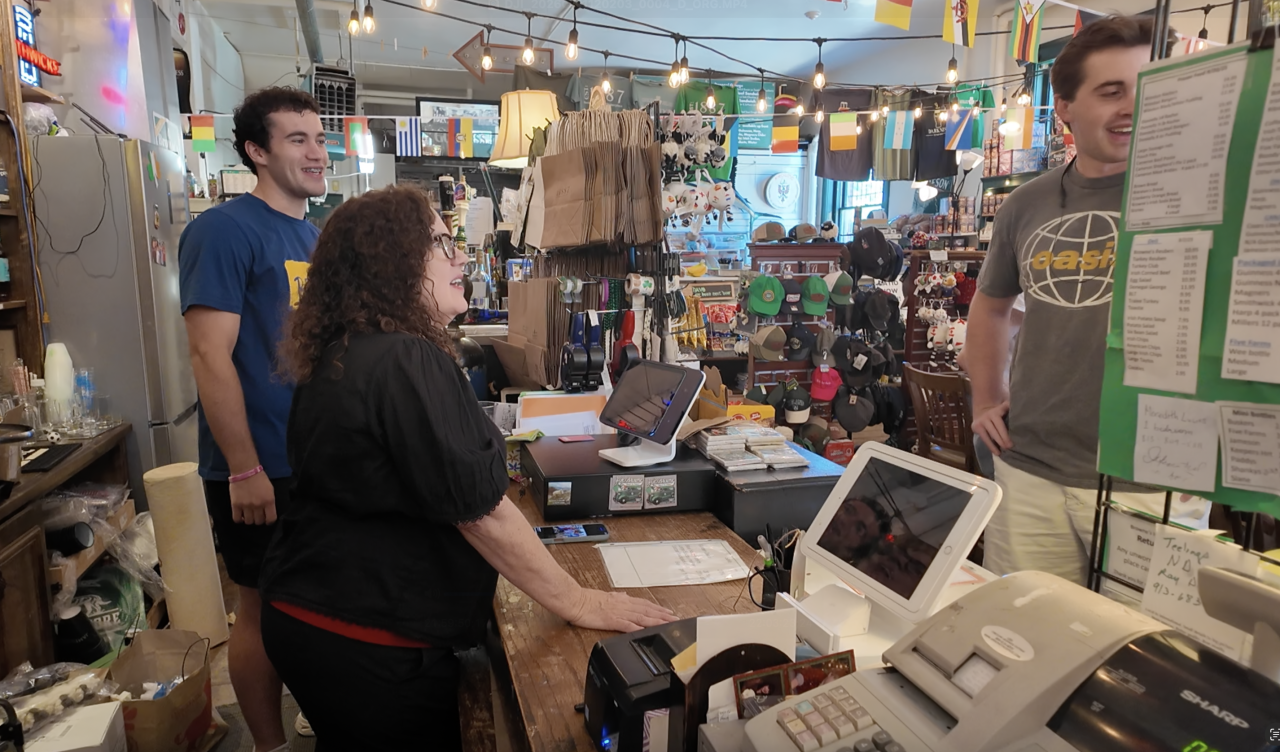
That show has changed me more than anything else has,” Rory Browne McClain said. “
KSHB 41 reporter Fernanda Silva had the chance to ask cast members questions ahead of the new season and brought along a question from the Browne family — what were their favorite parts of Kansas City?
KSHB 41
“For me, it’s the American Jazz Museum,” Jeremy Swift said. He plays Leslie Higgins in the show.
Brendan Hunt, who plays Coach Beard, pointed to CPKC Stadium, where the press conference was held.
Fernanda Silva/KSHB
“I like so much of Kansas City, but truly, honestly, like one of my favorite things is this stadium,” Hunt said.
Juno Temple, “Keeley Jones” in the show, reflected on what the city meant to her personally.
KSHB 41

“I was really moved by this place, and that’s something that I will forever hold close to my heart,” Temple said.
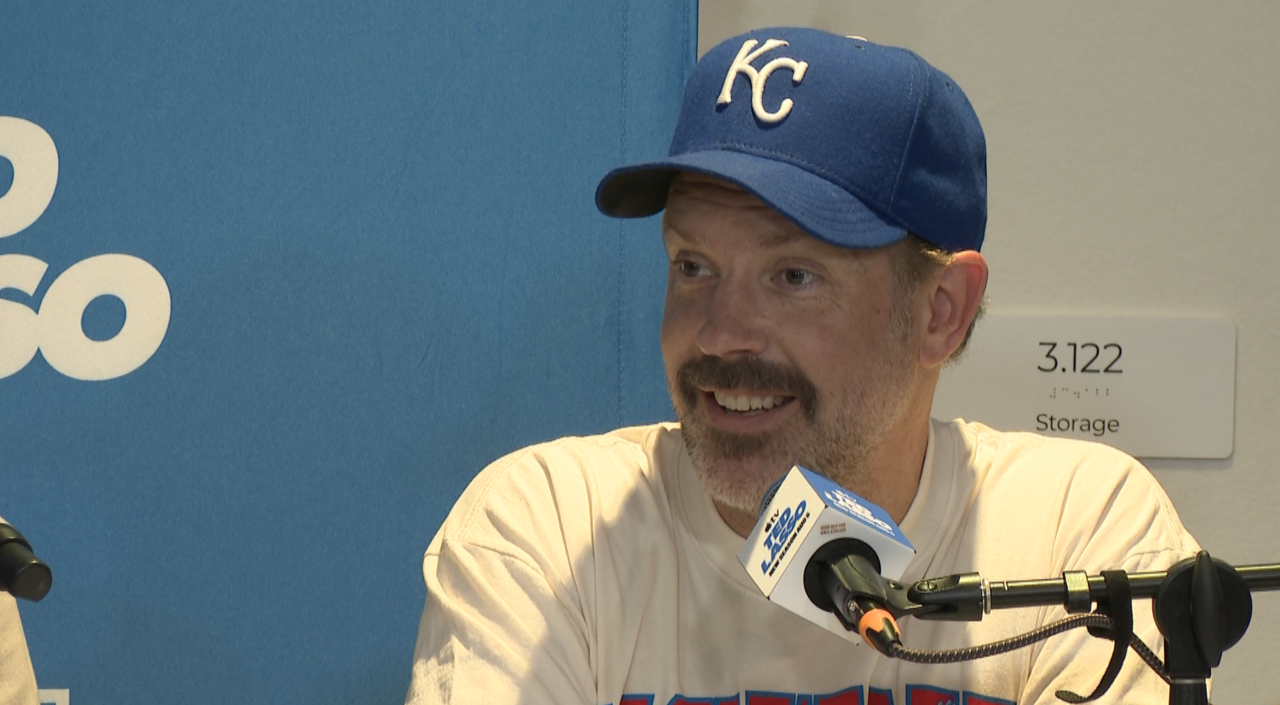
Jason Sudeikis, who plays the show’s title character, spoke about what he hopes Kansas City viewers take away from the new season.
“I’d like to think that they feel, that we from Kansas City feel well represented by the characters and by the characters from Kansas City, the characters that he met in Kansas, like Coach Beard,” Sudeikis said.
KSHB 41
Hunt drew a direct parallel between the World Cup’s effect on Kansas City’s global profile and what viewers are about to see play out on screen.
“It kind of ends up being like, you know, all this media that’s happened the last month of like the world discovering Kansas City and the vibe — like that is exactly what happens to Keely,” Hunt said. “So, you’re about to have déjà vu real hard when this thing comes along.”
For Browne, the timing could not be better.
“I love that the world will get to see what we love about Kansas City,” Browne said.
This story was reported on-air by a journalist and has been converted to this platform with the assistance of AI. Our editorial team verifies all reporting on all platforms for fairness and accuracy.
—

The Kansas Lottery offers several draw games for those aiming to win big.
Here’s a look at July 10, 2026, results for each game:
Winning Mega Millions numbers from July 10 drawing
02-39-44-46-56, Mega Ball: 23
Check Mega Millions payouts and previous drawings here.
Winning Pick 3 numbers from July 10 drawing
Midday: 4-0-8
Evening: 0-0-3
Check Pick 3 payouts and previous drawings here.
Winning 2 By 2 numbers from July 10 drawing
Red Balls: 01-03, White Balls: 02-08
Check 2 By 2 payouts and previous drawings here.
Winning Millionaire for Life numbers from July 10 drawing
14-42-46-47-57, Bonus: 05
Check Millionaire for Life payouts and previous drawings here.
Feeling lucky? Explore the latest lottery news & results
Are you a winner? Here’s how to claim your lottery prize
All Kansas Lottery retailers will redeem prizes up to $599. For prizes over $599, winners can submit winning tickets through the mail or in person at select Kansas Lottery offices.
By mail, send a winner claim form and your signed lottery ticket to:
Kansas Lottery Headquarters
128 N Kansas Avenue
Topeka, KS 66603-3638
(785) 296-5700
To submit in person, sign the back of your ticket, fill out a claim form, and deliver the form along with your signed lottery ticket to Kansas Lottery headquarters. 128 N Kansas Avenue, Topeka, KS 66603-3638, (785) 296-5700. Hours: 8 a.m. to 5 p.m., Monday through Friday. This office can cash prizes of any amount.
Check previous winning numbers and payouts at Kansas Lottery.
When are the Kansas Lottery drawings held?
- Powerball: 9:59 p.m. CT Monday, Wednesday and Saturday.
- Mega Millions: 10 p.m. CT Tuesday and Friday.
- Pick 3 Midday/Evening: 1:10 p.m. and 9:10 p.m. CT daily.
- 2 By 2: 9:30 p.m. CT daily.
- Lucky for Life: 9:38 p.m. CT daily.
- Lotto America: 9:15 p.m. CT Monday, Wednesday and Saturday.
- Super Kansas Cash: 9:10 p.m. CT Monday, Wednesday and Saturday.
- Millionaire for Life: 10:15 p.m. CT daily.
This results page was generated automatically using information from TinBu and a template written and reviewed by a Kansas editor. You can send feedback using this form.

WICHITA, Kan. (KSNW) — Two Kansas parents were charged Thursday in connection with the shooting deaths of their two children.
The Ellsworth County Attorney’s Office charged Aaron French and Makayla French of Brookville with four counts each of aggravated child endangerment.
On March 28, law enforcement responded to a home near Kansas Highway 141 and Avenue N near Kanopolis Lake.
A 5-year-old girl and an 8-year-old boy had been shot, according to the Kansas Bureau of Investigation. The 5-year-old was pronounced dead at the scene. The 8-year-old was taken to a Wichita hospital, where he died almost a week later.
The KBI said a young child in the home picked up a loaded, unsecured shotgun and shot the siblings.
Aaron French, 37, and Makayla French, 28, have been ordered to appear in court on July 28.
For more Kansas news, click here. Keep up with the latest breaking news by downloading our mobile app and signing up for our news email alerts. Sign up for our Storm Track 3 Weather app by clicking here. To watch our shows live on our website, click here.
-

 Illinois3 minutes ago
Woman in custody after breaking into home in Aurora, Illinois, police say
-

 Indiana6 minutes ago
Maximum Offer Relishes Stakes in Indiana Oaks
-

 Iowa11 minutes ago
Iowa State Football Predicted for Tough First Season Under Jimmy Rogers
-
Kansas18 minutes ago
New season of ‘Ted Lasso’ brings Kansas City back into global spotlight
-
Kentucky21 minutes ago
Lucas Glover hangs onto lead in ISCO Championship in Kentucky
-

 Louisiana26 minutes ago
LSP: Ascension Parish resident dies in two-vehicle crash
-

 Maine33 minutes ago
Collins confident as Maine Democrats move to replace Platner
-

 Maryland36 minutes ago
The Final Stretch for Maryland’s 2027 Class: Identifying the Remaining Must‑Gets


