Kansas
Former Kansas reporter accepts $235K settlement in lawsuit over police raid of local newspaper


A former reporter for a Kansas newspaper has accepted $235,000 to settle part of her federal lawsuit over a police raid on the local newspaper that made national headlines for concerns about press freedom violations.
Former Marion County Record reporter Deb Gruver reached the settlement on June 25 following her lawsuit against former Marion Police Chief Gideon Cody, who is accused of reinjuring Gruver’s previously injured hand when he allegedly grabbed her personal phone during an Aug. 11, 2023, raid on the newspaper.
The settlement removed Cody from the lawsuit, but the Marion County sheriff and the county’s prosecutor – who were also sued by Gruver over the raid – were not covered by the settlement, according to The Associated Press.
Gruver’s lawsuit is one of five federal suits filed over the raid against the city, county and eight current or former elected officials or law enforcement officers.
KANSAS POLICE RAID NEWSPAPER’S OFFICE, PUBLISHER’S HOME TO SEIZE RECORDS; REPORTER INJURED
A former reporter for the Marion County Record in Kansas has accepted $235,000 to settle part of her federal lawsuit after she was injured during a police raid on the newspaper. (AP)
Cody led the raid on the newspaper’s office, the home of publisher Eric Meyer and the home of a then-city council member after a source contacted the newspaper and the then-city council member with information about a restaurant owner who was trying to obtain a liquor license.
The source said Kari Newell had been convicted of drunk driving and was driving without a valid driver’s license, and that law enforcement was allegedly ignoring Newell’s repeated violations.
Meyer decided not to publish the story and instead told Cody and Marion County Sheriff Jeff Soyez about the information offered by the source. Law enforcement then launched an investigation and obtained a search warrant for evidence of identity theft and criminal use of a computer and alerted Newell.
Computers, cellphones and reporting materials were then seized over alleged violations related to identity theft and unlawful acts concerning computers after a search warrant was signed by Marion County District Court Magistrate Judge Laura Viar. Law enforcement was also given authorization to search for devices used to access the Kansas Department of Revenue’s records website, as well as documents and records pertaining to Newell.
KANSAS REPORTER SUES TOWN, LOCAL OFFICIALS OVER POLICE RAID OF NEWSPAPER OFFICE
The federal Privacy Protection Act prohibits law enforcement from most searches of journalists and newsrooms and usually requires police to issue subpoenas rather than search warrants. The police department said at the time that the law does not apply to instances when journalists are suspected of criminal wrongdoing.
At the time, Cody said he had evidence that the newspaper, reporter Phyllis Zorn and the then-city council member had committed identity theft or other computer crimes through obtaining information about Newell. The three denied doing anything illegal and charges were never filed.
Zorn is seeking $950,000 in damages in her federal lawsuit for being deprived of press and speech freedoms and the protection from unreasonable police searches guaranteed by the U.S. Constitution.
The lawsuit by former Marion County Record reporter Deb Gruver is one of five federal lawsuits filed over the raid of the newspaper. (AP Photo/John Hanna)
During the search of the newspaper office and Meyer’s home, officers removed two computers and an Alexa smart speaker used by Meyer’s 98-year-old mother and newspaper co-owner. She collapsed and died in her home the day after the raid despite otherwise being in good health for her age, her son said at the time.
Meyer and the newspaper filed a federal lawsuit alleging the raid caused his mother’s death. The lawsuit also suggested the raid was carried out in response to an investigation into Cody’s background.
CLICK HERE TO GET THE FOX NEWS APP
Cody seized Gruber’s personal phone and had her desk searched. While she was not involved in obtaining the driving record, she was investigating Cody’s past.
The raid led to national outrage over press freedom concerns. Cody resigned as police chief less than two months after the raid.
The Associated Press contributed to this report.


Editor’s note: Follow LIVE World Cup coverage today
Lionel Messi’s World Cup journey continues! Argentina came from the depths of desperation to shock Egypt on Tuesday afternoon and advance to the quarterfinals at the 2026 World Cup.
Egypt took a 2-0 lead late into the second half, but Argentina scored twice in four minutes, including the equalizer by Messi to level the match, and again in the second minute of stoppage time to win the game 3-2.
Argentina will face the winner of Switzerland and Colombia, who will face off on Tuesday afternoon.
Argentina’s quarterfinal matchup will take place on Saturday, July 11 at Arrowhead Stadium in Kansas City, Mo.
Here’s everything you need to know to buy Argentina quarterfinals tickets in Kansas City:
Shop Argentina World Cup quarterfinals tickets
Argentina World Cup quarterfinals tickets
As of publication, the cheapest tickets to Argentina’s next match are starting at $1,733. If you want to get closer to the match, lower level tickets are starting at $2,374.
Argentina World Cup quarterfinals game information
- When: Saturday, July 11
- Where: GEHA Field at Arrowhead Stadium in Kansas City, Mo.
- What time: 9 p.m. ET
- TV – English : FOX – Fubo
- TV – Spanish: Telemundo – Fubo
- Tickets: Starting at $1,733
Argentina World Cup schedule, results
- June 16 – Argentina vs. Algeria – WIN 3-0
- June 22 – Argentina vs. Austria – WIN 2-0
- June 27 – Argentina vs. Jordan – WIN 3-1
- July 3 – Argentina vs. Cape Verde (round of 32) – WIN 3-2
- July 7 – Argentina vs. Egypt (round of 16) – WIN 3-2
- Saturday, July 11 – Argentina vs. TBD (quarterfinals) at 9 p.m. in Kansas City, Mo. – Get tickets
Get Argentina World Cup tickets
When are the semifinals for the FIFA World Cup?
The semifinals will take place on Tuesday, July 14 and Wednesday, July 15. The two games will take place at AT&T Stadium in Arlington, Texas and Mercedes-Benz Stadium in Atlanta.
We don’t know which teams will face off in the semifinals just yet, but the bracket is set so once the quarterfinal matchups are set, we will have a clearer picture. Until then, you can shop the semifinal game tickets below:
- Tuesday, July 14 – Winner of France/Morocco vs. TBD at 3 p.m. ET in Arlington, Texas – Get tickets
- Wednesday, July 15 – Winner of Norway/England vs. TBD at 3 p.m. ET in Atlanta – Get tickets
When is the 2026 FIFA World Cup Final?
The final match of the 2026 FIFA World Cup will take place on Sunday, July 19 at MetLife Stadium just outside of New York City.
As of publication, the cheapest available tickets for the 2026 FIFA World Cup Final start at $10,338. If you want to get closer to the action, lower-level (category 1) tickets are starting at $21,783.
Get 2026 World Cup Final tickets

LOWER SWATARA, Pa. (WHP) — Police are searching for a teenager from Kansas who was reported missing Monday while visiting family in the Middletown area.
Lower Swatara Township officials said Jamilian Jones,16, was last seen around 1 p.m. in Harrisburg near 18th and Forester streets after being dropped off by a family member.
Officials said Jones was last seen wearing a purple Ed Hardy sweatshirt and blue jeans.
Anyone with information regarding her whereabouts should contact Lower Swatara Township Police at 717-558-6900.

KSHB 41 reporter Megan Abundis covers Kansas City, Missouri, including neighborhoods in the southern part of the city. She also focuses on issues regarding scams. Share your story idea with Megan.
—
The Veterans Community Project completed its new outreach center in Kansas City, marking the latest milestone for the organization that began in 2016 with a vision to address veteran homelessness.
KSHB 41
Brandonn Mixon, chief project officer and co-founder of Veterans Community Project, said the growth reflects the support of the local community.
Veterans Community Project opens new, expanded Kansas City outreach center
“Going back to this just kind of a vision in 2016 with a group of combat veterans, to literally changing what veteran’s homeless looks like on a national scale, but it’s literally because of the Kansas City community,” Mixon said.
Mixon said the new building is already fulfilling its purpose of bringing veterans together.
“That’s what’s been great about this, Mixon said. “We’re seeing a big influx of veterans coming in and saying,’Hey I’m a veteran, how do I get involved? What can I do in KC? I want to be around other veterans.”‘ And that’s really what this building is doing,” Mixon said.
KSHB 41

The new outreach center evaluates and helps veterans with many things, including help at the center with military documentation, commissary, rent and bills, bus passes, resume writing, education, a Medicare broker and a workforce representative. In just a few months, the organization has helped 35 people find jobs.
Air Force veteran Terrion Lacy is a veteran with a new job. Lacy served from 1987 to 1994 as a radio communications analyst specialist.
Veterans’ Community Project helped him with his home and bills, a new car, and stable employment.
KSHB 41
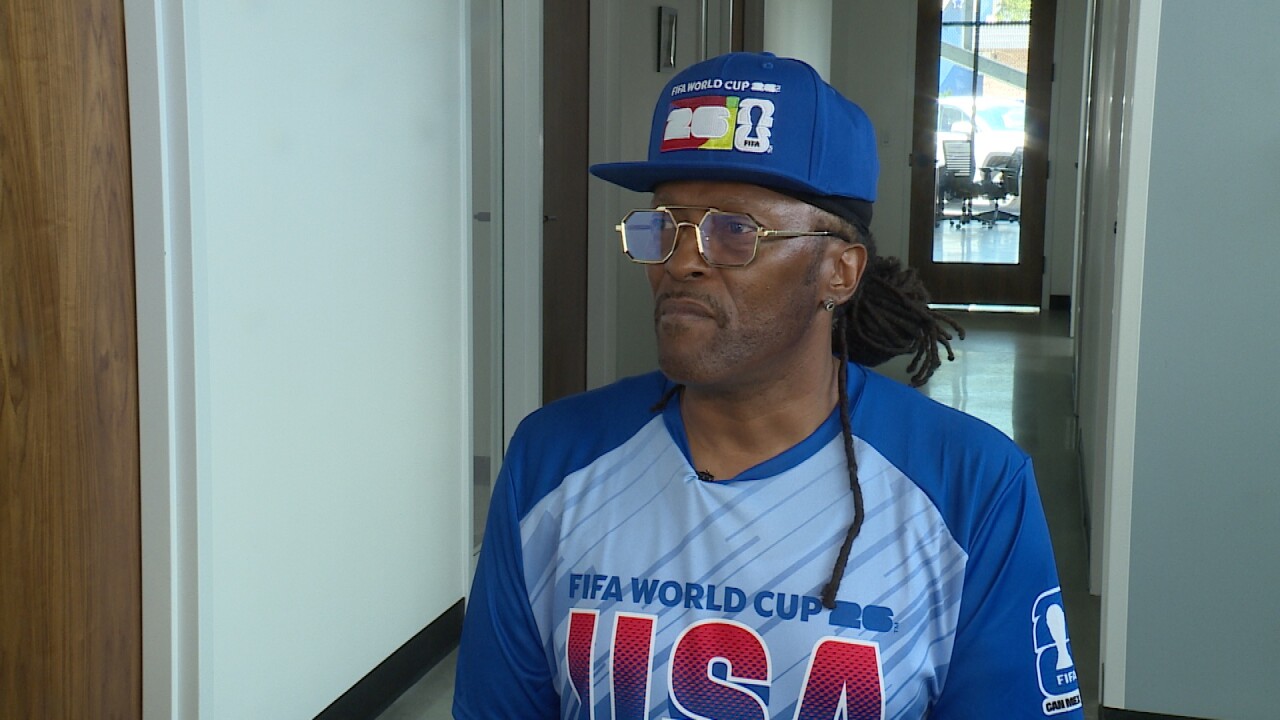
“I needed help with my rent,” Lacy said.
Since starting his new job, Lacy has earned a role connected to the World Cup.
“Since I have been in my job, I’ve gotten two promotions,” Lacy said. “That extra boost of confidence continues to help me keep the optimism I already have.”
Lacy encouraged other veterans to seek out help through the organization.
“I am always optimistic, and even if you’re not as optimistic as me, I’m going to tell you, you need to come down here, because they will help you find some,” Lacy said. “If the walk leads you here, you can really believe you’re going to get help.”
Veterans’ Community Project now operates tiny home communities in Kansas City, St. Louis, Glendale, Milwaukee, Sioux Falls, Longmont, and recently announced a new projet in Dallas.
The organization also is planning a $2.5 million expansion of its headquarters, which had been operating out of a former auto shop garage.
“When it gets hot in there, its 90 degrees,” Mixon said.
Mixon said the space has become inadequate.
“To be honest with you, we outgrew our original building a long time ago, but at the end of the day, it’s about serving veterans,” Mixon said.
KSHB 41

The expansion, funded through donations, will repair the roof and HVAC system and create new offices to support the organization’s continued national growth.
“We have to expand before we keep going into other markets,” Mixon said. “Thank you for believing in us, thank you for giving us the opportunity to change lives and have these stories and I look forward to doing more in the future.”
Lacy said the outreach center offers something essential for veterans looking to rebuild.
“Any veteran that wants to better themselves, wants to find the community, this is where you get that at,” Lacy said.
This story was reported on-air by a journalist and has been converted to this platform with the assistance of AI. Our editorial team verifies all reporting on all platforms for fairness and accuracy.
—
-
 Politics13 minutes ago
Platner’s collapsing campaign in Maine adds new midterm pressures for Democrats nationwide
-
 Science16 minutes ago
Fans slam FIFA’s cooling breaks. Why the U.S. World Cup team doctor disagrees
-
 Sports21 minutes ago
Cowboys’ Marshawn Kneeland had early-stage CTE when he died by suicide
-

 World31 minutes ago
Russian missiles strike Ukraine’s capital, Kyiv, for third time in a week
-
 News58 minutes ago
Reigning champion Argentina escapes with remarkable World Cup victory over Egypt
-

 Los Angeles, Ca2 hours ago
Punk legends unite for special Ramones tribute in Los Angeles
-

 Detroit, MI3 hours ago
Firefighters battle large blaze at vacant apartment complex on Detroit’s west side
-
San Francisco, CA3 hours ago
49ers Sign DL Gracen Halton to a Four-Year Deal


