Iowa
Summer Series: Sit-Down with Iowa State head coach Matt Campbell


CycloneFanatic publisher Chris Williams had a sit down interview with Iowa State head coach Matt Campbell for the new Summer Series doing a deep dive into Iowa State Football.
Here’s a full transcript of the interview.
Chris Williams: How are you? How’s your summer going?
Matt Campbell: “Yeah, well, you know, we’re at the early stages of it. But, you know, just a really exciting time. I think there’s just such a good energy around our coaching staff and this team. And, you know, it’s just it’s an exciting time. And honestly, just like I said, I think the word’s energy, there’s a lot of really positive energy around it, everything that’s going on, and I think everybody hears like, there’s an excitement – you’re sprinting to the office every day right now. And that’s fun.”
Williams: Yeah, it’s certainly an interesting time just with everything going on around the sport. I don’t want to lose track. I have to be honest, I think that I’m probably guilty of paying too much attention to all that stuff. And I’m kind of now getting into football mode, if that makes sense. Just because there’s been so many things, just changing in the landscape. But I’m really curious, because I know you’re such a football guy and you love coaching and the development aspect, what about all of this has, has kept you not just at Iowa State, but just even in this business? Throughout all of it?
Campbell: “Well, I think we’re probably isolated, you know, we’re probably an anomaly here a little bit that just – it’s so different here. We couldn’t win that way anyways. And we’ve never been able to compete in the landscape of having more than others, whether it be facilities, or money or talent. And so the reality has always been here, alignment and unification would be our guiding light to elite success. And, you know, when we’ve been at our best over our eight years here, man, it’s been magical. And it’s been really awesome to watch. Because at the end of the day, in football, you’ve still got to play the game, like ball is going to get snapped, there’s going to be 11 Guys on both sides of the ball. And you’re going to have to play the game. And ultimately, the best team still, still the majority of the time the person that can create the best team can win the football game. And so I’ve always felt like, that’s probably been the greatest joy of being at Iowa State is you can build team, you can build culture, you can build unity.
“And, you know, I think it’s certainly been a challenging time, over the course of the last couple of years as our environment around us has changed. But I really never worry about it, or have worried about it so far, because I’ve never felt like it’s not allowed us to do our job and not allowed us to still be able to compete, and be the team that we want to be and build a team that we believe that can compete for a championship. As long as you know, those things still allow us to be able to be competitive and still be able to care and love and serve young people. You know, then I really don’t worry about, you know, all the things that we can’t control outside of us. And, you know, there there is, it’s a storm, there’s a lot going on, there’s stuff, but I think you can get so lost in that. And you lose the reality of what my job is. And my job is to recruit 18 to 22-year old young people to build a culture where those young people feel confident, safe to grow. And then at the end of it, you know, be great developers of football players to go on the field and win football games. And, you know, I think sometimes what happens is you can get so lost on all the things that man you can be mad that it’s changing, you can be mad about this, you can get frustrated about this, but you can’t control any of those things. I just want to know, what are the rules? What’s the rules of engagement? How do we make sure whatever those rules are, we’re working really hard to make sure we’re aligned for Iowa State’s best way to be successful. And then yet, the rules of the game of football haven’t changed. Like that’s still all the same. It’s just everything else around it. And so, yeah, it’s to me, anytime things are changing around you. It’s forcing you to grow too, and forcing us to grow as a university and as an athletic athletic department, and certainly as a football program. And I think we have been able to, you know, at least internally as a football program really tried to grow forward through all the things that have come our way over the last couple of years, and not let it debilitate us but only kind of spit back into building our own culture and our own program and not not weaving off the course of what we’ve stood for.”
Williams: So I was gonna ask you, what’s the key? You know, in the future, let’s say the next 10 years to still win at Iowa State and just listening to what you just said there, it sounds pretty similar, right? I mean, don’t, don’t get off course.
Campbell: “Yeah, don’t get off course. And obviously, you know, you got to stay competitive and whatever the environment continues to be around us to, you know, recruit, retain, and then develop the student athletes that you have. And, like I said, so far, I mean, you know, you couldn’t be prouder of our ability. And it’s, I think it says a lot about the young men we’ve recruited on the front end, but those guys have stayed in, they’ve stayed here. And we’ve been fortunate because I’m sure a lot of guys have stayed and probably could have made a lot more money going other places, but, have stayed with us, because I think they believe in culture and what we, you know, maybe we can’t, you know, equate in financial dollars right now. But we know, we can equate in long term vision and their success of doubling or tripling that financial value in the long run.”
Williams: I guess, too. I’m not, I don’t know, as much as you do. I haven’t been close to players like you have, but I’ve been around enough of them. And we all hear about like, television set, you know, $22 million here TV, whatever. The end of the day these guys want to play though, right? Like there’s still only so many roster spots to go around in your estimation. Like if there’s 1000 players, how many of them are just going to take the biggest check going forward compared to actually, you know, wanting that opportunity to show themselves on the field? Like, I think we may overplay the money a little bit.
Campbell: “Yeah well, because I think at the end of the day, you know, you’re you’re looking at, these are 18 to 22 year olds, and football is different than any other sport, right? Like, in basketball, by the time you’re 1617 and 18, you’ve played AAU basketball, you you can play five on five basketball starting really at six years old. Yeah. And you can play that. So you kind of are fully developed by the time, or close to full development, by the time you’re 18 in that wheelhouse, where in football… boy – football is such a developmental game. You know, in high school, the majority of times, you’re only guaranteed 10 games a season. In college football, you’re guaranteed 12 games. And so the in as much as you can go practice, you’re you’re still growing and developing, but game development is still the greatest form of development of our sport that you can have. And the reality is our guys are still growing through, you know, they’re 18, 19 20, 21 22 year olds, you know, time in their life. And so it’s such a developmental game and a developmental sport, that you’re exactly right, playing on the field still matters and is still critical to the future success that, you know, if you want to have a hope to play in the National Football League, man, they’re not in the National Football League, they’re not paying, again, 32 teams for 50-some roster spots that they’re actually paying players to be on their team. And they’re not paying for development. They’re paying for the finished product. And they’re paying top dollar for the finished product.
“And so what what still matters between 18 and 22 years, two years old is meant where can I grow, get on the field develop and become my best and who’s going to not only where do I have a chance to play but where equally Do I have a chance to get better grow and develop as a football player. And, you know, it can’t just be football, you hope that their development is coming because we’re getting these young young people as young men and they’re in such the critical time in their life where they’re growing as men too. So I do think Chris, what you’re saying is you know playing time getting on the field, having the ability to grow and develop it’s so critical in our sport. It’s so different our sports so different than everybody else. And that’s that’s really the key piece of it, it’s a man’s game. I mean it’s a game where you are growing to be a 20, 22, 23, 24, 25, 26-year old man yeah to play professionally in this sport where none of the other sports you know you see baseball young people playing you say basketball young people playing professionally. Well man, our sport’s – it’s a total different ballgame though.
Williams: The other thing football, at least your program. It feels a little bit like a throwback to college athletics for me because I grew up in an era where it’s like, we watch Fred Hoiberg as a freshman and then we watch him as a senior – women’s basketball still has a little bit of that, although the portal is starting to kill that sport as far as the watching them come in at a team watching them come in at 18, watching them leave at 22. Well, that’s happening a lot in your program. I think it endears fans to it to like a guy like Jaylin Noel’s a perfect example. I had to be reminded the other night that he was on that ’21 team. Yeah, I didn’t even remember that he played on that. But it’s like, man, he’s been around here a long time. I liked that aspect of what you’re doing.
Campbell: “Well, that’s why I coach and you go back to your initial question, ‘what do you love about why you’re still here why you’re still going?’ I mean, to me, the greatest joy that I still get is I’ve been at one place long enough to where you see guys starting to bring their families back here. And you see players coming back here that were foundational building blocks of the success we’ve had, and some of the opportunities that our guys now are getting the opportunity to have. And where do you get that anymore? I got that growing up at a high school program and a college program. And, you know, we’re losing the fabric of team and culture and identity. And I feel like we haven’t lost our way, that way, we still have some powerful things here that have allowed us to endear a family and a parents that say, ‘Hey, I want my young man to go somewhere, where man there is some of these cultural, you know, residuals, there’s some of these opportunities where I know, my young man can go there and grow as a football player.’ And man, there’s former players that are back around that program. And there’s guys that are now having success that are pouring back into the program. And it’s not just the head coach, but it’s everybody involved. And I think we’re really fortunate that what we have, has helped us in your writing, you know, being able to keep key players here for four or five years, it’s always going to be critical to our success.
“If we ever get to a place where we’re not that, I don’t know if you can have success here at Iowa State. I don’t know if you can sustain long term success in terms of one year. And you know, I just don’t think that’s the way that it will ever be able to be successful here. Because, again, financially, we’re not going to get into that marketplace and ever be the top better. And so what we’re going to have to do is we’re going to have to continue to pour into recruiting the right people on the front end, doing a great job of identifying talent, being elite at retention, you know, creating a culture of those (traits). And we’ve done that with our facilities. And we’ve been able to do that with how we feed our kids how we train our guys. You know, I think the city of Ames, our fan base, you know, that it’s different, you got to almost be called here. But if you love it, there’s such a great experience available to you. And then the last piece of it is the development is, man, can you develop these players that are coming in here? And can you develop them to be some of the best players at their position? And, you know, I would hope nine years later, the fact is, hey, listen, like there’s a – you want to play quarterback – hey, listen, man, there’s a pathway we’ve been, we can show you what that looks like the play elite at the quarterback position. And we can show you a pathway of what it takes to be an elite tailback. And we show you what a pathway at least it looks like to be an elite wide receiver and an elite tight end and an elite defensive lineman and a linebacker, a safety and a corner. Because they they’ve lived here. And they’ve had those experiences and they’ve been developed within the program. And now, you know, it’s not just you’re not just hoping that it can happen. There’s an actual pathway of how it can happen.”
Williams: Do you think that the retention part is I know how much emphasis you all put on it – is that the equalizer because you pull up the internet, it’s the portal rankings, here’s who did the best in the portal, you know, whatever school got 12. To me, that would be difficult. If from a coaching standpoint from like chemistry, and you just you don’t really know Right? Like it, it reminds me of the JUCO market back in the 2000s where people when I was working at Scout, everybody wanted to know what JUCO you’re bringing in right in February, and like those guys hit sometimes, but not nearly as often is the guy who’s coming from his sophomore to his junior year, like do you see that as your equalizer in the new world?
Campbell: “Oh, I think it has to be. And again, and that’s not to say, you know, we won’t occasionally find a really talented transfer here or find a guy that we recruited along the way. Jalen Travis is a great story for us coming into this fall. He’s a kid that we recruited out of high school, he decides to go to Princeton, man, he has four years at Princeton, he gets he’s number one in his class at Princeton, and then all of a sudden, he’s an NFL prospect and he wants to come back home and he hit it off with us on the front end of it and you know, so that that there’s a transfer that makes sense, right? That makes sense. But for us, the majority of our players in our roster, it has to come that way because we can’t become a team that’s banking on how did your free agency go this past year. Did you get the right free agents and is that your team? If that’s what we’re depending on, I think it’d be hard for us to, to have long term success. I think we have to be homegrown, we have to do a great job on the front end. And then, like you said, the secret sauce for us has got to be be able to retain those student athletes within our program.”
Williams: Alright, so let’s look at the new Big 12. I mean, I love the continuity aspect of your program. I mean, just from a staff from a staffing standpoint – this league what, how is it different now? From what, say, five to six years ago? Where does Iowa State stack up in this new league going forward in the next five to 10 years?
Campbell: “Well, you know, I think the biggest difference is you when you when you take Oklahoma and Texas out and believe me, you know, you have a lot of respect for both of those programs. I mean, you know, obviously, those are very, man, they’re going to live a different way of building a football program than we are and you know, from a talent acquisition standpoint, you know, they were always going to have, you know, the elite in terms of talent acquisition. But I think, again, even we were able to prove that along the way, talent acquisition in a 60-minute football game are two different animals. And now I think the way talent acquisition maybe goes across the board and in the new Big 12 is everybody’s probably on a very similar basis.
Williams: I would agree.
Campbell: “And I think, you know, when that happens, now again, how you build your team, how you build your culture, how you what the sustainability looks like, how your coaching game is – all those things now are probably the deciding factors rather than talent acquisition. And so, you know, I think when you look at it, I think it’s proven to be even whether Texas and Oklahoma were in or not top the bottom, you know, the last two to three years, this has been a, ‘you better show up and you better bring your A-game and if you don’t play football, you’re gonna get yourself beat, no matter who you’re playing, no matter what it looked like.’ And I think it only enhances that way. So I think from a viewership a competitiveness, you know, you’re in a really fascinating time. When I got in to the league, you know, I remember sitting at that first meeting, and, you know, you got Bob Stoops at Oklahoma, and Art Briles at Baylor.”
Williams: That feels like an eternity ago, man, Art Briles.
Campbell: “It does. You know you’ve got all those guys sitting there, and the top end of it was elite. And the top end of it of, you know, Gary Patterson and what TCU was doing, and, and certainly for us and Iowa State, you were thinking like, ‘Holy smokes, how are we even going to have an opportunity to compete with these teams and these players?’ And I think what we’ve been able to do is find our pathway, who are we? How are we going to say sustained success at Iowa State? How are we going to push ourselves to get to November and play for championships here at Iowa State Football – we’ve figured that out. And we’ve proven that. And I think that’s the thing that’s really exciting. And yet, the reality of it is top to bottom, I think you got a lot of teams that have a great identity, they know who they are, they know what they’re about. There’s really good football across the board in this in this conference right now. And so I think, yes, we know who we are. And I think yes, we feel very confident about what we’re about. But I think you’d look at you look across the board, and there are very few teams in this conference that don’t know who they are or what they’re trying to do. So I think it makes for a really exciting conference.”
Williams: You guys have spent a lot of time in Utah lately on the recruiting trail? You’ve spent a ton of time in Arizona over the years. How does that impact these these West Coast schools? Like? Do you spend more time there? I’m really curious, just across the board, how much recruiting is going to be changed with that? Not only that, but then the whole salary cap thing, and, and everything in general.
Campbell: “And I think to sit here today and have a educated answer on exactly how recruiting is going to change, it would be hard. I still think the reality though Chris, comes to how well can you do in your six-hour radius? Because I still think your ability to recruit around your campus is so critical to your success. I think it’s I think sometimes the you know, a young person having a, you know, growing up understanding your program, understanding who you are willing to work through hard times in the in stay the course in a program. I think that’s still all matters. And not to say that you can’t, you know, expand your recruiting basis. And believe me, we have I think we’re willing, we’re always going to go national in some areas of our football team to try to find the right fit or the right player for our team. But I also think the reality of if you look at our core foundation, it hasn’t changed through NIL or any of these other things. If you look at our recruiting, I’d still say you know 65 to 75% of our team has built in a six-hour radius around Iowa State and I’ve always believed that and I don’t think that shifts. I don’t think that changes. But I do think it certainly, certainly opens up more eyes and other markets to your football program. And, you know, obviously playing out at BYU last year and, you know, being in Salt Lake City and now being out there a year you’re like, geez, man, there’s some good football out here. Yeah. And yeah, is this a great area for us, at least they know who Iowa State is and certainly knows about our football program. And, you know, Brock (Purdy’s) success in Arizona opened the pathway for us to be able to go down there. And, you know, now you got a kid like Dylan Lee here, who all of the sudden is the Gatorade Player of the Year and like, man, they are really special.”
Williams: I’m kind of obsessed with him. I think he’s the next like-
Campbell: “Well, he’s exciting. And I know, he had a good spring game and all this, but you go back and you look at Dylan’s background and his history, and it’s very similar to Brock, you know, kind of build a team and kind of was an anchor of a team that wasn’t a traditional powerhouse there and build them into a really successful program. But for us, you’re not gonna go sit there and get six kids out Arizona, but can you go get the right one or two guys and the right one or two guys in Utah. And, you know, this past year, you got the number one player out of Utah, the wide receiver (Dominic Overby) that’s coming in. And, you know, here’s a kid that just ran, you know, 10.5 in track and won the one the 100. And, you know, all of a sudden, now you get this big 6-foot-4 receiver that’s coming out of Utah, and probably wouldn’t have happened a year ago in this process. And so, you know, I again, I do, I think, anytime different pathways open to have viewership and eyes on your program, and can identify, and I think those are good things.”
Williams: What do you think the big 12 needs to do other than winning? Because that’s obviously number one, but to be, you know, like a real behemoth in football, right? Like, because they always throw around, it’s basketball league and all this stuff like going forward. The big 12 got to focus a ton on football. I know it is, but what is the big 12 need to do? In your opinion? If you had a, you know, if you had a call to the commissioner, what would you say?
Campbell: “Well, I think you hit the nail on the head. I mean, we’re just in a different time. Like, the obviously with what how the landscapes changing around us, football successes matter is in a matters big, I mean, it’s, it’s a frontline story to all the things that are changing athletically around us. And, you know, obviously, the monetization of college athletics, and certainly in the landscape of college football since the 1980’s or the 1990’s, when all of this changed, you know, it’s certainly the driving force around everything that’s going on around us. And so I just say, you’re right, like winning matters, and having success matters and sustaining sustainable success matters. And, you know, I certainly think in the Big 12, that’s what we’re gonna have to do and we’re gonna have to be able to, to not only win in our conference, but get into the College Football Playoff and, you know, show we can play and that’s the thing I think is so exciting. To even think of our own world, you know, of us and playing the Texas’s and the Oklahoma’s in the Oregon’s, and being in some of these big games over the last couple years, I think we’ve proven like, you know, at least in our own right, that we can go play with these people and beat these people. And we’re gonna have to play great football to beat those people. But yeah, I think winning matters. And at the end of the day, you know, can you make sure that you’re not creating a student athlete experience as well, that doesn’t match what everybody else, at least within the rules, is doing to match this the college student athlete experience that, you know, a Big 10 school or SEC school is. Above and beyond some of those things, that what we can’t control? That’s not our responsibility, but the things that we can control within the guidelines of the rules. I think we’re going to have to do a really good job of committing to that because if not, then then I do think you’ll find a great divide in terms of, you know, winning at a high level in playoff atmospheres or championship atmospheres. But again, if you can within the guidelines of what the rules are, as long as we’re able to compete and certainly able to create a student athlete experience that matches that then I think you know, man, you got great coaches I think you got some great programs in this Big 12 conference that have a chance to compete with anybody.”
Williams: To the fans listening I’ll I believe coach and I are gonna do this and maybe July and I’ll do a lot more on the roster with him. I guess the last thing I have for you today we’re both pro wrestling fans. And but I was thinking about this as I was prepping to do this and these these wrestlers or maybe use a musician right like they all have like different phases of their career. Like Hulk Hogan was the you know, the ultimate good guy and then turned heel on us and then under the rock he was corporate guy and then he was the people’s champ whatever it feels like to me that last year was almost like a different chapter, the Campbell era in my mind you correct me if you think I’m wrong, but It was like, Okay, this this down this year didn’t make a bowl game. And then he kind of come out of nowhere with the with the whole gambling thing that was just a distraction to outsiders and we used all summer and you guys surprise a lot of people when seven games have this great season and now you go into this year where I think on paper, I could make an argument that it’s as good of a what I penciled in your starting lineup as you’ve had maybe not high end? Because we’ll see, I hope Abu Sama’s the next Breece Hall right, but without hindsight though, I don’t know that. But it just seems like we’re going into this, like new era with you and that you’ve been able to ride the wave. A lot of coaches can’t do that. What has been the key to get into this new spot where you guys have such high expectations?
Campbell: “Yeah, you know, I would say this, we, you know, I’ve chuckled with our staff and our kids at times, and I’m in I would probably say this about myself, as you know, we’ve always been worthy to suffer. And, and I and what I mean by that is, we’ve had enough humility, me, us, we, that when we’ve gone through adversity and hard, that we’ve had the ability to self reflect and figure out how do we grow from this and be better from it and not make the same mistakes twice? And, you know, obviously, I feel like we’ve we’ve gone through that. And, you know, this is, you know, we’ve had the ability to not lose who we want to be and what what the foundations have been about building our football program, and yet continue to grow with it. And, you know, I, we’ve said this a little bit even coming into this journey, you know, I think, when we got here, you know, it was it was, Can you can you, can you really earn the right to believe that you can win here? It was just like trying to create belief that we can win. And, and we found a way to do that. And then it was the next phase was, you know, and I think as we did that, you know, along the way, people kind of laughed at you and kind of, you know, it was kind of a little bit of a joke, and then, you know, and then the next phase of can you sustain success?”
Williams: Which is the hardest part, right?
Campbell: “Right, and we proved that and, and then, you know, we kind of went to that phase of like, Man, can you now understand that? Yeah, they kind of respect you, but now they’re going to try to kill you. And now they’re going to fight you every step of the way. And we kind of got into that, but we weren’t ready for it. And I you know, I would probably blame myself on that a little bit. And, you know, I think, again, at Iowa State, I mean, you’ve talked about this is with our football program, there, you have to go through it all the first time. But then you better learn from it, and you better grow from it. And, you know, I think what last year created was, you know, and ‘they’ is a multitude of different things. This is not a pinpointing on anybody. That’s just whether it’s the teams that are that you’re playing, no matter what it is. And, you know, we kind of got into this phase after 22 of, man, some really hard self evaluation and reevaluation. And, you know, we didn’t really change a whole lot, we just realigned ourselves to the value of who we are and what we have stood for here. And, you know, I remember somebody wrote an article and one of our players had showed it to me about, you know, the going into last season is the culture of Iowa State football is crumbling, or whatever it was, whatever – chuckled at it. And the reality was, I’ve always believed that when it’s gotten really hard here, and adversity has hit, you’re kind of defined by your culture and who you are. And, you know, I think internally, we knew, number one, we were the most aligned, we had been in a long time, we kind of knew who we were after seven years of the team. And yes, man, there was chaos going on around us. But I think internally, we were like, man, ‘we gotta- we have one of the most talented groups we’ve ever had. We’re just really young and we lack experience.’ And, you know, it was almost like, it was almost like watching us go through those early stages, which we knew we were going to have happen, and then watch this team start to take off. It’s almost like, you know, you’re going into the third piece of it, because as I told our kids, when we are willing to want to kill and fight back, then we will win. And powerful things are going to happen. And we’re kind of I think, starting to understand some of those things. And I think as a staff and players and, you know, I think one of the really neat things about last year was, you know, the most adversity probably that we’ve ever had, and any group of players that I’ve ever dealt with, in the amount of young people that were forced to respond to that adversity and how they did it, it was really rewarding and probably one of the most rewarding experiences I’ve ever had
as a coach.”
Williams: One of my favorite seasons I’ve ever for sure been around.
Campbell: “For sure, and I think what it did for us is it, like I said, not only if we sprinted back here in the summer, I mean – even from January on, you know, in probably the most poetic way of, you know, disappointing, you know, didn’t play our best in the bowl game, you lose the bowl game, but almost like, almost the right recipe for this team to come back in January and say, here’s where we are. Here’s what it is. And here’s where we need to go. And is everybody willing to go there? Because these are the things we can actually put into reality, what’s happening and where we’re trying to go. And it’s been so fun to watch these, these guys rally together as one and in really have a great offseason. And you’re right, it’s an exciting time. Because I think not only do we, it’s not make believe you got guys that you’ve saw have success, but they have had success in they’re a group that they know who they are, and they know what they stand for. And the character and I mean, I know, you know, sometimes everybody lives like but you know, even look at the academics. And that’s a that’s a small thing. But you’re, you’re talking 100 and, you know, 109 guys with over a 3.0 GPA, a team GPA of 335. And in a cumulative GPA. I mean, it’s a smart committed football team and that that’s committed to excellence in everything they
do.”
Williams: Isn’t that contagious, though? Like? Because if they’re not –
Campbell: “Yeah, isn’t it life, Chris, right? Like, and I know, I’ve said this forever, like, how you do anything is how you do everything. Yeah. And it’s like, we know that. I mean, I think I feel like I almost catch myself saying that to myself. And man, how I eat I take care of myself, do I get up early? Do I am I willing to stay the course of my own process? Like we’re all continuing to try to do that, as parents, I think we’re trying to teach our young adult children that right. And it’s no different than what you’re teaching 18-to-22 year old, young young men that are trying to do something profoundly incredible. And so yeah, I think all those things still matter. And unfortunately, sometimes we get we’re in a world where it’s so transactional, that we want to, man, we want to make it about this, or we want to make it about that. But like, not in college football, because you’re still going to school, you’re still taking classes, you’re still being defined by who you become through your journey between 18 and 22 years old. And, man, what happens in your four to five years as a college student athlete are still going to define the next 40 to 50 years of your life, that type of life you live, who you marry, what kind of success you have, how what kind of father and husband you become, it still is defining that. And yet we get lost in this world of the mirage of $22 million here, and all this NIL stuff here and all this. And it’s easy to get lost. It’s easy to get lost down the road. But I think what we’ve tried to do is really kind of zero thinks back into what’s going on presently and the opportunity to become your best. And, you know, we’re really fortunate to have great kids right now.”
Williams: Well, I appreciate the time, because like I said, I think even in my position we can get lost and all the crap. And it’s eye opening and it’s good for the audience to to hear talk like this. Talk about actual football in the summer. And it it just it feels like COVID on it’s just been nonstop, with just crap. Well, and I’m really excited for this summer because I think we’re gonna be able to talk a lot of football.
Campbell: “Well, we look forward to it. And again, my gratefulness is to you, Chris, you’ve always covered us. And I’ve said this for forever. I mean, our alignment from you know, our fan base – it’s what’s special about Iowa State is if you are going to do something really special, everybody’s got to be pulling in the same direction. And, you know, from day one, you’ve always done that for us and I’m grateful and to our fans and our supporters – we’re really grateful. We look forward to making everybody really proud of this football team this fall.”
Full video interview:



IOWA CITY, Iowa (KCRG) – Iowa women’s basketball was facing just six returning players for the upcoming season, but on Saturday they landed a big transfer.
Georgia’s Dani Carnegie is heading to Iowa City, she announced on social media. Carnegie was a First Team All-SEC guard with the Georgia Bulldogs.
She averaged 17.8 points per game at UGA. She was also a teammate with Chit-Chat Wright at Georgia Tech in their freshman seasons.
She’ll have two years of eligibility remaining with Iowa.
Copyright 2026 KCRG. All rights reserved.

The Iowa State Cyclones men’s basketball team is going to look a lot different during the 2026-27 season than it did at the end of the 2025-26 campaign.
Gone are the five seniors who were on the roster: Tamin Lipsey, Joshua Jefferson, Nate Heise, Dominick Nelson and Eric Mulder. Cade Kelderman, a junior guard, entered his name into the transfer portal along with Mason Williams.
Milan Momcilovic currently has his name in the 2026 NBA Draft, putting his future up in the air for a few more weeks. However, head coach T.J. Otzelberger can rest a little easier knowing some of his core rotation is coming back. Included in that group now is Killyan Toure.
As shared by François Nyam via Jonathan Givony of Draft Express on X, the talented guard will be returning to Ames for his sophomore season.
Will Killyan Toure return to Iowa State for sophomore season?
Toure was a surprise member of the starting five for the duration of his freshman season with the Cyclones. Many people predicted that spot would go to Jamarion Batemon, the highest-rated recruit the program landed in the Class of 2025, but it was Toure who earned the trust of the coaching staff.
It was easy to see why this was the case early on. He was a ready-made high-level defender right out of the gate. His tenacious effort on that end of the court enabled Iowa State to deploy Lipsey in a more rovering role at times, playing the passing lanes and creating turnovers.
The senior was very impressed with what Toure brought to the court, giving him a ton of praise for his efforts on the defensive end.
A high-floor player because of his ability on defense, the Frenchman could truly breakout as a sophomore if he can find a rhythm offensively. His confidence seemed to wane during the season, as he hit the proverbial freshman wall.
NEWS: Killyan Touré will return to Iowa State for his sophomore season, François Nyam tells DraftExpress.
The 6’3, 19-year-old French guard started 37 games for the Cyclones, playing an important role in their 29-8 record and Sweet 16 appearance with his stifling defense. pic.twitter.com/XdS1L9XL9z
— Jonathan Givony (@DraftExpress) April 11, 2026
Toure shot only 38.7% from the field overall during Big 12 play and 23.8% from 3-point range, leading to his minutes being scaled back slightly as Otzelberger sought more offense for the lineup.
However, that confidence on offense did start to come back during the Big 12 tournament and in the NCAA tournament.
Over the final four games of his freshman campaign, Toure averaged 14 points, 5.5 rebounds, 2.8 assists and 1.3 steals in 30.5 minutes per game. He shot an impressive 55% from the field and 50% from 3-point range, knocking down 5-of-10 attempts.
Securing his return is a big win for Iowa State basketball. He has an incredibly high ceiling and is built to take the torch from Lipsey as the tone setter on the court.


Iowa State basketball: T.J. Otzelberger on importance of HS recruiting
The transfer portal is an important piece in building a team, but high school recruiting and development is still big at Iowa State.
The name’s Bond — Leon Bond III — and he’s Iowa State men’s basketball’s first transfer portal commit of the 2026 cycle.
Bond was one of several reported to be visiting Ames this weekend, and he announced his commitment on Friday, April 10. He will have one year of eligibility remaining.
Bond, a 6-foot-5, 200-pound guard from Wauwatosa, Wisconsin, spent the last two seasons at Northern Iowa, after originally starting his collegiate career at Virginia.
Bond is coming off of a career-best year with the Panthers. He averaged 11.9 points, 4.7 rebounds and 1.5 assists, while shooting 47.3% overall, 36.2% from 3-point range and 75% from the free-throw line. He earned All-Defensive Team honors in the Missouri Valley Conference and was one of the key players in helping Northern Iowa win the conference tournament and make its first NCAA Tournament appearance in a decade.
Across his two seasons in Cedar Falls with the Panthers, he appeared in 59 games with 57 starts and averaged 11 points and 4.6 rebounds per game. Before that, he played one season for former coach Tony Bennett at Virginia in 2023-24, where he played 24 games off the bench, averaging 4.1 points over 12.3 minutes per game.
Offensively, he’s a solid athlete capable of getting to the basket and making plays above the rim, while showing an improved perimeter jumper that he’s worked on over the years. Defensively, he provides versatility and an ability to guard multiple positions. His length, athleticism and motor bode well for him as he transitions into Iowa State’s system.
As the first transfer commit for Iowa State, Bond is helping replenish the Cyclones’ roster after the graduations of Tamin Lipsey, Joshua Jefferson, Nate Heise, Dominick Nelson and Eric Mulder.
They also saw Mason Williams and Cade Kelderman enter the portal since it first opened on April 7. College basketball players will have until April 21 to decide if they are staying with their current schools or entering the transfer portal.
Eugene Rapay covers Iowa State athletics for the Des Moines Register. Contact Eugene at erapay@gannett.com. Follow him on Twitter at @erapay5.
New Mexico Lottery Powerball, Pick 3 Day results for April 11, 2026

Griffins Add Former North Dakota Senior | Detroit Hockey Now

Columbus Aviators head coach, ex-Ohio State WR Ted Ginn Jr. charged with DWI

Oklahoma’s Transfer Players Reviews Are In — ‘This is a Real Team, Real Brotherhood’

Everything Oregon Receivers Coach Ross Douglas Said After Saturday’s Scrimmage

Florida High School Football Rankings: Top 25 teams – Oct. 21

How old is Bo Nix? What to know about Oregon quarterback ahead of 2024 NFL Draft

Cleary's 21 help Le Moyne down Central Connecticut State 69-64 in OT

99th annual Pony Swim held in Virginia

Indiana Members Credit Union announced as new anchor tenant at Bottleworks District

Carney casts himself as NATO defender amid Trump beef, despite Canada missing key benchmark for decades

‘Enough of war!’ says Pope Leo XIV who grows increasingly frustrated
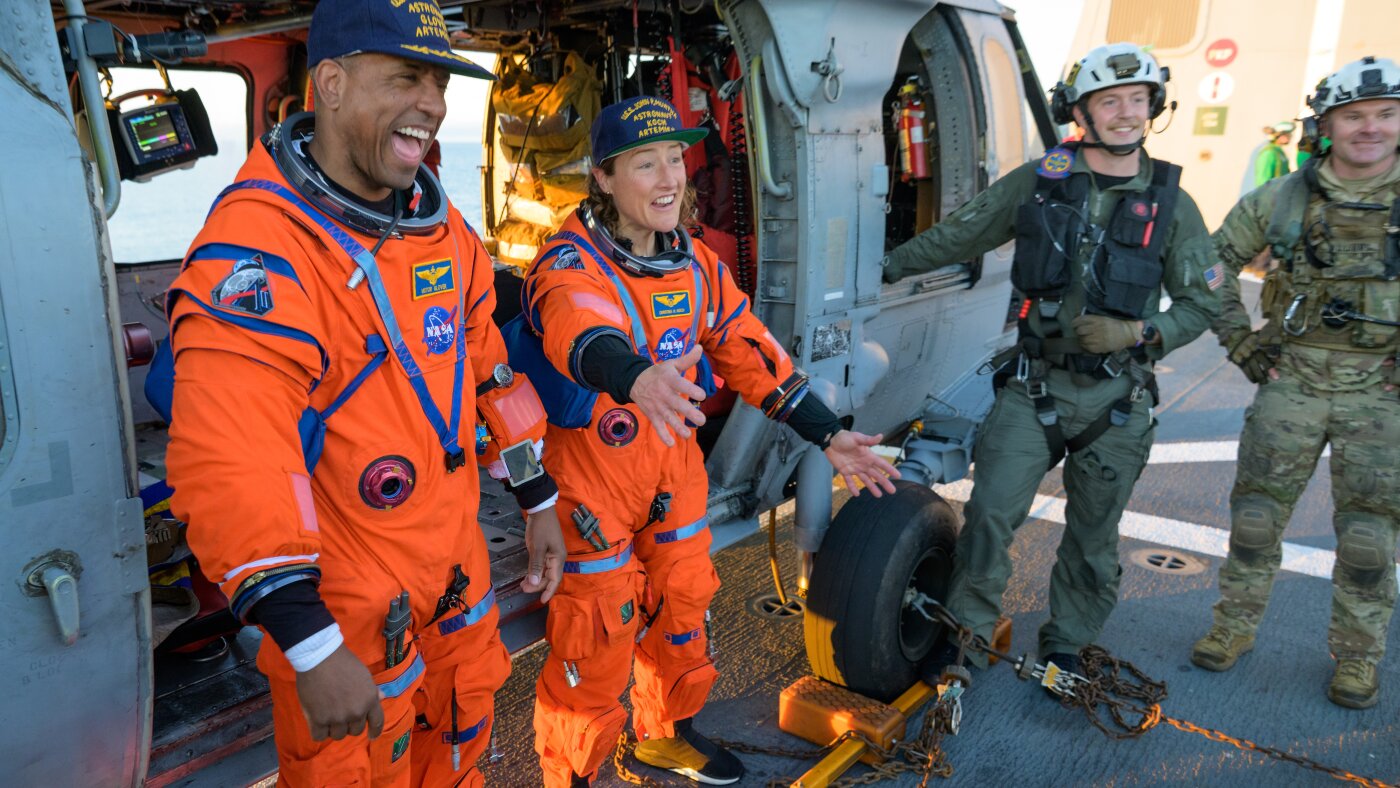
Artemis II splashdown captures nationwide attention

Video: Police Fatally Shoot Man After Stabbings at Grand Central Subway Station

Trump blasts Spanberger ahead of Virginia meetings, says state faces tax base exodus like New York, California
-

 Atlanta, GA1 week ago
1 teenage girl killed, another injured in shooting at Piedmont Park, police say
-

 Georgia5 days ago
Georgia House Special Runoff Election 2026 Live Results
-

 Pennsylvania6 days ago
Parents charged after toddler injured by wolf at Pennsylvania zoo
-

 Arkansas2 days ago
Arkansas TV meteorologist Melinda Mayo retires after nearly four decades on air
-
 Milwaukee, WI6 days ago
Potawatomi Casino Hotel evacuated after fire breaks out in rooftop HVAC system
-

 Indianapolis, IN1 week ago
Fighting Illini begin Final Four preparations in Indianapolis
-

 Technology1 week ago
Anthropic essentially bans OpenClaw from Claude by making subscribers pay extra
-

 Detroit, MI1 week ago
Puppy rescued after getting stuck on chimney in Detroit