Iowa
Eight Freshmen To Watch In The Iowa High School Wrestling Postseason – FloWrestling


The Iowa high school state tournament has produced at least one freshman state champion in each of the last nine years with as many as five in 2019 and as few as one the year before.
There’s a strong possibility a few more tournament rookies will ascend to the top of the podium later this month in Des Moines. Here’s a look at eight of the state’s top freshmen this season and where they’re ranked in the latest Flowrestling Iowa high school premium rankings.
Class 1A
Hudson Cox (Southeast Warren-Melcher Dallas) — #8 overall at 106/#2 in Class 1A
Cox collected multiple state championships on his rise up the youth ranks and he’s backed up that success with a 39-1 start to his freshman season. His lone loss came at the Charger Invitational, where lost in the finals to Greene County’s Brennan Jacobs, who’s ranked third in Class 2A.
Ty Martin (Don Bosco of Gilbertville) — #2 overall at 106/#1 in Class 1A
Martin kicked off his terrific freshman season by winning the title in a deep field at the Dan Gable Donnybrook. He’s been on a roll since, compiling a 34-1 record with his only loss coming against returning state finalist Cruz Gannon. Martin has notched wins over a pair of returning state medalists.
Braylon Peters (Westwood of Sloan) — #14 overall at 132/#6 in Class 1A
Peters entered high school on the heels of winning a state AAU title as an eighth grader and he needed no time to adjust to varsity competition. He didn’t wrestle a full period in his first 16 matches, notching 13 pins, two technical falls and a forfeit. He’s 31-0 on the season with 19 pins.
Class 2A
Adam Carey (Independence) — #5 overall at 126/#1 in Class 2A
Carey ran his record to 46-2 on the season with his title-winning performance last weekend at the WaMac Conference tournament, where he scored a pair of pins and a technical fall. Both of Carey’s losses this season came against D1-bound returning state champions — Don Bosco’s Hayden Schwab and Bettendorf’s Jake Knight.
Joseph Leick (Glenwood) — #6 overall at 126/#2 in Class 2A
Leick won Iowa AAU youth titles as a sixth-, seventh- and eighth-grader, and he’s put himself in contention for a high school state title as a freshman. Leick is 34-2 with both of his losses coming against Council Bluffs Lewis Central’s 2024 state finalist Weston Porter, who’s ranked third in 3A.
Class 3A
Amir Newman-Winfrey (Southeast Polk) — #1 overall at 106/#1 in Class 3A
In 2024, Nico DeSalvo followed in the tracks of four-time Iowa state champion and 2017 NCAA champ Cory Clark, becoming the second Southeast Polk freshman to win a state title at the lightest weight class. Then Eddie Woody duplicated the feat last year at 106, and now Amir Newman-Winfrey is trying to keep the run going for the Rams. Newman-Winfrey is 28-1 this season and undefeated against in-state competition, including a 17-10 win against returning state finalist Cruz Gannon.
Jaimon Mogard (Ames) — #4 overall at 144/#1 in Class 3A
Mogard is 36-3 and undefeated against in-state competition. Those three defeats came by a combined six points with two losses in overtime. Mogard has posted wins this season over a cast of returning state medalists and state qualifiers.
Diego Robertty (Iowa City West) — #7 overall at 113/#4 in Class 3A
Robertty recently pinned his way through the prestigious Mississippi Valley Conference title at 113 to run his record to 29-1. His lone loss this season was a 9-6 decision against returning state medalist Jack Wallukait of Dowling. It was also Robertty’s only match that went the distance this season. He scored a technical fall against state finalist Cael McCabe of Fairfield and also teched Abe Heysinger, who placed third last season at 106.
Iowa High School Premium Rankings
Check out the Iowa High School Wrestling Premium Rankings, which are generated by using an athlete’s complete match history to predict a wrestler’s performance against others in their weight class by considering factors such as win-loss records, the quality of their victories (pins, technical falls, major decisions), the strength of their opponents, and overall historical performance patterns.
The data is updated every Monday, sourced from the Trackwrestling season results. Since each team is responsible for maintaining its season results, any data discrepancies for a wrestler should be addressed by contacting their coach to manage the information within the season. This includes the weight class assigned. Wrestlers are eligible to be ranked after competing in five matches at a single weight.



Iowa State basketball coach TJ Otzelberger addresses coaching rumors
Iowa State basketball coach TJ Otzelberger addresses coaching rumors surrounding him, the UNC vacancy and other jobs.
Iowa State men’s basketball has filled the first assistant coaching vacancy on its staff.
The Cyclones announced on Monday, April 6, that head coach T.J. Otzelberger has named Tim Buckley as a new assistant coach. He will begin his duties with Iowa State immediately.
Buckley most recently served as an assistant for two seasons at Cincinnati, but he comes to Ames with more than three decades of coaching experience. He was also previously part of Otzelberger’s staff for both years of his tenure at UNLV from 2019-21.
“A renowned coach in player development, I’m excited to have Tim join our staff at Iowa State,” Otzelberger said in a statement. “Tim brings a wealth of knowledge, both as a head coach and assistant coach. He has recruited and developed some of the top talents in the NBA. I’m thrilled that our student-athletes will get the opportunity to work with Tim.”
The 62-year-old Buckley has garnered a reputation for his player development and recruiting. Before arriving in Ames, he got Division I head coaching experience at Ball State (2000-06), and he’s also been an esteemed assistant coach at Wisconsin (1993-94), Ball State (1994-99), Marquette (1999-00, 2007-08), Iowa (2006-07), Indiana (2008-17), UNLV (2019-22), South Carolina (2022-24) and Cincinnati (2024-26).
Before joining Otzelberger’s staff at UNLV, he was also a scout for the Minnesota Timberwolves from 2017-19.
Buckley has worked with 12 NBA Draft picks, nine of whom were drafted in the first round. Of those nine first-round picks, six of them were lottery picks. Some of the top talent Buckley has recruited and developed include Dwyane Wade, Victor Oladipo, Cody Zeller and Noah Vonleh. He also helped coach All-American Yogi Ferrell at Indiana.
“I’m thankful for the opportunity to be reunited with T.J. Otzelberger,” Buckley said in a statement. “What he has done over the last five years is amazing. Iowa State is a nationally recognized program and I’m excited to be a part of it.”
Buckley played at Waubonsee Community College from 1982-84, before finishing his playing career at Division II Bemidji State from 1984-86. After that, he went right into coaching at his alma mater for two seasons, before moving over to Division III Rockford, where he spent one year as an assistant. He was promoted to Rockford’s head coach, a job he held from 1989-93, before breaking through to the Division I ranks.
Iowa State finished this past season at 29-8. The Cyclones reached the Sweet 16 for the third time in five years under Otzelberger. The Cyclones still have one assistant coaching vacancy to fill, after J.R. Blount (San Diego) and Kyle Green (Northern Iowa) departed for head coaching opportunities.
Eugene Rapay covers Iowa State athletics for the Des Moines Register. Contact Eugene at erapay@gannett.com. Follow him on Twitter at @erapay5.

WATERLOO (KCRG) – The Amber Alert for 12-year-old Deyton Annabelle Cranston has been canceled.
The Iowa Department of Public Safety said Cranston was located and the Waterloo Police Department is investigating.
PREVIOUS STORY:
Iowa (KCRG) – An amber alert has been issued for a missing 12-year-old out of Waterloo.
12-year-old Deyton Annabelle Cranston was last seen wearing a white tank top and a blue skirt and wearing clear glasses.
She’s described as 5′4′, 135 and has blonde hair and brown eyes.
Officials say to look out for a red Toyota Camry with all tinted windows, a black spoiler, and no license plate on the front.
Anyone with information should contact authorites.
Copyright 2026 KCRG. All rights reserved.

Here are the candidates for High School on SI’s Iowa high school athlete of the week for March 30-April 4. Read through the nominees and cast your vote.
Voting closes at 11:59 p.m. PT on Sunday, April 12. The winner will be announced in the following week’s poll. Here are this week’s nominees:
Greyson Hartman, Washington boys track and field
The junior recorded the second-best United States throw in the shot put with a toss of 67-3.5. It is the second-best throw in Iowa history, breaking the Class 3A mark set by NFL standout Tristan Wirfs.
Shea Rapp, Ridge View girls track and field
Rapp won the high jump and the 200 at the Audubon Early Bird while also running on the winning distance medley relay and runner-up 4×400 relay.
Rylee Hemmingsen, Treynor girls track and field
Hemmingsen showed off her skills by winning the 100 hurdles, running on the winning shuttle hurdle and 4×400 relays, and placing second in the high jump at the Audubon Early Bird.
Cash Varner, Alburnett boys track and field
Varner was cash at the Benton Early Bird, placing first in both the 100 dash and long jump.
Aiden Gosselink, Grinnell girls track and field
Gosselink hit the Blue Standard to qualify for the Drake Relays in the long jump while also winning the 100 at the Benton Early Bird.
Rylan Peters, Waverly-Shell Rock boys track and field
Peters set a new school-record in the long jump at 23-8 while also hitting the Blue Standard and qualifying for Drake Relays.
Jase Price, Des Moines Christian boys soccer
Price had quite the varsity debut, as the freshman recorded a haul by scoring four goals in a win over Boone.
Aiden Kellar, Treynor boys soccer
Kellar tallied a hat trick with three goals in a 5-1 win for the Cardinals over Harlan.
Kaden Theisen, Western Dubuque boys soccer
Theisen was peppered with 20 shots in a match vs. Beckman Catholic, saving 19 of them to help the Bobcats to a 2-1 win.
Lucas Sidles, Independence boys track and field
Sidles swept the throwing events at the West Delaware Early Bird, winning the shot put and discus.
Adam Kacmarynski, Pella Christian boys track and field
Kacmarynski won the 100 and ran on the winning sprint medley and 4×100 relays at the Chariton Invitational.
Mark Fraise, Davis County boys track and field
Fraise finished first in the 400 hurdles, was on the first place shuttle hurdle and 4×400 relays, and also ran on the second place distance medley relay.
Gage Hoppenworth, Johnston boys track and field
Hoppenworth had a three-gold night at the Dowling Catholic meet, winning the 110 and 400 hurdles while running the third leg on the winning shuttle hurdle relay.
Alayna Goldsberry, Southeast Polk girls track and field
The junior won the 100 and 200 at her home invitational while running the anchor on the second place 4×400 relay.
Natalie Sitzmann, Waukee girls track and field
Sitzmann, a senior, won the 200 and ran on the first place shuttle hurdle and 4×400 relays at her home invitational.
Isabel Spradling, Des Moines Roosevelt girls track and field
Spradling picked up a first in the 1,500 and was on the gold-medal 4×400 and 4×800 relays at the Waukee Invitational.
Alayna Williams, Carlisle girls soccer
Williams, a senior, recorded five goals in a season-opening win over Knoxville, 10-1.
Carly Torneten, Harlan Community girls soccer
Torneten not only scored four goals, but she recorded four assists vs. Carroll.
About Our Athlete of the Week Voting
High School on SI voting polls are meant to be a fun, lighthearted way for fans to show support for their favorite athletes and teams. Our goal is to celebrate all of the players featured, regardless of the vote totals. Sometimes one athlete will receive a very large number of votes — even thousands — and that’s okay! The polls are open to everyone and are simply a way to build excitement and community around high school sports. Unless we specifically announce otherwise, there are no prizes or official awards for winning. The real purpose is to highlight the great performances of every athlete included in the poll.

How a Family of 3 Lives on $25,000 in Corona, Queens

Trick Trick joined Waka Flocka onstage at ‘The Boys 4 Life Tour’ stop in Detroit – Detroit Metro Times

NFL Experts Continue to Link Former 49ers WR Back to San Francisco

What we learned in FC Dallas’ win vs DC United

Dolphins 7-Round 2026 NFL Mock Draft: Miami could catch the wave just right and get a monster draw in the top-50 picks

Florida High School Football Rankings: Top 25 teams – Oct. 21

How old is Bo Nix? What to know about Oregon quarterback ahead of 2024 NFL Draft

Cleary's 21 help Le Moyne down Central Connecticut State 69-64 in OT

99th annual Pony Swim held in Virginia

Indiana Members Credit Union announced as new anchor tenant at Bottleworks District

Trump threatens Iranian infrastructure over Strait of Hormuz | BBC News

GOP races to pass ICE, Border Patrol funding bill as priorities pile up, divisions emerge
Jet fuel crisis: Rationing triggered at four airports in Italy
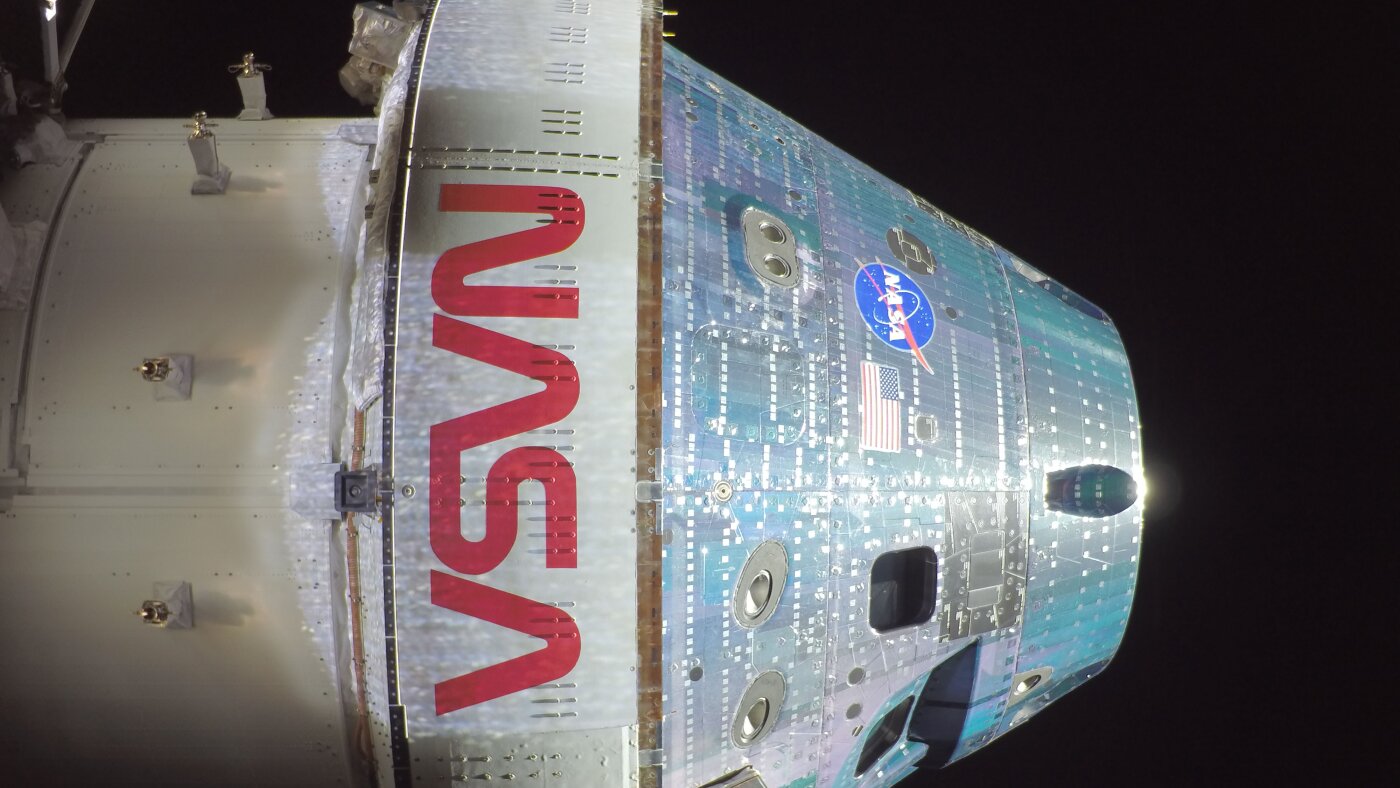
NASA’s Artemis II crew readies for Monday’s lunar flyby. Here’s what you need to know

Tax day is next week: Avoid these 5 common mistakes that can cost you money
-

 South-Carolina1 week ago
South Carolina vs TCU predictions for Elite Eight game in March Madness
-

 Atlanta, GA2 days ago
1 teenage girl killed, another injured in shooting at Piedmont Park, police say
-

 Vermont1 week ago
Skier dies after fall at Sugarbush Resort
-

 Movie Reviews4 days ago
Vaazha 2 first half review: Hashir anchors a lively, chaos-filled teen tale
-

 Politics1 week ago
Trump’s Ballroom Design Has Barely Been Scrutinized
-

 Atlanta, GA1 week ago
Fetishist ‘No Kings’ protester in mask drags ‘Trump’ and ‘JD Vance’ behind her wheelchair
-
 Entertainment4 days ago
Inside Ye’s first comeback show at SoFi Stadium
-

 Politics1 week ago
JD Vance says he was ‘obsessed’ with UFOs, believes aliens are actually ‘demons’