Indianapolis, IN
Mimi Blue Restaurant closes downtown Indianapolis location

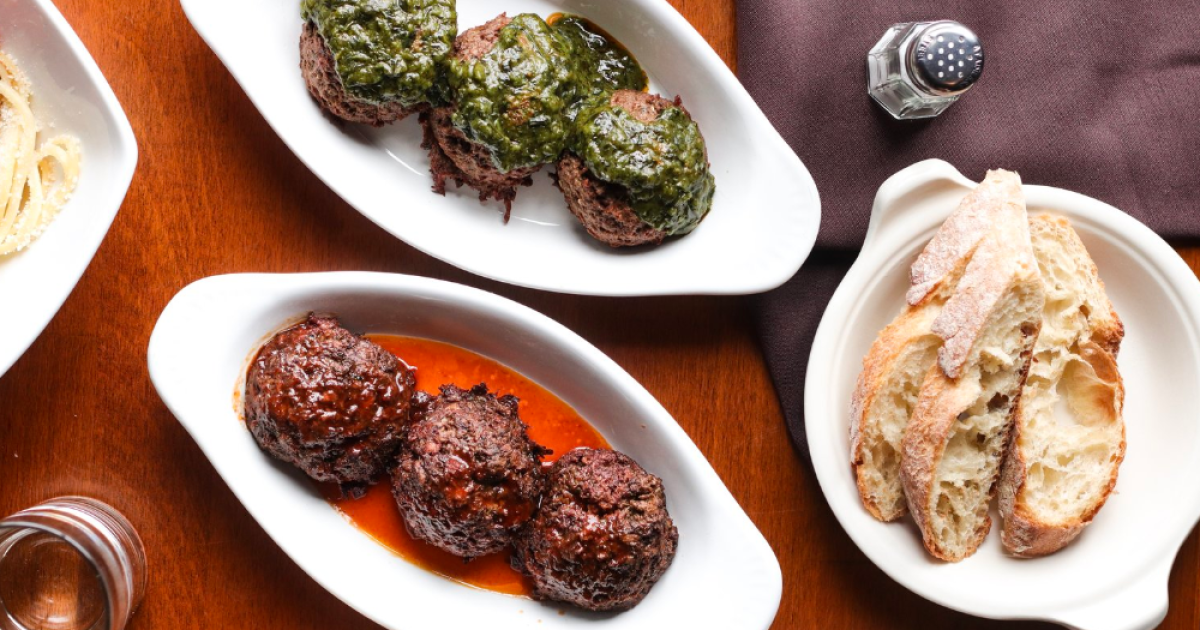
INDIANAPOLIS — Mimi Blue Restaurant closed its last remaining location downtown Indianapolis on Mass Ave.
The restaurant, known for its meatballs and other American fare, closed on Wednesday after a decade of business.
The building, located at 870 Massachusetts Avenue, will be put up for sale.
“Thank you for your support over the past 10 years. Our goal was to provide each customer with a quality dining experience at a fair price in a comfortable environment, where family and friends could gather,” the restaurant said in a statement on social media.
The company announced the closure of its location inside The Fashion Mall at Keystone in June 2023.



INDIANAPOLIS (WISH) — The NCAA has released Final Four attendance numbers.
More than 86,000 people attended the Fan Fest at the Indianapolis Convention Center during the Final Four Weekend.
It broke the overall attendance record and single-day records for Friday, Saturday, and Monday.
The NCAA says more than 142,000 people attended the semifinals and the national championship—
not to mention the thousands who showed up for fan activities.
For downtown businesses, that turnout translated into a major boost.
At 16-Bit Barcade in the heart of downtown Indy, things have slowed down compared to last week.
Staff say the Final Four more than doubled their usual customer traffic. Host Trinity Surbrook said, “We got to the point where we were telling people to stop and wait we’re not letting people in at that moment, and we’re waiting for other people to leave. It was a whole lot. We made bunch of good money and it was a lot of fun.”
The NCAA reports fans came from 49 of 50 states and 12 countries. “It was so interesting to see people passionate about the Final Four not even from this country.” Surbrook recalled customers from Australia. “It was really awesome, it was interesting.”
The weekend also featured a music festival with Post Malone and Twenty One Pilots, drawing more than 73,000 fans which was just steps away from the bar.
“There were thousands of people out. Just seeing the sidewalk traffic and seeing everyone on their feet. The festival was great for the city,” said general manager Janelle Miller. “When that festival ended, we saw hundreds of people hit the street and go in all different directions.” Miller said it didn’t just benefit pockets of the downtown but everywhere.
Miller said Saturday was their busiest day because there were a lot of activities to do. The employees served more than 6,000 drinks over the weekend. “I would say, we had numbers that I haven’t seen in probably 2 years on a Friday and Saturday. Which is refreshing to see.”
Now that the Final Four is over, the staff at 16-Bit said they are looking forward to what’s next: the Indianapolis 500.
Indianapolis, IN
9-year veteran defensive back, Colts agree to seek trade. How it impacts Colts’ future

The Colts and veteran slot cornerback Kenny Moore II, one of the franchise’s longest-tenured active players, have mutually agreed to pursue a trade this offseason, a league source confirmed to IndyStar on Friday
Moore, who has spent nine of his NFL seasons in Indianapolis after emerging from the 2017 draft an undrafted free agent and landing with the Colts following a training camp spent in New England, would be the second team captain dealt this offseason (along with linebacker Zaire Franklin) — should a trade partner be found before the 2026 season ramps up — and second bonafide team leader, along with former No. 1 wide receiver Michael Pittman Jr. Coming off a start to a season where the Colts sprinted out to an 8-2 start to hold the top spot in the AFC, only to finish on a seven-game slide that often featured a crumbling defense in high-pressure moments, longtime Indianapolis general manager Chris Ballard pledged early this offseason to get “younger and faster” on defense.
The notion has often been associated, in particular, with the team’s front seven, but in the Colts’ secondary, which one could argue is almost bursting at the seams with starting-caliber talent, Moore is far and away the most veteran member at the nickel corner position — a spot on the field that future second-year corner Justin Walley may be primed to slide into in order to get the rehabbing former third-round pick on the field with the outside corner spots spoken for by All-Pros Sauce Gardner and Charvarius Ward.
Given the Colts’ lack of a clear-cut starting strong safety alongside free safety Camryn Bynum, there was reason to wonder, too, if Moore could be asked — or even challenged in camp alongside other challengers for the role — to look at moving to safety, in order to both allow Walley a spot in the starting lineup while maintaining Moore’s veteran leadership, experience and tenacity.
In 14 games in 2025, Moore logged a single interception in an early season road game against the Titans — one he returned for a 32-yard touchdown. The veteran corner also forced two fumbles, registered 1.5 sacks, recorded 55 tackles (three for a loss) and had three quarterback hits. Though some of his numbers didn’t show it — his tackle numbers marked a career-low since his rookie season, and his single interception marked just his third campaign in nine seasons without at least two picks — Moore’s 2025 season was among his best while targeted in coverage, even if he at times looked to have lost half a step while working his way back from an Achilles strain that cost him three games in the early half of the season.
In a way, Moore’s toughness as a blitzer and capabilities in the run game seemed like a solid fit for the veteran nickel corner in first-year defensive coordinator Lou Anarumo’s system in 2025 — particularly for a team that also lost starting strong safety Nick Cross to free agency last month. But in seeking a deal that could net the Colts a mid-round pick, Indianapolis’ crowded secondary room is likely now to have easier avenues for a 2025 camp standout in Walley or new young additions in cornerback Cam Taylor-Britt or safety Juanyeh Thomas to find their way onto the field this fall.
In 2026, Moore enters the final year of a three-year, $30 million deal signed in the 2024 offseason that again (for the second time) made the now-30-year-old the highest-paid nickel corner in NFL history. Including a base salary of $9.49 million, Moore is set to count $13.11 million against the cap this next season, including a $3.2 million prorated signing bonus the Colts paid as part of his deal two years ago. In October, the Colts and Moore mutually agreed to restructure his contract, converting $4.75 million into more bonus money while adding three void years onto the end of his deal of $950,000 each. At the time, the move created $3.8 million in cap space for the Colts over the rest of the 2025 season.
Already with roughly $26 million in cap space open a month into free agency, trading Moore would save the Colts more than $7 million against the cap for this season while saddling them with just over $6 million in dead cap in accounting for Moore’s previous signing bonus money.
Trading Moore would mean the Colts’ sixth lost starter from its 2025 roster (and fourth on defense), a class that also includes Franklin, Cross, Pittman, offensive tackle Braden Smith and defensive end Kwity Paye. Indianapolis is also presently involved in seeking out, or listening to, offers for one-time starting quarterback and 2023 fourth-overall pick Anthony Richardson Sr.
Off the field, the Colts would lose in Moore the team’s three-time Walter Payton Man of the Year Award nominee — including each of the past two seasons, along with 2021.
Joel A. Erickson and Nathan Brown cover the Colts all season. Get more coverage on IndyStarTV and with the Colts Insider newsletter.

INDIANAPOLIS (WISH) — Indianapolis Metropolitan Police officers arrested a man Tuesday for possession of a firearm by a serious violent felon and possession of marijuana according to an Thursday IMPD Downtown District Facebook post.
Police pulled over 33-year-old Malcolm Murray at the intersection if East Ohio Street and North Delaware Street because Murray did not have a license.
Police asked Murray if he had any weapons in his car and he told the officers no.
Police asked Murray to leave the car and Murray put down a crossbody bag that he was wearing.
Narcotics detection K-9 Bruce identified narcotics odor in the car. Police searched the car and found a handgun and marijuana inside the crossbody bag.
Police say that Murray tried to blame the female passenger saying, “Ain’t that your gun.”
Police arrested Murray for possession of a firearm by a serious violent felon and possession of marijuana.

“Moon tree” in Metro Detroit rediscovered following Artemis II mission

San Francisco store created and run by AI

Wembanyama drops 40 as Spurs beat Mavericks, reach award eligibility

Who is Rueben Bain Jr\ufeff? Miami Hurricanes draft prospect visits Bengals

Full-length Replay: Boston | FOX Sports

Florida High School Football Rankings: Top 25 teams – Oct. 21

How old is Bo Nix? What to know about Oregon quarterback ahead of 2024 NFL Draft

Cleary's 21 help Le Moyne down Central Connecticut State 69-64 in OT

99th annual Pony Swim held in Virginia

Indiana Members Credit Union announced as new anchor tenant at Bottleworks District

Swalwell’s former female staffer drops bombshell allegations of sexual assault, exposing himself: report

NASA’s Artemis II prepares for splashdown on Earth

Trump proposes painting executive office building white

Rep Randy Fine joins House Freedom Caucus: ‘Strongest group of conservative patriots in Congress’

Trump issues NATO ultimatum to reopen Strait of Hormuz ‘within days’
-

 Atlanta, GA6 days ago
1 teenage girl killed, another injured in shooting at Piedmont Park, police say
-

 Education1 week ago
Video: YouTube’s C.E.O. on the Rise of Video and the Decline of Reading
-

 Movie Reviews1 week ago
Vaazha 2 first half review: Hashir anchors a lively, chaos-filled teen tale
-

 Education1 week ago
Video: Toy Testing with a Discerning Bodega Cat
-

 Georgia4 days ago
Georgia House Special Runoff Election 2026 Live Results
-

 Pennsylvania4 days ago
Parents charged after toddler injured by wolf at Pennsylvania zoo
-

 Arkansas14 hours ago
Arkansas TV meteorologist Melinda Mayo retires after nearly four decades on air
-
 Milwaukee, WI5 days ago
Potawatomi Casino Hotel evacuated after fire breaks out in rooftop HVAC system