Indiana
Top five seasons by a power forward in Indiana Pacers history


The Indiana Pacers best season, at least by individual accolades, came from a power forward. Jermaine O’Neal was a top-three MVP finisher and Second-Team All-NBA talent at his best, and it’s a defining season for the Pacers franchise.
Throughout the years, the blue and gold have had several strong seasons from four men. Some All-Stars, some top utility men, and some forceful defenders have shined on Indiana’s best teams. Their most recent season changed in a positive way when they acquired a former All-NBA power forward in Pascal Siakam.
The top-five seasons by a Pacers power forward are hard to determine, though. Some of the best players to suit up at the position have multiple contenders for their best season with the franchise, which makes this list difficult to put together.
Honorable mention: Troy Murphy in 2008-09 and every Antonio Davis season
Murphy had a great season for a crummy Pacers team in 2008-09. He averaged 14.3 points and 11.8 rebounds per game, and he showed off skills that would make him a terrific modern big man as he shot 45% from long range. It was Murphy’s best-ever season as he was a star in his role, but it wasn’t enough to land in this top five.
Davis, meanwhile, gets on to this list for his lifetime achievement with Indiana. He played for the franchise for six seasons and was a great player almost every campaign. He averaged 9.0 points and 6.6 rebounds for the team and was a part of some terrific groups. He finished third in Sixth Man of the Year voting in 1999.
5: Dale Davis in 1999-2000
Davis had many great seasons for the Pacers, but the 1999-2000 campaign featured his best combination of regular season and playoff success. The veteran big man was reliable for years, but he hit a new level as the century flipped.
Davis averaged 10.0 points and 9.9 rebounds per game that season, and he was named an All-Star for the first and only time during his long career. He averaged more points or more boards in other campaigns, but he was strong in both categories for a talented Pacers team and contributed tough, much-needed defense. He was 11 total rebounds away from averaging a double-double.
In the postseason, Indiana reached the NBA Finals for the first time in franchise history. Davis averaged 8.3 points and 11.4 rebounds during his 23 playoff games that year, including 20 points and 14 boards in Game 6 of the NBA Finals. The run to the title series, the All-Star appearance, and the strong production in both the regular season and playoffs make this a top-tier campaign at the four spot for Indiana.
4: Detlef Schrempf in 1992-93
Schrempf had many great, accolade-filled campaigns for the blue and gold during his time with the franchise. He won Sixth Man of the Year twice and received MVP votes for the organization. His skill set would fit well in the modern NBA — he had range, could rebound well, and added to any lineup he was a part of.
He had multiple seasons with monster stat lines for the blue and gold, including nearly averaging a double-double twice. More than one season could be considered Schrempf’s best with the franchise.
1992-93 rises to the top. The German forward was an All-Star for the first time that year, dominating opposing teams as a starter for the first time. He played 37.8 minutes per game and was in closing lineups often, yet the team hummed with Schrempf playing with bench units. He averaged 19.1 points and 9.5 rebounds per game, and while the Pacers didn’t do much in the postseason, the talented forward still had one of the best-ever power forward seasons for the blue and gold.
3: David West in 2012-13
West came to the Pacers and was the final piece on a roster that contended for the NBA Finals every season. The former All-Star forward helped Indiana approach the level of Miami Heat groups led by LeBron James, and West was a rock-solid contributor during those years.
Much of his Pacers tenure could be considered his peak with the franchise, but 2012-13 was West’s best season for Indiana. He averaged 17.7 points and 7.1 rebounds per game, which were by far his best figures for the blue and gold. That production was vital for a 49-win team. So much of West’s impact can’t be quantified — his toughness and leadership were frequently important.
In the postseason, the Pacers needed everything West could give. They raced to the Eastern Conference Finals, and their four man averaged 15.9 points and 7.6 rebounds. West didn’t have the same statistical production as Schrempf and didn’t earn the same accolades, but he had much more postseason success and was vital in many intangible ways. The Pacers were one game from the Finals that year, and West had many great outings along the way in the playoffs.
2: Jermaine O’Neal in 2002-03
O’Neal has perhaps the best peak of any player in Pacers history. After coming to Indiana from Portland in the early 2000s, the two-way threat changed the franchise’s fortunes and pushed the team back into the top tier of the league.
His play on both ends of the floor was menacing. On offense, O’Neal had punch and touch. He could finish around and through defenders, and he made 69.4% of his shots from inside three feet that season. He scored 20.8 points and pulled in 10.3 rebounds per game for a Pacers team that won 48 games. O’Neal was an All-Star and was named to the All-NBA Third Team while receiving Most Improved Player votes one year after winning the award.
The Pacers playoff run was short that season, which separates this season from some of O’Neal’s other great years — that said, his playoff stats (22.8 points and 17.5 rebounds per game in six games) were remarkable. But in many ways, he was at his best during this campaign, and the Pacers knew they had a star on their roster.
1: Jermaine O’Neal in 2003-04
O’Neal followed up his excellent 2002-03 season with an even better one from start to finish. The veteran forward continued to dominate on both ends of the floor as Indiana grew into a title contender once again.
The big man averaged 20.1 points and 10.0 rebounds per game, nearly matching his numbers from the prior year. His subtle improvements were vital in the Pacers ascent. They also led to more league wide recognition. O’Neal was named to the All-NBA Second team, which is the best All-NBA finish for a Pacers player ever. He likely would have made the First-Team if positions didn’t matter for the squads.
O’Neal ranked third in MVP voting that season, and he took in two first-place votes — the second most of any player. Kevin Garnett and Tim Duncan were the top-two finishers, but O’Neal was voted near that level for his contributions.
In the postseason, the star forward continued his level of play and averaged 19.2 points and 9.1 rebounds. The Pacers reached the Eastern Conference Finals before losing to the Detroit Pistons, but O’Neal’s campaign was still terrific from start to finish, and it featured postseason success.
For more on this list, check out the Locked On Pacers podcast.



(INDIANA CAPITAL CHRONICLE) — A judge is sending back to the Indiana Election Commission a dispute over whether one of two women with the last name Wilson can remain on the Republican primary ballot for a state Senate seat.
The legal fight has political significance because of its possible impact on the campaign prospects of Brenda Wilson, a Vigo County Council member who has President Donald Trump’s endorsement against current Sen. Greg Goode of Terre Haute following the senator’s December vote against the Indiana congressional redistricting plan.
Supporters of Brenda Wilson are trying to have Alexandra Wilson removed from the primary ballot, arguing that she’s ineligible because of a 2010 criminal conviction.
The four-member Election Commission split 2-2 during a February hearing on the challenge to Alexandra Wilson’s candidacy, with the tie vote leaving her name on the ballot.
Alexandra Wilson has since had her conviction for resisting law enforcement at the age of 19 expunged by a Vermillion County court.
Putnam County Superior Court Judge Charles Bridges cited that action in an order this week following a court hearing on an appeal of the Election Commission’s action.
“Remand to the Indiana Election Commission is appropriate because circumstances of the case have changed,” the order said. “The Indiana Election Commission has not had an opportunity to consider Wilson’s notice of expungement and whether her candidacy is disqualified in light thereof.”
Prominent conservative attorney Jim Bopp, who is a top political ally of Gov. Mike Braun and is supporting Brenda Wilson, said Friday he had asked the Election Commission to quickly set a new meeting to reconsider the challenge for Alexandra Wilson’s candidacy.
Bopp maintains that Alexandra Wilson’s eligibility should be determined by her status when she filed her candidate paperwork in February.
“At that time, she had been convicted of a felony and was disqualified from being a candidate,” Bopp told the Indiana Capital Chronicle. “The expungement of her felony conviction more than six weeks later is not retroactive and is thus irrelevant.”
Alexandra Wilson’s attorney has argued that she remained eligible since her 2010 guilty plea to a low-level Class D felony charge was accepted by a judge as a Class A misdemeanor.
Attorney General Todd Rokita’s office has argued the same in defending the commission.
An Election Commission meeting had not been announced as of Friday afternoon.

TELL CITY, Ind. (WKRC) — A man and woman in Southern Indiana were arrested and charged with murder after the death of a toddler this week.
In a press release, Tell City Police said they were called to a home for an unresponsive child on Tuesday. The boy, identified as 2-year-old Erik Reichard, was pronounced dead at the scene. Police did not say how the boy died.
On Friday, following an investigation, police arrested 39-year-old Trevor Reichard-Hates and 31-year-old Katherine Carter. It’s not clear what their relationship to the boy was.
Both Reichard-Hayes and Carter are in the Perry County Detention Center and charged with murder, neglect of a dependent resulting in death, neglect of a dependent resulting in serious bodily injury and neglect of a dependent.

The Food Bank of Northern Indiana will distribute boxed and bagged food to those in need at remote locations in the coming month. The food can be picked up in a drive-through on a first-come, first-served basis.
● April 6: 9 to 10:30 a.m. Trinity Lutheran Church, 430 Academy Road, Culver, Indiana
● April 8, 2026: 10 a.m. to noon CT at Prairie Meadows Park, 199 Flynn Road, Westville, Indiana
● April 9: 9 to 10:30 a.m. at the Kosciusko County Fairgrounds, 1440 E. Smith St., Warsaw
● April 10: 12:30 to 2 p.m. at Clayton Homes, 66920 Indiana 19, Wakarusa
● April 14: 1 to 2:30 p.m. at the Food Bank of Northern Indiana, 702 Chapin St., South Bend
● April 15: 9:30 to 11 a.m. CT at Heartland Church, 6020 S. 300 E., Knox
● April 16: 10 to 11:30 a.m. at First Baptist Church, 206 S. Oak St., Mentone, Indiana
● April 17: noon to 1:30 p.m. Plymouth Parks, 1660 N. Michigan St. (by the pool), Plymouth
● April 20: 1 to 2:30 p.m. Charles Black Center, 3419 W. Washington St., South Bend
● April 22: 10 a.m. to noon CT at the LaPorte County Fairgrounds, 2581 Indiana 2, LaPorte
● April 23: 11 a.m. to 12:30 p.m. at the Excel Center (former Pierre Moran Mall Sears), 154 W. Hively Ave., Elkhart
● April 24: 9 to 10:30 a.m. CT at Knox United Methodist Church, 201 S. Shield St., Knox

How Sports Illustrated is getting back in the game after scandal, layoffs

Two ex-New Yorkers embrace more-is-more style in their maximalist Pasadena home

Inside the Pentagon, fears of a disrupted war effort after Army chief’s ouster

Microplastics are everywhere — even in the labs studying them. That’s a problem for research
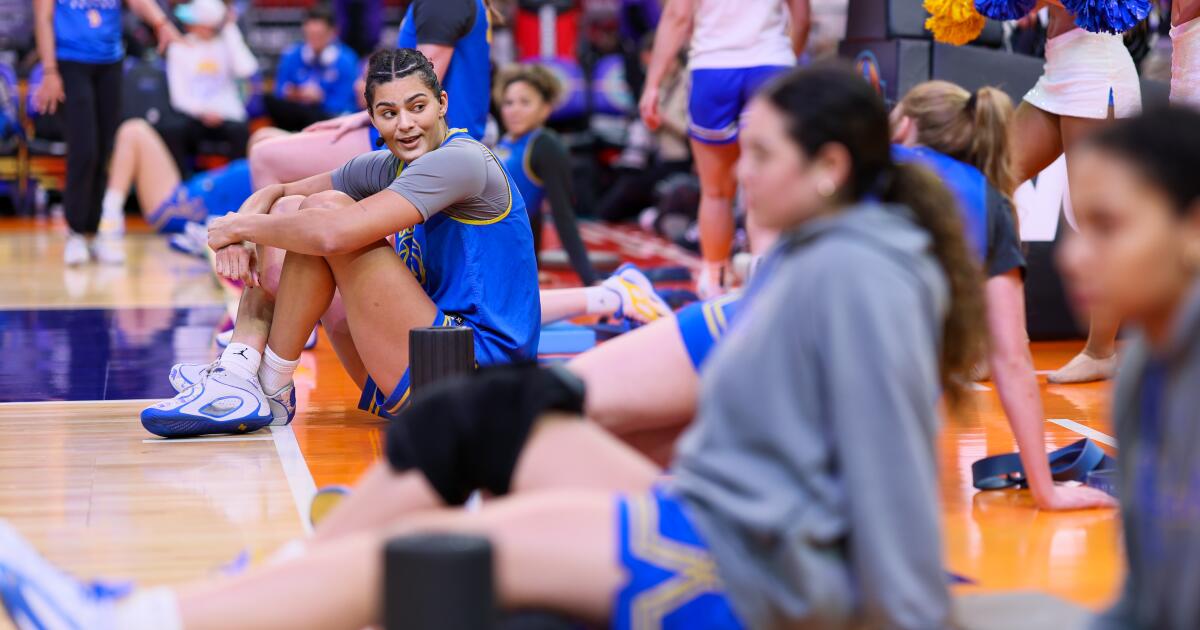
Three keys for UCLA as it faces South Carolina for an NCAA national championship

Florida High School Football Rankings: Top 25 teams – Oct. 21

How old is Bo Nix? What to know about Oregon quarterback ahead of 2024 NFL Draft

Cleary's 21 help Le Moyne down Central Connecticut State 69-64 in OT

99th annual Pony Swim held in Virginia

Indiana Members Credit Union announced as new anchor tenant at Bottleworks District

Hamas armed wing says disarmament demands not acceptable

Trump issues fiery new threat against Iran as details of US aviator’s rescue emerge

DHS slams Democrat Sen Chris Van Hollen claim, says illegal alien caused crash while fleeing ICE

Zelenskyy warns US-Iran war could divert critical aid from Ukraine

After the Minnesota surge, ICE is moving to a quieter enforcement approach
-

 South-Carolina1 week ago
South Carolina vs TCU predictions for Elite Eight game in March Madness
-

 Atlanta, GA16 hours ago
1 teenage girl killed, another injured in shooting at Piedmont Park, police say
-

 Vermont1 week ago
Skier dies after fall at Sugarbush Resort
-

 Movie Reviews3 days ago
Vaazha 2 first half review: Hashir anchors a lively, chaos-filled teen tale
-

 Politics1 week ago
Trump’s Ballroom Design Has Barely Been Scrutinized
-

 Atlanta, GA1 week ago
Fetishist ‘No Kings’ protester in mask drags ‘Trump’ and ‘JD Vance’ behind her wheelchair
-
 Entertainment4 days ago
Inside Ye’s first comeback show at SoFi Stadium
-

 Politics1 week ago
JD Vance says he was ‘obsessed’ with UFOs, believes aliens are actually ‘demons’