Midwest
Indiana serial killer made concerning purchase before burying 10,000 pieces of remains at home: family friend

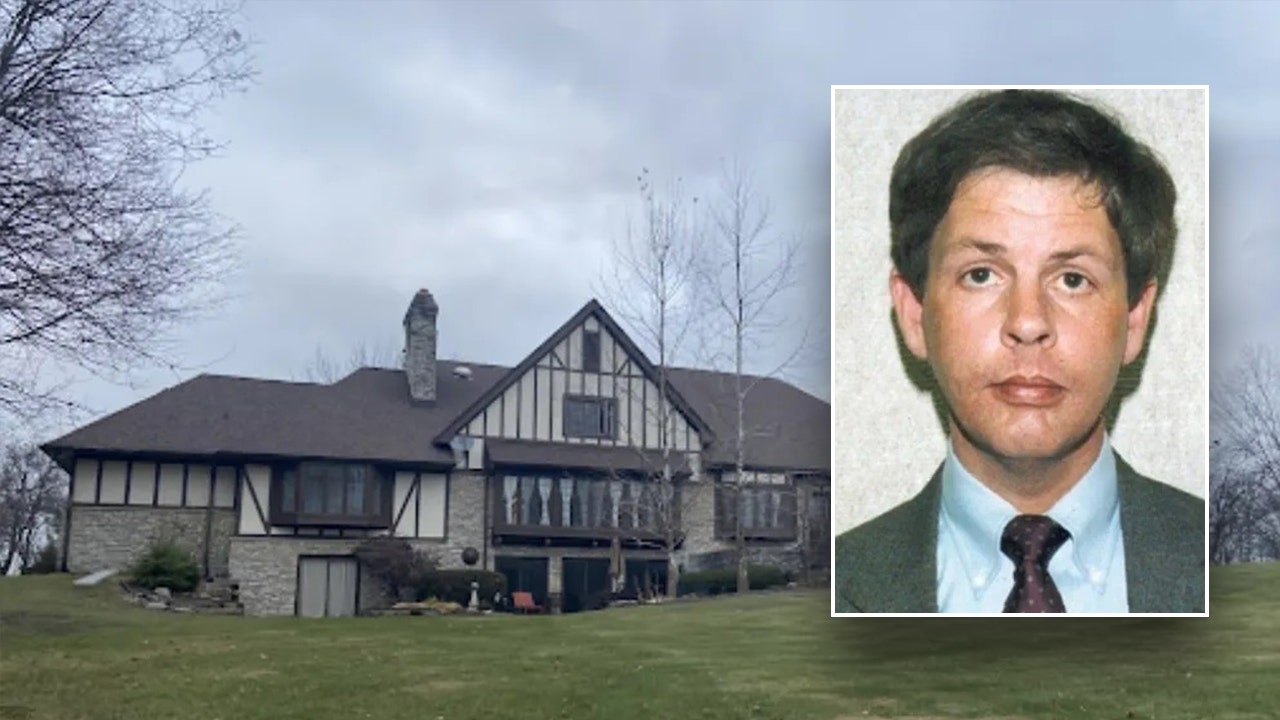
A serial killer bought a hearse “to pick up women for dates” about 10 years before murdering his first victim, a friend of the killer’s father told Fox News Digital.
“I’d say it was 1970, or somewhere around there. I’m not really sure of the exact date, but Herb (Baumeister) Jr. purchased a hearse. . . . And I could tell Dr. (Herb) Baumeister (Sr.) was genuinely perplexed and a little, what can I say, concerned,” Mannetta Braunstein said.
Braunstein worked with Baumeister Sr. several times a week from about 1966 to 1976 in the surgery department at Indiana hospitals. She said the elder Baumeister was a “gentleman” who drove her home after late shifts or emergency surgery and looked out for her.
While they worked together, Baumeister Sr. told her tidbits about his son that seemed to weigh on his mind, according to Braunstein. And that was years before his son killed the first of at least 12 victims and buried their bodies around his Indiana property.
INDIANA SERIAL KILLER’S 18-ACRE PROPERTY STILL HIDES SECRETS
Indiana’s Herb Baumeister was suspected of killing at least 25 people. So far, 12 victims have been linked to him. (Indianapolis Police Department)
Baumeister Jr. is believed to have killed at least 25 people from the 1980s to the 1990s, and buried them throughout his $1 million, 18-acre property called Fox Hollow Farm in Westfield, Indiana.
Law enforcement recovered 10,000 “burnt and crushed” skeletal remains after Baumeister Jr. shot himself as police closed in on the serial killer.
So far, the Hamilton County coroner’s office has identified eight victims, and investigators have four more DNA profiles that have not been identified yet, which brings the body count up to 12, according to Coroner Jeff Jellison.
EASTBOUND STRANGLER: SERIAL KILLER STAYS IN THE SHADOWS AS BOOGEYMAN WITH NO FACE
Looking back, Braunstein remembers several conversations in which Baumeister Sr. seemed concerned about his son.
The hearse was the most vivid in her mind.
About 10,000 pieces of human remains were found on the 18-acre Westfield, Indiana, property of Indiana serial killer Herb Baumeister. (Google Street View)
She said Baumeister Sr. asked his son why he would get a used hearse, and his response was, “Well, dad, it’s a good way to get around and go on dates,” Braunstein said. “And we left it at that, but I could tell it bothered him.”
There were other potential red flags that she can see now in hindsight.
Baumeister Jr. and Braunstein were close in age, so she felt that Baumeister Sr. spoke to her to get a younger person’s perspective.
VIDEO INTERVIEW: ’82 TYLENOL MURDERS SUSPECT WAS RELAXED AS HE CALLS COPS ‘STUPID’ FOR MISSING ‘BIG BLUNDER’
She said Baumeister Jr. did not appear to have many friends – people did not come to the house or want to hang out with him, he did not play sports at a high school that was an athletic juggernaut or participate in extracurricular actives, and struggled to maintain his grades.
Baumeister Jr. flunked out of college after one semester. His dad pushed him to go back to school in the late 1960s to study anatomy, but he did not make it through the first semester.
“I knew Dr. Baumeister was very disappointed when his son dropped out,” Braunstein said. “And it’s as if he (Baumeister Jr.) didn’t want to bother (with school).”
Mannetta Braunstein, who knew an Indiana serial killer’s father, said she was “shocked” after learning Herb Baumeister Jr. had killed so many people. (Fox News Digital)
Braunstein personally met the serial killer once while he was a college-aged man, but she does not remember anything out of the ordinary.
He came to her house once and spent about an hour talking about “mundane things,” said Braunstein, who noted that they were mostly topics he picked.
And she came away thinking he was a “polite, courteous and nice-looking” man.
FBI PROFILE OF A SERIAL KILLER: THEY LIVE MUNDANE LIVES AND ‘HIDE IN PLAIN SIGHT’
“It’s hard to get my mind wrapped around something like this, even after all these years,” Braunstein said.
At one point, she fought back tears and rubbed her eyes. “It’s still emotional.”
“I knew Dr. Baumeister very, very well,” she said. “He was just a kind person, and it’s hard to imagine his son being able to do these incredible crimes, and incredible in a bad way.”
Jeffrey A. Jones, who was reported missing from Fillmore, Indiana, in 1993, was identified as the most recent victim of serial killer Herb Baumeister. (Hamilton County Coroner’s Office)
Braunstein’s glimpse into the years of Baumeister Sr.’s concern for his son seemed to come to a head in 1971, when Baumeister Jr. was committed to a mental institution six months after marrying Juliana Saiter.
She stuck with him through his treatments, and by 1984, Baumeister Jr. was a married dad of three.
JOHN WAYNE GACY’S LAWYER EXPLAINS WHY SHE BELIEVES ‘THE KILLER CLOWN’ KILLED MORE VICTIMS – AND HAD HELP
He had achievements at different jobs, but some odd behaviors, such as urinating on a letter addressed to then-Indiana Gov. Robert Orr in 1985 – shortly after a promotion in the Bureau of Motor Vehicles ended his success.
He lost his job after that incident, but he and his wife essentially switched roles. He became a stay-at-home dad, while she went back to work.
The couple ultimately founded a profitable thrift store, which changed their lives.
WATCH: Is ‘Long Island Serial Killer’ the ‘Manovrille Butcher,’ as Rex Heuermann is charged with more murders
Double life
In the early 1990s, Baumeister Jr. and his family moved into the $1 million, 18-acre home, but their marriage began to crumble.
He stayed behind to care for the stores and the house, which is where he committed most of his murders, while his wife and kids left for long stretches of time to get out of a toxic environment.
That’s when his double life started. He used the name “Brian Smart” when he hunted for his prey in gay bars in the Indianapolis area.
That’s where he picked up his victims. He brought them to his spacious and secluded home and ultimately killed them and buried the remains.
About 10,000 pieces of human remains were found on the 18-acre Westfield, Indiana, property of Indiana serial killer Herb Baumeister. (Google Street View)
One day, in 1994, his teenage son found a skull and showed it to his mom.
He initially brushed it off as an anatomical skeleton that his father owned, which Braunstein and her friends from the medical field knew was a lie right away.
“Of course, we all know there’s no such thing as owning an anatomical skeleton. They’re carefully handled,” Braunstein said after hearing about the murders on the news.
SIGN UP TO GET TRUE CRIME NEWSLETTER
But Baumeister Jr.’s wife believed the excuse but became suspicious. She initially denied law enforcement’s requests to search the premise.
But their son’s chance discovery of the skull was trapped in her mind like a fly in a spider-web.
The business went downhill, the couple faced bankruptcy, and Baumeister Jr. was consumed by alcoholism. All of this led to divorce, and his wife going to the police with the skull.
“It certainly crosses your mind thinking, ‘I had a brush with the devil.’”
Manuel Resendez, who was 34 when he vanished in 1996, was identified as one of Herb Baumeister’s victims in January 2024. (Hamilton County Coroner’s Office)
Baumeister Jr.’s reign of terror was over.
Law enforcement closed in. There were a warrant for his arrest and a search warrant to dig up the property, which was littered with human remains.
Baumeister Jr. fled to Canada, where he shot himself.
GET REAL TIME UPDATES DIRECTLY ON THE TRUE CRIME HUB
Braunstein said, “Everybody was stunned” after hearing about Baumeister Jr.’s crimes.
“We all knew Dr. Baumeister (Sr.) and his family. They were normal people. It wasn’t like they were doing anything weird that we knew of,” she said. “So the fact that his son turned into this prolific serial killer was just unimaginable.”
Looking back and rethinking the hour or so that she and Baumeister Jr. had spent together years before the murders, she said, “It certainly crosses your mind thinking, ‘I had a brush with the devil.’
“I just remember saying, ‘My God, thank goodness his father died and didn’t have to live to see this.’”
She has since moved out of the state but said it’s still “unnerving that someone can be such a chameleon.”
“That’s the only word I can use,” she said. “He fooled me. I’m sure he fooled everyone else.”
Read the full article from Here


South Dakota Republican delegates rejected a push to censure Senate Majority Leader John Thune (R-S.D.) over the stalled SAVE America Act, exposing a fight within the GOP over how far the party should go to force through sweeping new voting restrictions.
South Dakota Republicans voted down a proposed censure of Thune at the state party convention Friday after a resolution accused him of blocking President Donald Trump’s election agenda.
The measure had advanced out of the party’s Resolutions Committee, but failed before the full convention.
The resolution targeted Thune for what it called “his failure in regards to the SAVE America Act,” a Republican-backed bill that would impose strict proof-of-citizenship and photo ID requirements to vote.
Voting rights advocates have warned the bill could block millions of eligible Americans from registering, especially people who do not have easy access to passports, birth certificates or documents matching their current names.
Trump has sharply escalated pressure on Republicans to pass the bill. This week, he abruptly canceled a planned signing ceremony for a bipartisan housing affordability bill, tying the unrelated legislation to his demand that Congress first pass the SAVE America Act.
“Today’s Housing News Conference and Signing is hereby cancelled until such time as we pass the desperately needed SAVE AMERICA ACT, which I consider to be a National Emergency,” Trump wrote.
The censure push reflects growing anger among Trump allies who want Senate Republicans to change or bypass filibuster rules to pass the bill. A filibuster is a Senate procedure that usually requires 60 votes to move most legislation forward. Republicans do not have those votes.
“We don’t have the votes, either to proceed to a talking filibuster nor to sustain one if we got one,” Thune said last week. “That’s just a function of math. There isn’t anything I can do about that.”
For pro-democracy advocates, the fight is not simply about Thune. It is about a broader Republican effort to turn Trump’s election denialism into federal policy. Noncitizen voting is already illegal and exceedingly rare.
But the SAVE America Act would use that false crisis to create new barriers for eligible voters.
The South Dakota vote shows the limits of MAGA pressure even in a deep-red state. Delegates were willing to debate punishing their own Senate majority leader, but ultimately rejected escalating the internal fight.
Still, the episode underscores how central voting restrictions have become to the Republican agenda ahead of the midterms.
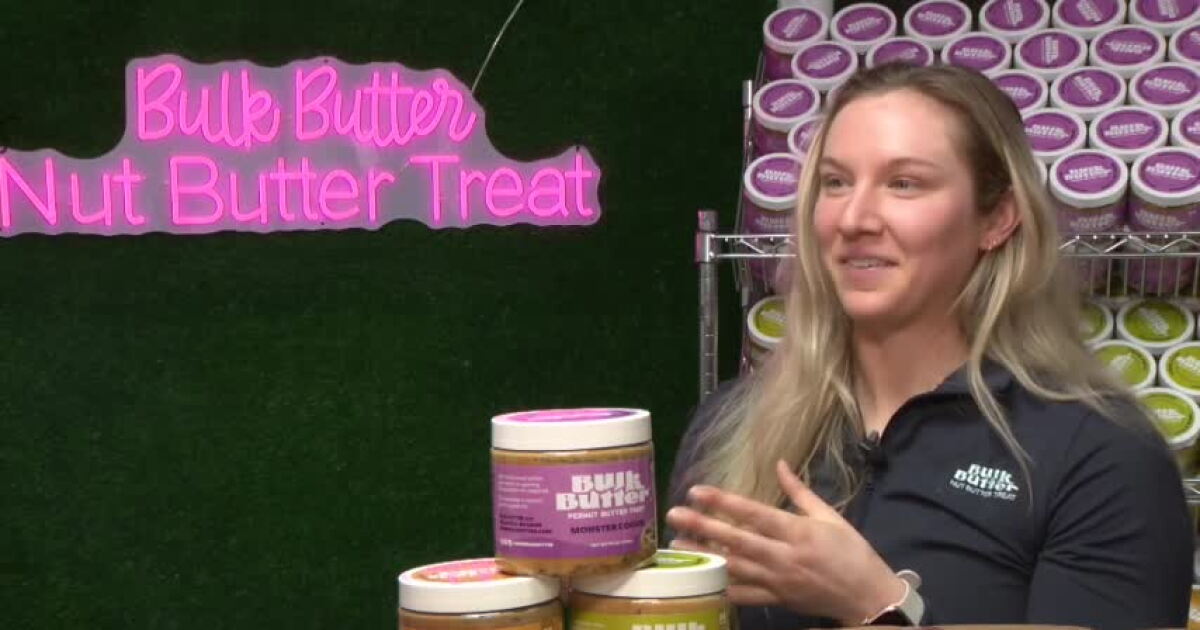
MUKWONAGO — Just two and a half years after launching her business, Emily Koltermann has transformed a simple idea into a growing Wisconsin brand found on the shelves of local supermarkets.
Koltermann, founder of Bulk Butter, created the company after searching for a healthier alternative to traditional sweet spreads.
“Bulk Butter is a lower sugar, better-for-you sweet treat,” she said. “We start with a natural peanut butter base and add in different fun inclusions. Think of your favorite treat or candy bar added to a jar of nut butter, minus all the added sugar plus additional protein.”
Unlike many commercial nut butters, Bulk Butter starts with natural peanut butter that contains no added sugar, salt, oils or emulsifiers. From there, Koltermann adds creative mix-ins that turn the spread into a dessert-inspired snack.
“Our best seller is our Monster Cookie,” she said. “We start with just a natural peanut butter base, blend it with white chocolate and then add toppings to both the top and bottom to make for a better-for-you sweet treat.”
Koltermann said the idea was born during her years as a nationally competitive bodybuilder. While training, peanut butter remained a staple in her nutrition plan because of its healthy fats, even though many people mistakenly assume lower-calorie foods are always healthier.
Watch: Wisconsin entrepreneur builds success with Bulk Butter
From Bodybuilding to Business: Wisconsin Entrepreneur Builds Success with Bulk Butter
“A lot of people think that lower calories equate to better for you than higher calories,” she said. “But as a competitor, I had peanut butter in my plan all throughout prep. We need those healthy fats as individuals for energy, fuel and proper body function.”
After competitions, she would celebrate with a simple indulgence.
“I love peanut butter, so after competing, I would take a spoonful of peanut butter and dunk it into chocolate chips. That was my little sweet treat,” she said. “So, I thought, put it in a jar, and I kind of ran with it.”
At the time, Koltermann was balancing national bodybuilding competitions with a full-time corporate job but wanted something more fulfilling.
“I felt very unfulfilled in the corporate life, so I wanted to find something that was fulfilling while also being passionate about it,” she said.
Building the business meant long days and even longer evenings.
“I knew nothing about the whole business background, and I wanted to just jump in on something and go 10 toes to the ground,” she said. “I was working my 9-to-5 job. In the morning, I would go to the gym, train, get my cardio in, work from 9 to 5, and then after work I would go to farmers markets to launch my product.”
That hard work has paid off. What began as a farmers’ market venture has grown into a regional brand, with Bulk Butter now available in numerous local supermarkets across Wisconsin.
For Koltermann, the company’s success is rooted in offering something different.
“We wanted to find a product that was lower in sugar and didn’t have all the added oils that most nut butters do,” she said. “We took a twist on your natural nut butter and added fun inclusions. We’re very different from your standard nut butter.”
Bulk Butter: Nut Butter Treat | Handcrafted & Small-Batch
Let’s talk:
Hey there! At TMJ4 News, we’re all about listening to our audience and tackling the stuff that really matters to you. Got a story idea, tip, or just want to chat about this piece? Hit us up using the form below. For more ways to get in touch, head over to tmj4.com/tips.
It’s about time to watch on your time. Stream local news and weather 24/7 by searching for “TMJ4” on your device.
Available for download on Roku, Apple TV, Amazon Fire TV, and more.
Report a typo or error // Submit a news tip

If you need help with the Public File, call (313) 222-0566
At WDIV, we are committed to informing and delighting our audience. In our commitment to covering our communities with innovation and excellence, we incorporate Artificial Intelligence (AI) technologies to enhance our news gathering, reporting, and presentation processes. Read our article to see how we are using Artificial Intelligence.
-

 Oregon4 minutes ago
The Cost of the Crackdown: How Trump’s immigration enforcement affects Oregon
-

 Pennsylvania11 minutes ago
Federal government sues Pennsylvania, others over SNAP data
-

 Rhode Island14 minutes ago
Target 12: State of RI’s fire hoses
-

 South-Carolina19 minutes ago
Mississippi State baseball lands Will Craddock, South Carolina transfer infielder
-

 South Dakota26 minutes ago
South Dakota Republicans reject censuring John Thune over stalled SAVE America Act
-

 Tennessee29 minutes ago
Flood watch in effect for Middle Tennessee: 2-3″ of rain expected Saturday
-

 Texas34 minutes ago
Texas state school board approves mandated reading list including Bible passages
-

 Utah41 minutes ago
Utah, Salt Lake County awarded grants for community cleanup

