Midwest
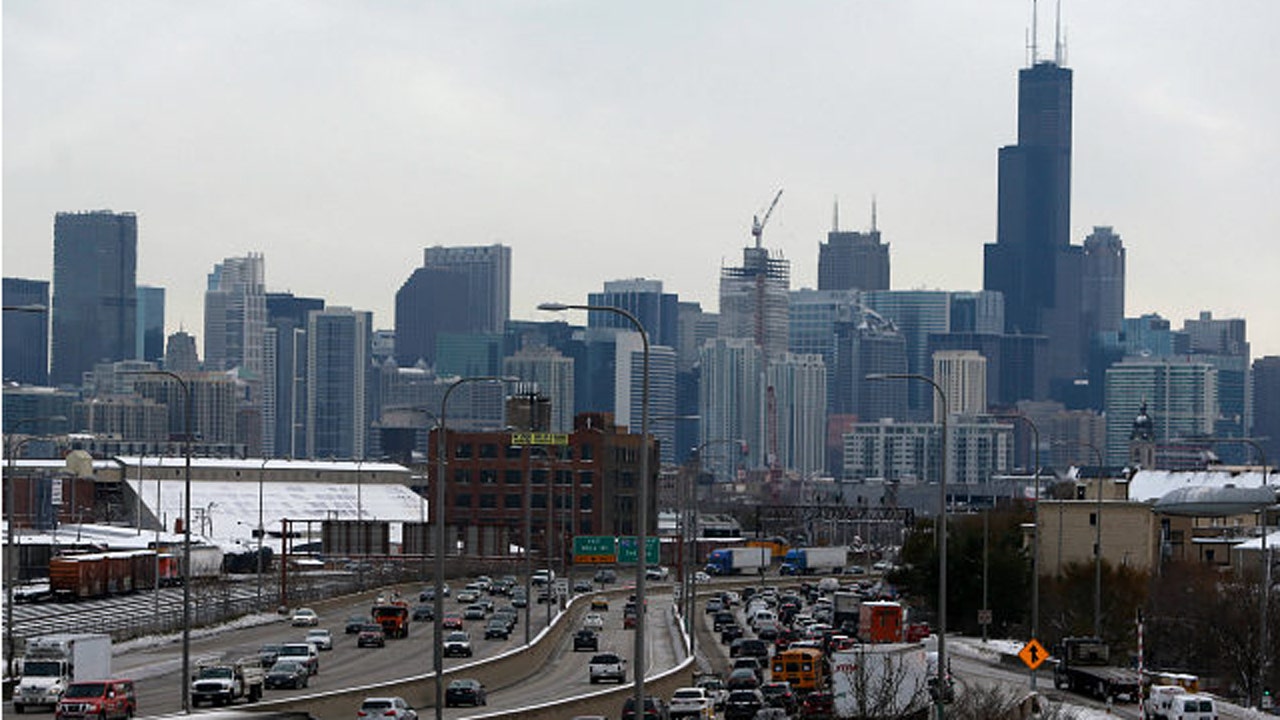
Illinois' population is aging 'faster' than the rest of the country, editorial warns

NEWYou can now listen to Fox News articles!
Illinois’ population of young people is dwindling, an editorial from the Chicago Tribune warned.
“A dwindling youth population means shrinking potential — not just economically, but in civic energy, creativity and community life. That’s bad news for a state that depends on young people to power its workforce and its future,” the editorial stated.
he Tribune’s editorial board described the conditions of an aging population in Illinois, adding that the Prairie State is “aging faster than the rest of the country.”
The editorial board of The Chicago Tribune urged Illinois Gov. J.B. Pritzker to take action on the issue, citing that the state “desperately” needs to “retain and attract young people.” (Anna Moneymaker/Getty Images)
The board urged Illinois Gov. J.B. Pritzker, D., to take action on the issue, citing that the state “desperately” needs to “retain and attract young people.” Pritzker signed legislation making college more accessible and affordable. The move came after Pritzker cited the Illinois Board of Higher Education’s research showing that nearly half of the state’s high school graduates were fleeing to colleges outside the state and not returning.
CHICAGO SCHOOLS FACE ENROLLMENT CRISIS WITH 150 BUILDINGS HALF-EMPTY
“There is a 70% likelihood that when they get to whatever that university is outside of Illinois, they’re not coming back,” Pritzker said at a news conference in March. “That’s a real problem, so we want to keep our best and brightest in the state.”
Other factors are driving the state’s aging population.
Illinois’ retiree population is growing. Currently, the median age is 39.4, five years older than in 2000, according to the editorial.
That is “rising steadily,” the board added. However, the state was younger than the rest of the country, on average, 25 years ago.
(Illinois’ population of young people is dwindling, an editorial from the Chicago Tribune warned. Beata Zawrzel/NurPhoto via Getty Images)
ILLINOIS PROJECTED TO SPEND $2.5B ON MIGRANTS BY END OF 2025, REPORT CLAIMS
The number of “prime-age working adults” declined in Illinois by 1% from 2020 to 2024, while the rest of the country increased by 2%.
The board detailed the cause of the declining population of young people is due to population loss, “outmigration,” and low birth-rates.
Illinois governor J.B. Pritzker signed a slate of legislation aiming to make college more affordable and accessible as young people flee the state and likely never return.
“Illinois faces a demographic double bind. Not only are fewer women of childbearing age remaining in the state because of persistent outmigration, but those who stay are having fewer children than their counterparts elsewhere. Our birth rate already lags behind most states — particularly those in the South and West — and the gap is growing,” the Tribune wrote. “The long-term implications for our workforce, tax base and economic vitality are hard to ignore.”
Read the full article from Here



The Detroit Lions are facing a significant dilemma regarding a player selected in the first-round of the 2024 NFL Draft.
Cornerback Terrion Arnold is facing multiple felony charges stemming from an alleged robbery and kidnapping plot in Florida.
When drafted, the former Alabama Crimson Tide defensive back signed a four-year, $14,343,710 contract. The agreement included a $7,251,788 signing bonus and an average salary of $3,585,928 annually.
So at this point, Arnold has been paid more than half of his contract.
This year, Arnold was set to earn a base salary of $1,273,974, which included a roster bonus of $825,000. His cap hit is $3,911,921 this year and has dead cap hit of $9,127,816.
If the Lions decide to cut the 23-year-old, they would be on the hook for dead cap costs, but could in the future recoup monies based on the league’s conduct policy.
According to Spotrac, “Lions Terrion Arnold has 2-years, $4.8 M (guaranteed) remaining on his rookie contract, plus a potential 5th-year option for the 2028 season. Any suspension stemming from a violation of the league’s conduct polict would void the guarantees.”
In the short term, cutting Arnold is not significantly beneficial. The organization could save money in the future depending on if his decisions are deemed to have breech the clauses in his first NFL contract.
Detroit has options at the cornerback position if Arnold is no longer a part of the organization. Nick Whiteside, Rock Ya-Sin, Keith Abney and Ennis Rakestraw are all in the mix to earn playing time opposite of veteran D.J. Reed.
“It’s just the depth. Like, you’ve got guys that have played in games and that’s what you want. It’s not like you’re guessing on what you’re getting. You know what you’re going to get from those guys and so another year in the system, another year competing, he’s (Whiteside) going to be better,” said defensive backs coach Deshea Townsend. “And just that’s the thing about the NFL, you got to have guys who go out there and compete and he’s another one that’s capable of playing and it’s going to push everybody else in the room.”
Currently, the team has $19,338,873 (17th) available in cap space, based on the top-51 players on the roster.
#Lions CB Terrion Arnold has 2-years, $4.8M (guaranteed) remaining on his rookie contract, plus a potential 5th-year option for the 2028 season.
Any suspension stemming from a violation of the league’s conduct policy would void the guarantees.
— Spotrac (@spotrac) June 25, 2026
For more comprehensive Detroit Lions coverage and NFL insider analysis, follow us on X, @detroitpodcast, head on over to our Facebook page and give it a like, follow us on TikTok, subscribe to the Detroit Lions On SI Lone Wolves YouTube Channel for daily videos, news, member-exclusive content.
Follow


Sneak peek inside the new Milwaukee Public Museum under construction
See inside the new Nature & Culture Museum of Wisconsin, the future successor to the Milwaukee Public Museum, under construction on Nov. 20, 2025.
The Milwaukee Public Museum has now packed 600,000 items from its collection of 4 million as the staff prepares to move them into their new home: The Nature & Culture Museum of Wisconsin at 1310 N. 6th St.
The staff could still be working through 2027 to move the remaining items, said Collections Move Project Manager Sara Podejko on June 24.
“We will continue packing here even after the future museum opens,” Podejko said.
According to the museum’s June report to the County Board’s committee on parks and culture, construction continues to move along on track, and the new site is expected to open mid-way through 2027.
About half of the total collection has already been inventoried, a painstaking process that has given the museum the opportunity to streamline its electronic storage system.
“There’s been a lot of work ongoing in the collections departments prior to digitize their material, but not everything was. And so, a real upside to this move is that we are able to not only inventory, but barcode all of our specimens,” Podejko said.
That barcode allows collection move technicians to easily input items into an inventory spreadsheet and immediately relocate them.
“It kind of eliminates some human error, which is really important when you’re dealing with four million things,” Podejko said.
Twenty-nine staff members are facilitating the move, including the technicians who were hired and trained specifically to move the artifacts.
“Every time they pack an object, they first assess it for its condition, weaknesses, areas of stability, and then they adapt the pack to that object itself,” Podejko said.
Many of the technicians are also recent graduates and early professionals looking to break into the museum collections scene.
“Collections can be difficult to get into and a job like this kind of gives them (a) foot in the door,” Podejko said.
The public museum’s current facility has continued to face structural challenges amid the move. In January, a passenger elevator failed and was out of service for two months. The only elevator was a small one for wheelchairs, which led to wait times as long as 30 minutes. During that time, an escalator was also taken out of service for repairs.
The museum’s 350-ton water-cooled chiller is also close to failure and needs bearing replacement to keep it functioning throughout the summer.

Sunshine and comfortable temperatures return Thursday before a weekend warm-up sends highs into the 90s. Heat index values could reach the triple digits early next week. FOX 9 meteorologist Jared Piepenburg has the forecast.
Posted
-

 Health26 minutes ago
Does Berberine Aid Weight Loss? The Best Time To Take It To Boost Results
-
 Lifestyle41 minutes ago
John Cena wanted to step away from the WWE ring before he became ‘too slow for the show’ : Wild Card with Rachel Martin
-

 Technology54 minutes ago
Here’s a bunch of Prime Day deals on keyboards, mice, and other peripherals we like
-

 World56 minutes ago
Israel slams UN report as ‘political blood libel’ for alleging deliberate targeting of Palestinian children
-

 Politics1 hour ago
Biden judge rejects Trump’s sanctuary cities lawsuit, says even a win wouldn’t solve DOJ’s problem
-

 Health1 hour ago
Latest COVID vaccine may have unexpected health benefit, study suggests
-

 Sports1 hour ago
How to watch USA vs Turkey: Live stream the 2026 FIFA World Cup
-

 Technology1 hour ago
Bionic hands are now teaching robots to feel

