Midwest
'I-70 Strangler' remains mysterious Midwest boogeyman, but private investigator has theory

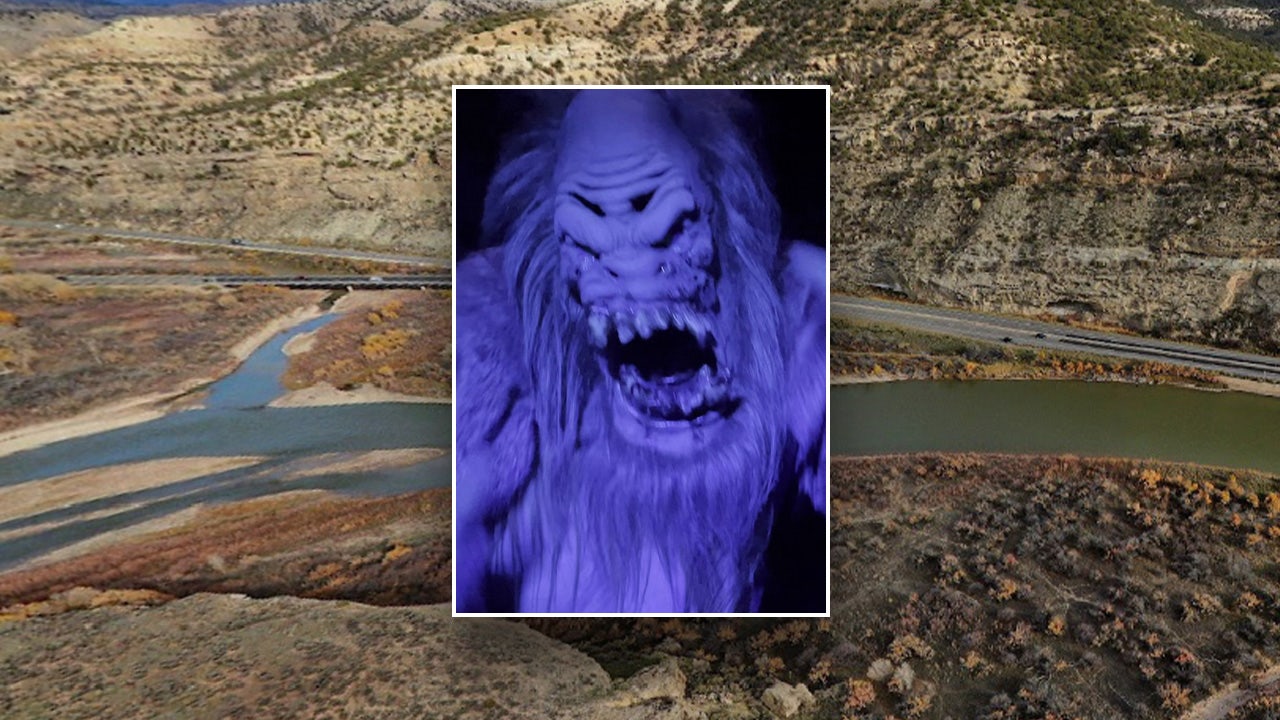
The “I-70 Strangler” has become a ghost story about a faceless boogeyman who hunted boys and men in the 1980s and 1990s.
At least 12 bodies were found partially nude and strangled and dumped in streams, gullies and trenches along Interstate 70 in Indiana and Ohio.
Over the years, investigators looked at two notorious serial killers – Larry William Eyler and Herb Baumeister – as the “I-70 Strangler,” but the theories never materialized into definitive proof.
Baumeister, whose property was littered with 10,000 “burnt and crushed” skeletal remains of his victims, is more commonly associated with the shadowy Midwest monster since a local retired, highly respected sheriff turned private investigator tied him to the killings.
‘I HAD A BRUSH WITH THE DEVIL’
About 10,000 remains of Herb Baumeister’s victims were dug up throughout his 18-acre Indiana property. (Google Street View/Indianapolis Police Department)
After Virgil Vandagriff retired as the sheriff of Marion County, Indiana, he received a pair of calls in the mid-1990s from families concerned about suspicious disappearances of loved ones.
Seemingly isolated missing persons cases became a hunt for a serial killer.
Both missing men were gay with similar heights, weights and appearances. They vanished on the way to bars, and that’s where he distributed flyers.
WATCH: KILLER EXPLAINS IN PRISON VIDEO ABOUT ‘WARPED LOGIC’ HOW SHE WASN’T RESPONSIBLE FOR HUSBAND’S DEATH
During his investigation, a publisher of a magazine focused on issues concerning the gay population alerted Vandagriff about a rash of missing men in the Indianapolis area that seemed to fit the same profile.
“It became obvious there was a serial killer,” Vandagriff told WTHR in a December 2022 interview. “Just had to figure out who, where and how to bring it to an end.”
The “Interstate 70 Strangler,” whose identity is still unknown, killed at least 12 boys and young men and dumped their bodies along the interstate in Indiana and Ohio. (Google Maps)
Interstate 70 from Indiana to Ohio has many different terrains, including water, gullies and wooded areas, where the bodies were dumped in the 1980s and early 1990s. (Google Street View)
Vandagriff took his findings to the police, but gay victims were considered a low priority for law enforcement at the time.
“It was shocking to me the number of gay people that were missing that no one would pay attention to,” Vandagriff told WTHR during the 2022 interview.
WATCH: HAUNTING FOOTAGE OF COP SHOOT-OUT WITH MAN SUSPECTED OF SLAUGHTERING FAMILY BEFORE HE VANISHED
Instead of waiting, the investigator took the case into his own hands and created a profile of the killer.
During the investigation, an informant who used a fake name said he had met a man named “Brian Smart,” a nickname used by Baumeister when he frequented local watering holes.
Interstate 70 from Indiana to Ohio has various terrain, including water, gullies and wooded areas, where the bodies were dumped in the 1980s and very early 1990s. (Google Street View)
The informant survived a confrontation with Baumeister and saw him again in a bar and reportedly yelled, “This guy’s a serial killer. Somebody get his license plate number,” Vandagriff told WTHR.
Not surprisingly, that license plate came back to Baumeister, which led law enforcement to his secluded, 18-acre property at Fox Hollow Farm in Westfield, Indiana.
WATCH: TYLENOL MURDERS SUSPECT RELAXES AS HE CALLS COPS ‘STUPID’ FOR MISSING ‘BIG BLUNDER’
Law enforcement ultimately dug up 10,000 “burnt and crushed” skeletal remains around Baumeister’s home in the 1990s, including those of Vandagriff’s two missing persons.
Before he bought the vast property in 1991, investigators believe Baumeister had dumped his victims along I-70, but he died by suicide after fleeing to Canada as his life spiraled into a tailspin.
His marriage crumbled, his businesses went bankrupt, and there was a warrant for his arrest.
SIGN UP TO GET TRUE CRIME NEWSLETTER
About 10,000 remains of Indiana serial killer Herb Baumeister were found on the 18-acre Westfield, Indiana, property. (Google Street View)
He shot himself in July 1996 and took all his secrets to the grave.
The Hamilton County Coroner’s Office teamed up with Othram, one of the country’s leading forensic genetic genealogy labs, to identify Baumeister’s victims three decades after his death.
So far, the Hamilton County Coroner’s Office has identified eight victims, and investigators have four more DNA profiles that have not been identified yet, which brings the body count up to 12, according to Hamilton County Coroner Jeff Jellison.
GET REAL-TIME UPDATES DIRECTLY ON THE TRUE CRIME HUB
Jeffrey A. Jones, who was reported missing from Fillmore, Indiana, in 1993, was identified as the latest victim of serial killer Herb Baumeister. (Hamilton County Coroner’s Office)
Manuel Resendez, who was 34 when he seemingly vanished in 1996, was identified as one of Herb Baumeister’s victims in January 2024. (Hamilton County Coroner’s Office)
Investigators have tied Baumeister to at least 25 victims, but he was never definitively named as the “I-70 Strangler,” and neither was the other prime suspect, Eyler, who is believed to have murdered at least 21 victims around the same time.
His victims were also boys and young men in the gay community from the same area. Eyler was sentenced to death by lethal injection.
The “I-70 Strangler” and “I-70 Killer” are two different – but still unknown – serial killers who murdered their victims in the same area.
But the “Strangler’s” killings appeared to be sexually motivated, and the victims were male, while the “I-70 Killer’s” victims didn’t have evidence of sexual assault and were typically young women.
Read the full article from Here

Wisconsin
A Wisconsin family is suing Target after their 10-month-old died from swallowing a water bead

A Wisconsin family lost their ten-month-old daughter after she swallowed a water bead. They blame Target and the water bead manufacturer for her death.
This week, Taylor and Tyler Bethard filed a lawsuit against Target in Hennepin County, claiming that the company failed to warn them and other customers about the dangers of a water beads product that used to be sold exclusively at Target.
Water beads are marketed as toys that come with sensory kits or craft sets, but data shows the products are prone to injuring young children. The polymer material is extremely absorbent, allowing water beads – which are often colorful – to expand around 100 times their original size when they interact with water or liquid. This presents a hazard for kids; the United States Product Safety Commission states that between 2017 and 2022, there were 6,300 water bead-related ingestion injuries that required treatment from emergency departments across the country.
In 2023, a 10-month-old girl died. Her name is Esther “Jo” Bethard. According to court filings, Taylor Bethard found her daughter unresponsive in her crib on the morning of July 7, 2023, after she had suffered symptoms of a stomach illness overnight. Medical examiners told the family that her death was caused by swallowing a single water bead.
The Bethards had purchased a Chuckle and Roar water bead set in the spring of 2022 for Esther Jo’s older siblings, never intending for the infant to interact with the water beads.
Target and the Chuckle and Roar manufacturer, Buffalo Games LLC, mutually agreed to pull the product from the shelves in November of 2022. Court records show an email exchange between Buffalo Games and a product safety employee at Target where the manufacturer noted that while their water beads had met safety standards at the time, they wanted to “avoid any future unintended misuse of the product.”
That conversation was prompted after Buffalo Games was informed that an infant required surgery after ingesting a water bead from the Ultimate Water Beads kit. Target agreed to end sales, indicating that this would be classified as a “safety removal.”
The Bethard’s lawsuit alleges that Target clearly knew how dangerous these water beads could be, but failed to warn them or other customers. Target stopped selling the product about eight months before Esther Jo died. Daniel Mann, a personal injury attorney representing the Bethards in this case, said that Esther Jo would still be alive if Target had acted.
“With all this information Target didn’t do anything to reach out to the family or other consumers to let them know about this problem,” Mann said, “I think 10/10 people would say Target had a responsibility to do more than what they did, which was nothing.”
A spokesperson for Target said that they would not comment on ongoing litigation, but the company had already responded to an identical complaint filed by the Bethards in the State of New York. In 2025, the Bethards sued both Target and Buffalo Games in Erie County, N.Y., because that was where the manufacturer was based. In response to the lawsuit there, court filings show that Target denied the allegations that they knew of an extraordinary danger posed by the water beads and failed to notify customers.
The complaint was dismissed against Target in New York, Mann explained, due to jurisdiction. This lead to them refiling in Hennepin County this week.
In a statement to WCCO on the new legal action, a Target spokesperson said “We extend our deepest sympathies to those affected by this tragedy, and we worked closely with the manufacturer of the product at the time the incident occurred.”
Taylor Bethard, Esther Jo’s mother, has lead the charge to ban water beads entirely. Her efforts lead to the United States Consumer Product Safety Commision recalling the more than 52,000 Chuckle and Roar Ultimate Water Beads Activity Kits that were in circulation. The recall took effect in September of 2023. Target, Walmart and Amazon announced that they would stop marketing water beads to children.
Bethard is also working with Wisconsin U.S. State Senator Tammy Baldwin to establish federal legislation to permanently outlaw all water beads. This past spring, the CPSC established new legal guidelines that restrict the size of water beads to try to ensure high safety standards.

Every seat in the Michigan Senate is up for election this year, and eight of those districts are in Wayne County.
In the 4th, 5th and 8th Districts, only one Republican and one Democrat filed for election, meaning those candidates will automatically be nominated and move on to the November ballot. Here are The Detroit News endorsements in the five contested Senate primaries in Wayne County:
1st District (Southwest Detroit and parts of Downriver, including Taylor, Melvindale and Lincoln Park): Two Detroit Democrats are competing for this seat: Abraham Aiyash and Justin Onwenu.
Aiyash is a former state representative who is hoping to return to the Legislature after a two-year absence. He is a progressive whose policy positions align with Democratic socialists.
Onwenu is an attorney who served the Mike Duggan administration as Detroit’s first Director of Entrepreneurship and Economic Opportunity, helping small businesses get a start in the city. Before attending Columbia Law School, where he was president of the student body from 2023 to 2024, Onwenu worked to combat air and water pollution in Detroit, Ecorse and River Rouge.
In the Senate, he promises to be a supporter of legislation to strengthen neighborhoods by lowering property taxes and investing in infrastructure.
He also supports stronger transparency and ethics rules for lawmakers. Justin Onwenu gets our endorsement in the 1st District Democratic primary.
Patrick O’Connell of Ecorse is unopposed in the Republican primary.
2nd District (Northwest Detroit, Dearborn Heights and part of Dearborn): The district is currently represented by Sylvia Santana, who made an unsuccessful bid to be nominated for the Michigan State University board.
The Democratic primary features two Dearborn residents who are hoping to replace Santana: Erin Byrnes and Abbas Alawieh.
Alawieh describes himself as a political strategist, community organizer and pro-peace advocate. He is supported by the Michigan Democratic Party’s Progressive Caucus and aligns with many of its anti-growth positions.
Byrnes is currently a state representative in her second term. Like her opponent, she is well to the left of center on the political spectrum. In the Legislature, she has pushed for utility rate controls.
The two Democrats are similarly positioned. Our choice in the 2nd District is Erin Byrnes, based on her legislative experience.
Harry Sawicki of Dearborn Heights is unopposed in the Republican primary.
3rd District (Detroit, Warren and Madison Heights): The contest to replace incumbent Stephanie Chang has drawn a long list of candidates. The 3rd District starts near Downtown Detroit and stretches north through the center of the city into southern Oakland and Macomb counties.
Eleven Democrats, all from Detroit, are competing in the primary. They are: Mohammad Alam, a Bangladeshi immigrant and Army veteran; LeJuan Council, a property manager and small business owner; John Conyers III, son of the late congressman; LaTanya Garrett, a former state representative; Korey Hall, a former director of community affairs in the Whitmer administration; Adam Hollier, a former state senator; Gary Hunter, a former candidate for Detroit City Council; Kimberly Hill-Knott, former head of the Detroit Climate Action Collaborative; Toinu Reeves, an economist, Abraham Shaw, who owns an auto repair shop, and Eboni Taylor, a community advocate.
There are several interesting and impressive candidates in this race, including Conyers, who just wrote about his father. Garrett has legislative experience, as does Hollier, whom we’ve endorsed in his previous runs for public office.
But we are most impressed with Reeves, a newcomer to politics who brings top-notch credentials to the race. Reeves grew up on Detroit’s east side and is an economist who attended Wayne State University and Dartmouth College.
He serves as chair of the Economic Development Workgroup for Detroit’s District 4 Community Advisory Committee and on the Jefferson-Chalmers Community District Council. He is a former school teacher and autoworker.
Toinu Reeves offers fresh ideas and much-needed skills, and gets our endorsement in the 3rd District Democratic Primary.
Mark Ashley Price is unopposed in the Republican primary.
6th District (Redford Township, Farmington and Farmington Hills): Incumbent Mary Cavanaugh is defending her seat from a challenge from fellow Democrat Stephen Jensen, who shows no signs of a campaign. Both are from Redford.
Mary Cavanaugh, granddaughter of the late Detroit Mayor Jerome Cavanaugh, has served her district well and should be renominated for a second term.
Joi Pokerwinski of Redford Township is unopposed in the Republican Party.
12th District (Parts of Wayne, Macomb and St. Clair counties, including Algonac, the Grosse Pointes, St. Clair Shores, Harper Woods, Mount Clemens and New Baltimore): Incumbent Sen. Kevin Hertel of St. Clair Shores is unopposed in the Democratic primary. Five Republicans are competing in their primary to face him in November.
They are: Joseph Backus of St. Clair Shores, a prolific community volunteer who has run unsuccessfully for other offices; Patrick Biange of St. Clair Shores; John Goldwater of New Baltimore, an oil and gas entrepreneur; Eileen Tesch, the former mayor of Algonac who faced recall efforts, and Shelley Wright, a former general contractor and owner of a process serving company who says Donald Trump inspired her to politics.
John Goldwater has experience growing a business and creating jobs. He would also prioritize improving skilled trades training. The father of six is a conservative who describes himself as pro-life and a defender of the Second Amendment.
Our endorsement in the 12th District Republican primary goes to John Goldwater.

MILWAUKEE, Wis. – Several Milwaukee leaders are condemning recent Immigrations and Customs Enforcement activity in the city, though questions remain whether actions meant to limit the agency within city limits can be enforced.
The group led by U.S. Congresswoman Gwen Moore expressed anger at the nature of the at least 57 confirmed arrests made by ICE agents across Wisconsin during “targeted operations” that began in late June.
“They’re being kidnapped. They’re being disappeared. They’re being rushed through a judicial process without due process because they don’t have any money. And we’re here to decry that,” said Moore during a press conference July 9.
Back in April, Milwaukee Common Council members unanimously passed one of the key pieces of their “ICE Out MKE” package: an ordinance that prohibited ICE agents from wearing masks while working in the city. But the Department of Homeland Security has indicated they will not adhere to the ordinance, with representatives asserting the US Constitution’s Supremacy Clause allows for federal laws to supersede any local ordinance.
“State and local sanctuary politicians attempting to ban our federal law enforcement from wearing masks is despicable and a flagrant attempt to endanger our officers,” said an ICE spokesperson in a statement to WTMJ. “To be crystal clear: we will not abide by unconstitutional bans. The Supremacy Clause makes it clear that state and local sanctuary politicians do not control federal law enforcement.”
During the recent arrests, ICE agents were spotted by groups like Voces de la Frontera wearing masks despite the ordinance. Agents also used the Milwaukee Police Department District 2 parking lot for staging purposes, which is against another “ICE Out” city ordinance. A statement from MPD said they were not told in advance that ICE intended to use the parking lot, and then asked them to leave.
No citations have been written by Milwaukee Police against any agents who have violated the mask ban, with the department citing the need for legal clarity from City Attorney Evan Goyke.
“We’re waiting to see what the city attorney’s advice will be on that,” said Milwaukee Mayor Cavalier Johnson July 9 when asked by WTMJ if any of the “ICE Out” package is enforceable.
ICE says those arrested will remain in custody pending removal proceedings.
TOP STORIES FROM THE WTMJ NEWSROOM:
-

 Wisconsin3 minutes ago
A Wisconsin family is suing Target after their 10-month-old died from swallowing a water bead
-

 West Virginia9 minutes ago
How midsummer wild berries connect people, wildlife, and West Virginia’s forests – West Virginia Explorer
-

 Wyoming12 minutes ago
Fourth Annual Wyoming Firearms & Outdoor Recreation Expo, Wyoming Governor’s Match returning to Casper July 18, 19
-

 Crypto17 minutes ago
Bitdeer Invests $36 Million in First US Sealminer Factory as Bitcoin Mining Margins Stay Tight
-

 Finance25 minutes ago
How AI Is Evolving in Sage Intacct and What It Means for Finance Teams | CBIZ
-

 Fitness28 minutes ago
Tim Henman, 51, Has Barely Aged Since Retiring – Here’s His Fitness Formula
-

 Movie Reviews39 minutes ago
‘Evil Dead Burn’ Movie Review – Spotlight Report
-

 World48 minutes ago
Hoops Players’ Win Tops Big Day in NCAA Eligibility Litigation

