Midwest
Black students dismiss University of Michigan’s DEI programs as ‘well-meaning failure’: Report

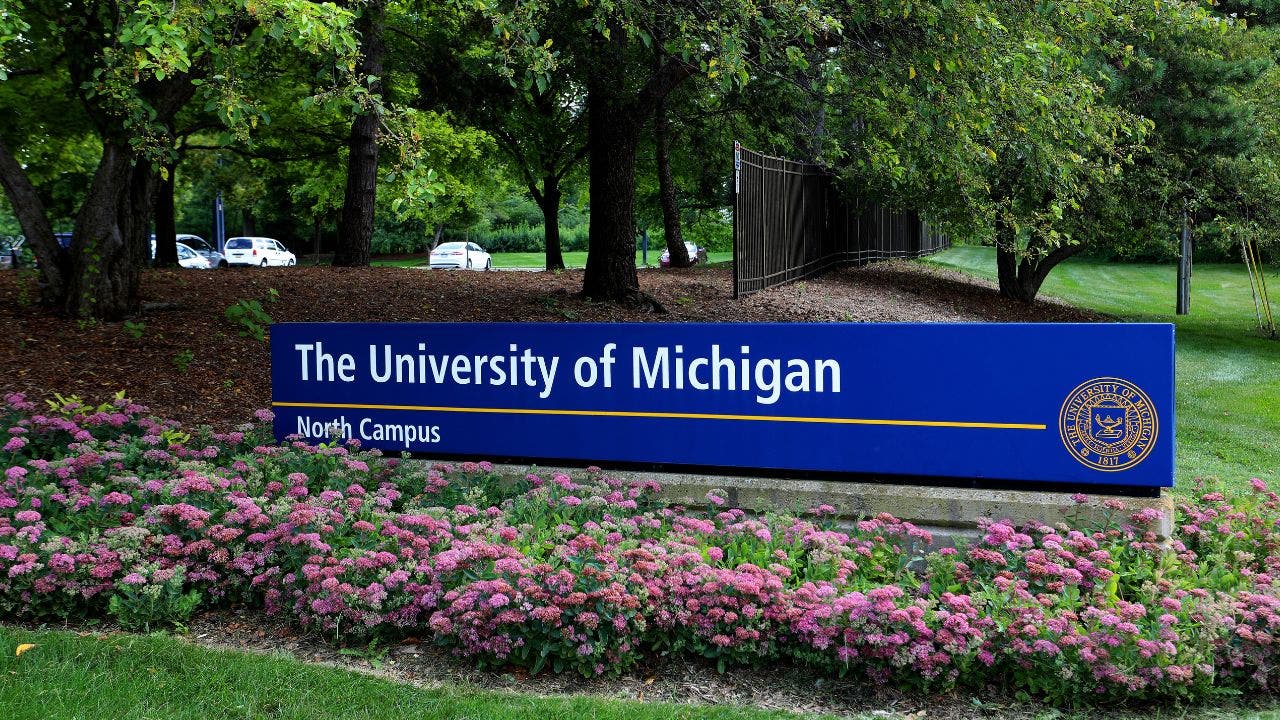
Black students at the University of Michigan (UM) told The New York Times Magazine that the institution’s plethora of diversity, equity, and inclusion (DEI) initiatives are a failure.
“D.E.I. at Michigan is rooted in a struggle for racial integration that began more than a half-century ago, but many Black students today regard the school’s expansive program as a well-meaning failure,” NYT Magazine columnist Nicholas Confessore wrote.
Confessore added that the university serves a larger population of Hispanic, Asian and first-generation students, and a “more racially diverse staff.” He added that while Blacks make up 14 percent of Michigan’s population, only 5 percent of students at UM are Black.
HIGH SCHOOL SENIORS FROM THE NORTH FLOCK TO SOUTHERN UNIVERSITIES: REPORT
The University of Michigan North Campus signage at the University of Michigan in Ann Arbor, Michigan on July 30, 2019. (Raymond Boyd/Getty Images)
One student called UM’s diversity efforts “superficial” and, despite the institution’s programs, they betrayed “a general discomfort with naming Blackness explicitly.”
Princess-J’Maria Mboup, the speaker of the university’s Black Student Union, told Confessore that “the students that are most affected by D.E.I. — meaning marginalized communities — are invested in the work, but not in D.E.I. itself.”
Furthermore, Confessore added that Mboup’s “discontent” reflected a tension he found “threaded throughout DEI” at UM. More precisely, he found a “pervasive uncertainty around whom—and what—DEI is really for.”
After meeting with students with a “wide range of backgrounds and perspectives,” Confessore wrote that “not one expressed any particular enthusiasm for Michigan’s D.E.I. initiative.”
“Where some found it shallow, others found it stifling. They rolled their eyes at the profusion of course offerings that revolve around identity and oppression, the D.E.I.-themed emails they frequently received but rarely read,” he added.
UNIVERSITY OF NEW MEXICO DEALT LEGAL BLOW AFTER CHARGING ‘HEFTY’ FEE AGAINST CONSERVATIVE SPEAKER: ‘MAJOR WIN’
A police car patrols the University of Michigan campus. (UMich)
He explained further that UM’s “own data” suggests that in its pursuit of diversity and equity, the academic institution has become less inclusive via a survey in 2022 showing “students and faculty members reported a less positive campus climate than at the program’s start and less of a sense of belonging.”
Confessore went on to write, “Students were less likely to interact with people of a different race or religion or with different politics — the exact kind of engagement D.E.I. programs, in theory, are meant to foster.”
Another criticism of UM’s DEI efforts came from a member of the university’s Board of Regents: Mark Bernstein, a lawyer and a Democrat.
Berstein told Confessore, “D.E.I. here is absolutely well-intentioned, extremely thoughtful in its conception and design.”
He added, “But it’s so virtuous that it’s escaped accountability in a lot of ways.”
One University of Michigan student called the school’s DEI efforts “superficial” and added that, despite the institution’s programs, they betrayed “a general discomfort with naming Blackness explicitly.”
“Everyday campus complaints and academic disagreements, professors and students told me, were now cast as crises of inclusion and harm, each demanding some further administrative intervention or expansion,” Confessore wrote.
“On a campus consumed with institutional self-criticism, seemingly the only thing to avoid a true reckoning was D.E.I. itself.”
The University of Michigan did not immediately respond to Fox News Digital’s request for comment.
Read the full article from Here


There was a time when many Historical Black Colleges had swimming teams. The late Robert ‘Fish’ Jenkins benefited from that era and then he spent much of his adult life lifting up youths in Detroit.

Black heritage tours teach travelers what they missed in history class
So much of America’s Black history isn’t taught in schools, but travelers can learn about some of those experiences on the road.
Cody Godwin, USA TODAY
The celebration of Black History Month throughout February provides an opportunity to share stories about Detroiters that have positively impacted the lives of others in a variety of ways.
And included among those stories that have been shared this month is a “Fish” story that is unique, without exaggeration.
That is because this story is about the late Robert “Fish” Jenkins Sr., a longtime Detroit educator and a groundbreaking coach, whose superpower was his ability to create life-changing opportunities for young people in unconventional spaces.
In 1969, Jenkins arrived at Detroit’s Northern High School as a physical education teacher and coach. During Northern’s heyday, the high school, formerly located on Woodward Avenue at Owen in the city’s North End, produced a host of high-profile sports stars, including basketball greats Bill Buntin — a two-time All-American center at the University of Michigan during the 1960s — and Derrick Coleman — the first overall pick in the 1990 NBA draft. And record-breaking sprinter Marshall Dill, Track & Field News’ High School Athlete of the Year in 1971, who set world records in the 300-yard dash while running for Michigan State University.
However, Jenkins specialized in coaching sports that were a little less popular among young people in Detroit, particularly Black students. Jenkins coached teams at Northern — and for one year at East English Village Preparatory Academy after he retired from teaching in 2001 — to 24 Detroit Public School League championships in swimming, golf and soccer.
“No matter what the sport was, he had the formula to make a team a champion,” Robert Jenkins Jr. said about his father, who died on Jan. 14 at the age 86.
“But more than that, my father had a profound impact on the minds of every student he touched. He brought golf, and all the lessons golf teaches, to the North End. And, in the summer, he had members of the swim team teach the younger kids in the neighborhood how to swim, which taught his swim team members how to give back to the community.”
During the evening of Feb. 22, Robert Jenkins Jr. took pride in sharing stories about young people who were coached and mentored by his father across multiple decades that went on to become “doctors, educators, business leaders, and parents” that have made positive contributions to the city of Detroit.
Robert Jenkins Jr. also described some of the friendly interactions that his dad had with notable people like U.S. Olympic sprint champion Wilma Rudolph and Naismith Memorial Basketball Hall of Famer Dick Barnett at Tennessee State University, where the elder Jenkins received the education and training that he needed to teach and coach student-athletes in Detroit.
But earlier that day, an equally compelling “Fish” story was told by another community member.
“Mr. Jenkins was a very important person in my life and he is one of the reasons why I have always tried to do my part when it comes to providing opportunities for young people in our city,” said Gary Peterson, who has coached young swimmers in Detroit for 47 years, including at Detroit’s King High School, where he coaches boys and girls swimmers today.
Long before Peterson coached high school swimmers — and youth swimmers of virtually all ages when he was a full-time swimming instructor for the city of Detroit’s Recreation Department — Peterson was on the swim team at King High School (Class of 1974), when Robert Jenkins Sr. came into his life.
“There were coaches at other schools that helped young swimmers that wanted to improve and go to another level, and Mr. Jenkins was one of those coaches,” said Peterson, who was coached at King High School by Clyde James, a lifelong friend and teammate of Jenkins on the Tennessee State University swimming team during the late 1950s and early 1960s, when they brought national attention to the school’s swimming program.
“Mr. Jenkins would make his pool at Northern available to students from other schools that wanted to get in extra practice. Then, as I got closer to going to college, Mr. Jenkins was the person who introduced me to the colleges that were recruiting Black high school swimmers.
“At that time, there were more than 20 HBCUs (Historically Black Colleges and Universities) that had competitive swimming programs. Today, there is only one (Howard University in Washington, DC). But back then, Mr. Jenkins wanted to make sure we had the opportunities and exposure, which included sending a small group of us to South Carolina State for a recruiting trip.
“Afterwards, Mr. Jenkins even came over to King from Northern to present me with my scholarship to South Carolina State, while I was sitting in a King classroom. I couldn’t believe it and I was ecstatic, but everything that he did for me and other young swimmers in the city he did so willingly. And that’s what I always thought I was supposed to do as a coach.”
Peterson said he would do even more with Jenkins when Peterson returned to Detroit from Orangeburg, South Carolina, after graduating from college.
“In the late 1980s, a team I was coaching at Johnson Recreation Center and Mr. Jenkins’ team at Northern, traveled to Washington DC as one team in February to compete in the Black History Invitational Swim Meet. And that tradition of Detroit competing as one team at that meet continued every year until COVID,” said Peterson, who also recalled that Jenkins coached softball and even junior varsity football for a time, in addition to swimming, golf and soccer.
“Just as Mr. Jenkins thought it was critical for us to come together and take our kids to DC for that swim meet because it was the biggest showcase for Black swimmers, he wanted all the young people he coached to have good training and exposure. And in my case, as the son of sharecroppers, I can say that Mr. Jenkins inspired me as well, as a swimmer and a coach.”
Every time Peterson walks into King High to coach the current group of swimmers at the school, he said he is reminded of Jenkins and other important people that paved the way for Black swimmers in Detroit.
For example, in 2023, the natatorium at King was rededicated as the Clyde James Natatorium by the Detroit Public Schools Community District. Peterson says the renaming was not only a salute to James, who was a finalist in the National Association of Intercollegiate Athletics Championships in the 100-yard butterfly during the 1960-61 season while swimming for Tennessee State, but also a tribute to the fabled swimming program that was once housed at the Brewster Recreation Center, which helped to develop James, Jenkins and many other Detroit swimmers that competed nationally. Brewster’s early swimming program was led by the legendary Clarence Gatliff, an all-city swimmer at Cass Tech during the 1920s.
Another pleasant reminder of the history and evolution of Black swimmers in Detroit that Peterson sees when inside King High is 54-year-old Robert Jenkins Jr., an educator like his father, who is teaching personal finance this school year at King and hopes to honor his father’s legacy this summer by offering a swimming and golf program to students.
“I want to make sure that Detroiters understand my father’s legacy,” said Jenkins, a 1989 graduate of Northern High School, who explained that his father and mother (Norma Jean Jenkins) taught him and his sister (Dr. Marlo Rencher) that “we don’t half do anything.”
And that includes community service.
“My father was a servant leader and he would offer encouragement to any young person he was around, not just the students he coached. And paying it (that support) forward was a lesson he always taught in the process.”
Scott Talley is a native Detroiter, a proud product of Detroit Public Schools and a lifelong lover of Detroit culture in its diverse forms. In his second tour with the Free Press, which he grew up reading as a child, he is excited and humbled to cover the city’s neighborhoods and the many interesting people who define its various communities. Contact him at stalley@freepress.com or follow him on Twitter @STalleyfreep. Read more of Scott’s stories at www.freep.com/mosaic/detroit-is/. Please help us grow great community-focused journalism by becoming a subscriber.

A Milwaukee County judge on Thursday, Feb. 26, criticized the smell of marijuana inside the courthouse during a sentencing hearing, calling it inappropriate and illegal as visitors described the odor as common.

A Minneapolis family is struggling to make sense of a tragedy that has left them heartbroken.
Family tells WCCO 14-year-old Xavier Barnett and 23-year-old Akwame Stewart were killed Monday.
The brothers were very different, but equally loved. Barnett was a good student and athlete. Stewart was a painter, creative and thoughtful. Two brothers, loved and full of promise, gone.
Police say the accused shooter is their cousin, 23-year-old Eddie Duncan.
Court records show Duncan was released on bail Monday on charges of fleeing law enforcement and possession of a gun modified with an “auto sear switch.”
Court records also show Duncan was ordered to undergo a psychological evaluation, but not until next month, on March 24.
Deasia Freeman, Barnett and Stewart’s sister, says this loss could have been prevented.
“They all failed us. We got two innocent lives gone for no reason. Didn’t do nothing to nobody,” Freeman said.
Family members say the system and Duncan’s family let them down.
Freeman says Duncan’s family saw the warning signs and still bailed him out
“If you knew this man was thinking like this, y’all should have kept him in there and he should not even have bail,” she said.
The Hennepin County Attorney’s Office says they noted Duncan was a public safety risk and asked for a high bail, much higher than a typical request.
“In Minnesota, there is a constitutional right to bail, and the bail amount is set by the Court. Our office noted a public safety risk with Mr. Duncan and asked the judge to set bail at $70,000, or $35,000 with conditions; both of which are higher than we would typically request in this scenario. The judge set bail in that amount. Mr. Duncan posted $35,000 bail with conditions of release, as is allowed under the Minnesota Constitution, and was released from custody. Our thoughts are with all those impacted by yesterday’s violence. This was a terrible tragedy for this family and our community,” a spokesperson for the Hennepin County Attorney’s Office said.
For Freeman and her family, the hardest part isn’t just the legal process but living each day without their brothers.
Even in the heartbreak, she says the memories of the good days, the laughter and love they shared will carry them through.
“I wish I could get just one more phone call from them asking me where I’m at,” Freeman said as tears rolled down her face.
Court records confirm Duncan left the scene of the crime and fled to nearby Brooklyn Center. There, a search warrant says Duncan “fired a gun at officers, striking two squads,” when police arrived. That’s when officers returned fire, shooting and killing him.
Three officers have been placed on critical incident leave as the Minnesota Bureau of Criminal Apprehension leads the investigation into Duncan’s fatal shooting.

Robert ‘Fish’ Jenkins helped Detroit students soar in sports and life

San Francisco court clerks strike for better staffing, training

Mavericks vs Kings Final Score: Dallas falls to Sacramento, 130-121

Red Sox insider hints Boston may have Pablo Sandoval problem with Masataka Yoshida

David Fountaine Black Obituary | The Denver Post

Florida High School Football Rankings: Top 25 teams – Oct. 21

Cleary's 21 help Le Moyne down Central Connecticut State 69-64 in OT

How old is Bo Nix? What to know about Oregon quarterback ahead of 2024 NFL Draft

99th annual Pony Swim held in Virginia

Indiana Members Credit Union announced as new anchor tenant at Bottleworks District

Read Judge Schiltz’s Order

Vulnerable House Dem lashes out at Trump’s ‘racist’ SOTU challenge: ‘That was uncomfortable’

Italy calls for suspension of EU carbon market

Chicagoans pay respects to Jesse Jackson as cross-country memorial services begin

DHS shutdown triggers TSA ‘emergency measures’ as lawmaker warns airports could feel economic pain
-

 World1 day ago
Exclusive: DeepSeek withholds latest AI model from US chipmakers including Nvidia, sources say
-

 Massachusetts2 days ago
Mother and daughter injured in Taunton house explosion
-

 Montana1 week ago
2026 MHSA Montana Wrestling State Championship Brackets And Results – FloWrestling
-

 Oklahoma1 week ago
Wildfires rage in Oklahoma as thousands urged to evacuate a small city
-

 Louisiana4 days ago
Wildfire near Gum Swamp Road in Livingston Parish now under control; more than 200 acres burned
-

 Technology6 days ago
YouTube TV billing scam emails are hitting inboxes
-

 Denver, CO2 days ago
10 acres charred, 5 injured in Thornton grass fire, evacuation orders lifted
-

 Technology6 days ago
Stellantis is in a crisis of its own making