Lifestyle
‘What you see is really me,’ says ‘Wicked’ star Cynthia Erivo

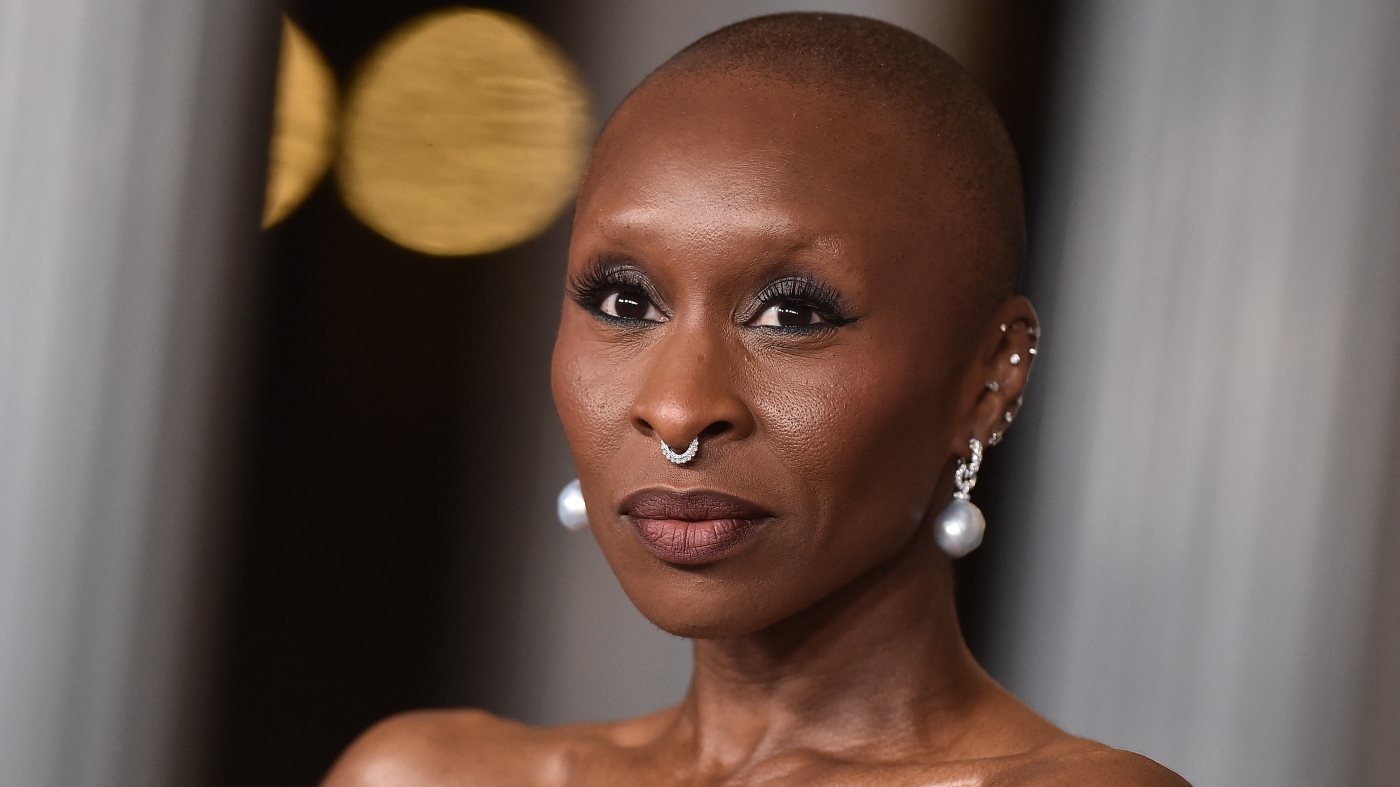
Cynthia Erivo attends LACMA Art+Film Gala at the Los Angeles County Museum of Art on Nov. 1, 2025.
Lisa O’Connor/AFP via Getty Images
hide caption
toggle caption
Lisa O’Connor/AFP via Getty Images
There’s a moment in the new movie, Wicked: For Good, when Elphaba, the so-called Wicked Witch, stops defending herself to a world that has misunderstood her and embraces her own power. Cynthia Erivo, who plays Elphaba, sees a connection between her character’s trajectory and her own.
“There were so many sort of real parallels — the relationship with her father, the relationship to being in spaces that don’t really include you,” Erivo says. “The feelings you see in the movie are very real feelings.”
Erivo grew up in London as the child of Nigerian immigrants. From an early age, it was evident that she had a powerful singing voice. She attended the Royal Academy of Dramatic Art, but felt like an outsider.
“It was a tough experience to be there. I just didn’t think I fit,” she says. “And I think there was sort of a lack of wanting to understand where I was coming from or who I was as a person.”

Erivo first broke through on Broadway in The Color Purple, winning a Tony Award for her portrayal of Celie. She went on to earn an Oscar nomination for her portrayal of Harriet Tubman, and later played Aretha Franklin in Genius Aretha.
In Wicked: For Good, Erivo reprises her role as Elphaba, alongside Ariana Grande as Glinda, in this final chapter of the Wicked story. Both Wicked movies were filmed at the same time, which proved challenging at times.

“There were days where, luckily, you would sort of know where the character was at this point [in the story],” Erivo says. “But there were some times where you’re sort of guessing really, because you hadn’t shot a certain scene, you’re just sort of assuming that the scene is gonna feel this way.”
Erivo also has a new memoir, Simply More: A Book for Anyone who Has Been Told They’re Too Much, which details her childhood in South London and her path to the stage.

Erivo reprises her role of Elphaba in Wicked: For Good.
Giles Keyte/Universal Pictures
hide caption
toggle caption
Giles Keyte/Universal Pictures
Interview highlights
On her physical training for Wicked
I’d [swim] laps, then sing and then I’d run. … It’s the idea that if I’m doing something that’s strenuous and I can sing it whilst I’m doing the thing that’s strenuous, when I’m standing still, it’ll just be there. I won’t actually have to work that hard for it to be there. … Once your body has it in it, it just sort of lives with you. And so that’s what I wanted for myself.
On getting into character through perfume
I started doing this years and years ago. The first time I did it, I think I did with Harriet [Tubman] and hers was, like, cedarwood and lavender, I think it was, but like essence with a base oil, not a perfume, because I wanted it to feel like something she could find, that she could discover, make, as opposed to something you could just buy in a store and spray on oneself. Because of the time, because of who she was, I wanted it to feel like it was of the Earth. And then I realized how powerful it was for me. And so I kept doing it with my characters. …

So Elphaba, who’s younger, I sort of messed around with big florals, like really deep florals. So tuberose, rose, lilies and then I mixed it with a tobacco oud. It was a scent called Witchy Woo. When I found it, I thought, there’s no way this is going to work. It will be way too on the nose. … I was staying at a Soho Farmhouse in the UK and they have this little sort of gift shop and in the back they have a few perfumes … I sprayed some on my hand and immediately I wasn’t convinced, but you know how perfume changes? … My body is like, no, this is a really good scent. There was a reason it was there for you, go back for it.
On her decision to cut, and then shave, her hair
It started a long time ago, just as I was coming out of drama school. I just knew that I wanted something different. Around that time, everyone who was auditioning, girls who were auditioning wanted long hair and a particular kind of aesthetic, and I sort of repelled against the idea because I didn’t want any distractions. I don’t know what gave me the idea, what gave [me] the wherewithal to think, I want to lessen the distraction. I want them to just see my face. I want, when I walk in, for them to see a canvas that can transform. A vessel. That what you see is really me, and I can change into the character in front of your very eyes.
After I left drama school, I cut my hair. I went to get a haircut and the hairdresser was very, very scared to cut it, because my hair was quite long. It came down past my shoulders. … If you’re African, often you cut your hair if you lose someone. So there’s an understanding of loss. You know that the old adage when a woman cuts her hair or changes her hairstyle, a life shift has happened. That is very true of the Nigerian tradition. And so, for me, I felt like I went for my own life shift. … It was sort of leaving [drama school] behind and taking from it what I needed and letting go of whatever else I didn’t. And when I cut my hair, I felt strangely like myself. I’ve felt like I’ve been steadily moving towards cutting it off completely, and Wicked was the moment when I took it off completely.
On regretting a time she sang backstage, allowing another actor to lip-sync to her voice
It’s one of those moments that I’ve started to learn to forgive myself for because … previously I’ve felt so mad at myself. So I guess there’s a part of me that’s a little bit ashamed that I would sort of give up my voice in that way. But it’s also why I’m vehemently protective of the way I use my voice. I do not say yes to everything at all. It has to mean something for me to sing, and it has to make sense. I will never give my voice to someone like that again, because it felt like someone removing a gift that was meant for me and giving it to someone else. It just felt, in the moment, really awful, and I remember feeling really wrong. It felt wrong.
On not growing up with her father, and not having a relationship with him as an adult

I think I’m in a real place of acceptance, and a strange apathy as well. I don’t wish him harm, but it’s not like I’m waiting for some grand resolution. I’m sort of OK with it being exactly what it is. I have no desire to start a relationship. I have no desire to mend a relationship. But it doesn’t really occupy my thoughts.
If the point of doing the things you love or the point of doing a thing that you’re good at is to make someone care about you, is to prove that you are meant to be loved, is to prove that you are worthy of being loved, it doesn’t sustain. Because really and truly, the most important love is that of yourself. It has to come from you first.
Ann Marie Baldonado and Susan Nyakundi produced and edited this interview for broadcast. Bridget Bentz, Molly Seavy-Nesper and Beth Novey adapted it for the web.


Singer-songwriter P!nk hosted The 79th Tony Awards on Sunday at Radio City Music Hall in New York.
Charles Sykes/Invision/AP
hide caption
toggle caption
Charles Sykes/Invision/AP
The 79th Annual Tony Awards celebrated the best of Broadway performances on Sunday in New York City, but the night was stolen by a performer who’s never starred in a Broadway show at all: the singer-songwriter P!nk.
P!nk, who hosted the evening, started the show dressed like Peter Pan, swinging from the ceiling, but soon donned a pink bustier to sing a raucous version of “Lady Marmalade” that celebrated women in theater. She was joined by Megan Thee Stallion, Broadway stars, and a cast of about 170 others stretching across the huge stage at Radio City Music Hall. That opening number was written by Dear Evan Hansen‘s Benj Pasek and Justin Paul, plus Mark Sonnenblick, who wrote songs for KPOP Demon Hunters.
There was no big winner this year. Instead, awards were spread among several shows — best new musical went to Schmigadoon!, which won four awards; best play revival and direction went to Death of a Salesman (it won six Tonys in all.)
Plenty of celebrities showed up to share the stage, including cameos from former hosts Neil Patrick Harris and Ariana DeBose, plus presenters Sting, Paul Rudd, Billy Crystal, Bernadette Peters and Adrien Brody.
Later, P!nk sang “All That Jazz” from the long-running musical Chicago, along with the current Broadway cast. Other performances that received rapturous receptions from the crowd included The Rocky Horror Show cast singing “Time Warp” and a number from CATS: The Jellicle Ball — a musical that brings Andrew Lloyd Webber’s show into the world of drag ballroom. Members of the audience were given branded fans from the production, and they snapped them happily.
The ceremony also offered a few surprises, like best new play going to Bess Wohl’s Pulitzer-winning Liberation, beating out Giant, about Roald Dahl. Wohl’s win was the first by an American woman playwright in 37 years.
The design awards were given out in the pre-show on Pluto TV, which made room for the CBS broadcast to focus primarily on performances of new and longer-running shows. In the pre-show, Qween Jean, who won for best costume design for CATS: The Jellicle Ball, became the first openly transgender woman to win a Tony. In 2023, J. Harrison Ghee and Alex Newell were the first nonbinary actors to win Tonys.
The full list of winners is below.
Best New Musical
WINNER: Schmigadoon!
The Lost Boys
Titaníque
Two Strangers (Carry a Cake Across New York)
Best New Play
WINNER: Liberation
The Balusters
Giant
Little Bear Ridge Road
Best Revival of a Musical

WINNER: Ragtime
CATS: The Jellicle Ball
Richard O’Brien’s The Rocky Horror Show
Best Revival of a Play

WINNER: Arthur Miller’s Death of a Salesman
Becky Shaw
Every Brilliant Thing
Fallen Angels
Oedipus
Best Performance by an Actor in a Leading Role in a Musical
WINNER: Joshua Henry, Ragtime
Nicholas Christopher, Chess
Luke Evans, Richard O’Brien’s The Rocky Horror Show
Sam Tutty, Two Strangers (Carry a Cake Across New York)
Brandon Uranowitz, Ragtime
Best Performance by an Actress in a Leading Role in a Musical
WINNER: Caissie Levy, Ragtime
Sara Chase, Schmigadoon!
Stephanie Hsu, Richard O’Brien’s The Rocky Horror Show
Marla Mindelle, Titaníque
Christiani Pitts, Two Strangers (Carry a Cake Across New York)
Best Performance by an Actor in a Featured Role in a Play
WINNER: Alden Ehrenreich, Becky Shaw
Christopher Abbott, Arthur Miller’s Death of a Salesman
Danny Burstein, Marjorie Prime
Brandon J. Dirden, Waiting for Godot
Ruben Santiago-Hudson, August Wilson’s Joe Turner’s Come and Gone
Richard Thomas, The Balusters
Best Performance by an Actress in a Leading Role in a Play

WINNER: Lesley Manville, Oedipus
Rose Byrne, Fallen Angels
Carrie Coon, Bug
Susannah Flood, Liberation
Kelli O’Hara, Fallen Angels
Best Performance by an Actor in a Featured Role in a Musical

WINNER: Ali Louis Bourzgui, The Lost Boys
André De Shields, CATS: The Jellicle Ball
Bryce Pinkham, Chess
Ben Levi Ross, Ragtime
Layton Williams, Titaníque
Best Performance by an Actress in a Featured Role in a Musical
WINNER: Shoshana Bean, The Lost Boys
Hannah Cruz, Chess
Rachel Dratch, Richard O’Brien’s The Rocky Horror Show
Ana Gasteyer, Schmigadoon!
Nichelle Lewis, Ragtime
Best Direction of a Play
WINNER: Joe Mantello, Arthur Miller’s Death of a Salesman
Nicholas Hytner, Giant
Robert Icke, Oedipus
Kenny Leon, The Balusters
Whitney White, Liberation
Best Direction of a Musical
WINNER: Zhailon Levingston and Bill Rauch, CATS: The Jellicle Ball
Michael Arden, The Lost Boys
Lear deBessonet, Ragtime
Christopher Gattelli, Schmigadoon!
Tim Jackson, Two Strangers (Carry a Cake Across New York)
Best Performance by an Actress in a Featured Role in a Play
WINNER: Laurie Metcalf, Arthur Miller’s Death of a Salesman
Betsy Aidem, Liberation
Marylouise Burke, The Balusters
Aya Cash, Giant
June Squibb, Marjorie Prime
Best Performance by an Actor in a Leading Role in a Play
WINNER: John Lithgow, Giant
Will Harrison, Punch
Nathan Lane, Arthur Miller’s Death of a Salesman
Daniel Radcliffe, Every Brilliant Thing
Mark Strong, Oedipus
Best Book of a Musical
WINNER: Schmigadoon!, Cinco Paul
The Lost Boys, David Hornsby and Chris Hoch
Titaníque, Marla Mindelle, Constantine Rousouli and Tye Blue
Two Strangers (Carry a Cake Across New York), Jim Barne and Kit Buchan
Best Original Score (Music and/or Lyrics) Written for the Theatre
WINNER: Schmigadoon!, Music & Lyrics: Cinco Paul
Arthur Miller’s Death of a Salesman, Music: Caroline Shaw
August Wilson’s Joe Turner’s Come and Gone, Music: Steve Bargonetti
The Lost Boys, Music & Lyrics: The Rescues
Two Strangers (Carry a Cake Across New York), Music & Lyrics: Jim Barne and Kit Buchan
Best Scenic Design of a Play
WINNER: Chloe Lamford, Arthur Miller’s Death of a Salesman
Hildegard Bechtler, Oedipus
Takeshi Kata, Bug
David Korins, Dog Day Afternoon
David Rockwell, Fallen Angels
Best Scenic Design of a Musical
WINNER: Dane Laffrey, The Lost Boys
dots, Richard O’Brien’s The Rocky Horror Show
Soutra Gilmour, Two Strangers (Carry a Cake Across New York)
Rachel Hauck, Cats: The Jellicle Ball
Scott Pask, Schmigadoon!
Best Costume Design of a Play
WINNER: Jeff Mahshie, Fallen Angels
Brenda Abbandandolo, Dog Day Afternoon
Qween Jean, Liberation
Emilio Sosa, The Balusters
Paul Tazewell, August Wilson’s Joe Turner’s Come and Gone

Qween Jean, who won for best costume design for CATS: The Jellicle Ball, is the first openly transgender woman to win a Tony in any category.
Theo Wargo/Getty Images for Tony Awards Productions
hide caption
toggle caption
Theo Wargo/Getty Images for Tony Awards Productions
Best Costume Design of a Musical
WINNER: Qween Jean, CATS: The Jellicle Ball
Linda Cho, Ragtime
Linda Cho, Schmigadoon!
Ryan Park, The Lost Boys
David I. Reynoso, Richard O’Brien’s The Rocky Horror Show
Best Lighting Design of a Play
WINNER: Jack Knowles, Arthur Miller’s Death of a Salesman
Isabella Byrd, Dog Day Afternoon
Natasha Chivers, Oedipus
Stacey Derosier, August Wilson’s Joe Turner’s Come and Gone
Heather Gilbert, Bug
Heather Gilbert, The Fear of 13
Best Lighting Design of a Musical
WINNER: Jen Schriever and Michael Arden, The Lost Boys
Kevin Adams, Chess
Jane Cox, Richard O’Brien’s The Rocky Horror Show
Donald Holder, Schmigadoon!
Adam Honoré, CATS: The Jellicle Ball
Adam Honoré and Donald Holder (Lighting Design) and 59 Studio (Projection Design), Ragtime
Best Sound Design of a Play
WINNER: Mikaal Sulaiman, Arthur Miller’s Death of a Salesman
Justin Ellington, August Wilson’s Joe Turner’s Come and Gone
Tom Gibbons, Oedipus
Lee Kinney, The Fear of 13
Josh Schmidt, Bug
Best Sound Design of a Musical
WINNER: Kai Harada, Ragtime
Kai Harada, CATS: The Jellicle Ball
Adam Fisher, The Lost Boys
Brian Ronan, Richard O’Brien’s The Rocky Horror Show
Walter Trarbach, Schmigadoon!
Best Choreography
WINNER: Omari Wiles and Arturo Lyons, CATS: The Jellicle Ball
Christopher Gattelli, Schmigadoon!
Ellenore Scott, Ragtime
Ani Taj, Richard O’Brien’s The Rocky Horror Show
Lauren Yalango-Grant and Christopher Cree Grant, The Lost Boys
Best Orchestrations
WINNER: Doug Besterman and Mike Morris, Schmigadoon!
Ethan Popp, Kyler England, Adrianne “AG” Gonzalez and Gabriel Mann, The Lost Boys
Lux Pyramid, Two Strangers (Carry a Cake Across New York)
Brian Usifer, Chess
Andrew Lloyd Webber, David Wilson, Trevor Holder and Doug Schadt, CATS: The Jellicle Ball


Sunday Puzzle
NPR
hide caption
toggle caption
NPR

On-air challenge
As you probably know, the N.B.A. finals are going on right now. Game 3 between the Knicks and the Spurs is tomorrow night. So today I’ve brought a puzzle based on N.B.A. team names.
1. The name of what N.B.A. team is an anagram of PARROTS?
2. The name of what N.B.A. team is an anagram of THRONES
3. The name of what N.B.A. team is an anagram of SCRAPE?
4. Name two N.B.A. franchises that are birds.
5. You can remove the consecutive letters UGG of one N.B.A. team to get another. What teams are these?
6. The name of what N.B.A. team sounds like what they try to do for home games?
Last week’s challenge
Last week’s challenge comes from Mike Reiss, a longtime writer and showrunner for “The Simpsons.” Name a classic song with a two-word title. Drop the first letter. Add an R after the new first letter. The result will be the names of two countries one after the other. What song is this?
Answer: “Piano Man” by Billy Joel –> Iran, Oman
Winner
This week’s winner is Jocelyn Tutak of Portland, Oregon.
This week’s challenge
Rearrange the letters of “NECESSARY MISPRINT” to spell a familiar phrase.
If you know the answer to the challenge, submit it here by Thursday, June 11 at 3 p.m. ET. Listeners whose answers are selected win a chance to play the on-air puzzle. Important: include a phone number where we can reach you.

When I saw the headlines that flames were ravaging Santa Rosa Island, sadness washed over me.
Many of the news stories highlighted the threat to the unique plants and animals inhabiting the island off the coast of Santa Barbara, from plucky, pint-sized foxes to the rarest pine trees in North America.
To me, the loss wasn’t theoretical. I saw these and many other otherworldly species while on a life-changing backpacking trip to the island five years ago, which I chronicled for this newspaper. Looking at the fire map, I could see much of the path I charted was now seared.
That includes my first wilderness campsite near Ford Point, where a several-thousand-pound elephant seal roused me from slumber with its jarring bark. It wasn’t pleasant moving a tent after hiking for 10 hours, but seeing the behemoth (and his mate) in the gauzy morning light made it worth it.
The fire also passed through a grove of critically endangered Torrey pines, which I had hiked up to and gazed down on the island’s crystal blue water. It burned through Water Canyon Campground, where I spent my final night in relative comfort after roughing it in the backcountry. Beyond the sights, the trip brought me closer to my husband, who had transformed into a bona fide outdoorsman during the pandemic.
Crystal clear waters of Santa Rosa Island.
(Lila Seidman / Los Angeles Times)
Now fear clouds the memories: Does the rugged, magical place of my mind’s eye still exist? As The Times’ wildlife and outdoors reporter, I felt immediate concern for the island’s critters and plants. I was a visitor, but this is their home. Would it still be hospitable?
Among the good news is that the fire is now fully contained, after igniting three weeks ago. But before it was vanquished, the blaze chewed through about a third of the island, one of five that comprise Channel Islands National Park. While the cause remains under investigation, the U.S. Coast Guard initially reported a shipwrecked sailor may have sparked the blaze after firing flares for help. Coast Guard images showed the 67-year-old man had carved “SOS” into what looked like charred ground before being rescued by helicopter.
The Channel Islands, an archipelago that includes three additional islands outside the park, are nicknamed the “Galapagos of North America” for the flora and fauna found only there. Fires of such magnitude are rare on Santa Rosa so its inhabitants haven’t evolved with them.


Speaking to fire officials and scientists, the prevailing sentiment is there’s much we don’t know about the fire’s impact and how long recovery will take — or if it will ever even look the same. Starting Friday, specialists will begin assessing where everything stands. Until then, researchers can take educated guesses.
“There will be winners and losers for sure,” said Heather Schneider, director of conservation at the Santa Barbara Botanic Garden, whose work includes studying and protecting rare plants on the island.
Take the Hoffmann’s slender-flowered gilia, a federally endangered wildflower found only on the island and much of it within the area that burned. It’s possible the blaze incinerated the dainty purple-and-white flowers before they could drop seeds this year. But Schneider and her colleagues believe there’s probably a healthy collection of seeds in the soil from previous years that hasn’t germinated yet that could help it recover when conditions are right.
Some glimmers of hope have emerged from what we do know. It’s believed the island’s Torrey pines are largely intact and much of the campground survived. The pinnipeds that crashed my first night on the island were probably not affected much. Certain areas I visited, like the historic South Point Light Station, were spared.
Greg Pauly, curator of herpetology for the Natural History Museum of Los Angeles County, who has researched the island’s reptiles and amphibians for 14 years, highlighted that the web of life is interconnected — and certain effects may play out over time.
“It’s sort of a one-two punch,” he said. “You’ve got to survive the fire, and then you’ve got to be able to figure out how to make a living in a landscape that looks very different than it did a week ago.”
In many parts of the island, the soil’s high clay content causes deep fractures to form as it dries. He expects many animals, like the gopher snake, made it through the fire by hunkering down in the cracks.
When the snake emerges, it should find enough mice to chow down on. But a lack of seeds and other food for mice might mean that prey dwindles over time.
He worries about other ripple effects, too.
Non-native grasses that have taken hold “create a carpet of highly flammable material for much of the year,” he said. In the aftermath of fire, such grasses often spring up quickly and shade out native plants. He expects the acreage to increase.
That’s bad news for the majority of wildlife on the island that relies on native habitat, like woody shrubs.
Yet, as Pauly put it, the island is no stranger to flux. Just within the past two centuries, cattle and sheep brought in for ranching — and then later elk and deer for hunting — ate up the island’s shrubs, he said. Since 2011, he added, the island’s been free of these non-native grazers and native vegetation has rebounded.
He expects even more change. Scientists are clocking an increase in temperature and slight decrease in fog. He also predicts fires will become more common as more people visit.
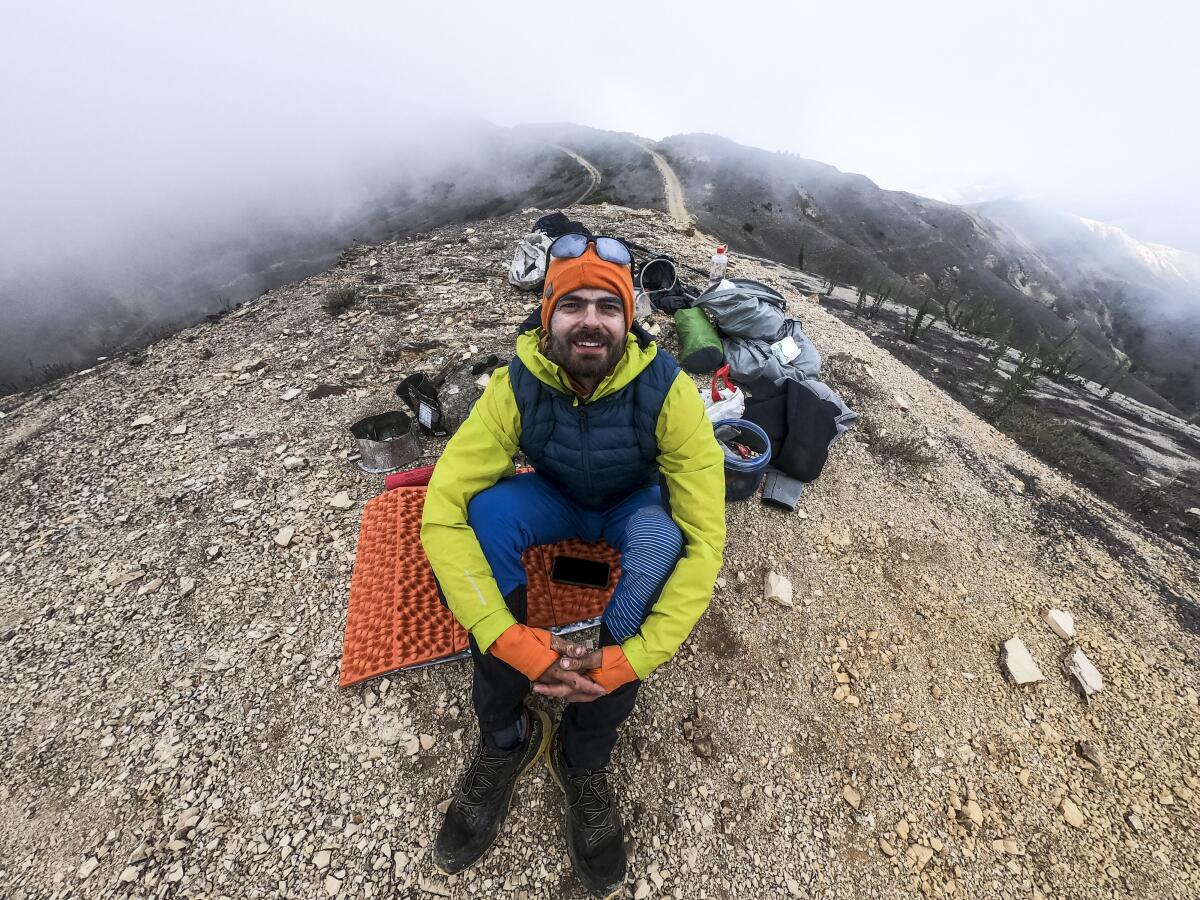
Emanuel Röhss, the author’s husband, sits amid fog during a backpacking trip to the island five years ago.
(Lila Seidman / Los Angeles Times)
While harrowing, I also found a strange comfort in Pauly’s words. Change is inevitable, whether bad or good. My memories of the island are of a snapshot in time. I went during the height of the pandemic, when my boatmates were masked and socially distanced. All the wonder I experienced notwithstanding, I wouldn’t want that aspect of the journey to carry on.
And change doesn’t need to be taken lying down. Some are already gearing up to get the island back on track.
The Santa Barbara Botanic Garden has seeds for all of the rare plants in the burn area, a sort of fail safe if they need help recovering. Additionally, just this March, it opened a conservation grove of Torrey pines grown from seeds collected on Santa Rosa. The Channel Islands National Park Foundation is on hand to raise money for the park.
“It’s going to be an all hands on deck situation to understand, assess and plan the recovery,” the garden’s Schneider said.
If I go back to Santa Rosa, I hope to embrace it as it is: transformed.
-

 New York44 minutes ago
How a Family of 4 (and One Kid in College) Live on $85,000 a Year in the Bronx
-

 Los Angeles, Ca47 minutes ago
Los Angeles church fire forces firefighters into defensive mode
-

 Detroit, MI1 hour ago
Detroit’s Inbolt Launches Vision-enabled Robot Programming
-

 San Francisco, CA1 hour ago
These are California’s treasured views: Stunning scenic spots to visit
-

 Dallas, TX1 hour ago
One World One Game: A Cultural Preview for FIFA 2026 – Dallas Weekly
-

 Miami, FL1 hour ago
WPLG Local 10 Becomes the Home of the Miami HEAT
-

 Boston, MA2 hours ago
World Cup 2026 travel guide: Boston
-

 Denver, CO2 hours ago
Denver Ventures says ‘far-fetched’ lawsuit ‘nothing more than a smear campaign’

