Lifestyle
These pop-ups, drops and art events got you covered for spring

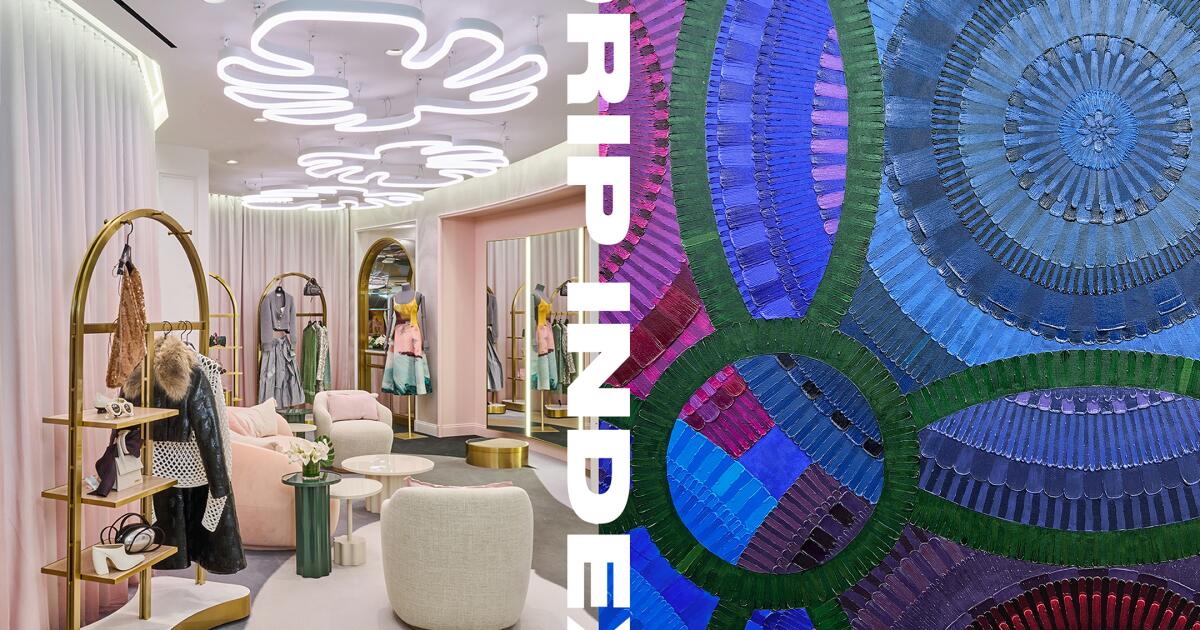
Miss Dior Avenue pop-up comes to West Hollywood
(Christian Dior Parfums / Marc Patrick/BFA.com)
Sometimes you need a 1960s-inspired style adventure. You’re in luck thanks to the new immersive Miss Dior Avenue experience that has popped up this week on Melrose Avenue in West Hollywood. ( The pop-up event isn’t too far from the Pacific Design Center and the WeHo park where Elton John AIDS Foundation’s annual Academy Awards viewing party will be held Sunday.)
In the colorful Miss Dior space, visitors will find a La Parfumerie celebration of the new Miss Dior Parfum, which was created by brand perfume creative director Francis Kurkdjian and has floral, fruity and woody notes. (The original Miss Dior perfume from designer Christian Dior dates back to 1947.) Also, guests will get a chance to check out the Miss Dior campaign starring Natalie Portman at the Diorama Cinema or have a snack at the Miss Dior cafe before venturing back into the world. There also will be exclusives and goodies as well as a special Miss Dior flower shop — a tribute to the love of flowers that Dior and his sister Catherine shared. Make a reservation soon, because this pop-up is only from Friday morning through Sunday evening. 8626 Melrose Ave., West Hollywood, dior.com
Saks Fifth Avenue opens women’s store in Beverly Hills
(Peter Christiansen Valli / Saks Fifth Avenue)
Still miss the old Barneys New York space in Beverly Hills and its Regency-style marble staircase? Well, you’re in luck. Luxury retailer Saks Fifth Avenue, a longtime staple of Wilshire Boulevard, moved its women’s store to the space at 9570 Wilshire Blvd. Called a reimagined West Coast flagship, this revived building is stocked with well-known luxury labels (think McQueen, Loewe, Celine, Brunello Cucinelli, Dolce & Gabbana, Valentino and Dries van Noten), beauty items, footwear and goods from emerging designers spread over 130,000 square feet of space. Louis Vuitton, Dior, Gucci and Chanel have dedicated main boutiques in the store. As a bonus, there’s an expanded Fifth Avenue Club with an outdoor terrace. 9570 Wilshire Blvd., Beverly Hills, saks.com
Burberry pop-up lands at South Coast Plaza
The revered British brand is settling into a stateside visit at luxury shopping center South Coast Plaza in Costa Mesa. This interactive pop-up, billed as a celebration of the brand’s heritage, offers a showcase of new clothes and bags as well as the beloved trench coat, including new styles in checks and prints from Chief Creative Officer Daniel Lee’s Spring 2024 collection. Shoppers at this Orange County event will find Burberry’s tent-like, outdoor-inspired setting along with furniture that takes its cues from camping. The pop-up is open through March 14. 3333 Bristol St., Costa Mesa, burberry.com, southcoastplaza.com
Jaime Muñoz solo exhibition and capsule collection with Huf
L.A.-born artist Jaime Muñoz’s solo exhibition, “The Meaning Is the End,” at John Doe Gallery explores commodity and consumerism as well as the effects of modernity through a series of diagram drawings that look like auto repair manuals. To commemorate the exhibition’s opening, Muñoz and the L.A. skate and streetwear brand Huf, the exhibition presenter, dropped a new capsule collection, including a hat, T-shirt, short-sleeve shirt and sweater. The pieces are available through Huf’s website. The exhibition is open through April 7. 107 E. 11th St., Los Angeles, johndoegallery.com
Prada Mode presents the Double Club Los Angeles
This weekend, artist Carsten Höller will indulge the minds of visitors at a private club escape, the Double Club Los Angeles, in the Arts District inside the warehouse complex occupied by the Drake-backed amusement park exhibition, “Luna Luna: Forgotten Fantasy.” (On a side note, Höller, who’s known for his experimental installations and sculptures, visited the original Luna Luna art amusement park featuring the works of Jean-Michel Basquiat, Keith Haring, Sonia Delaunay, David Hockney and others in Hamburg, Germany, in 1987.)
This exclusive downtown L.A. event is presented by contemporary cultural series Prada Mode in partnership with Luna Luna, and will focus on Höller’s “signature tropes” such as “the principle of division and the machinery of fun within carnival aesthetics,” according to a media release. During their visit, guests will be able to interact with nine individual spaces as part of the Double Club, which originally opened in 2008 in London, commissioned by Fondazione Prada. March 9 and 10. Ace Six, 516 S. Mission Road, Los Angeles. Admission to the Double Club Los Angeles is free with the purchase of a Luna Luna ticket.
‘Scratching at the Moon’ comes to the Institute of Contemporary Art, Los Angeles
During the summer of 2020, L.A.-based sculptor Anna Sew Hoy started dreaming about an exhibition of Asian American artists with ties to L.A., and that eventually led to a new exhibition at the Institute of Contemporary Art, Los Angeles. Dubbed the first focused survey of Asian American artists in a major contemporary Los Angeles museum, “Scratching at the Moon” is a celebration of the work of an intergenerational group of 13 artists who were born in the United States or who emigrated from Asia, New Zealand and Canada. They are Patty Chang, Young Chung, Vishal Jugdeo, Simon Leung, Michelle Lopez, Yong Soon Min, Na Mira, Amanda Ross-Ho, Miljohn Ruperto, Dean Sameshima, Amy Yao, Bruce Yonemoto and Sew Hoy. Through May 12. 1717 E. 7th St., Los Angeles, theicala.org
‘Karla Diaz: Wait ’til Your Mother Gets Home’ opens
‘No Te Metas Con Mi Cucu (Don’t mess with my ass),’ 2022 watercolor and ink on paper.
(Karla Diaz / 18th Street Arts Center)
“Wait ’til Your Mother Gets Home,” which is on display at 18th Street Arts Gallery’s Propeller Gallery, is an exploration of American Mexican identity from the 1970s through today via the paper and canvas work of artist Karla Diaz. Called her first institutional solo exhibition in Greater L.A., the exhibition features 37 of the writer, teacher and multidisciplinary artist’s new and recent works. At the heart of the exhibition is “The Silver Dollar” (2021), a work on paper that commemorates Ruben Salazar, the L.A. Times reporter and columnist — the city’s leading Latino media voice — who was killed in August 1970 when a sheriff’s deputy shot a projectile into East L.A. bar the Silver Dollar. Through June 22. 3026 Airport Ave., Santa Monica, 18thstreet.org
Fashion brand 424 opens a new flagship store
One thing is clear: Menswear designer Guillermo Andrade, founder and creative director of L.A. label 424, wanted a new retail space that would get people talking and posting on social media. The first thing you’ll notice about 424’s newly minted flagship is that it looks as if the cave-like space, with clothes neatly hanging on racks made from industrial beams and footwear placed on floating shelves throughout, came from a postapocalyptic subterrane in a “Blade Runner”-style Los Angeles. The store is a return to an actual physical space for the streetwear brand, which had a Fairfax Avenue space from 2010 to late 2022. 8441 Melrose Place, Los Angeles, fourtwofour.com
The Frankie Shop opens West Hollywood pop-up experience
High-fashion label the Frankie Shop has collaborated with product and architectural design studio Crosby Studios in a pop-up experience called the Meeting Room, at 8580 Sunset Blvd. in West Hollywood. The space pays tribute to a bygone era, taking inspiration from “powerful women of the post-office age,” according to a press release. Here you’ll find the Frankie Shop’s latest collection of leather goods and exclusive items set up in a space that looks like the remnants of a once-bustling office. (Think stacks of binders, monitors, office chairs and a broken printer and water coolers.) To commemorate the collab, a new campaign called “The Frankie Shop Goes to Hollywood,” features actor Demi Moore in photos by artist and photographer Collier Schorr. 8580 Sunset Blvd., West Hollywood, thefrankieshop.com
June Edmonds at Luis De Jesus Los Angeles
(June Edmonds / Luis De Jesus Los Angeles)
Black strength, endurance, joy and harmony are all qualities found in L.A.-born artist June Edmonds’ work. In her new exhibition, “Meditations on African Resilience,” Edmonds takes a deeper look at the river leaf emblem, a sacred quatrefoil used as a spiritual symbol (unity, balance and protection) as well as a symbol for “the power and regality of kings, healers and deities” in the Kingdom of Benin in what’s now southern Nigeria. Pay attention to the “deep color,” as Edmonds calls it, used to tap “into a part of our psyche linked to an ancient memory that exists within all of us.” Through April 13. 1110 Mateo St., Los Angeles, luisdejesus.com
S.R. Studio. LA. CA. for OTW by Vans collaborate on new sneakers
Having collaborated with designer Raf Simons and fashion brand Calvin Klein, artist Sterling Ruby isn’t a stranger to fashion. His own label, S.R. Studio. LA. CA., debuted in 2019, and now Ruby is the first collaborator for Costa Mesa-based brand Vans’ new premium line called OTW by Vans. With this new collab titled Clash the Wall, there’s a bold mash-up of four Vans iconic styles — the Style 36, the Authentic, the Mid Skool ’77 and the Sk8-Hi — in full-on neon green and an orange reminiscent of Crush soda, both signature S.R. colors. The sneakers, part of an extended partnership between S.R. and Vans, are $160, and the green version can be purchased at kith.com.
‘At the Edge of the Sun’ at Jeffrey Deitch
(Joshua and Charles White)
Twelve artists who have known each other through artistic discourse as well as just living, working, surviving and thriving in Los Angeles were brought together for “At the Edge of the Sun” exhibition at Deitch. Focusing on landmarks, memories and communities, the artists take us on a year-in-the-making exploration of the complex realities of life today in L.A.: underground economies, surveillance, youth culture, California landscapes, public transportation, night life and more. The artists are Diana Yesenia Alvarado, Michael Alvarez, Mario Ayala, Karla Ekaterine Canseco, rafa esparza, Alfonso Gonzalez Jr., Ozzie Juarez, Maria Maea, Jaime Muñoz, Guadalupe Rosales, Gabriela Ruiz and Shizu Saldamando. Through May 4. 925 N. Orange Drive, Los Angeles, deitch.com
‘RETROaction (part two)’ pays homage to 1993 exhibition in downtown L.A.
“Twenty Five Candles,” 1993, 25 color Polaroid prints. © Lorna Simpson and Hauser & Wirth
(Timothy Doyon)
The new exhibition “RETROaction (part two)” revisits and pays homage to the seminal Charles Gaines-led 1993 exhibition “Theater of Refusal: Black Art and Mainstream Criticism” at UC Irvine, which featured the work of Jean-Michel Basquiat, Renée Green, David Hammons and other artists. Not only is this Hauser & Wirth exhibition a showcase for early-1990s works by Gaines, Lorna Simpson and Gary Simmons, who participated in “Theater of Refusal,” but it also has on display the works of 10 artists who were selected by Gaines and art historian Ellen Tani: Edgar Arceneaux, Kevin Beasley, Mark Bradford, Torkwase Dyson, Lauren Halsey, Leslie Hewitt, Rashid Johnson, Caroline Kent, Tony Lewis and Rodney McMillian. Through May 5. 901 E. 3rd St., Los Angeles, hauserwirth.com
Tory Burch and Humberto Leon open new Melrose Avenue concept store
Designer Tory Burch and restaurateur and Opening Ceremony co-founder Humberto Leon recently celebrated their collaboration on a Tory Burch concept store on Melrose Avenue in West Hollywood. The façade and interior of the new shop feature the work of German photographer Walter Schels, whose animal portraits are featured in Burch’s Resort 2024 collection. In addition to having the initial drop of the Spring 2024 collection, the Melrose store carries a dedicated capsule collection of T-shirts, sweatshirts and totes that were screen-printed with Schels’ portraits of a bunny and a cat. The concept store will be open through the end of 2024 while the Tory Burch flagship on Rodeo Drive in Beverly Hills is renovated. 8483 Melrose Ave., West Hollywood, toryburch.com
Merrick Morton’s exhibition celebrates photographer’s work
“Two Cholas ‘Lisa and Crystal,’” circa 1981.
(Merrick Morton)
The camera of L.A.-born Merrick Morton, the documentary street photographer and film still photographer of more than 90 films, has captured the realities of life from the streets to the sets of films. In “Merrick Morton: Un-Rehearsed” at Eastern Projects art gallery, you’ll find a solo exhibition that shows the barrio and inner city as well as incarcerated people in prisons and the locked wards of a California psychiatric hospital. In the mix on display, there’s a variety of portraits taken in Mexico and Cuba as well as of actors on film sets. As a bonus, there’s a special poetry and photo collaboration with actor-poet Richard Cabral called “Life of a Cholo.” Also, this spring, Morton will release the photography book “Clique: West Coast Portraits From the Hood, 1980-1996” (Hat & Beard Press). March 30 through May 18. 900 N. Broadway, Suite 1090, Los Angeles, easternprojectsgallery.com

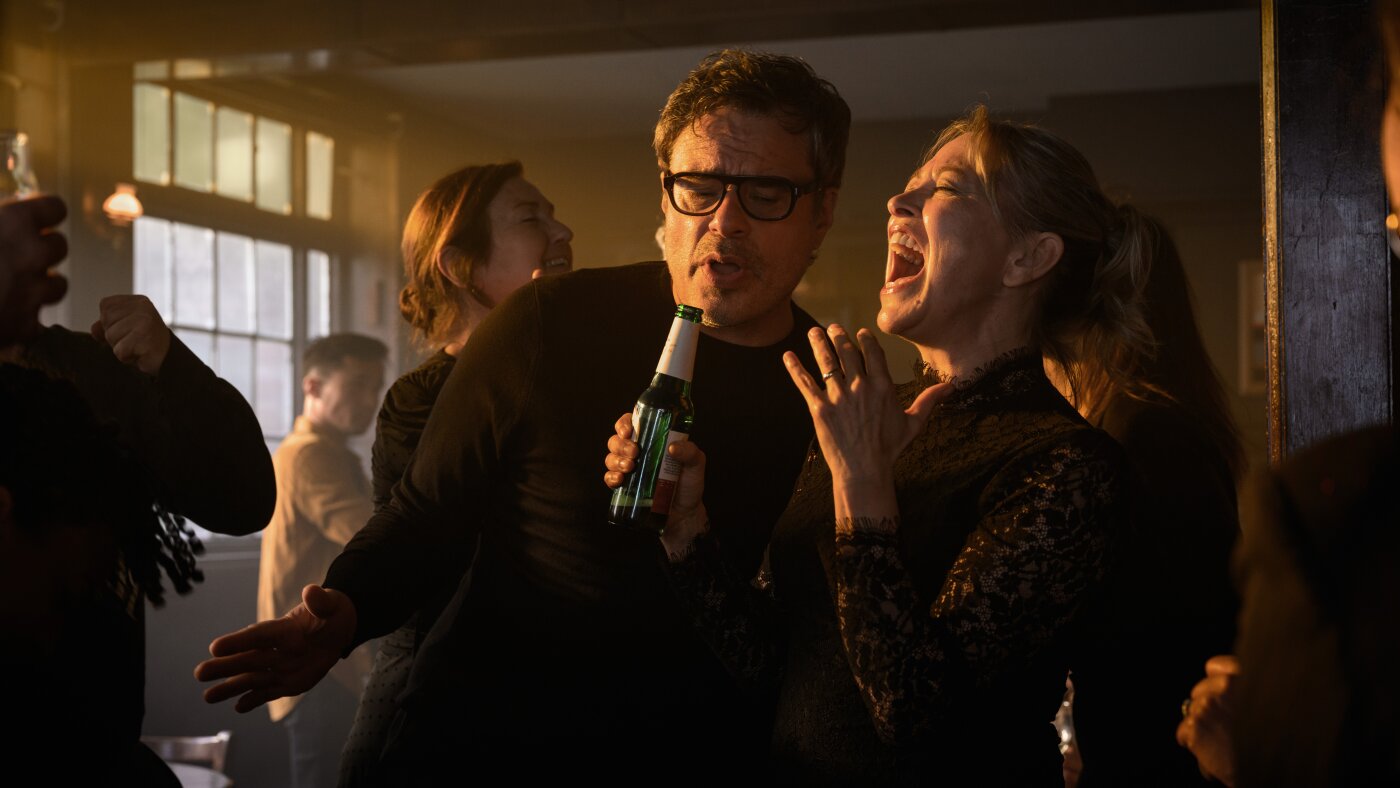
In Alice and Steve, Jemaine Clement and Nicola Walker play long-time friends who turn on each other after he gets involved with her 26-year-old daughter.
Lara Cornell/Disney+
hide caption
toggle caption
Lara Cornell/Disney+
I grew up watching episodic shows on network TV, nearly all of them formulaic but some indelibly great. Then, like everyone else, I moved into the days of what my colleague David Bianculli dubbed Platinum TV, where series like The Sopranos and The Wire and Fleabag aspired to something higher. What both these eras had in common was that their shows were carefully crafted — they had an internal logic, and a tone, that held them together.
In recent years, though, there’s been a proliferation of shows that, possibly obeying some algorithm, care less for coherence than sensation. They lurch among tones, from cuteness to sentimentality to meanness, stirring in random plot twists along the way. Bouncing all over the emotional map, these shows depend on compelling actors and a few memorable scenes to make us overlook their loose construction.
A great example is Alice and Steve, an entertaining but sometimes exasperating six-part British comedy on Hulu about two 50-something best friends who turn on each other after he gets involved with her 26-year-old daughter.


While the premise is juicy, it’s also a tad yucky, and I mainly tuned in because its title characters are played by performers Jemaine Clement from Flight of the Conchords and Nicola Walker, whom I’ve raved up on this show more than once.
The series starts poorly with Steve and Alice going on a cutesy bender after a friend’s funeral. Now, I always hate drunk scenes, which are an invitation to overact. As Clement and Walker bray their lines, we learn that Steve’s a divorced celebrity hair stylist who can’t find a girlfriend while Alice is a clothes designer with a doting younger husband, nicely played by Joel Fry, a sweetie-pie of a teenage son — that’s Tyrese Eaton-Dyce — and, of course, that 26-year-old daughter, Izzy, who has inherited her mother’s willfulness. Played by Yali Topol Margalith, Izzy kickstarts the plot by flirting with Steve. Predictably, he succumbs.

Almost immediately, they think they’re in love. While the weak-willed Steve wants to hide their romance — he knows it’s inappropriate — Izzy just blurts out the facts to her mom. Alice flips. And from hereon out in this series where the women are as alpha as the men are hangdog, Alice drives the action. Betrayed and violently angry, she’ll do whatever it takes to break them up — no matter who gets hurt. Her antics unleash Steve’s own malice. We’re in Beef territory.
At its core, Alice and Steve hinges on the way that platonic friendships are often richer and more powerful than romantic ones. It’s a fascinating subject, which may be why I found the script by Sophie Goodhart so frustrating. I wanted her to dig deeper. While the show’s got some very funny bits — Alice’s sharp-tongued mother is a blast — it’s often annoyingly lax.

If Steve really does the hair of Charli XCX, how come he’s a clueless older guy whose pop culture references are Willie Nelson and Woody Allen? If Izzy truly adores her mother as she claims, why does she keep rubbing her relationship with Steve in her mom’s face? Halfway through, one character nukes the other’s career, but this life-shattering event has no real weight: It’s barely even mentioned for the rest of the series.
That said, Alice and Steve is worth seeing for scenes like the one in which Steve spinelessly sells Izzy out or the lacerating discussion between Alice and her husband when he fully grasps that he adores a woman who views him as a reliable but dull concierge, not a man she likes hanging with. Most touching of all may be the lovely sequence when Alice, wise for once, smooths a romantic crisis between her son and his would-be girlfriend, a pair who are the show’s emblem of hope. For once, we understand why people love her.

While most viewers will find Steve more likable than Alice — the show takes pains not to make him appear predatory or creepy — the role doesn’t give Clement a whole lot to do except play variations on shambolic dread and discomfort. The show gets its galvanizing zing from Walker, a beloved star in England with amazing, luminous eyes. Her Alice is the kind of complicated, volcanic heroine that you don’t see in movies and rarely see on TV, one who shows her apocalyptic rage freely and in many different forms.
At least once in every episode, something would lead me to say, “Man, is this show a mess.” But that wasn’t a deal breaker. I kept watching. After all, life is messy, too.


How to enter your Sporty Spice era.
Getty Images/quantic69/Olga Kurbatova/Anastasiia Zvonary/Photo Illustration by NPR
hide caption
toggle caption
Getty Images/quantic69/Olga Kurbatova/Anastasiia Zvonary/Photo Illustration by NPR
Reality dating and professional sports are not as different as you’d think.
Brittany is in her Sporty Spice era – she watched the NBA playoffs, she’s following World Cup games, and she’s watching the New York Liberty play their WNBA season. These games are daily – and so is the reality dating show Love Island. And she noticed that the two formats are not very different at all. Defector.com staff writer and co-owner Kelsey McKinney came to the same conclusion – so the two of them discuss why these games of athleticism and love can bring us together… and why they get valued differently in our culture.
For more episodes on sports and reality TV, check out:
Get rich or die trying: how sports betting is changing our love of the game
Is this the end of reality TV?
The ugly truth of America’s expensive homes
Support Public Media. Join NPR Plus.
Follow Brittany on Instagram: @bmluse
This episode was produced by Liam McBain. It was edited by Neena Pathak. Our Supervising Producer is Cher Vincent. Our Executive Producer is Barton Girdwood. Our VP of Programming is Yolanda Sangweni.

-

 Culture25 minutes ago
Try This Quiz on Literary Quotations About American Life
-
Lifestyle31 minutes ago
‘Alice and Steve’ might be a mess — but it’s also too fun to stop watching
-

 Technology39 minutes ago
America’s greatest idea is still under threat
-

 World46 minutes ago
Zelenskyy pressures US and Europe for more ‘air defense’ assistance amid ongoing war with Russia
-

 Politics49 minutes ago
ICE renews hunt for El Chapo’s last two fugitive sons with massive reward
-

 Health1 hour ago
Biohacker hoping to live to 160 reveals alarming diagnosis: ‘My stomach is eating itself’
-

 Sports1 hour ago
FIFA president addresses Trump call amid scrutiny over decision on USA World Cup star
-

 Technology1 hour ago
Fake Booking.com travel credit scam targets travelers

