Lifestyle
The Novelty of a Natural Smile


“I love your teeth. You’re from England, right?” Charlotte Le Bon asks her co-star Aimee Lou Wood in an early episode of this season of “The White Lotus.”
Ms. Wood’s smile is broad, beautiful and something of a novelty these days — both among her castmates and in a broader sea of actors with straight, evenly spaced teeth having been apparently willed into submission by orthodontics or cosmetic modification.
The line, which Ms. Le Bon improvised, turned out to be prescient.
Online, viewers of the show have also begun praising Ms. Wood, who is indeed from England, for choosing to keep her natural smile. The praise has also prompted a question: When did everyone’s teeth get so perfect?
Emma Dickson, 30, said seeing Ms. Wood onscreen felt “comforting.”
Like Ms. Wood, Ms. Dickson has a gap between her front teeth. As an actor and medical aesthetician, Ms. Dickson, who lives in Chicago, said she was all too familiar with the pressure to have flawless pearly whites. She described the style of veneers that are so ubiquitous in Hollywood as the “copy-and-paste smile,” and said she was saddened when celebrities with teeth resembling her own appeared to correct them.
“I feel like in the beginning of the ‘Real Housewives’ franchise and ‘Keeping Up With the Kardashians,’ there was this fascination with the most bleached tooth you could have,” said Sarah Hahn, a prosthodontist in Fremont, Calif., who has carved out a niche for herself on TikTok analyzing celebrity smiles. “It became more and more prevalent. So many people were doing it.”
“You could name off a million celebrities,” she added, “and they were all getting veneers.”
Over time, as the look became more widespread among celebrities, everyday people began to take a harsher look at their own smiles.
Joyce Kahng, a cosmetic dentist from Costa Mesa, Calif., said she saw an uptick in patient interest in veneers after 2020 thanks to the “Zoom effect.”
“People were constantly looking at themselves and starting to nitpick themselves,” she said. Wanting perfect-looking teeth is a very American — though not exclusively — aesthetic ethos, she said.
“People expect celebrities to all get their teeth done at this point,” Dr. Kahng continued. “It started with celebrities. Then it went on to influencers. And influencers are a tad bit closer to just regular everyday people. Once influencers started getting them, everyone started getting them.”
Still, not everyone finds a gleaming row of straight, bleach-white teeth aspirational. As people train their eyes to spot celebrity veneers, a small backlash has started to brew. Some derisively call the too-perfect teeth “Chiclets” and yearn for an older era of television and filmmaking when actors didn’t so closely resemble one another. Even those who want veneers may ask for ones that don’t look too perfect.
“American TV now is becoming visually very homogenous,” said Sue-Ann Jarrett, who is 33 and lives in Brooklyn. “I feel like a lot of people are just looking very similar.”
Shedika Williams, who lives in Brooklyn, said Ms. Wood’s teeth made her feel a twinge of regret about getting braces and altering her own smile.
“I watch a lot of TikTok videos of creators doing before-and-afters, and it makes me sad because I always think the before picture looks way better,” said Ms. Williams, 27. “It just made them look more unique, and their teeth fit them.”
In her videos, which she calls “veneer checks,” Dr. Hahn explains what is going on in celebrities’ mouths in technical terms, often using images spanning multiple years to show changes.
A former professor, she tries to keep her videos positive and educational, she said, hoping to help people understand what dental work their favorite stars might have had rather than to criticize the quality of the work itself.
Dr. Kahng, who has also made celebrity dentistry content for TikTok, took a similar approach to some of her videos, but said they sometimes prompt criticism.
“People associate teeth with socioeconomic level,” Dr. Kahng said. Last year, JoJo Siwa, for instance, admitted to paying $50,000 for her new set of teeth.
Dr. Kahng has since stopped making videos analyzing celebrity’s teeth.
“If you pick apart someone’s teeth and it never really bothered them and you start conversations about them, then people start to dislike themselves when it really wasn’t a problem to begin with,” she said.
In a recent interview with The Hollywood Reporter, Ms. Wood addressed the sudden fascination with her teeth.
“These people live in Hollywood,” she said of her castmates. “I live in my little flat in South East London, and I’m so British in my sensibility that I wasn’t sure how to handle being around so many people who are so front-footed and confident. All I ever do is take the piss out of myself.”
The way “White Lotus” fans are talking about her teeth, she added, “that I don’t have veneers or Botox — it feels a bit rebellious.”
Ms. Dickson, the medical aesthetician from Chicago, said she was also slightly uncomfortable with the way some people have lavished praise on Ms. Wood’s smile.
“There is something slightly unique about her, but in every other way she fits the exact beauty standard that Hollywood has loved forever,” Ms. Dickson said. And perhaps a way to make normal teeth more, well, normal again would be not to comment on them, she suggested.
“Even for myself, when people are like, ‘Oh my God, they love your gap!’” Ms. Dickson said. “It’s always just kind of like, ‘Thank you — why are we talking about this?’”



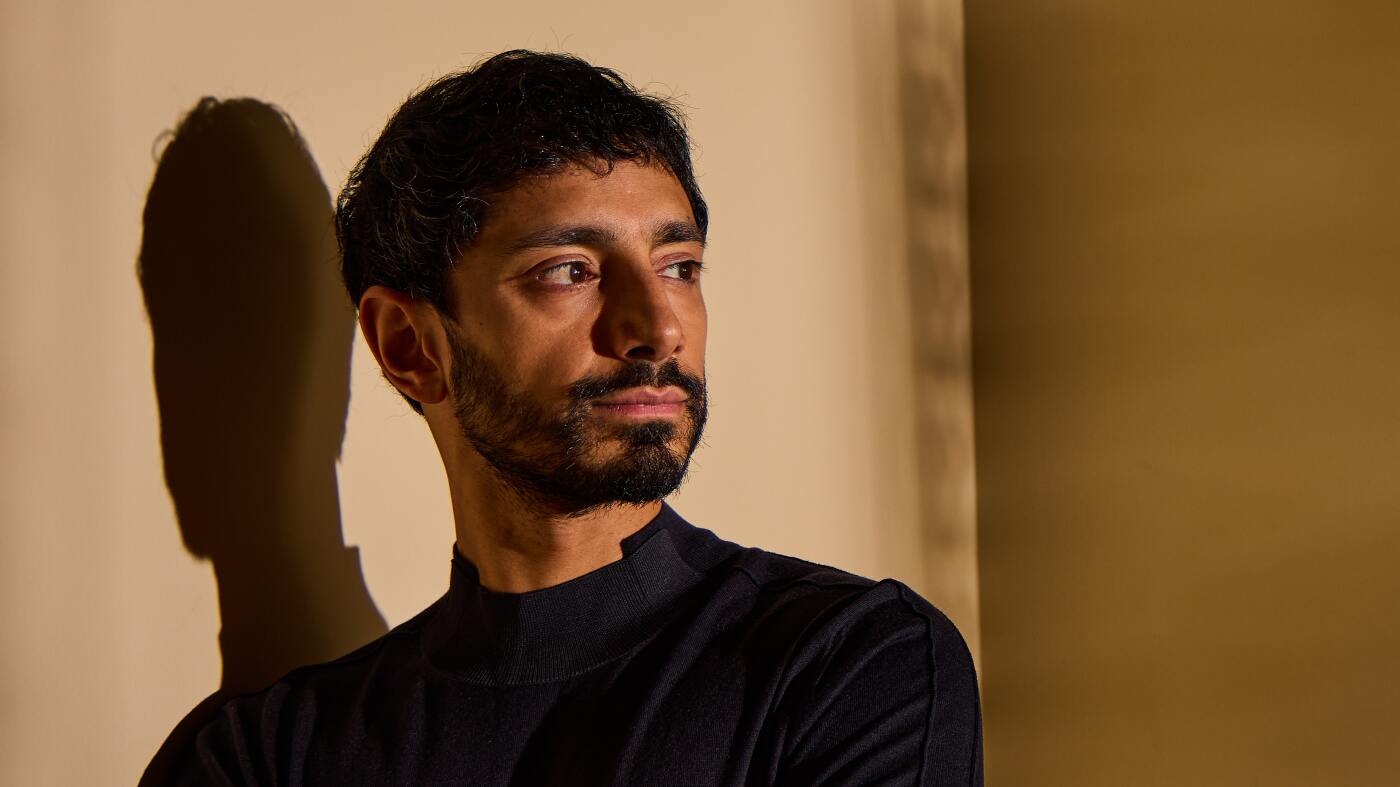
Riz Ahmed, shown here in December 2025, won an Academy Award in 2022 for his life action short film, The Long Goodbye.
Tristan Fewings/Getty Images
hide caption
toggle caption
Tristan Fewings/Getty Images
Actor Riz Ahmed admits to being his own worst critic.
“I remember waking up in the middle of the night, two years after I wrapped on [the 2016 series] The Night Of, and going to the mirror and redoing scenes that the whole world had already seen,” he says. “I’d already been handed awards for this performance, [but] I was like, no, I gotta get it right.”
That energy — what Ahmed refers to as “chasing acceptance and running away from your own inner critic” — runs through his new Prime Video series Bait. The series, which Ahmed wrote and stars in, focuses on a struggling British Pakistani actor named Shah who lands an audition to be the next James Bond. When word gets out, and the internet goes wild. Suddenly, Shah’s life starts to resemble the character he’s auditioning to play — except he’s chasing acceptance instead of a villain.

“[Showrunner Ben Karlin and I] felt, early on in the show, you needed to see just how mean Shah’s inner voice can be about him,” Ahmed says. “I think actually there’s a lot of Shah in all of us, more than we like to admit. … The gap between that public self and the messy vulnerability of our private selves is often huge.”
Ahmed says the show’s title has multiple layers and meanings. In British slang, “bait” refers to being blatant and attention-seeking. It can also refer to online trolling. In Arabic and Hebrew, it means home, while in Urdu, it’s a term for loyalty.
“Of course, there’s a big spy-thriller element to our show, and bait is something that is used as part of a trap,” Ahmed says. “So it’s a weird thing where only in retrospect we realize like, ‘oh my God, we accidentally stumbled on the perfect title for this that actually communicates the entire layer cake of this show.’ It is all those flavors and the word ‘bait’ means all those things.”
Interview highlights
On what James Bond represents in Bait
The show isn’t really about James Bond, but James Bond is a very important symbol because he is the ultimate symbol of success. As an actor he is the pinnacle of cinematic achievement. And yet for any of us, he’s this archetype of decisiveness, desirability, of being in control, being unflappable, of being invulnerable. And so I wanted the character of James Bond to serve as this symbol of aspiration, this unattainable kind of self that Shah is hunting down almost. And in chasing this symbol, is he abandoning himself? Is he abandoning where he’s from? Is he abandoning his family? Has he forgotten who he really is? …

I think that that’s something that we all kind of go through. We’re often pulled between the people we were and the people that we want to be. And actually the healthy equilibrium is probably somewhere in the middle. Probably that thing you want to, is like an attempt to escape yourself. And that thing that you were is maybe a version of yourself that you need to evolve out of.

Guz Khan and Riz Ahmed star in the Prime Video series Bait.
Prime Video
hide caption
toggle caption
Prime Video
On playing with different genres in Bait
We try and flip the series the whole time. There’s a spy-thriller episode, there’s romantic comedy, there’s kind of a surreal episode, there is one that’s almost like the Bond gala, like James Bond turns up at … [a] black-tie event and hijinks ensues. We’ve got that. We got all these different flavors and we’ve got an Eid episode as well. … We’re very deliberately trying to layer in and thread multiple different genres, because honestly, I feel like my life takes place in different genres. I feel that right now I’m here, lucky me, you know pretending to be all clever, talking to you guys on Fresh Air and I’m gonna walk outside and slip on a banana peel and fall flat on my face and suddenly I’m in a slapstick, you know?
We wanted to have that multiplicity, that tonal whiplash, because honestly that’s just what I enjoy and I felt like if I can make something that’s a full meal — that is a romance and a spy thriller and a family drama … but overall a comedy — then I could also just solve a very personal problem, which is me and my wife squabbling over what we’re going to watch.
On working with Patrick Stewart in Bait

I don’t want to give anything away. I guess I’ll just say that working with him showed me your art can kind of only be as big as your heart is, if that doesn’t sound too corny. Like, you have to have a capacity for such receptivity, humility, generosity, and empathy in order to kind of be an artist of that stature and at that level. … He was just such a pro and such a gentleman and I’ll really cherish that experience.
On discovering Hamlet as a British Pakistani teen
I am like many people. I felt like Shakespeare is the epitome of everything I’m on the outside of. It doesn’t belong to me. It’s stuffy. It is elitist. I got a government-assisted place to a private school where I felt like an outsider for many different reasons. And I was lucky enough to have an English teacher … who [was] a white, Jewish middle-aged man from a different place in the U.K. I thought we had nothing in common, but he spoke fluent Punjabi, and he brought me Hamlet and said, “This thing, this story, this character, it’s at the heart of the establishment that you feel so alienated from in many ways. But have a read of it? You might recognize yourself in this character.”

And I did, like millions of people have, right? Hamlet being a character who feels out of place. Hamlet himself feels like an outsider. He feels like he doesn’t belong, like no one understands. … And it was then, at the age of 17, that I very precociously had the idea that, “Man, I wanna make a movie of this one day.”
On starring in a new adaptation of Hamlet
Hamlet is a story and it’s character who is grieving the illusion that the world was ever a fair place. And I think that’s how we’re all feeling now. We’re all grieving and reeling from this realization that “OK, I knew the world is unfair, but now the shameless brazen unfairness of it is just kind of laid bare.” … The part that we were struggling to unlock is: How do you not make this feel just like a Shakespeare performance, and a poetry recital? How do you not make this feel like a kind of self-congratulatory, like “actor wants to take on the classic”?
It really took us meeting Aneil Karia, the director. It was after I collaborated with him on the short film, The Long Goodbye, for which he won an Oscar, that I was like, “Oh, I think we know how to do this. We need a director who’s worked a lot in rap music videos. We need a director who can render poetry in a very raw way and give us raw action in a poetic way.” … We had a long conversation about how this has to feel like music.
On how his background as an MC helped with the Shakespeare verse

One thing that [Shakespeare] played with all the time was rhythm. Rhythm, rhythm, rhythm. And so, in the same way that when I listen to some of my favorite rappers’ new songs, I don’t know what they say the first-time around, but I am totally wrapped. I’m totally leaning in, I’m engaged. I feel it emotionally. It’s the same way. Your first experience of this thing is supposed to be like music. You didn’t catch all of the words, but that word there felt weird enough to make you sit up. And what you’re supposed to do is receive an electric charge of rhythm and melody and musicality, just like rap music. But that’s not the actual experience of these plays. So I wish more people spoke about Shakespeare in that way. Because, to me, it is much more like music than it is an English class.
Ann Marie Baldonado and Nico Gonzalez-Wisler produced and edited this interview for broadcast. Bridget Bentz, Molly Seavy-Nesper and Beth Novey adapted it for the web.


As the sun peeked out from behind the clouds at 9:30 a.m. on the day after a rainy Saturday, the strollers at Runway Playa Vista rolled in. Giggles echoed in a nearby play area where children twisted knobs and spun a wheel in a car-like play structure. Toddlers whizzed by on scooters as parents chatted about the struggles of parenting during a rare L.A. storm.
Their solution to kids with pent-up energy wasn’t to head to any park — it was to come to a mall park. Or rather, the turf fairway and play structures that sit just outside storefronts at this southwest Los Angeles “shopping center.”
“My older daughter does dance right here, so this is a Sunday routine for us,” said Daniel LaBare, who sat with his Whole Foods shopping bags by the play car with his younger daughter, 2-year-old Ellie. “She goes to dance, and we hang out and play.”
With the rise of e-commerce, it’s no secret that retail developers have had to get creative to keep attracting customers. One method that seems to be working? Catering to families by making green turf and other kid-friendly spaces a mall centerpiece.
Some of these areas are just patches of turf with Adirondack chairs — popular with exploration-minded toddlers, or kids with a ball. But there are also shopping centers with more elaborate play structures, such as Rancho Cucamonga’s Victoria Gardens “Orchard Play Area” (“near Shake Shack and Silverlake Ramen,” according to the website). The lawns often serve as activity centers where malls hold kid concerts, adult exercise classes and Christmas tree lighting events.
A child plays on playground equipment, conveniently located near Shake Shack, at Victoria Gardens in Rancho Cucamonga.
(Brookfield Properties)
“More and more centers are moving away from just transactional spaces, and they’re moving towards community destinations,” said Paul Chase, president of JLL Lifestyle Property Management, a commercial real estate developer and investment firm that owns shopping centers across the globe. In November, it refocused Chase’s division from “retail” to “lifestyle” — a semantic change that reflects a shifting focus. The division now manages retail spaces as a place to spend time, not just shop, whereas it previously focused on the latter. Chase said the industry name for the landscaped places where kids play and families gather is “entertainment zones.”
One JLL Property, Manhattan Village in inland Manhattan Beach, underwent a renovation in 2021 that transformed a flat parking lot into an “entertainment zone” featuring a turf lawn with benches, fountains and short rolling hills. On any given weekend, toddlers can be seen summiting the “hills” to stick their fingers in the water features while parents sip coffee from the cafe that sits at the west end of the green space.
Just across Rosecrans from Manhattan Village in El Segundo, families flock to the Point, the South Bay’s first mall- turned-park development, which opened in 2002. Fresh from soccer games, kids kick a ball on the same patch of turf where babies crawl and families picnic — with food purchased from the mall’s restaurants, including Mendocino Farms and Cava. Conceived as “the South Bay’s living room,” the Point’s “anchor tenant” would not be a department store, explained Jeff Kreshek, a senior vice president and western region president and chief operating officer of the Point’s parent company, Federal Realty. It would be 45,000 square feet of open space.
“If you look at traditional malls, there’s a commerce aspect, and they threw in some places for you to sit down,” Kreshek said. “So it was kind of reverse engineering what shopping centers had been for decades.”

Charlotte Nguyen, center, and her friends do craft activities on the lawn during a Lunar New Year celebration at the Point in El Segundo, on Sunday, February 22, 2025.
(Stella Kalinina/For The Times)
There are plenty of parks in these neighborhoods, and parents say they bring their children to public playgrounds, too. But they come to Runway, the Point or Manhattan Village because of the convenience of having nearby food, beverage and shopping options as their children play.
Convenience has yielded community. Daniel LaBare’s daughter goes to preschool nearby, and they frequently run into classmates’ families at Runway.
“She’ll see at least one or two people who she knows here today,” LaBare said. “This is our community as far as I’m concerned.”
Tori Kjer, executive director of parks management and advocacy organization LA Neighborhood Land Trust, is all for it.
“We are 100% supportive of gathering spaces of all shapes and forms because we believe those are the critical places where community members have a chance to come together and meet and celebrate,” Kjer said.
The combination of shopping and green space is by no means a new phenomenon. Catherine Nagel, executive director of parks equity organization City Parks Alliance, points out that where parks go, shopping often follows. It’s a symbiotic relationship where parks attract families, and then families can get the provisions or fulfill the errands they need to further enjoy the park. That’s a recipe for a healthy community.


Twin sisters Emma and Ella Sandoval, left, greet the character Mei Mei at the Point during a Lunar New Year celebration. Kids and parents participate in craft activities at the celebration on Sunday, February 22, 2025. (Stella Kalinina/For The Times)
Parks — like retailers — have also begun to offer more activities in recent years, said Nagel. So retailers and the stewards of public lands (whether that’s the city or the nonprofits that often manage parks) are learning from each other.
“There’s a lot of attention now to activating these [public] spaces in a way that will bring people to them,” Nagel said, referencing activities like salsa dancing in Bryant Park in New York that use park land for structured public gatherings. “Because if you don’t activate them, they can quite often become places where unhealthy, unproductive activity takes place.”
At the same time, a mall park’s green space is not truly public.
“It’s totally fine and great if private property owners want to create gathering spaces in their malls, but there’s no replacement for a robust city park system that has green spaces with trees and lawns and play structures and just places for people to gather,” Kjer says. “The beautiful thing about parks is they are open to everyone. They are intended to be safe spaces for people to protest, to celebrate, to go about their daily lives, without any stigma or worry about being asked to leave.”
At a park, visitors are citizens or patrons. At the shopping center entertainment zone, they’re customers.
“It comes down to dwell time,” Chase said. “The longer that people stay in a center, of course the more money they’re going to spend.”
But families say the mall aspect doesn’t bother them. After all, this generation of parents are the millennials and Gen X-ers who grew up socializing at the mall a la Cher Horowitz in “Clueless.” Now, as parents, the convenience, manicured turf and camaraderie offers something valuable for them in this season of their lives.
“You can let them run, and do your shopping, so everyone wins,” said Charlotte Ahles, who was playing at Runway with 2-year-old daughter Chloe. She pulled at her mom’s pants, towards the Micro Kickboard store directly across from the play area.
“Scooter, scooter,” Chloe said.
“The scooter store isn’t open yet, honey,” said Ahles.
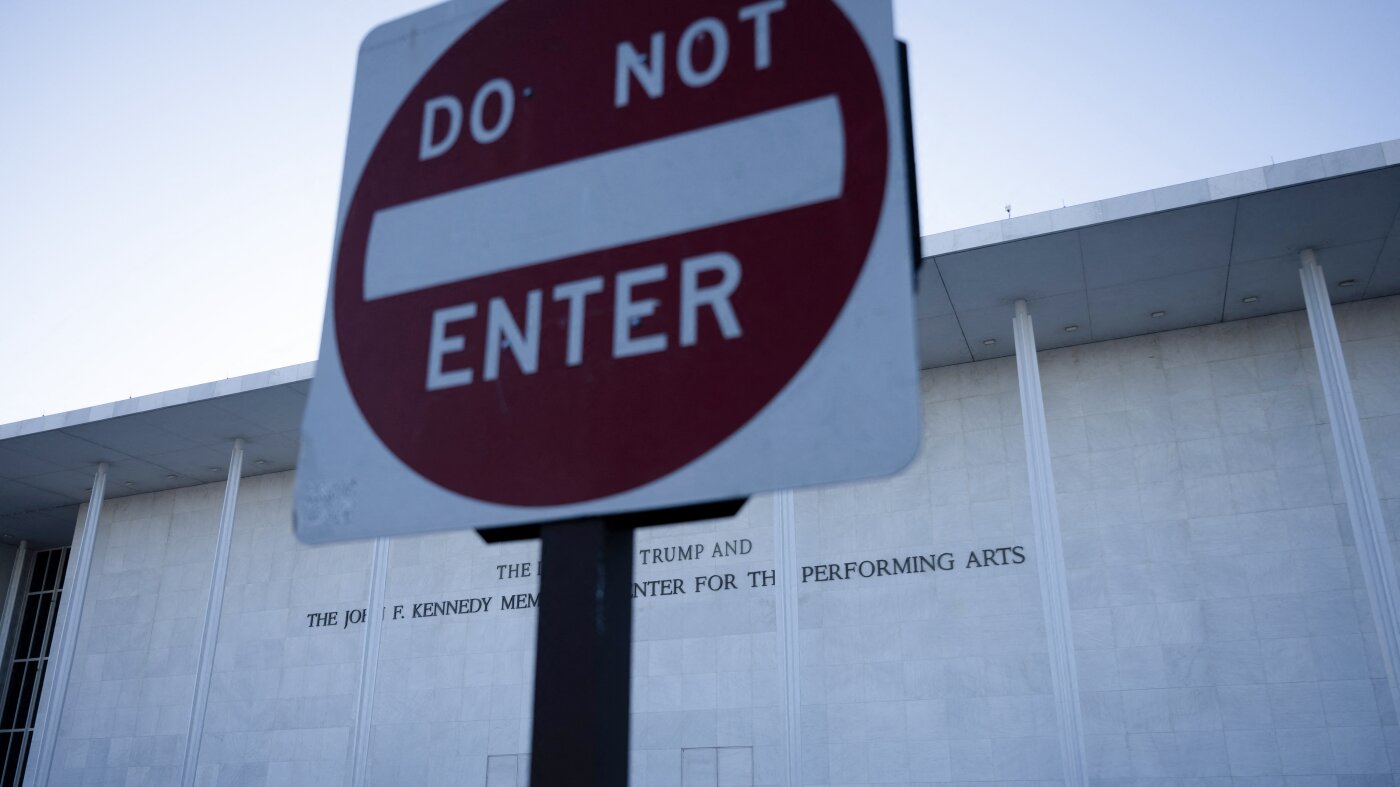
A view of the Kennedy Center in Washington, D.C., in February. On Monday, a group of eight architecture and culture groups filed a federal lawsuit against President Trump and the arts complex’s board to halt a planned renovation.
Brendan Smialowski/AFP via Getty Images
hide caption
toggle caption
Brendan Smialowski/AFP via Getty Images
A group of eight architecture and cultural organizations is suing President Trump and the board of the Kennedy Center over the planned renovations of the arts complex, which are set to begin in just over three months. The lawsuit seeks to have the White House and the Kennedy Center board comply with existing historic preservation laws and secure Congress’ approval before moving ahead with the renovations.
The lawsuit was filed Monday in U.S. District Court in Washington, D.C., by the American Institute of Architects, the American Society of Landscape Architects, the Committee of 100 on the Federal City, the Cultural Landscape Foundation, the DC Preservation League, Docomomo US and the National Trust for Historic Preservation. Collectively, these groups have over 1 million members.

In an email sent Monday to NPR, White House spokesperson Liz Huston wrote: “President Trump is committed to making the Trump-Kennedy Center the finest performing arts facility in the world. We look forward to ultimate victory on the issue.” NPR also requested comment from the Kennedy Center, but did not receive a response.
In the lawsuit, the groups wrote that the Kennedy Center has stood since 1971 “as a living memorial to a slain president, a national gathering place for the arts and a defining landmark within the monumental core of the Nation’s capital. Its Modernist design, grand public spaces and role as a premier cultural institution together form an irreplaceable legacy of history, architecture and civic purpose.”
They argue that under President Trump as the arts complex’s chairman, the president and his hand-selected board of trustees wish “to fundamentally alter this iconic property without complying with bedrock federal historic preservation and environmental laws, and without securing the necessary Congressional authorization.” They cite the demolition of the East Wing of the White House last October as an example of how they say Trump is reshaping the landscape of the nation’s capital, as well as Trump’s repeated assertion that he intends a “complete rebuilding” of the Kennedy Center.

Last Monday, the center’s board voted to close the arts complex for two years of renovations, beginning just after July 4 celebrations. Just before the vote, Trump held a press conference with the Kennedy Center board and other close allies, including New England Patriots owner Robert Kraft and casino magnate Steve Wynn. In that press conference, Trump said that the vote was coming “a little late for the board, because we’ve already announced it.”
Architectural plans for the renovation have not been made public. Trump has frequently said that experts have been consulted on those plans; NPR has made repeated requests to learn more about the project, including about the bidding, financing and experts working on the renovations, but the Kennedy Center has declined to respond.


Motown Museum in Detroit to Premiere New Psychedelic Soul Exhibit

Pain at the pump: One gas station in S. San Francisco near $7 a gallon

H-E-B plans new store on the eastern side of Dallas-Fort Worth

Motorcyclist killed in crash on Biscayne Boulevard, deputies say

Another crop of Boston College NFL hopefuls get a chance to shine at Eagles’ annual Pro Day

Florida High School Football Rankings: Top 25 teams – Oct. 21

How old is Bo Nix? What to know about Oregon quarterback ahead of 2024 NFL Draft

Cleary's 21 help Le Moyne down Central Connecticut State 69-64 in OT

99th annual Pony Swim held in Virginia

Indiana Members Credit Union announced as new anchor tenant at Bottleworks District

See How the LaGuardia Plane Crash Unfolded

Mullin confirmed as DHS chief as lawmakers near solution on shutdown standoff

Von der Leyen clinches Australia trade deal

Trump administration places Christopher Columbus statue on White House grounds

See TSA Wait Times at Major U.S. Airports
-

 Detroit, MI6 days ago
Drummer Brian Pastoria, longtime Detroit music advocate, dies at 68
-

 Oklahoma1 week ago
Family rallies around Oklahoma father after head-on crash
-

 Georgia1 week ago
How ICE plans for a detention warehouse pushed a Georgia town to fight back | CNN Politics
-

 Alaska1 week ago
Police looking for man considered ‘armed and dangerous’
-

 Movie Reviews5 days ago
‘Youth’ Twitter review: Ken Karunaas impresses audiences; Suraj Venjaramoodu adds charm; music wins praise | – The Times of India
-

 Education1 week ago
Video: Turning Point USA Clubs Expand to High Schools Across America
-
 Science1 week ago
Long COVID leaves thousands of L.A. county residents sick, broke and ignored
-

 Sports3 days ago
IOC addresses execution of 19-year-old Iranian wrestler Saleh Mohammadi