Lifestyle
The New American Travel Anxiety: ‘Will They Hate Us?’


As Franck Verhaeghe and two friends planned a March trip to Mexico City, they plotted out not only where they would stay and which museums they would visit but also the language they would speak: French. “It’s not that I think it’s unsafe for Americans,” said Mr. Verhaeghe, 65, who lives in California, but “I can imagine people there aren’t very happy with us. So my friends and I decided that on this trip, we would all just speak French to each other.”
Two months into his second term, President Trump has set off panic in Europe about the potential collapse of alliances; inspired boycotts of American products in Canada; heightened tensions between Denmark and Greenland over the island’s independence; and prompted protests in Istanbul and Panama over the possibility of U.S. territorial expansion.
His proposals are also making some Americans reconsider their travel plans.
Behavior adjustments
Since the inauguration, some agencies are noticing a drop in sales for international travel by Americans. Tour operators are fielding inquiries from customers concerned about how they will be received abroad. The risk management company Global Rescue recently conducted a survey that found that 72 percent of “experienced” U.S. travelers expected Americans to be less welcome abroad this year.
The nervousness does not seem to have translated into widespread cancellations, but social media and travel forums are filled with Americans asking variations of “Will they hate us?”
Christine Bauer, a New Hampshire retiree who is planning a trip to France, asked travelers on a Rick Steves’ Europe forum for insight into how the French were responding to American foreign policy changes. A few days later, she grew more worried when “Trump and Musk began insulting NATO and allied countries.” She and her husband haven’t made any changes “at least for now,” but they are “hoping that travel doesn’t become more unsafe.”
Vicci Jaffe, 68, has second thoughts about an excursion to Berlin this fall. Her concern stems not only from the rise of the far right in Germany, but also from political changes at home. “How will I be regarded while in Berlin?” she asked. “At the very least, I am embarrassed, but also now afraid of retribution or violence.”
Some people, including Mr. Verhaeghe, who is traveling to Mexico using his second, European, passport, are adjusting their behavior. Cheryl Carlson, 63, a Chicago educator, plans to reveal her nationality ahead of time to the owners of the accommodations she and her husband will be staying in during a trip to Canada “to make sure our presence would not cause a small business to feel uncomfortable hosting us.” Peter Serkian, 60, who travels to Canada twice a month from Farmington Hills, Mich., pays in Canadian dollars, not U.S. dollars. “I try to hide that I am an American,” he said.
Feeling spooked
Those measures are preventative; none of the interviewees for this article have actually experienced anti-American sentiment. But the nervousness is taking its toll. Cameron Hewitt, content and editorial director for Rick Steves’ Europe, has seen a dip in guidebook sales, “literally starting the day of the inauguration,” he said.
Lisa Wirth, an owner of Ataxito, which offers tours to Oaxaca, Mexico, said that some prospective guests are feeling spooked. “We had several American travelers decide to cancel our February weeklong tour, either because the travel partners they had planned on traveling with backed out due to concerns regarding safety in Mexico or because the current administration and their anxiety around it caused them to pause any trip decisions in the short term,” she said. Others are postponing because of “concerns regarding inflation and job losses.”
Jack Ezon, founder of Embark Beyond, a New York-based luxury travel company, had a client cancel a trip to Mexico. “They were doing a birthday-party trip and had booked out the whole hotel,” he said. “But this was right after the whole tariff thing, and their security team said, ‘Don’t go, there’s anti-American sentiment, it’s going to be too dangerous.’”
That fear has not been borne out in the experience of other clients, said Mr. Ezon, who added that bookings to Mexico have rebounded. And sales to Europe are booming. “Ever since Covid, the recovery from crisis is a lot faster,” he said.
It’s hard to pinpoint the cause for travelers’ unease. Plane crashes, tariffs and stock market instability have contributed, said Jeff Roy, executive vice president of the tour company Collette. “We’ve been a little bit behind for the last four to five weeks from what we were producing last year at this time,” Mr. Roy said. “There’s so much swirling around right now, it’s really hard to know exactly what’s causing the change.”
What Mr. Roy describes as “mild trepidation” is playing out more in nervous calls than in cancellations. And because many bookings are made far in advance, he’s not too worried about this year. If the uncertainty continues, he said, “I don’t know about 2026.”
Unexpected interest
A few destinations have experienced increased interest since Mr. Trump took office. After he said that he wanted the United States to “buy” Greenland — one of The New York Times’s 52 Places to Go in 2025 — the Greenland tourist authority said it was seeing evidence of “piqued curiosity about the destination.”
The new attention has had a similar effect on Panama, whose canal Mr. Trump has said he wants the United States to reclaim. Carlos Ivan Espinosa, the owner of Panama Canal Tours, said his company has experienced a significant increase in bookings by U.S. tourists. “President Trump’s declarations,” he said, “are awakening curiosity.”
That isn’t to say there haven’t been protests against American rhetoric, notably in Canada, where citizens have objected to Mr. Trump’s tariffs as well as his expressed desire to turn the country into “the 51st state.”
But those protests aren’t directed against American individuals, said Donna Salter, a retired journalist in Vancouver. She, like many Canadians, is swearing off travel to the United States for the duration of this administration but welcomes Americans. “We love Americans and we also love the American dollar, especially now,” Ms. Salter said.
Not all foreigners are receptive. One TikTok user in Scotland told “MAGA tourists” that they are not welcome, and a farmer on the Danish island of Bornholm terminated an agreement he had with a U.S. travel agency to receive tourists in his home for coffee and a chat. “I would feel ridiculous if I had to discuss democracy with representatives of such a government,” Knud Andersen, the farmer, told the Danish broadcaster DR.
On a trip to Italy, Rebecca Andersons, of California, and her family had a taxi driver whose criticisms of American politics started with Ronald Reagan and ended with Mr. Trump. Ms. Andersons told him they were “too young to vote for Reagan and actually are Californians who voted for Harris.” Apparently forgiven, they later found themselves singing along with the driver to “Volare.”
Other Americans are adopting tactics designed to deflect criticism, like answering the question “Where are you from?” with their state’s name. Sue Rook Nichols from California ordered buttons off Etsy that read, “I didn’t vote for him.” She plans to wear them on a trip to Europe.
The tactics may not be necessary. Mariana Hamman, who owns a tour agency in Mexico, said that none of her colleagues had reported encountering anti-American sentiment. “Sometimes you see ‘Go home, gringo’ graffiti,” she said. “But that’s about overtourism, not politics.”
When David Rojas-Klein, of California, traveled to Mexico recently, his expectation that he would “see something anti-American” never materialized. “What I learned was that people make a distinction between the American people and the American government.”
The fear that people in other countries will equate them with their politicians’ actions is a peculiarly American anxiety, one that also surfaced during the Gulf War, said Mr. Hewitt of Rick Steves’ Europe. “If you look at history, most European countries have had experience with a ruler who, especially in retrospect, they’re not particularly proud of.”
Bo Albertus, a 57-year-old school principal in Denmark, agrees. He administers a Danish Facebook group, 89,000 strong, that is dedicated to boycotting American products. But American citizens are welcome in his country, Mr. Albertus said. “The Danish people don’t have a problem with Americans. We have a problem with the American administration.” Even a tourist in a MAGA hat would be treated fine, he added, “Because in Denmark, we have freedom of speech.”
Follow New York Times Travel on Instagram and sign up for our Travel Dispatch newsletter to get expert tips on traveling smarter and inspiration for your next vacation. Dreaming up a future getaway or just armchair traveling? Check out our 52 Places to Go in 2025.



First released in 2000, the acclaimed film Amores perros, which was produced and directed by Alejandro González Iñárritu and written by Guillermo Arriaga, has been remastered and is returning to theaters.
Mubi
hide caption
toggle caption
Mubi
Before Amores Perros became widely regarded as a modern classic, it belonged to Mexico. The film premiered at the 53rd Cannes Film Festival in 2000, where it won The Grand Prix, launching a run of international acclaim that has never quite ended. This month, Amores Perros is back in theaters in a fully remastered format from its original Kodak film stocks.
The film’s plot centers on three strangers whose lives intersect at the scene of a car crash. Each story wrestles with overlapping issues of social class disparities, crime and familial betrayal. The release in Mexico coincided with the end of the Institutional Revolutionary Party or PRI’s 71-year hold on power. Amores Perros was followed by a period of original, contemporary films in Latin America that would prove the region’s studios could compete with Hollywood in scope and complexity.

One of the film’s lead charachters, Octavio, is played by actor Gael García Bernal.
Mubi
hide caption
toggle caption
Mubi
The film marked the directorial debut of Alejandro González Iñárritu, who would go on to win four Academy Awards including back-to-back best director awards for Birdman (2014) and The Revenant (2015). In a recent interview with NPR, Gael García Bernal, a lead actor in Amores Perros, called the film’s launch “a new geography in cinema.”
González Iñárritu and García Bernal spoke with Morning Edition’s A Martinez about their early collaboration and the film’s continued resonance with new audiences.
Listen to the interview by clicking on the blue play button above.
The broadcast version of this story was produced by Margaux Bauerlein.

Preparations underway for the Great American State Fair, as seen on Washington, D.C.’s National Mall last week.
Win McNamee/Getty Images
hide caption
toggle caption
Win McNamee/Getty Images
A lot is changing these days in Washington, D.C., with even more on the horizon: 10 city blocks of the National Mall will soon transform into a multi-week state fair spectacle, complete with a Ferris wheel, in honor of the country’s 250th birthday.
The “Great American State Fair” will run from June 25 through July 10, promising to bring state-themed pavilions, movie screenings, musical performances, military flyovers, nostalgic snacks, a daily rodeo — and potentially scores of tourists — to the nation’s capital.
It will feature more than 150 exhibits, with full participation across the United States and several U.S. territories, as well as “businesses, innovators and civic organizations,” according to Freedom250, the White House-backed campaign that is organizing the fair in addition to other semiquincentennial events.
“A master-planned celebration will unfold along the National Mall from the Capitol to the Washington Monument, featuring vibrant pavilions representing every U.S. state and territory,” says the White House website, adding that the beaux-arts style tents will also highlight national themes like agriculture, the arts, faith and family.

Workers started setting up the fair, in view of the U.S. Capitol, in late May.
Anna Moneymaker/Getty Images
hide caption
toggle caption
Anna Moneymaker/Getty Images
However, not all states are sending official government delegations to the fair. Officials in more than half a dozen states — including Connecticut, Hawaii, Illinois, Maine, Massachusetts, North Carolina, Oregon, Rhode Island and Washington — confirmed to NPR that they are not participating directly. Most cited financial considerations and a desire to prioritize celebrations in their own communities, though others voiced political concerns.
Rachel Reisner, a spokesperson for Freedom250, emphasized in an email that there is “a vast majority participating” among the states. Additionally, others are being represented by local businesses and organizations — such as two companies from North Carolina and a museum from Illinois.
“Whether represented by a governor’s office, a tourism board, or a beloved state company or organization, every community will be celebrated, and every American will see themselves in this once-in-a-generation event,” Reisner said.
The state fair is one in a series of patriotic anniversary events planned for D.C. this summer, including the UFC fight night outside the White House last Sunday and a fireworks-heavy July Fourth celebration that President Trump rebranded as a political rally in a Truth Social post on Monday.
In another post that day, Trump encouraged people to attend the kickoff to the fair on Wednesday — and, by extension, the “summer long Celebration of 250 years of American Independence.”
“We are going to have fun, and celebrate America!” he wrote.

That opening event was originally billed as a concert, though many of the performers originally attached to it — including Martina McBride, Bret Michaels, the Commodores and Young MC — have withdrawn in recent weeks. Organizers now say the kickoff will feature remarks by Trump and performances by Lee Greenwood and Christopher Macchio, musicians who have sung at Trump events before.
What to know about the fair
The fair is an all-day, rain-or-shine event. It is free and open to the public, though preregistration is encouraged.
Freedom250 is promising attendees an interactive experience at the state pavilions, from Michigan’s mechanical milking cow to Florida’s re-creation of a Spanish fort honoring explorer Juan Ponce de León.
There will also be activations by a wide range of companies, organizations and government agencies, from NASA and John Deere to Meta and the Washington Commanders.
Each of the fair’s 16 days has its own theme, including two “MAHA Mondays” and a military and veterans’ appreciation day. July Fourth is branded as the Independence Day Celebration, and the fair’s final day is billed as “The Next 250: Innovation.”
The extravaganza will span a wide swath of the National Mall, much of it already blocked off with fences and construction cranes. The fair may also impact air travel in the area.
In a press release this week, the Metropolitan Washington Airports Authority warned travelers at D.C.’s Reagan National Airport that their flights might be adjusted or delayed due to some of the America 250 celebrations — including the opening and closing days of the state fair.
“Many events will include downtown flyovers or other aerial displays such as fireworks or parachute jumps, which will affect flights periodically at Reagan National,” it said, adding that the most significant disruptions are expected on July 3 and 4.
Why some state governments aren’t participating
Nearly 10 states say they will not be spending funds or sending personnel to the D.C. fair. While all but one are led by Democratic governors, many told NPR the decision not to attend was a financial decision, not an overt political statement.
“The states were expected to fund and to staff a multi-week exhibit in Washington, D.C., which would entail getting staffers down to D.C., housing them, feeding them, and with the booths and everything … the estimated budget was at least $100,000,” said Cathryn Vaulman, a spokesperson for Connecticut Gov. Ned Lamont.
Vaulman said that money would have come out of the state’s budget for its own 250th celebrations — so leaders made a “resource-based decision” to focus on those instead. But she noted that plenty of other blue states, like New York, are still planning to staff the state fair.
Some other states estimated their costs as $100,000, though others were much higher: Sarah Hansen, director of the Maine Semiquincentennial Commission, told NPR that its cost estimates were “half a million dollars or more,” which she said was not feasible for the state, “given the federal government’s refusal to provide any funding.”
Washington Lt. Gov. Denny Heck’s office told NPR over email that the state opted out in large part because of confusion over costs.

The fair will span 10 city blocks on the National Mall for over two weeks.
Anna Moneymaker/Getty Images
hide caption
toggle caption
Anna Moneymaker/Getty Images
“We had heard participating states (whether that was state agencies, tourism authorities, etc.) were generally planning for their costs to be anywhere between $100k to nearly $1m,” Dallas Roberts, Heck’s chief of staff, said in the email.
Each state and territory gets about 600 square feet to build its exhibit, with no set dollar amount required to participate, according to Freedom250. It acknowledges that cost was a concern for many states, which is why some partnered with tourism bureaus and companies.
“Our ask was not your government entity must do this and give money; it was an invitation to the state to represent their culture, heritage, and landscape however they would like,” Reisner, the Freedom250 spokesperson, wrote in an email, adding that the event is funded by “both private and public dollars.”
Officials in a handful of states have been more outspoken in their criticism of how the event is being run.

Speaking to GBH News’ Boston Public Radio earlier this month, Massachusetts Gov. Maura Healey, who also opted out, said Trump “invited all the states to participate and wants to charge us to go down and put something on his exhibit.”
“It’s just ridiculous,” she added. “This is taxpayer money.”
Luke Harkins, a spokesperson for Oregon Gov. Tina Kotek, told Oregon Public Broadcasting that the state is not participating “due to both the cost of participating in the Fair and growing concerns that the event in Washington, D.C. is shaping up to be a more partisan affair than originally presented.”
Officials from different states told NPR they had different understandings of how representation from their state would work.
Jayette Bolinski, a spokesperson for the Illinois Department of Natural Resources, said the Peoria Riverfront Museum volunteered to represent the state with an “Illinois-centric pavilion” featuring a hologram of stories from over 50 residents — none of which was paid for by state funds, she stressed. Vaulman, of Connecticut, said she believes its booth will have photos and posters of some sort, while Hansen of Maine said their inquiries to Freedom250 about this “have gone unanswered.”
What else is on the anniversary agenda — and who’s planning it
Planning for national 250th anniversary events mainly falls to two main groups, which have become increasingly politicized.
In 2015, looking ahead, Congress created a nonpartisan commission to orchestrate anniversary celebrations, which in turn created a nonprofit called America250. It’s composed mostly of private citizens, along with several members of Congress and representatives from federal agencies.
America250 appears to focus mainly on getting Americans involved in celebrations at the local level, such as attending synchronized nationwide block parties. It has gathered — and recently sealed — a time capsule with contributions from every state and is hosting a July Fourth concert in Los Angeles, with tickets selling for $17.76, featuring the Smashing Pumpkins, Chris Stapleton and Queen Latifah.
Freedom250, on the other hand, emerged from a Trump 2025 executive order establishing a task force for celebrating the milestone. Critics — including progressive consumer advocacy group Public Citizen — see this group as Trump’s attempt to bypass America250 after trying unsuccessfully to pack it with loyalists.
Freedom250 describes itself as “the national, non-partisan organization leading the celebration of our Nation’s 250th birthday.” Another sign of its standing in the administration: The official White House webpage for the 250th links out to Freedom250, not America250.
The group has organized many other high-profile anniversary events, including the White House UFC event, the July Fourth rally on the Mall, a July Fourth tall ship event on the East Coast and the Freedom 250 Grand Prix of Washington, D.C., an Indycar event scheduled for the National Mall in August.
Trump’s executive order says the 250th task force must disband at the end of the year, unless he extends it. And many of the beautification projects his administration is undertaking in D.C. — from restoring fountains to installing statues to repainting the Lincoln Memorial Reflecting Pool — are tied to the anniversary but could shape the city far beyond it.

I took a ride on a tuk-tuk motorcycle taxi around Maputo, Mozambique, with my buddy and fellow All Things Considered producer, Vincent Acovino. We were in the country reporting on changes to U.S. funding for AIDS in Africa.
Vinny noticed it first: There was something magical about a number of the concrete apartment blocks and government offices here. With half a day off and a little googling, we gave ourselves an impromptu tour of the architecture of Amâncio “Pancho” Guedes. The late Portuguese-born architect designed some pretty cool buildings here in the 1950s and ’60s. They include the Prédio Abreu, Santos e Rocha pictured above, and other structures with evocative names like The Smiling Lion apartment block and the Lemon Squeezer church. Step into a small interior stairwell of The Dragon House, and you see a mural in sparkling black and white stone of a spiky dragon with a toothy grin. It transforms what would otherwise be a dim stairwell.
Guedes designed more than 500 buildings in the city, from churches to bakeries. I don’t have the language to capture it: the use of heavy materials, combined with the playful use of shapes and murals. “Eclectic Modernist,” I later learned, is how his work is described. One critic wrote that his work brilliantly mixes the “sculptural and figurative with practical requirements and traditional local identity.”
Maputo will change and I have to imagine not all of his work will survive. But stumbling into a town with a visual landscape that still shows Guedes’ thumbprint was a delight. For an afternoon, riding through the city streets in the open-air tuk-tuk, looking for what might have been his handiwork was a good time. Like an Easter egg hunt in concrete.
For more Far-Flung Postcards, click here.
-

 Technology6 minutes ago
Barret Zoph is out at OpenAI again after just five months
-

 World11 minutes ago
Iran hardliner behind US deal warns Tehran won’t honor agreement if Trump fails to deliver
-

 Politics18 minutes ago
Top GOP lawmaker rallies around conservative school board member facing calls to resign
-

 Sports26 minutes ago
2026 World Cup Odds: How Far Can Mexico Go After Winning Group A?
-

 Technology33 minutes ago
6 in 10 identity crimes now begin with a new account
-
 Business36 minutes ago
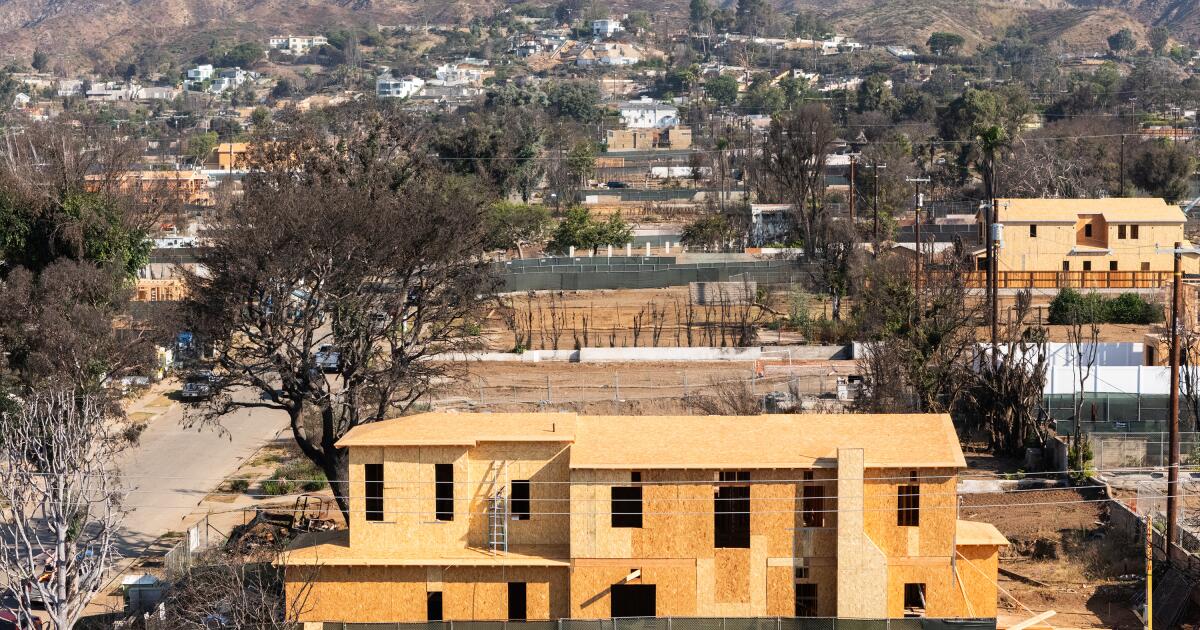
January 2025 wildfire victims seek tougher penalties against State Farm over claims handling
-
 Entertainment41 minutes ago
Review: ‘Sugar,’ with Colin Farrell as an alien private eye, gets a new and improved second season
-
 Politics51 minutes ago
Political watchdog fines Newsom for failing to report $5.5M in solicited donations on time

