Lifestyle
The New American Travel Anxiety: ‘Will They Hate Us?’


As Franck Verhaeghe and two friends planned a March trip to Mexico City, they plotted out not only where they would stay and which museums they would visit but also the language they would speak: French. “It’s not that I think it’s unsafe for Americans,” said Mr. Verhaeghe, 65, who lives in California, but “I can imagine people there aren’t very happy with us. So my friends and I decided that on this trip, we would all just speak French to each other.”
Two months into his second term, President Trump has set off panic in Europe about the potential collapse of alliances; inspired boycotts of American products in Canada; heightened tensions between Denmark and Greenland over the island’s independence; and prompted protests in Istanbul and Panama over the possibility of U.S. territorial expansion.
His proposals are also making some Americans reconsider their travel plans.
Behavior adjustments
Since the inauguration, some agencies are noticing a drop in sales for international travel by Americans. Tour operators are fielding inquiries from customers concerned about how they will be received abroad. The risk management company Global Rescue recently conducted a survey that found that 72 percent of “experienced” U.S. travelers expected Americans to be less welcome abroad this year.
The nervousness does not seem to have translated into widespread cancellations, but social media and travel forums are filled with Americans asking variations of “Will they hate us?”
Christine Bauer, a New Hampshire retiree who is planning a trip to France, asked travelers on a Rick Steves’ Europe forum for insight into how the French were responding to American foreign policy changes. A few days later, she grew more worried when “Trump and Musk began insulting NATO and allied countries.” She and her husband haven’t made any changes “at least for now,” but they are “hoping that travel doesn’t become more unsafe.”
Vicci Jaffe, 68, has second thoughts about an excursion to Berlin this fall. Her concern stems not only from the rise of the far right in Germany, but also from political changes at home. “How will I be regarded while in Berlin?” she asked. “At the very least, I am embarrassed, but also now afraid of retribution or violence.”
Some people, including Mr. Verhaeghe, who is traveling to Mexico using his second, European, passport, are adjusting their behavior. Cheryl Carlson, 63, a Chicago educator, plans to reveal her nationality ahead of time to the owners of the accommodations she and her husband will be staying in during a trip to Canada “to make sure our presence would not cause a small business to feel uncomfortable hosting us.” Peter Serkian, 60, who travels to Canada twice a month from Farmington Hills, Mich., pays in Canadian dollars, not U.S. dollars. “I try to hide that I am an American,” he said.
Feeling spooked
Those measures are preventative; none of the interviewees for this article have actually experienced anti-American sentiment. But the nervousness is taking its toll. Cameron Hewitt, content and editorial director for Rick Steves’ Europe, has seen a dip in guidebook sales, “literally starting the day of the inauguration,” he said.
Lisa Wirth, an owner of Ataxito, which offers tours to Oaxaca, Mexico, said that some prospective guests are feeling spooked. “We had several American travelers decide to cancel our February weeklong tour, either because the travel partners they had planned on traveling with backed out due to concerns regarding safety in Mexico or because the current administration and their anxiety around it caused them to pause any trip decisions in the short term,” she said. Others are postponing because of “concerns regarding inflation and job losses.”
Jack Ezon, founder of Embark Beyond, a New York-based luxury travel company, had a client cancel a trip to Mexico. “They were doing a birthday-party trip and had booked out the whole hotel,” he said. “But this was right after the whole tariff thing, and their security team said, ‘Don’t go, there’s anti-American sentiment, it’s going to be too dangerous.’”
That fear has not been borne out in the experience of other clients, said Mr. Ezon, who added that bookings to Mexico have rebounded. And sales to Europe are booming. “Ever since Covid, the recovery from crisis is a lot faster,” he said.
It’s hard to pinpoint the cause for travelers’ unease. Plane crashes, tariffs and stock market instability have contributed, said Jeff Roy, executive vice president of the tour company Collette. “We’ve been a little bit behind for the last four to five weeks from what we were producing last year at this time,” Mr. Roy said. “There’s so much swirling around right now, it’s really hard to know exactly what’s causing the change.”
What Mr. Roy describes as “mild trepidation” is playing out more in nervous calls than in cancellations. And because many bookings are made far in advance, he’s not too worried about this year. If the uncertainty continues, he said, “I don’t know about 2026.”
Unexpected interest
A few destinations have experienced increased interest since Mr. Trump took office. After he said that he wanted the United States to “buy” Greenland — one of The New York Times’s 52 Places to Go in 2025 — the Greenland tourist authority said it was seeing evidence of “piqued curiosity about the destination.”
The new attention has had a similar effect on Panama, whose canal Mr. Trump has said he wants the United States to reclaim. Carlos Ivan Espinosa, the owner of Panama Canal Tours, said his company has experienced a significant increase in bookings by U.S. tourists. “President Trump’s declarations,” he said, “are awakening curiosity.”
That isn’t to say there haven’t been protests against American rhetoric, notably in Canada, where citizens have objected to Mr. Trump’s tariffs as well as his expressed desire to turn the country into “the 51st state.”
But those protests aren’t directed against American individuals, said Donna Salter, a retired journalist in Vancouver. She, like many Canadians, is swearing off travel to the United States for the duration of this administration but welcomes Americans. “We love Americans and we also love the American dollar, especially now,” Ms. Salter said.
Not all foreigners are receptive. One TikTok user in Scotland told “MAGA tourists” that they are not welcome, and a farmer on the Danish island of Bornholm terminated an agreement he had with a U.S. travel agency to receive tourists in his home for coffee and a chat. “I would feel ridiculous if I had to discuss democracy with representatives of such a government,” Knud Andersen, the farmer, told the Danish broadcaster DR.
On a trip to Italy, Rebecca Andersons, of California, and her family had a taxi driver whose criticisms of American politics started with Ronald Reagan and ended with Mr. Trump. Ms. Andersons told him they were “too young to vote for Reagan and actually are Californians who voted for Harris.” Apparently forgiven, they later found themselves singing along with the driver to “Volare.”
Other Americans are adopting tactics designed to deflect criticism, like answering the question “Where are you from?” with their state’s name. Sue Rook Nichols from California ordered buttons off Etsy that read, “I didn’t vote for him.” She plans to wear them on a trip to Europe.
The tactics may not be necessary. Mariana Hamman, who owns a tour agency in Mexico, said that none of her colleagues had reported encountering anti-American sentiment. “Sometimes you see ‘Go home, gringo’ graffiti,” she said. “But that’s about overtourism, not politics.”
When David Rojas-Klein, of California, traveled to Mexico recently, his expectation that he would “see something anti-American” never materialized. “What I learned was that people make a distinction between the American people and the American government.”
The fear that people in other countries will equate them with their politicians’ actions is a peculiarly American anxiety, one that also surfaced during the Gulf War, said Mr. Hewitt of Rick Steves’ Europe. “If you look at history, most European countries have had experience with a ruler who, especially in retrospect, they’re not particularly proud of.”
Bo Albertus, a 57-year-old school principal in Denmark, agrees. He administers a Danish Facebook group, 89,000 strong, that is dedicated to boycotting American products. But American citizens are welcome in his country, Mr. Albertus said. “The Danish people don’t have a problem with Americans. We have a problem with the American administration.” Even a tourist in a MAGA hat would be treated fine, he added, “Because in Denmark, we have freedom of speech.”
Follow New York Times Travel on Instagram and sign up for our Travel Dispatch newsletter to get expert tips on traveling smarter and inspiration for your next vacation. Dreaming up a future getaway or just armchair traveling? Check out our 52 Places to Go in 2025.



The first essay in Joan Didion’s famous collection Slouching Towards Bethlehem is an odd bit of true crime writing titled “Some Dreamers of the Golden Dream.” It covers the case of Lucille Miller, a “housewife” who was accused of killing her husband in 1964 and convicted in 1965 — and includes Didion’s signature blend of smart, beautiful prose and deadpan disdain.
Didion describes San Bernadino County, Calif., where the murder took place as, among other things, “the country of the teased hair and the Capris and the girls for whom all life’s promise comes down to a waltz-length white wedding dress and the birth of a Kimberly or a Sherry or a Debbi and a Tijuana divorce and a return to hairdressers’ school. ‘We were just crazy kids,’ they say without regret, and look to the future. The future always looks good in the golden land, because no one remembers the past.”
One of these ambitionless girls, Didion implies, is Lucille Miller, who named her eldest daughter Debra (Debbie for short). In 1964, Debbie was a 14-year-old facing the death of her father and the imminent loss of her mother. Debra Miller has now published her own book The Most Wonderful Terrible Person: A Memoir of Murder in the Golden State with She Writes Press, a hybrid publisher.
Miller opens her memoir with a reflection on her unsolicited relationship with Didion. Miller found it offensive and unsympathetic, writing: “She taught her children to be offended, too, and I hated the essay until I had enough hindsight to see it through new eyes many years later.” Indeed, it is likely this distinction — Miller being related to the subject of one of the most famous literary essayists’ essays — that will prompt many people to pick up the book, although those looking for a Didionesque narrative will be disappointed, as there is not an ounce of cynicism in it.

Instead, The Most Wonderful Terrible Person is a deeply sincere, if sometimes jumbled, reckoning with a life gone off its already rickety rails. Miller’s home life before her father’s death and her mother’s imprisonment was far from picture perfect. Born in Guam where her father, then a military dentist, was stationed, Miller’s parents first relocated to Japan and then to Oregon before finally moving to Southern California. One disturbing anecdote from those early years involves a crying 5-year-old Miller telling her father that her beloved dog, Shep, was too enthusiastic and knocked her down; “Out of ‘love for me,’” Miller writes, “my father gets his shotgun, takes Shep out back, and shoots him… I understood that something awful happened to Shep and it was my fault.”
Both of Miller’s parents were physically abusive — and their parents, she learns, were too — but where her father was largely emotionally distant, her mother was more unpredictable with her affections. Lucille ran hot and cold, sometimes telling her daughter that she preferred raising her younger siblings because they were boys, and other times taking her out on shopping sprees and lavishing her with affection.
The defining event of Miller’s youth, though, is her father’s death and her mother’s trial and imprisonment. The kids weren’t allowed to see their mother for a while after she first went to jail, and when they finally did and asked her when they’d all be able to go home, she told them: “As soon as this is all over.”

“‘This,’” Miller writes, “came to mean a lot of things, the unspoken things. That day, ‘this’ meant legal proceedings. Later, it meant the allegation of murder, and later still, a trial. Those abstractions didn’t mean anything to us yet. Each ‘this’ was a component unto itself. ‘This’ went on and on. It was easier not to call anything by its name, which made it too real, too unbearable. This was momentary, doable. Anybody could do this for a while.”
Not talking about what was really going on became, or perhaps already had been, a pattern in the family. Miller writes about the events that followed: how she and her brothers helped smuggle drugs, alcohol, and makeup into the prison Lucille was sent to; how they moved around a lot between different family members and friends, often separated from one another and from their baby sister who was born shortly after Lucille was convicted; how they the siblings all began using drugs and alcohol to cope and struggled with substance use disorders for years. But even though she details these and other troubles both during and after Lucille’s imprisonment, the memoir rarely digs deep into any real analysis of what was going on.

Still, Miller’s book is moving in its rawness, in its ability to lay out how trauma can derail a person’s life without them ever really recognizing it. An especially astute moment is when, following Lucille’s death in 1986, Miller realizes that her mother owed money to each and every one of the people attending her memorial. And still, Miller writes, “They had loved her, been caught in her spell, believed she was innocent of murdering my father, and now that she was gone, they missed her. She had made each one of them believe they were her best friend and that they were the most fascinating, fabulous person in the world. And now here they all were. Who was going to make them feel better than they were now?”
Even someone terrible, Miller recognizes, can be wonderful in some circumstances, to some people; she herself behaved terribly to many, and her regret and grief over her own behavior is palpable. Miller spent the second half of her life teaching English at a girls’ high school in Los Angeles, and although she is now retired, one very much gets the sense that she’s attempted, in paying attention to her students, to atone for some of her own sins. The Most Wonderful Terrible Person is not a confession, exactly, but it is a reckoning.
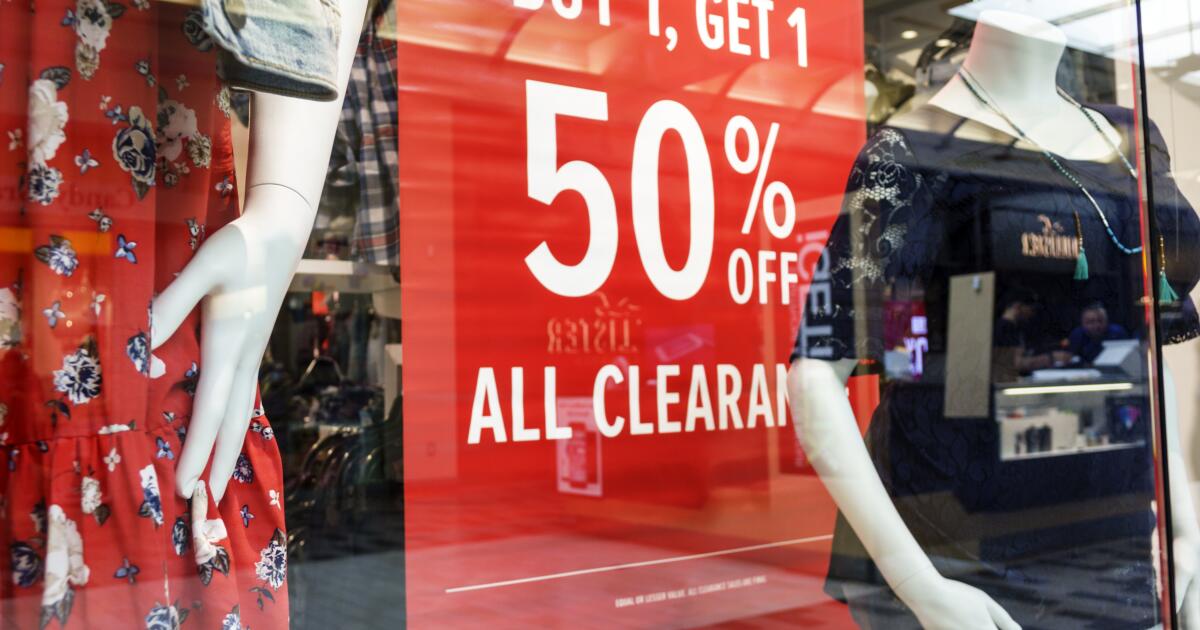
Plus-size retail chain Torrid is shuttering nearly a third of its stores as it grapples with sliding sales.
The City of Industry-based company closed 151 locations last year and an additional 11 stores since the start of 2026.
The closures targeted “structurally unproductive stores” with low sales, the company said on an earnings call last week. The company plans to shut up to another 30 locations during the first half of 2026, chief executive Lisa Harper said during the call.
Torrid was founded in California in 2001 and specializes in clothing for women who wear sizes 10 to 30. The total closures would be about 30% of the company’s physical locations, with just over 480 stores still open at the end 2025.
The closures are part of “intentional structural change” implemented by the company to regain its financial footing, said Chief Financial Officer Paula Dempsey.
The retailer has struggled with declining net sales, which fell 9% in 2025, Harper said.
Established mall retailers and department stores have struggled in recent years, with a major player like Forever 21 closing all of its locations last year.
Online-only retailers, like Temu and Shein, have cut into the retailers’ consumer base. Bargain retailers like Ross Dress for Less are also thriving, attracting a larger swaths of customers and reporting record sales.
Customer retention was strong in 2025 despite store closures, Harper said, and Torrid executives flagged early signs of success in shifting its customer base toward its digital platform.
Harper said she’s confident the company will experience a turnaround, adding that the first few months of 2026 “give us confidence that the foundation we’ve built is beginning to take hold,” she said.
“I am confident we are on the right path and encouraged by early signs of progress we are seeing in the business,” Harper said in the year-end report.
The company has focused on optimizing its store network by reintroducing sub-products like footwear and intimate apparel.
Investors think the company is on the right path. Torrid shares have surged close to 40% since it announced its plans.
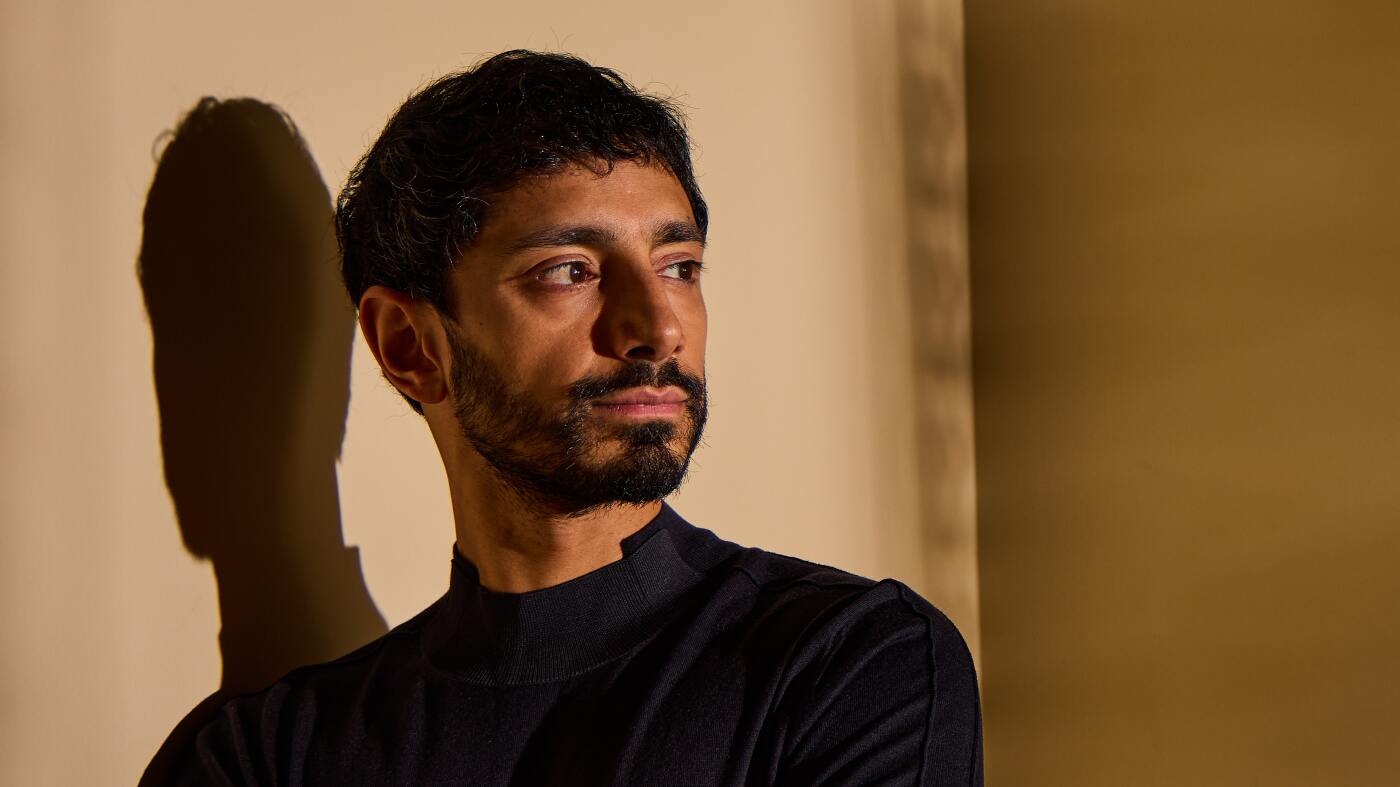
Riz Ahmed, shown here in December 2025, won an Academy Award in 2022 for his life action short film, The Long Goodbye.
Tristan Fewings/Getty Images
hide caption
toggle caption
Tristan Fewings/Getty Images
Actor Riz Ahmed admits to being his own worst critic.
“I remember waking up in the middle of the night, two years after I wrapped on [the 2016 series] The Night Of, and going to the mirror and redoing scenes that the whole world had already seen,” he says. “I’d already been handed awards for this performance, [but] I was like, no, I gotta get it right.”
That energy — what Ahmed refers to as “chasing acceptance and running away from your own inner critic” — runs through his new Prime Video series Bait. The series, which Ahmed wrote and stars in, focuses on a struggling British Pakistani actor named Shah who lands an audition to be the next James Bond. When word gets out, and the internet goes wild. Suddenly, Shah’s life starts to resemble the character he’s auditioning to play — except he’s chasing acceptance instead of a villain.

“[Showrunner Ben Karlin and I] felt, early on in the show, you needed to see just how mean Shah’s inner voice can be about him,” Ahmed says. “I think actually there’s a lot of Shah in all of us, more than we like to admit. … The gap between that public self and the messy vulnerability of our private selves is often huge.”
Ahmed says the show’s title has multiple layers and meanings. In British slang, “bait” refers to being blatant and attention-seeking. It can also refer to online trolling. In Arabic and Hebrew, it means home, while in Urdu, it’s a term for loyalty.
“Of course, there’s a big spy-thriller element to our show, and bait is something that is used as part of a trap,” Ahmed says. “So it’s a weird thing where only in retrospect we realize like, ‘oh my God, we accidentally stumbled on the perfect title for this that actually communicates the entire layer cake of this show.’ It is all those flavors and the word ‘bait’ means all those things.”
Interview highlights
On what James Bond represents in Bait
The show isn’t really about James Bond, but James Bond is a very important symbol because he is the ultimate symbol of success. As an actor he is the pinnacle of cinematic achievement. And yet for any of us, he’s this archetype of decisiveness, desirability, of being in control, being unflappable, of being invulnerable. And so I wanted the character of James Bond to serve as this symbol of aspiration, this unattainable kind of self that Shah is hunting down almost. And in chasing this symbol, is he abandoning himself? Is he abandoning where he’s from? Is he abandoning his family? Has he forgotten who he really is? …

I think that that’s something that we all kind of go through. We’re often pulled between the people we were and the people that we want to be. And actually the healthy equilibrium is probably somewhere in the middle. Probably that thing you want to, is like an attempt to escape yourself. And that thing that you were is maybe a version of yourself that you need to evolve out of.

Guz Khan and Riz Ahmed star in the Prime Video series Bait.
Prime Video
hide caption
toggle caption
Prime Video
On playing with different genres in Bait
We try and flip the series the whole time. There’s a spy-thriller episode, there’s romantic comedy, there’s kind of a surreal episode, there is one that’s almost like the Bond gala, like James Bond turns up at … [a] black-tie event and hijinks ensues. We’ve got that. We got all these different flavors and we’ve got an Eid episode as well. … We’re very deliberately trying to layer in and thread multiple different genres, because honestly, I feel like my life takes place in different genres. I feel that right now I’m here, lucky me, you know pretending to be all clever, talking to you guys on Fresh Air and I’m gonna walk outside and slip on a banana peel and fall flat on my face and suddenly I’m in a slapstick, you know?
We wanted to have that multiplicity, that tonal whiplash, because honestly that’s just what I enjoy and I felt like if I can make something that’s a full meal — that is a romance and a spy thriller and a family drama … but overall a comedy — then I could also just solve a very personal problem, which is me and my wife squabbling over what we’re going to watch.
On working with Patrick Stewart in Bait

I don’t want to give anything away. I guess I’ll just say that working with him showed me your art can kind of only be as big as your heart is, if that doesn’t sound too corny. Like, you have to have a capacity for such receptivity, humility, generosity, and empathy in order to kind of be an artist of that stature and at that level. … He was just such a pro and such a gentleman and I’ll really cherish that experience.
On discovering Hamlet as a British Pakistani teen
I am like many people. I felt like Shakespeare is the epitome of everything I’m on the outside of. It doesn’t belong to me. It’s stuffy. It is elitist. I got a government-assisted place to a private school where I felt like an outsider for many different reasons. And I was lucky enough to have an English teacher … who [was] a white, Jewish middle-aged man from a different place in the U.K. I thought we had nothing in common, but he spoke fluent Punjabi, and he brought me Hamlet and said, “This thing, this story, this character, it’s at the heart of the establishment that you feel so alienated from in many ways. But have a read of it? You might recognize yourself in this character.”

And I did, like millions of people have, right? Hamlet being a character who feels out of place. Hamlet himself feels like an outsider. He feels like he doesn’t belong, like no one understands. … And it was then, at the age of 17, that I very precociously had the idea that, “Man, I wanna make a movie of this one day.”
On starring in a new adaptation of Hamlet
Hamlet is a story and it’s character who is grieving the illusion that the world was ever a fair place. And I think that’s how we’re all feeling now. We’re all grieving and reeling from this realization that “OK, I knew the world is unfair, but now the shameless brazen unfairness of it is just kind of laid bare.” … The part that we were struggling to unlock is: How do you not make this feel just like a Shakespeare performance, and a poetry recital? How do you not make this feel like a kind of self-congratulatory, like “actor wants to take on the classic”?
It really took us meeting Aneil Karia, the director. It was after I collaborated with him on the short film, The Long Goodbye, for which he won an Oscar, that I was like, “Oh, I think we know how to do this. We need a director who’s worked a lot in rap music videos. We need a director who can render poetry in a very raw way and give us raw action in a poetic way.” … We had a long conversation about how this has to feel like music.
On how his background as an MC helped with the Shakespeare verse

One thing that [Shakespeare] played with all the time was rhythm. Rhythm, rhythm, rhythm. And so, in the same way that when I listen to some of my favorite rappers’ new songs, I don’t know what they say the first-time around, but I am totally wrapped. I’m totally leaning in, I’m engaged. I feel it emotionally. It’s the same way. Your first experience of this thing is supposed to be like music. You didn’t catch all of the words, but that word there felt weird enough to make you sit up. And what you’re supposed to do is receive an electric charge of rhythm and melody and musicality, just like rap music. But that’s not the actual experience of these plays. So I wish more people spoke about Shakespeare in that way. Because, to me, it is much more like music than it is an English class.
Ann Marie Baldonado and Nico Gonzalez-Wisler produced and edited this interview for broadcast. Bridget Bentz, Molly Seavy-Nesper and Beth Novey adapted it for the web.


Hawaii launches emergency relief program for farmers, businesses | Honolulu Star-Advertiser

Crash blocking eastbound lanes on Idaho Route 24

Lottery-winning ticket worth $5.6 million sold in downstate Illinois

International academy proposes tennis center in Noblesville

USA TODAY Sports Network picks for Iowa vs Nebraska in Sweet 16

Florida High School Football Rankings: Top 25 teams – Oct. 21

How old is Bo Nix? What to know about Oregon quarterback ahead of 2024 NFL Draft

Cleary's 21 help Le Moyne down Central Connecticut State 69-64 in OT

99th annual Pony Swim held in Virginia

Indiana Members Credit Union announced as new anchor tenant at Bottleworks District

Video: Passengers Wait in Long Security Lines at LaGuardia After Deadly Crash

King Charles to address Congress in historic first state visit to Washington

Iran names successor to security chief killed in US-Israeli attack

See How the LaGuardia Plane Crash Unfolded

Mullin confirmed as DHS chief as lawmakers near solution on shutdown standoff
-

 Detroit, MI6 days ago
Drummer Brian Pastoria, longtime Detroit music advocate, dies at 68
-

 Georgia1 week ago
How ICE plans for a detention warehouse pushed a Georgia town to fight back | CNN Politics
-

 Movie Reviews6 days ago
‘Youth’ Twitter review: Ken Karunaas impresses audiences; Suraj Venjaramoodu adds charm; music wins praise | – The Times of India
-

 Alaska1 week ago
Police looking for man considered ‘armed and dangerous’
-

 Education1 week ago
Video: Turning Point USA Clubs Expand to High Schools Across America
-
 Science1 week ago
Long COVID leaves thousands of L.A. county residents sick, broke and ignored
-

 Sports3 days ago
IOC addresses execution of 19-year-old Iranian wrestler Saleh Mohammadi
-
 Science1 week ago
Industrial chemicals have reached the middle of the oceans, new study shows