Business
Video: The Web of Companies Owned by Elon Musk


new video loaded: The Web of Companies Owned by Elon Musk

By Kirsten Grind, Melanie Bencosme, James Surdam and Sean Havey
February 27, 2026



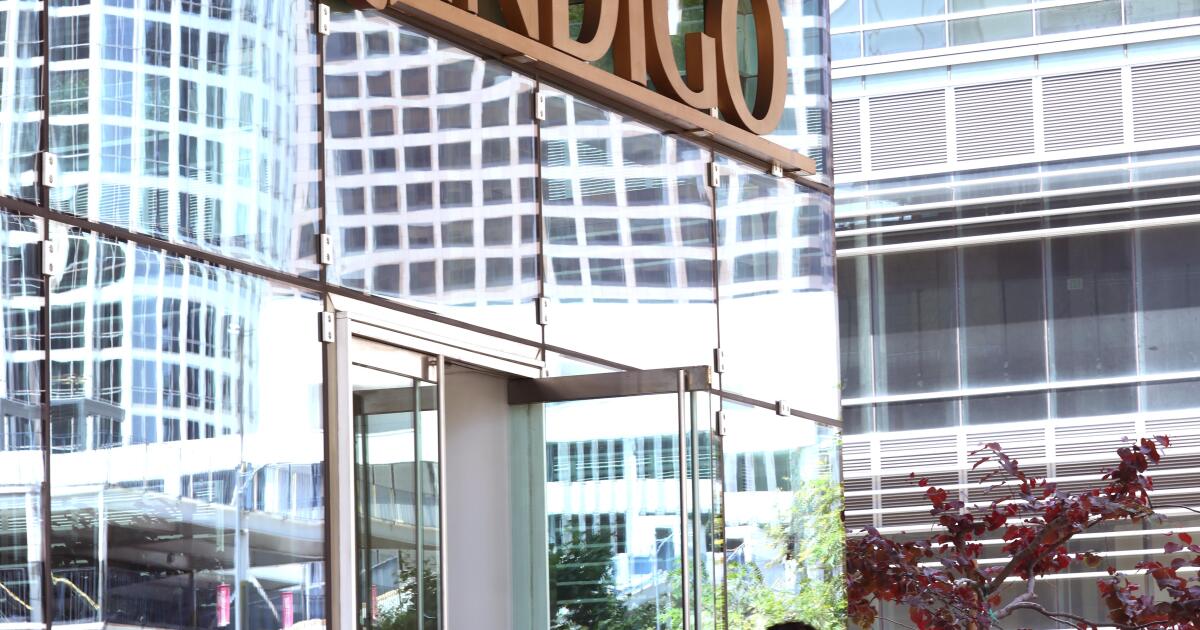
After showing worryingly weak early interest, World Cup fans showed up at the last minute to boost Los Angeles hotel occupancy and room rates.
Ahead of the last tournament game in Los Angeles is on Friday, hotels popular with soccer fans said they were full and charging higher rates.
In early May, the American Hotel and Lodging Assn. reported a lack of hotel bookings just a month shy of the games.
About 80% of respondents said hotel bookings were below initial expectations, and more than 65% of L.A. respondents said bookings were lower than a typical summer. In the report, half of the L.A. hotel respondents said they assumed that visa barriers and distance from venues were contributing to the low early bookings.
The turnout that many were concerned had also been hurt by high ticket prices ended up being better than those first projections.
The Pierside in Santa Monica has been exceptionally busy during the World Cup, with many tourists opting to stay near the beach despite the longer trek to SoFi Stadium where the games are held. The Pierside has no rooms for this weekend.
“We’ll have a day or two gap, but other than that we’ve been full,” said a Pierside manager. “I think beach-side hotels have been busier, because tourists are more interested in going to the beach while here.”
In the so-called Stadium District, the Anthem Hotel saw even greater numbers of tourists than they had initially expected for the tournament, including both domestic and international guests.
Its few remaining rooms were going for more than $500 per night late in the week.
“Many guests are planning longer stays, using match days as the centerpiece of a broader Los Angeles itinerary,” said Ruben Flores, general manager at the hotel. “Being in the heart of the Stadium District puts us in a unique position to welcome fans who want the energy of the tournament to extend beyond the stadium.”
Downtown L.A.‘s Hotel Indigo got a surge in bookings the days leading up to the July 2 knockout game between Spain and Austria. Previously, FIFA had reserved thousands of rooms downtown for staff, media, and other stakeholders, but later canceled the reservation.
The American Hotel and Lodging Assn. attributed the delayed booking boom to young international travelers waiting until right before the game to book hotels in search of last-minute deals.
“Demand has picked up, consistent with a recent trend toward shorter booking windows for events of this caliber,” Rosanna Maietta, the association’s chief executive, said in a statement. “Unlike typical leisure travel, many travelers finalized plans and secured tickets closer to the start of the games.”
Not all hotels have seen the last-minute boom in bookings. Hotel June next to Los Angeles International Airport said its bookings were lower than expected.
“We were expecting more reservations, but I think it’s because the rates have gone up,” said Kira Moreno from Hotel June. “We have still been steady but not been too full or too busy, pretty similar to any other day.”
Airbnb proved to be a popular alternative to traditional hotels, with offers like the World Cup bundle, which included free World Cup tickets with select Airbnb stays at an average price of $365 per night.
In recent years, L.A. has struggled to bring tourists into the city. Last year, the number of international tourists went down by 5.5% from the year before, marking the first time tourism had fallen since the 2020 COVID-19 pandemic.
Immigration raids and wildfires dissuaded tourists from visiting, and even Canadian tourists who typically make up the largest number of foreign visitors to California dropped 21%.
Increased flight costs also discouraged many tourists. With the U.S.-Iran conflict continuing and the Strait of Hormuz closed, jet fuel prices skyrocketed, making international travel unrealistic for many tourists. International air travel to L.A. County had already fallen 30% from August to November 2025.
Business
Billionaire exodus? California drew 10 times more venture capital than any other state this year
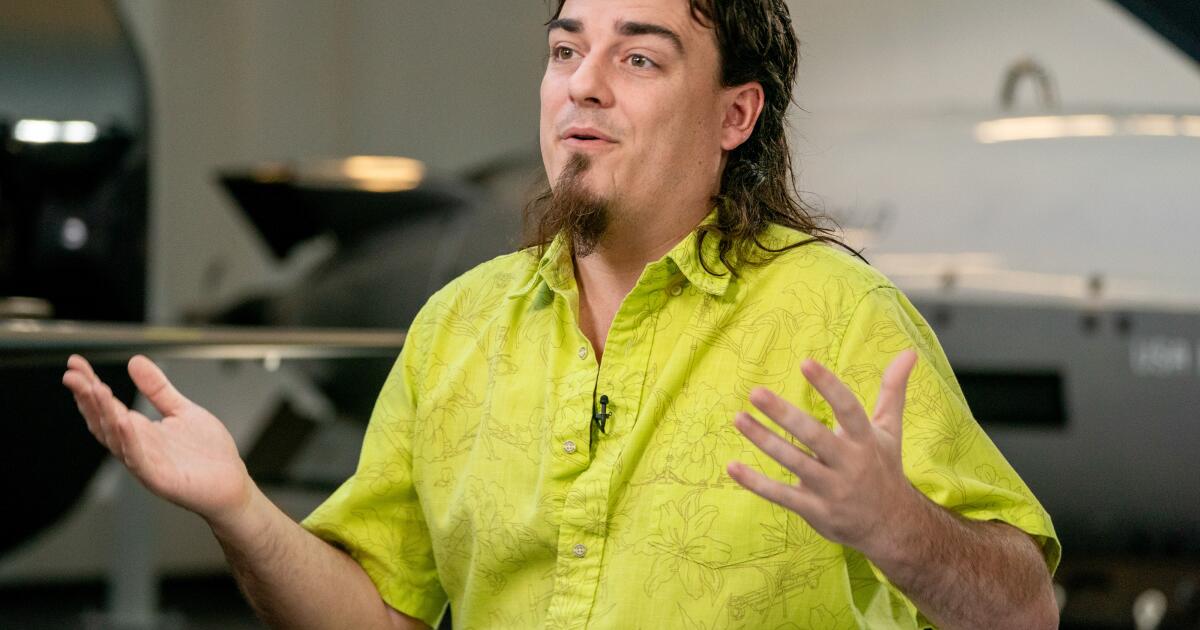
Despite concerns that California’s costs and regulations are bad for business, the state has attracted an unprecedented pile of capital this year, and no other state is even close.
The Golden State’s deep pool of talent, rich investors and other tech infrastructure have made it ground zero for the artificial intelligence explosion. That has helped it attract more than $335 billion in venture capital funding this year, according to PitchBook’s private market funding data released Thursday.
Its next biggest competitor, New York, raised less than a tenth of California’s total. Texas raised 1/40th of the amount.
“California has far and away the most [deals], obviously, a huge amount of that sits in the [San Francisco] Bay Area,” said Kyle Stanford, director of U.S. venture capital research at PitchBook. “Los Angeles, San Diego has a really strong tech market that I think benefits a lot from capital moving easily between San Francisco and L.A.”
Although a campaign for a new tax on billionaires has convinced some ultra-rich residents to shift to other states and businesses often complain that high property and energy costs and an anti-business regulatory regime make it too tough to make money in the state, the inability of the top talent, companies and investors in AI to set up elsewhere shows California’s enduring attraction.
The state’s economy grew 5% last year to a record $4.25 trillion, making it larger than every country other than the U.S., China and Germany. It is home to nearly 400 billion-dollar startups — more than any other state, according to CB Insights.
Southern California has emerged as a go-to address for fast-growing space and defense tech companies.
“California’s workers, entrepreneurs, and innovators continue to prove that investing in California delivers real results,” Gov. Gavin Newsom said in a statement last week in response to strong productivity numbers for the state. “As one of the largest economies in the world, the Golden State demonstrates that a strong workforce, economic growth, innovation, and performance go hand in hand.”
In the three months that ended in June, 1,087 California companies raised $108.8 billion in venture capital. Just three companies — Anthropic, Jeff Bezos’ Project Prometheus and Anduril Industries — absorbed 75% of that total. Anthropic alone raised $65 billion, which valued it at nearly $1 trillion.
Among metropolitan regions, Los Angeles ranked behind only Silicon Valley and New York, which attracted $98 billion and $11.5 billion in venture investment, respectively.
“Capital is flowing back into American innovation with real force,” said Bobby Franklin, president of the National Venture Capital Assn., an industry group that put out the report with PitchBook. “Investment activity is picking up, fundraising is improving, and there are early signs the IPO market is beginning to reopen.”
Investors poured in nearly $8 billion across 207 deals in the Los Angeles, Long Beach, and Santa Ana metro areas, up 28% from a year earlier, according to PitchBook.
The top deals in the region were led by aerospace and defense companies Anduril Industries, which raised $5 billion, and Impulse Space, which attracted $500 million.
Companies in industrial parts, software, consulting and life sciences were the other sectors in the Southland that attracted venture investments. El Segundo-based industrial supplies company Advanced Manufacturing Company of America and Huntington Beach-based aerospace company Mach Industries each raised $300 million.
To be sure, the surge in the size and number of monster deals could be overshadowing other money-raising efforts from smaller companies and investment by smaller funds, industry experts said.
Nearly 90% of invested dollars went to AI firms, up from last year, when around 65% of new funds were allocated to AI.
“If you’re a tech company and you’re not an AI company, you have a very, very difficult opportunity ahead of you to raise capital,” Stanford said.
This concentration of capital in AI leaves smaller, middle-of-the-road venture funds without large AI holdings struggling to return capital to their investors.
Only the largest funds, such as Andreessen Horowitz and Sequoia Capital — which possess the war chest to back OpenAI, Anthropic, and SpaceX — stand to gain from their initial public offerings of stock.
“It’s going to concentrate the fundraising over the next few years as well into these already very large names,” Stanford said.
Beyond the two potential blockbuster listings — Anthropic and OpenAI, each valued around $1 trillion — the IPO pipeline is thin.
“We don’t really have a strong IPO market,” Stanford said. “Obviously, SpaceX’s IPO is great. OpenAI and Anthropic, if they go out this year, will be very large drivers of distribution. But a vast majority of investors do not have exposure to them, and so that money will not make it back to them.”
Whether California’s venture-investing boom can continue at this record-breaking pace now hinges on how the IPOs of Anthropic and OpenAI perform.
“If Anthropic and OpenAI have really strong financials, that’s a big push of support for the rest of the market,” Stanford said.
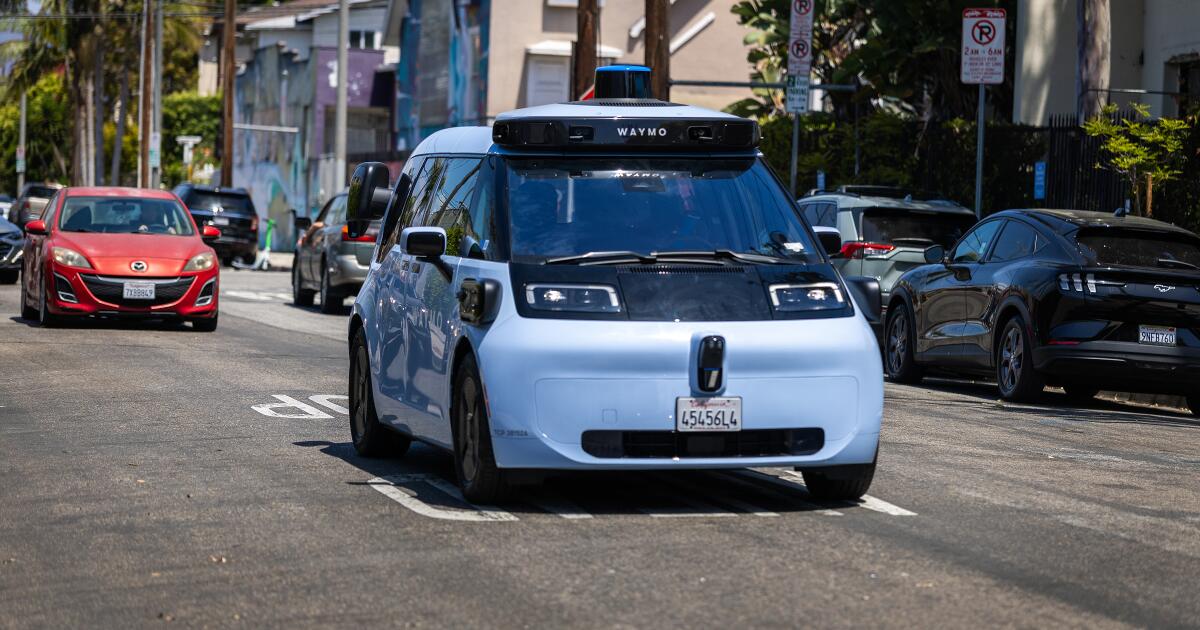
Waymo, the driverless taxi company that operates in more than 10 cities, will soon serve customers in San Diego.
The company has been testing its autonomous vehicles in San Diego with a safety driver behind the wheel since earlier this year. Rides without a human driver became available to employees Thursday and will open to members of the public later this year.
Waymo, which announced the expansion Wednesday, will also bring its taxis to Tampa, Las Vegas and Denver.
“If you’re in one of these four new cities, download the app to be notified when it’s time to ride,” the company said in a blog post.
Waymo has offered fully autonomous rides in San Francisco since 2022 and in Los Angeles since 2024.
It also serves customers in Nashville, Phoenix, Miami and other cities.
In May, Waymo launched a cheaper robotaxi dubbed the Ojai, which is better equipped for difficult driving conditions such as snowy roads.
The Ojai will supplement Waymo’s fleet of Jaguar I-Paces, the company said. In San Diego, services will be provided with the Ojai.
Waymo also announced Wednesday it’s beginning autonomous driving with a safety driver in its newest retrofitted vehicle, the Hyundai IONIQ 5.
“This phase allows us to validate our technology for fully autonomous operations as we work to bring riders even more ways to enjoy Waymo in the future,” the company said.
The company plans to eventually have tens of thousands of driverless taxis made per year, starting with the Ojai, then scaling using the IONIQ 5s.
The move into San Diego and three other cities widens the gap between Waymo and its competitors in the robotaxi race.
Elon Musk’s Tesla robotaxis and Amazon-owned Zoox are shuttling customers autonomously, but are nowhere near the scale at which Waymo operates.
Other companies are working on autonomous trucks and freight trains.
Waymo’s San Diego service area will include Pacific Beach, Normal Heights, La Playa and Southcrest, among other neighborhoods, the company said.
-

 Sports1 minute ago
Shohei Ohtani ruled out of MLB All-Star Game as Dodgers plan to manage nagging injury
-

 Technology13 minutes ago
Fake VA shoe offer targets veterans
-
Business16 minutes ago
Los Angeles hotels saved by last-minute surge in World Cup bookings
-
 Entertainment21 minutes ago
Emily Ratajkowski’s viral essay on sex life as a single mom scores her a seven-figure book deal
-

 Lifestyle28 minutes ago
The BoF Podcast | Decoding Paris Haute Couture: Wonder, Restraint and the Call of the Void
-
 Politics31 minutes ago
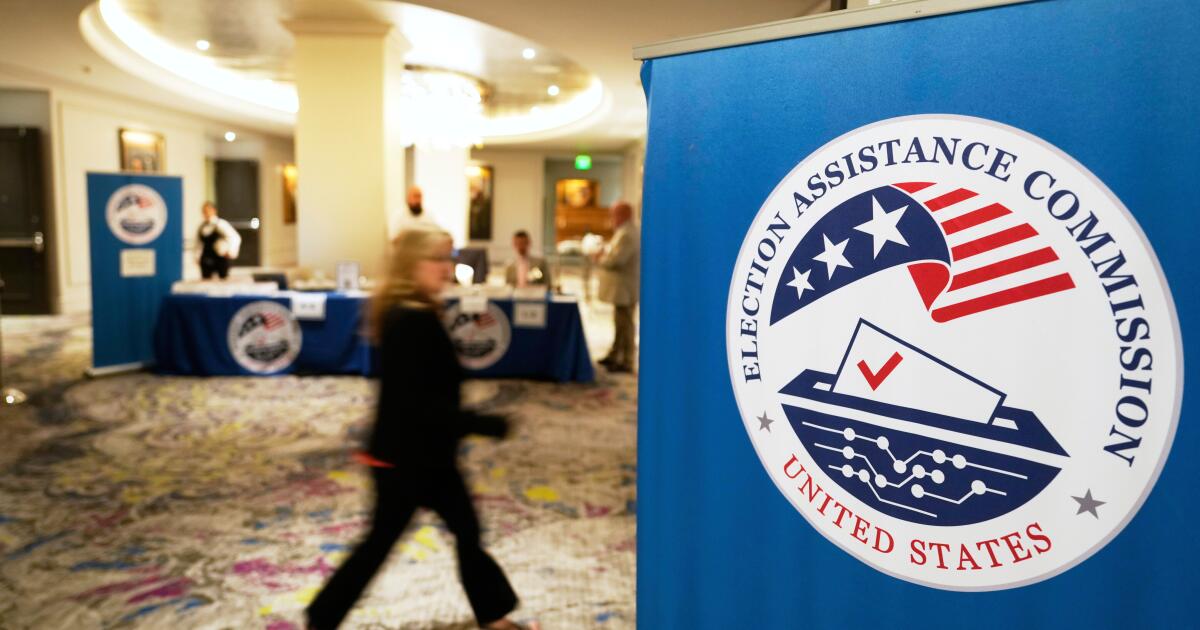
Trump ousts bipartisan commission in latest effort to reshape elections before midterm
-
 Science36 minutes ago
Nobel Prize winner leaving UC Berkeley for new role in China
-
 Sports43 minutes ago
Mikel Merino lifts Spain over Belgium, setting up World Cup showdown with France

