Lifestyle
How to have the best Sunday in L.A., according to Sasheer Zamata


Here’s a shortlist of American cities Sasheer Zamata has called home: Brooklyn, N.Y.; Charlottesville, Va.; Indianapolis; Lexington, Ky.; San Antonio; and Riverside.
The actor, comedian and former “Saturday Night Live” star was a self-described military brat, born in Okinawa, Japan, and never staying in one place for more than two years throughout her childhood. The experience gave her a great sense of perspective, but now, after living in Los Angeles for the last six years, she says, “This is the most rooted and grounded I’ve felt.”

In Sunday Funday, L.A. people give us a play-by-play of their ideal Sunday around town. Find ideas and inspiration on where to go, what to eat and how to enjoy life on the weekends.
Zamata settled in East Los Angeles because “when I moved to L.A., I was told by all my friends, ‘If you want to see us, you have to be on the Eastside, otherwise you won’t,’” she said.
This month, she’ll appear in Disney+’s hotly anticipated “Agatha All Along,” a spinoff of the streamer’s acclaimed “WandaVision” series. She plays a witch named Jennifer Kale who finds a kindred spirit in Kathryn Hahn’s titular Agatha Harkness. “All of the characters are coven-less witches so we are all loners, misfits and bandits who come together for this common goal of achieving our dreams,” said Zamata. “My character Jen is pretty dry and sarcastic, like me, and she’s fun to play.”
When she’s not working, Zamata enjoys secondhand shopping and taking in the best of the Eastside’s culinary offerings. “Sundays feel nice and sleepy for me, but I do like making it a social time as well with brunch or a gathering of some sort,” she said. Here’s how she’d spend a perfect day in L.A.
This interview has been lightly edited and condensed for length and clarity.

9 a.m.: Start the day with early-morning Pilates
I go to bed late, but my body is waking up earlier. Around 7 or 8 a.m. is when I’m waking up. I used to love sleeping in until 11 or 12 but my body can’t do that anymore. It’s not by choice, it’s not because I want to.
I’m trying to make Pilates a weekly tradition. It also helps doing it in the morning because it’s like, “I left my house, I can start the day, things are happening.” I’m always trying to strengthen my core. I have a really small waist that causes back problems and if you can strengthen your core, it does help your back and everything else. I’ve been recommended by so many chiropractors and masseuses like, “You should probably do Pilates.” So now I’m doing it and trying to be serious about it.
I like Wundabar Pilates. They have a jumpboard [reformer apparatus] and they make it very fun. The teachers are very accommodating and help you adjust and figure it out and it doesn’t feel too intimidating to me.
11:30 a.m.: Meet friends for brunch
After Pilates, I will probably go to brunch and meet up with some friends. If no one has anything to do, we’ll be there for a couple of hours.
I love HomeState so much. I don’t even remember who introduced me to HomeState, but I learned about it pretty early on when I moved to L.A. I was like, “Oh my God, I have to come here every day.”
I have a couple of go-tos: I like their Tijuana Panther taco. Their Emo’s taco is a simple bean and cheese. And I like their Frito pie dish. It’s a Frito bag that they put brisket and onions and all this other stuff in and it’s very tasty. Something about eating out of a potato chip bag feels really satisfying. But all of their stuff is good.

2 p.m.: Go secondhand shopping
If the friends are down to hang, we’ll probably do shopping of some sort. I love doing estate sales. I’m always on Estatesales.net to look up what’s in the area, what’s happening that weekend.
The Frogtown Flea Crawl actually happens on Saturday, but sometimes there are still sales going on Sunday. I love being able to bop from multiple different parking lots and multiple different venues on a stroll and shop for hours and hours and hours. It’s very fun.
Currently I’m on a hunt for matching sets, like a top and a bottom, a suit, a jumpsuit or a romper. Those are very fun if they’re vintage-looking and old school. I think what draws me in is patterns. If there’s a really fun pattern or a really bright color, I just bull’s-eye right to it.
And I’m always, always looking at chairs. I certainly don’t need any furniture, but I love looking at it. I love chairs as a functional piece of furniture but also as decoration. Or sometimes I’ll find fun wall art. There’s actually a really great furniture place called Vintage Junktion and it’s huge. They have everything: armoires, dressers, tables, whatever you could possibly want. I got this great bench from there. [Another time] I found an armoire that I was so sad about because I had just bought an armoire that was much more expensive than this one. I have spent hours and hours there, because you can. I like an older piece of furniture because they’re also just built better, which is unfortunate. Thankfully there are people who save that stuff and want it to be reused, and I will happily reuse it.

6 p.m.: Refuel at Little Dom’s
Shopping always make me hungry so I probably will have built up an appetite. And I love eating at Little Dom’s. It’s such a cute vibe and also all their food and drinks are delicious.
Sometimes I’ll just get a traditional spaghetti and meatballs. Most of the time I’ll get the salmon. I do like their salmon a lot. And they have a side of spinach that I’ll get to pretend to be healthy, or an arugula salad. And their Penicillin [cocktails] are really good.

8 p.m.: Home for some comfort TV
Once I get home, I might watch some TV or a movie or something. I just finished that K-pop reality competition, “The Debut: Dream Academy.” It was really intense … they were training these 14- to 18-year-old girls for two years. They’re away from their families and risking it all to become a K-pop group. And then they did it and were actually a really good, talented group.
I [also] love cartoons. I’m watching “Solar Opposites” right now, which is really fun. I finished all of “Rick and Morty” before that and I’m waiting [eagerly] for the next season because I love that show so much.
After TV it’s bedtime. I would like to be the type of person that’s like, “Wow, it’s 9 p.m. I’m going to read a book, stretch, meditate, wind down.” But my brain always just stays busy, I’m sure from being on the phone all the time. I’m up until like 11 p.m. and then my body just crashes and it’s like, “All right, well now we’re sleeping on the couch.”



There’s a three-story house in Baltimore that looks a bit imposing. You walk up the stone steps before even getting up to the porch, and then you enter the door and you’re greeted with a glass case of literary awards. It’s The Clifton House, formerly home of Lucille Clifton.
The National Book Award-winning poet lived there with her husband, Fred, starting in 1967 until the bank foreclosed on the house in 1980. Clifton’s daughter, Sidney Clifton, has since revived the house and turned it into a cultural hub, hosting artists, readings, workshops and more. But even during a February visit, in the mid-afternoon with no organized events on, the house feels full.

The corner of Lucille Clifton’s bedroom, where she would wake up and write in the mornings
Andrew Limbong/NPR
hide caption
toggle caption
Andrew Limbong/NPR
“There’s a presence here,” Clifton House Executive Director Joël Díaz told me. “There’s a presence here that sits at attention.”
Sometimes, rooms where famous writers worked can be places of ineffable magic. Other times, they can just be rooms.

Princeton University Press
Katie da Cunha Lewin is the author of the new book, The Writer’s Room: The Hidden Worlds That Shape the Books We Love, which explores the appeal of these rooms. Lewin is a big Virginia Woolf fan, and the very first place Lewin visited working on the book was Monk’s House — Woolf’s summer home in Sussex, England. On the way there, there were dreams of seeing Woolf’s desk, of retracing Woolf’s steps and imagining what her creative process would feel like. It turned out to be a bit of a disappointment for Lewin — everything interesting was behind glass, she said. Still, in the book Lewin writes about how she took a picture of the room and saved it on her phone, going back to check it and re-check it, “in the hope it would allow me some of its magic.”
Let’s be real, writing is a little boring. Unlike a band on fire in the recording studio, or a painter possessed in their studio, the visual image of a writer sitting at a desk click-clacking away at a keyboard or scribbling on a piece of paper isn’t particularly exciting. And yet, the myth of the writer’s room continues to enrapture us. You can head to Massachusetts to see where Louisa May Alcott wrote Little Women. Or go down to Florida to visit the home of Zora Neale Hurston. Or book a stay at the Scott & Zelda Fitzgerald Museum in Alabama, where the famous couple lived for a time. But what, exactly, is the draw?

Lewin said in an interview that whenever she was at a book event or an author reading, an audience question about the writer’s writing space came up. And yes, some of this is basic fan-driven curiosity. But also “it started to occur to me that it was a central mystery about writing, as if writing is a magic thing that just happens rather than actually labor,” she said.
In a lot of ways, the book is a debunking of the myths we’re presented about writers in their rooms. She writes about the types of writers who couldn’t lock themselves in an office for hours on end, and instead had to find moments in-between to work on their art. She covers the writers who make a big show of their rooms, as a way to seem more writerly. She writes about writers who have had their homes and rooms preserved, versus the ones whose rooms have been lost to time and new real estate developments. The central argument of the book is that there is no magic formula to writing — that there is no daily to-do list to follow, no just-right office chair to buy in order to become a writer. You just have to write.

Bruce Johnston
I’m Riding My Last Wave With The Beach Boys
Published
Bruce Johnston is riding off into the California sunset … at least for now.
The Beach Boys legend announced Wednesday he’s stepping away from touring after six decades with the iconic band. The 83-year-old revealed in a statement to Rolling Stone he’s hanging up his touring hat to focus on what he calls part three of his long music career.

“It’s time for Part Three of my lengthy musical career!” Johnston said. “I can write songs forever, and wait until you hear what’s coming!!! As my major talent beyond singing is songwriting, now is the time to get serious again.”
Johnston famously stepped in for co-founder Brian Wilson in 1965 for live performances, becoming a staple of the Beach Boys’ touring lineup ever since. Now, he says he’s shifting gears toward songwriting and even some speaking engagements … with occasional touring member John Stamos helping him craft what he’ll talk about onstage.
“I might even sing ‘Disney Girls’ & ‘I Write The Songs!!’” he teased.
But don’t call it a full-on farewell tour just yet. Johnston made it clear he’s not shutting the door completely, saying he’s excited to reunite with the band for special occasions, including their upcoming July 2-4 shows at the Hollywood Bowl as part of the Beach Boys’ 2026 tour. The run celebrates both the 60th anniversary of “Pet Sounds” and America’s 250th birthday.
“This isn’t goodbye, it’s see you soon,” he wrote. “I am forever grateful to be a part of the Beach Boys musical legacy.”
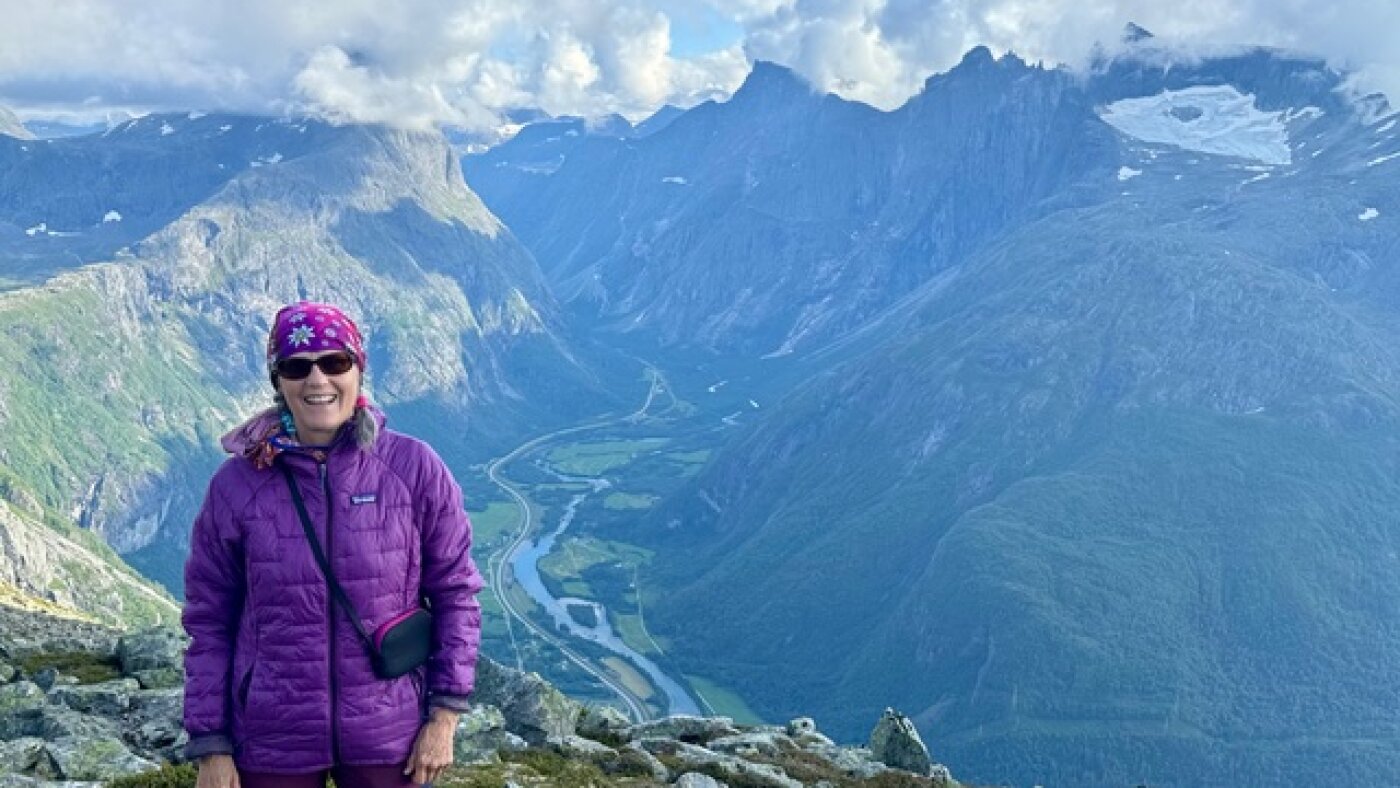
In 1982, Jean Muenchrath was injured in a mountaineering accident and on the brink of death when a stranger and his family went out of their way to save her life.
Jean Muenchrath
hide caption
toggle caption
Jean Muenchrath
In early May 1982, Jean Muenchrath and her boyfriend set out on a mountaineering trip in the Sierra Nevada, a mountain range in California. They had done many backcountry trips in the area before, so the terrain was somewhat familiar to both of them. But after they reached one of the summits, a violent storm swept in. It began to snow heavily, and soon the pair was engulfed in a blizzard, with thunder and lightning reverberating around them.
“Getting struck and killed by lightning was a real possibility since we were the highest thing around for miles and lightning was striking all around us,” Muenchrath said.
To reach safer ground, they decided to abandon their plan of taking a trail back. Instead, using their ice axes, they climbed down the face of the mountain through steep and icy snow chutes.
They were both skilled at this type of descent, but at one particularly difficult part of the route, Muenchrath slipped and tumbled over 100 feet down the rocky mountain face. She barely survived the fall and suffered life-threatening injuries.

This was before cellular or satellite phones, so calling for help wasn’t an option. The couple was forced to hike through deep snow back to the trailhead. Once they arrived, Muenchrath collapsed in the parking lot. It had been five days since she’d fallen.
”My clothes were bloody. I had multiple fractures in my spine and pelvis, a head injury and gangrene from a deep wound,” Muenchrath said.
Not long after they reached the trailhead parking lot, a car pulled in. A man was driving, with his wife in the passenger seat and their baby in the back. As soon as the man saw Muenchrath’s condition, he ran over to help.
”He gently stroked my head, and he held my face [and] reassured me by saying something like, ‘You’re going to be OK now. I’ll be right back to get you,’” Muenchrath remembered.
For the first time in days, her panic began to lift.
“My unsung hero gave me hope that I’d reach a hospital and I’d survive. He took away my fears.”
Within a few minutes, the man had unpacked his car. His wife agreed to stay back in the parking lot with their baby in order to make room for Muenchrath, her boyfriend and their backpacks.
The man drove them to a nearby town so that the couple could get medical treatment.
“I remember looking into the eyes of my unsung hero as he carried me into the emergency room in Lone Pine, California. I was so weak, I couldn’t find the words to express the gratitude I felt in my heart.”

The gratitude she felt that day only grew. Now, nearly 45 years later, she still thinks about the man and his family.
”He gave me the gift of allowing me to live my life and my dreams,” Muenchrath said.
At some point along the way, the man gave Muenchrath his contact information. But in the chaos of the day, she lost it and has never been able to find him.
”If I knew where my unsung hero was today, I would fly across the country to meet him again. I’d hug him, buy him a meal and tell him how much he continues to mean to me by saving my life. Wherever you are, I say thank you from the depths of my being.”
My Unsung Hero is also a podcast — new episodes are released every Tuesday. To share the story of your unsung hero with the Hidden Brain team, record a voice memo on your phone and send it to myunsunghero@hiddenbrain.org.

Cal Men’s Basketball: Bears Stay Focused and Outlast a Beleaguered Georgia Tech 76-65

Kolekole Pass cleared for emergency evacuations out of West Oahu

Local woman having ‘closet revival’ with new consignment store – East Idaho News

How a clump of moss helped convict grave robbers in Illinois

Watch Indiana basketball’s Lamar Wilkerson give his mom a Cadillac

Florida High School Football Rankings: Top 25 teams – Oct. 21

Cleary's 21 help Le Moyne down Central Connecticut State 69-64 in OT

How old is Bo Nix? What to know about Oregon quarterback ahead of 2024 NFL Draft

99th annual Pony Swim held in Virginia

Indiana Members Credit Union announced as new anchor tenant at Bottleworks District

DHS defends McLaughlin against allegations husband’s company profited millions from ad contracts: ‘Baseless’

Sánchez defies Trump in political gamble as Madrid say no to war

Satellite images show Iran school strike hit more buildings than earlier reported

US submarine sinks Iranian warship by torpedo in a first since World War II

Which oil and gas facilities in the Gulf have been attacked?
-

 World1 week ago
Exclusive: DeepSeek withholds latest AI model from US chipmakers including Nvidia, sources say
-

 Massachusetts1 week ago
Mother and daughter injured in Taunton house explosion
-

 Wisconsin3 days ago
Setting sail on iceboats across a frozen lake in Wisconsin
-

 Maryland4 days ago
AM showers Sunday in Maryland
-

 Denver, CO1 week ago
10 acres charred, 5 injured in Thornton grass fire, evacuation orders lifted
-

 Florida4 days ago
Florida man rescued after being stuck in shoulder-deep mud for days
-

 Oregon6 days ago
2026 OSAA Oregon Wrestling State Championship Results And Brackets – FloWrestling
-

 Massachusetts2 days ago
Massachusetts man awaits word from family in Iran after attacks