Lifestyle
He calls himself the Gay Choreographer. His L.A. pop star dance classes help people find the diva within


In early April, 31-year-old social producer Kimberleigh Anderson joined a group of about 60 in the mirror-lined studio at the Pickle Factory dance studio at the Frogtown Creative compound, removing her shoes and stretching on the black-padded floor.
She was there for an Intro to Popstar Dance class led by self-described Gay Choreographer Alec Cohen. In just 90 minutes, Cohen promises to help participants “realize they have permission to be fabulous in their everyday lives and the benefits, joys and lessons that dance can teach everyone.”
Anderson hadn’t danced in a studio setting since elementary school and was eager to find her rhythm.
Each 90-minute Intro to Popstar Dance session costs $25 to attend.
(Kit Karzen / For The Times)
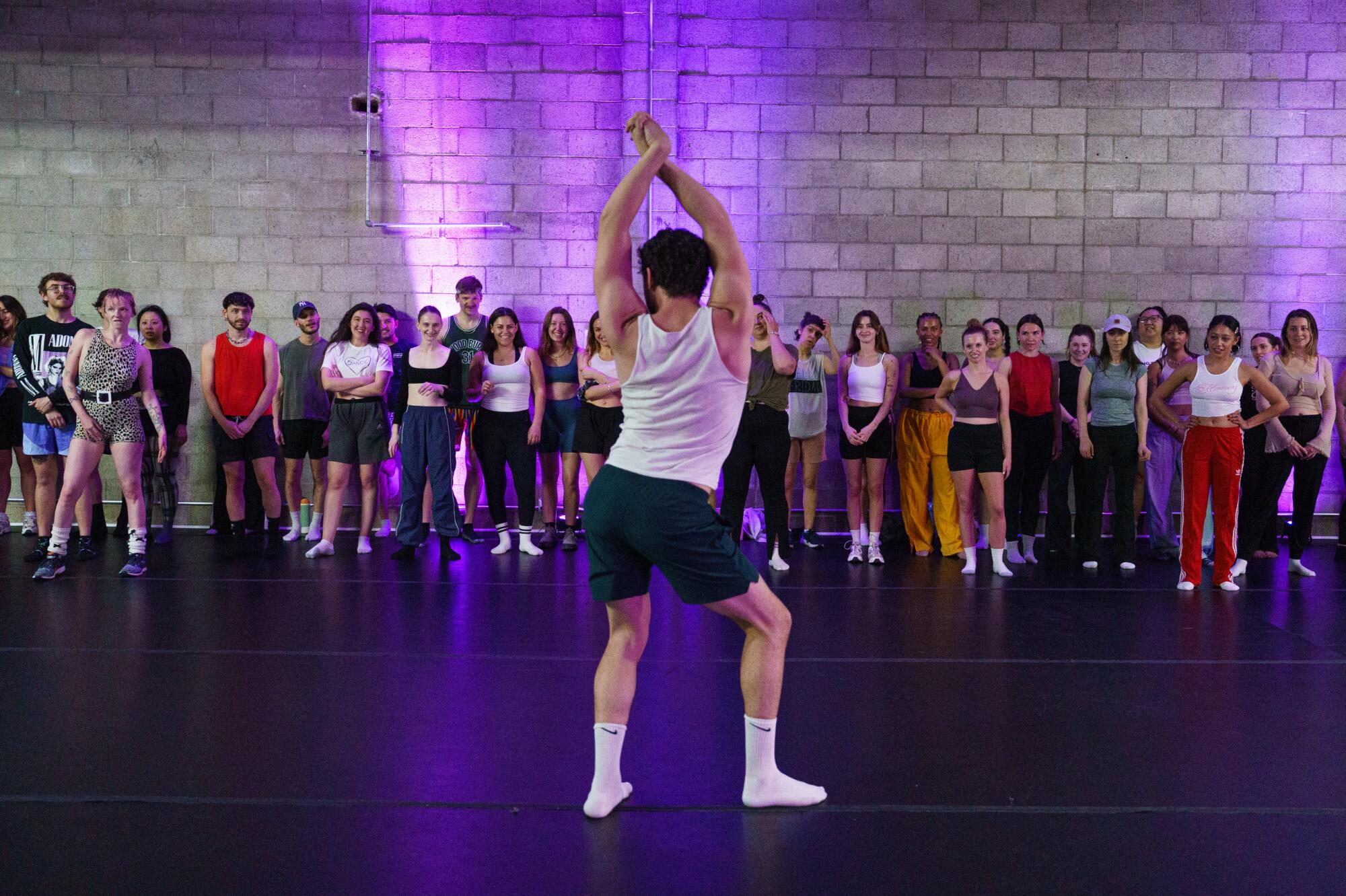
Cohen has a background in musical theater but performing in Lady Gaga re-creation drag shows helped him discover a certain gratification that came with pop music.
(Kit Karzen / For The Times)
“I want to explore moving my body in a way that’s new to me,” she said.
Cohen kicked off the $25 session with what he calls a “communal pump,” a classwide strut across the floor. Anderson followed his instruction, counting eight beats of one foot in front of the other and ending in a pose. Later she tells me it’s a movement she wants “to implement into daily life,” to move “with intention.”
Every Intro to Popstar Dance class unfolds the same way. Before leading students step by step through an original dance routine, Cohen details a narrative arc to inform the energy he wants to elicit, while providing a hint of context for the pop hit that he will play at the very end.
It’s only in the final few minutes of the course, once the room comfortably twirls to embrace metaphorical sunshine and assertively sashays to leave the negativity behind, that the song is triumphantly revealed.
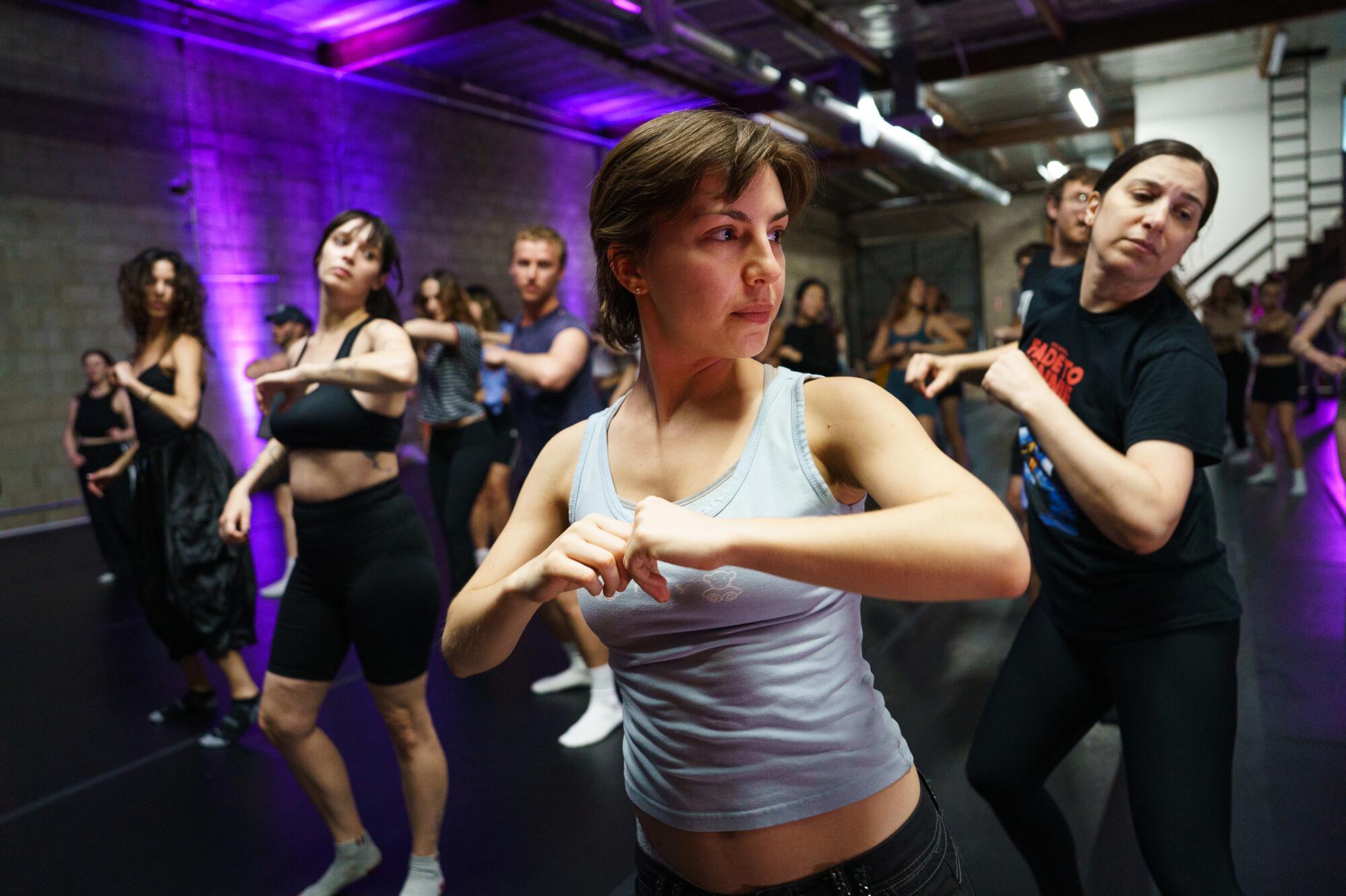
Each Intro to Popstar Dance class revolves around learning a choreographed dance for a single pop song, which Cohen reveals at the end of the session.
(Kit Karzen / For The Times)

“What attracts me to pop stars is the complete conviction that they have, and I love how comfortable they are being seen,” Cohen said. “It’s this sort of mentality where you don’t even entertain the possibility of you not being completely, 100% fabulous.”
(Kit Karzen / For The Times)
For Anderson and her fellow dancers, Cohen related the day’s song to “The Wizard of Oz,” specifically Dorothy’s journey of realizing the ruby slippers’ power was within her all along.
That sense of self-assuredness that he sees in Dorothy’s story, he also sees in the many singers who dominate the Billboard Top 40 list.
“What attracts me to pop stars is the complete conviction that they have, and I love how comfortable they are being seen,” Cohen said. “It’s this sort of mentality where you don’t even entertain the possibility of you not being completely, 100% fabulous.”
Cohen is steeped in the art of projecting confidence onstage. He began his career as a dancer in musical theater, which included a two-year ensemble role in the national Broadway revival tour of “Hello, Dolly.” Between auditions in 2022, Cohen began performing in Lady Gaga re-creation drag shows, where he discovered a certain gratification that came with pop music.
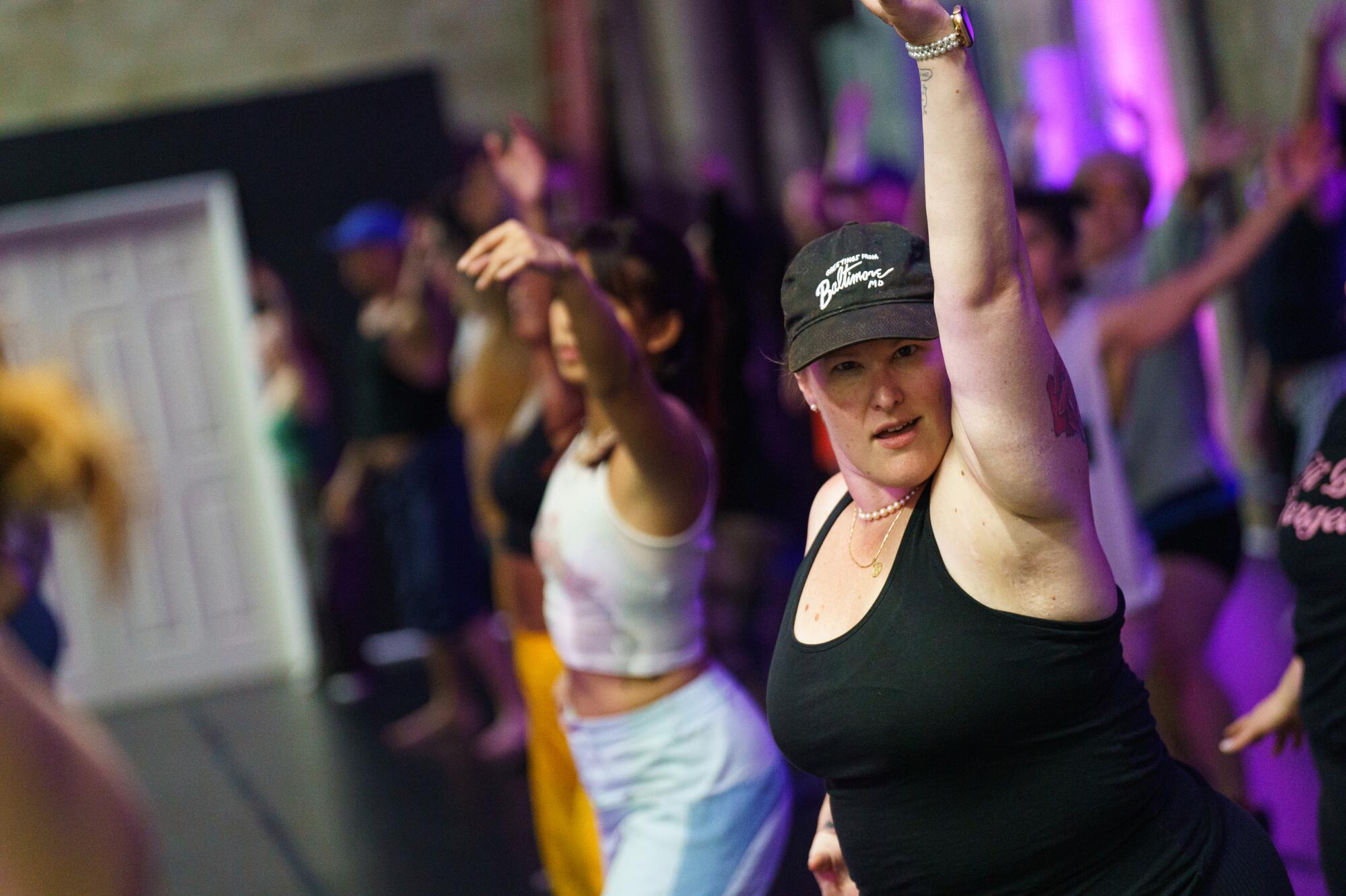
Cohen appreciates pop songs because within the music, “There’s room for individuality and freedom of movement.”
(Kit Karzen / For The Times)
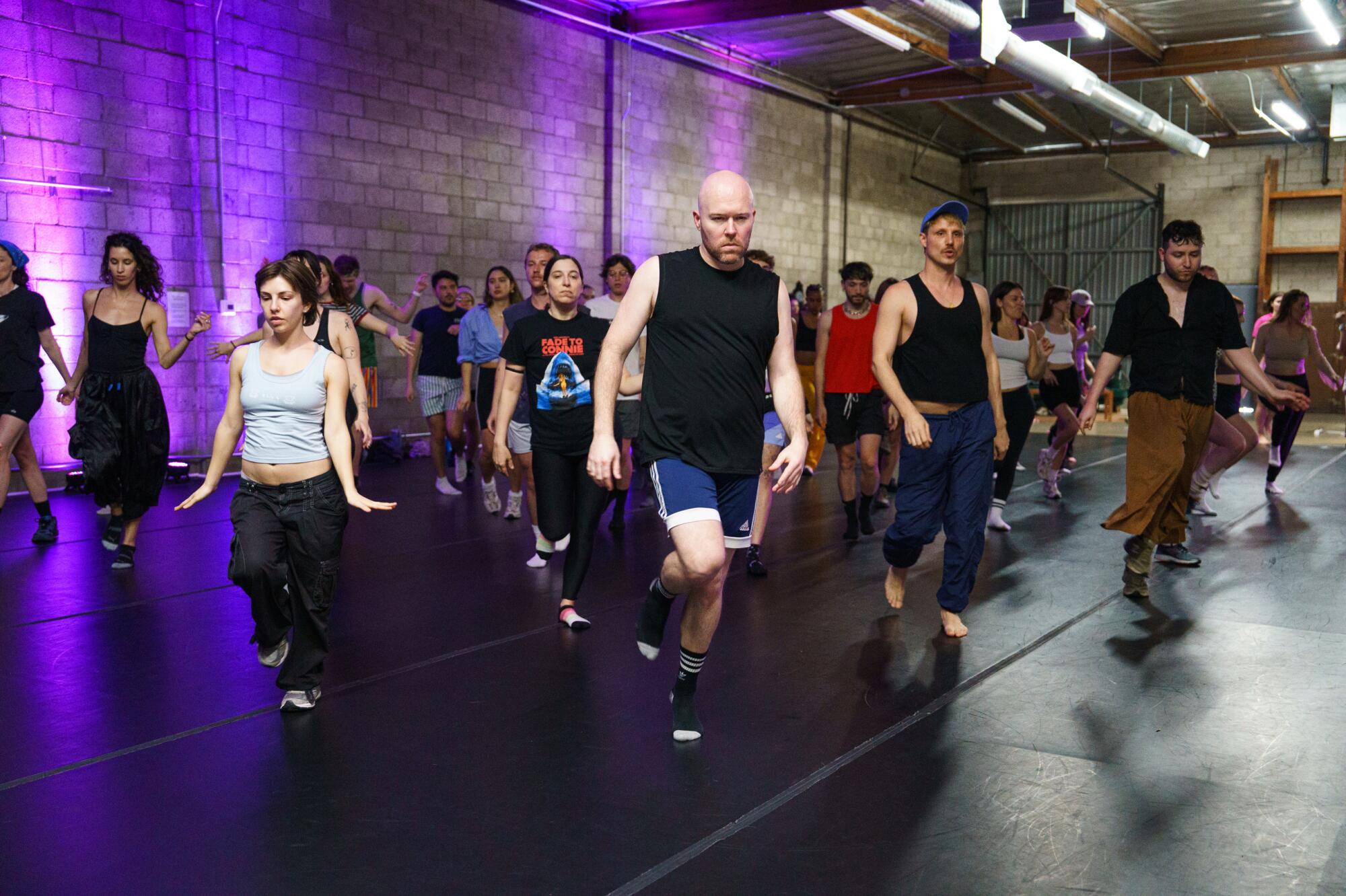
Cohen teaches weekly classes, typically rotating between locations in New York and Los Angeles.
(Kit Karzen / For The Times)
“There’s room for individuality and freedom of movement,” he said. “If you mess up, there’s not going to be a pile of cards on your dressing room station saying, ‘Your foot was not pointed when it was supposed to be.’ You can just be yourself. Be flamboyant.”
Shortly afterward, a friend connected him with Chrissy Chlapecka, a queer pop singer with more than 5 million followers on TikTok. Cohen started out dancing alongside her in videos, but once he saw how clearly their visions aligned he volunteered to choreograph both her live performances and music videos.
Around the same time, an idea began to percolate. Whenever Cohen discussed his career, people would often confide they had a secret desire to learn how to dance as well.
“I realized everyone had this story with dance and a lot of times that story [came down to], ‘I really wanna learn how to dance,’” Cohen said.
Inspired to provide lessons, he posted an Instagram story gauging interest in taking an intro-level pop star-inspired class. Fifteen signups later, he led the first session in the basement of the Mark Morris Dance Center in Brooklyn in August 2023. The anthem of choice was “Hair Body Face,” a song sung by Lady Gaga for her role as a budding pop artist in “A Star Is Born.”

(Kit Karzen / For The Times)

Cohen’s classes typically feature music from pop stars like Britney Spears, Rihanna and Charli XCX.
(Kit Karzen / For The Times)
Students soon began commenting on Cohen’s Instagram posts, raving about the course and asking when the next would be held. So Cohen kept arranging for more.
Cohen now teaches weekly, traveling between Los Angeles and New York, with occasional stops in San Francisco, Chicago and, once, Yale University for its community-wide masterclass dance series. (His next Los Angeles class will be May 4 at the Pickle Factory in Frogtown.)
Cohen typically features music from pop stars like Britney Spears, Rihanna and Charli XCX, though occasionally he will branch out to subgenres that cater to a certain fan base. In March, he led a Gay Guy Intro to Popstar Dance class to Ricky Martin’s “Livin’ la Vida Loca” in New York City. After several requests for Lana Del Rey songs, Cohen created an Alt-Girl Popstar class, which focuses on more lo-fi artists like Del Rey, Lorde and FKA Twigs.
Back at the studio, Anderson and the rest of the class were glistening with sweat, having spent the last half of the class spinning with their arms open, sashaying across the floor and blowing kisses in the air. It was finally time: Cohen’s big song reveal.
Ballet-trained Cohen leaped across the floor to press play and there over the speakers, the class heard the first few notes of the 2008 pop hit “Pocketful of Sunshine” by Natasha Bedingfield. “Oohs” rippled through the class as students began to kneel down in position to begin the choreography. “Ahas” were heard as the embracing twirl coincided with Bedingfield’s voice singing, “Take me away / A sweet escape.”

Mikey Harmon, left, hugs a fellow attendee at Cohen’s April 6 class in Frogtown.
(Kit Karzen / For The Times)

Cohen frequently reminds class attendees, “There should be no shame in your body’s natural response to music.”
(Kit Karzen / For The Times)
“An absolute classic. … Being able to actually process the words and feel the emotion of the song with the movement was really incredible,” Anderson told me after the class. “The way Alec encourages everyone to feel fully free to move without judgment is a huge part of this. It was a truly supportive environment.”
No matter the theme or city, during the class’s warm-up and cool-down, Cohen reiterates, “There should be no shame in your body’s natural response to music.”
No shimmery bodysuit necessary.
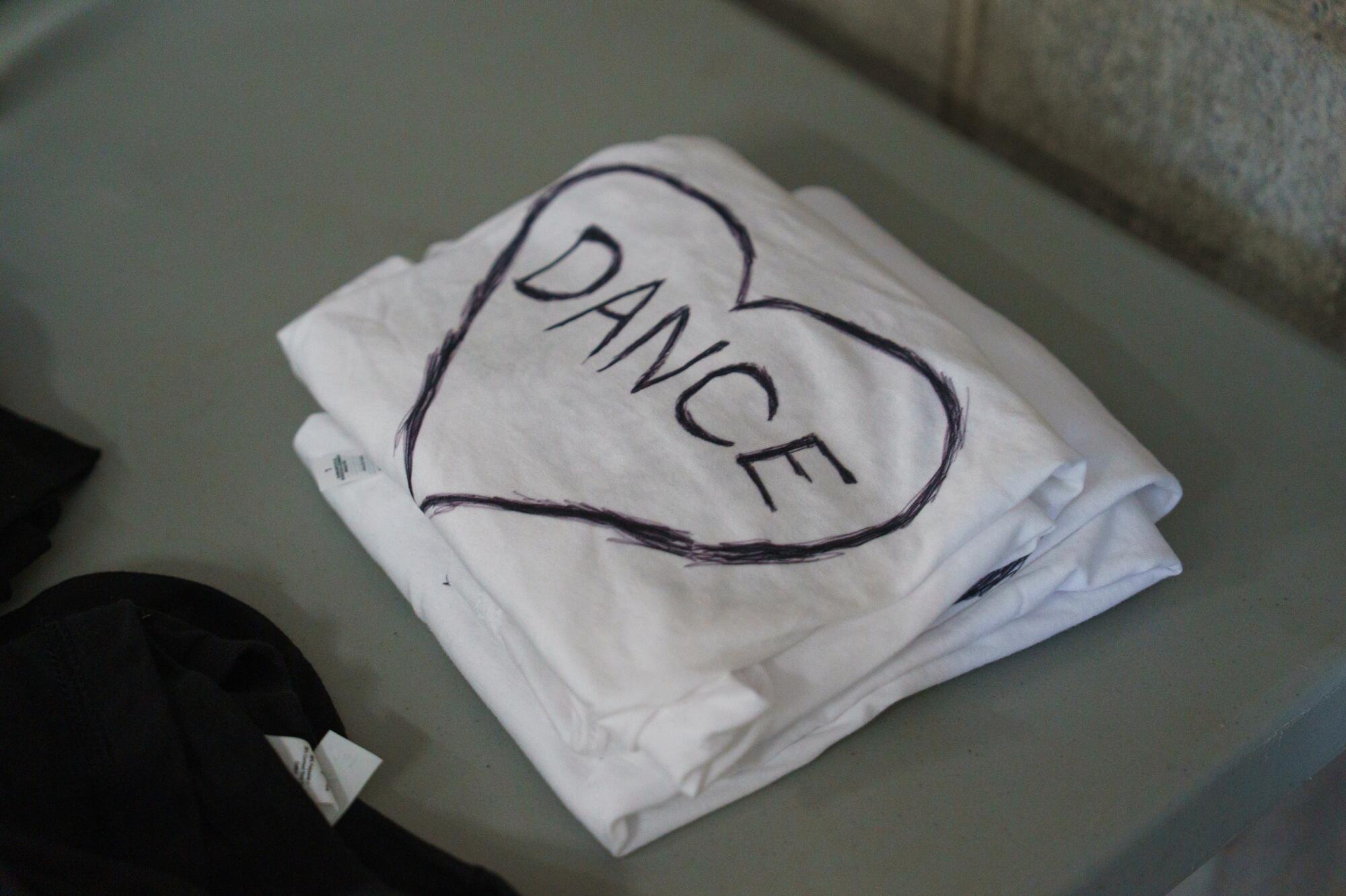
(Kit Karzen / For The Times)


Lonnie Bunch III is the 14th Secretary of the Smithsonian. He’s pictured above in September 2017.
J. Scott Applewhite/AP
hide caption
toggle caption
J. Scott Applewhite/AP
In a memo addressed to staffers sent Tuesday, the secretary of the Smithsonian, Lonnie G. Bunch III, defended the institution after the White House issued a 162-page report that characterizes the National Museum of American History as a place which has become “subject to institutional capture by a radical, activist ideology that is fundamentally opposed to telling the noble, honest story of the great country we know and love.”
In his email, which NPR has obtained, Bunch wrote in part: “While there will always be room for improvement, this report is not a fair characterization of the work and totality of the National Museum of American History. At the Smithsonian, our work is driven by scholarship, accuracy and an uncompromising commitment to tell the fullness of America’s story. As public servants and the keepers of this institution, we are charged with helping a nation find understanding, hope and clarity and as part of that duty, we are dedicated to excellence, reflection and growth.”

He continued: “We remain focused on what grounds us: a steadfast commitment to scholarship, nonpartisanship, independence, accuracy and integrity. For nearly 180 years, the Smithsonian has worked alongside partners across government — from the White House to Congress to our governing Board of Regents — guided by our enduring mission to increase and diffuse knowledge. That purpose remains: to pursue knowledge with rigor and to serve the American public with clarity and care.”
The White House report was issued on July 4 by the Domestic Policy Council under the title “Saving America’s Story: How Ideological Capture at the Smithsonian Institution’s National Museum of American History Erases Our Heritage.”

The council faults the National Museum of American History on a multitude of fronts, saying it underemphasized the Founding Fathers and early colonial and Revolutionary history; was not sufficiently celebratory of the country’s 250th anniversary; and that it engaged in “anti-white,” “illegal alien” and transgender activism.
It also accuses the museum of trying to “indoctrinate” teachers and students through its exhibitions, programming and teaching resources.
In the report, the council also specifically criticizes museum director Anthea Hartig, who has led the National Museum of American History since 2019 and is concurrently the president of the Organization of American Historians, calling her “an activist advancing an ideological agenda contradictory to the museum’s founding purpose of fostering patriotism.”
The Trump administration has made the Smithsonian museums one of its primary targets in its efforts to reshape cultural narratives to align with its viewpoints. In August 2025, the White House requested a “comprehensive internal review” of eight Smithsonian museums, including the National Museum of American History, following an executive order issued by President Trump in March 2025 in which he called for the removal of “improper ideology” from the Smithsonian’s offerings.
According to the Smithsonian’s charter, all of its 21 museums, 14 education and research centers, and the National Zoo are meant to be run independently of the federal government. The Smithsonian is overseen by Bunch and a board of regents, which includes Vice President Vance, Supreme Court Chief Justice John Roberts and other members appointed by Congress.
In an interview with NBC’s Meet the Press on Sunday, Bunch spoke about the Smithsonian’s 250th anniversary special exhibition at the Smithsonian Castle, which is called “American Aspirations.”
He told NBC: “It’s really important for people to understand that America is much an ideal as it is a place, that it’s a series of aspirations that have really shaped who this country is. And so for me, what is so powerful is to say, ‘Let us honor the words of Thomas Jefferson and the founders, but let us use those to challenge us to be better.’”
Jennifer Vanasco edited this story.

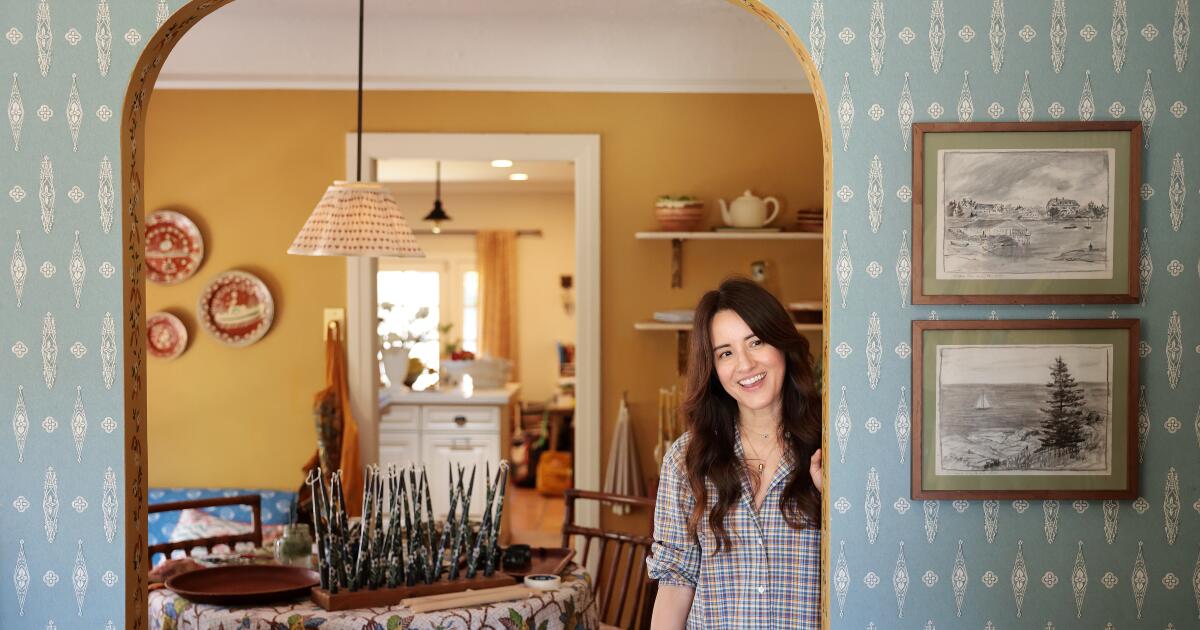
It was after the death of her son, Laith, that Esme Saleh decided to become a folk artist.
She had always been creative, experimenting with watercolors and learning to sew and embroider at a young age.
“I had a creative inkling,” she said, “but I never pursued it.”
Everything changed on Aug. 17, 2013.
In this series, we highlight independent makers and artists, from glassblowers to fiber artists, who are creating original products in and around Los Angeles.
When Saleh was nine months pregnant, she woke up with stomach pains and presumed she was in labor. She and her husband, Nasim, immediately went to the hospital, where doctors checked her and put the baby on a heart monitor. Saleh’s blood pressure was high, however, and the baby’s heart rate kept dropping. After about an hour, his heartbeat stopped. Doctors rushed her in for an emergency C-section, but it was too late. Laith did not survive.
Saleh lost a tremendous amount of blood and developed postpartum HELLP syndrome, a dangerous form of preeclampsia, but doctors were able to stabilize her.
When she woke up, the first thing she asked was, “How’s my baby?”

After losing her son in 2013, Esme Saleh left her job as a television producer. Since then, she has sold her hand-painted candles to local designers in Los Angeles and to LVMH in Paris.
“Aug. 17, 2013, was the most difficult day of my life, and Aug. 22 was the second most difficult, the day we drove home with an empty car seat,” she said of her and her husband’s new reality.
They named their son Laith Finn Saleh.
“His first name means ‘lion’ in Arabic. His middle name is an ode to Huckleberry Finn — sharp wit, kind heart, strong moral compass — all the attributes he’s imparted on us in spirit,” said Saleh, 45.
After such a devastating loss, she found it difficult to trust the world again. “It was hard to trust anything,” she said. “The medical system. Myself. It made me realize the fragility of bringing anything to life. We take so much for granted.”
So after years of working as a television producer, Saleh left broadcast journalism and leaned into her creative spirit.
She grew up in San Diego. Her mother was raised on a farm in Mexico, and her father moved from Tijuana to Los Angeles to be near her mother, who started working for a family in Sherman Oaks at 16. They eventually settled in San Diego, where Saleh’s father, now a church deacon, worked as a car salesman.


“The word Mystic has also become a driving force of what this journey means to me,” Saleh says. “A magical, otherworldly journey that has led me to some beautiful friendships, projects and unlimited well of curiosity. When I paint each pair of candles, it feels like I’m imparting a piece of that magic.”
“He always wanted to be a weatherman on TV,” she said, explaining how he hoped to get his big break on television by doing a weather report from the car lot.
Saleh wanted to be a broadcast journalist as her father had. After graduating from San Diego State, she interned in the sports department at CBS affiliate KFMB-TV although she didn’t know much about sports. She enjoyed sharing information with people, learned how to write plays of the week and felt she had found the right career.
But during a summer class at Mesa College, she started to think journalism might not be for her.


Saleh’s home is filled with her artwork. “My home expresses a lot of the things that I do,” she says. “If it works here, then I feel like I can put it out in the world.”
“I’m an empath — a sensitive soul — so when I was reading news about death and destruction, my eyes could not lie,” she said. Her professor told her, “This may not be your thing.” But when she arranged flowers on camera, she really came alive. She decided to work behind the scenes as a producer.
Her professor helped her get her first network news job in 2003, and she moved to Los Angeles, working on hard news and entertainment coverage.
After losing Laith a decade later, she couldn’t keep doing red-carpet interviews and acting like everything was fine. “It all felt so different, superficial and hard,” she said. “I felt like there was a bigger purpose out there for me. It’s in the small things that we find the big things.”
She started by painting folk art-inspired invitations for a friend’s baby shower. She painted delicate flowers, oranges and leaves on glass, leather and even lampshades. She created a logo. “I was just trying to say yes to things that were really scary,” she said. “Laith gave me the courage to do that.”

“I was just trying to get out of hole,” Saleh says of taking up painting after her son died.
Her first son, she said, became “a catalyst for painting.”
Then, at the first Thanksgiving during the COVID-19 pandemic when people could gather again, she had a light-bulb moment. “I was setting the table and didn’t have flowers or anything to add to decorate, so I thought, ‘I have these candles. I’m going to paint them and make them fancy,’ ” she said.
Her guests were impressed.
As time went on, painting taper candles helped her find joy again, and others noticed too.
“The one thing I hear when people pick up a pair of my candles is, ‘This makes me so happy. It makes me feel like there’s life here,’ ” she said.
1

2

3

1. Saleh sometimes leads painting workshops where participants can decorate items like ornaments and lampshades.
2. Leather napkin rings Saleh has painted for Nathan Turner. 3. Saleh’s hand-painted candles retail for approximately $42 to $50.
One of the hardest parts of losing a child “is that you’re not just grieving the person, you’re grieving the future you imagined with them,” said Chicago-based grief specialist Carla Harvey. “A lifetime of love suddenly has nowhere to go. Creating art doesn’t erase grief, but it can become a way to carry it.”
Saleh created her brand Mystic by Esme in 2021, but it took her some time before she could gather the courage to try to sell them.
When she brought a shoebox full of samples to Nickey Kehoe, the L.A. store agreed to carry her candles. “I was beside myself,” Saleh said.
“Her candles were absolutely beautiful, and she had a fantastic spirit that made selling them a no-brainer,” said interior designer Todd Nickey, co-founder of Nickey Kehoe.

Saleh gets a surprise kiss from her dog Olive while painting candles at her dining room table.
Saleh viewed her new side project as a way to earn extra money for piano lessons for her 11-year-old son Linus, who is an entrepreneur like his mother. “I felt proud painting the candles while he was in lessons in the next room,” she said. “It became this circular economy, and it led to bigger opportunities for me.”
Last year, luxury conglomerate LVMH commissioned Saleh to paint 465 pairs of candles, or 930 candles in total, for its Chaumet jewelry brand. The collection was unveiled at an elaborate event at the Abbaye des Vaux de Cernay, just outside Paris.
“It was fun,” Saleh said about the process, which took six months from conception to delivery. “I felt like I was dressing my candles up for a party.”
Always a hard worker, which she attributes to being a first-generation child of immigrant parents, Saleh has now created a candle collection for Pierce and Ward in Los Feliz, leather napkin holders for interior designer Nathan Turner and pomegranate wrapping paper for Olive Ateliers. The candles retail between $42 to $50 for a pair, and recently, she developed a handsome pewter candle shaver that will be released in the winter.

Her dining room can sometimes feel like “an assembly line,” Saleh says.

Saleh holds a pair of candles she has embellished with florals.
Occasionally, she leads painting workshops, and she loves helping others tap into their creativity. The most meaningful one for her was an ornament workshop attended by several victims of the 2025 Los Angeles wildfires. “Without saying anything, we understood each other,” she said. “I understood that they were trying to create memories.”
Saleh knows what it means for things not to last — “impermanence,” she calls it — whether it is homes, candles or life itself.
She paints every day in the art-filled dining room of her home (unless it’s Little League season), surrounded by her family, candles and her two dogs, Lennon and Olive. ”Painting is like meditation,” she said. “You can sit in your dining room and tune everything out and just be in the moment.”

Even the family’s summer bucket list receives an artistic flourish.

An arch inside Saleh’s home receives a personalized touch.
She knows painting candles isn’t new, but she believes her motivation and the care she puts into each candle makes them special beyond their looks.
She has learned to look at the world that way, that painting in her dining room has offered her healing and joy, that she can trust herself and her body, that continuing to be inspired by her two boys — “one in spirit and the other here on Earth” — means that Laith will always be with her.
Many people think healing means moving on, said grief specialist Harvey, but “it’s really about finding ways to move forward while keeping the people we love woven into our lives. That’s what I see in her candles, not an ending, but an ongoing relationship with her son.”
“I feel like my son is channeling through this medium,” Saleh said, her voice breaking as she painted a taper. “He’s whispering to me, ‘Mom, this is your path.’ That has been my driving force. We’re going to grow this together.”
Lifestyle
Terry Tempest Williams on why women with big ideas get labeled ‘crazy’ : Wild Card with Rachel Martin
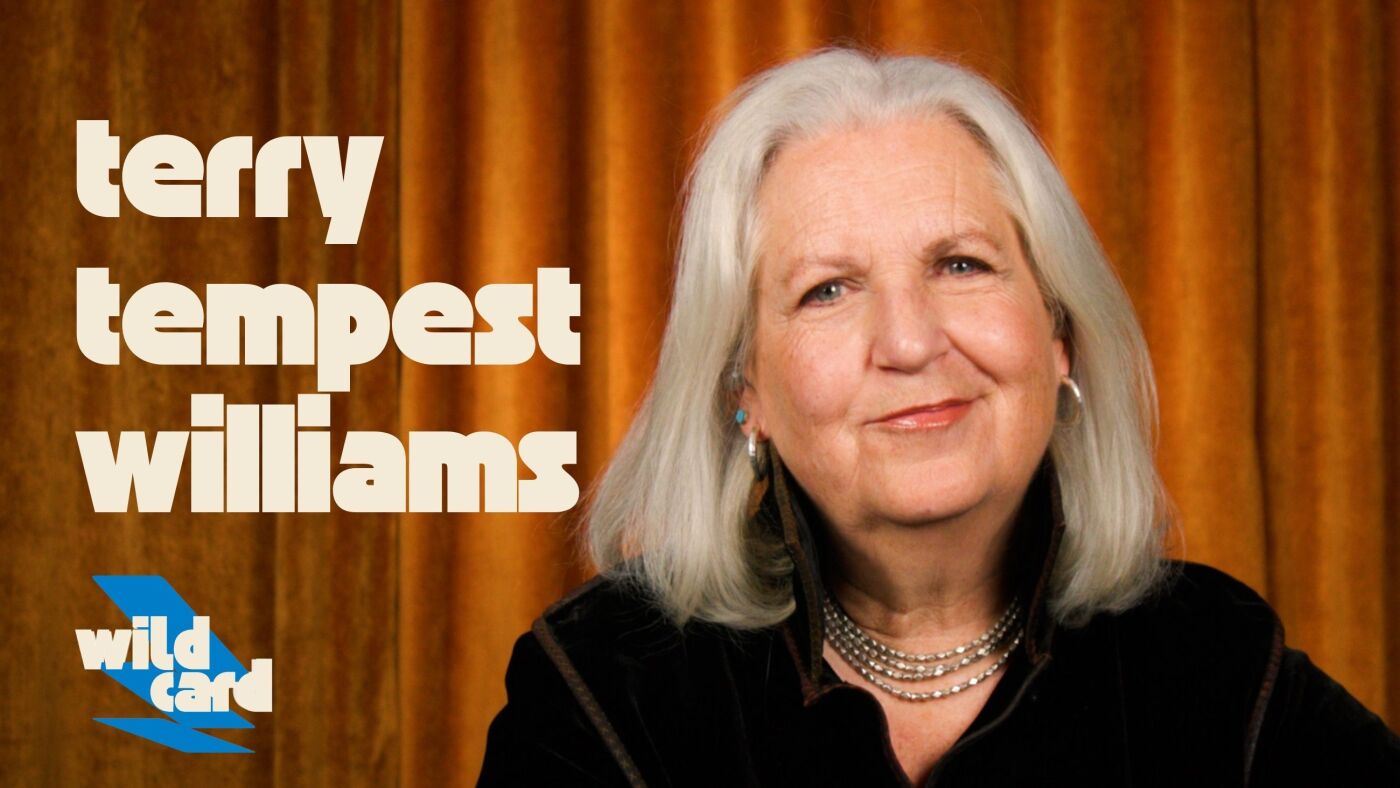
A note from Wild Card host Rachel Martin: I met Terry Tempest Williams about 25 years ago at a writer’s conference in Yosemite Valley. I was a young reporter who was there to do a story about how literature was addressing climate change and she made such a huge impression on me. I had never heard someone talk about the natural world the way Terry did and she had a spiritual depth I hadn’t encountered in my life at that point.
To this day, Terry’s writing always reorients me towards what is good, what is beautiful, and what is true. Her newest book is called “The Glorians.”
-

 Atlanta, GA1 minute ago
Critically missing: 11-year-old missing in Atlanta after running away
-

 Minneapolis, MN6 minutes ago
Marilyn Savage, St. Cloud State Educator And Media Pioneer, Remembered July 18 In Cokato
-

 Indianapolis, IN13 minutes ago
Unsettled Friday and Saturday, then summer heat returns early next week | July 10, 2026
-

 Pittsburg, PA16 minutes ago
Buying Here: Modern home with backyard pool in Lawrenceville priced at $949,900
-

 Augusta, GA21 minutes ago
South Augusta community raises concern over Family Y on Tobacco Road
-

 Washington, D.C28 minutes ago
About 120 Iowa National Guard soldiers leave today for D.C. deployment – Radio Iowa
-

 Cleveland, OH31 minutes ago
Wanted: Sex offender on the run after crimes against a child
-

 Austin, TX36 minutes ago
Austin: Community Vigil for Lorenzo Salgado Araujo

