Lifestyle
Feeling drained? Here's how to rediscover your childlike wonder

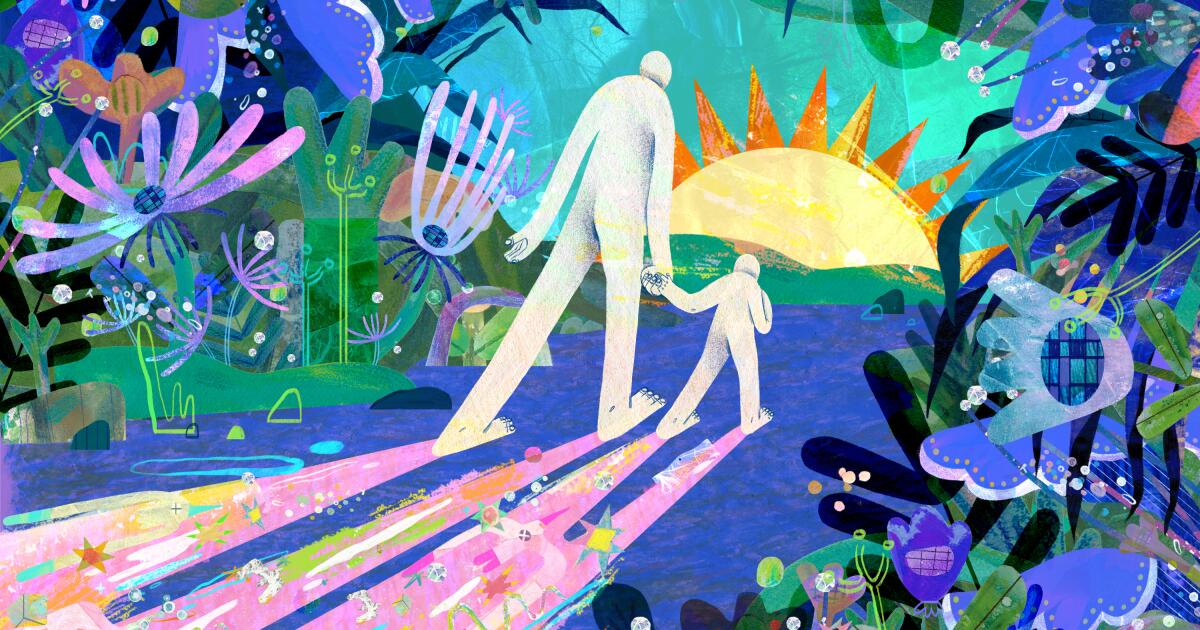
The older I get, the more I enjoy acting like a kid.
I jump at every opportunity to do backflips in the pool and absolutely love seeing the circus when it’s in town. I’ll giggle over banana splits at Fluffy McCloud’s and relish the silly moments when my friends want to watch an animated movie or order an absurd treat like Carvel’s “Fudgie the Whale” ice cream cake. Every few months, my partner and I make a pilgrimage to the desert where we climb huge rocks and lie beneath the stars to feel existentially tiny.
I’ve loved all of these activities since I was young, but my last year has been especially joyful since I started learning the art of childlike wonder.
The phrase first came into my life as a way my partner would justify ordering Shirley Temples, but the more I thought about childlike wonder, the more I began to notice it. I’d find posts about it on social media and contemplate it with friends, including my co-worker Kailyn, who told me about the whimsy she felt as she rolled down a grassy hill at the Getty Center.
And though these notions aren’t new to the world, recent research shows that experiencing awe and wonder can positively affect our mental and physical health, ultimately benefiting our lives. So in 2023, I sought out experts on awe and play and tried to reframe my life in L.A. around the big and tiny things that propel people into states of reverence and joy.
Through this, I discovered something profound yet simple: With the right perspective, and a little bit of effort, we can teach ourselves to generate childlike wonder in all sorts of places.
1. Look for awe in the mundane
Though Dacher Keltner has lived in Berkeley since 1996, he still has a distinctly SoCal vibe. His flowy blond hair looks eternally sun-kissed, and his disposition is equal parts optimistic and laid-back.
“Raised by an artist and a literature professor and living in the wild Laurel Canyon in the late ’60s, you know, life was awe,” Keltner said from his light-dappled kitchen.
A psychology professor at UC Berkeley, Keltner has been formally studying awe since 1999. As a scientist who focuses on the social functions of emotion, Keltner recently wrote “Awe: The New Science of Everyday Wonder and How It Can Transform Your Life” and was a consultant on Pixar’s “Inside Out.”
Keltner said that when he first started researching awe, there were a few early studies on goosebumps, chills and neuroaesthetics, but no one had really zeroed in on the impact of the feeling.
“I always think in terms of phenomena. Where is the motion? Where do I see it? How do I feel it?” Keltner said. “It just seemed like almost everything that really mattered to me — from being at a concert, to sports teams I love winning a championship, to people I really admire, to having children — it’s just all awe.”
Nearly 25 years later, Keltner has these experiences — and what triggers them — down to a science.
“Awe is an emotion that you feel when you encounter vast things that are mysterious,” he explained. “Wonder is what follows awe. It is a mental state, less so an emotion. It’s just a mental state where you’re curious and wanting to explore and discover.”
Keltner has been able to determine eight wonders of life that often propel people into states of awe: moral beauty (witnessing the virtue of others); collective effervescence (often experienced in large groups like those at weddings, rallies or sporting events); nature; music; visual design (beautiful buildings, paintings and the like); spiritual and religious experiences; life and death; and epiphanies.
Learning about these different kinds of wonder made it easier for me to zoom in on moments of awe that I could’ve otherwise forgotten, like carving through Laurel Canyon this summer in my beloved convertible, listening to KCRW play Sampha’s “Spirit 2.0” as the moon rose over the city.
When it comes to researching awe, Keltner often mixes qualitative questions and stories with quantitative measurements. One of his experiments had people create self-portraits while looking at either Yosemite Valley or San Francisco’s Fisherman’s Wharf. The self-portraits from Yosemite consistently had smaller subjects, suggesting that people’s sense of self — or ego — can shrink or even disappear when they’re experiencing awe.
“How much awe do you feel? Tell me a story? How small is your self? Do you feel humble? Draw a circle of the people you’re part of?” Keltner said as he listed various ways to measure awe. “Goosebumps, tears, vagal tone, default mode network deactivation, vocalizations, body postures. I mean, man, we can measure it, and that in its own right some people would not have predicted.”
Shrinking your ego or “self” may sound intimidating, but I like to think about it as feeling like a little guy. That might come from something literal — like wearing a size 5XL sweater for comfort — or it could be more poetic, like finding places where you feel tiny. I often experience this when I dive into the Pacific and roast marshmallows over the fire pits at Dockweiler Beach. Maybe you’ll get that same 5-year-old-in-an-adult-body sensation learning about far-off galaxies at Griffith Observatory’s planetarium or feeling the wind whip over the edge of a canyon.
2. But don’t forget to appreciate wonder in unsurprising places
Some of Keltner’s eight wonders might feel a bit obvious — of course you’ll feel awe when a new baby is born, or while processing a life-changing epiphany. It’s not shocking to learn that people access awe and gratitude while volunteering in their local communities, and by reflecting on the people who shaped their moral compass.
“We were surprised that moral beauty was the most prevalent source of awe around the world,” Keltner said. “People aren’t talking about the Grand Canyon; what they’re talking about, it’s like, ‘Man, I had this teacher and she did everything for her students.’”
Spiritual wonder is another form of awe that’s always at our fingertips. Angelenos can partake in death meditations and sink into sound baths. We take trips to breakup boot camps, energy vortexes or atheist retreats. We laugh and cry inside the most ethereal sacred spaces and find ways to revel in the beauty of our loneliness.
For Keltner, working on this book in the wake of his brother’s death made grief feel like its own complex yet obvious source of wonder. His work made him wrestle with the awe-lessness that he was feeling, and eventually brought him to appreciate the cycles of life that are constantly in motion around us.
Your obvious sources of wonder might look different. I know that awe is guaranteed when I plan a night out with my friends at a crowded gay bar or buy tickets to see Beyoncé perform for a silver-swathed crowd of thousands at SoFi Stadium. I know I’ll find it at weddings, as I watch loved ones reflect on finding someone who turned their world upside down, and I’m guaranteed to feel it every time I get to hug my mom or dad, who live 2,500 miles away.
People aren’t talking about the Grand Canyon; what they’re talking about, it’s like, ‘Man, I had this teacher and she did everything for her students.’
— Dacher Keltner, author of ‘Awe: The New Science of Everyday Wonder and How It Can Transform Your Life’
When I really need to ground myself, I’ll return to my favorite botanical gardens. Though I love taking special trips to the Huntington (to marvel at bonsai trees and sample various teas) and Descanso Gardens (to appreciate summer nights filled with ambient music and glowing foliage each winter), I’m loyal to UCLA’s garden, which is completely free. I find awe in the monstera leaves, often larger than my head, and make silent wishes on my favorite orange-and-black koi fish every time I visit.
It’s also easy enough to stumble upon the kind of jaw-dropping and awe-inspiring nature and design that Keltner mentions around California: We have drive-through redwoods, architectural triumphs, vibrant fields of flowers and spectacular ceilings. I can visit national parks of every flavor; float in lakes and swimming holes; and trip on psychedelics in the desert.
All of these channels for accessing wonder make Keltner hopeful: If awe is able to quiet the negative voices that get trapped in our heads, perhaps this sensation can better people’s lives.
“I started to think about the problems associated with too much self-focus — depression, rumination, anxiety, shame, self-harm, suicide, body-image issues,” Keltner said. “People are sick of the self-focus [that’s] imposed upon us by Instagram and the like. They want to be free of the self.
“Here’s an emotion that frees us of that, and gets us to see how we’re a part of much larger things,” he continued. “And what good news.”
3. Allow yourself to be more playful
Though prioritizing awe is a huge revelation, it’s only one piece of this existential puzzle.
So many of the things that brighten my life are tethered to the softest and brightest parts of my childhood. My partner and I make up silly dances and comedy bits as we move through the day to make each other laugh. Even as I try new hobbies, I find myself returning to the activities that I loved when I was a teenager: swimming, watercolor painting and pottery. When I need to get out of a deep emotional funk, I’ll usually order birria tacos and put on my favorite movie of the last two decades: Pixar’s “Ratatouille.”
That’s all to say that staying close to my playful childhood habits has made it easier to access awe, so I wanted to find out how these aspects of life are intertwined.
Stuart Brown, founder of the National Institute for Play, began studying play in 1966, when he was tasked with figuring out a motive behind the Texas Tower shooting.
“I subsequently went to the Texas state prison system, through a grant, and studied homicidal males,” Brown explained. “And I found out in a pilot study of 26 or so of these individuals, that their play life was very different than a control group.”
This study set Brown on a lifelong mission to study play and how it shapes people’s lives and allows them to enter a gleeful state. Throughout the years, he has interviewed thousands of people — “from Nobel laureates to murderers” — to map out their play patterns.
Brown listed examples of his interview questions: “What did you really, really enjoy as a kid? What’s a joyful moment you had? What’s the first toy you had? Did you have pets? Were there vacation times that were tremendously important? Can you remember a moment of joyfulness where you were absolutely at peace with yourself?”
From those interviews, Brown identified the different play patterns that naturally manifest in each person. For some, that looks like body play — think of dancing or playing a sport — while other people will be more interested in musical play or object play (think of using a Lego set or collecting stamps or keys).
Brown likened these play patterns to our fingerprints, saying they’re deeply embedded within each of us, but he added that many people don’t prioritize play as a significant part of personal well-being and fulfillment.
“Can you remember a moment of joyfulness where you were absolutely at peace with yourself?”
— Stuart Brown, founder of the National Institute for Play
That’s one huge challenge that the NIFP comes up against: Many people don’t see play as indispensable.
“If you go back 50 years, people didn’t know that sleep was important,” said Tony Christopher, the executive director for the institute. “And today, it’s very clear that [if] you don’t get a good night’s sleep you are far from at your best.”
And when people don’t get to play, there are clear drawbacks. Brown said that people can be grumpier, more rigid, and worse problem solvers when they’re play-deprived.
“From birth to death, [play is] a part of being human,” Brown said. “But when it’s not experienced, there are consequences. And the consequences are mild depression, or an outlook that’s not optimistic and not creative and not innovative.”
(Changyu Zou / For The Times)
4. Fill your life with people who expand your universe
When I hear Brown talk about play, it makes me think about Randy King Lawrence, the man behind Echo Park’s colorful and astounding Phantasma Gloria. Lawrence is the kind of person who always brings out my playful side, constantly showing people new ways to look at the world. He’s convinced me that everything looks a little more beautiful through one of his metal stencils or ruby-colored marbles.
“It’s just so damn fun, and it’s so easy,” Lawrence said of his art as we stood in his front yard in 2022. His words and enthusiasm struck me with a feeling that is now, clearly, awe. I had just moved to L.A., and seeing his art was one of the first experiences that convinced me that moving across the country wasn’t a massive mistake.
I’m lucky to be surrounded by many people who love to play, like my friend Charlie, who brought me to Griffith Park for Clown Zoo last spring to partake in a night of comedy. I think of my friends Sophia and Riley, who joined me at Akbar’s craft night one rainy Wednesday to decorate paper owls with pom-poms and beads, or Simone, whom I met in a ceramics class, and all of the long days we’ve spent at the Pottery Studio experimenting with glazes and throwing pots that sometimes crumple.
My roommates sometimes tease me about how silly my schedule often sounds — I’m not free that night because I’m seeing Cirque du Soleil. Wednesday I have to wake up at 6 in the morning to see the Oscar Mayer Wienermobile with the Los Angeles Breakfast Club — but these activities keep me feeling playful. Sometimes I’ll be sampling various crafts around the city and learning archery in Van Nuys, or jet-skiing to Catalina and riding railbikes through Ventura County.
But you don’t need to buy a jet ski or start woodworking to play more (though those are both great ways to get the feeling going). Swapping stories, making weekly or yearly rituals with friends and attending dinner parties are all great ways that adults can play.
“Adult play is not the same as childhood play,” Brown said. “We all have changed our tune as we age. I’m a grandfather and telling stories to my grandkids is a lot of fun to me. Whereas if I was telling stories when I was 18, I would have thought I was nuts.”
5. Slow down to appreciate things you take for granted
When Ingrid Barreneche is having a tough moment, she likes to move slowly and spend a little time on her patio.
“I walk out there and just close my eyes and I let the sun touch my skin,” Barreneche said. “That contact with the sun makes me feel immediately alive and [makes me] wonder.”
Barreneche, who did her MFA thesis on reclaiming wonder, was inspired by Rachel Carson’s 1965 book, “The Sense of Wonder.” Barreneche still creates art that’s intended to “awaken the viewer to rediscover the wonders of the world around them,” and as a resident of Boca Raton, Fla., she often finds awe and joy in admiring the fruit trees that surround her.
“In my backyard, I have a starfruit tree, and my nephew [and I], we call the tree the giving tree,” Barreneche said, a nod to the book by Shel Silverstein.
“It’s such a beautiful thing and people throw [it] away — there’s just fruit everywhere,” she continued. “[When] there’s too much going on, we don’t notice those things.”
She described wonder as something that comes from her gut — a deep, instinctive practice that shapes the way she views the world throughout each day.
“I paint every day; I cook; I walk the dogs; I love,” she mused. “I’ve been with my husband 27 years, and I wonder, ‘How come I’m so blessed to have a love in my life? And such a good human being?’”
That perspective is exactly what Catherine L’Ecuyer, author of “The Wonder Approach,” suggests for those who are trying to reconnect with wonder.
“Wonder is the desire to know,” she said. “Wonder is not taking anything for granted, so it is seeing things as if it were for the first — or for the last — time.”
“I paint every day; I cook; I walk the dogs; I love. I’ve been with my husband 27 years, and I wonder, ‘How come I’m so blessed to have a love in my life? And such a good human being?’”
— Ingrid Barreneche, artist
Ingrid Barreneche’s “A Tale of Life” (2023).
(Courtesy of Ingrid Barreneche)
L’Ecuyer, who is a doctor of both education and psychology, said that adults often approach the world with more cynicism, which is “the opposite of wonder.”
“In my speeches, I often invite people to identify how capable of wonder they are by asking them, ‘When you woke up this morning and you saw the person that was at your side, did you feel wonder and awe?’” L’Ecuyer continued. “We adults tend to get used to the beauty of the world and take it for granted.”
Talking with L’Ecuyer made me feel lucky to have a love who makes every morning feel more exciting than the day before. My partner, Reanna, always finds new ways to make me appreciate the world on a deeper level. They introduce me to their favorite foods — a bucket of popcorn at Brain Dead Studios, or maybe a Fat Sal’s sandwich — with unbridled enthusiasm and always make me laugh while we run errands. On date nights, they’ll surprise me with mini-golf games at Sherman Oaks Castle Park or trips to the piers of Marina del Rey to admire the basking sea lions.
We’ll often spend joyful afternoons at their favorite museum, the bizarre and wonderful Museum of Jurassic Technology, which serves tea in a captivating rooftop garden filled with doves. Sometimes I’m able to bring them to a new-to-us hidden gem, like the Velaslavasay Panorama, which houses a breathtaking 360-degree panoramic painting of China’s Shenyang city in the early 1900s.
Even on the hardest days, appreciating the presence and company of a loved one is a sure-fire way to access a little wonder.
6. Create new daily rituals, like ‘awe walks’
Keltner speaks of the world with an unbridled enthusiasm, as if he can find awe in nearly everything around him: when he’s noticing how the leaves change color in the fall; when he’s revisiting the music of Brian Eno; when he’s reading the work of Ralph Waldo Emerson, Walt Whitman or Rachel Carson.
He makes his work a daily practice through taking “awe walks,” where he’ll slowly observe the beauty surrounding him. He’ll often focus on small details, like a leaf on a tree, and then expand out to the big picture.
“You can get to awe quickly, but to really make it rich, it’s got to be part of this broader pursuit of wonders — of life,” he said. “It’s about a lot of deeper stuff. It’s about your life philosophy, and what you find meaningful, what Aristotle called eudaimonia: What do I care about? And how do I find it in music? And then act upon it?”
By centering awe, Keltner believes that people are more inclined to preserve nature, help each other and reach “big ideas that move our mind.”
“Awe tells you what’s sacred to you,” he said. “And we will fight for sacred stuff; we will sacrifice for what’s sacred.”
The daily awe practices that I’ve integrated into my own life are fairly simple. I now take a 30-minute-long walk every morning, and try to take a photo of something special that I wouldn’t have noticed if I were in a hurry. As I explore my neighborhood day after day, I’ll find myself pausing to take in a lush natural tunnel made by curving trees and the tropical birds that one of my neighbors keeps in their front yard.
I’ve been trying to slow down and really appreciate the beauty that’s constantly around me. I’m acknowledging the small and special joys, pausing for even just a second to acknowledge a new leaf that sprouted on one of my houseplants, or how lucky I am to live two minutes from a taco stand with the best homemade tortillas I’ve ever tasted.
I’m doing my best to appreciate my life for what it is — not what it once was, or not what it could be in the future. (There’s no way to say that without it feeling corny, so please cut me a little slack.) It doesn’t always feel like it’s working, but I’m sure that even the most optimistic people still have bad days.
I don’t believe that awe will combat all of the depression and anxiety that plagues my brain, but I know that strengthening my sense of wonder has helped me appreciate things more deeply. I hope that I’ll continue to find awe each morning, as the sun streams through my window and my partner snores lightly from the other side of the bed.
If nothing else, I hope that this reinvigorated sense of playfulness and wonder will keep compelling me to move through the world with a little more kindness and buoyancy, so I can float down the river of life knowing I didn’t miss all the beauty it has to offer.



Mohammad Saiyub (above, in a Mumbai quarter on a February day) appeared in a photo that went viral in the early days of the pandemic. He and his childhood buddy Amrit Kumar were hitching home, a journey of nearly 1,000 miles. Kumar, who is a Hindu Dalit, fell ill. Saiyub, a Muslim, cradled his friend by the roadside. Their different religious identities drew attention in a country where communal relations have been polarized after a decade of Hindu nationalist rule. The photo and the story behind it inspired the award-winning movie Homebound.
Diaa Hadid/NPR
hide caption
toggle caption
Diaa Hadid/NPR
DEVARI, India — The legendary Martin Scorsese was the movie’s executive producer although his role was kept secret to ensure the film crew could keep working without attracting media attention. He was even assigned a code name: “elder brother.”
That’s because Neeraj Ghaywan, director of Homebound, didn’t want to go public with his movie until it was ready. He worried its central story might be received with hostility by Indian media — by a country — profoundly changed by a decade of rule by the e Prime Minister Narendra Modi and his Hindu nationalist Bharatiya Janata Party, known as the BJP.
He need not have worried.
Homebound, is based on a true story: a tender friendship between two boys from a dusty village, one a Muslim; the other a Dalit, a South Asian caste once known as “untouchables.” The movie revolves around their failed attempts to push through the discrimination they face in today’s India as their lives are upturned and imperiled by the Indian government’s response to the COVID pandemic.
“I treaded that path very, very carefully. Like we didn’t disclose about the story for a long time. We were being very cautious,” Ghaywan tells NPR. “I thought: Let the film speak for itself.”
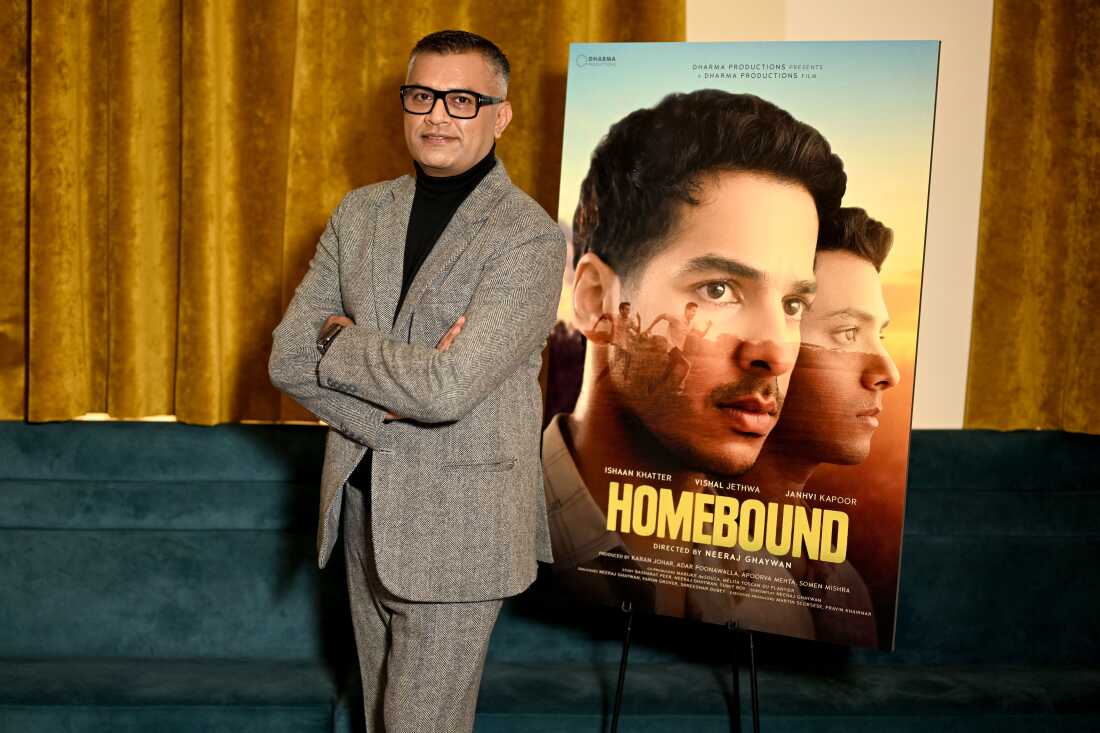
Neeraj Ghaywan is the director of Homebound.
Kate Green/Getty Images/Getty Images Europe
hide caption
toggle caption
Kate Green/Getty Images/Getty Images Europe
The film has spoken for itself — helped of course, by the megaphone that is the backing of one of the world’s most prominent directors.
Cannes loved it — a nine-minute standing ovation. Homebound made the rounds of film festivals, gathered up medals along the way, then was selected by India for consideration for an Oscar in the foreign film category. It even made it to the prestigious shortlist — a rare feat for any Indian movie.
Based on a true story
Homebound is based on a New York Times essay from 2020 by writer Basharat Peer. It tells the backstory of a photograph that went viral during the early days of the pandemic in India. The image shows one man cradling another in his lap in the dirt, by the roadside. And that man is clearly unwell.
“Just the care and the dignity, the photograph moved me immensely,” says Peer. “It was a great act of friendship.”
Then Peer discovered the men were Hindu and Muslim, and it drew him in, because of the context of “everything that had come before that in the past 10 years,” he says, referring to the routine vilification of Muslims by Hindu nationalists, including members of the ruling BJP party, and the prime minister himself. Perhaps most prominently this year, in February, the chief minister of the northeastern state of Assam, Himanta Biswa Sarma, generated an AI video of himself shooting Muslims. It was shared by his party and only taken down after a backlash, and a member of the state’s BJP social media team was fired.)
The two men in the image are garment factory workers: Mohammad Saiyub, a Muslim and Amrit Kumar, a Dalit.
That image captured them as they were trying to get home after the Modi government shut down most industries and transport to prevent the spread of the virus.
But with no work, migrant workers, who survive off low wages, began going hungry — and trying to leave. Economist Jayati Ghosh, who researched India’s COVID response, estimates some 80 million migrant workers tried to return home, walking and hitching rides in searing summer heat.
Peer says it reminded him of the Dust Bowl exodus of the ’30s in the United States. “I was thinking about Steinbeck and the Dust Bowl migrants, which led him to write Grapes of Wrath,” says Peer — except in India: “They’re not running from their Dust Bowl villages. They’re running from the Californias to their villages.”
Migrants died enroute — including the man in that viral photo, Amrit Kumar. “He died of heat exhaustion,” his friend Mohammad Saiyub tells us in a tiny tea house in a crowded Mumbai quarter, where workers sat at stainless steel tables to down steaming cups of chai, boiled in a giant, blackened pot manned by a teenager whose face was largely buried in his phone. Saiyub was in the port city to look for work.
Saiyub says the day that photo was taken, he and Kumar had paid a truck driver the equivalent of $53 for a ride. The cargo was crammed with other migrant workers, desperate to return home. But Kumar developed a fever, and the driver booted him off. “They worried he had corona,” Saiyub recalled.
So Saiyub helped his friend off the truck. Then, he says, “the driver told me, you get on the truck and let’s go.” Saiyub refused to abandon his friend. They sat by the roadside, waiting for help. That’s when someone took their photo. As the image spread online, an ambulance raced to find them.
Too late.
Saiyub ultimately returned home with his friend’s body. He dug his best friend’s grave. “My blood is Kumar’s,” he says. “And Kumar’s blood is mine. We were friends like that.”
A personal connection
Director Ghaywan read the essay, drawn in by that tender friendship between a Muslim and a Dalit Hindu.
There was also a very personal reason that Ghaywan was so affected: He was born into a Dalit family but concealed that information for much of his life, fearing rejection by his upper-caste peers if he told them the truth about who he was.
Ghaywan also happens to be a celebrated wunderkid in Bollywood. He got the backing of a major production studio to make Homebound.
He drew on his own experiences of fear and shame as a Dalit-in-hiding to draw Kumar’s character. “In the film, I poured in a lot of my own shame.” And he hoped to humanize a story rarely told, about India’s downtrodden workers. “I felt there is a strong springboard to talk about contemporary India,” Ghaywan said.
Film critic and curator Meenakshi Shedde said the decision to put money on a movie like Homebound spoke to Ghaywan’s talents as a director, and yet remained, something of a “miracle.”
“In today’s India, you can imagine how daring it is of a producer to put money on a film that’s going against the grain,” Shedde said. The grain she refers to is the stuff that Bollywood is increasingly churning out: films that reflect the Indian government’s Hindu nationalist ideology – with macho Hindu men fighting evil Muslims and proud Indians battling enemy Pakistan.
India’s notoriously prickly censors approved the film for screening in the country, although they insisted on changes that diminished the intensity of the caste and faith discrimination that the protagonists faced. Still, Ghaywan says, “the soul of the film remained intact.”
And then, it was selected as India’s official entry for the Oscars.
It was a striking choice to represent India. Just last year, an Indian movie that critics globally tipped as an Oscar winner was passed over by the same selection committee. Critics suggested that was because it featured a steamy Hindu-Muslim romance.
(NPR sought to speak to the Indian selection committee but received no response.)
Film curator Shedde said she, like many of her peers, were dumbstruck. “How did they end up being India’s submission? OK, so those are, I think, mysteries of the universe,” says Shedde.
Ultimately, Homebound made it to the Oscar shortlist for best foreign film but not the final five.
A very personal screening
After all the excitement died down, Ghaywan set about screening the movie in the one place that really mattered: in Devari, the dusty hamlet that Kumar and Sayoub came from.
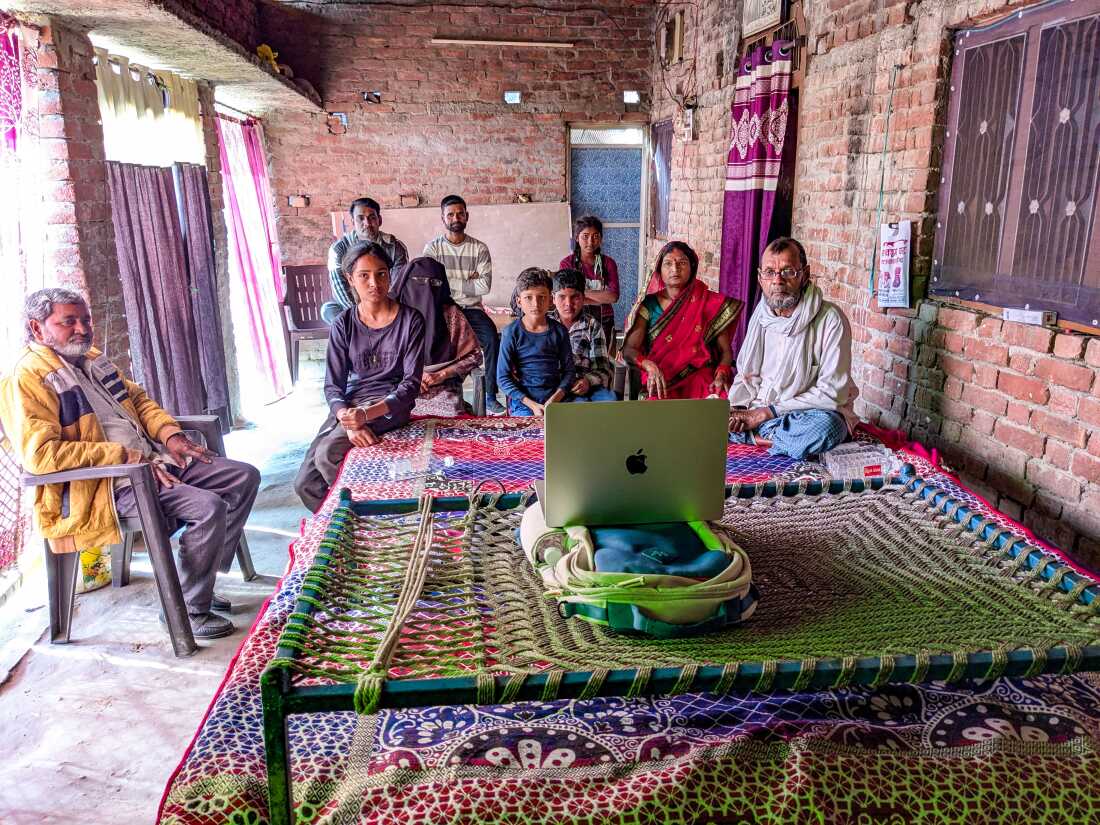
The families of two young men whose friendship inspired the movie Homebound gather for a makeshift screening on the balcony of the home of Mohammad Saiyub.
Diaa Hadid/NPR
hide caption
toggle caption
Diaa Hadid/NPR
That day, Gaywan hugged the fathers of Saiyub and Kumar, who were waiting to meet him. Both men, elderly and unable to work, sat on the same wooden bench.
Kumar’s mother Subhawati arrived later, dressed in her best, brightly colored sari, gifted by her daughter. Subhawati, hunched and sunburnt, stood quietly outside, until Ghaywan insisted she sit with the menfolk on the porch. Saiyub is from a conservative Muslim family. His sisters and mother stayed inside the house, his mother only poked her head outside to pass on plates of food for lunch.
After the meal, Ghaywan lined up plastic chairs on the Saiyoub family porch. Hung up sheets to block the light. Set up his laptop. Curious villagers piled in. Saiyub’s mother even drew up a chair.
But one person refused to watch: Kumar’s mother, Subhawati.
Ghaywan pleaded with her. “Your son’s story,” he said, “inspired millions of people.” Maybe if she watched the movie, she would see how big he had become in people’s hearts, and “maybe this will help you in some way to heal.”
Kumar’s mother asks us: “What good will it do me to watch this movie?”
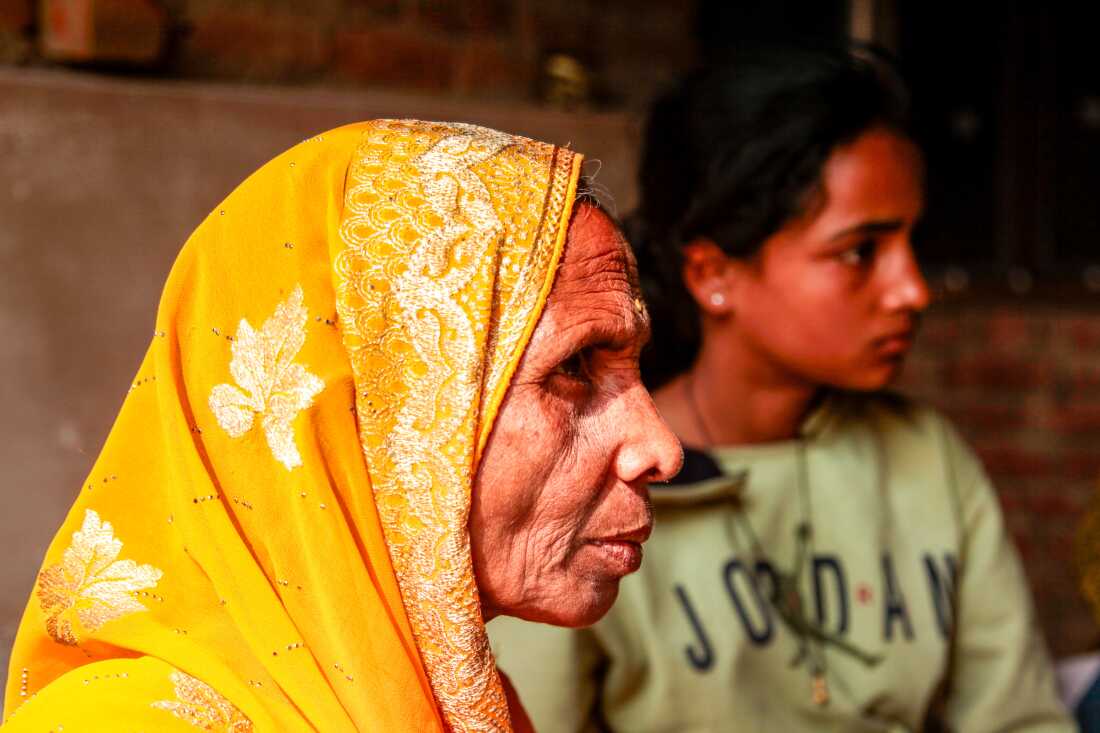
Subhawati is the mother of Amrit Kumar, who was on a 1,000-mile journey home with his childhood friend Mohammad Saiyub. Kumar fell ill and later died. Their story inspired the movie Homebound. When the director arranged a screening for the families of the two young men, Kumar’s mother could not bear to watch.
Diaa Hadid/NPR
hide caption
toggle caption
Diaa Hadid/NPR
It was her son Amrit who kept their bellies full with his garment factory work. Now she works on construction sites for a few dollars a day.
“Amrit used to see my sorrow and my happiness. He took my troubles away. If I watch this film — and Amrit doesn’t speak to me, what is the point?”
So as the opening score wafted from the porch, of a movie about her son’s life and death, she walked away.

I didn’t think anyone would take my Hinge prompt seriously. My ideal first date is … hot yoga. The prompt was partly a joke, written by a friend because I couldn’t figure out what to write. If anything, I figured the prompt would explain the series of yoga pictures scattered across my profile, proving to potential suitors that I wasn’t simply a yoga poser like most Angelenos who view vinyasa as just another workout trend.
I was a “serious yogi,” and to date me would mean respecting my daily practice and being OK with the 3,000 small Ganesha statues tucked into every crevice of my apartment.
Still, I was surprised and slightly amused when Noah asked, in all seriousness, if I would like to go to a yoga class with him and then get dinner afterward. In my effort to go on as many dates as possible as quickly as possible, I said yes, of course. I was a couple of months removed from an eight-year relationship that ended badly. I had convinced myself it would take 100 bad first dates before I found anyone remotely interesting. At least a yoga date for date No. 14 would be slightly more exciting than recounting life stories over drinks at the local bar.
In the texting convo that followed planning our date, Noah and I exchanged music tastes. He is a raver and loves EDM, and I am a Swiftie who also, as it turned out, loves EDM. We learned we attended Chapman University at the same time. We both worked on the Fox lot during the same years. And we share an appreciation for tofu, which he called a “gift from the heavens,” making my vegan heart skip a beat.
Noah and I met at a popular hot yoga studio in Hollywood for our one-hour Bikram-vinyasa fusion date. There was something familiar about him that I initially attributed to having crossed paths in college at some point. In the moments before class, we unloaded our gym bags and shoes into separate lockers outside of the yoga room while exchanging hellos that I expected to be awkward but somehow felt easy and unforced. My interest piqued.
In the yoga room, we set up our mats in the second row. As the class started and the instructor dimmed the lights to an orange glow, it hit me that hot yoga might be a horrible first date idea. We were two strangers, our yoga mats a little too close together, already sweating profusely as the yoga teacher instructed us into sun salutations. I couldn’t decide whether to focus on the class, the poses and keeping my breath slow or if I should try to continuously look cute since this was a date. I kept accidentally catching Noah’s eye in the mirror, and through facial expressions, tried to communicate that I was having fun and in no way subtly judging his yoga practice.
At some point during class, Noah slipped his shirt off and, even through my sweat-filled gaze, I caught a glimpse of his six-pack in the mirror. He met my eyes right as I started to blush, and I looked away fast, embarrassed at having been caught staring. The room suddenly felt hotter and more humid than before. I struggled to steady my breath. Yes, this was definitely a horrible yet interesting first date idea.
The teacher cued us onto our bellies for a backbend sequence. My eyes met Noah’s in the mirror again. This time I turned to look at him, and he smiled a surprisingly familiar smile that meant, “I know this is weird, but I’m having fun too.”
“That was a nice class,” Noah said once our hour was up and we were back in the air-conditioned studio lobby. “It’s one way to see your date sweaty and half-naked.”
I laughed in agreement as we parted ways to shower and change for dinner.
We met again at Cafe Gratitude on Larchmont Boulevard and ordered dishes called “I Am Grateful” and “I Am Remarkable” while recounting the class from our perspectives. He told me about his interest in yoga, how he only recently began practicing as a way to help with mobility. I told him yoga keeps me grounded. I showed off the book I kept in my purse, a story about living Jewishly in modern times, which led to a discussion of how we both grew up Jewish on opposite sides of the country. I liked how neither of us ordered a drink with dinner, choosing water over alcohol as the conversation remained interesting and focused. I liked how he was nice to the server and that his eye contact put me at ease. I liked how after paying the check, he walked me to my car and asked if he could kiss me.
I nodded, and he closed the distance between us. We kissed, and with it came a memory: Freshman year of college, orientation week or shortly afterward, I was at a football party with the girl who would soon be my sorority big. I was drunk and chatty and looking to make friends. I started talking to a freshman boy, and that conversation soon turned to making out, the way most drunken college flirting did back then.
My eyes opened, I pulled away from the kiss. “Have we done this before?” I asked.
Noah blushed then nodded softly.
“Freshman year, I think,” he said, “at a party.”
“A football party?”
“Yes!” He laughed, and I did too.
We kissed again. It was the type of kiss you don’t forget. The type that makes sense.
“Well, we have to do this again,” he concluded.
We said good night. He texted me a song to listen to. I played it in the car on repeat until I arrived home.
Until Noah, I thought an invisible string was only the name of a Taylor Swift song. Now, I know better.
The author is a community builder, writer and yoga teacher. She lives in Echo Park. She’s on Instagram: @allegramarcelle.
L.A. Affairs chronicles the search for romantic love in all its glorious expressions in the L.A. area, and we want to hear your true story. We pay $400 for a published essay. Email LAAffairs@latimes.com. You can find submission guidelines here. You can find past columns here.
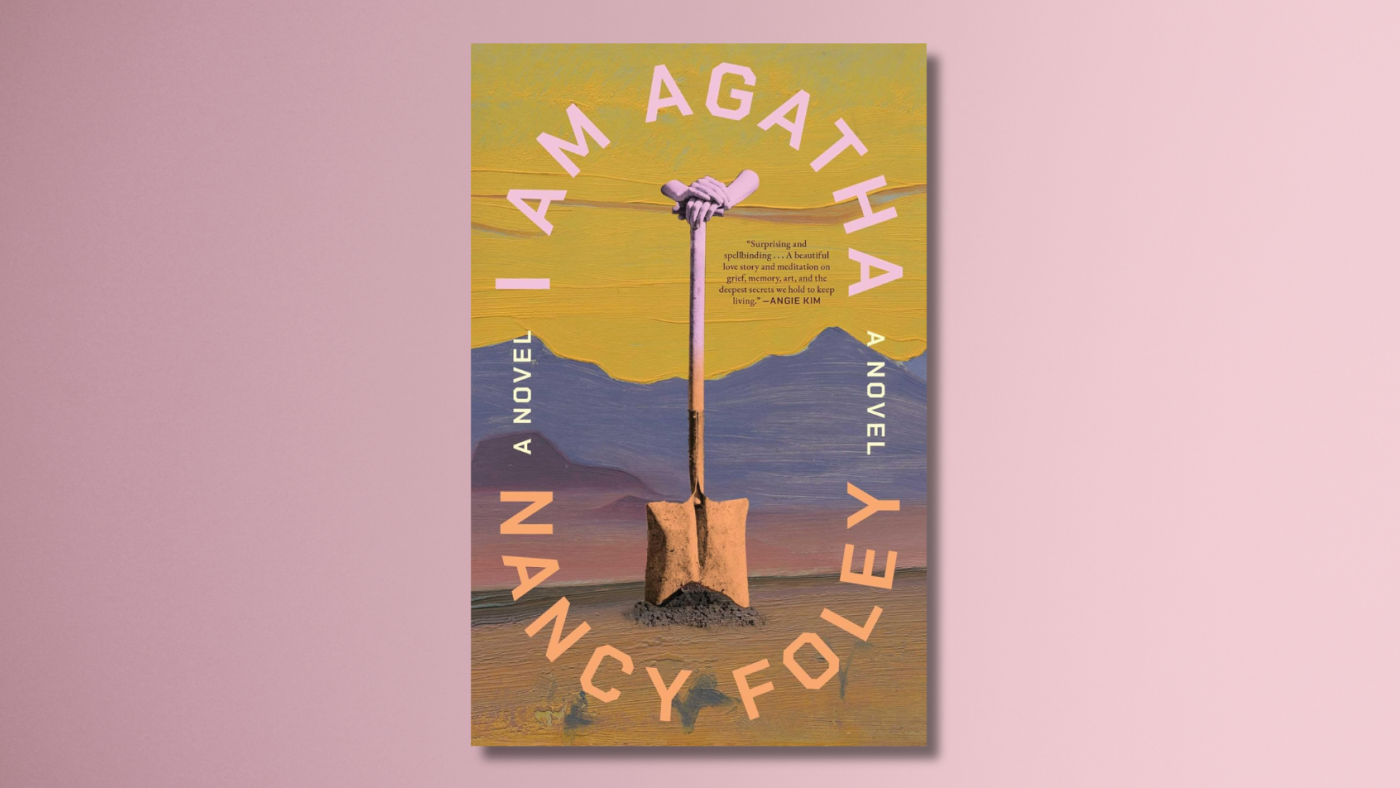
Agatha Smithson is that rare person who lacks the gene for self-doubt. Brash and brutally dismissive of anyone who disagrees with her, Agatha is the main character and unreliable narrator of Nancy Foley’s deviously plotted debut novel, I Am Agatha.
If you’re one of those readers who prizes likeability above all else in your fictional characters, you may be inclined to give I Am Agatha a pass. But that would be a mistake. This is a strange, fresh story about artistic ambition and personal autonomy willingly abridged for love. And, all too unusually, the love affair here is between two women in their 60s.
Agatha’s character is inspired by the real-life minimalist painter Agnes Martin, known for her canvases covered in graphs and stripes. Martin lived for years in New Mexico near Georgia O’Keeffe.
Diagnosed with paranoid schizophrenia, Martin was a solitary person, although she had significant relationships with women. Foley, who grew up in New Mexico, says that her novel was inspired by rumors of such a relationship between a friend of her grandmother’s and Martin.
I Am Agatha takes place mostly in the 1970s, with flashbacks to Agatha’s rough youth in Canada and allusions to a hard time in New York, including a stint at Bellevue. New Mexico offers Agatha a new start and an austere landscape that jibes with her art and own personality. Here’s Agatha, in her typical brusque, pared-down manner of speaking, describing the view from the adobe house she built herself high upon a mesa:
My house looks west out over a canyon that although far from any ocean whatsoever yet resembles one in scope and light. This ocean canyon heaves waves of shale and basalt, quartz and silt. Cloud shadows flit across its rock floor like ghost boats.
There is no other place on Earth like Mesa Portales. I have traveled to many places, so mine is not an uninformed opinion. The truth is that there is a hierarchy. Some places are objectively better, just as some people are objectively better than others.
The “objectively better” person Agatha wants to bring to live with her on Mesa Portales is her longtime secret love, a woman named Alice who’s now declining into dementia. But, there are two obstacles to Agatha’s caretaking plan: The first is Alice’s adult son, Frank Jr., who plans to move his mother into a care facility in Taos.
At one point, Agatha and Frank argue over this plan and Frank Jr. drops some bombshell news. Agatha tells us: “I’m startled but won’t let him take my own breath away from me and puff himself up with it.” It’s hard not to root for a character who knows how to sling words around like that.
The other obstacle seems more immovable: It’s Alice’s daughter, Lorna, who’s buried in the backyard of Alice’s house. Years ago, Lorna was murdered by her abusive husband, and Alice likes to sit every day by her daughter’s grave, which is planted with violets and lilacs. I’m not giving much away when I point out that Agatha’s practical, if grotesque, solution to this dilemma is revealed in the cover art of I Am Agatha; metaphorically, that book jacket hits readers over the head with a shovel.

This novel becomes even more deliciously weird as a pattern emerges: That is, whenever Agatha talks with Frank Jr. or other characters about Alice’s welfare, Alice is never present. She’s always taking a walk or a nap or just unavailable.
It becomes impossible to ignore that Agatha is estranged from a lot of people. She makes brief enigmatic references to a falling out with O’Keefe, and an academic colleague, and a parasitic graduate student who’s writing her thesis on Agatha’s art. As a narrator, Agatha turns out to be no more forthcoming to us readers than she’s been to any of these characters — former friends she now regards as antagonists.

In its ingeniously duplicitous narrative structure, I Am Agatha is reminiscent of Patricia Highsmith’s magnificent Ripley novels. Not that Agatha is an amoral con artist like Tom Ripley, but she will do anything to safeguard Alice, her fading love. “We are all of us hunted animals from the moment we are born,” says Agatha, contemplating old age and death. None of us will outrun Mortality, but watching brilliant and wily Agatha try is captivating.

Russian propaganda unit targets Hungary’s elections

WATCH: Artemis II astronauts splash down on Earth

How David Cross Gets Ready for a Night of ‘Dangerous’ Comedy

“Moon tree” in Metro Detroit rediscovered following Artemis II mission

San Francisco store created and run by AI

Florida High School Football Rankings: Top 25 teams – Oct. 21

How old is Bo Nix? What to know about Oregon quarterback ahead of 2024 NFL Draft

Cleary's 21 help Le Moyne down Central Connecticut State 69-64 in OT

99th annual Pony Swim held in Virginia

Indiana Members Credit Union announced as new anchor tenant at Bottleworks District
Russian propaganda unit targets Hungary’s elections
WATCH: Artemis II astronauts splash down on Earth

Swalwell’s former female staffer drops bombshell allegations of sexual assault, exposing himself: report

NASA’s Artemis II prepares for splashdown on Earth

Trump proposes painting executive office building white
-

 Atlanta, GA6 days ago
1 teenage girl killed, another injured in shooting at Piedmont Park, police say
-

 Education1 week ago
Video: Toy Testing with a Discerning Bodega Cat
-

 Movie Reviews1 week ago
Vaazha 2 first half review: Hashir anchors a lively, chaos-filled teen tale
-

 Georgia4 days ago
Georgia House Special Runoff Election 2026 Live Results
-

 Pennsylvania4 days ago
Parents charged after toddler injured by wolf at Pennsylvania zoo
-

 Arkansas17 hours ago
Arkansas TV meteorologist Melinda Mayo retires after nearly four decades on air
-
 Milwaukee, WI5 days ago
Potawatomi Casino Hotel evacuated after fire breaks out in rooftop HVAC system
-
 Entertainment1 week ago
Inside Ye’s first comeback show at SoFi Stadium