Lifestyle
Feeling drained? Here's how to rediscover your childlike wonder

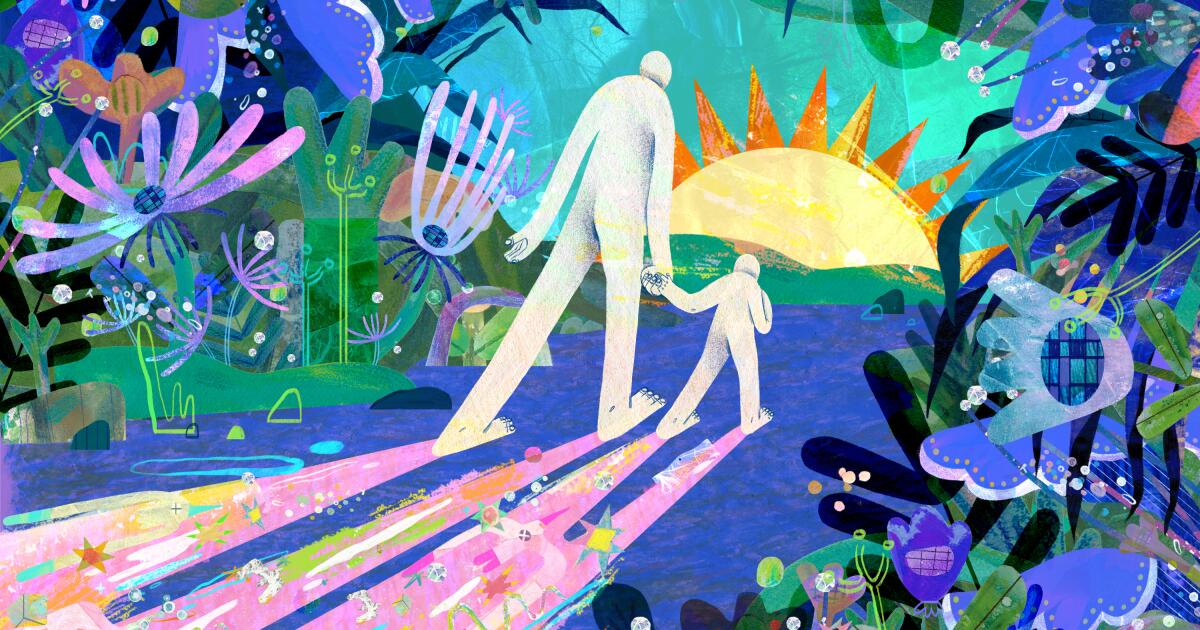
The older I get, the more I enjoy acting like a kid.
I jump at every opportunity to do backflips in the pool and absolutely love seeing the circus when it’s in town. I’ll giggle over banana splits at Fluffy McCloud’s and relish the silly moments when my friends want to watch an animated movie or order an absurd treat like Carvel’s “Fudgie the Whale” ice cream cake. Every few months, my partner and I make a pilgrimage to the desert where we climb huge rocks and lie beneath the stars to feel existentially tiny.
I’ve loved all of these activities since I was young, but my last year has been especially joyful since I started learning the art of childlike wonder.
The phrase first came into my life as a way my partner would justify ordering Shirley Temples, but the more I thought about childlike wonder, the more I began to notice it. I’d find posts about it on social media and contemplate it with friends, including my co-worker Kailyn, who told me about the whimsy she felt as she rolled down a grassy hill at the Getty Center.
And though these notions aren’t new to the world, recent research shows that experiencing awe and wonder can positively affect our mental and physical health, ultimately benefiting our lives. So in 2023, I sought out experts on awe and play and tried to reframe my life in L.A. around the big and tiny things that propel people into states of reverence and joy.
Through this, I discovered something profound yet simple: With the right perspective, and a little bit of effort, we can teach ourselves to generate childlike wonder in all sorts of places.
1. Look for awe in the mundane
Though Dacher Keltner has lived in Berkeley since 1996, he still has a distinctly SoCal vibe. His flowy blond hair looks eternally sun-kissed, and his disposition is equal parts optimistic and laid-back.
“Raised by an artist and a literature professor and living in the wild Laurel Canyon in the late ’60s, you know, life was awe,” Keltner said from his light-dappled kitchen.
A psychology professor at UC Berkeley, Keltner has been formally studying awe since 1999. As a scientist who focuses on the social functions of emotion, Keltner recently wrote “Awe: The New Science of Everyday Wonder and How It Can Transform Your Life” and was a consultant on Pixar’s “Inside Out.”
Keltner said that when he first started researching awe, there were a few early studies on goosebumps, chills and neuroaesthetics, but no one had really zeroed in on the impact of the feeling.
“I always think in terms of phenomena. Where is the motion? Where do I see it? How do I feel it?” Keltner said. “It just seemed like almost everything that really mattered to me — from being at a concert, to sports teams I love winning a championship, to people I really admire, to having children — it’s just all awe.”
Nearly 25 years later, Keltner has these experiences — and what triggers them — down to a science.
“Awe is an emotion that you feel when you encounter vast things that are mysterious,” he explained. “Wonder is what follows awe. It is a mental state, less so an emotion. It’s just a mental state where you’re curious and wanting to explore and discover.”
Keltner has been able to determine eight wonders of life that often propel people into states of awe: moral beauty (witnessing the virtue of others); collective effervescence (often experienced in large groups like those at weddings, rallies or sporting events); nature; music; visual design (beautiful buildings, paintings and the like); spiritual and religious experiences; life and death; and epiphanies.
Learning about these different kinds of wonder made it easier for me to zoom in on moments of awe that I could’ve otherwise forgotten, like carving through Laurel Canyon this summer in my beloved convertible, listening to KCRW play Sampha’s “Spirit 2.0” as the moon rose over the city.
When it comes to researching awe, Keltner often mixes qualitative questions and stories with quantitative measurements. One of his experiments had people create self-portraits while looking at either Yosemite Valley or San Francisco’s Fisherman’s Wharf. The self-portraits from Yosemite consistently had smaller subjects, suggesting that people’s sense of self — or ego — can shrink or even disappear when they’re experiencing awe.
“How much awe do you feel? Tell me a story? How small is your self? Do you feel humble? Draw a circle of the people you’re part of?” Keltner said as he listed various ways to measure awe. “Goosebumps, tears, vagal tone, default mode network deactivation, vocalizations, body postures. I mean, man, we can measure it, and that in its own right some people would not have predicted.”
Shrinking your ego or “self” may sound intimidating, but I like to think about it as feeling like a little guy. That might come from something literal — like wearing a size 5XL sweater for comfort — or it could be more poetic, like finding places where you feel tiny. I often experience this when I dive into the Pacific and roast marshmallows over the fire pits at Dockweiler Beach. Maybe you’ll get that same 5-year-old-in-an-adult-body sensation learning about far-off galaxies at Griffith Observatory’s planetarium or feeling the wind whip over the edge of a canyon.
2. But don’t forget to appreciate wonder in unsurprising places
Some of Keltner’s eight wonders might feel a bit obvious — of course you’ll feel awe when a new baby is born, or while processing a life-changing epiphany. It’s not shocking to learn that people access awe and gratitude while volunteering in their local communities, and by reflecting on the people who shaped their moral compass.
“We were surprised that moral beauty was the most prevalent source of awe around the world,” Keltner said. “People aren’t talking about the Grand Canyon; what they’re talking about, it’s like, ‘Man, I had this teacher and she did everything for her students.’”
Spiritual wonder is another form of awe that’s always at our fingertips. Angelenos can partake in death meditations and sink into sound baths. We take trips to breakup boot camps, energy vortexes or atheist retreats. We laugh and cry inside the most ethereal sacred spaces and find ways to revel in the beauty of our loneliness.
For Keltner, working on this book in the wake of his brother’s death made grief feel like its own complex yet obvious source of wonder. His work made him wrestle with the awe-lessness that he was feeling, and eventually brought him to appreciate the cycles of life that are constantly in motion around us.
Your obvious sources of wonder might look different. I know that awe is guaranteed when I plan a night out with my friends at a crowded gay bar or buy tickets to see Beyoncé perform for a silver-swathed crowd of thousands at SoFi Stadium. I know I’ll find it at weddings, as I watch loved ones reflect on finding someone who turned their world upside down, and I’m guaranteed to feel it every time I get to hug my mom or dad, who live 2,500 miles away.
People aren’t talking about the Grand Canyon; what they’re talking about, it’s like, ‘Man, I had this teacher and she did everything for her students.’
— Dacher Keltner, author of ‘Awe: The New Science of Everyday Wonder and How It Can Transform Your Life’
When I really need to ground myself, I’ll return to my favorite botanical gardens. Though I love taking special trips to the Huntington (to marvel at bonsai trees and sample various teas) and Descanso Gardens (to appreciate summer nights filled with ambient music and glowing foliage each winter), I’m loyal to UCLA’s garden, which is completely free. I find awe in the monstera leaves, often larger than my head, and make silent wishes on my favorite orange-and-black koi fish every time I visit.
It’s also easy enough to stumble upon the kind of jaw-dropping and awe-inspiring nature and design that Keltner mentions around California: We have drive-through redwoods, architectural triumphs, vibrant fields of flowers and spectacular ceilings. I can visit national parks of every flavor; float in lakes and swimming holes; and trip on psychedelics in the desert.
All of these channels for accessing wonder make Keltner hopeful: If awe is able to quiet the negative voices that get trapped in our heads, perhaps this sensation can better people’s lives.
“I started to think about the problems associated with too much self-focus — depression, rumination, anxiety, shame, self-harm, suicide, body-image issues,” Keltner said. “People are sick of the self-focus [that’s] imposed upon us by Instagram and the like. They want to be free of the self.
“Here’s an emotion that frees us of that, and gets us to see how we’re a part of much larger things,” he continued. “And what good news.”
3. Allow yourself to be more playful
Though prioritizing awe is a huge revelation, it’s only one piece of this existential puzzle.
So many of the things that brighten my life are tethered to the softest and brightest parts of my childhood. My partner and I make up silly dances and comedy bits as we move through the day to make each other laugh. Even as I try new hobbies, I find myself returning to the activities that I loved when I was a teenager: swimming, watercolor painting and pottery. When I need to get out of a deep emotional funk, I’ll usually order birria tacos and put on my favorite movie of the last two decades: Pixar’s “Ratatouille.”
That’s all to say that staying close to my playful childhood habits has made it easier to access awe, so I wanted to find out how these aspects of life are intertwined.
Stuart Brown, founder of the National Institute for Play, began studying play in 1966, when he was tasked with figuring out a motive behind the Texas Tower shooting.
“I subsequently went to the Texas state prison system, through a grant, and studied homicidal males,” Brown explained. “And I found out in a pilot study of 26 or so of these individuals, that their play life was very different than a control group.”
This study set Brown on a lifelong mission to study play and how it shapes people’s lives and allows them to enter a gleeful state. Throughout the years, he has interviewed thousands of people — “from Nobel laureates to murderers” — to map out their play patterns.
Brown listed examples of his interview questions: “What did you really, really enjoy as a kid? What’s a joyful moment you had? What’s the first toy you had? Did you have pets? Were there vacation times that were tremendously important? Can you remember a moment of joyfulness where you were absolutely at peace with yourself?”
From those interviews, Brown identified the different play patterns that naturally manifest in each person. For some, that looks like body play — think of dancing or playing a sport — while other people will be more interested in musical play or object play (think of using a Lego set or collecting stamps or keys).
Brown likened these play patterns to our fingerprints, saying they’re deeply embedded within each of us, but he added that many people don’t prioritize play as a significant part of personal well-being and fulfillment.
“Can you remember a moment of joyfulness where you were absolutely at peace with yourself?”
— Stuart Brown, founder of the National Institute for Play
That’s one huge challenge that the NIFP comes up against: Many people don’t see play as indispensable.
“If you go back 50 years, people didn’t know that sleep was important,” said Tony Christopher, the executive director for the institute. “And today, it’s very clear that [if] you don’t get a good night’s sleep you are far from at your best.”
And when people don’t get to play, there are clear drawbacks. Brown said that people can be grumpier, more rigid, and worse problem solvers when they’re play-deprived.
“From birth to death, [play is] a part of being human,” Brown said. “But when it’s not experienced, there are consequences. And the consequences are mild depression, or an outlook that’s not optimistic and not creative and not innovative.”
(Changyu Zou / For The Times)
4. Fill your life with people who expand your universe
When I hear Brown talk about play, it makes me think about Randy King Lawrence, the man behind Echo Park’s colorful and astounding Phantasma Gloria. Lawrence is the kind of person who always brings out my playful side, constantly showing people new ways to look at the world. He’s convinced me that everything looks a little more beautiful through one of his metal stencils or ruby-colored marbles.
“It’s just so damn fun, and it’s so easy,” Lawrence said of his art as we stood in his front yard in 2022. His words and enthusiasm struck me with a feeling that is now, clearly, awe. I had just moved to L.A., and seeing his art was one of the first experiences that convinced me that moving across the country wasn’t a massive mistake.
I’m lucky to be surrounded by many people who love to play, like my friend Charlie, who brought me to Griffith Park for Clown Zoo last spring to partake in a night of comedy. I think of my friends Sophia and Riley, who joined me at Akbar’s craft night one rainy Wednesday to decorate paper owls with pom-poms and beads, or Simone, whom I met in a ceramics class, and all of the long days we’ve spent at the Pottery Studio experimenting with glazes and throwing pots that sometimes crumple.
My roommates sometimes tease me about how silly my schedule often sounds — I’m not free that night because I’m seeing Cirque du Soleil. Wednesday I have to wake up at 6 in the morning to see the Oscar Mayer Wienermobile with the Los Angeles Breakfast Club — but these activities keep me feeling playful. Sometimes I’ll be sampling various crafts around the city and learning archery in Van Nuys, or jet-skiing to Catalina and riding railbikes through Ventura County.
But you don’t need to buy a jet ski or start woodworking to play more (though those are both great ways to get the feeling going). Swapping stories, making weekly or yearly rituals with friends and attending dinner parties are all great ways that adults can play.
“Adult play is not the same as childhood play,” Brown said. “We all have changed our tune as we age. I’m a grandfather and telling stories to my grandkids is a lot of fun to me. Whereas if I was telling stories when I was 18, I would have thought I was nuts.”
5. Slow down to appreciate things you take for granted
When Ingrid Barreneche is having a tough moment, she likes to move slowly and spend a little time on her patio.
“I walk out there and just close my eyes and I let the sun touch my skin,” Barreneche said. “That contact with the sun makes me feel immediately alive and [makes me] wonder.”
Barreneche, who did her MFA thesis on reclaiming wonder, was inspired by Rachel Carson’s 1965 book, “The Sense of Wonder.” Barreneche still creates art that’s intended to “awaken the viewer to rediscover the wonders of the world around them,” and as a resident of Boca Raton, Fla., she often finds awe and joy in admiring the fruit trees that surround her.
“In my backyard, I have a starfruit tree, and my nephew [and I], we call the tree the giving tree,” Barreneche said, a nod to the book by Shel Silverstein.
“It’s such a beautiful thing and people throw [it] away — there’s just fruit everywhere,” she continued. “[When] there’s too much going on, we don’t notice those things.”
She described wonder as something that comes from her gut — a deep, instinctive practice that shapes the way she views the world throughout each day.
“I paint every day; I cook; I walk the dogs; I love,” she mused. “I’ve been with my husband 27 years, and I wonder, ‘How come I’m so blessed to have a love in my life? And such a good human being?’”
That perspective is exactly what Catherine L’Ecuyer, author of “The Wonder Approach,” suggests for those who are trying to reconnect with wonder.
“Wonder is the desire to know,” she said. “Wonder is not taking anything for granted, so it is seeing things as if it were for the first — or for the last — time.”
“I paint every day; I cook; I walk the dogs; I love. I’ve been with my husband 27 years, and I wonder, ‘How come I’m so blessed to have a love in my life? And such a good human being?’”
— Ingrid Barreneche, artist
Ingrid Barreneche’s “A Tale of Life” (2023).
(Courtesy of Ingrid Barreneche)
L’Ecuyer, who is a doctor of both education and psychology, said that adults often approach the world with more cynicism, which is “the opposite of wonder.”
“In my speeches, I often invite people to identify how capable of wonder they are by asking them, ‘When you woke up this morning and you saw the person that was at your side, did you feel wonder and awe?’” L’Ecuyer continued. “We adults tend to get used to the beauty of the world and take it for granted.”
Talking with L’Ecuyer made me feel lucky to have a love who makes every morning feel more exciting than the day before. My partner, Reanna, always finds new ways to make me appreciate the world on a deeper level. They introduce me to their favorite foods — a bucket of popcorn at Brain Dead Studios, or maybe a Fat Sal’s sandwich — with unbridled enthusiasm and always make me laugh while we run errands. On date nights, they’ll surprise me with mini-golf games at Sherman Oaks Castle Park or trips to the piers of Marina del Rey to admire the basking sea lions.
We’ll often spend joyful afternoons at their favorite museum, the bizarre and wonderful Museum of Jurassic Technology, which serves tea in a captivating rooftop garden filled with doves. Sometimes I’m able to bring them to a new-to-us hidden gem, like the Velaslavasay Panorama, which houses a breathtaking 360-degree panoramic painting of China’s Shenyang city in the early 1900s.
Even on the hardest days, appreciating the presence and company of a loved one is a sure-fire way to access a little wonder.
6. Create new daily rituals, like ‘awe walks’
Keltner speaks of the world with an unbridled enthusiasm, as if he can find awe in nearly everything around him: when he’s noticing how the leaves change color in the fall; when he’s revisiting the music of Brian Eno; when he’s reading the work of Ralph Waldo Emerson, Walt Whitman or Rachel Carson.
He makes his work a daily practice through taking “awe walks,” where he’ll slowly observe the beauty surrounding him. He’ll often focus on small details, like a leaf on a tree, and then expand out to the big picture.
“You can get to awe quickly, but to really make it rich, it’s got to be part of this broader pursuit of wonders — of life,” he said. “It’s about a lot of deeper stuff. It’s about your life philosophy, and what you find meaningful, what Aristotle called eudaimonia: What do I care about? And how do I find it in music? And then act upon it?”
By centering awe, Keltner believes that people are more inclined to preserve nature, help each other and reach “big ideas that move our mind.”
“Awe tells you what’s sacred to you,” he said. “And we will fight for sacred stuff; we will sacrifice for what’s sacred.”
The daily awe practices that I’ve integrated into my own life are fairly simple. I now take a 30-minute-long walk every morning, and try to take a photo of something special that I wouldn’t have noticed if I were in a hurry. As I explore my neighborhood day after day, I’ll find myself pausing to take in a lush natural tunnel made by curving trees and the tropical birds that one of my neighbors keeps in their front yard.
I’ve been trying to slow down and really appreciate the beauty that’s constantly around me. I’m acknowledging the small and special joys, pausing for even just a second to acknowledge a new leaf that sprouted on one of my houseplants, or how lucky I am to live two minutes from a taco stand with the best homemade tortillas I’ve ever tasted.
I’m doing my best to appreciate my life for what it is — not what it once was, or not what it could be in the future. (There’s no way to say that without it feeling corny, so please cut me a little slack.) It doesn’t always feel like it’s working, but I’m sure that even the most optimistic people still have bad days.
I don’t believe that awe will combat all of the depression and anxiety that plagues my brain, but I know that strengthening my sense of wonder has helped me appreciate things more deeply. I hope that I’ll continue to find awe each morning, as the sun streams through my window and my partner snores lightly from the other side of the bed.
If nothing else, I hope that this reinvigorated sense of playfulness and wonder will keep compelling me to move through the world with a little more kindness and buoyancy, so I can float down the river of life knowing I didn’t miss all the beauty it has to offer.


Sunday Puzzle
NPR
hide caption
toggle caption
NPR

On-air challenge
Today’s theme is “hot.” Every answer is a familiar two-word phrase in which the first word starts HO- and the second word starts with T-.
Ex. Rowdy bar with country music, in slang –> HONKY TONK
1. Guided walkthrough of a property
2. Any member of the N.H.L.
3. Lone Star State metropolis that’s the fourth-largest city in the U.S.
4. Like an animal with its four legs bound (hyph.)
5. Instruction manual (hyph.)
6. A little pompous and arrogant, informally (hyph.)
7. Punny greeting from a magician
8. Someone who steals animals from a stable
9. Congestion that drivers encounter around July 4th, say
10. Acquisition of a company against its will.
11. Exclamation for “wow!” on TV’s “Batman”
Last week’s challenge
Last week’s challenge comes from Evan Kalish, of Bayside, N.Y. Take the name of a nocturnal creature, in two words. The first word is a spooky sound. Move the last letter of the first word to the start of the second word and you’ll get another spooky, nocturnal sound. What is the creature and what are the sounds?
Answer: Screech owl –> howl
Winner
Dan Sadoff of St. Paul, Minnesota
This week’s challenge
This week’s challenge comes from Rawson Sheinberg. of Plymouth, Mich. Think of a U.S. city with a two-word name. Add a letter to the first word, without rearranging letters, to name a country. Then, without adding a letter, rearrange the letters of the second word to name another country. What places are these?
If you know the answer to the challenge, submit it here by Thursday, July 2 at 3 p.m. ET. Listeners whose answers are selected win a chance to play the on-air puzzle. Important: include a phone number where we can reach you.

If you’re struggling to use up leftovers like a half-eaten rotisserie chicken, turn the assignment into a creative exercise, says chef Margaret Li. It’ll make the cooking process more fun and less guilt-driven.
Pulse/Getty Images/Corbis RF Stills
hide caption
toggle caption
Pulse/Getty Images/Corbis RF Stills
On a recent weeknight, I opened up my fridge and found an assortment of half-eaten or ignored food.
That included takeout that I didn’t find appetizing enough to eat for lunch. A rotisserie chicken with most of the meat picked off. A couple of raw vegetables from the farmers market that were starting to wilt.
“There’s nothing to eat,” I told myself. Yet even I knew that was ridiculous. There was plenty of food in my fridge. I just didn’t feel inspired to cook with it.
So I asked some chefs for guidance. How could I more consistently use leftovers and the other ingredients I tend to overlook?
Start with a mindset shift, says Margaret Li, chef and co-author of the cookbook Perfectly Good Food: A Totally Achievable Zero Waste Approach to Home Cooking. Think about cooking with leftovers as a creative, experimental exercise, not a guilt-driven one.
“It ends up being this fun game where you are creating something from what seems like nothing and solving this puzzle, and then you get to eat it,” she says.
There are other good reasons to use up your food scraps. Nationally, about a quarter of food products go to waste, according to the nonprofit ReFED. In my own household, where we spend about $200 a week on groceries, that means I might be throwing out the equivalent of $50 of food — an unnecessary burden on my wallet, not to mention the environment.
The chefs I spoke to had some practical tips about using up more of the food we buy. Here are a few that I put to the test.
Find your “hero recipes”
Build up an arsenal of go-to recipes that are flexible enough to use up just about any ingredient. Li calls them “hero recipes.”
I tried one of these from her cookbook, called “Make-It-Your-Own Stir-Fry.” (Scroll down for the recipe.) It includes loose ingredients like “1 pound crisp-crunchy vegetables” or “4 cups leafy greens.”
In the spirit of the recipe, I pulled vegetables out of my fridge at random and did not measure them out. The sauce was a simple mixture of soy sauce, vinegar, sugar and water. By the time I topped my bowl with chopped scallions, the dish looked like a gourmet meal, not an afterthought.

Other ideas: “You could put anything in a frittata, and it’ll be great,” says Tamar Adler, chef and author of The Everlasting Meal Cookbook: Leftovers A-Z.
Or, if you have day-old rice on hand, cook it alongside other ingredients to make fried rice. “Saute some aromatics — ginger, garlic, onion — in oil,” Adler says. Then add your rice and whatever leftover bits you have, like the rotisserie chicken and older produce I had in my fridge.
“Just take the approach of making it more flavorful and crispy and then spicy, and then usually adding a squeeze of lemon,” Adler says.
Label your leftovers
Keep a permanent marker and painter’s tape in your kitchen to label and date your leftovers, Li says. “That is a classic chef’s method for knowing what something is and when it was made. That saves you the guessing game.”
Adler takes the concept a step further and labels her leftovers with their intended use. Leftover blueberries are labeled “muffins-to-be on Tuesday,” she says. “I really like doing that — assigning the destiny of the food.”

So after a night of Ethiopian takeout, when we ended up with an entire container of leftover injera, I followed Adler’s advice and thought about what it might become in the future.
I imagined scrambling the spongy, tangy bread with eggs, akin to scrambling matzo into matzo brei. “Injera for eggs,” I wrote on the container. Sure enough, their destiny was fulfilled the following morning.

Li keeps a dedicated bag in her freezer just for scraps from which to make chicken or vegetable stock. That bag houses carrot peels, the ends of onions, extra garlic cloves and chicken bones.
Flavia Morlachetti/Getty Images/Moment RF
hide caption
toggle caption
Flavia Morlachetti/Getty Images/Moment RF
Don’t forget your odds and ends
Adler encouraged me to never, ever throw away the stems of herbs. Stems don’t get as much glory as tender, pretty leaves, but they still have the same herby taste.
“I’m going to chop these herbs up or stick them in a blender with a clove of garlic,” she says. Then add olive oil. “And then it’s just gonna be my base sauce for everything.”
So I foraged a few varieties of half-cut herbs from my refrigerator drawers, most of them sad looking and unidentifiable.
I threw out the stems that had turned brown and gooey and put the rest in a blender. I added garlic on Adler’s instructions, nuts and kale for bulk, and plenty of olive oil and salt. Then, on a whim, I added a splash of olive juice for brightness.
The result was somewhere between a pesto and a chimichurri, and it elevated that night’s otherwise routine dinner. And Adler was right: Once the stems were blended, it tasted exactly the same as the leaves. (The same idea applies for broccoli stems in a cheesy broccoli soup, Li says.)
Li likes to keep her odds and ends organized with an “Eat Me First” box in her fridge. That’s where she keeps half-used lemons, leftover coconut milk or produce that’s starting to get wrinkly. “You kind of have an idea for, OK, here’s where you look first,” she says.
Don’t strive for perfection
Cooking these meals did feel like a game, as Li had suggested. It brought me unexpected joy to use up as many existing ingredients as possible — to the point where I often spent much longer in the kitchen because I kept thinking of new ideas: If I turn these wrinkly sweet potatoes into a soup, then I can caramelize this half-cut onion for a topping, and then I can use the leftover soup as a sauce tomorrow …
Did I cook more often, though? Probably not. My cooking energy burned brighter but fizzled out after a few nights, at which point I ordered takeout.
So I was glad to hear Li’s take: If you’re too hard on yourself, you’re not going to enjoy it at all. “ I try not to be too obsessive about eating absolutely everything,” she says. If my takeout was truly terrible, I’m allowed to toss it or, better yet, compost it.
If you really want to use up everything, you can always chuck ingredients into the freezer. Li has dedicated freezer bags for different dishes, like vegetable scraps for soups or fruit discards for smoothies. (She labels them, of course.)
And how does that smoothie taste? It’s “delicious,” she says, “even if it’s made up of all the things that have been rejected in the past,” she says.
Recipe: Make-It-Your-Own Stir-Fry
Excerpted from Perfectly Good Food: A Totally Achievable Zero Waste Approach to Home Cooking. Copyright ©2023 by Irene Li and Margaret Li. Used with permission of the publisher, W. W. Norton & Company, Inc. All rights reserved.
Sauce
- 1 tablespoon soy sauce
- 1 tablespoon water
- 1 teaspoon sugar
- 1 teaspoon black vinegar, rice vinegar, lime juice, or other acid
- 1 tablespoon neutral oil, or enough to lightly coat the bottom of your wok or skillet
- 1 garlic clove, thinly sliced or minced, or more as desired
- ½-inch piece fresh ginger, minced or grated (optional)
- Pinch chili flakes or 1 small chile pepper, diced (optional)
- 4 cups leafy greens, torn into bite-size pieces, or 1 pound crisp-crunchy vegetables, cut into chunks
- Kosher salt
Stir the sauce ingredients together in a small bowl and set by the stove.
Heat a wok or large skillet over high heat until just smoking, then add the neutral oil and tilt to coat the bottom of the pan.
Add the garlic, ginger (if using), and chili flakes (if using) and stir-fry for 10 seconds. Add the greens and/or vegetables, in stages as necessary, and toss in the garlicky oil, then add the sauce and cook to your liking, stirring frequently.
Vegetable chunks may need 4 to 7 minutes — if you want to speed up the process, cover the pot so the vegetables steam for a minute or two, then uncover and toss again. Sturdy greens may need 3 to 5 minutes to get tender (we like to let them sit for a bit and char for extra texture).
Lighter leaves will need less than a minute to wilt down. Stir in a spoonful of any additional sauce you like, season with salt to taste, then sprinkle with your favorite garnishes and a generous drizzle of sesame oil.
A sprinkle of crunch is a great way to finish a stir-fry. Our favorites include crushed cashews or peanuts, toasted sesame seeds, thinly sliced scallions, and fried onions or shallots.
Your turn: What are your favorite go-to leftover recipes?
We’d love to hear from you! Share your recipe with us at lifekit@npr.org with your full name. We may publish it on NPR.org.
The story was edited by Malaka Gharib. The visual editor is CJ Riculan. We’d love to hear from you. Leave us a voicemail at 202-216-9823, or email us at LifeKit@npr.org.
Listen to Life Kit on Apple Podcasts and Spotify, and sign up for our newsletter. Follow us on Instagram: @nprlifekit.

Stephen Malkmus & the Jicks perform onstage during day two of the Boston Calling Music Festival at Boston City Hall Plaza on September 26, 2015 in Boston, Massachusetts. (Photo by Mike Lawrie/Getty Images)
Mike Lawrie/Getty Images
hide caption
toggle caption
Mike Lawrie/Getty Images
This week’s show was recorded in Chicago with host Peter Sagal, judge and scorekeeper Alzo Slade, Not My Job guest Stephen Malkmus and panelists Emmy Blotnick, Joyelle Nicole Johnson, and Gianmarco Soresi. Click the audio link above to hear the whole show.
Who’s Alzo This Time
Pool Problems; Don’t Forget to Hydrate; The Rise of Hot Podium Guy
Panel Questions
TSA Gets A Dressing Down
Bluff The Listener
Our panelists tell three stories about game shows in the news, only one of which is true.
Not My Job: Stephen Malmus, lead singer and guitarist for Pavement, answers our questions about road construction
Indie rock legend and founder of Pavement, Stephen Malkmus, joins us to play a game called, “Pavement repairs are underway!” Three questions about road construction.
Panel Questions
The Battle Over A Home Sale; The Best Three Words To Get Over A Loss and Out of a Meeting?; A New Job in the Dating World
Limericks
Alzo Slade reads three news-related limericks: Good News For Gym Slobs; Cruisin’ For A Tattooin’; Fringe Food Benefits
Lightning Fill In The Blank
All the news we couldn’t fit anywhere else
Predictions
Our panelists predict what will find after the reflecting pool is emptied
-

 Sports6 minutes ago
J.T. Poston posts a 12 on a single hole at Travelers Championship in stunning meltdown
-

 Technology13 minutes ago
Midjourney’s wild body scanner scans you in water
-
 Business15 minutes ago
Why tech stocks are getting hammered
-
 Entertainment21 minutes ago
Sigh. Again? ‘Love Island USA’ confirms another contestant fired over apparent use of racial slur
-
 Politics31 minutes ago
Commentary: This California bill is so bad it has me agreeing with a Trump Republican
-
 Sports43 minutes ago
Wife, kids of Dodgers’ Miguel Rojas in Caracas when earthquakes hit Venezuela
-

 World51 minutes ago
Stars, Stripes, VIPs and Protests: Brussels hosts US Independence bash
-

 News1 hour ago
Can the so-called nanobubbler save the Reflecting Pool? | CNN Politics

