Lifestyle
Actor and beloved baritone James Earl Jones dies at 93


James Earl Jones, pictured here in 2014, followed in the footsteps of actors like Sidney Poitier, Paul Robeson and Canada Lee, all of whom refused to be limited by stereotypical roles.
Jesse Dittmar for The Washington Post/Getty Images
hide caption
toggle caption
Jesse Dittmar for The Washington Post/Getty Images

James Earl Jones, pictured here in 2014, followed in the footsteps of actors like Sidney Poitier, Paul Robeson and Canada Lee, all of whom refused to be limited by stereotypical roles.
Jesse Dittmar for The Washington Post/Getty Images
One of America’s most beloved actors, James Earl Jones, died Monday at age 93. He was at home in Dutchess County, N.Y. surrounded by his family, his longtime agent Barry McPherson confirmed to NPR.
In addition to an illustrious stage career — which included roles in classics like Macbeth, Othello and The Iceman Cometh — Jones also had an extensive film career, appearing in Dr. Strangelove, Field of Dreams, and The Hunt for Red October. He voiced Mufasa in The Lion King, and as Darth Vader, he delivered the line that still sends shivers up the spines of Star Wars fans: “I am your father.”
James Earl Jones was born on Jan. 17, 1931, in Arkabutla, Miss. He was raised by his grandparents. When he was 5 years old, the family moved to a rural farm in Dublin, Mich. Jones said the move so traumatized him that he developed a severe stutter that continued until he was in high school.
“I was able to function as a farm kid, doing all those chores where you call animals,” he told WHYY’s Fresh Air in 1993, “and I certainly let the family know what my needs were. But when strangers came to the house, the mute happened. I didn’t want to confront them and I wasn’t ready. I hid in a state of muteness.”
Then a high school teacher found a way to help: “He one day discovered that I wrote poetry and he said to me, ‘This poem is so good I can’t believe you wrote it. The way you can prove it to me is to get up in front of the class and recite it by heart.’ And I accepted the challenge and did it, and we both realized we had a means — we had a way of regaining the power of speech through poetry.”
And what a power it was. Jones’ baritone came complete with its own echo chamber. His voice became one of the most instantly recognizable in entertainment history.
Everything about him was big: his commanding stage presence, the intensity of his glance and his brilliance at his chosen craft. Woodie King Jr. is founder of New York’s New Federal Theater, which has been producing shows by and about African-Americans throughout its history. He first became aware of Jones in the early 1960s.
“I was a young aspiring actor who had come into New York and he had all the elements of acting — physicality, vocal range, psychically in tune with what was going on,” King says. “And I wanted to be that kind of artist who had that kind of freedom with his instrument.”
King saw Jones’ critically acclaimed performance in a 1961 production of Jean Genet’s The Blacks. He also worked with Jones in a 1968 Broadway production of Howard Sackler’s The Great White Hope, based on the life of champion black boxer Jack Johnson.
“It was an unbelievable kind of performance,” King recalled. “It was an amazing metamorphosis, watching him transform himself into this vicious boxer.”
Muhammad Ali, (left) spars with Jones, then the star of The Great White Hope, in 1969.
GB/AP
hide caption
toggle caption
GB/AP
Muhammad Ali, (left) spars with Jones, then the star of The Great White Hope, in 1969.
GB/AP
Jones won a Tony for that role, as well as an Oscar nomination for the 1970 film adaptation, and he won a second Tony in 1987 for his role in August Wilson’s Fences.
His first film role was as bombardier Lothar Zogg in Stanley Kubrick’s 1964 classic Dr. Strangelove. In 1972’s The Man, Jones played the first black president; in the 1974 black classic Claudine, he played a garbage man who charms a date out of a welfare mom; and in 1989’s Field of Dreams, he explained why people would care about a baseball diamond in an Iowa cornfield. Jones has said that one of his favorite roles was that of the South African reverend in Cry, the Beloved Country.
Jones’ voice has pervaded pop culture: He’s the voice of CNN and Verizon, and even showed up on a few episodes of The Simpsons, which managed to kid the actor about his kaleidoscopic work in one fell swoop.
In his conversation with Fresh Air, Jones remembered the beginning of his voice-over career with amusement. “I think the first commercials I did … they asked me to ‘just give us the sound of God.’ … They were not embarrassed about saying that.”
Jones takes a bow after his final performance in Broadway’s You Can’t Take It With You in 2015.
Grant Lamos IV/Getty Images
hide caption
toggle caption
Grant Lamos IV/Getty Images
New Federal Theater’s Woodie King said Jones was a warm, somewhat shy man who was a powerful artist. He followed in the footsteps of actors like Sidney Poitier, Paul Robeson and Canada Lee, all of whom refused to be limited by the old stereotypical roles of butlers or buffoons. Jones saw theater as a place for all people.
“What you have is a master craftsman at work,” King said. “He makes young people aware of the vast possibilities of this business when you are a craftsman. … The Broadway stage sees him as really colorless — not black or white, but a brilliant artist.”


Sunday Puzzle
NPR
hide caption
toggle caption
NPR
On-air challenge
I’m going to give you two five-letter words. Add the same two letters at the end of the first one and the start of the second one, in each case to complete a familiar seven-letter word.
Ex. Later Ready –> LATERAL/ALREADY
1. Habit Tempt
2. Laten Press
3. Blank Ching
4. Since Venue
5. Shack Groom
6. Surge Stage
Last week’s challenge
Last week’s challenge came from Rawson Sheinberg. of Plymouth, Mich. Think of a U.S. city with a two-word name. Add a letter to the first word, without rearranging letters, to name a country. Then, without adding a letter, rearrange the letters of the second word to name another country. What places are these?
Answer: Los Angeles –> Laos, Senegal
Winner
Elaine Neel of Derby, Kansas.
This week’s challenge
Next weekend will be the 186th convention of the National Puzzler League, in Bloomington, Ind., which I’ll be attending as always. Two other people who will be there are Henri Picciotto and Joshua Kosman, who created this week’s challenge. Name two words that are opposites. They share a single letter. Remove that shared letter from each word, put a hyphen between the two starting words, and you’ll get a term you sometimes see in food ads. What are the two words?
If you know the answer to the challenge, submit it here by Thursday, July 9 at 3 p.m. ET. Listeners whose answers are selected win a chance to play the on-air puzzle. Important: include a phone number where we can reach you.
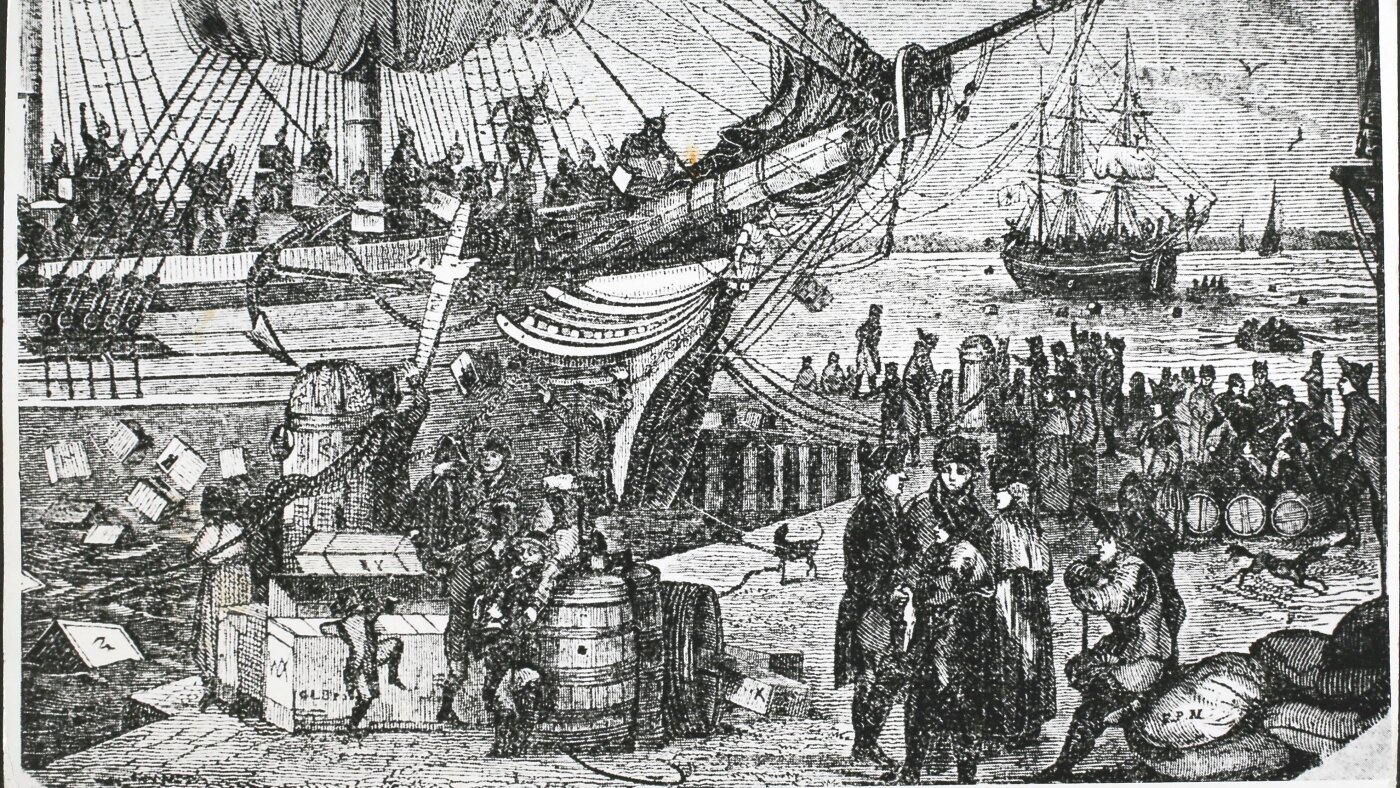
An illustration of the Boston Tea Party, when colonists dumped British East India Company tea into the harbor on Dec. 16, 1773. Some accounts say this marked a pivotal moment when Americans started loving coffee. But one historian says Americans were drinking lots of coffee before then.
Hulton Archive/Getty Images
hide caption
toggle caption
Hulton Archive/Getty Images
A consequential act of defiance secured tea’s place as perhaps the most iconic beverage of America’s colonial era.
The Boston Tea Party became an essential ingredient in the recipe for revolution in the following years.
But tea wasn’t the only hot beverage with a prominent role in America’s fight for independence.
Coffee was an important part of American culture from the start. And coffeehouses were essential, too — serving as hubs for brewing ideas of independence.
As the United States celebrates 250 years, here’s what to know about America’s early history of coffee.

Colonists were drinking coffee long before the United States existed
Europeans brought coffee with them when they came to America.
“The first documented example of a mortar and pestle used to grind coffee beans was on the Mayflower” in 1620, says historian Michelle Craig McDonald, the author of Coffee Nation: How One Commodity Transformed the Early United States.
“The fact that coffee was present so early is not surprising if you think about it,” McDonald says. “A number of those who were on the Mayflower came to North America from Amsterdam, which was a major coffee trading center in Western Europe by the 17th century.”
The first coffeehouse in the colonies opened in 1676 in Boston, a century before the U.S. declared independence, she says. Some taverns sold coffee even earlier.
The Boston Tea Party probably wasn’t the dramatic turning point toward coffee that some claim
On the night of Dec. 16, 1773, disgruntled colonists boarded three ships moored in Boston Harbor and threw overboard more than 92,000 pounds of tea owned by the British East India Company.
Tensions had been building between the Crown and the colonies over the previous decade, as Britain tried to levy taxes on its colonies to recoup war debts.
The Boston Tea Party protest was targeted at the British government’s passing of the Tea Act in 1773, which granted the East India Company a monopoly over tea sales in the colonies. While the British had removed some unpopular taxes in the preceding years, they left tea taxes in place. Colonial merchants were especially upset that the act allowed the East India Company to undercut their tea business.
To build solidarity for their cause of sovereignty, some patriots called on colonialists to swear off tea in favor of coffee. It’s why many histories point to the Boston Tea Party as a turning point when Americans switched from mostly drinking tea to mostly coffee. The anti-tea sentiment was immortalized in a founding father’s now-famous letter.
In July 1774, John Adams (before he became the second U.S. president) wrote to his wife Abigail, recounting an incident during his travels. After a long day, he asked the proprietor of the house where he was lodging for a cup of tea, provided it was smuggled and free of British taxes.
” ‘No sir, said she, we have renounced all Tea in this Place. I cant make Tea, but I’le make you Coffee.’ Accordingly I have drank Coffee every Afternoon since, and have borne it very well. Tea must be universally renounced. I must be weaned, and the sooner, the better,” Adams wrote.
Despite John Adams claiming a newfound patriotic duty to appreciate coffee, McDonald says colonists had been drinking lots of coffee all along.
She studied advertisements from the 1760s and ’70s to estimate how many shops sold coffee versus tea. Even before the Boston Tea Party, she says, “coffee is definitely more broadly available than tea is.”
A big reason? It was cheaper. “Its price again per pound is significantly less, which tells you about its availability, its accessibility to drinkers.”
Historians say it’s hard to definitively compare tea with coffee consumption, though, as official records from before America gained independence were inconsistent.
And smuggling was rampant, making official records even less reliable.
“There is a vast amount of smuggling,” says Joyce Chaplin, a professor of early American history at Harvard University. “So they’re not paying formal duties on tea that they get from the Dutch. They’re probably not paying formal duties on coffee from the French Caribbean.”
And Chaplin notes that people who loudly proclaimed a new appreciation for coffee over tea weren’t always doing what they said. It could have been political pandering. “I do not drink tea that comes via the East India Company,” she posits someone of the era saying. “But, you know, other sources are fine. Ditto for the coffee.”
Coffeehouses were a hub for revolutionary ideas
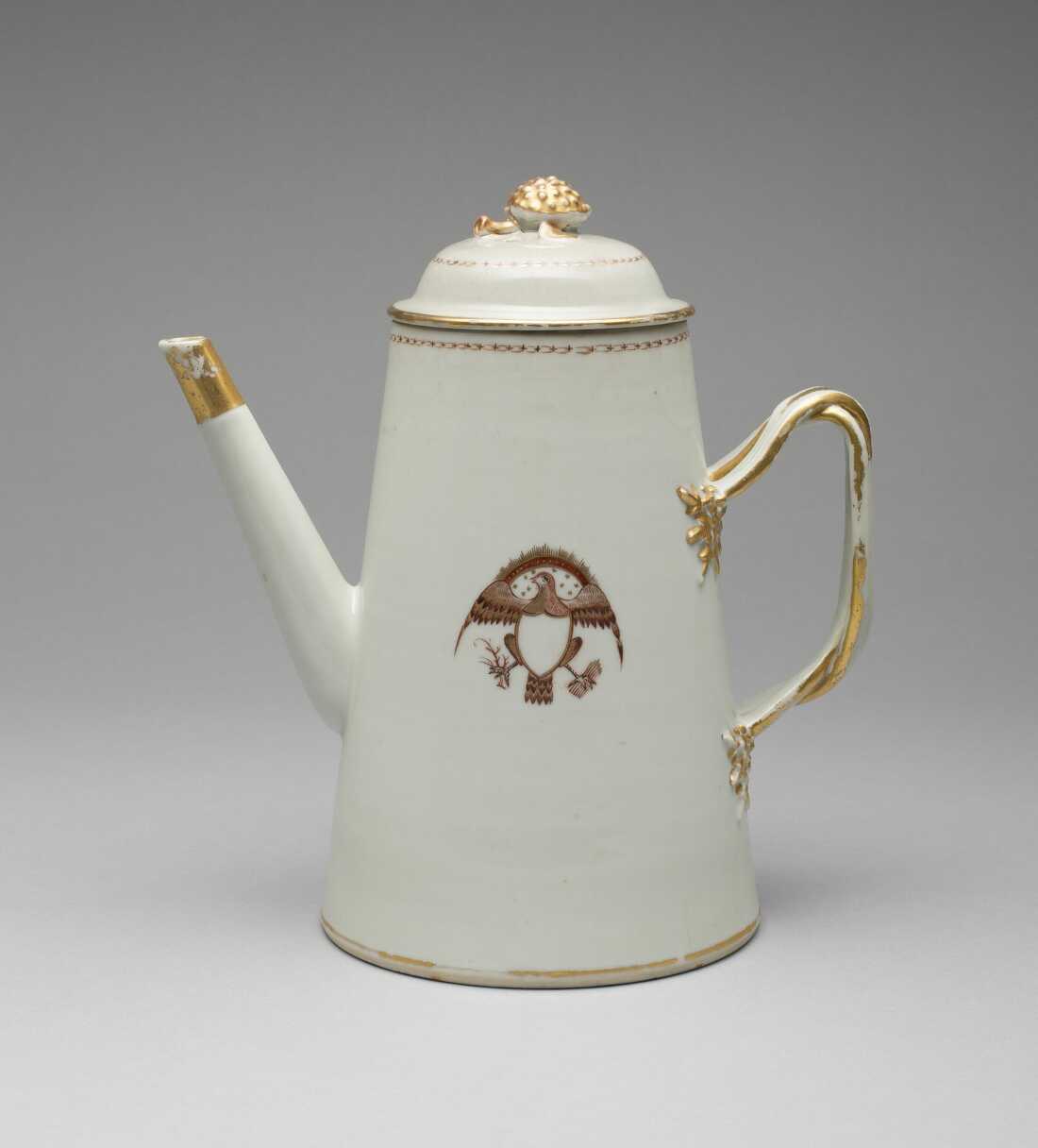
A coffeepot with cover, circa 1795. It has an American eagle motif, made in China for the American market. Coffee was part of a growing trend of globalization in the colonial era.
Heritage Art/Heritage Images via Getty Images
hide caption
toggle caption
Heritage Art/Heritage Images via Getty Images
In the colonial era, coffeehouses were hotbeds for seditious thought — where people planned acts of revolution.
“Coffeehouses are kind of famous for being places where people think and plot things,” says Mark Pendergrast, author of Uncommon Grounds: The History of Coffee and How It Transformed Our World.
A coffeehouse called the Green Dragon served as one of the locations for planning the Boston Tea Party. Years earlier, the Old London Coffeehouse in Philadelphia was a meeting place for strategizing responses to another British tax, the Stamp Act of 1765.
In Britain, coffeehouses were nicknamed “penny universities,” Pendergrast says: “because for a penny you could go and learn a whole lot by sitting around in a coffeehouse and discussing everything.” The same attitude traveled across the Atlantic.
Early American coffeehouses would commonly have city business directories, libraries of newspapers and currency exchange information. People could get maritime insurance there or buy things at auction.

“There’s a reason why coffeehouses become places of colonial protest … in the 1760s, in the 1770s, and it’s because it is the place where traders and merchants tended to gather,” historian McDonald says. “That’s where they heard about the economics of the day.”
Taverns were more likely than coffeehouses to have rooms for rent and stables for travelers’ horses. They were also more likely to have food.
Interestingly enough, coffeehouses could serve alcohol and taverns could serve coffee.
But the vibes at each were different. While women and men could “riotously drink together” in taverns, coffeehouses often didn’t allow women, according to Chaplin of Harvard.
“The sense was the coffeehouse was the place where you had a clear head — to argue about politics, to find out what was going on in the business world, to cut a business deal,” she says. “Whereas taverns were places where, in a sense, you refueled.”
Still, she says, the lines between the two “weren’t completely clear.”
The cost of America’s revolutionary drink
Coffee (and tea for that matter) was part of a growing globalization of trade around this time.
Much of the coffee in the colonies was grown in the Caribbean, while tea came from China.

Supply was up and coffee was easier than ever to drink. “Trade and frankly, imperialism, are making it possible for … colonial products to be produced and transferred to other parts of the world in greater and greater quantities,” says Chaplin.
As a result, by the time of the American Revolution, both coffee and tea were in reach for many common people. “They’re both becoming affordable luxuries,” Chaplin says.
Fancy coffee and tea paraphernalia were also part of this increasingly global market. Middle and upper-class people would have wanted special implements for drinking these beverages and a place to drink it. That meant they needed wood for coffee tables, silver for coffeepots, and porcelain for teapots.
“These two beverages are encouraging people to consume all kinds of new stuff,” says Chaplin. “The mahogany that comes out of the Caribbean, the china coming out of China, silver that is mined principally in South and Central America and processed in a lot of the parts of the world.”
There’s a dark side to coffee’s history, too. The plantations that supplied the crop ran on the labor of enslaved people. By 1790, half of the world’s coffee was being grown in the French colony of Saint-Domingue, in what is today Haiti, Pendergrast says, where slaves were routinely mistreated, raped and murdered.

The Declaration of Independence, signed in 1776, is infamous for a contradiction. It proclaimed that “all men are created equal,” but failed to acknowledge the hundreds of thousands of enslaved people living in America at the time.
Coffee carried a similar contradiction. The beverage that fueled conversations that inspired America’s fight for independence — centered on the ideals of life, liberty and the pursuit of happiness — depended on enslavement.
“Coffee had this paradoxical effect, that it did promote revolutionary thought,” Pendergrast says. “But it was also grown by slaves.”
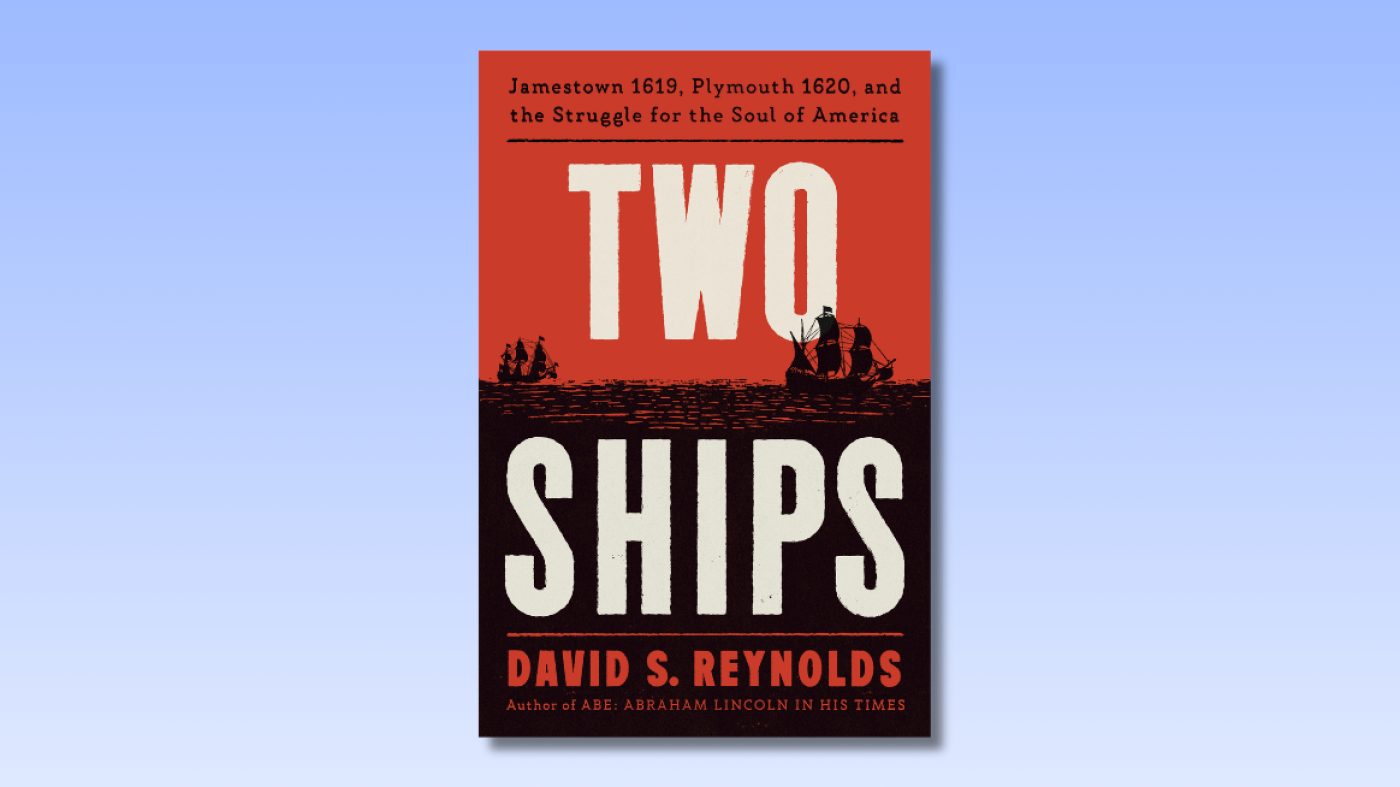
Just in time for a contentious 250th anniversary of the United States of America, historian David S. Reynolds’ latest book, Two Ships, helps us realize that any country that couldn’t agree on its own origin story is destined for divisive times.
Two Ships is about the complicated, conjoined legacy of the landings of the Mayflower, which carried the Pilgrims to Plymouth, Mass., in 1620, and the White Lion, which arrived in Jamestown a year earlier, bringing the first enslaved Africans to Virginia.
As Reynolds demonstrates, it’s not so much the facts of these two voyages, as it is the meanings ascribed to them, that made them such a powerful metaphor for two conflicting visions of American identity.
To simplify, the Mayflower’s passengers were separatist Puritans, dissenters to the reign of the English king, James I. As the United States developed, the Mayflower was credited with carrying the seeds of a radical democracy to the New World, one in which all men (in theory, at least) were equal before God.
In contrast, the European settlers of Jamestown were Royalists, also known as Cavaliers. Loyal to the monarchy, they believed in a strict hierarchy.
But the meaning of the images of the two ships shifted depended on who was invoking them and when. Not surprisingly, the metaphor was deployed most vigorously during the Civil War. In abolitionist speeches and writings, the White Lion or the “Slave-Ship,” as it was commonly called, was condemned for infecting America with the “plague-spot” of slavery.
Reynolds says that Frederick Douglass resorted to the “two ships” metaphor frequently, while Lincoln avoided it, hoping to preserve a unified ship of state. Meanwhile, Southern descendants of Cavaliers invoked the Mayflower to emphasize the intolerance and “cruel, persecuting” character of the Puritans. In a comment that resonates for our own times, Reynolds says:
It didn’t matter to the South that … by the mid-nineteenth century, the North had become a kaleidoscope of religious denominations, …, few of which resembled the faith of the Plymouth colonists. Distortion is intrinsic to cultural memory, especially when amplified by sectional or political bias. For Southerners, the Mayflower had brought Puritanism, which had yielded fanatical movements like abolitionism, now a dire threat to the Union.
In a brief-but-fascinating digression into the unpredictable power of literary fiction, Reynolds observes that the South’s fondness for Nathaniel Hawthorne’s anti-Puritan novel, The Scarlet Letter, and, even more, for the medieval historical romances of Sir Walter Scott, bolstered its nostalgia for a largely-imagined feudal society.

Reynolds quotes the always-quotable Mark Twain, no fan of Scott’s, as saying that Scott “did measureless harm; more real and lasting harm, perhaps, than any other individual that ever wrote …”
Two Ships is a dazzling survey of some three centuries of American history through a close reading of a metaphor. By the 1890s, Reynolds says, the interpretive tide had turned again: “Southern and Northern whites, feeling threatened by people of color and by an array of European immigrants, were retreating to a cocoon of racial solidarity that Mayflower celebrations helped reinforce.”
By the later-20th century, the image of the Mayflower was depoliticized and commercialized into Pilgrim hats and Black Friday sales. The powerful metaphor of the two ships receded into the mist.
Seven years ago, however, the 1619 Project piloted the White Lion — “The Slave-Ship” — back into view and anchored it at the center of debates about slavery’s place in the national story. The 1619 Project has been faulted for its historiography, and it does lie outside of the chronological boundaries of Reynolds’ book; still, it seems too momentous a reappearance of the White Lion not to at least acknowledge in this book.
That criticism noted, I think reading Two Ships would be an excellent way to observe this particular Fourth of July. It’s wise for all of us to have a more informed awareness of how Americans have understood, misunderstood and, often, flattened each other into stereotypes. Or, as Ernest Hemingway, one of the Mayflower Pilgrims’ more cynical descendants, might say in response to that sentiment: “Isn’t it pretty to think so?”

-
 Austin, TX39 seconds ago
2 overnight shootings in Austin leave 3 dead on Fourth of July weekend
-

 Alabama8 minutes ago
Two Alabama football greats named top bargain-bin NFL free agents
-

 Alaska11 minutes ago
Alaska’s David Norris makes it 7 wins in 7 starts at Mount Marathon
-

 Arizona16 minutes ago
3 Arizona Cardinals Now on the Chopping Block Entering Training Camp
-

 Arkansas23 minutes ago
A WORD | July 5: Arkansas’ own little game likes to play with your brain | Arkansas Democrat Gazette
-

 California26 minutes ago
A Dividend Portfolio That Out-Earns the Average California Family
-

 Colorado31 minutes ago
WATCH LIVE: Memorial service to honor firefighters killed on Colorado-Utah border – East Idaho News
-

 Connecticut38 minutes ago
Torrington declares local state of emergency after storms leave thousands without power

