Health
U.S. Canceled Work to Contain a Serious Ebola Outbreak


Hours after Elon Musk reassured Cabinet members on Wednesday that efforts to contain the Ebola outbreak in Uganda had only been “accidentally canceled very briefly,” the Trump administration terminated at least four of the five contracts for Ebola-related work in that country.
The four canceled contracts were a tiny fraction of the 10,000 contracts and grants at the United States Agency for International Development and the State Department that the Trump administration ended on Wednesday.
But they were important: Since January, Uganda has experienced a serious Ebola outbreak, from which the country is only just emerging. The contracts funded Ebola screening at airports and protective equipment for health workers, and helped prevent transmission by survivors of the disease, according to a former U.S.A.I.D. official.
Mr. Musk told cabinet members that the administration had “restored the Ebola prevention immediately, and there was no interruption.” But his statement was inaccurate, according to two former U.S.A.I.D. officials with knowledge of the situation in Uganda. (The officials asked to remain anonymous for fear of retaliation.)
In theory, waivers allowed for some work to continue on containing pathogens like Ebola, Marburg and mpox, as well as preparedness for bird flu. But very little money had actually been delivered.
Few organizations providing those services had the financial reserves to continue, and even fewer trusted that they would be reimbursed.
Their fears may have been justified. On Wednesday night, the Supreme Court’s chief justice, John G. Roberts Jr., ruled that U.S.A.I.D. and the State Department did not need to immediately pay for more than $1.5 billion for work that had been already completed.
The work underway without those payments was interrupted, contrary to Mr. Musk’s claim.
At the airport in Entebbe, Uganda, screening for Ebola was on pause for more than two weeks, according to a former U.S.A.I.D. official with knowledge of the situation. The organization doing it decided a few days ago to resume work with its own funds.
The group’s contract was terminated on Wednesday night.
The White House declined to clarify Mr. Musk’s comments and directed inquiries to the man himself. Mr. Musk did not immediately respond to a request for comment.
There were other gaps. The first Ebola patient in the current outbreak had gone to six facilities before he died and was diagnosed, prompting the Ugandan government to request protective gear for exposed health workers.
U.S.A.I.D. stockpiles such gear at a warehouse in Nairobi. But the facility was managed by the World Health Organization, and U.S.A.I.D. employees were not allowed to communicate with the W.H.O., let alone pay it to release the gear.
After more than a week awaiting permission to contact the W.H.O., officials were abruptly ordered to come up with another solution. They eventually paid about $100,000 to procure the protective equipment elsewhere.
“So much for cost-effectiveness,” said a former official with knowledge of the events. The contract with the alternate provider, too, has now ended.
Even the waiver process was riddled with confusion. The Trump administration asked for specifics on how many lives each intervention would save, and U.S.A.I.D. staff struggled to link minor resources like hand sanitizer or risk communication messages to a specific number of lives saved.
The staff purge at U.S.A.I.D. has left few people in place. The agency had more than 50 people dedicated to outbreak responses, the result of a congressional push to beef up pandemic preparedness.
That number was initially cut by half, including some from the core Ebola team, and then on Sunday to just six. Those fired included the organization’s leading expert in lab diagnostics, and the manager of the Ebola response.
“I have no idea how six people are going to run four outbreak responses,” said one official who was let go. “It’s complicated at the best of times when you’re fully staffed.”



Use left and right arrow keys to navigate between menu items.
Use escape to exit the menu.
Sign Up
Create a free account to access exclusive content, play games, solve puzzles, test your pop-culture knowledge and receive special offers.
Already have an account? Login

NEWYou can now listen to Fox News articles!
Top stories
→ ‘Anti-aging’ peptides may soon be easier to get amid RFK Jr.’s push
→ Doctors expose ‘buffalo hump’ as potential sign of hidden health conditions
→ Popular weight-loss medications linked to hidden side effects
RFK Jr. continues his push for accessible peptides, but some experts urge caution. (Secretary Kennedy/X, iStock)
Interview of the week
→ Dr. Wendy Troxel shares relationship tips for chronic snorers and their tired partners
Unexpected threats
→ Doctor warns wearable fitness trackers could backfire
→ Where you live could shape your risk of cancer mortality
→ Lead contamination exposed in public parks across major city
The city previously applied for a lead prevention grant prior to the recent investigation of local parks. (iStock)
Conversation starters
→ Dementia risk could be tied to your mindset and outlook on life
→ Americans wait overnight for access to free healthcare as costs soar
→ What is butt microneedling? Behind the ‘desperate’ procedure Kelly Ripa tried
CLICK HERE FOR MORE HEALTH STORIES

NEWYou can now listen to Fox News articles!
“Clavicular,” the controversial “looksmaxxing” influencer, was reportedly hospitalized due to a suspected overdose Tuesday night during a livestream.
The Miami content creator, 20, posted a photo of his bloody face and commented on X Wednesday.
“Just got home, that was brutal. All of the substances are just [to] cope, trying to feel neurotypical while being in public, but obviously, that isn’t a real solution. The worst part of tonight was my face descending from the life support mask.”
WHAT IS BUTT MICRONEEDLING? BEHIND THE ‘DESPERATE’ PROCEDURE KELLY RIPA TRIED
The influencer, whose real name is Braden Peters, was hospitalized after his livestream was cut short when he began slurring his words and repeating phrases, according to reports.
What is ‘looksmaxxing’ and why is it trending?
Looksmaxxing is a social media trend focused on enhancing appearance, ranging from basic skin care to extreme practices like hitting cheekbones with hammers to alter facial structure.
Looksmaxxing is a social media trend focused on enhancing appearance, ranging from basic skin care to extreme practices like hitting cheekbones with hammers to alter facial structure. (iStock)
The potentially dangerous trend has been popular with young males, plastic surgeons told Fox News Digital.
“In my practice, we’ve seen it primarily in young men in their 20s,” Dr. Josef Hadeed, a plastic surgeon in Beverly Hills, California, told Fox News Digital. “We have had a few women, but I’d say by and large, it’s been mostly men who have come into our office wanting these various looksmaxxing procedures.”
THE REAL REASON FOR SAGGING JOWLS, AND WHAT WILL AND WON’T HELP, ACCORDING TO AN EXPERT
“Patients are increasingly seeking to align how they look with how they feel,” he said. “The difference today is that the tools and technologies available to achieve that have never been more advanced or more accessible.”
Looksmaxxing can be divided into two categories: “softmaxxing” and “hardmaxxing,” according to Hadeed. Softmaxxing is a more simple, non-invasive approach to improving one’s looks.
The potentially dangerous trend has been popular with young males, plastic surgeons told Fox News Digital. (iStock)
“It’s really like self-care or grooming – things like going to the gym on a regular basis to try to improve your body composition, or using various skincare products to try to improve your skin texture,” the surgeon said.
Softmaxxing techniques – which can also include teeth whitening, beard grooming, or upgrading a wardrobe or hairstyle – are not usually a problem, according to Hadeed. Hardmaxxing, which involves more extreme measures, can have riskier consequences.
“Even minimally invasive treatments carry real risks if performed incorrectly or by an untrained provider.”
Some individuals in the looksmaxxing online community do things like “bone smashing,” Hadeed said.
“[It’s] literally what it sounds like, where you smash the bones to change the facial structure, and that is obviously not recommended because it can lead to potential complications,” he warned.
“Once you cross that line and start getting into more extreme things, I feel like that’s where most plastic surgeons should draw the line.”
CLICK HERE FOR MORE HEALTH STORIES
Dr. C. Bob Basu, president of the American Society of Plastic Surgeons, said the biggest safety risks with the looksmaxxing trend come from pursuing treatments without proper medical guidance.
Looksmaxxing can be divided into two categories: “softmaxxing” and “hardmaxxing.” Softmaxxing is a more simple, non-invasive simple approach to improving one’s looks. (iStock)
“Social media can make procedures seem easy or risk-free, but even minimally invasive treatments carry real risks if performed incorrectly or by an untrained provider,” the Houston-based plastic surgeon told Fox News Digital.
To achieve quality results, it is critical to be treated by a board-certified plastic surgeon who understands both safety and anatomy, Basu advised.
What’s driving the trend?
The convergence of social media, constant digital visibility and “unprecedented access to aesthetic treatments” – along with a cultural shift toward optimizing wellness and longevity – are fueling the looksmaxxing trend, according to Basu.
CLICK HERE TO SIGN UP FOR OUR HEALTH NEWSLETTER
Hadeed agreed, noting that social media puts pressure on individuals to look perfect.
“People are constantly comparing themselves to other people online,” he told Fox News Digital. “It can quickly develop into body dysmorphia for a lot of people, and that’s when they start pursuing more and more procedures that they don’t need by any stretch – it’s kind of like keeping up with the Joneses.”
Both plastic surgeons emphasized the importance of taking a responsible approach when considering the looksmaxxing trend. (iStock)
Dr. Nancy Frye, a professor in the psychology department at Long Island University in Brookville, New York, also weighed in on what’s driving the looksmaxxing craze.
“We figure out how attractive we might be by comparing what we see in ourselves to what we see in others,” she told Fox News Digital. “This social comparison is especially problematic with social media and filters, as people compare themselves to filtered versions of others.”
Healthier approach
While experts warn of the risks of looksmaxxing, they say a thoughtful approach can have some benefits, including pride in one’s appearance and health.
CLICK HERE TO DOWNLOAD THE FOX NEWS APP
The most tangible benefits are associated with the softmaxxing approach, which includes following a fitness routine, eating a clean diet and following regular skin care routines, according to Hadeed.
“The goal should always be thoughtful self-improvement, not perfection.”
With healthy guidance, aesthetic care can “enhance confidence and self-esteem, helping patients feel more aligned with their sense of self,” Basu added.
Both plastic surgeons emphasized the importance of taking a responsible approach when considering the looksmaxxing trend.
TEST YOURSELF WITH OUR LATEST LIFESTYLE QUIZ
“The goal should always be thoughtful self-improvement, not perfection,” Basu said. “It should never be about looking like someone else or a filtered version of yourself, but rather about becoming a confident, natural and authentic version of you.”
Anyone considering this trend should consult a licensed healthcare professional rather than relying on advice from social media influencers, the doctors advised.
Zion National Park closes popular trail during ongoing search and rescue operation – KSLNewsRadio

Tornado with winds up to 90mph touches down in Vermont amid storms

Car crashes into Murphy’s Irish Pub patio on the Oceanfront

How will Trump get out of his fight with Pope Leo?

Wisconsin transfer Aleksas Bieliauskas joins SEC team with ties to Badgers

Florida High School Football Rankings: Top 25 teams – Oct. 21

How old is Bo Nix? What to know about Oregon quarterback ahead of 2024 NFL Draft

Cleary's 21 help Le Moyne down Central Connecticut State 69-64 in OT

99th annual Pony Swim held in Virginia

Indiana Members Credit Union announced as new anchor tenant at Bottleworks District

Grieving mothers scorch Dem lawmaker after he pivots during hearing to attack ‘MAGA Republicans’

Pressure mounts on Peru’s election authorities amid presidential race delay

Tornadoes touch down in Rochester area

Minnesota Republicans reveal which far-left candidate they want to challenge in open Senate race

Swedish rights groups slam ‘honest living’ criteria for migrants
-

 Ohio3 days ago
‘Little Rascals’ star Bug Hall arrested in Ohio
-

 Arkansas1 week ago
Arkansas TV meteorologist Melinda Mayo retires after nearly four decades on air
-

 Austin, TX1 week ago
ABC Kite Fest Returns to Austin for Annual Celebration – Austin Today
-

 Politics3 days ago
Dem fundraising giant in the hot seat as GOP lawmakers demand answers over dodged subpoena
-
 Science3 days ago
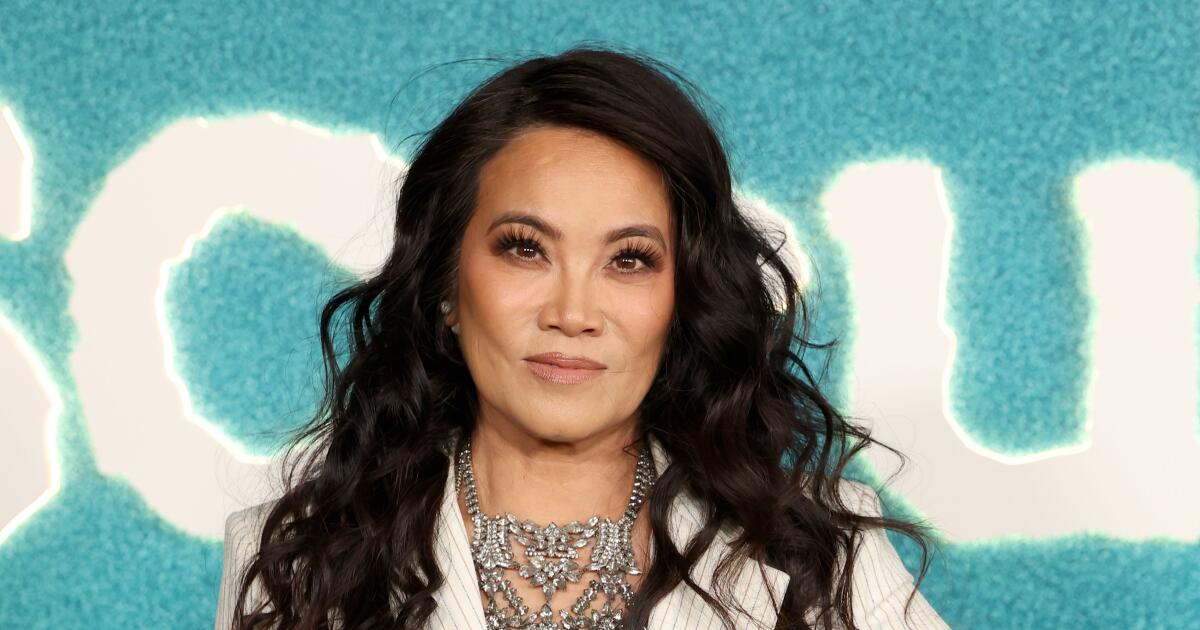
‘Dr. Pimple Popper’ Sandra Lee had a stroke last fall. Here’s how the TV doc is bouncing back
-

 Politics6 days ago
Trump blasts Spanberger ahead of Virginia meetings, says state faces tax base exodus like New York, California
-

 Health1 week ago
Woman discovers missing nose ring traveled to her lungs, causing month-long cough
-

 Detroit, MI1 week ago
Byron Allen’s “Comics Unleashed” replacing Colbert’s “Late Show”