Fitness
The 9 best free workout apps for 2024, according to a certified personal trainer | Fortune Recommends Health


If you’re committed to crushing your fitness goals, there’s nothing wrong with seeking some support. However, you don’t have to break the bank to get help with building muscle, burning fat, and becoming your best self. While many workout apps have pricey subscriptions, plenty of cost-free platforms provide the tools you need to start (and stay) on the path to success.
To help you find the right fit, we’ve researched and tested more than 30 fitness apps to evaluate key criteria such as ease of use, equipment demands, and workout variety. Our mission to find the best free workout apps helped us identify worthy contenders. The apps that made our list come at no cost or at least include an excellent trial period that may convince you to find some room in your monthly budget.
Best free workout app overall
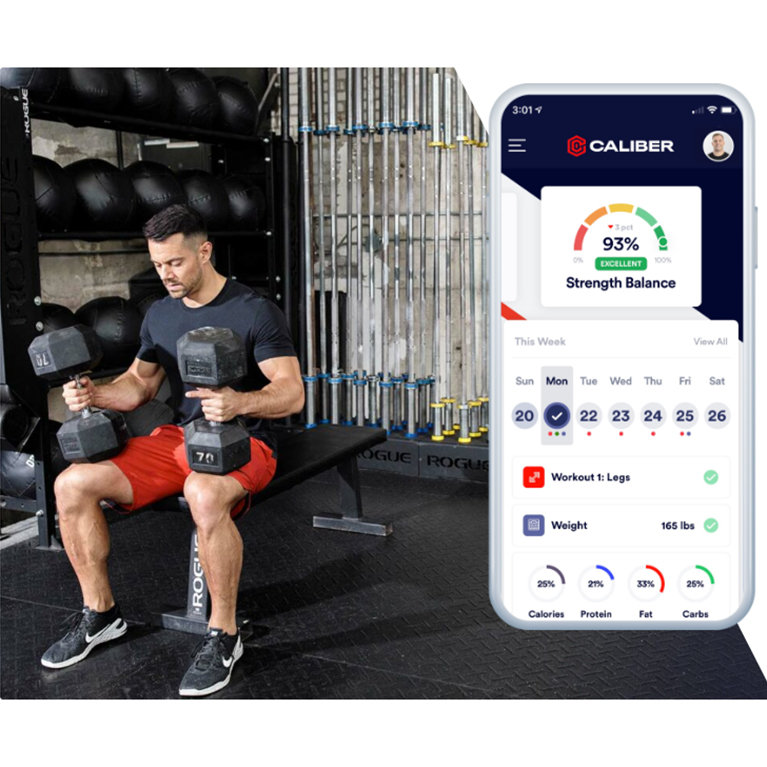
Caliber
offers a free-forever version that arms you with ample resources to start your fitness journey. Learn why it earned the nod as our best overall free workout app by reading our in-depth review, complete with testing notes.
Our picks for the best free workout apps
|
|
|
|
|
|
|
|
|
|
|
|
|
|
|
|
|
|
|
|
|
|
|
Rating |
|||||||||
|
Price |
Free version, or $12-$200 per month | $20 per month or $120 per year | Free version, $8 or $20 per month | Free | Free | $15 per month or $100 per year | Free version, $13 per month, or $70 per year for Jefit Elite | Free version or $30 per year | Free version, or $1.99 per month, $12.49 per year, or $40 for lifetime access |
|
Free Trial |
Free-forever version | Seven days | Free-forever version or 14 days for paid plans | N/A | N/A | Seven days | Seven days | Free-forever version | Free-forever version |
|
Platform |
iOS, Android | iOS, Android | iOS, Android | iOS | iOS, Android | iOS, Android | iOS, Android, Desktop | iOS, Android | iOS, Android |

Best free workout app overall:
Caliber
Although you must pay for group and one-on-one training, the free version of Caliber still provides excellent resources and tools.
Key product features

Instruction
Excellent

Compatible
Apple Watch

Exercises
500+

Community
Groups
What you should know
Caliber comes in several different tiers, which allows you to select the level of support you need. The free version includes useful resources that can help you accomplish your goals.
Our product tester gave Caliber a perfect score for instruction, noting that each exercise has an extensive overview of the movement.
The fully free version of Caliber gives you access to a deep library of exercises and workouts that you can utilize to make gains.
This highly-rated workout app can serve as a solid starting point while allowing you to upgrade if you want to work directly with a coach.
Pros
Community support via groups
In-app performance metrics tracking
Robust library of curated workout plans
Cons
Premium package has an expensive starting price of $200 a month, which is high for a workout app
Personalized macros only available with paid versions
Limited fitness tracker integration
Why we like Caliber as best overall
As a fitness coaching program rooted in scientific principles, Caliber checks all the boxes we look for in the
best workout apps
. The first paid tier, Caliber Plus, comes with access to a library of coach-created workouts. The next tier, Caliber Premium, starts at $200 a month for individual coaching. One of our product testers invested in the one-on-one option and found the $200 price tag well worth it due to the high-quality programming and accountability she received from her coach.
However, you don’t have to spend a single cent to reap some of the benefits of this data-driven platform. Caliber’s free-forever version contains a vast library of more than 500 exercises, each featuring a demo video, detailed instructions, and a color-coded diagram displaying the body parts involved. By also including key points and form takeaways, Caliber easily earned 5 out of 5 stars for instruction from our tester.
“So many people would benefit from simple instruction and understanding of how different exercises affect different muscles. The exercise library and demo videos provided with Caliber’s free version is a fantastic offering, in and of itself. Many of my clients would benefit from this.”
Chris Mohr, Ph.D., RD, Fortune Recommends Advisor
Although you don’t get access to a coach with the free version, you don’t have to plan your own daily workouts. During the set-up process, you’ll complete a quick assessment. The evaluation will give the Caliber algorithm the necessary data to generate a custom workout program for you. This can be especially helpful for beginners who are unfamiliar with how to structure a strength training routine.
In addition, the app allows you to track your progress by recording and charting strength and body metrics like your weight, waist size, and body fat percentage. While stepping on a scale is one way to assess your progress, keeping track of your body composition via other methods can provide better insight. (
1
) This can help you stay invested in your success by developing self-accountability, which is particularly important since you won’t be working with a coach.
“In addition to body composition, waist circumference is another useful and very simple tool to assess health. There has been research connecting waist circumference to blood pressure and even all cause mortality, among others,” says Mohr. (
2
,
3
)
You can also lean on another user-friendly feature for additional support: groups. Our product tester joined several, including ones for mountain biking, cycling, and swimming. Research shows that external factors like social support and engagement can help with motivation and accountability. (
4
)
“Each group has its own social feed where you can post things and interact with other people. Although there’s not a ton of engagement, that could change as Caliber expands,” our team product tester explained.
While our tester gave the app a perfect score for interactive features, she wished it integrated with Garmin, Fitbit, and other fitness trackers. As of this writing, it only integrates with the Apple Watch.
Overall, the free version of Caliber offers plenty of valuable tools and resources for both beginners and more experienced users. If you need more support in the form of nutritional guidance, routine check-ins, and fully personalized programming, you can always upgrade to the Premium tier.
What Customers are saying
Caliber users on the Apple App Store appreciate how the app has helped them become more accountable and invested in their health and wellness.
“Caliber is a fantastic way to build a habit of working out, especially if, like me, you’re moderately new to weight lifting/fat burning. The app tracks your progress and shows stats so you can see improvement over time, which is very motivational for me. The app also connects to third-party apps to help you track calories, etc.”
Alexey Laduda, Apple App Store user
However, customer Patrick Rizk called out a few areas for improvement in his review on the Google Play Store.
“Provides novel strength and balance scores to visualize progress, but the algorithm doesn’t incorporate them to give tailored recommendations, which greatly reduces their utility,” he said. “Automatic weight progression is a basic function that most competitor apps have and is conspicuously missing.”
Specs
|
Price |
Fully free version, $12 a month for Plus, or $200 a month and up for Premium |
|
Platform |
iOS, Android |
|
Type of training |
Cardio, strength, functional fitness |
Best free workout app for women:
Sweat App
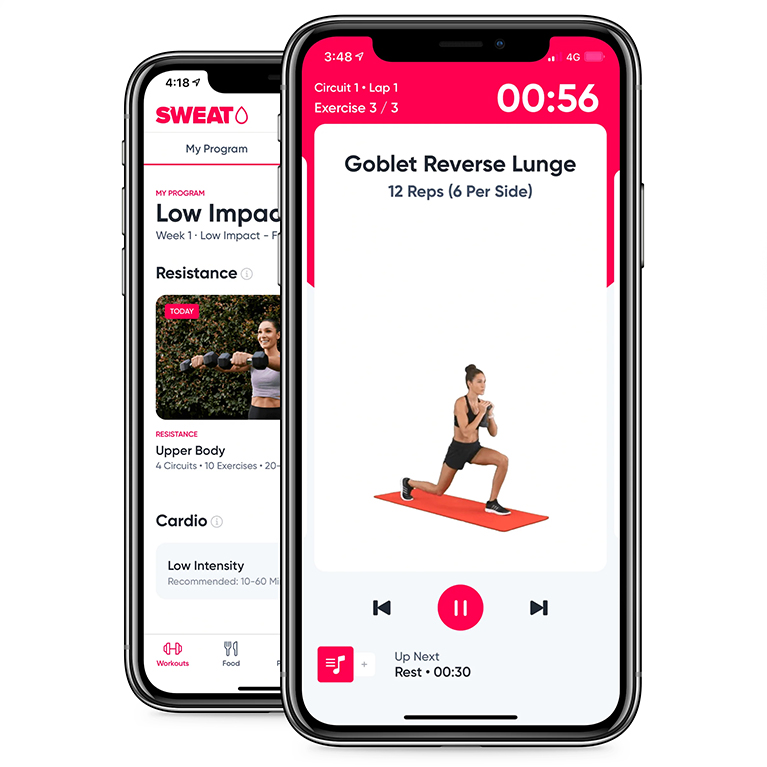
Launched by fitness influencer Kayla Itsines, the Sweat App offers women everything from nutritional guidance to on-demand classes.
Key product features

Reminders
Real-Time

Nutrition
Meal Planning

Programs
50+

Training Plan
Customizable
What you should know
Designed for women, the Sweat App includes customizable training plans and meal planning assistance. After trying out the platform for free for seven days, you can sign up for the full version to gain even more features.
-
The Sweat App excels at offering a wide variety of programs, with classes ranging from high-intensity training to daily yoga sessions.
-
While users can try the Sweat App for free for seven days, the annual subscription cost of $119.94 still represents great value given the wealth of resources you receive.
-
Women seeking a female-focused fitness app should enjoy Sweat’s community feel and solid programming.
Pros
Can easily modify a program
Cons
Some users describe the programs as repetitive
Primarily pre-recorded workouts
Some recipes are overly complicated and require numerous ingredients
Why we like Sweat App as best for women
Fitness influencer Kayla Itsines spearheaded an effort to help women get healthier via the Sweat App. The app features various workout programs that include everything from postpartum training to its flagship BBG program (Bikini Body Guide), now known as “High Intensity with Kayla.” The app also features nutrition plans, community challenges, and on-demand classes led by certified personal trainers.
Although Sweat is only free during the seven-day trial period, women can get a first-hand look at how much the platform offers. Those with long-term goals can decide whether to invest in a monthly subscription that’ll allow them to receive individualized attention and support.
To explore all Sweat had to offer, our product tester downloaded the app, inputted her fitness goals and other pertinent information, and received a personalized training plan. She rated the setup process 5 out of 5 stars. She also found the app’s interface easy to navigate, which led to a score of 4.5 out of 5 stars for ease of use.
From a training perspective, Sweat covers just about every modality you can think of, including weightlifting, HIIT, yoga, pilates, and barre. In addition, there are zero-equipment versions of programs featuring straightforward movements, which allowed our reviewer to “deeply connect with the targeted muscle.”
What our tester says:
“Offering the ability to exercise without equipment is a fantastic option, given many people may either not have any or not belong to a facility that does. That said, bodyweight workouts are a great option for improving strength and cardiorespiratory fitness, and having guidance around how to perform various exercises to support your goals is great.” (
5
)
Chris Mohr, Ph.D., RD, Fortune Recommends Advisor
What customers are saying
The Sweat App has received positive feedback from women who needed structure, accountability, and support from a workout app.
A reviewer on the Apple App Store with the username Hxnxlei highlighted how the app motivated her to start working out again after a two-year hiatus.
“The variety in programs makes it suitable for any kind of workout goal. I can see how the intensity and difficulty of BBG might be unmotivating for some though, so it’s great that Kayla has recently added more beginner weeks! The community tab is filled with supportive women!”
Hxnxlei, Apple App Store user
Still, a few reviews criticized the app for having occasional bugs and glitches. Several customers on both the Apple App Store and the Google Play Store expressed that the suggested meal plans and recipes contained too many ingredients, which can prove problematic if you have a limited budget, time, or culinary skills.
Specs
|
Price |
Free seven-day trial; $120 for an annual subscription; $20 for a monthly subscription |
|
Platform |
iOS, Android |
|
Type of training |
Cardio, strength, functional fitness, yoga, pilates, barre, HIIT |
Best free workout app for men:
Fiit
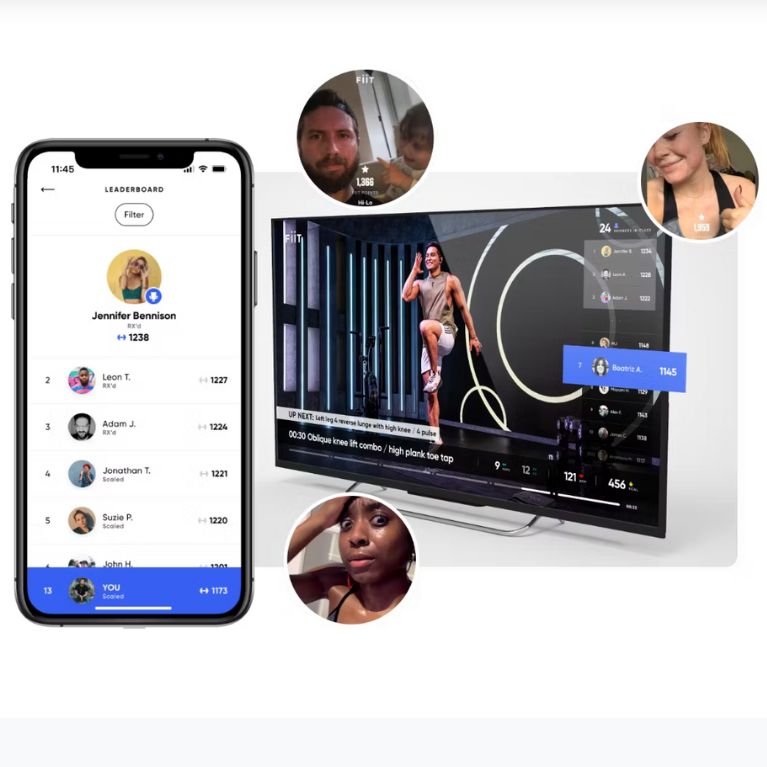
From strength training to recovery, Fiit offers plenty of options for those who enjoy group classes but don’t want to travel.
Key product features
Workouts
2,000+

Tracking
30+ devices
Training Plans
More than 30
Group classes
Daily
What you should know
Fiit covers all the bases with a wide variety of workouts and training plans. Users can access all group classes at no cost—a great feature for those who enjoy training in that type of engaging setting.
-
Fiit offers a huge library of classes that include bodyweight workouts, HIIT, strength training, functional movement, and more.
-
Signing up for one of the paid tiers provides access to a 14-day free trial, giving you sufficient time to test all of Fiit’s features.
-
If you like group classes, this interactive platform can be a more convenient solution than commuting to a commercial gym.
Pros
Syncs with fitness trackers and devices
Works with mobile devices, TVs, laptops, tablets, and desktops
Records performance metrics
Caters to all fitness levels
Cons
Some classes may be too intense for beginners
No 1:1 coaching or accountability
Can’t fast forward or rewind classes
Why we like Fiit as best for men
Men (and women) who love the interactive aspect of group fitness classes will truly appreciate Fiit. Available in both free and paid versions, this app offers 2,000 workouts ranging from strength training to cardio to yoga.
The free version gives you unlimited access to all group classes—a major plus for those who value that added motivation from training alongside others (virtually, in this case). Plus, you can invite family and friends to join, which can be another source of accountability and self-motivation. (
6
)
The workouts vary in length, with some taking as little as 10 minutes and others lasting for one hour. If you’re a guy who’s always on the go, you can still squeeze in a quick workout before you head out the door. Or, you can take a longer-duration session for a true full-body workout.
Another user-friendly feature Fiit offers: the ability to complete workouts with zero gym equipment. The platform has hundreds of bodyweight classes that only require a phone, TV, or laptop for streaming.
While the free version gives you plenty to work with, upgrading to the Essential or Unlimited tiers opens the door to more training possibilities. Luckily, you don’t have to fully commit to either option. Fiit offers a 14-day free trial that allows you to test additional features like Apple and Google Health integration, performance metrics tracking, and exclusive workouts.
Ultimately, you can start with the free version and enjoy unlimited access to all of Fiit’s group classes before considering upgrading to the Essential ($80 per year) or Unlimited ($120 per year) tiers.
What Customers are saying
Fiit customers enjoy the quality of the workouts and that they’re challenging without being too time-consuming.
“This app is fantastic! I’ve been completing FIIT workouts for about 3 months now, and it has completely changed my view on working out! The Base FIIT camps are great for an out of shape beginner like myself, and they prepare you for heavier workouts through lots of technique and form practice, and stretching. The ‘flow’ yoga classes too, are also super useful as a supplemental cooldown/stretch session.”
Aurora Siegler, Android app user
However, one common pain point customers highlight is the inability to fast forward or rewind classes.
“This is really important as sometimes you don’t quite understand how to do a move and want to rewind to see it properly,” wrote Android user Hussein Ladha.
Specs
|
Price |
Free-forever version; $8-$20 a month; or $80-$120 a year |
|
Platform |
iOS, Android |
|
Type of training |
Strength, HIIT, mobility, yoga, pilates, stretching, functional fitness |
Best free gym workout app:
Train Fitness
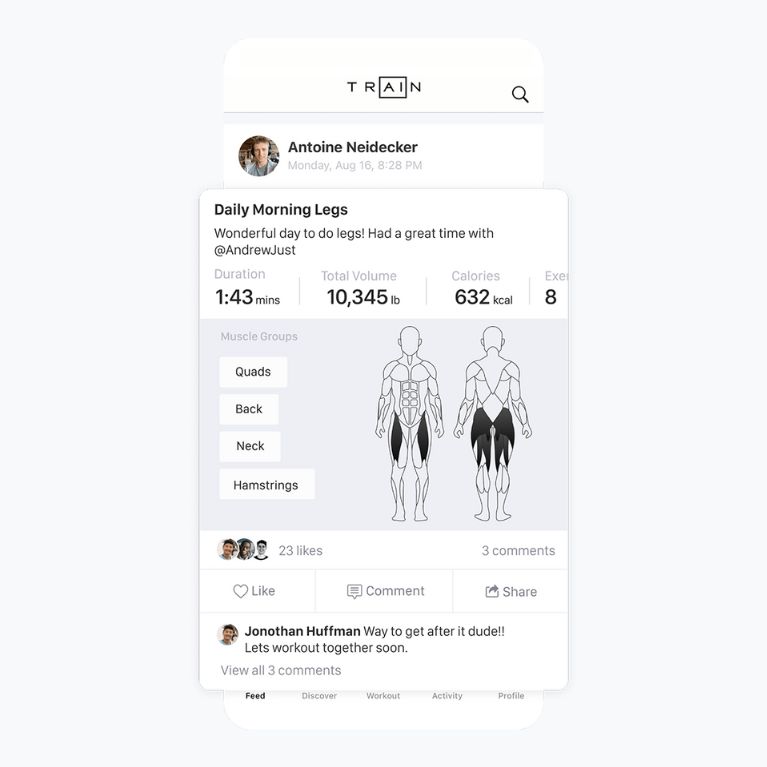
Designed for Apple Watch users, Train Fitness allows you to automatically track and log over 100 exercises using AI technology.
Key product features
Rep Counting
Automatic
Tracking
100+ exercises
Accountability
Community feed
What you should know
Think of Train Fitness as a tool to get more insight into your workouts rather than something that will guide you on how to train. It’s a convenient way to log every rep without having to do it yourself.
-
Unlike other fitness apps, Train Fitness doesn’t provide workouts or training programs.
-
This completely free app features an AI detection system that allows you to track your workouts hands-free.
-
Apple Watch users can take full advantage of their device by utilizing Train Fitness to track their reps during a workout.
Pros
Sturdy and high-quality mattress
Nice option for stomach sleepers
Good option for back sleepers
I also like this for heavier sleepers
Cons
Pretty high motion transfer
Luxury Firm is too firm for side sleepers
Customer service was longer than average
Why we like Train Fitness as best gym
Gym-goers whose workout routine wouldn’t be complete without their Apple Watch shouldn’t hesitate to download Train Fitness. Powered by intuitive AI, this app doesn’t provide programs or workouts to follow. Rather, it allows users to focus more on their technique and less on counting their reps by recording them for you.
When paired with the Apple Watch, AI algorithms automatically detect what exercise you are performing based on the movement of your wrist. Train Fitness tracks more than 100 exercises using this method, and you can also manually enter data for more than 400 exercises.
In addition, you can filter and review their workout data by multiple metrics. The interface has easy-to-read graphics and charts that show your progress with particular lifts. This may help you identify weak points and potentially inspire you to change your program to push through plateaus.
Moreover, Train Fitness encourages you to stay connected with other users by sharing your completed workouts on your social feed. You can also challenge a friend, which can give both of you extra motivation to not to skip out on your next gym session.
Unfortunately, this app doesn’t give you training plans to implement in the gym. So, if you’re searching for a structured routine, Train Fitness isn’t for you. However, if you have an Apple Watch and a gym membership (or even a
full home gym
), you can take advantage of this technology and get more insight into your workouts without having to do anything extra.
What Customers are saying
Featuring a rebuilt search function and notifications page, this AI-driven workout tracking app generates positive user feedback for being easy to use and accurate.
“I have been amazed at the accurate ability of the application to recognize specific workouts while I am at the gym,” a user named Gym Geno wrote in their review on the Apple App Store. “I highly recommend using this app because not only can experienced gym enthusiasts maximize their workout sessions, but this platform can also teach newcomers as well.”
Another reviewer on the Apple App Store with the username KaseyLynn R. shared a similar sentiment about Train Fitness.
“I absolutely love this app! It makes my workouts so easy. I used to log with a pen and paper but that got hard and annoying. This app also helps me know what muscles need rest and what muscles need attention.”
KaseyLynn R., Apple App Store user
Specs
|
Price |
Free |
|
Platform |
iOS |
|
Type of training |
Workout tracking |
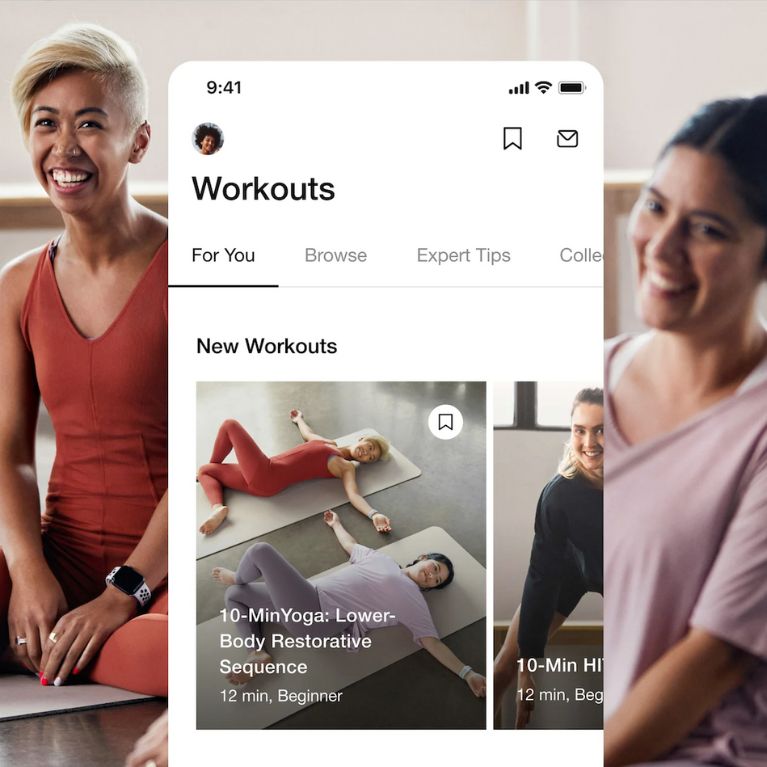
A free app that includes classes and periodized programs, Nike Training Club can help you get more out of your dumbbell workouts.
Key product features

Classes
Live/on-deman
Workout types
More than 10

Programming
Periodized
What you should know
Nike Training Club is a completely free workout app that offers periodized programming and engaging classes. You can put your
favorite dumbbells
to work with strength training workouts, or find bodyweight options if you don’t have equipment available.
-
There’s no shortage of variety when it comes to workouts, as this app covers multiple modalities ranging from strength training to HIIT to pilates.
-
Our product tester gave Nike Training Club a perfect value score—a testament to the number of resources you receive for zero cost.
-
As a free app, NTC should appeal to any health-conscious person who wants to upgrade their workout routine without spending any extra money.
Pros
Wide range of workout types
Most workouts taught by certified trainers and instructors
Cons
Doesn’t track workout metrics
May not offer enough variety for advanced-level users
Why we like Nike Training Club as best dumbbell
A free exercise app that features a clean interface and a large library of individual workouts and on-demand classes, Nike Training Club (NTC) caters to users of all fitness levels. Whether you’re training in your garage or at a commercial gym, you can utilize this highly-rated platform to put your
adjustable dumbbells
, kettlebells, or other equipment to good use. Dumbbell training, in particular,
NTC offers periodized programming for a wide range of goals and workout types, which means you can work on developing strength and endurance as you hone your technique.
“You just don’t see this kind of value in a free workout app.”
Team product tester
Earning perfect scores from our reviewers for setup and ease of use, NTC makes it simple to find workouts by muscle group, equipment, or workout focus (endurance, mobility, strength, or yoga). Trainers on the app also have profiles that display their expertise, along with introduction videos.
In addition, NTC offers “whiteboard” classes that are non-trainer-led. If you need guidance and structure but don’t want or need to follow an instructor, you can try these workouts instead.
However, Nike Training Club doesn’t provide much accountability.
“You can download the app on your phone, but no one is going to push you to use it,” our reviewer noted. “It does send notifications if you enable them, and you can join specific programs or challenges.”
Although the app lacks interactive features like coach interaction and stat tracking, it still provides an excellent user experience. Whether you’re focused on making maximum gains or getting in shape for an upcoming event, there are ample options for workout programs and classes that can show you how to use dumbbells (and other equipment) effectively.
What Customers are saying
Customers consistently praise Nike Training Club’s easy-to-navigate interface, along with the ability to select workouts that align with their goals, available equipment, and experience level.
“I’ve been pregnant for nearly two years now (back-to-back kids…) and love how A. The app is free. Period. And B. The ladies coaching the prenatal/postnatal programs seem awesome to work with. I love how I don’t have to pay a cent to access the workout videos and the resources, and no ads either. The interface is seamless and easy to navigate. Nike does a great job recruiting other real moms and moms-to-be to show alternative poses/positions, and the coaches themselves are mothers, too.”
luu1uu, Apple App Store user
A few negative reviews pointed out glitches with the app.
“No option past the log-in button; just sits there with the background animation,” a user named Sierra Eaves wrote in her review on the Google Play Store.
Specs
|
Price |
Free |
|
Platform |
iOS, Android |
|
Type of training |
Strength, cardio, HIIT, yoga, dance, pilates, kickboxing, plyometrics |
Best free bodyweight workout app:
Aaptiv
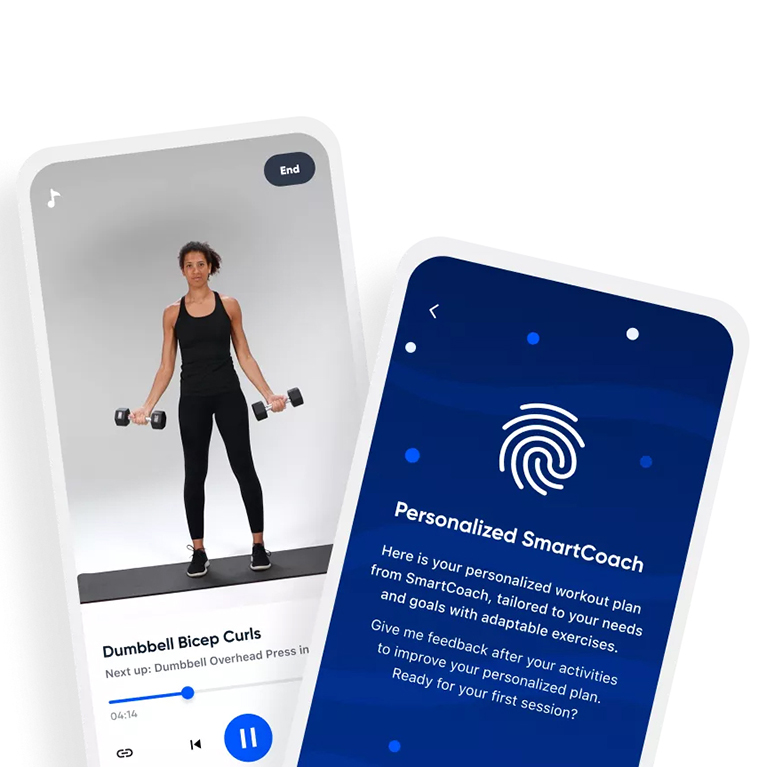
Aaptiv features audio-guided workouts from certified coaches and trainers, providing ample variety to keep you engaged.
Key product features
Workouts
More than 9,500
Equipment
None needed
Accountability
Community feed
Instruction
Audio guidance
What you should know
Aaptiv’s audio-guided workouts should give you a boost of confidence and comfort when it’s time to train. With nearly 10,000 workouts to choose from, you can challenge yourself to try something new every time you log on.
-
Our product tester noted that the well-designed workouts were obviously programmed by skilled, experienced coaches.
-
Although Aaptiv costs $15 per month, you can try it for free for seven days.
-
This app may benefit beginners looking for a budget-friendly workout app that doesn’t require additional equipment to get started.
Pros
No limits to the types of workouts offered
Excellent audio instructions
Supportive online community
Cons
Fewer coaches than competitor apps
Must sign up for annual plan to get seven-day free trial
Why we like Aaptiv as best for bodyweight
As a certified personal trainer, I can admit that some bodyweight workouts are more challenging than ones with even
the best kettlebells
, dumbbells, and barbells. Whether it’s burpees, push-ups, or mountain climbers, you may be surprised at how taxing a no-equipment session can be. Aaptiv might be the ideal fit if you’re looking for a workout app that suits this style of training.
Although it’s only free for a seven-day trial, this platform is one of the most affordable on the market. Available for $15 per month or at a discounted rate of $100 for an annual subscription, Aaptiv gives you access to almost 10,000 workouts ranging from strength training to pilates to outdoor running. Our product tester had no trouble navigating the app, rating it 5 out of 5 stars for ease of use.
“You can filter workouts by type, length, muscle group, fitness level, and even equipment. You can also easily change your information, such as your weight, at any time.”
Team product tester
What separates this app from others is that the workouts include audio guidance from certified trainers and coaches. If you’re unfamiliar with certain movements, this can be particularly helpful.
Our product tester, who’s also a certified personal trainer, called attention to Aaptiv’s coaches for providing top-notch programming with a session that focused on contralateral training (strengthening one side of the body). “This is something only a high-level trainer would likely program,” she explained.
Although Aaptiv earned 4 out of 5 stars for instruction, our product tester highlighted that there’s not always an instructor on the screen.
“Some of the workouts it’s more like having an animation of a person doing the movements with the trainer speaking in the background,” she noted. “This certainly could throw some people off.”
What Customers are saying
Aaptiv users appreciate being able to choose from so many training styles.
“This app has been so helpful. The wide variety of content makes it a one-stop shop for me. In the last six months, I’ve discovered yoga and really appreciate the variety of coaches and yoga types available.”
Otis Oxnard, Apple App Store user
Meanwhile, another user highlighted how Aaptiv has helped him remain engaged and focused even without an in-person trainer.
“The coaches may just be recorded, but psychologically it feels like you aren’t alone and that someone is with you and cheering for you. That makes all the difference for motivation and endurance,” wrote iOS user gpottschicago.
However, several negative reviews mention glitches and technical errors with the app.
“My biggest complaint is that every single time there’s an update to the app, it messes the sync with my Apple Watch and I have to start workouts manually for a while if I want them to be recorded at all,” wrote iOS user EME314.
Specs
|
Price |
Seven-day free trial; $15 per month or $100 for yearly subscription |
|
Platform |
iOS, Android |
|
Type of training |
Cardio, strength, functional fitness, yoga, pilates, barre, HIIT, boxing, rowing, running |
Best free ab workout app:
Jefit
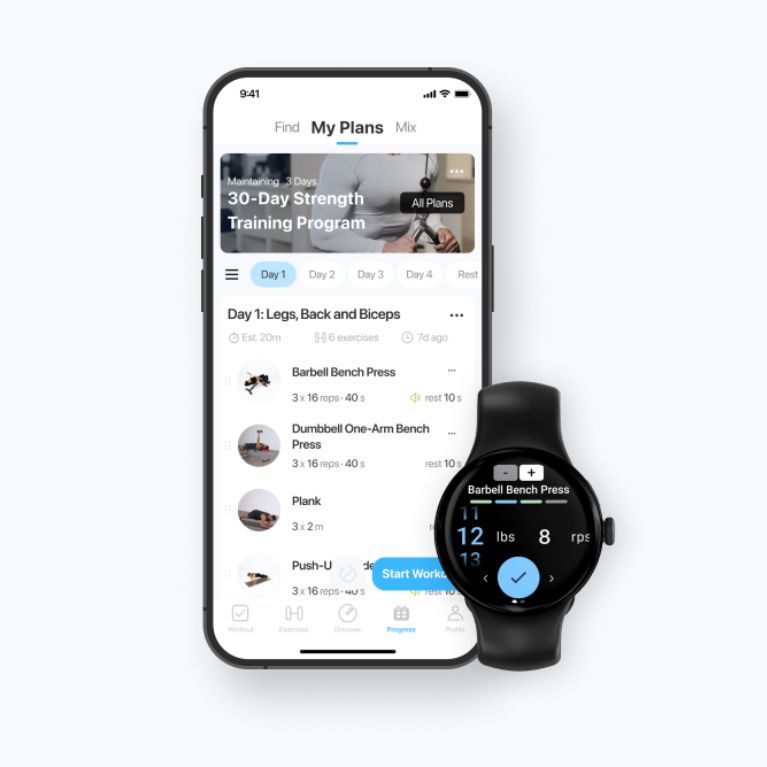
The free version of Jefit allows you to log and track your workouts while also giving you access to a huge exercise library.
Key product features
Exercises
More than 1,400
Workout plans
Pro-designed

Tiers
Free and paid
What you should know
Jefit features an extensive exercise library that’s broken down by body part. Even though you won’t work with a coach, you can utilize reminders and notifications to stay on track with your fitness plan.
-
Our product tester gave Jefit a rating of 4 out of 5 stars for accountability, noting that you turn on push notifications and set workout reminders for any time. You can also set reminders if you’re inactive for two weeks.
-
Jefit is available in either a free version or Jefit Elite, which costs $13 per month or $70 per year. Compared to other workout apps, this is a highly affordable price point.
-
This app should appeal to users who want variety and guidance for their workouts at no cost.
Pros
Workouts designed by professional coaches
Why we like Jefit as best for abs
With both an extensive free version and an Elite membership option, Jefit caters to gym enthusiasts looking to level up their workouts. The no-cost version lets you log and track your workouts—a feature that can assist with accountability. If you’re trying to build muscle or defined abdominals, maintaining a consistent approach is key to accomplishing your goal.
Keep in mind, though, that routinely performing core exercises doesn’t guarantee you’ll get a shredded stomach. Other factors, such as your diet and genetics, play critical roles in your ability to get defined abs.
In addition to tracking, Jefit’s free version also gives you access to some workout routines. More importantly, you can browse through an exercise library that left our product tester and Olympic weightlifter highly impressed.
“I love how the Nolah Evolution comes in three different firmness models, so you can choose the best fit for you. One of my favorite features is the soft pillow top. It’s a great touch for anyone that suffers from shoulder or hip pain, as it allows you to sink into bed for a plusher feel.”
Bridget Chapman, former senior product editor
For ab-focused sessions, there’s more than enough variety to keep you engaged without getting bored. From alternating leg bridges to barbell press sit-ups to cable oblique crunches, Jefit’s database contains 25 pages of core exercises, each with video demos and step-by-step instructions.
Overall, our lead product tester rated the app 4 out of 5 stars for instruction.
“The biggest benefit is that there is a person doing the movement on the screen as you do it,” she noted.
However, keep in mind that some of the app’s functionality is limited in the free version. For example, you must upgrade to Jefit Elite to receive exercise cues and “audio tip” workouts. In addition, many of the pro-designed workout plans require a subscription, which costs either $13 per month or $70 per year.
Still, you can utilize Jefit’s exercise library and free gym workouts to get more out of your training or add variety to your routine. While you may not get personalized programming for free, you can count on giving your abs a challenge with the free 3-Day Core Superset Routine, which our tester completed (and enjoyed).
“If you just want some variety and guidance for workouts from an app that will track your progress, this is a decent option!” she reported.
What Customers are saying
Jefit has earned high praise from users for providing an excellent exercise library, along with different workout programs that are both challenging and enjoyable.
“I’ve been using it for several years. The app does an excellent job in tracking my progress and is very customizable. I love the feature that allows me to customize my own exercises and routines and write my own instruction reminders. My only knock on the app is also a positive as well and that is this—the App is updated regularly.”
Priest Man, Apple App Store user
One negative review pointed out that Jefit can be unreliable.
“The reason I have to try other apps for now is the flakiness of the app’s syncing. It used to take up to half a minute for the watch app to sync with the phone app and store a workout. It was annoying and time-consuming to babysit it, but at least it worked. Lately, however, it will not work at all,” wrote an iOS user named Jon Vuri.
Specs
|
Price |
Free version, or $13 per month or $70 per year for Jefit Elite |
|
Platform |
Desktop, Android, and iOS |
|
Type of training |
Strength training, bodyweight, HIIT |
Best free workout app for beginners:
FitOn
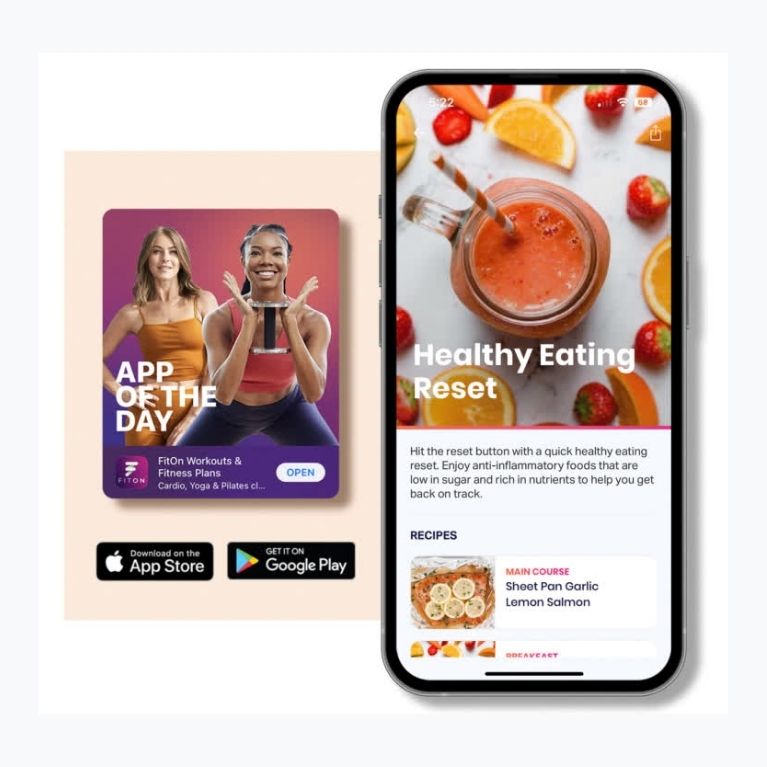
With trainer-led videos and shorter workout programs, FitOn is well-suited for people who are just starting their fitness journey.
Key product features

Apple Watch
Compatible
Classes
Live/on-demand

Mindfulness
Meditation/yoga
Members
15+ million

Nutrition
500+ recipes
What you should know
FitOn is a fully free workout app that also encompasses nutrition and mental health. This well-rounded platform is available in a Pro version.
-
Our product tester had no trouble navigating FitOn’s intuitive interface and gave the app 5 out of 5 stars for ease of use.
-
Although all workouts and personalized fitness plans are 100% free, you will have to upgrade to FitOn Pro if you want extra features like premium music and unlimited offline downloads.
-
FitOn is a great option if you’re at the beginning of your journey, as you can try different types of workouts and find the training style that works best for you—at no cost.
Pros
Free version gives full access to all workouts
Comprehensive health and fitness app
Cons
Many features require paid version
No monthly subscription option
Why we like FitOn as best for beginners
Available in both a free-forever and Pro version, FitOn is a fantastic way for inexperienced folks to get started with their fitness journey. This comprehensive health and fitness app gives users full access to all workouts at no cost—a huge benefit for those who may not know where to begin.
Once you download the app, the setup process is a breeze. Our product tester gave FitOn a perfect score in this category, noting that you will have to answer questions about your height, weight, what type of workouts you’re interested in, and your experience level.
For beginners who are unfamiliar with navigating fitness apps, FitOn features an intuitive, user-friendly interface. As a result, our reviewer gave the app 5 out of 5 stars for ease of use.
“There’s an icon for all the features, such as workouts, advice, meals, and friends. The app is not overwhelming; it’s easy to find what you want.”
Team product tester
Most importantly, new trainees can feel confident about doing the workouts correctly. Our reviewer still gave FitOn 4 out of 5 stars for instruction.
“There’s an on-screen trainer in the workouts who is very motivating,” she noted. “They show you how to do the exercise, and most of the workouts show modifications for the movements.”
Although FitOn only earned 3 out of 5 stars for interactive features, it stood out in two other areas: workout variety and value.
“I would never get bored using this app since there are so many options,” our reviewer wrote.
What Customers are saying
FitOn users praise this platform for providing ample training options and high-level instruction.
“Amazing workout programs with great flexibility and variety ranging from cardio/HIIT to resistance and strength training. You have a TON of trainers to choose from, have the ability to add to favorites, and the length of workouts and intensity levels also vary depending on how you are feeling! This app has single-handedly helped me get back on track with my fitness.”
BAPwarrior0126, Apple App Store user
Several negative reviews call out FItOn for no longer allowing screen sharing.
“I just want to be able to SEE the workouts without squinting at a small screen and/or getting out of positions to peer over at the next move,” wrote an iOS user with the screen name connoodle.
Specs
|
Price |
Free version; $25 for six months or $30 a year for Pro |
|
Platform |
Android and iOS |
|
Type of training |
Pilates, yoga, kickboxing, strength training, bodyweight |
Best free workout app for CrossFit:
SmartWOD
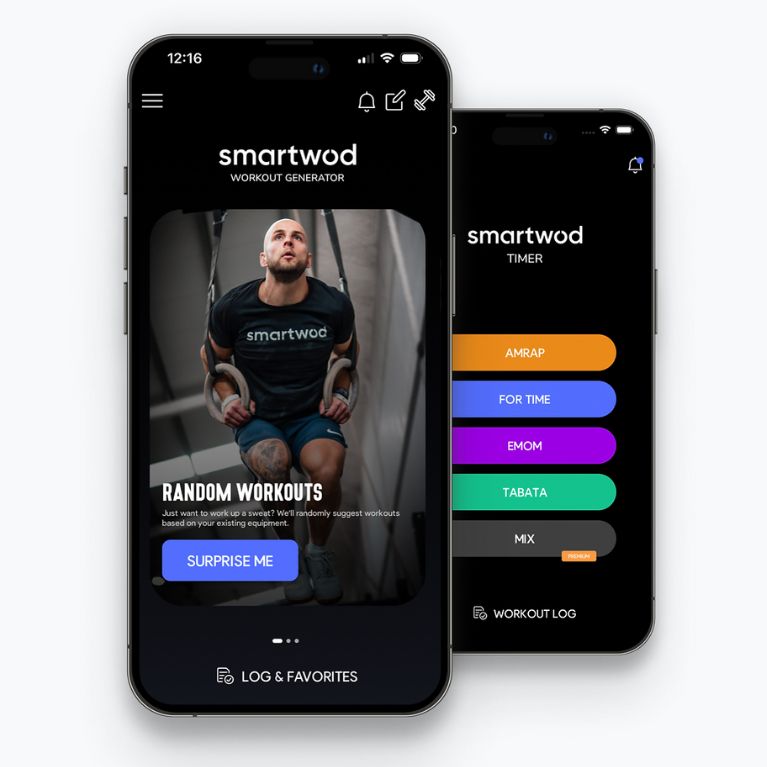
Functional fitness enthusiasts will appreciate SmartWOD, which features tools for timing and generating high-intensity workouts.
Key product features

Timers
Multiple
WODs
More than 5,000
Customizable
Yes
What you should know
SmartWOD is geared toward CrossFitters and those who enjoy HIIT-style workouts. With timing and workout generator tools, this app can help make your sessions more effective and dynamic.
-
Our product tester gave this app a perfect score for workout variety.
-
While the SmartWOD timer is completely free, you will have to pay a subscription cost to use the WOD generator.
-
SmartWOD should appeal to functional fitness and CrossFit enthusiasts who want to switch up their routines and take advantage of tracking and timing tools.
Pros
Customized to available equipment
Generator component can be fun to use
Workout log for tracking progress
Cons
Lots of ads on SmartWOD timer
Filtering options could be better
Why we like SmartWOD as best for CrossFit
CrossFitters and those who enjoy intense, dynamic workouts can turn to SmartWOD for support. This app includes a free timer feature that can be utilized for all types of functional fitness training. For example, you can use it for AMRAP (as many rounds as possible), EMOMs (every minute on the minute), Tabata (intervals of work and rest), or For Time workouts. The AMRAP and For Time timers also have round counters to help you keep track of where you are in your workout.
Upgrading to the paid version will also allow you to use the SmartWOD generator tool for creating customized workouts.
Our product tester highlighted how simple it was to get started and gave it 5 out of 5 stars for setup and ease of use. “You just select what equipment you have access to and then keep pressing the spinner button until you come across a workout you like,” she noted. If you have limited access to equipment due to traveling, this can allow you to still train.
You can also filter by skill, so if you aren’t comfortable with performing a certain movement, the app won’t show particular exercises.
“You could select a pull-up bar for equipment but also deselect muscle-ups for skills and it won’t give you any workouts that feature muscle-ups,” our tester explained.
Since some common CrossFit moves like snatches and cleans can be particularly challenging and require precise technique, it’s important to see them performed correctly. Luckily, SmartWOD earned a solid score of 4 out of 5 stars for instruction, as each exercise features a demo video.
“They’re nicely filmed and there’s also a detailed ‘movement’ page for each exercise, complete with step-by-step instructions and cues,” our reviewer noted. “It’s honestly great content.”
On the other hand, our product tester gave SmartWOD a disappointing score of just 1 out of 5 stars for both interactive features and accountability.
What Customers are saying
SmartWOD customers appreciate the ability to customize workouts based on their skill level and available equipment.
“Perfect for any workout, easy to set up and change depending on needs. My go-to workout app.”
Darsheezy27, Apple App Store user
Another user pointed out an inconvenience when trying to use SmartWOD and another app at the same time.
“This is a great app and I’m glad to have it. But dang if they don’t make it hard to put the timer up on the screen AND have a second app open,” wrote iOS user jlharter. “I keep my WODs in Notes while screen sharing to my gym TV. And while I can have the note open in slide-over, it covers part of the timer.”
Specs
|
Price |
Free version, or $1.99 per month, $12.49 per year, or $40 for lifetime access |
|
Platform |
Android and iOS |
|
Type of training |
Functional fitness |
How we test workout apps
Our team has collectively researched and tested more than 30 workout apps to evaluate which provide the best overall user experience. We assign scores ranging from 1 to 5 stars across key categories, taking into account that some areas matter more than others. Although not every category applies across the board, our experienced product testers have carefully analyzed each app to assess their respective strengths and weaknesses. You can read our full
fitness program testing methodology here
.
Here’s a breakdown of what factors go into our scoring process:
Program design—30%
With decades of collective experience, our testers can discern the difference between a one-size-fits-all program and one that’s put together by a certified personal trainer, strength and conditioning coach, or another qualified expert. We evaluate whether a program includes step-by-step descriptions and video tutorials so you can understand how to perform each exercise.
In addition, for free platforms that offer training plans, we assess the volume and overall structure to see if the average user should be able to follow.
Here’s what we’re looking for from a program design standpoint:
-
Explanation
-
Versatility
-
Reasonable amount of training volume
Value—30%
Fully free fitness apps deliver value simply by giving users tools and resources at no cost. However, the best ones step up with a level of personalization that makes you feel even more invested in your success. Our testing team also looks for what type of technology the app uses, as some platforms utilize AI to generate training programs.
Overall, here’s what we factor into a program’s value rating:
-
Fair price
-
Personalization
-
Technology
Extra options—20%
While some free workout apps offer basic functionality, others go a step further. Does the platform provide more than just a handful of programs? Are you able to work with a certified coach? Is there a social media group or community feed where you can interact with other users?
All of these options can make a difference:
-
Additional programs
-
Coaching
-
Tech extras
Customer experience—20%
Users want to focus on working out and getting results—not dealing with glitches and crashes. We value workout apps that provide a positive overall experience with features like free trials, glitchless platforms, and excellent customer support.
Here are the factors we take into account:
-
Reliable and user-friendly apps
-
Reviews
-
Customer service
-
Free trials and flexible cancellation policies
What to look for in the best free workout apps
Here are some important factors to keep in mind when you’re considering which free workout app to download on your iPhone or Android device:
Style of training
Find an app that offers the type of training you enjoy most. Some platforms specialize in certain modalities, while others offer a broad spectrum of classes and workouts. For example, if you’re looking for a free workout app that focuses on functional fitness, SmartWOD would fit the bill. On the other hand, strength training enthusiasts may prefer something like Caliber.
Classes vs. programs
Are you interested in participating in virtual fitness classes where you can interact with others? Or do you want a program that includes structured workouts? Some platforms offer both, which can be appealing to people who enjoy both group and solo sessions.
Tracking tools
Does the app provide tracking tools for free? Whether it’s monitoring your strength progress or keeping tabs on your body measurements, having some method to maintain accountability will help you achieve your goals.
FAQs
Are there any truly free workout apps?
Yes, several workout apps cost nothing to use, including Nike Training Club and the fully free versions of Caliber, SmartWOD, and FitOn.
What is the best free online workout program?
We consider Caliber to be the best free online workout program, as it provides a vast exercise library, tracking tools, and other helpful resources.
Is FitOn really free?
There is a completely free version of FitOn that gives you unlimited access to a database of workouts. Meanwhile, the Pro version provides additional features like personalized meal plans, an exclusive recipe library, and unlimited offline downloads of workouts for a subscription fee.
Our experts
Amanda Dvorak, CPT
Amanda Dvorak is a Fortune Recommends writer and editor. A garage gym owner who is passionate about working out and healthy living, she has four years of experience writing product reviews for fitness and nutrition websites. Amanda is a certified personal trainer through the International Sports Sciences Association (ISSA).
Christopher Mohr, Ph.D., RD
Dr. Christopher Mohr is an internationally recognized subject matter expert and speaker and performance coach. Through his facilitation and online resources, he works closely with some of the largest corporations in the world including Deloitte, Delta Airlines, Johnson & Johnson and more to help busy executives all over the world, develop the energy to thrive personally and professionally.
Jen Roper, Ph.D., CSCS
Dr. Jen Roper is an associate professor of Health and Human Sciences at Loyola Marymount University. She received her Ph.D. in Physical Education, Sports and Exercise Science in 2015 from the University of New Mexico, with a specialization in Exercise Science and Biomechanics. She has been a Certified Strength and Conditioning Specialist from the National Strength and Conditioning Association since 2014.
Jessica Coulon
Jessica is a contributing editor and writer for Fortune Recommends who specializes in fitness, health, nutrition, and science content. Previously, she was an editor for Popular Mechanics and Bicycling, where she covered pro cycling news, wrote how-to guides, and tested all the latest and greatest bike gear. She was also a regular shoe tester and contributor for Runner’s World. You can often find her skiing or riding her mountain bike, and racing with the F1RE female enduro team.
Kelly Uhler
Kelly has a multifaceted background in elder care, health care, and copywriting. She has worked for organizations such as A Place For Mom and Homecare.com, which gave her the opportunity to work closely with families, providing reliable information to help them make informed decisions about their loved one’s health, safety, and quality of life.

Fitness
Business News: Stock and Share Market News, Economy and Finance News, Sensex, Nifty, Global Market, NSE, BSE Live IPO News – Moneycontrol.com

Moneycontrol Pro Panorama | Glitter fades
In this edition of Moneycontrol Pro Panorama: India’s payment ecosystem must prioritise trust alongside scale, family-run companies face complex succession beyond conventional myths, Pakistan’s budget underscores military dominance over national economy, and more

Les Mills, the New Zealand Olympian who opened an Auckland gym in 1968 that grew into an international group fitness brand, has died aged 91, his family confirmed.
Mills, a four-time Olympic athlete and former Auckland mayor, and his wife, Colleen, founded the first Les Mills gym on Victoria Street in central Auckland after a sporting career in which he represented New Zealand in shot put and discus.
More than five decades later, Les Mills workouts are used by clubs around the world.
The business, now run by later generations of the Mills family, became internationally known for choreographed group-exercise classes set to music.
Mills’s son, Phillip, joined the business full-time in 1980, and his partner, Jackie, helped develop the music-driven group-fitness model that became central to its global expansion.
Les Mills became an international fitness brand. (Supplied: Les Mills)
Phillip Mills said in a statement that his father had achieved a great deal in his life, but the common thread was that he always wanted to help others.
“Dad was immensely strong, driven, and always cared deeply for the less advantaged,” he said.
“He left a lasting impression on everyone he met, and his spirit lives on in gym workouts around the world, continuing to help people fall in love with fitness.“
Les Mills was born Leslie Roy Mills in Auckland in 1934.
He competed at four Olympic Games from 1960 to 1972 and won five Commonwealth Games medals, including discus gold at the 1966 British Empire and Commonwealth Games in Kingston, Jamaica.
Move into politics
He later moved into local politics and served as mayor of Auckland from 1990 to 1998.
Juliet Yates served on Auckland Council during his first term.
She told RNZ he brought others together.
“He was a very, very pleasant person to work with,” she said.
“He was really good at bringing people together and achieving things for the benefit of the city,”
she said.
“At the time, I think the achievements of the council he was mayor of were benefiting the whole of the city.”
He also remained active in sport as a coach, helping guide New Zealand discus thrower Beatrice Faumuina to the world title in 1997 and Commonwealth Games gold in 1998.
Les Mills was appointed a Member of the Order of the British Empire in 1973 for services to sport and a Companion of the New Zealand Order of Merit in 2002 for services to local government and sport.
Reuters

Chester County has an elaborate new outdoor gym, installed as part of a national campaign to encourage exercise and combat obesity.
The infrastructure is called a Fitness Court and it features seven stations that enable people to get a workout in seven minutes.
MORE: Most costly add-on procedures marketed to improve IVF success show little benefit, study says
The Fitness Court was funded by Independence Blue Cross as part of the National Fitness Campaign. The $100 million initiative will work in collaboration with schools and municipalities to build 5,000 outdoor gyms across the country by 2030.
“By investing in accessible, welcoming spaces like this, we’re helping remove barriers to healthier lifestyles and ensuring more residents across Chester County have opportunities to stay active and connected close to home,” Marian Moskowitz, vice chair of the Chester County Board of Commissioners, said in a statement.
Last year, approximately 37% of the people in the United States were obese, down slightly from a record-high of nearly 40% in 2022, a recent Gallup poll reports. The drop is due in part to the rise in GLP-1 weight-loss medications. More than 34% of adults and more than 15% of children in Pennsylvania are obese, according to statistics from the Obesity Action Network, a national nonprofit advocacy group.
Obesity is a chronic condition that increases the risk of high blood pressure, high cholesterol, type 2 diabetes, heart disease, stroke, cancer and other serious health issues.
The Fitness Court is located at Charlestown Township Park, which already had play structures, basketball courts, picnic pavilions and a one-mile paved trail. The new outdoor gym is designed for people 14 and older and adaptable to different fitness levels.
People can use the Fitness Court app for workout challenges and metrics to help people track their exercise goals and outcomes.
Horsham Township in Montgomery County also has a Fitness Court at Lukens Park at 540 Dresher Road.
Other municipalities, schools and organizations throughout Southeastern Pennsylvania that own accessible public space may apply for grants to help build Fitness Courts, according to IBX.
-

 Technology6 minutes ago
Texas data breach hits 3M license customers
-
 Business9 minutes ago
Rocket Lab enters satellite communications market with $8-billion deal
-
 Entertainment14 minutes ago
Jesús Ortiz Paz and Jimmy Humilde took their legal dispute to Instagram. Here’s the breakdown
-

 Lifestyle21 minutes ago
Inside Hearts On Fire’s Plan For a New Era of Diamond Jewellery
-
 Politics24 minutes ago
Anthropic partners with California to expand AI use by government workers
-
 Sports36 minutes ago
Lions release cornerback Terrion Arnold soon after judge sets his bond at $1 million
-

 World44 minutes ago
EU will ‘come to its senses’ on Israel, former Netanyahu adviser says
-
 News1 hour ago
Senate Ethics Committee dismisses complaint against Sen. Ruben Gallego

