
Connect with us

Fitness

Survey says it takes nearly 2 months of exercise before you'll start to look more fit

Published

on

Survey says it takes nearly 2 months of exercise before you'll start to look more fit

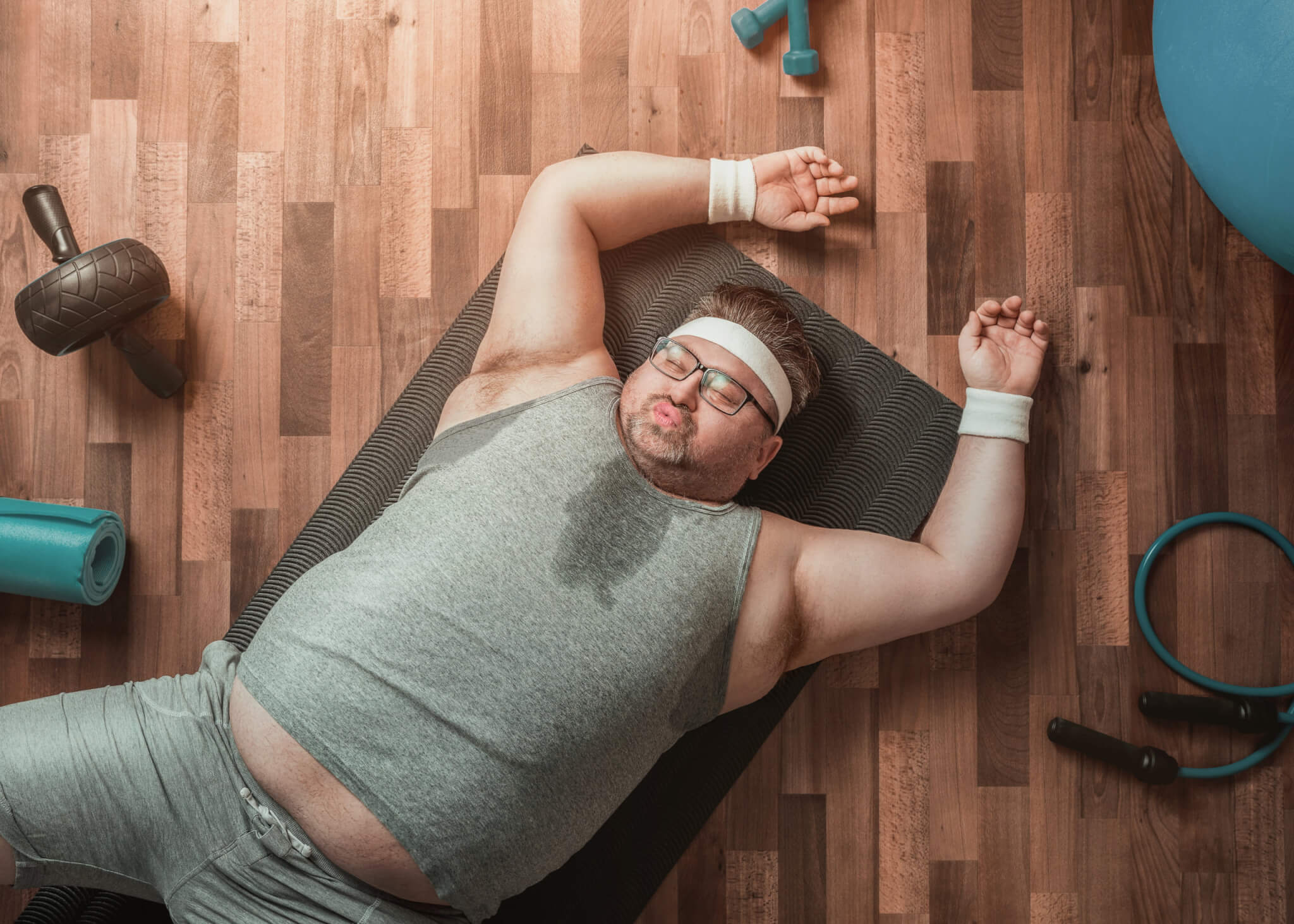
(© rangizzz – stock.adobe.com)

The poll of 2,000 adults reveals what goals people prioritize when it comes to their fitness. Above all, they’re aiming to lose a certain amount of weight (43%), increase their general strength (43%) and increase their general mobility (35%).

However, 48 percent are worried about potentially losing the motivation to get fit and 65 percent believe the motivation to increase their level of physical fitness wanes over time.

According to respondents, the motivation to keep going lasts for about four weeks before needing a new push.

intense workout exerciseintense workout exercise
The average person believes it takes six weeks in a new fitness routine before they can see a physical difference. (Credit: Julia Larson on Pexels)

The survey, commissioned by Optimum Nutrition and conducted by TalkerResearch, finds that a majority of Americans’ diet affects their level of fitness motivation (89%). 

Nearly three in 10 (29%) believe they don’t get enough protein in their diet, lacking it either “all the time” (19%) or often (40%). 

Advertisement

Gen X respondents feel like they are lacking protein the most out of all generations (35%), compared to millennials (34%), Gen Z (27%) and baby boomers (21%). Plus, over three in five (35%) women don’t think they get enough protein vs. 23 percent of men. 

The average person has two meals per day that don’t include protein, but 61 percent would be more likely to increase their protein intake to help achieve their fitness goals.

As people reflect on health and wellness goals, the most common experiences that make people feel out of shape include running out of breath often (49%) and trying on clothing that no longer fits (46%). 

Over a quarter (29%) say they realized they were out of shape after not being able to walk up a flight of stairs without feeling winded. 

Overall, half are optimistic about their fitness futures, believing that their best physical days are still ahead of them.

Advertisement

“Of course, it takes time to see a physical difference in ourselves,” says Optimum Nutrition Brand Director Jim Hogan, in a statement. “But when you first start a new fitness routine, that moment of realization is powerful — it’s an encouragement that what you’re doing is working and the goals you have for yourself are achievable. That’s the sort of motivation people need to keep their fitness habits up.”

Sources

This random double-opt-in survey of 2,000 general population Americans was commissioned by Optimum Nutrition between Jan 4 and Jan 8, 2024. It was conducted by market research company Talker Research, whose team members are members of the Market Research Society and have corporate membership to the American Association for Public Opinion Research (AAPOR) and the European Society for Opinion and Marketing Research (ESOMAR).

Fitness

Circadian Fitness: New Research Heightens Debate Over the Optimal Time for Exercise

Published

on

Circadian Fitness: New Research Heightens Debate Over the Optimal Time for Exercise
A Recent Study Suggests Evening Workouts May Offer Significantly Greater Longevity Benefits for Individuals with Obesity, Intensifying the Ongoing Scientific Discussion Over Whether Health Goals and Body Metabolism Dictate the Best Hour to Exercise. The question of the most beneficial time of day to exercise—a straightforward query—continues to yield frustratingly contradictory and complex answers in […]
Continue Reading

Fitness

Prepare for Ski Season With These Workouts

Published

on

Prepare for Ski Season With These Workouts

Skiing can be a whole lot of fun when the snow starts flying. But your body can take a beating on the slopes if it’s not properly prepared.

Advertisement

Cleveland Clinic is a non-profit academic medical center. Advertising on our site helps support our mission. We do not endorse non-Cleveland Clinic products or services. Policy

Sports medicine specialist Molly McDermott, DO, shares how to get ready for ski season with some workouts and strategies.

Ski training routine

Some elite skiers start training at the tail end of spring — about six months before they ever hit the slopes. Others may need less time. In general, Dr. McDermott recommends training at least six to eight weeks before your first outdoor adventure.

Advertisement

As part of your routine, you’ll want to focus on ski workouts that build:

  • Strength
  • Endurance
  • Flexibility
  • Neuromuscular control (also known as muscular coordination)

Trying to jump into a sport when you haven’t intentionally trained is difficult and challenging, says Dr. McDermott. That’s especially true given the physical demands that come with skiing.

“You want to train your brain, nerves and muscles to really build stability and balance so you can have more control over how you jump and land,” she notes.

Ski exercises

Ski-focused training puts a strong emphasis on lower-body exercises, targeting everything from your glutes to your ankles. But you’ll want to take a full-body approach to ski exercises, which means working on your core and upper body as well.

“You’re going to have to make real-time decisions when you’re out on the slopes,” stresses Dr. McDermott. “You’ll need to strengthen your whole body to be able to do things like pivot or change direction, keep your balance, propel yourself forward and withstand the impact of skiing.”

Dr. McDermott recommends starting with just bodyweight exercises if this is your first go at it. More experienced athletes can focus on higher weights or machines. In general, she recommends doing three sets of 10 to 15 reps each. Then, as you work through your training, you can progressively load your weight, sets, reps or how long you exercise to continue building strength and endurance.

Advertisement

Here are some workouts that lend themselves to skiing.

Dynamic warm-up

Warming up before any workout is key, especially right before you hit the slopes. The International Ski and Snowboard Federation agrees. Dynamic warm-ups and cool-downs are highly effective for preventing injury and improving performance.

Consider starting and ending your ski workout with five to 10 minutes of:

  • Jogging
  • Using an elliptical
  • Walking on a treadmill

“You’re warming up your muscles and then stretching them, as opposed to static, cold stretching,” explains Dr. McDermott.

Squats

“Squat maneuvers help make sure you have the coordination of your nerves and your muscles working together so your muscles are strong and keep your body aligned — in particular, keeping your knees from turning in,” says Dr. McDermott. “As squats become easier, you can progress to squat jumps.”

  1. Stand with your feet shoulder-width apart with your toes pointed slightly outward.
  2. Hinge at your hips, bend your knees and slowly lower your body (as if sinking into a chair).
  3. Lower until your thighs are parallel to the ground, keeping your knees in line with your toes and your weight on your heels.
  4. Hold the position for three to five seconds.
  5. Shoot up quickly to your starting position by pushing through your heels.
  6. Repeat this process for 10 to 15 reps.

Side-lying hip abductors

Hip abductor exercises help with skiing because they focus on balance, control and building strength in your hips, glutes and thighs.

  1. Lie down on your side with your legs extended straight. Your right leg should be on top of the other and you should rest your head on your left arm.
  2. Keeping your hips steady, lift your right leg so your knees are no longer touching. You should feel a stretch in your upper thigh and hip.
  3. Slowly lower your right leg.
  4. Repeat for 10 to 15 reps, then switch sides and continue.

Calf raises

Calf raises help improve ankle mobility and calf strength — all needed for those quick turns while skiing.

  1. Stand with your feet hip-width apart, with your arms hanging at your sides.
  2. Slowly lift the back of your heels until you’re standing on the balls of your feet.
  3. Hold this position for one to two seconds before lowering back down.
  4. Repeat for 10 to 15 reps.

Skater hops

“Skater hops are single-leg hops from side-to-side,” describes Dr. McDermott. “These are really going to help you in certain ski maneuvers.”

  1. Stand with your feet hip-width apart and your hips and knees bent at a 45-degree angle.
  2. Push off the floor with your left leg so that you jump to the side, landing on your right leg.
  3. Keep your knees bent and your left leg crossed behind your right (as if you’re skating).
  4. Then, jump back to the opposite side, crossing your right leg behind your left.
  5. Repeat this process in quick succession for 10 to 15 reps, jumping as fast and far as you’re able.
  6. To maintain momentum, it helps to swing your left arm forward as you’re pushing off with your left leg and vice versa.

Shoulder shrugs

“Shoulder shrugs are a good ski exercise because they help build the upper trapezius muscles that connect with your neck,” says Dr. McDermott. “They really work on your posture.”

  1. Start by standing tall, feet hip-width apart.
  2. While looking straight ahead, lift both of your shoulders and slowly roll them backward in a circle for 10 seconds.
  3. Repeat the process by circling your shoulders in the opposite direction for 10 seconds.

Chin tucks

Chin tucks involve a gentle range of motion to improve posture and strengthen neck muscles.

  1. While sitting or standing in a relaxed position, look straight ahead and lightly touch the bottom of your chin with your index finger.
  2. Gently pull your head and neck back so your chin moves away from your finger.
  3. Hold this tucked-chin position for up to 10 seconds before slowly extending your head and neck forward to the starting chin position.
  4. Repeat this process for 10 to 15 reps.

Push-ups

“Push-ups are good for strengthening your shoulders, chest and core, which helps with balance and stability when you’re skiing,” says Dr. McDermott.

  1. Kneel on all fours with your palms flat on the floor in front of you and your fingers facing forward. Hands should be shoulder-width apart and directly below your shoulders.
  2. Lift your knees off the floor and straighten your legs.
  3. Bend your elbows and tuck them to your sides as you slowly lower your chest and chin to the floor.
  4. Push through your palms until your arms are fully extended. Don’t let your hips or back dip to the ground — your head, spine and butt should all be aligned.
  5. Repeat this process for 10 to 15 reps.

Planks

This exercise targets your wrists, forearms, core and upper body — all areas that promote stability and strength while skiing.

  1. Get into a push-up position, with your legs extended and your elbows directly beneath your shoulders.
  2. Hold this upright push-up position for 10 to 15 seconds, with your abs engaged and butt and back aligned.
  3. For a modified challenge, you can lower your knees to the floor while holding this position.
  4. For a deeper stretch, you can rock your hips back and forth, or lower down to your elbows for a low plank.

Bridges

Bridges help strengthen your glutes, which help guide and direct your skis.

  1. Lie on your back with your knees bent, feet on the floor and arms at your sides.
  2. Squeezing your butt and abdominal muscles, push through your heels to slowly lift your hips toward the ceiling.
  3. Keep your back straight and your arms pressed into the floor at your sides.
  4. Hold this position for a few seconds, before slowly lowering your hips to the floor.
  5. Repeat this process for 10 to 15 reps.

Oblique twists

Also known as a Russian twist, this exercise focuses on your abdominal muscles and core strength. It helps with skiing because it supports your ability to rotate, turn and move quickly.

  1. Sit on the floor with your knees bent and your feet flat.
  2. Lean back at a 45-degree angle and squeeze your abdominal muscles.
  3. Extend your arms out straight in front of you and clasp your hands together.
  4. Engage your core as you twist slowly to the right as far as you feel comfortable, moving your arms in the direction you’re turning.
  5. Return back to center, pause and then twist to the left side.
  6. Repeat this process for 10 to 15 reps.

Cardio exercises

Skiers can also benefit from cardio exercises that get their blood flowing and build aerobic endurance, like:

  • Cycling
  • Running
  • Swimming
  • Rowing

“Build cardiovascular and low-impact activities into your training routine to help improve your performance and increase your endurance,” advises Dr. McDermott. “Some days you can break it up into sets or you can do 30 minutes straight.”

A note before hitting the slopes

A big part of ski training is getting your body acclimated to cold-weather exercises. For athletes who live in areas where winter runs strong, it helps to train early and get that outdoor exposure as temperatures begin to drop during the fall.

Advertisement

Others who live in warmer climates might benefit from taking cold showers, ice baths or lowering indoor temperatures weeks before heading out on a ski trip.

Once ski season begins, make sure you warm up before heading outdoors, stay hydrated and keep moving to keep your body warm.

“When you’re skiing, a lot of unexpected things happen,” cautions Dr. McDermott. “The weather changes and things happen really fast. So, you want to be physically and mentally prepared before you hit the slopes, making sure you’ve got the right equipment, the right clothing and you’re prepared in case of injury.”

Continue Reading

Fitness

Forget the gym — you just need 20 minutes and 2 dumbbells to strengthen your whole body with this workout

Published

on

Forget the gym — you just need 20 minutes and 2 dumbbells to strengthen your whole body with this workout

One of the harder parts of committing to a training routine is knowing where to start, and that’s true of those who have never trained regularly before as well as more experienced people coming back after a break.

This 20-minute workout from fitness trainer Lindsey Bomgren, founder of Nourish Move Love on YouTube, is perfect for easing your way into a training routine, especially if you’re coming back from a break because of illness or any other reason.

Continue Reading

Trending

