Fitness
The best exercise for stress – The Australian Women's Weekly
When most of us think about exercise, our minds usually conjure up images of running as fast as we can or sweating it out in a gym class.
But slower forms of movement – like walking and stretching – can be just as beneficial, especially when we’re overwhelmed.
High-intensity exercise benefits our overall health, but it causes a steep increase in cortisol levels – the hormones responsible for stress.
It’s undoubtedly good for us, and countless studies have proved that regular movement results in better sleep, lower blood pressure and improved mood, as well as helping to combat health conditions and diseases.
But, when you’re already going a million miles an hour, adding in an early morning gym class could be doing more harm than good. Low-intensity exercise, on the other hand, has the opposite effect. It reduces cortisol levels.
“If you are already fatigued and embark on a workout when your body’s energy reserves are low, exercise can further deplete your energy,” explains naturopath, nutritionist and founder of Edible Beauty, Anna Mitsios.
“Getting up early can be counterproductive as it can induce a stress response, especially if we haven’t had enough sleep to begin with. It can spark a rise in cortisol, which can increase blood sugar levels and, in turn, imbalance hormones.”
Keeping cortisol in check
When you’re exhausted and put your body under additional stress, you’re only adding to your likely already elevated cortisol levels.
Pushing through an intense exercise session can increase cortisol, negatively impacting your immune system, metabolism and mood. And instead of boosting your energy, it could have the reverse effect.
“Rather than getting the benefits of an endorphin rush, exercising while exhausted can further deplete reserves, leading to increased fatigue, which in the end makes you feel more tired,” explains Anna.
What’s more, increased stress and fatigue can impact our immune system, and adding more stress can leave you prone to illness and infection, which is the last thing we need when we’re already drained.
Slow it down – right down
Once upon a time, cortisol gave us a boost of energy to outrun an enemy or animal. Today, however, our cortisol spikes whenever someone cuts us off in traffic or we run late for an appointment. This triggers a stress response that constantly tells our brain that we’re in danger, even when that ‘danger’ is just the relentless pace of everyday life.
Slowing down and focusing on our breath through gentler exercise soothes our nervous system, which is exactly what we need when frazzled.
“You should walk away from exercise feeling good. You want to nourish your body rather than deplete it,” explains Ali Handley, founder of Sydney’s Bodylove Pilates.
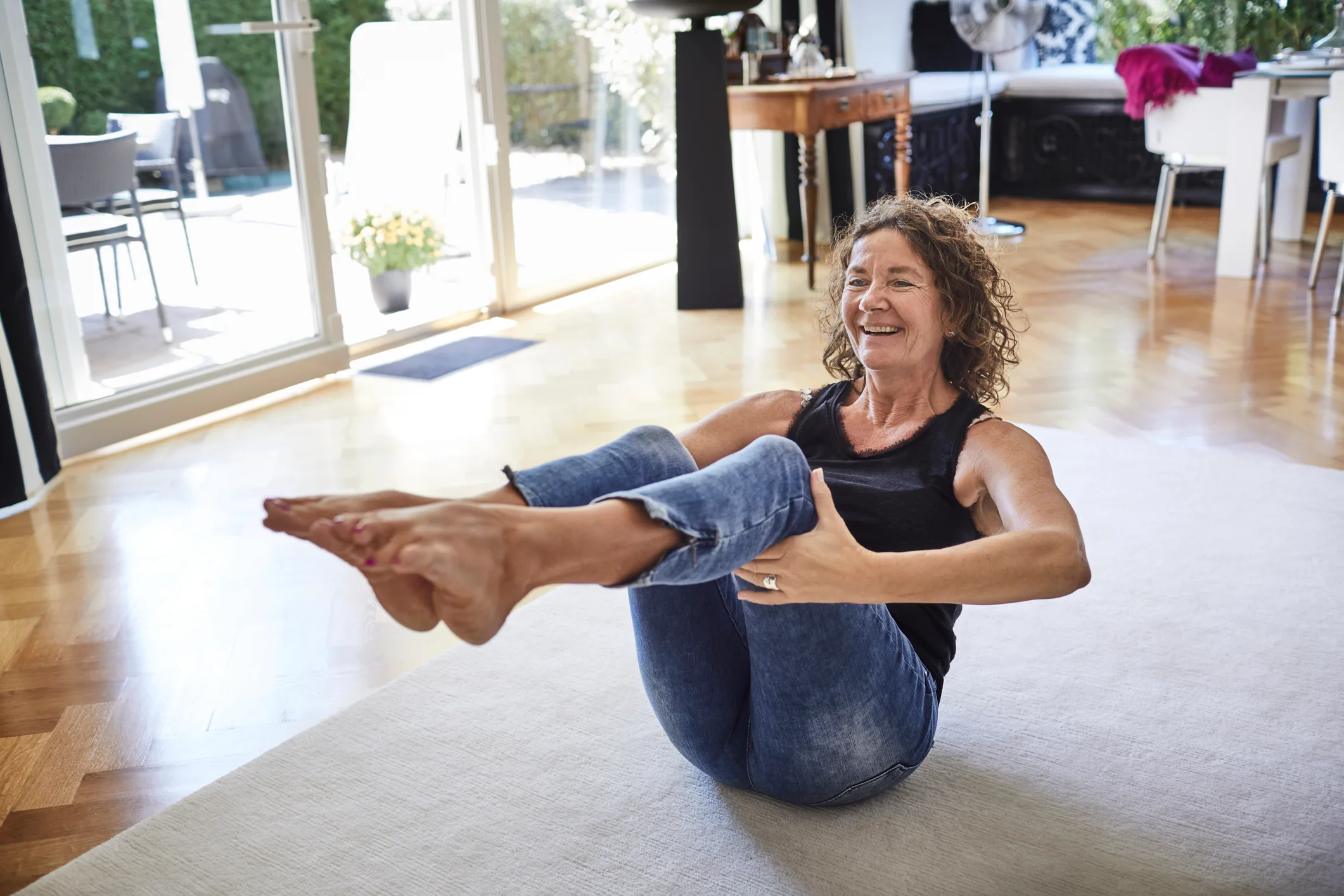
She’s an advocate for Pilates, which has soared in popularity in recent years. Using a variety of props to challenge, strengthen and lengthen, it serves as a full-body workout, just at a more controlled pace.
“Women think they need to do a lot of cardio, but that’s just not the case. We often need a slower burn to support our bodies, activate our muscles and connect to our breathing. All those things help to make exercise an experience rather than a punishment.”
Rest is a right, not a reward
Lydia O’Donnell, a running coach and co-founder of the Femmi app, which provides training plans personalized to your menstrual cycle, echoes this sentiment.
“We’ve been fed this narrative of ‘no pain, no gain’, and it’s very masculine. It can be a slow jog around the block. It can be a walk. You can still move in a healthy, sustainable way that isn’t about trying to reach a marathon finishing line.”
If you love running, you don’t have to give it up. Instead, just aim to slow down the pace. Running slower can help build your aerobic base, which is good for covering longer distances without leaving you feeling zapped.
“No matter what exercise you do, you should enjoy moving and do what feels right for you,” says Lydia.
For many of us, walking is a great option to help lower cortisol levels. Not only can it increase cardiovascular fitness, lower blood pressure and help maintain a healthy weight without pushing your body beyond its limits, but you also receive mood-boosting endorphins, which can help counter feelings of overwhelm and exhaustion. Plus, it’s free and can be done practically anywhere.
“Walking is a form of stress relief,” says Anna. “It activates the parasympathetic nervous system, reducing the body’s stress response without the extra exertion of a gym session. If you need one or two cups of coffee to help you function at a 6am gym class, your body isn’t ready for the assault. You are better off sleeping in and calmly starting the day, waking with the sunlight and avoiding the harsh sound of the alarm.”
Permission to sleep in? Granted.
Fitness
We Tested More Than A Dozen Popular Fitness Trackers—Our Favorite Is $120
After testing a dozen fitness trackers, the Fitbit Charge 6 won a gold star for its premium features at an affordable price point of $120. The price also includes a six-month membership to Fitbit Premium, which features a library of cardio and strength training workouts and a monthly analysis of 10 sleep metrics—that’s an easy sell! The Charge 2 was my first ever fitness tracker, so I have a soft spot for the Charge line. Instead of manually recording workouts, it automatically records movement such as walking, swimming, and biking, which is nice instead of fiddling around with a watch interface (although it’s a simple swipe). Speaking of swimming, the tracker can be submerged in water up to 50 meters so I never have to take it off when showering.
It has a sensor on the back of the slim rectangular watch case to track heart rate, which never disrupts my range of motion during weight lifting or mat Pilates. When comparing against higher-end models like the Garmin Vivioactive, my heart rate data matched up, which proves its lower price tag doesn’t equal lower quality. Aside from heart rate, stress levels, period, fertility insights, and sleep are also tracked.
I’m not a fan of wearing a watch to bed, but this model is so lightweight (30 grams) and thin that I barely notice it. It provides a sleep score breakdown of all your cycles and whether or not it was optimal for recovery, which is especially helpful if you’re in the process of training for a race or going hard at the gym. Your duration of sleep is also recorded, but I found it recognizes sedentary activities such as watching TV as sleeping, which got on my nerves slightly. Post-snooze, it delivers a personalized daily readiness score, which shows if you’re ready for a sweat sesh.
It pairs perfectly with Android smartphones, given that Google owns Fitbit (a Google account is also required to set up). It seamlessly interacts with calendar and weather apps, plus you can receive texts, notifications, calls, and access Spotify. Fitbit Pay is built in, too, for easy access to cardless payments.
The biggest con with the Charge 6 is that the battery drains fast. Fitbit says it lasts up to a week, but I found it needs to be charged by day four. It’s not a huge deal, just make sure to carry a charger if you’re traveling. As for the warranty, it lasts one year and provides coverage in the event the hardware is defective, so make sure you don’t lose it!
Read More: Best Workout Apps
Fitness
How Heidi Klum stays fit and strong at 52 – ‘I never exercise too much’
Heidi Klum has been highly active throughout her career, but nowadays she prefers to rely on her lifestyle to keep her fit incidentally rather than on dedicated gym sessions.
The 52-year-old supermodel counts keeping up with her family as her primary form of movement. ‘I run around a lot, having four kids. I have a younger husband,’ she told Us Weekly. ‘I get plenty of movement from running around after two dogs and a cat,’ she added to the Daily Mail.
This kind of non-intentional or informal activity is known as Non-Exercise Activity Thermogenesis, or NEAT. It can include housework, walking, taking the stairs instead of the lift, carrying the shopping instead of using a trolley, gardening and even fidgeting.
NEAT makes up between 15 – 50% of your total daily energy expenditure (TDEE) – how many calories you burn throughout the day, says Hannah Baugh, nutritionist and sports performance nutritionist at Hannah Rose Nutrition. By contrast, formal exercise like a workout class or going for a run makes up around 5-10% (though this varies between individuals).
Calorie burning is a big benefit, but there’s considerably more to it. It can also help build cardiovascular fitness and muscle as you lift and carry things and move, and for Heidi, it’s convenient and sustainable, meaning she can stay consistent.
‘I never over-exercise or lift heavy weights,’ she explained. ‘People often push themselves too hard. I listen to my body. I have no back or knee pain. I eat right.’
Adding that she doesn’t ‘really exercise’ that much, she said, ‘I don’t think you have to do a lot, but if you do a little bit [regularly], that’s important’.
Heidi’s low-impact exercise routine
When she does incorporate formal exercise into her day, Heidi prefers more low-impact, joint-friendly movements that she can do on the go.
At the beginning of this year, she shared a video of herself performing bicep curls with resistance bands by the pool. Generally, bands are gentler on your joints compared to dumbbells as they start with very little resistance and increase gradually as the band stretches – the weight isn’t fixed. In contrast, a dumbbell requires you to bear a fixed weight from the start of the movement. There’s also less stress on the way down (eccentric) with a band as the tension releases as you return.
‘Bands create constant tension through the full range of motion, and they’re light enough to throw in a suitcase, so ideal for someone like Heidi who is constantly travelling,’ agrees Daniel Booth, high-performance coach and consultant, and the co-founder of MyoLab Performance Concierge. ‘Anyone can do this at home to build their biceps and triceps without a lot of equipment.’
He stressed the importance of lifelong resistance training. ‘After 40, women lose muscle faster, oestrogen drops and their metabolism shifts, meaning they gain weight easier, making training consistently like Heidi especially important.’
Heidi’s previous training routines
Heidi’s preference for low-impact movement extends back to the covid pandemic. ‘I jump on the trampoline in the garden at my home in LA and do bodyweight exercises – including lots of squats,’ she said to Daily Mail about her routine. The one exception would be running – a high-impact activity that places stress on your bones – which she counted as her main form of cardio.
As a Victoria’s Secret Angel, Heidi was known to work out with celebrity trainer David Kirsch, whose sessions involved more conventional weight-based gym training.
Having a strong core is about far more than sporting a six-pack. Build functional mid-section strength – while also improving your power, posture, coordination and balance – with WH COLLECTIVE coach Izy George’s 4-week core challenge. Download the Women’s Health UK app to access the full training plan today.
Get the app
Daniel Booth is a high-performance coach and consultant, and the co-founder of MyoLab Performance Concierge, which cultivates excellence within elite performers, working on everything from strength and conditioning to injury-risk reduction and competition preparation. He previously led performance management as head coach at Warner Bros. and Watford FC Women. Find him on Instagram.
Fitness
Experts Love These Exercise Trampolines for a Low-Impact Workout That Still Gets Your Heart Pumping
✔️ Look for a bungee-based trampoline. Avoid using trampolines that have metal springs. Those will be harsh on your joints. Instead, look for trampolines that have a bungee system or cords. “The bungee material is softer and it will have more give, which makes the workouts more challenging. “The tighter or harder that mat, the less bounce you’ll get,” explains Lo Russo.
✔️ Figure out the size. If you plan on using a trampoline inside a small-sized apartment, it’ll be best to reach for a pick that is small and foldable. “If someone is looking to workout in front of the television, I recommend going with a 39-inch,” says Lo Russo. If you’ve got a backyard then you can take advantage of the space and go for something bigger, like a 44-inch that will give you room for advanced movements.
✔️ Go with or without handlebars. “I know the handlebars look supportive and helpful but I recommended not using them,” says McGregor. “I’ve never had anyone fall off while teaching beginner classes and the handlebar may take away from the workout and the range of motion,” she explains. So instead of reaching for handlebars right away, try out a regular fitness trampoline first (maybe with someone nearby to help in case you lose balance) and then decide if you want to add on handlebars for extra support.
-
Boston, MA2 minutes agoBoston May Fair 2026 opening times as ‘iconic’ attraction returns
-
Denver, CO8 minutes agoAvalanche vs. Wild NHL playoff schedule
-
Seattle, WA14 minutes agoSporting Kansas City vs Seattle Sounders FC: TV channel, live stream, and kick-off time | Goal.com US
-
San Diego, CA20 minutes agoNew audit breaks down the City of San Diego’s response on homeless encampment clean-ups
-
Milwaukee, WI26 minutes agoMilwaukee fatal shooting early Saturday, 18-year-old killed
-
Atlanta, GA32 minutes ago8x MLB All-Star Atlanta Braves Must Consider Acquiring In A Trade
-
Minneapolis, MN38 minutes ago4 injured in shooting at south Minneapolis park, officials say
-
Indianapolis, IN44 minutes agoRunners are revving their engines for chilly 500 Festival Mini-Marathon