Finance
Trump tariffs live updates: The unilateral 10% tariff on imports takes effect


TAIPEI (Reuters) — Taiwan President Lai Ching-te met tech executives on Saturday to discuss how to respond to new U.S. tariffs, promising to ensure Taiwan’s global competitiveness and safeguard the island’s interests.
President Donald Trump announced across-the-board import tariffs on Wednesday… The U.S. tariffs, however, do not apply to semiconductors, a major Taiwanese export.
Lai met the executives at his official residence to discuss the response to “the global economic and trade challenges brought about by the reciprocal tariff policy,” his spokesperson Karen Kuo said in a statement.
She did not say which companies were present, only that there were several representatives from the information and communications technology, or ICT, industry.
Lai “hopes to give industry the greatest support, stabilise the economic situation, ensure Taiwan’s industry’s global competitiveness, and safeguard our country’s national interests and the continued steady progress of our economy,” Kuo said.
Taiwan is home to TSMC, the world’s largest contract chipmaker and an important supplier to companies including Apple and Nvidia.
Read more here.



What if the global financial system could move at the speed of the internet unlocking trillions in value while expanding access to capital worldwide?
Developed in collaboration with Dante Disparte, Chief Strategy Officer and Head of Global Policy & Operations at Circle; Fred Thiel, Chairman and Chief Executive Officer of MARA, Inc.; and Ryan Hayward, Head of Digital Assets and Strategic Investments at Barclays, this report on digital assets and tokenized finance reveals how a rapidly emerging $16–30 trillion market is transforming traditional finance into a real-time, programmable, and borderless ecosystem.
It explores how the tokenization of real-world assets, the explosive growth of stablecoins processing over $30 trillion annually, and instant (T+0) settlement are redefining liquidity, reducing cross-border costs, and reshaping global investment flows. The report also highlights the critical role of financial inclusion, addressing a $330 billion SME financing gap alongside the rise of AI-driven transactions, energy-powered infrastructure, and evolving regulation that will ultimately determine who leads and who benefits in the next era of finance.

Brent crude (BZ=F) and West Texas Intermediate (CL=F) futures contracts marched higher on Tuesday morning, having plummeted more than 10% at one point in Monday’s trading session. Questions continue to swirl around the potential reopening of the Strait of Hormuz and an end to the conflict between Iran and the US and Israel.
Brent crude (BZ=F) gained 1.7% after the opening bell in London, to around the $97.50 per barrel mark. West Texas Intermediate (CL=F) also rose 1.7% to $89.55 per barrel.
The moves come amid conflicting reports about talks between Iran and the US to end fighting. On Monday, president Donald Trump delayed strikes on Iranian power plants, having given Iran a deadline to restore trade through the Strait of Hormuz, saying Washington had productive conversations with Tehran.
But Tehran has since denied that it has been in touch with US negotiators, accusing Washington of price manipulation.
On Sunday night, Trump and prime minister Keir Starmer held a 20-minute phone call about the situation.
“They agreed that reopening the Strait of Hormuz was essential to ensure stability in the global energy market,” a Downing Street spokesperson said.
On Saturday, Trump gave Iran a 48-hour deadline to reopen the Strait — a measure set to expire shortly before midnight UK time on Monday.
In a Truth Social post, Trump wrote: “If Iran doesn’t FULLY OPEN, WITHOUT THREAT, the Strait of Hormuz, within 48 hours from this exact point in time, the United States of America will hit and obliterate their various POWER PLANTS, STARTING WITH THE BIGGEST ONE FIRST!”
Yesterday, Iran’s defence council said in a statement that the “only way for non-hostile countries” to pass through Strait of Hormuz is “coordination with Iran”.
Finance
Iran issues its largest-ever currency denomination as accelerating inflation ravages a financial sector deemed a ‘Ponzi scheme’ even before the war | Fortune

Iran’s economy was already crashing before the U.S. and Israel launched a war against the Islamic republic three weeks ago, and the relentless bombing since then has wreaked even more havoc.
In fact, high inflation triggered mass protests in December and January, prompting the regime to massacre tens of thousands of its own citizens. President Donald Trump warned Tehran against further violence and began a military build-up that led to the current conflict.
Inflation has worsened and apparently is so bad now the government issued its largest-ever currency denomination: the 10 million rial note (equivalent to about $7).
The new currency went into circulation last week, according to the Financial Times, and comes just a month after the prior record holder, the 5 million rial, came out.
As prices continue to spiral higher while the war boosts demand for cash, long lines formed to withdraw the fresh banknotes, and supplies quickly ran out.
Iran’s central bank said electronic payments are still the main methods for transactions, though the 10 million rial bill will “ensure public access to cash,” the FT reported.
But doubts about the viability of electronic payments have grown during the war as the U.S. and Israel target the regime’s levers of control.
In addition to bombing Islamic Revolutionary Guard Corps and Basij paramilitary forces, a data center for Bank Sepah was also hit on March 11. Sepah is the country’s largest bank and is responsible for paying salaries to the military and IRGC.
“Iran is already in the middle of a severe cash liquidity crisis,” Miad Maleki, a senior advisor at the Foundation for Defense of Democracies and a former Treasury Department official, said on X earlier this month. “As of Jan 2026, banks were running out of physical banknotes daily, with informal withdrawal caps of just $18–$30/day. Cash in circulation surged 49% YoY due to panic hoarding. The regime simply cannot pivot to cash payments, there isn’t enough physical currency in the system.”
Meanwhile, a currency collapse that began after last year’s U.S.-Israeli bombardment has fueled crippling inflation. The rial lost 60% of its value in the months after the 12-day war, and food inflation soared to 64% by October. It accelerated further to 105% by February, vaulting overall inflation to 47.5%.
The exchange rate fell as low as 1.66 million rials per $1 last month, though it strengthened to about 1.5 million rials as the U.S. temporarily lifted sanctions on Iranian oil.
Heightened demand for cash further stresses a financial system that was considered dubious even before the current war started three weeks ago.
The failure of Ayandeh Bank late last year forced the regime to fold it into a state-run lender, underscoring how fragile the sector was as bad loans piled up to politically connected cronies.
“This was largely theater. In reality, Iran’s entire banking system is insolvent, its balance sheets sustained by fiction rather than assets,” Siamak Namazi, who was a U.S. hostage in Iran from 2015 to 2023, wrote in a report for the Middle East Institute in January.
During his captivity, he learned from imprisoned former officials and business elites that politically connected borrowers bribed assessors to inflate the value of properties, which were used to obtain massive loans.
Instead of repaying the loans, borrowers just gave their properties to the bank, which sold them to other banks at a paper profit, according to Namazi. Those banks knew the properties were overvalued “garbage,” but played along in the scheme by dumping their own toxic assets in exchange and booking fictitious gains.
“The result is a closed-loop Ponzi scheme, sustained by mutual deception and regulatory complicity,” he added. “This practice has metastasized over the past 15 years and is far more extensive than this simplified description suggests. And this is only the banking system. Much of the rest of Iran’s economy is afflicted by similarly entrenched corruption and mismanagement.”
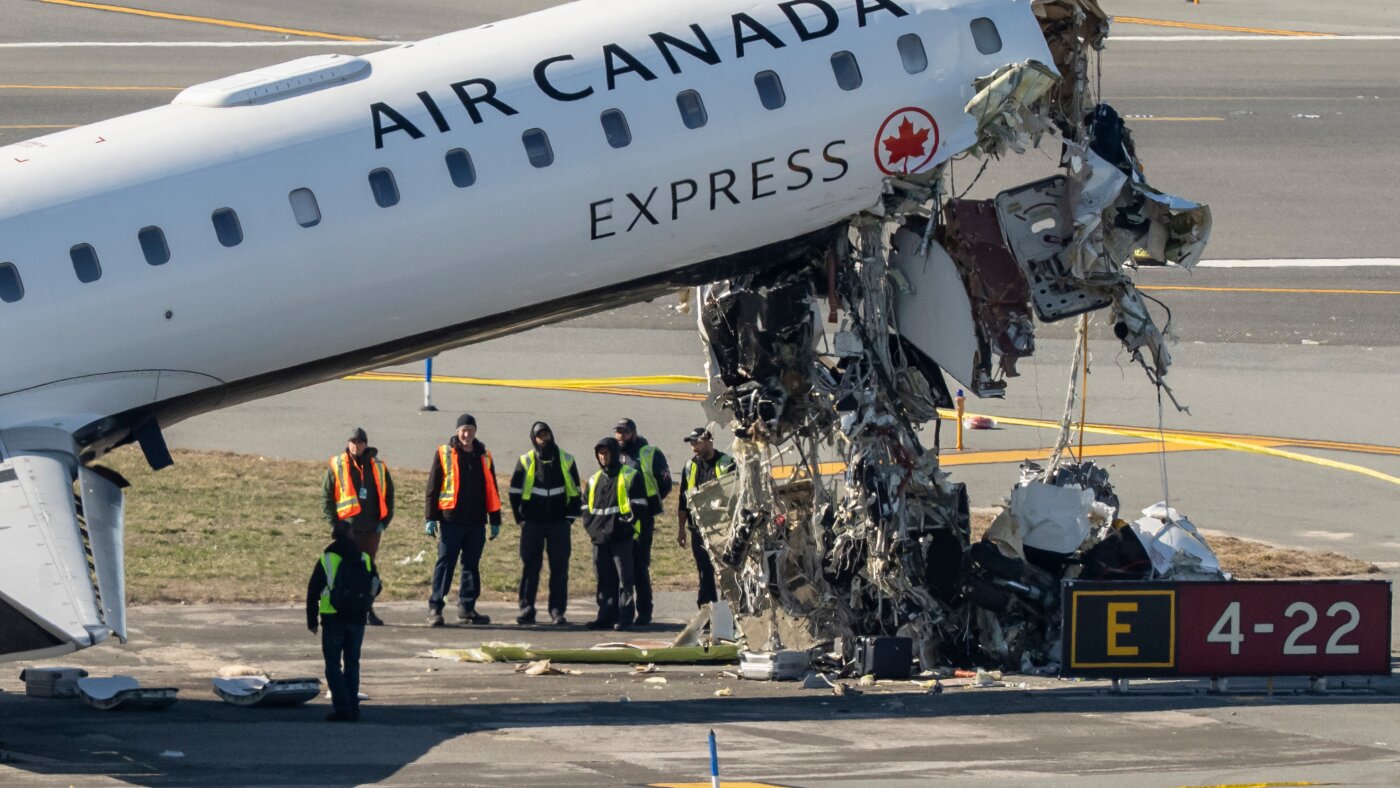
An air traffic controller was juggling extra roles during the LaGuardia plane crash

Video: LaGuardia Crash Survivors Recount Ordeal

Michigan ‘adventure seekers’ take flight at new experiential venues

Barricaded suspect in standoff with police in San Francisco’s Tenderloin neighborhood

Jack Hughes scores twice as Devils beat Stars 6-4, end Dallas streak with four-goal first period

Florida High School Football Rankings: Top 25 teams – Oct. 21

How old is Bo Nix? What to know about Oregon quarterback ahead of 2024 NFL Draft

Cleary's 21 help Le Moyne down Central Connecticut State 69-64 in OT

99th annual Pony Swim held in Virginia

Indiana Members Credit Union announced as new anchor tenant at Bottleworks District
An air traffic controller was juggling extra roles during the LaGuardia plane crash

Iran War: Pentagon set to send thousands of elite 82nd Airborne troops to region | BBC News

Video: Passengers Wait in Long Security Lines at LaGuardia After Deadly Crash

King Charles to address Congress in historic first state visit to Washington

Iran names successor to security chief killed in US-Israeli attack
-

 Detroit, MI6 days ago
Drummer Brian Pastoria, longtime Detroit music advocate, dies at 68
-

 Georgia1 week ago
How ICE plans for a detention warehouse pushed a Georgia town to fight back | CNN Politics
-

 Movie Reviews6 days ago
‘Youth’ Twitter review: Ken Karunaas impresses audiences; Suraj Venjaramoodu adds charm; music wins praise | – The Times of India
-

 Alaska1 week ago
Police looking for man considered ‘armed and dangerous’
-

 Education1 week ago
Video: Turning Point USA Clubs Expand to High Schools Across America
-

 Sports3 days ago
IOC addresses execution of 19-year-old Iranian wrestler Saleh Mohammadi
-
 Science1 week ago
Industrial chemicals have reached the middle of the oceans, new study shows
-

 New Mexico2 days ago
Clovis shooting leaves one dead, four injured