Finance
Long-Time Finance Prof Named Interim Dean At Stanford GSB


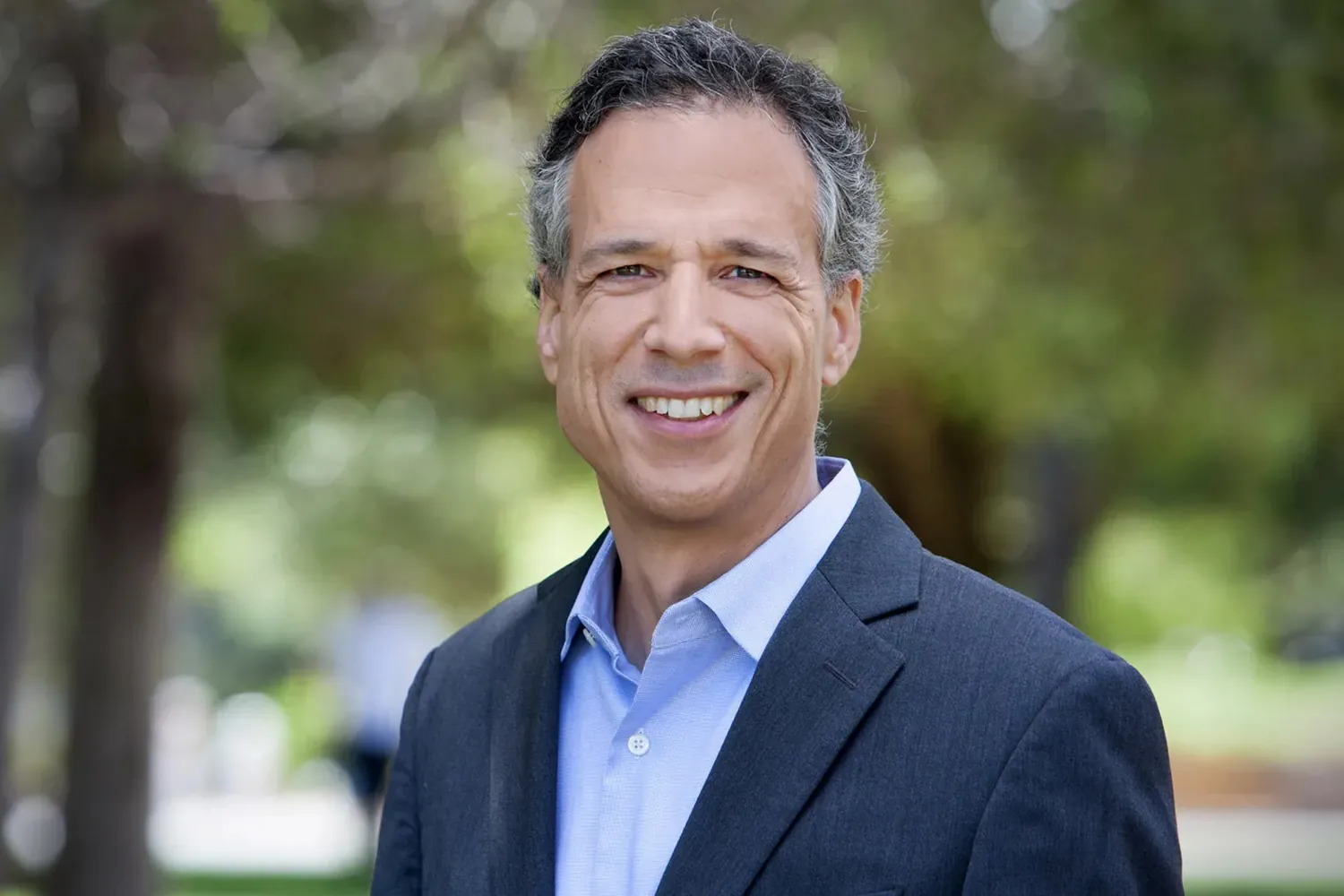
Peter Demarzo will serve on an interim basis as dean of Stanford’s Graduate School of Business beginning August 1 as the search begins for Jonathan Levin’s replacement. Levin becomes the university’s president that day. Stanford photo
The dean’s office at Stanford Graduate School of Business is moving from economics to finance. As Jonathan Levin, an econ prof and GSB dean since 2016, prepares to move up to the university presidency in August, the B-school has named an interim successor: long-time finance professor Peter Demarzo.
Demarzo, Stanford’s John G. McDonald professor of finance who has taught at the B-school altogether for more than a quarter century, assumes the deanship August 1 and will keep it until a permanent successor to Levin is named.
“Peter will provide important continuity for the school during this transition, and we are grateful to him for being willing to accept this responsibility,” Stanford Provost Jenny Martinez says in a news release.
DEMARZO TEACHES CORPORATE FINANCE & FINANCIAL MODELING
Demarzo earned his Ph.D. and a master’s in operations research from Stanford in the 1980s. He taught at the school for two years in the 1990s, then returned for good in 2000. He teaches MBA and Ph.D. courses in corporate finance and financial modeling; he also founded and serves as faculty co-director of the Stanford LEAD Online Business Program.
Before joining Stanford, Demarzo was on the faculty of UC-Berkeley’s Haas School of Business and Northwestern’s Kellogg Graduate School of Management; he was also a national fellow at the Hoover Institution.
Demarzo’s research is in the areas of corporate finance, asset securitization, financial contracting, and regulation. According to his online bio, “He is co-author of Corporate Finance and Fundamentals of Corporate Finance” and “has served as president of the Western Finance Association and the American Finance Association. He is a fellow of the Econometric Society and the American Finance Association, and a research associate of the National Bureau of Economic Research.”
LEVIN LOOKS ‘TO STANFORD’S FUTURE’
Stanford on April 4 announced that Levin, dean of its business school since 2016, will become president of the university on Aug. 1.
Named Dean of the Year by Poets&Quants in 2022 for his success in bringing stability to a school that had been wracked by scandal, Levin’s more important achievements include putting Stanford in the lead of all business schools on diversity and inclusion, making the GSB the first major institution to publish an annual report on its diversity progress.
“As I look to Stanford’s future, I’m excited to strengthen our commitment to academic excellence and freedom; to foster the principles of openness, curiosity, and mutual respect; and to lead our faculty and students as they advance knowledge and seek to contribute in meaningful ways to the world,” the 51-year-old Levin said in a statement in April.
DON’T MISS STANFORD NAMES BUSINESS SCHOOL DEAN JONATHAN LEVIN ITS PRESIDENT and A DAY IN THE LIFE OF A STANFORD MBA STUDENT


Google Cloud and FactSet, a provider of data and artificial intelligence solutions to the financial markets, plan to jointly develop AI agents designed to assist with portfolio operations, deal advisory and corporate finance.

Tuesday’s Supreme Court ruling changing certain federal campaign finance limits could make a big difference in the battle for control of Congress this fall, giving Republican candidates who have been getting outraised by opponents direct access to more party cash.
Limited time: Save 25% on NBC News subscription
Get exclusive reporting, live Q&As and ad-free reading.


The World Bank is ditching its commitment to steer 45 percent of its spending toward projects with climate benefits, after facing pressure from the Trump administration.
The move, announced Monday following a meeting of the bank’s board of directors last week, marks a victory in President Donald Trump’s effort to purge climate policies from U.S. foreign policy. His administration has described the target as “distortionary” and “nonsensical.”
The bank preserved its broader Climate Change Action Plan — of which the 45 percent target was a key metric — just days before it was set to expire at the end of June. In addition to directing money toward climate projects, the plan provides technical support for helping countries reduce their greenhouse gas pollution and adapt to rising temperatures.
“We will retire the 45% climate co-benefits target,” the World Bank Group said in a statement, noting that it had “done significant work in answering client demand and needs.”
The bank’s work on climate “is and will remain firmly client driven, supporting them in delivering on their own ambitions as set out in their national plans and NDCs,” the statement added, referring to the nationally determined contributions countries submit under the Paris Agreement.
The decision to drop the climate finance target follows months of pressure from the Trump administration. People with knowledge of the negotiations said the U.S. was firm that the target must go despite other countries indicating their support for the bank’s climate goal. The U.S. has sway over the bank’s decisions as its largest shareholder.
Beyond the finance target, the Climate Change Action Plan also provides diagnostic reports on countries’ climate and development goals and aims to align lending with the Paris Agreement, which calls for preventing temperature rise from surpassing 2 degrees Celsius since the Industrial Revolution.
The bank said it would honor a board request to undertake an independent evaluation of the climate plan to determine if it’s helping countries grapple with rising temperatures. The decision effectively extends the plan beyond its expiration at the end of June.
The climate target was supported by many of the bank’s shareholders. It’s also been a prominent signal of the bank’s support for climate action at a time when the impacts of rising temperatures are accelerating.
“This is way, way away from where we should be for a responsible financial architecture,” said one official from a developed country who was directly involved in the negotiations and was granted anonymity to describe internal discussions.
The bank will continue to track and report on the amount of money going to projects with climate co-benefits. It exceeded its own target last year by directing 48 percent of its financing to climate-related projects.
Other climate targets embedded in agreements that govern different arms of the bank will remain, including one for the International Development Association, the bank’s fund for the poorest countries.
Multilateral development banks play a key role in global climate negotiations, where wealthy countries have committed to helping provide $300 billion a year for poorer countries by 2035. That no longer includes the United States, which has left the Paris Agreement and will exit the underlying United Nations Framework Convention on Climate Change early next year.
“Targets send enormous signals about an institution’s direction of travel,” said Clemence Landers, a senior fellow at the Center for Global Development. “At the same time, it’s a sign of the times and the World Bank is doing its level best to not rankle its largest shareholder.”
She believes the bank will continue financing renewable energy projects in countries that want them, despite having dropped its climate target.
“I wouldn’t be shocked if the bank continued to have an extremely robust clean pipeline with or without this target,” said Landers.
The bank says retiring the 45 percent target is part of its shift from a focus on “inputs to outcomes.” It will continue to monitor and report net greenhouse gas emissions across its projects and countries’ ability to withstand climate risks.
“We will continue to report to the Board on progress, including on climate co-benefits, and to contribute to our related joint MDB efforts,” the statement said, referring to its role as a multilateral development bank. “We will explore and discuss ways to better structure our engagement on adaptation, nature and pollution.”
-

 Michigan5 minutes ago
Whitmer says she will pull Michigan National Guard from D.C. if troops used in Trump’s Safe and Beautiful Mission
-

 Massachusetts8 minutes ago
Massachusetts dad on ‘adventure of a lifetime’ left fighting for his life in Fiji after noticing bug bite
-

 Minnesota13 minutes ago
Invasive ‘bloody red shrimp’ reach Lake Superior
-

 Mississippi20 minutes ago
Mississippi Lottery Mississippi Match 5, Cash 3 results for June 30, 2026
-

 Missouri23 minutes ago
Missouri Sports Betting May 2026: $256.4M Handle, Record $21.3M Revenue
-
Montana28 minutes ago
Montana Lottery Mega Millions, Big Sky Bonus results for June 30, 2026
-

 Nebraska35 minutes ago
Erstad joins Nebraska golf program
-

 Nevada38 minutes ago
‘Arrive Alive’ initiative with Nevada Department of Public Safety, FOX5

